Click on photos for more information.
The Story of McCarthy Blue Oak Ranch Preserve
by Laurie Schwaller
with John Greening and Skip May
When the staff and directors of Sequoia Riverlands Trust (SRT) learned in 2005 that a nearly two-square-mile portion of the 4,000 acre Golden Sierra Ranch just five miles north of Springville was coming up for sale, they knew they had to find the funds to buy it.
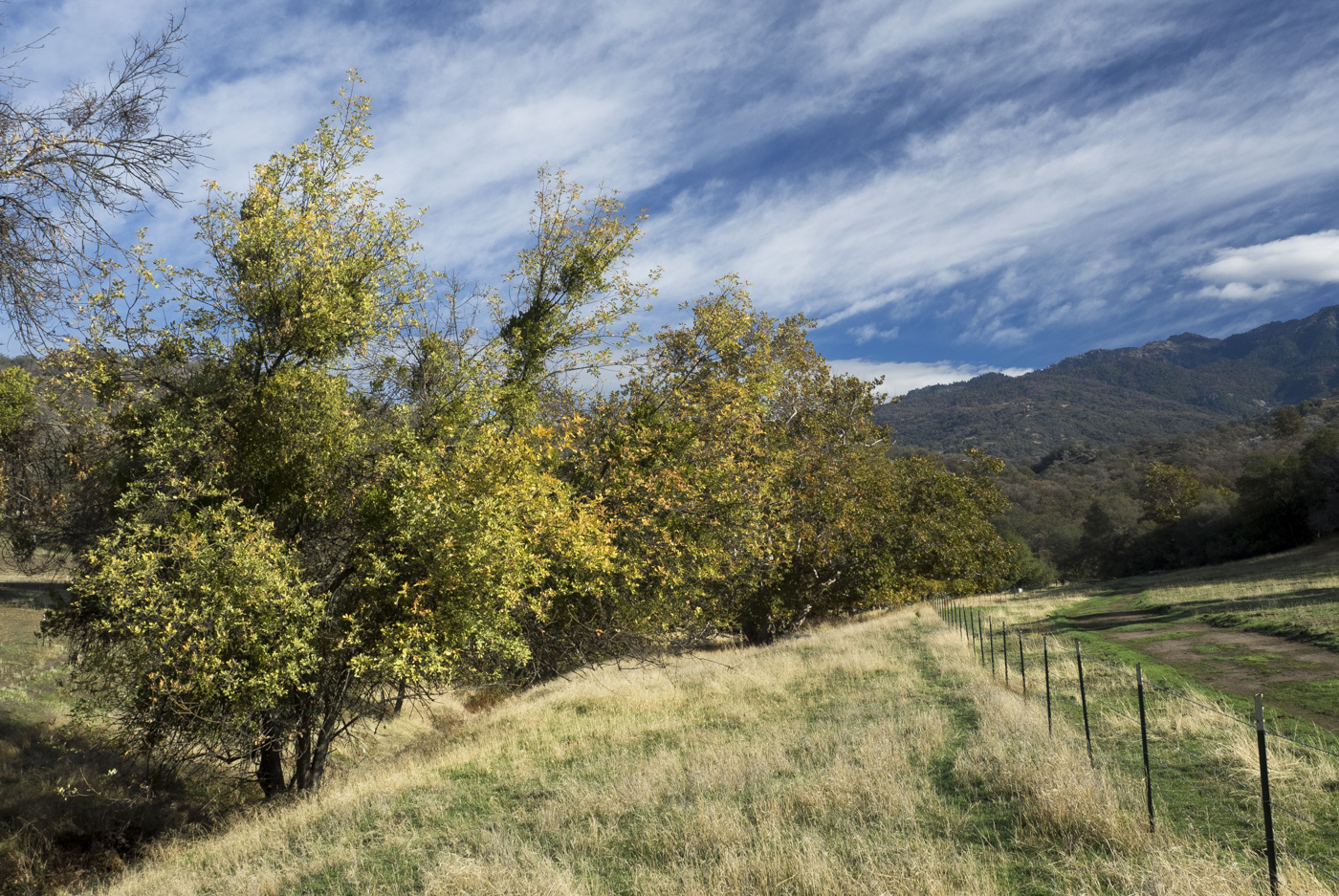
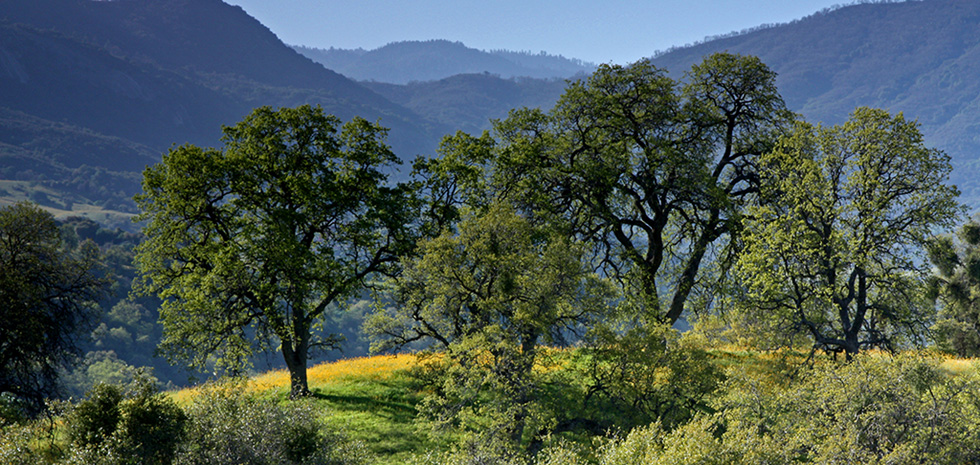
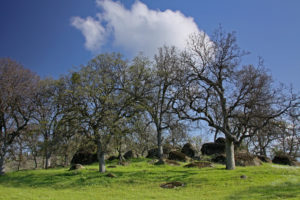
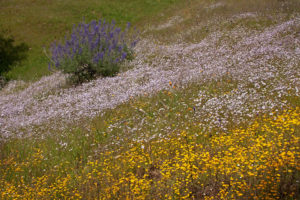
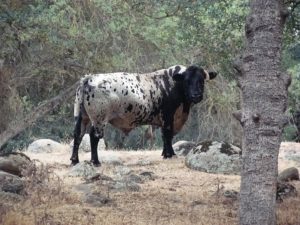
Bordered by Dennison and Sycamore creeks and the north fork of the Tule River, this beautiful land supported biologically rich riparian areas and extensive blue oak woodlands. Cattle had grazed its grasslands for over one hundred years, and all kinds of wildlife visited its ponds and springs. Substantial elevation changes provided varied habitat and marvelous 360-degree views. Rising from the river up the slopes toward Giant Sequoia National Monument, the ranchland also served as an important travel corridor enabling wild creatures such as mule deer, black bears, mountain lions, bobcats, and Pacific fishers to move unhindered between the foothills and the mountains.
Both Harris Road and Bear Creek Road provided easy access to the property, and just across Bear Creek Road, SCICON, the Tulare County Office of Education’s Clemmie Gill School of Science and Conservation, protected 1,000 similar acres. Historic ranch structures and prehistoric artifacts added cultural values to the site. In short, the parcel was a perfect fit with the land trust’s mission of permanently protecting the productive land and healthy natural systems that promote our county’s vitality and prosperity.
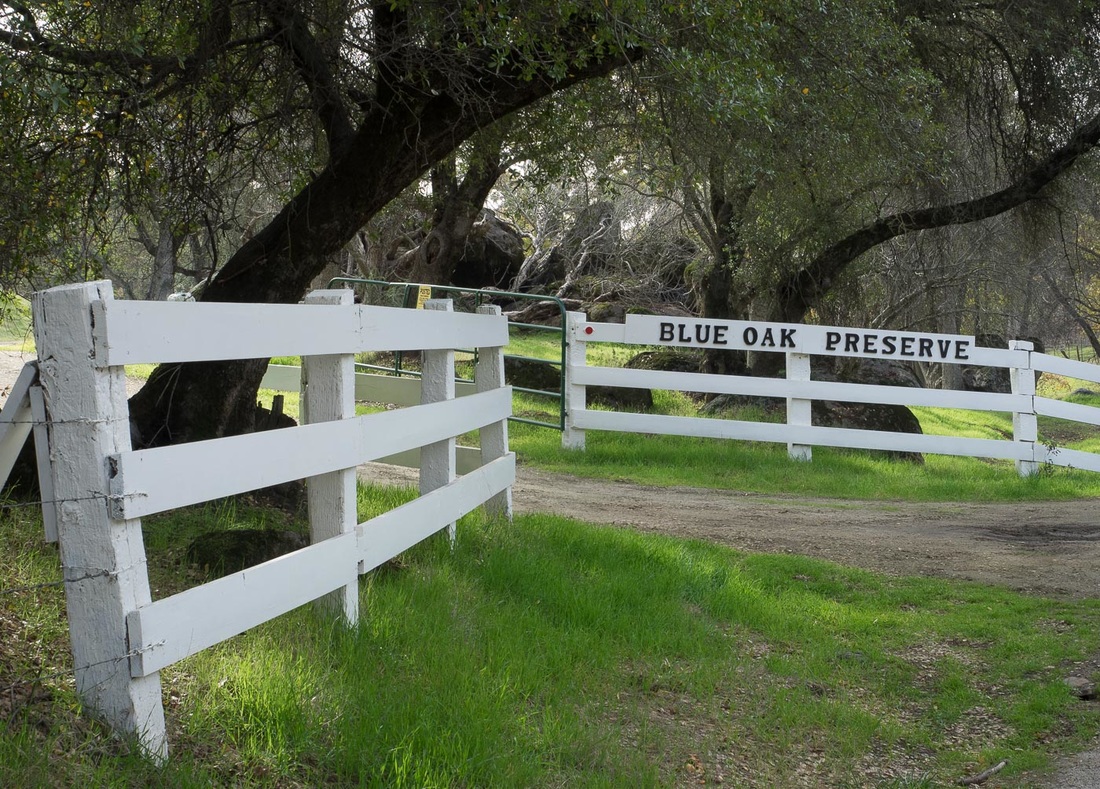
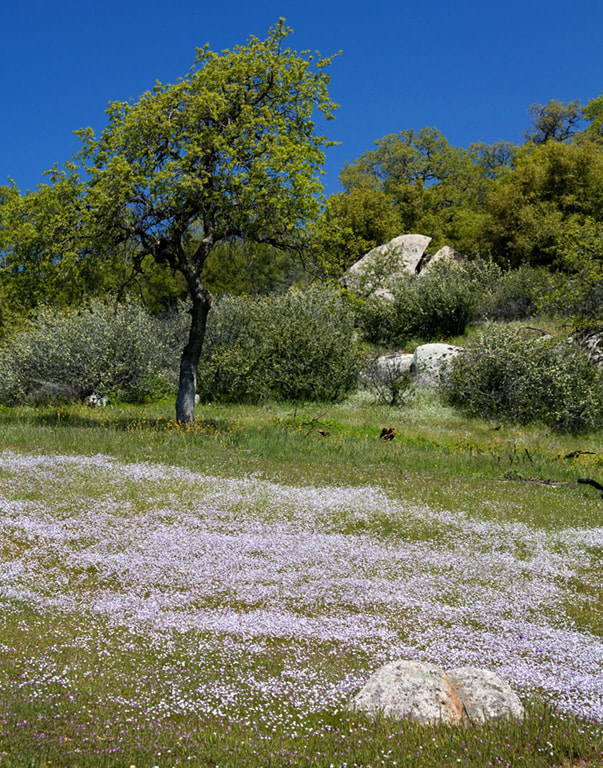
Along the north fork of the Tule, Sequoia RIverlands Trust already held conservation easements on other key landscapes, including River Ridge Ranch and SCICON’s Circle J-Norris Ranch. But on the Golden Sierra Ranch, hundreds of homesites had been mapped out on one- and two-acre lots. Fortunately, a loan from the Packard Foundation enabled SRT to make the purchase, with the goal of managing the newly-named Blue Oak Ranch as a permanent nature preserve.
Opening the new preserve to the public was a priority, but detailed planning and multiple projects had to be completed first. Since education is another SRT priority, the land trust reached out to involve local students of the Environmental Sciences Academy (ESA) career-based learning program at Porterville’s Monache High School in these processes. The first idea was to work over the summer with some engineering student interns, who would have the opportunity to plan and build trails to lead visitors into the ranch. Then Geographical Positioning System (GPS) and Geographic Information System (GIS) training became important, then communications skills, then creating a video record of the students’ work.
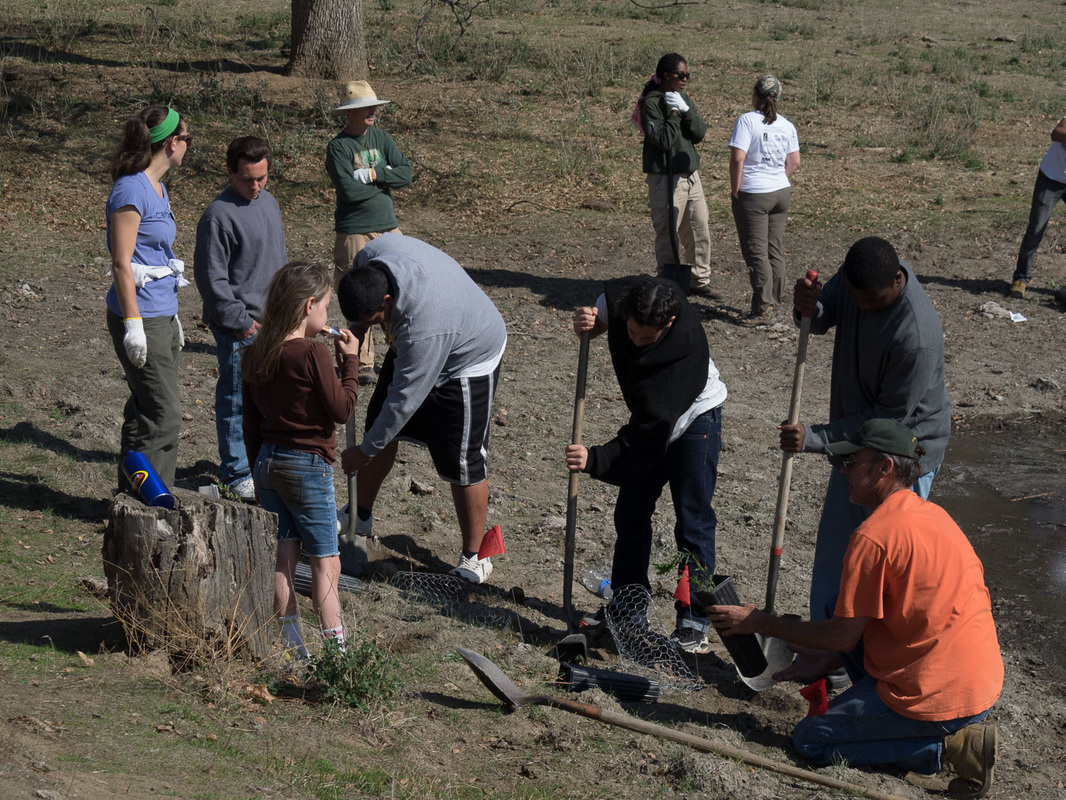
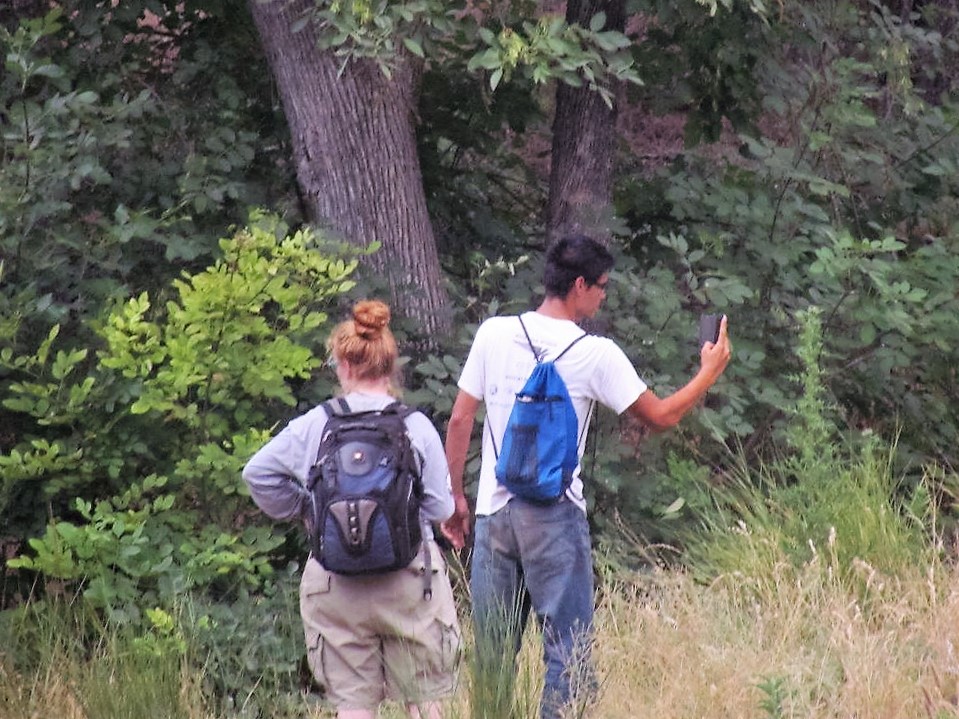
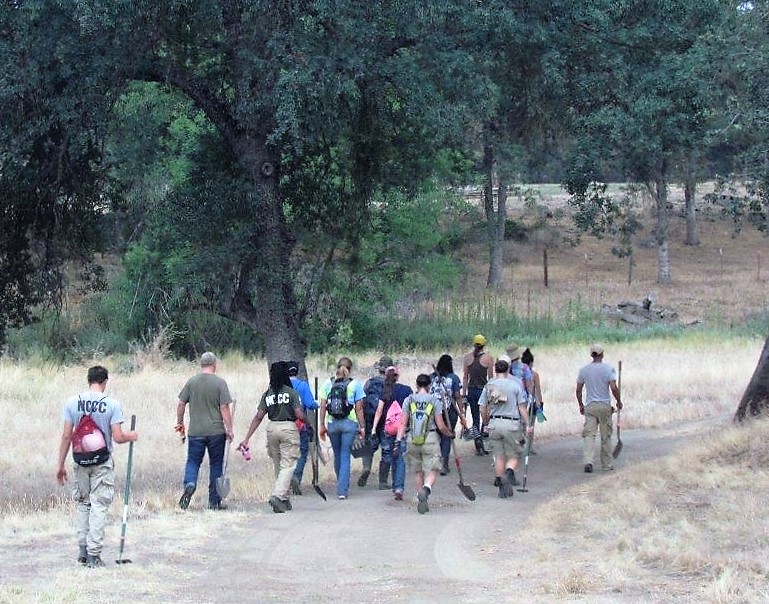
Over several summers, the ESA student interns were joined by AmeriCorps volunteers, working closely with SRT project leaders to design and carry out the tasks at Blue Oak that would gradually return the land to its natural balance as a healthy riparian oak savannah and make it more visitor-friendly. The volunteers dedicated thousands of hours under the hot summer sun to removing stubborn invasive species such as the Himalayan blackberries that had overrun and blocked the riparian areas, and the massive patches of Italian and bull thistles that were degrading the grasslands.
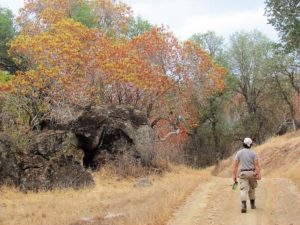
They planted appropriate native species in the salvaged spaces. With GPS and GIS, they located and mapped significant biological, archaeological, and historic sites on the preserve and determined where trails should go. Then they shouldered their shovels and set out to build the trails they had designed for the public to follow and share in the riches of Blue Oak Ranch Preserve.
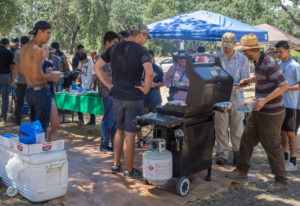
Armed with their ever-increasing knowledge of the preserve’s resources, the young volunteers helped plan a preview day for Blue Oak Ranch held on December 4, 2014. They proudly served as docents, led interpretive tours, and introduced visitors to the many recreational activities to be enjoyed there, including hiking, birdwatching, photography, horseback riding and biking at special events, and even archery on a parcel leased to the Springville Archery Club.
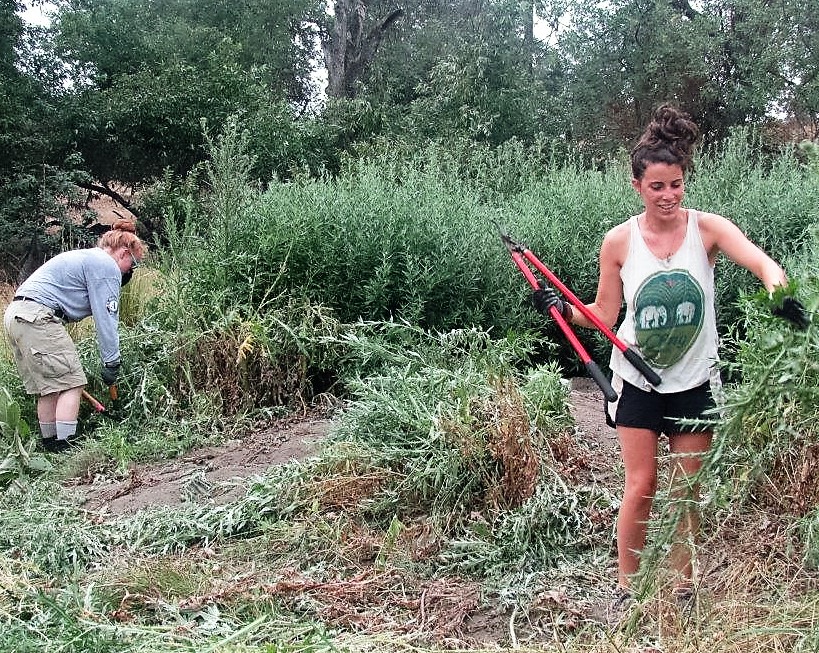
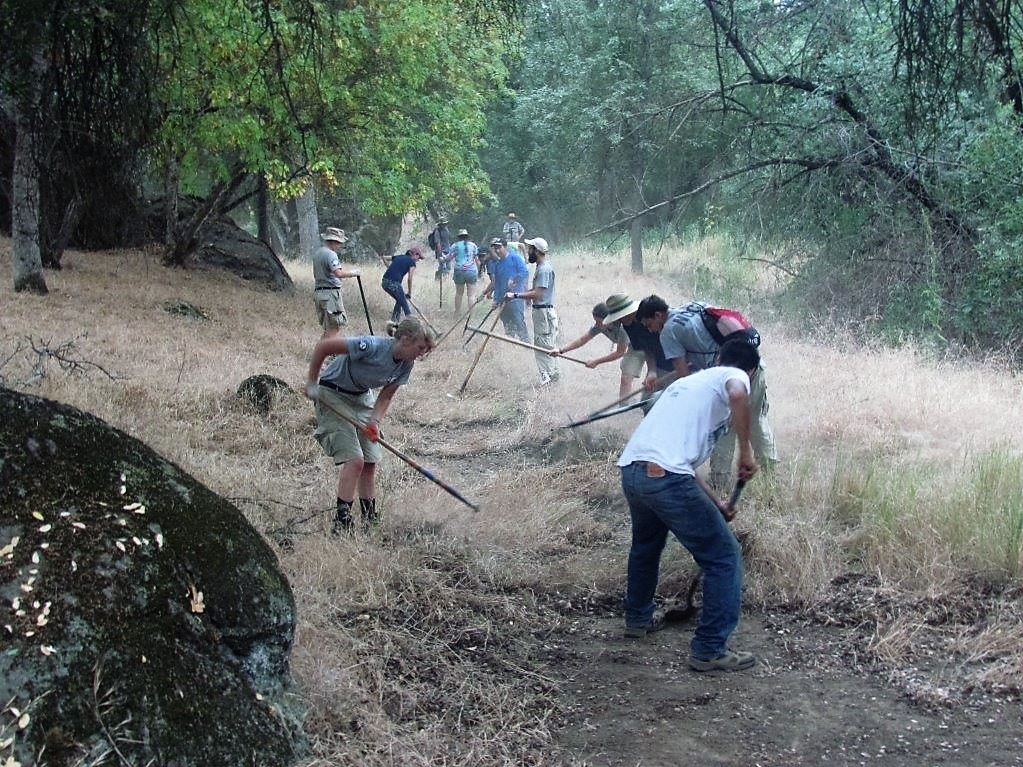
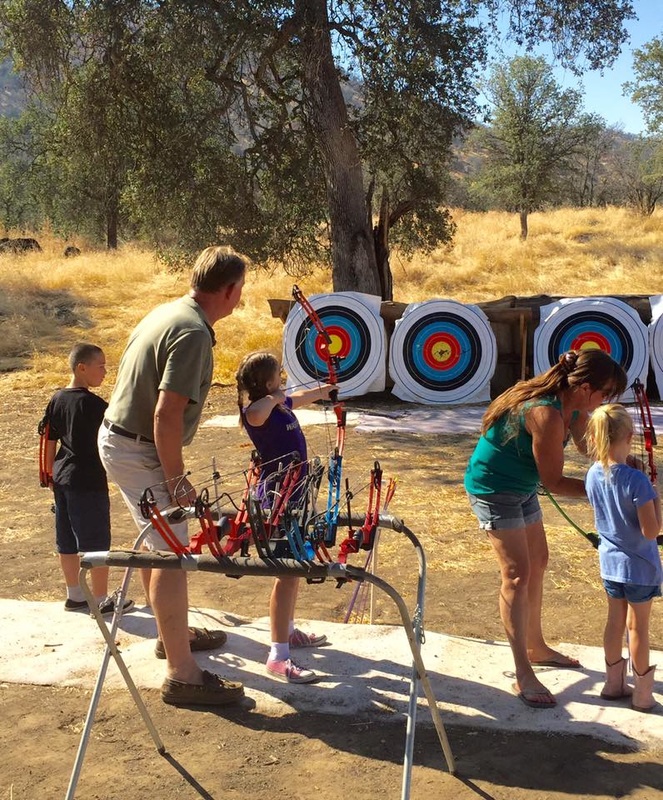
While Blue Oak is presently open to the public only on first Saturdays and for special events, students continue to regularly work there, volunteering both during the school year and in a specialized summer program, carrying out research, monitoring the Western Pond Turtle population, creating phenology records, enhancing maps and trails, and increasing their knowledge and skills related to preserve management. During their senior year, in cooperation with their teachers, local officials, and various non-profit organizations, the students continue to design projects for the preserve.
This resource-rich new link in the chain of preserves protecting a vital watershed is well on its way to becoming a key environmental, educational, and recreational asset to Tulare County. SRT is planning to house residential caretakers on the ranch, establish a sustainable cattle grazing operation, develop interpretive signage and other features to help the public learn more about the blue oak woodlands, and increase the days that the preserve is open to the public.
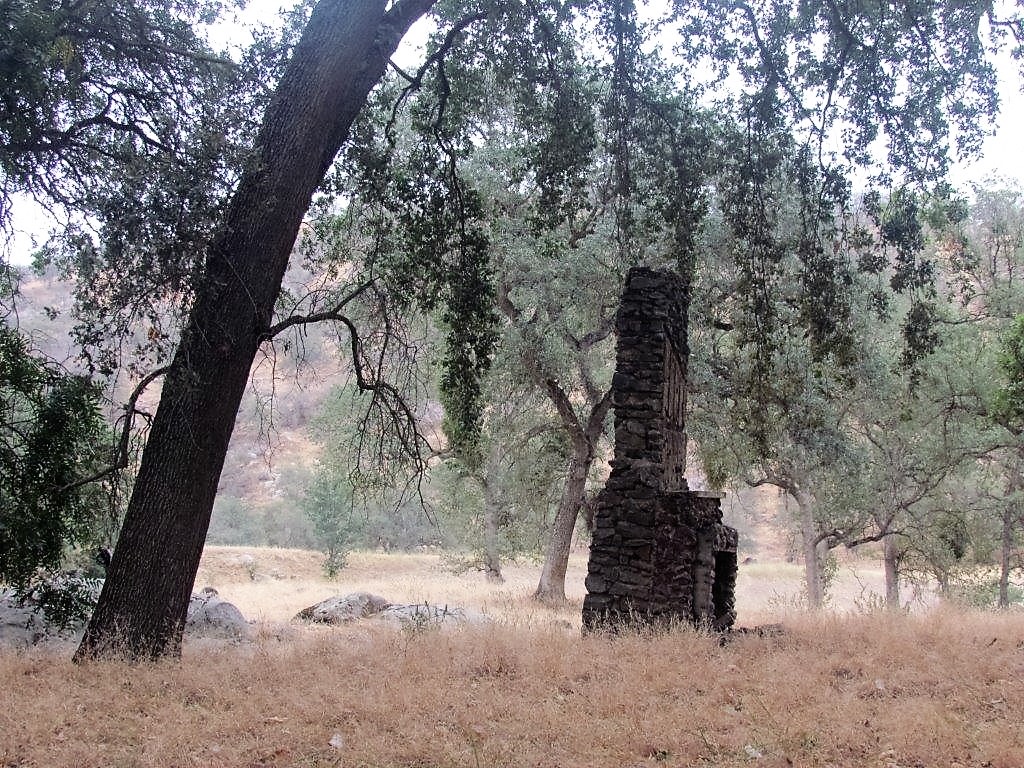
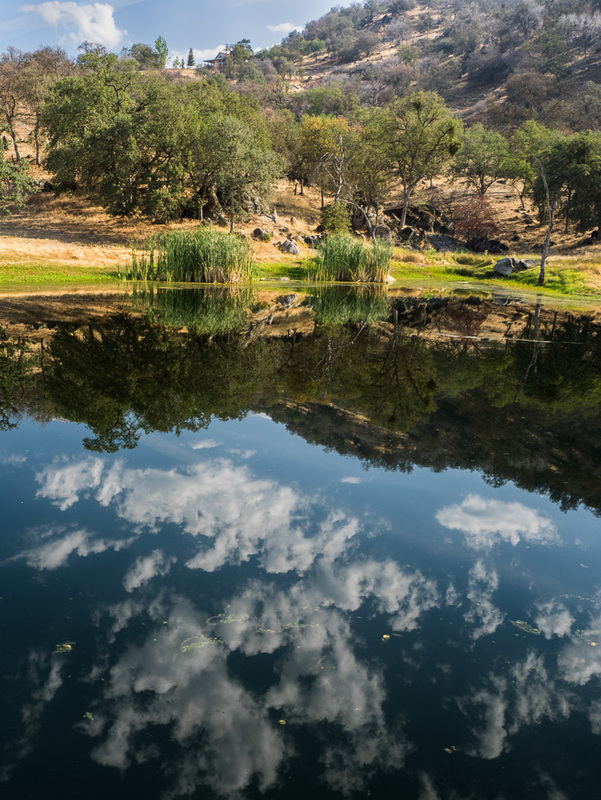
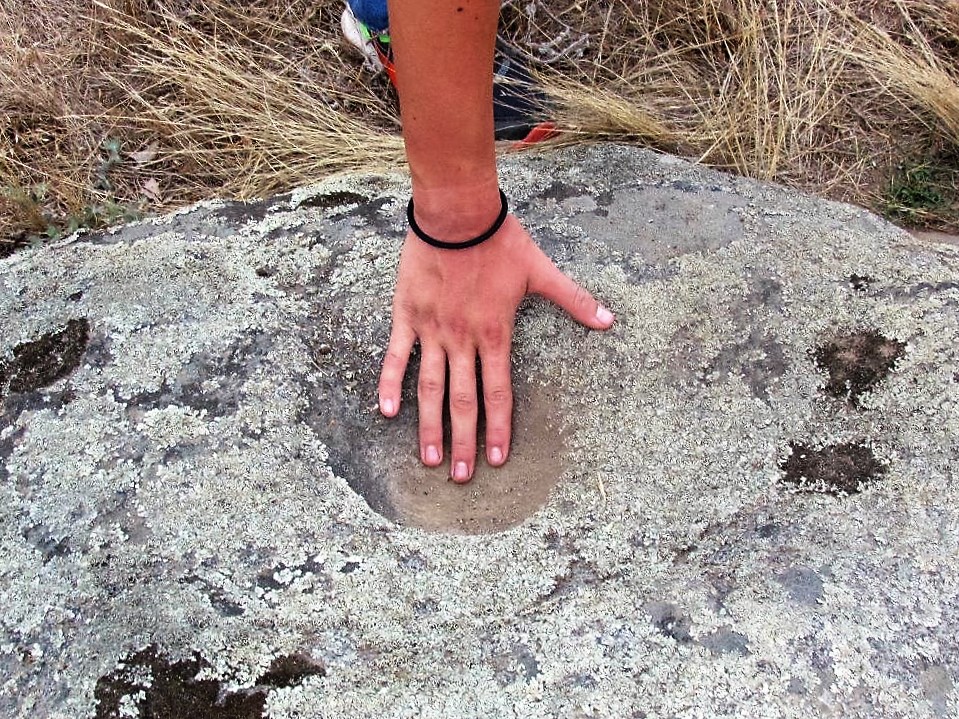
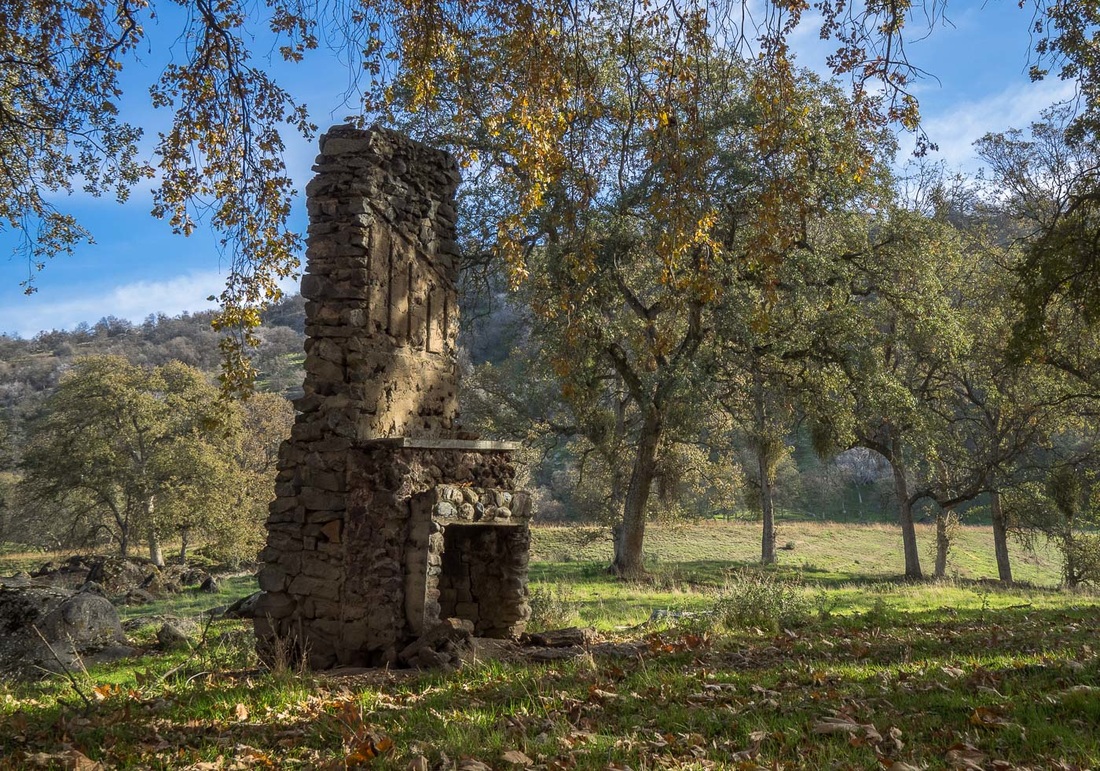
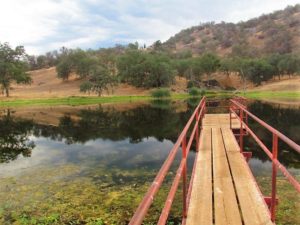
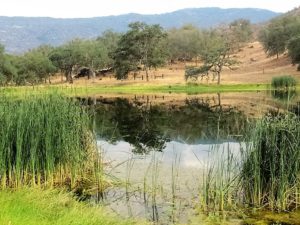
On open days, visitors can take a short, easy walk from the parking area by the old corrals to a shady oak grove where a tall granite chimney is all that remains of a historic ranch house. Just a few hundred feet from there are bedrock mortars etched into the big boulders where generations of native Yokuts women ground acorns into nutritious meal. Take the quick path up a gentle hillside and you’ll find a beautiful pond, perfectly reflecting the bordering oaks and hillsides and the sky above. Adventurous hikers can make their way to the top of the peak for a real workout and a tremendous view.
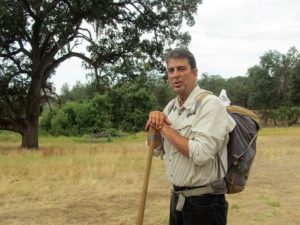
On a lucky day, you might see a rare Swainson’s thrush or black swift flying by. And if you spot some students at work, stop and ask what they’re doing. What you learn from them will add to your appreciation of this vital foothill landscape that still looks much as it did when the first Euro-American settlers arrived, 175 years ago.
September, 2016
UPDATE: In 2023, this preserve’s name was shortened from Sopac McCarthy Mulholland Blue Oak Ranch Preserve to McCarthy Blue Oak Ranch Preserve.
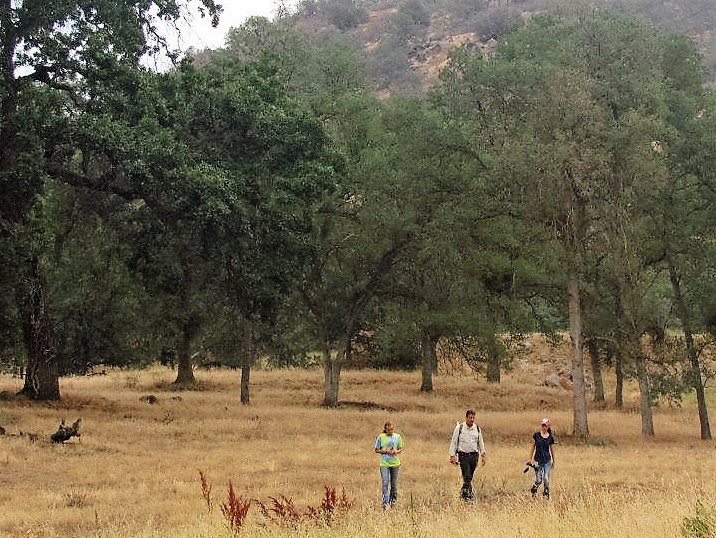
“Conservation and rural-life policies are really two sides of the same policy; and down at the bottom this policy rests upon the fundamental law that neither man nor nation can prosper unless, in dealing with the present, thought is steadily given for the future.” — Theodore Roosevelt
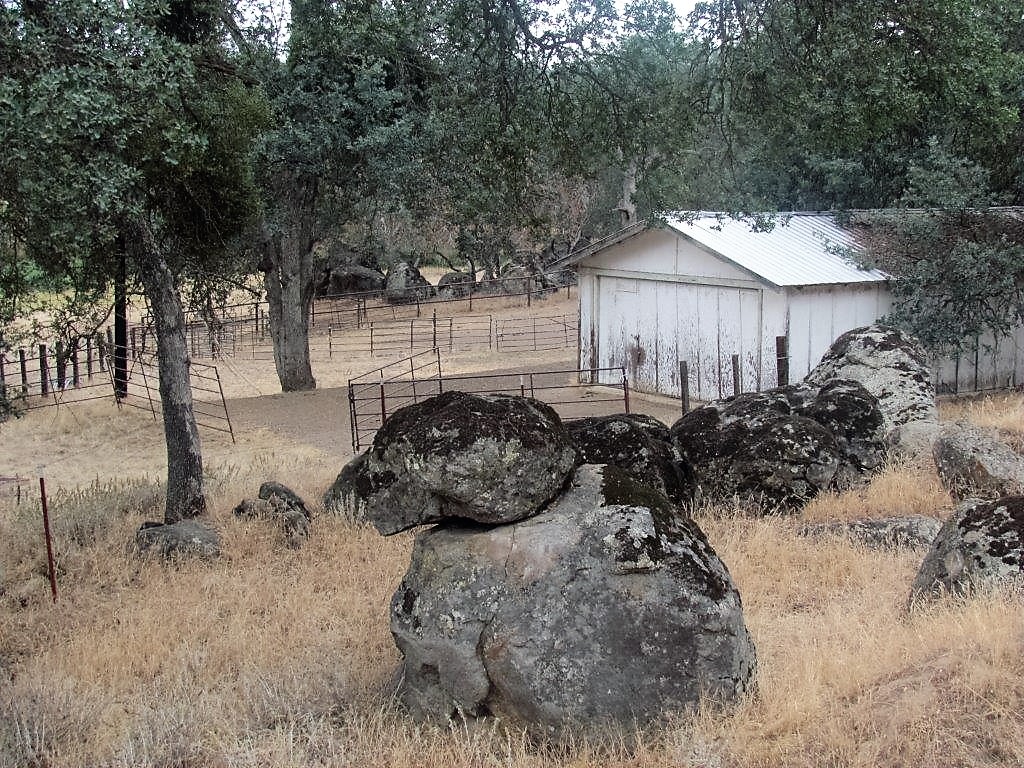
“Throughout California’s history, people have lived among the oaks, raised families in homes shaded by oaks, worked and played around these generous natural and cultural icons. Oaks have played a crucial role in supporting the health and well being of people, plants, and animals across the state for decades.” — Janet Cobb
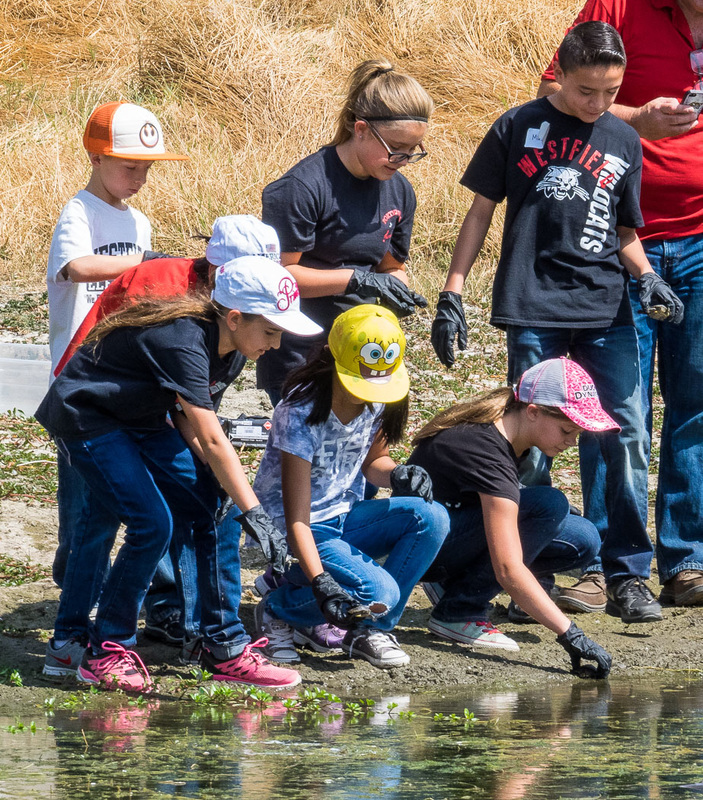
“[A]n intimate awareness of the continuity between our lives and the rest of life is the only thing that will truly conserve the earth — this wonderful earth that we rightly love.” — Lyanda Lynn Haupt
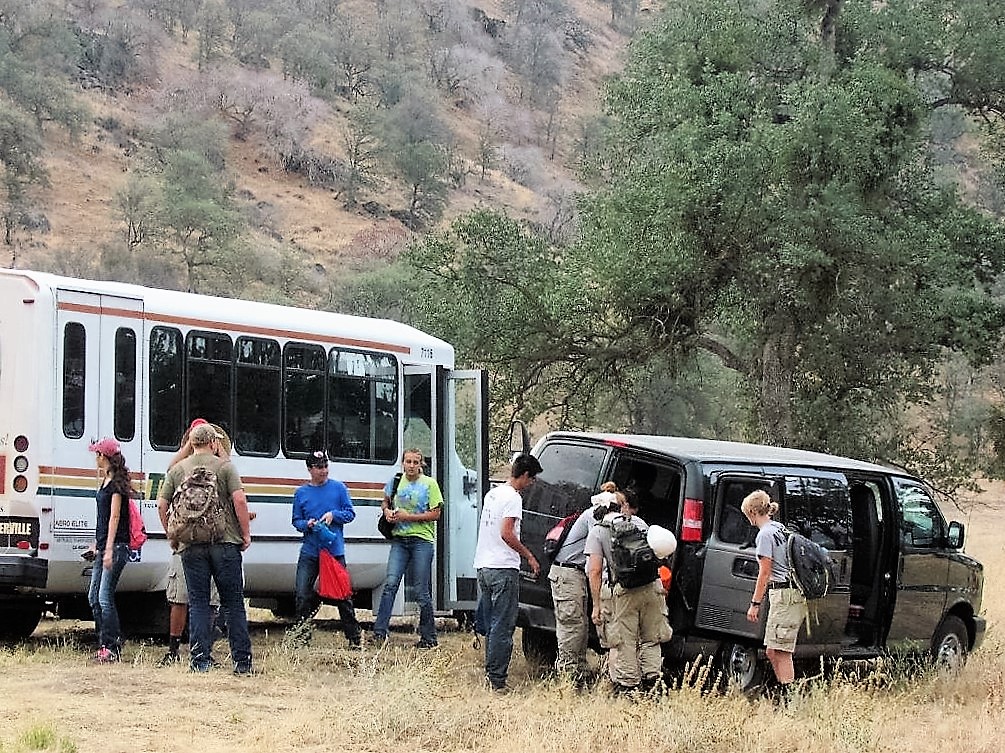
“I’m proud of [Porterville Unified’s Environmental Sciences Academy students’] accomplishments, . . . amazed at their growth, knowledge, and confidence. [They] sacrificed their weekends, free time, summer vacation . . . to come work in the . . . preserve . . . .” — Bud Darwin
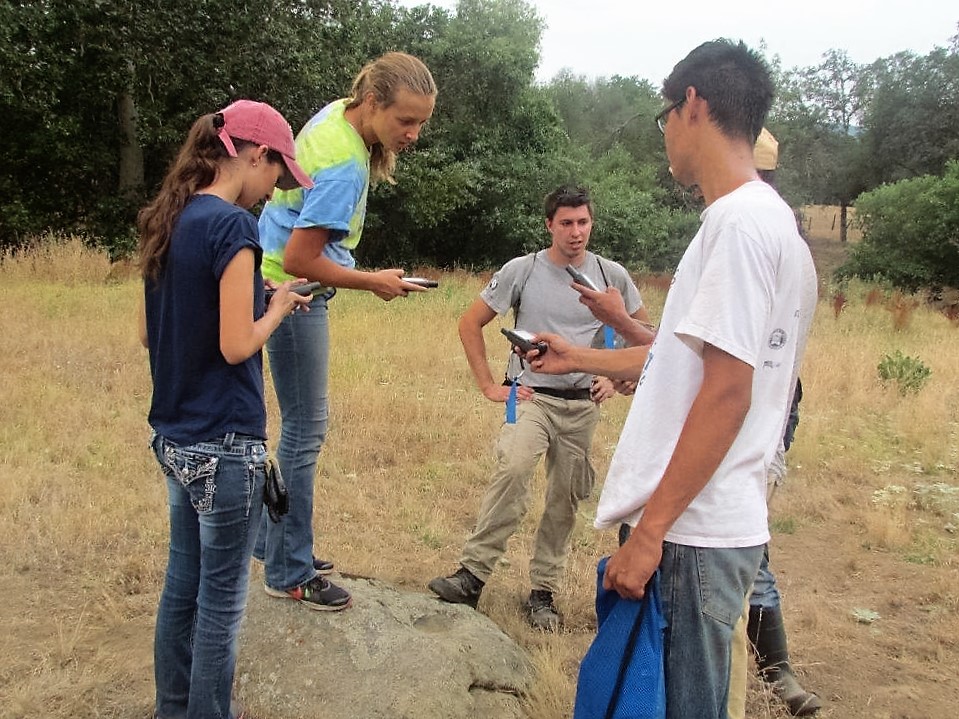
“I feel like Blue Oak Ranch is my second home because I was out here GPS mapping and trail walking all summer long. It was a great experience for me, and made me want to pursue a career in environmental science.” — Luis Galvan
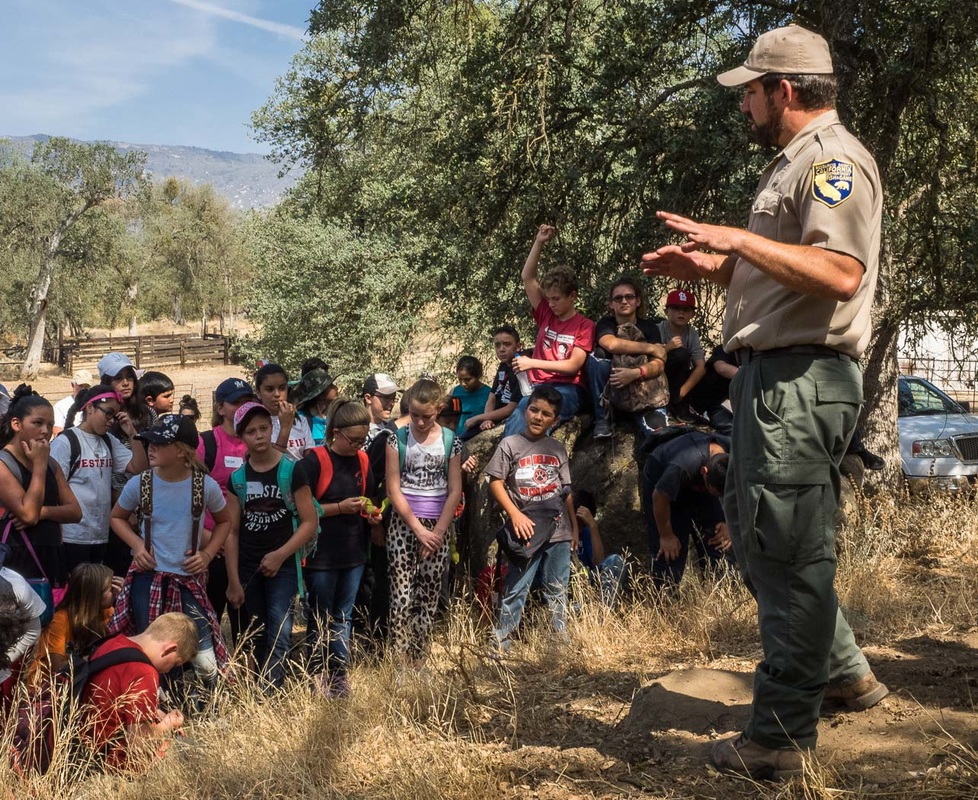
“Come forth into the light of things, let nature be your teacher.” — William Wordsworth
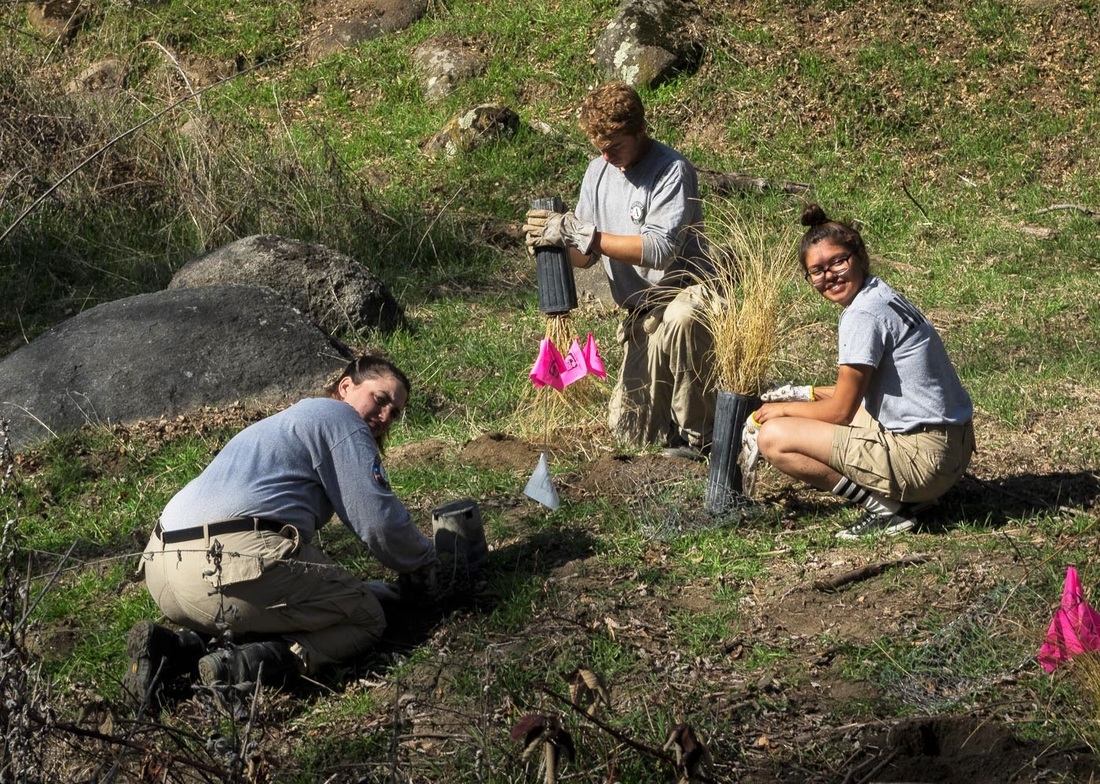
“Don’t judge each day by the harvest you reap but by the seeds that you plant.” — Robert Louis Stevenson
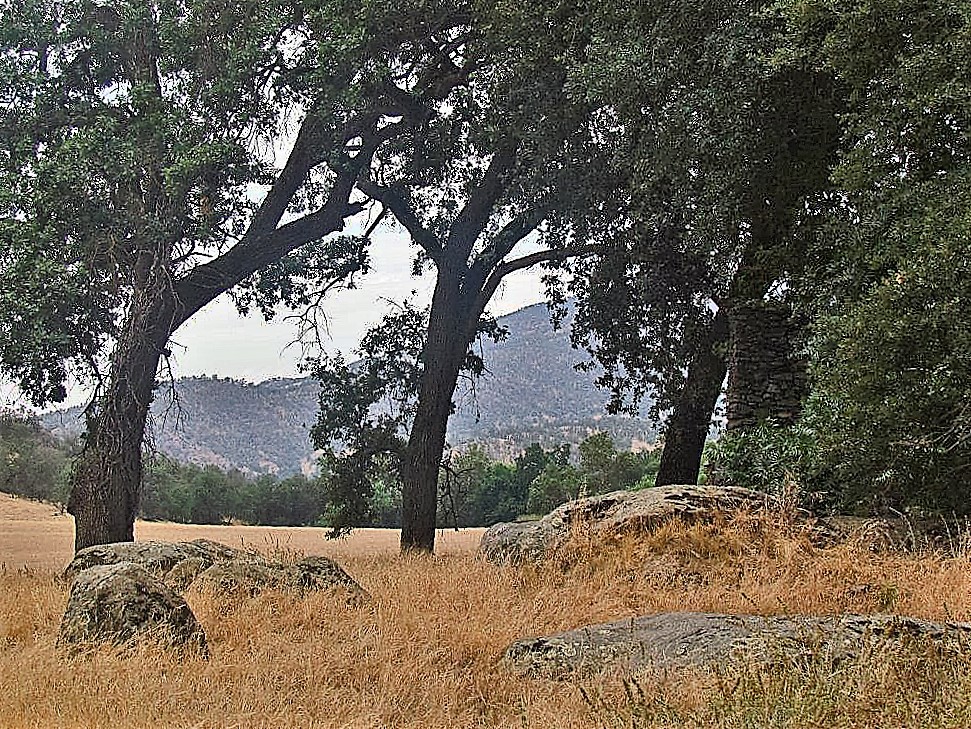
“There is new life in the soil for every man. There is healing in the trees for tired minds and for our overburdened spirits, there is strength in the hills, if only we will lift up our eyes. Remember that nature is your great restorer.” — Calvin Coolidge
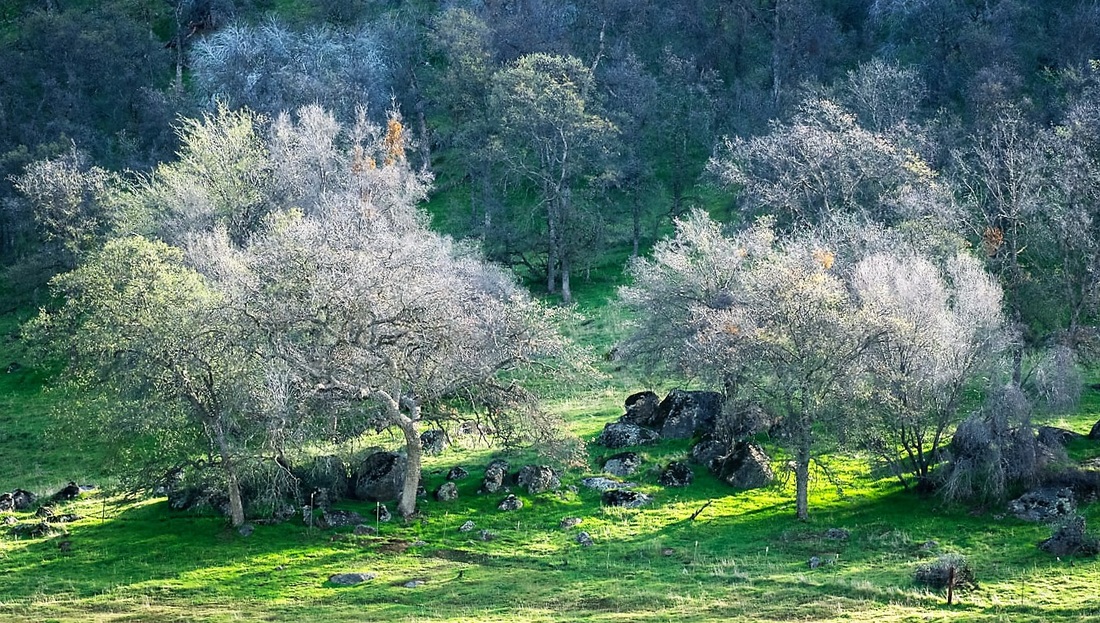
“These old Blue Oaks, charcoal gray after rain, gathered to the shady side of every draw, have seen all kinds of weather, evolved to survive and give back more than they take away.” — John Dofflemyer
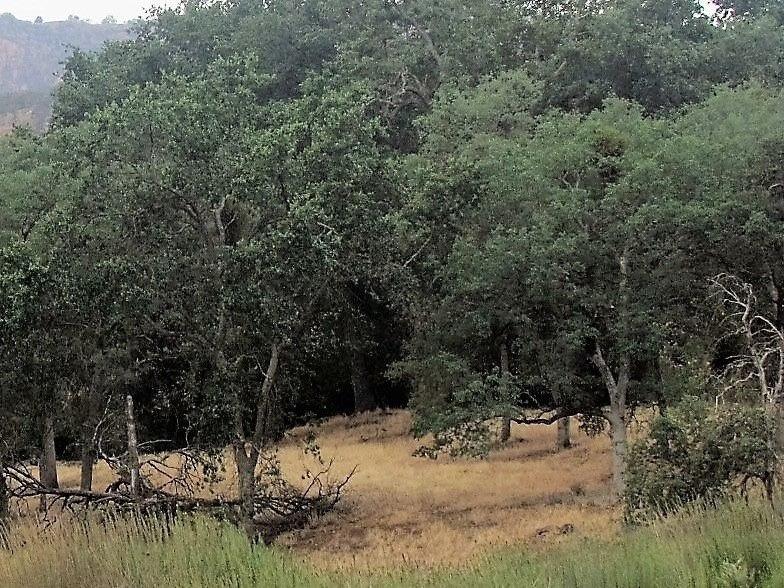
“I wandered among the oaks, sat on their roots, and observed their changing moods in different light and different seasons. Slowly, I began to hear their whispers.” — William Guion
Directions:
Address: 40865 Harris Rd., Springville, CA 93265
From Visalia, take Hwy 198 east. Turn right (south) onto Road 204/Spruce Rd. Turn left onto Hwy 65 south toward Porterville. Turn left onto County Route J28 through Strathmore to the junction with Hwy 190. Go left (east) on Hwy 190 into Springville. Turn left (north) onto J37/Balch Park Dr. Watch carefully for the right turn in about 5 miles onto Harris Rd. Proceed about 1/2 mile on Harris Rd. to the entrance to Blue Oak Ranch Preserve on your right.