Click on photo for more information.Atwell Recreation Area AKA Atwell Island Restoration Project AKA Atwell Island Land Retirement Demonstration Site
by Laurie Schwaller
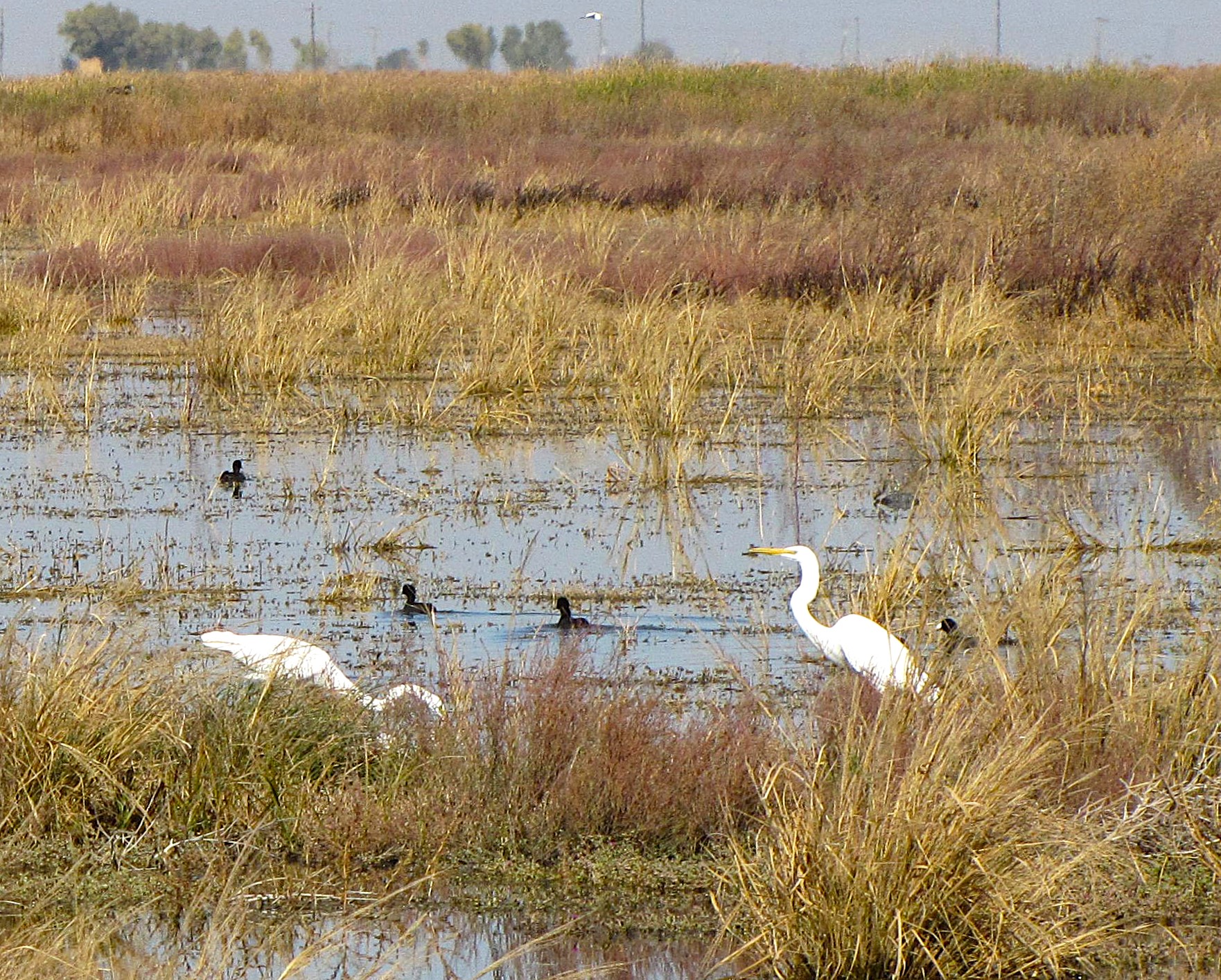
Conserving 8,000 acres in southwest Tulare County, the Atwell Recreation Area/Atwell Island Restoration Project offers opportunities for bird watching, botanizing, hiking, photography, wildlife viewing, and the enjoyment of wide open spaces and quiet solitude. Visit in the cooler, moister months (usually October to March) and try to imagine how this vast, flat valley land looked a little over a hundred years ago, when it was the site of America’s largest freshwater lake west of the Mississippi , and home for well over 12,000 years to a substantial population of indigenous people who thrived on the great variety of plant and animal life that abounded in its waters and along its shores and neighboring uplands.
It was also a vital resting, feeding, and nesting site for the millions of migratory birds traveling the Pacific Flyway every year. But this tremendously productive ecosystem was almost completely lost due to intensive irrigated agriculture’s extensive damming, diversions, and pumping of water, eradication of native plants, plowing, planting of commercial crops, and heavy chemical use. These operations on the area’s perched water table eventually prohibited proper drainage in the root zone, which led to deadly salinization, uneconomical farming, and the Central Valley Improvement Act (CVIA) of 1992.
Since then, the Bureau of Land Management and many partners, including the Bureau of Reclamation, the Fish and Wildlife Service, public interest and environmental organizations, schools, AmeriCorps crews, and lots of volunteers have been working to assess the effects of voluntary land retirement on drain water and ground water levels and its potential to decrease bioavailable selenium and other toxic compounds, along with developing and determining costs of effective restoration technologies for re-establishing native plants and animals on these sites and determining wildlife’s responses to these efforts.
Nowadays, visitors enjoy walking the trail that circles the restored wetland area, and birdwatching from its viewing platform above the water. Beyond the wetland, hundreds of acres of voluntarily-retired marginal farmland are being restored to native valley grassland and alkali sink habitats, providing living space for animals such as mountain plovers, Tipton’s kangaroo rats, San Joaquin kit foxes, burrowing owls, horned lizards, tricolored blackbirds, blunt-nosed leopard lizards, and other imperiled species. Someday, perhaps even natives such as pronghorn and Tule elk could be returned to roam the Atwell plains again. What a gift that would be for wildlife and for those exploring this vast, revitalizing ecosystem.
August, 2025
NOTE: The Project Team will be conducting research for a full article as volunteer time allows. Contact us if you’d like to help research, write about, and/or illustrate this Treasure.
Latitude/longitude: 35.84506, -119.4975
From Visalia, take Hwy 198 west to Hwy 99 south to Earlimart. There, take exit #65 west (right) onto County Road J22/Avenue 56 (which becomes Avenue 54) to Alpaugh (about 12 miles west of Earlimart).
In Alpaugh, turn left (south) on Road 38, which will soon jog east and then continue south as Road 40, about 2 miles to the signs for Atwell Island. Continue straight on the graveled road and follow signs about 1 mile to the wildlife viewing platform in the Ton Tache Wetlands.
Nearby Treasures: Colonel Allensworth State Historic Park, Pixley National Wildlife Refuge, Allensworth Ecological Reserve, Alpaugh Park