Click on photos for more information.
The Story of Grant Grove
by William Tweed
Every big story starts somewhere, and it is up in the Sierra at General Grant Grove that we find the first example of Tulare County citizens taking action to protect natural resources they care about. The saga of how the Grant Grove came to be protected for public use more than 140 years ago is chapter one in a story that is still progressing today.
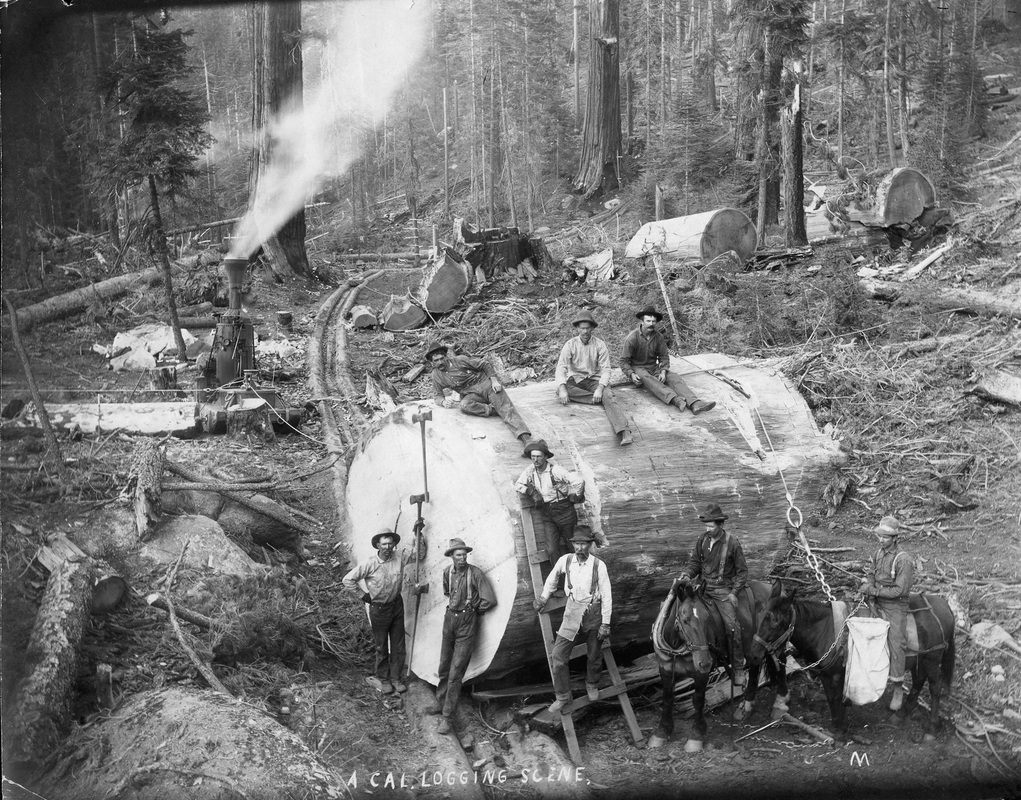
By the 1860s, cattlemen, miners, and mountaineers had explored enough of the Sierra Nevada to know that the southern third of the range – located largely in Tulare County – contained numerous stands of giant sequoia trees. Of all these groves, perhaps the easiest to access were the stands located on the divide between the Kaweah and Kings rivers. Wagon roads were pushed into these woods in the middle 1860s, when logging first began in the region, and those primitive routes soon also provided access for summer visitors seeking to escape the extreme summer heat of the San Joaquin Valley.
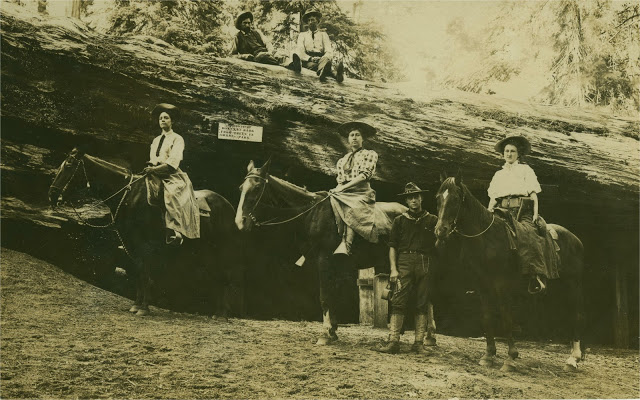
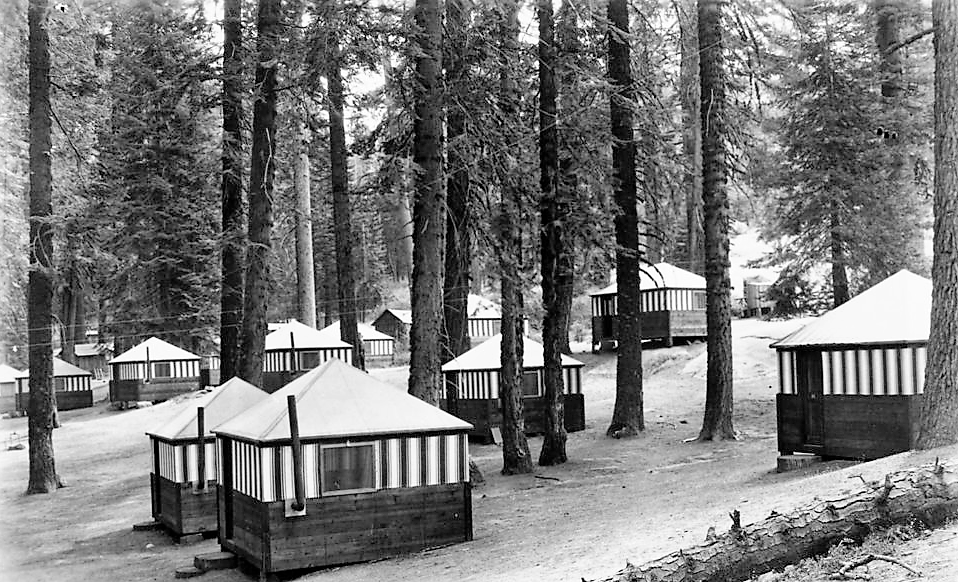
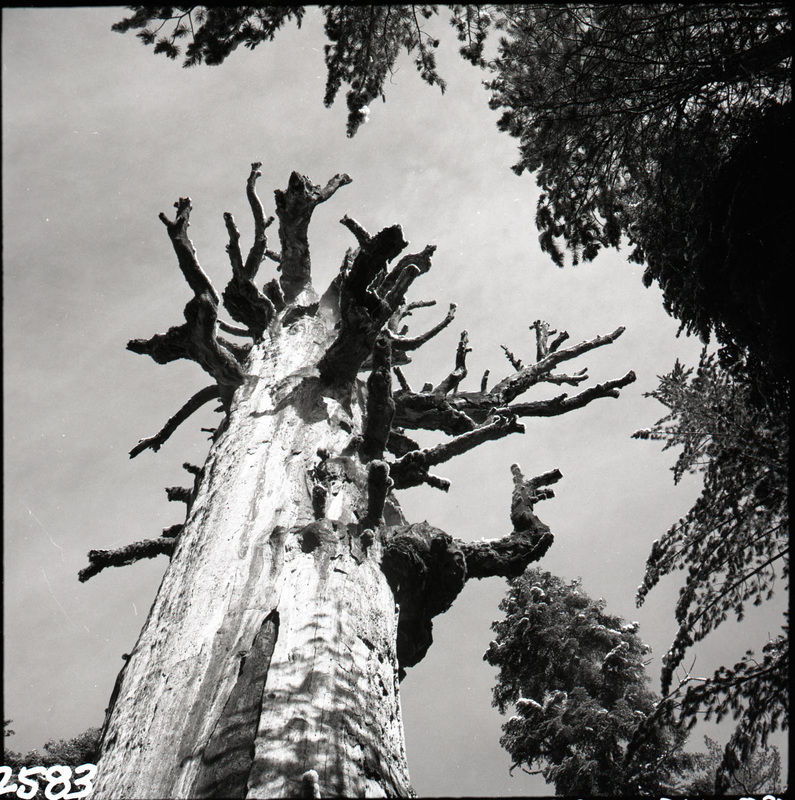
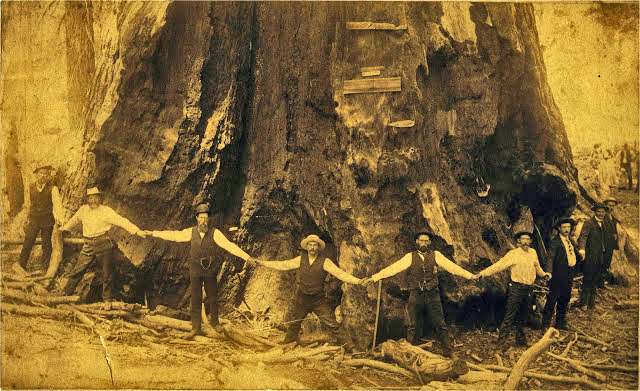
Tulare County residents so enjoyed camping in the cool green forests around the General Grant Tree that they began to develop protective feelings about their summer camping grounds. In 1870, when Mariposa County resident William Snediker came to the area looking for a large sequoia to cut down and remove for display purposes, local residents reacted negatively. Editor R. H. Shearer of the Tulare Weekly Times (an ancestor of the modern Visalia Times-Delta) came out against the project and talked Edward Willett, registrar of the federal General Land Office branch in Visalia, into taking action to stop Snediker.
The Mariposa County man had already selected a tree and begun preparing it for felling. When ordered to stop, Snediker walked away from the tree, which had already been damaged sufficiently to cause it ultimately to die. The towering remains of the dead tree still stand today, more than 140 years after it was first attacked. The snag is known as the Dead Giant.
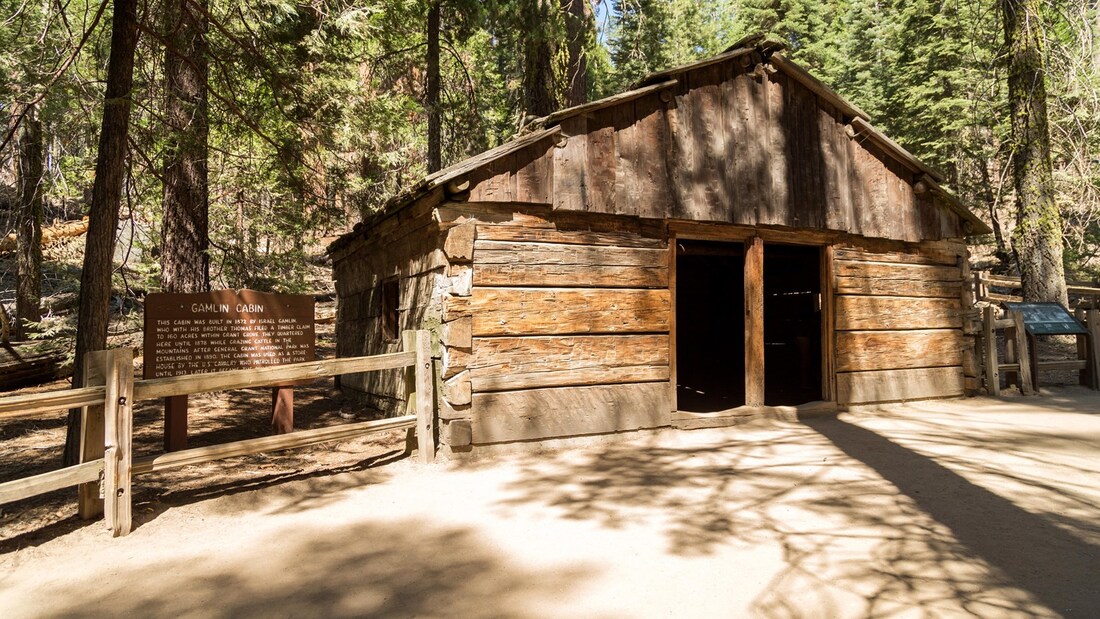
Though Snedicker had been stopped, threats to the grove continued to multiply. In 1872, brothers Thomas and Israel Gamlin built a log cabin near the General Grant Tree and filed papers to purchase the surrounding land. Government officials apparently talked them out of the claim on the grounds that the area should be preserved for public use. (The Gamlin Cabin still stands today.)
Worried that they would lose their summer camping grounds, Visalians began to organize to give the area better protection. Several newspaper editorials about the value of the sequoias appeared, and in January 1880, the General Land Office withdrew from sale four square miles of land in and around the General Grant Tree. A resulting field inspection disclosed that the best Big Trees were not quite where they had been thought to be, however, and on June 1st 1880, the withdrawal was shifted to better protect the trees. The boundary separating Tulare and Fresno counties now split the reserved tract in half.
The withdrawal from sale of these 2,560 acres marked the first formal step in the preservation of what would ultimately become modern Kings Canyon National Park. For the next ten years, the four square miles around the General Grant Grove remained in government hands while nearly all the surrounding lands were sold to private parties. Ultimately, most of the land that was sold would be logged.
In 1881, California Senator John Miller proposed a bill that would have laid a large national park over the southern Sierra, including the Grant Grove area, but the bill had little support and died. It was not until 1890 that the withdrawn lands around the General Grant Tree received permanent protection. In the summer of that year, Visalians George Stewart, R. E. Hyde, Frank Walker, Tipton Lindsay, and Daniel K. Zumwalt began agitating for the creation of a national park in the Kaweah River watershed to protect giant sequoias. Santa Barbara congressman William Vandever (who also represented Tulare County) submitted a bill to do just that. Vandever’s Sequoia National Park bill passed and became law on September 25, 1890.
One week later, a second bill made it through the Congress. This one had as its primary purpose the creation of Yosemite National Park, but it also contained a provision to give permanent national park status to the four square miles surrounding the General Grant Tree. On October 1, 1890, this relatively small area became General Grant National Park, the nation’s fourth such reservation.
General Grant National Park endured under that title for the next half century before it was merged in 1940 with the new and much larger Kings Canyon National Park. Since that time, the area has been known formally as the General Grant Grove Section of Kings Canyon National Park.
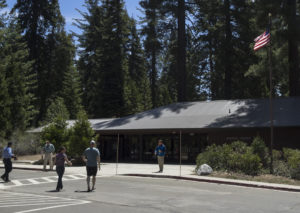
Today, this island of virgin forest, together with its visitor center, campgrounds, and lodge, is one of the most-visited destinations in the southern Sierra Nevada. Numerous local residents still enjoy visiting this magnificent green forest that Tulare County residents worked so long ago to protect from destruction.
June, 2014
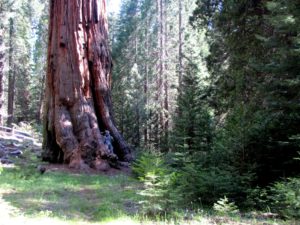
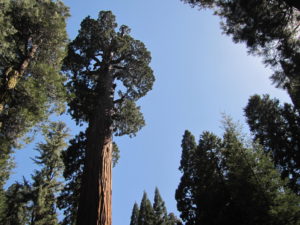
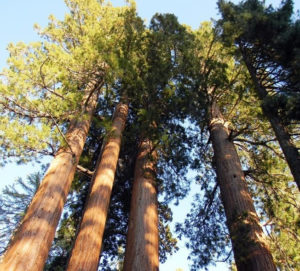
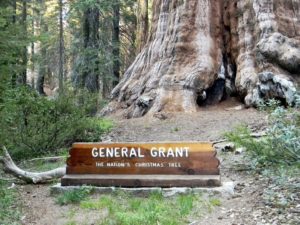
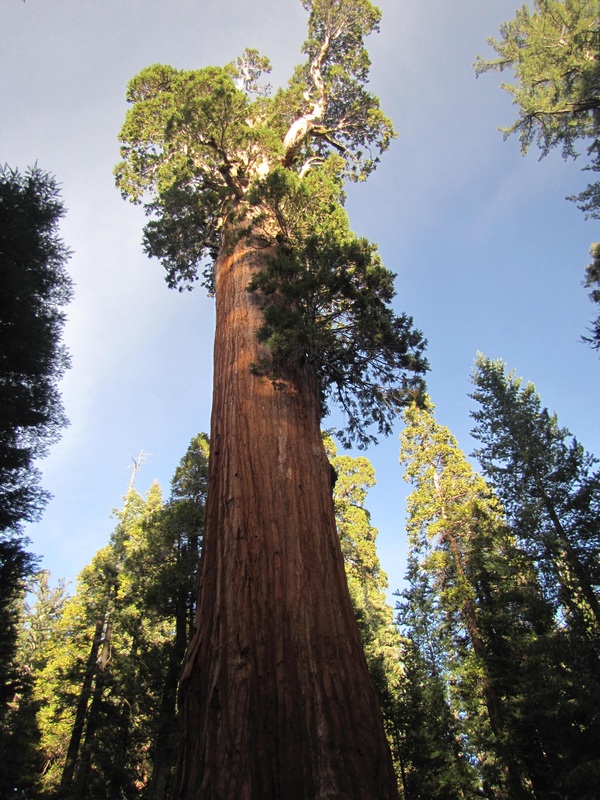
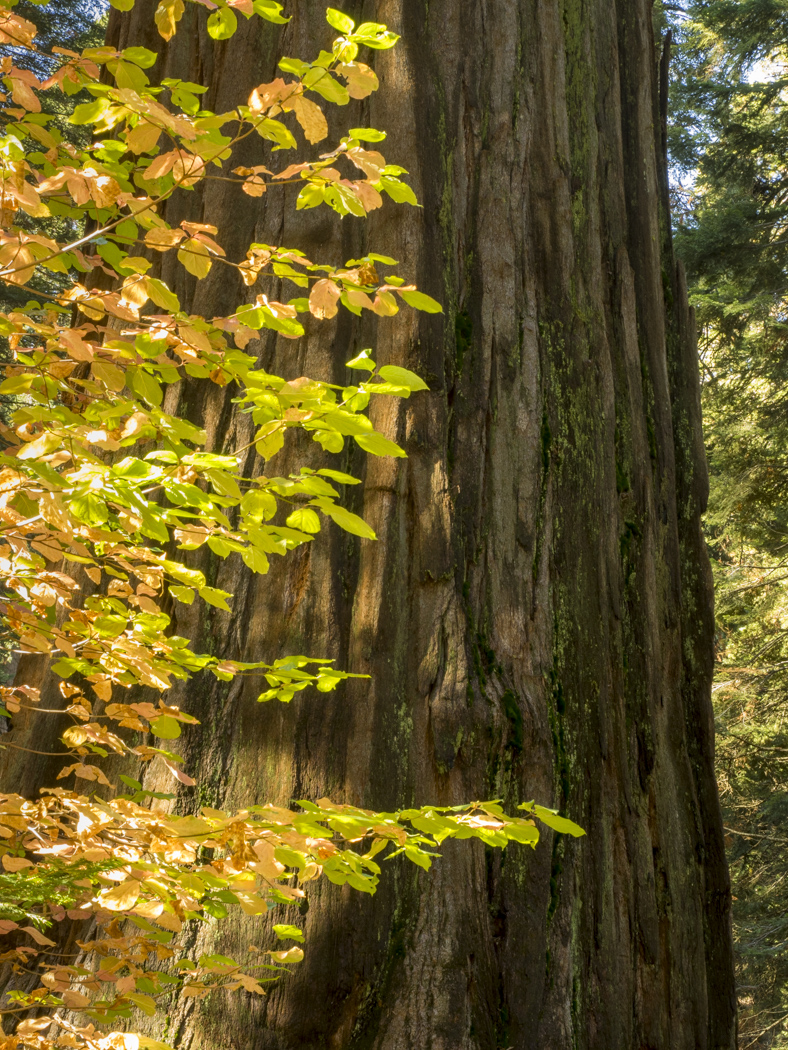
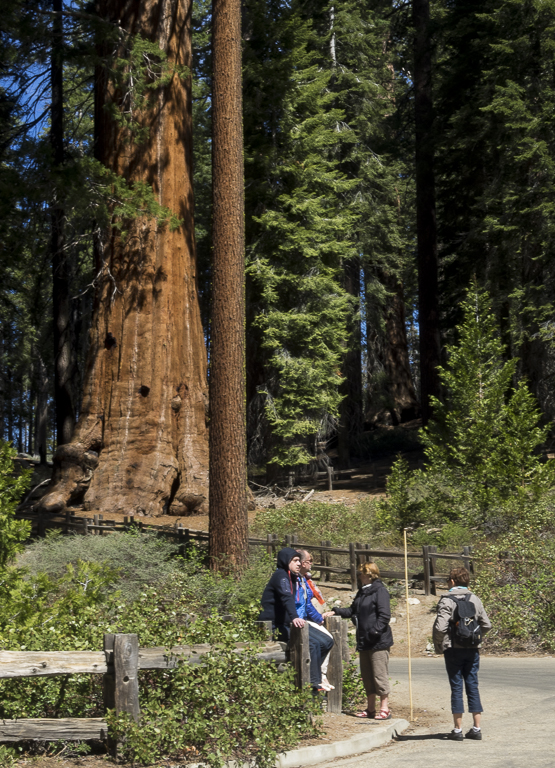
About 1650 years ago, as the Roman Empire declined and fell, the giant sequoia that is now the world’s third-largest tree began to rise toward the sky. Known since 1857 as the General Grant, this splendid tree may yet be only half way through its life span. What kind of world will it be living in 1650 years from now?
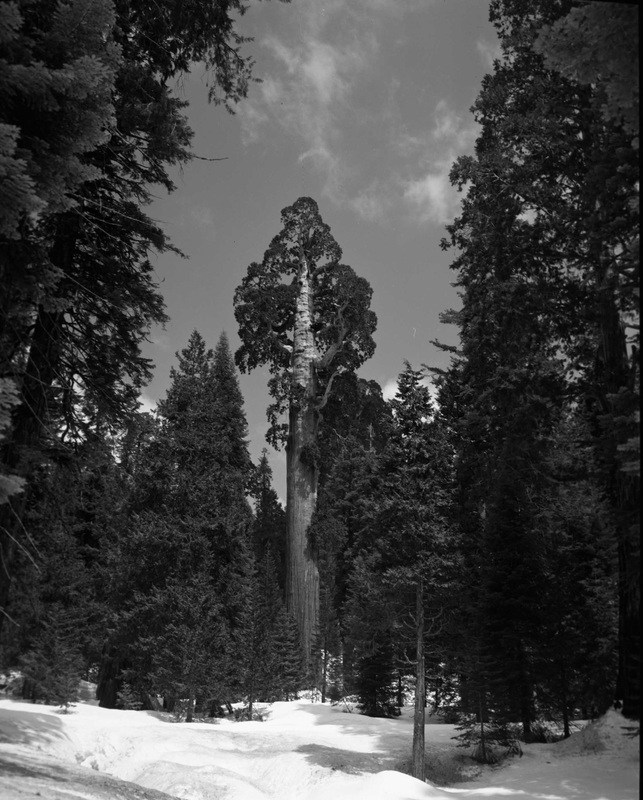
1862 — Joseph Hardin Thomas, Visalia resident, while operating a lumber mill at Shingle Flat (now the site of Sequoia Lake) “discovers” this majestic sequoia (known by then for hundreds of years to the Yokuts and Monache Indians visiting hunting and trading camps nearby).
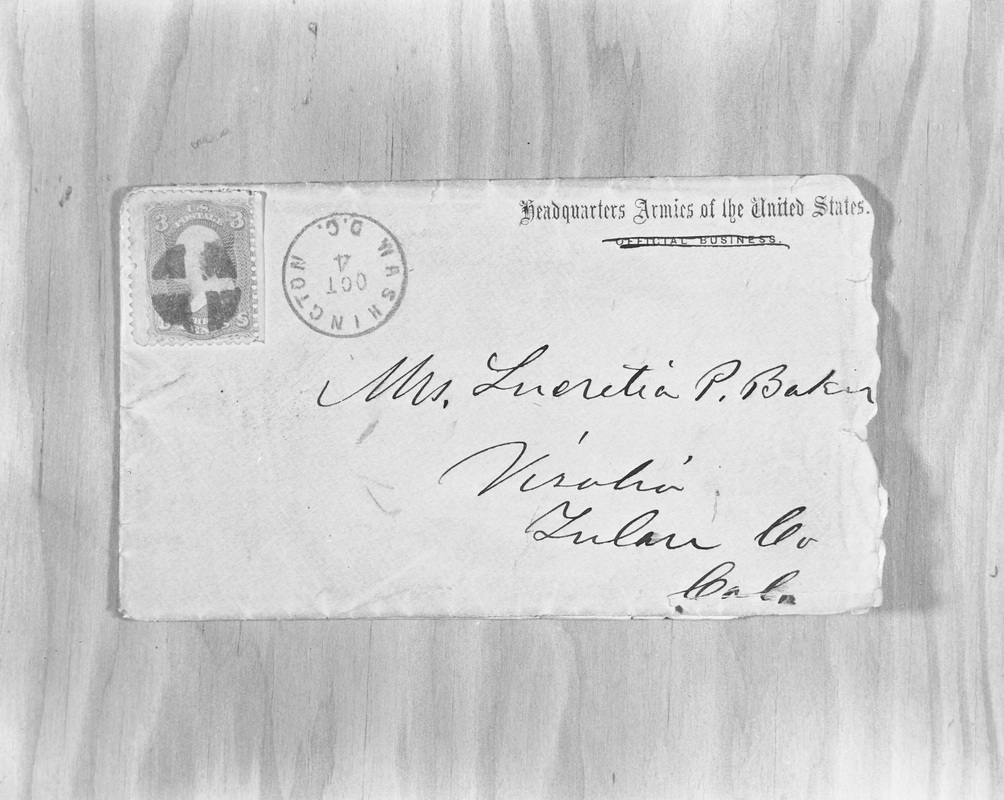
1867 — Mrs. Lucretia P. Baker, member of a pioneer Porterville family and married to a Visalia merchant, camps with a party in the “Visalia Big Tree Grove” in August; she measures a huge sequoia and names it General Grant to honor Civil War General Ulysses S. Grant (18th President of the U.S. as of 1869).
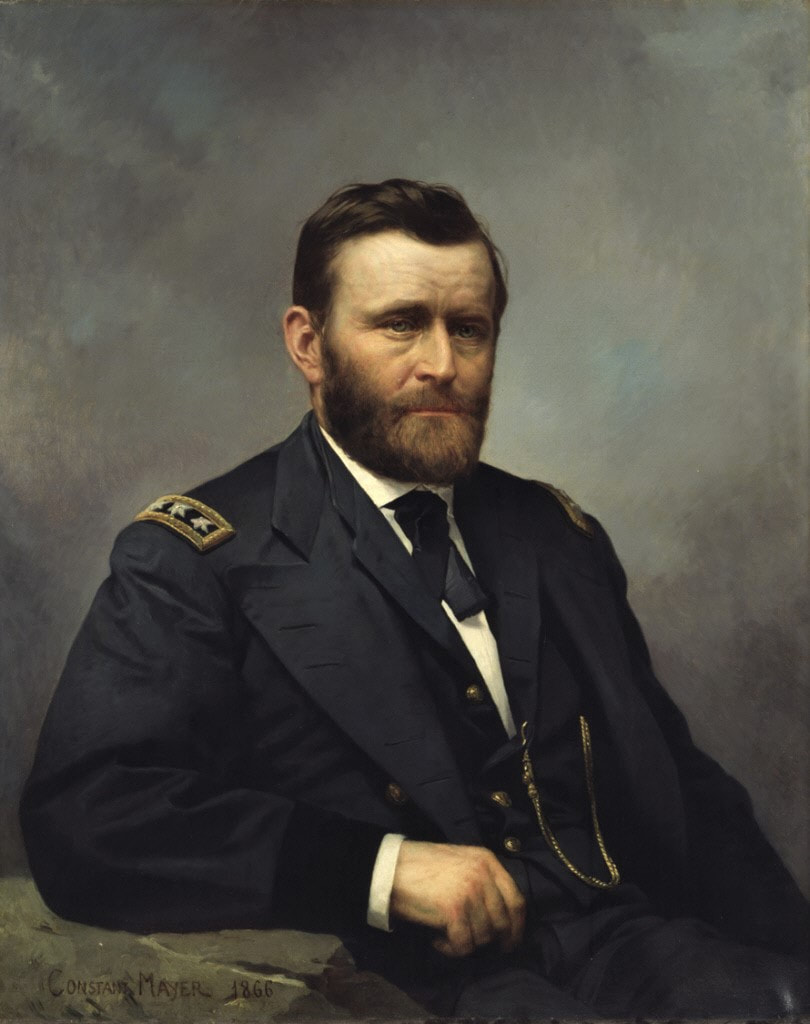
Mrs. Baker writes to General Grant in Washington, D.C.; he replies October 4, 1867, thanking her for the “box containing branches etc. from the largest tree in California, and no doubt in the world” and for her “kind expressions of regard.”
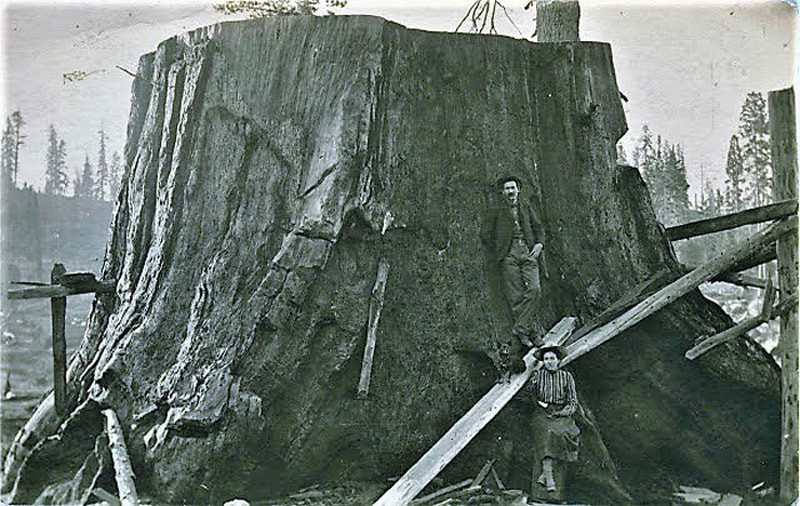
1873 — John Muir stops at Thomas’s mill, likely visits the Grant Tree, returns in 1875 and 1887; horrified by the ever- accelerating destruction of the sequoias, he works and writes tirelessly to rally support for their protection.
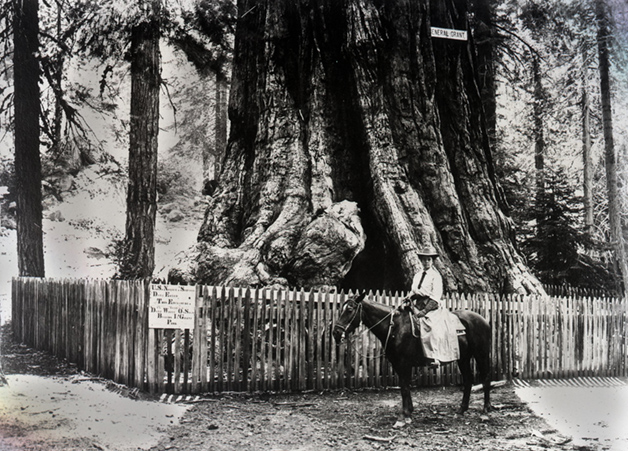
1890 — U.S. Congress creates General Grant National Park, the nation’s fourth, comprising four square miles.
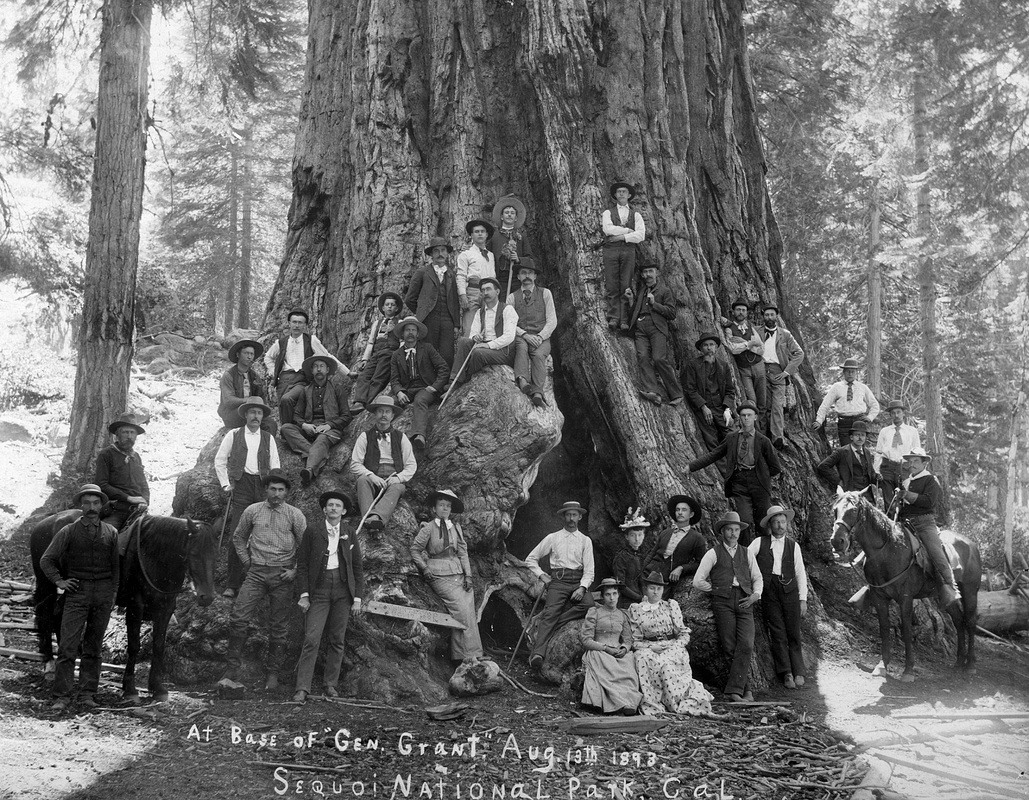
1907 — Visitation to General Grant exceeds 1,000 for the first time. The tremendous tree, 267 feet tall, then thought to be 3,000 to 5,000 years old, is touted as the biggest tree and oldest living thing on earth.
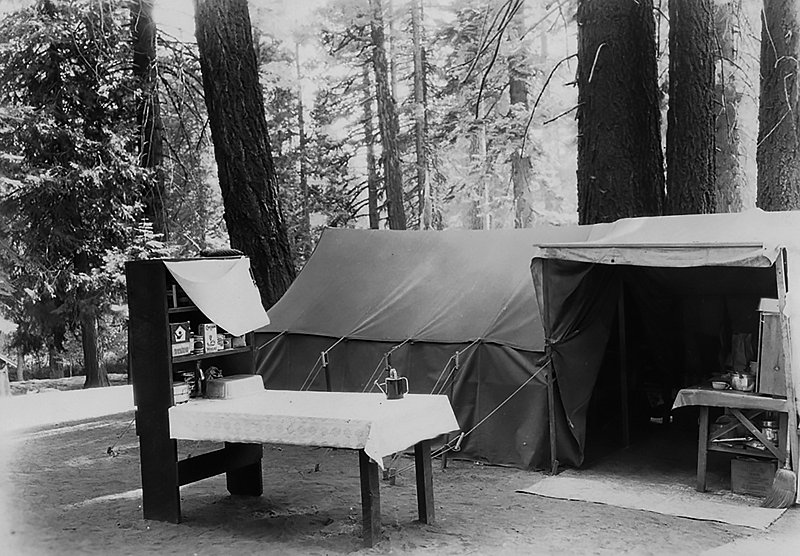
1922 — Over 30,000 visit.
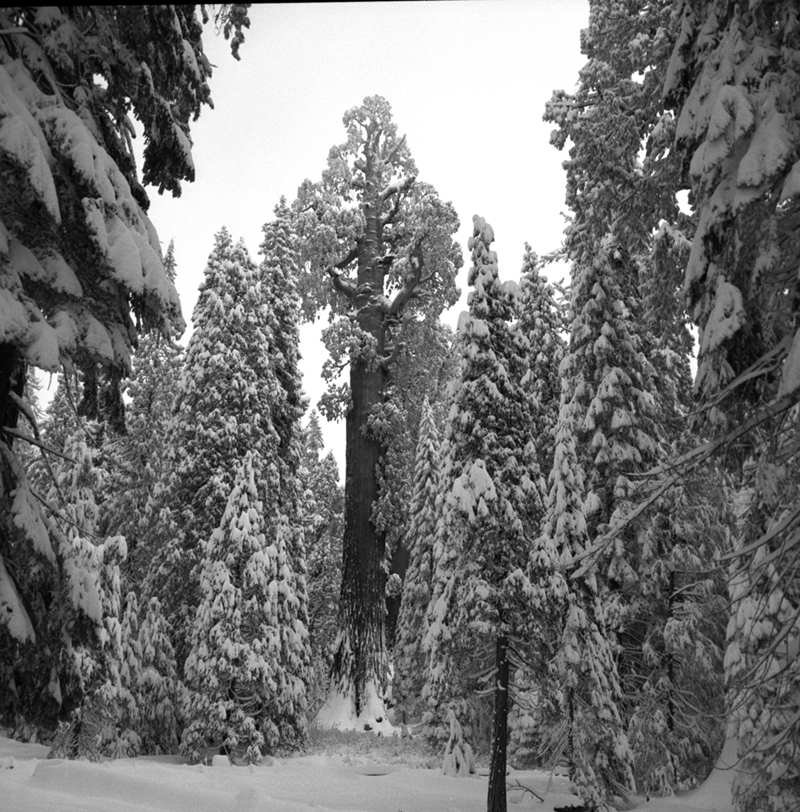
1924 — A small girl inspires R.J. Senior, Sanger Chamber of Commerce president. While admiring the General Grant, he hears her say, “What a lovely Christmas tree that would be.”
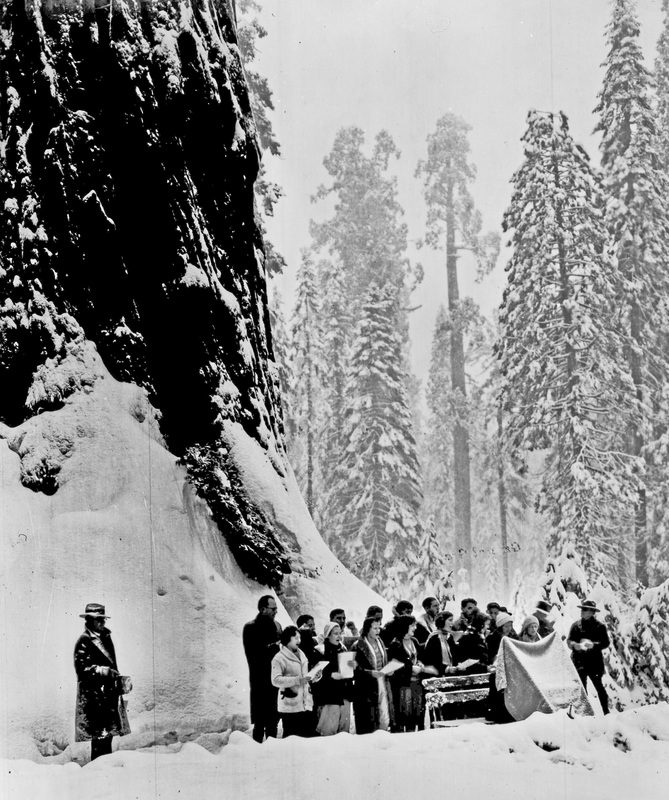
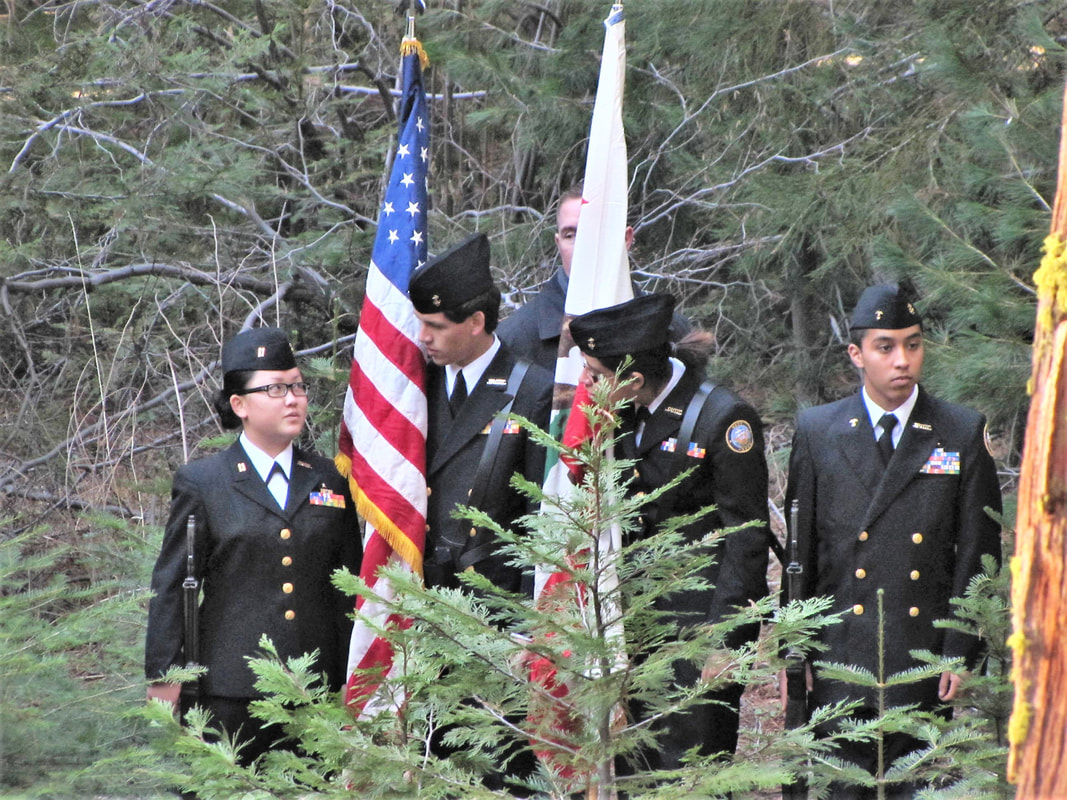
1925 — Along with Charles Lee, Sanger Chamber Secretary, Senior starts the tradition of holiday services in the snow beside the Grant Tree.
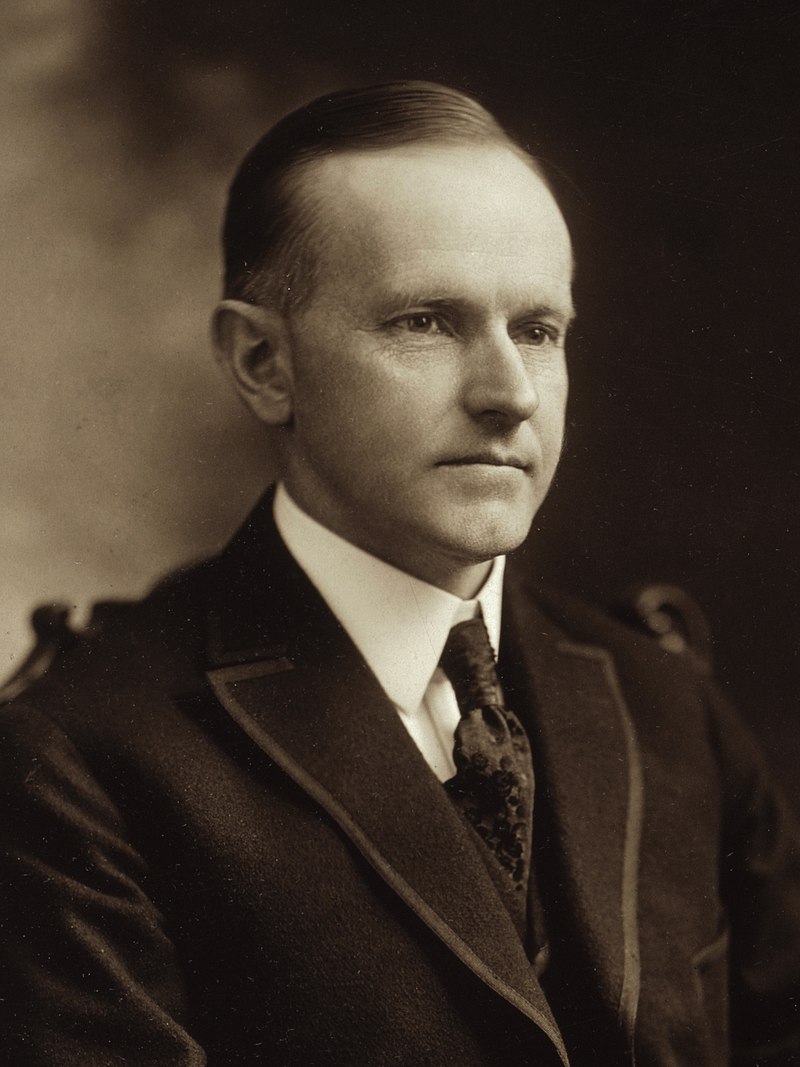
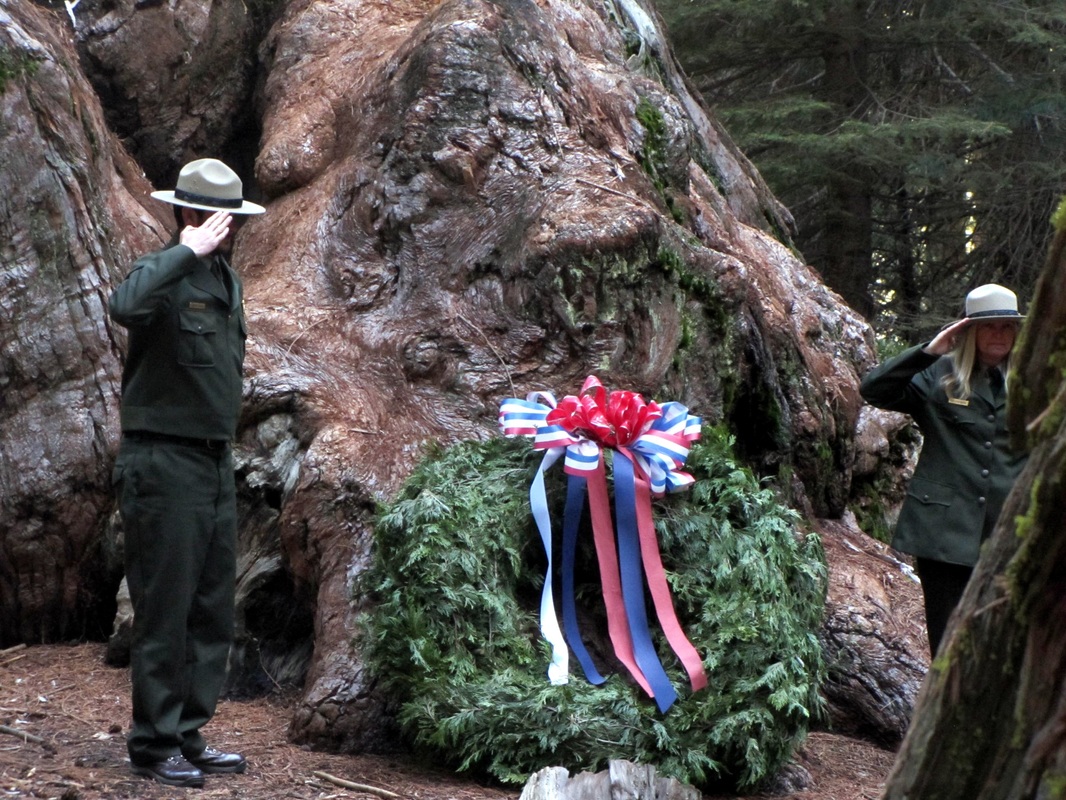
1926 — Responding to a campaign led by Lee, President Coolidge officially designates the General Grant as the Nation’s Christmas Tree (April 28). Ever since, people have gathered beneath this giant sequoia in December “to stimulate the spirit of ‘Peace on Earth, Good Will to All Men'” and to pay tribute to this wonder of nature, with members of the National Park Service placing a big wreath at the foot of the great tree. These services (re-enacted simultaneously at Fresno radio station KMJ) were broadcast over nation-wide hookups, and Presidential messages constituted part of the program.
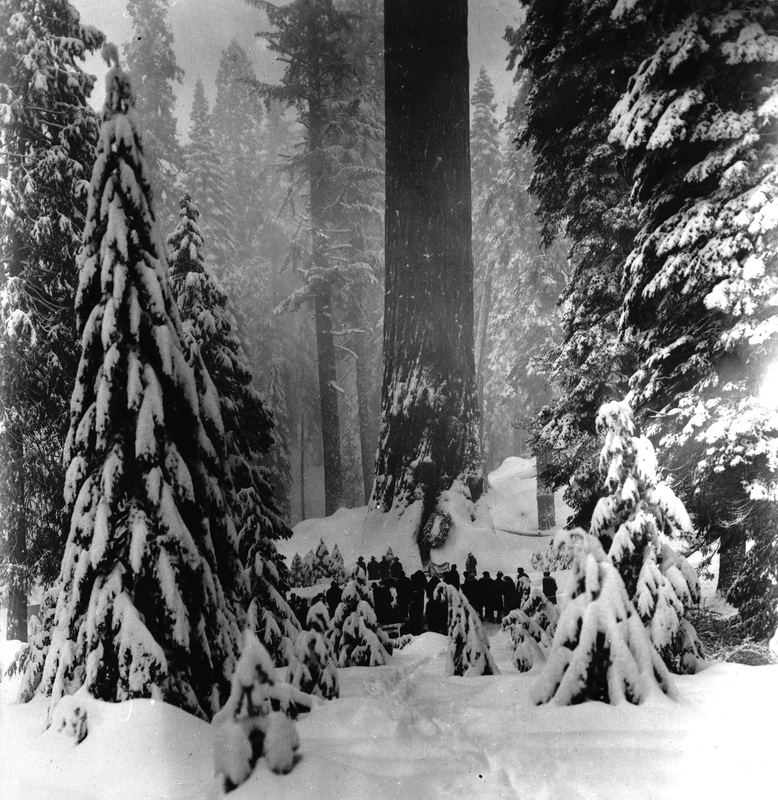
1936 — Internationally-renowned American composer Charles Wakefield Cadman, visiting his friend Grace Osborn Wharton at her Grant Grove cabin, composes music on his portable organ at the base of the inspiring Grant Tree. He writes “Star of the East, A Christmas Song” for the holiday celebration; Wharton writes the words.
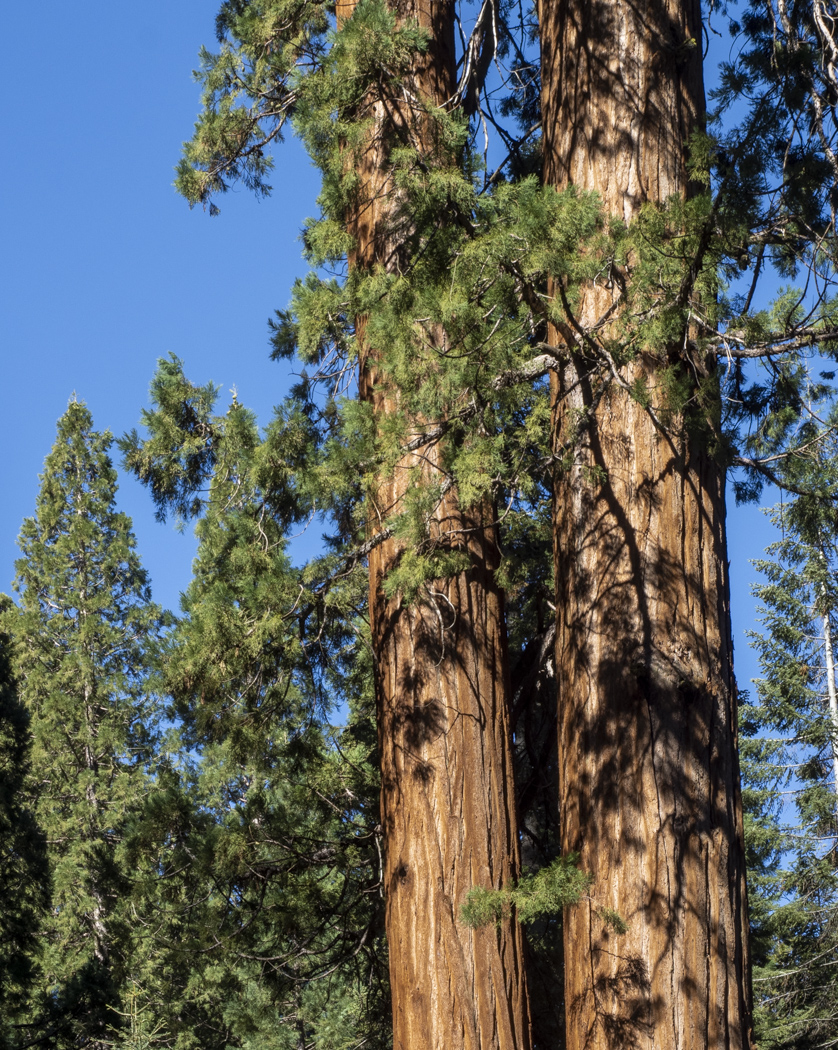
1937 — The United Press announces that “The designation of the General Grant Tree as the nation’s Christmas Tree has added significance in the fact that a survey by the American Forestry Association revealed that the sequoias were overwhelmingly the most popular tree in the United States and the sequoia gigantea thereafter was honored as the official tree of the nation.”
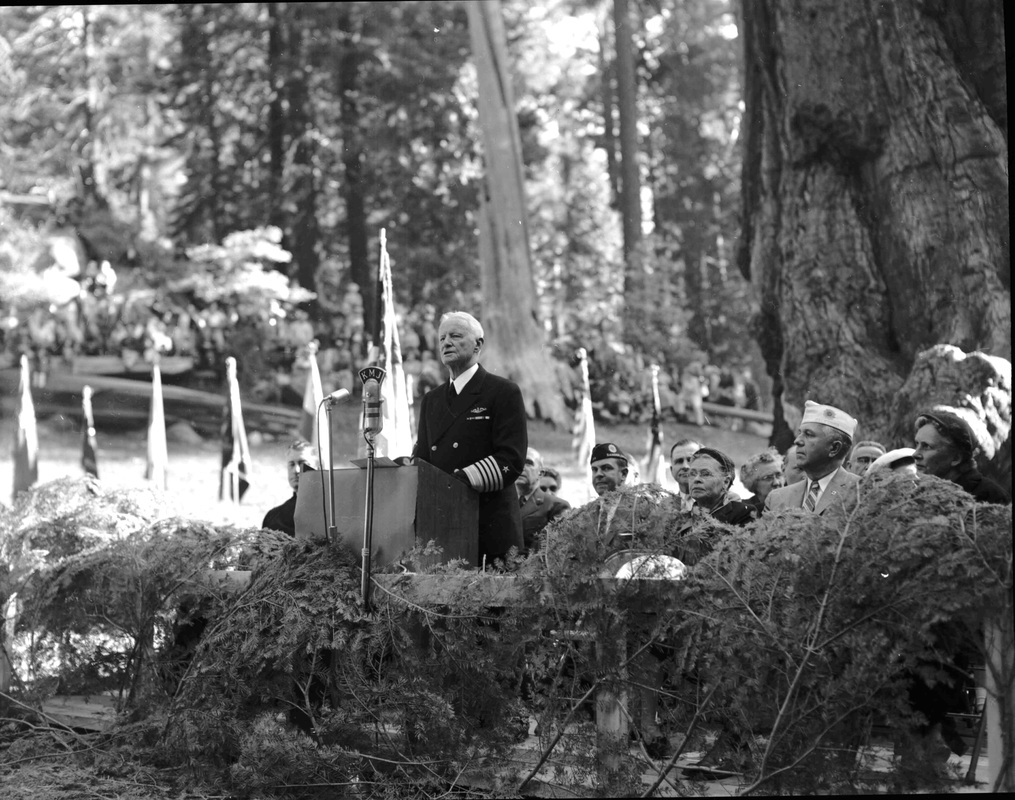
1956 — By joint resolution of Congress (March 29), President Eisenhower proclaims the Grant Tree a national shrine (our only living shrine) to those who have died in service to our country. Fleet Admiral Chester Nimitz presides beside the great tree at its dedication ceremony (November 11). “Today this shrine takes its place in equal stature with that other great shrine in Arlington Cemetery — the Tomb of the Unknown Soldier.”
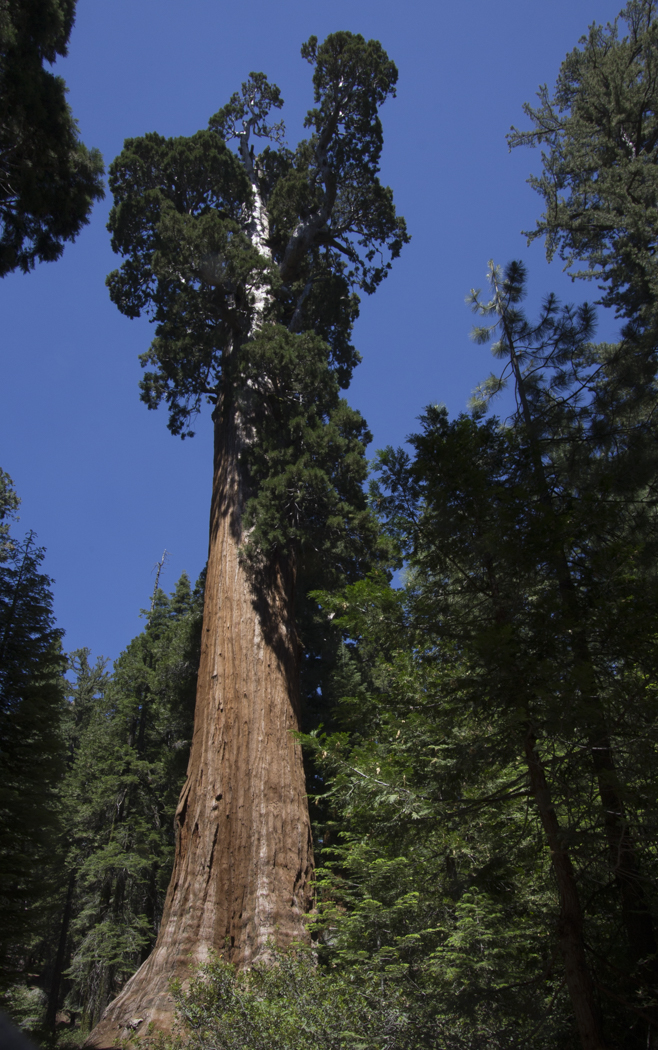
1990 — Grant Grove celebrates the centennial of General Grant National Park, along with Sequoia National Park (in September), while Kings Canyon National Park celebrates its Golden Anniversary (March 4).
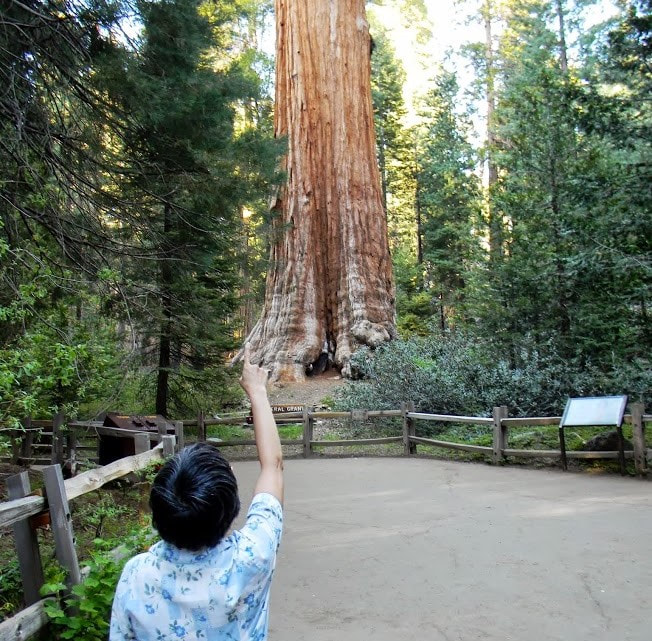
An icon for the ages, the General Grant is truly an exceptional tree. It now stands just over the Tulare County line, but its recorded history is so entwined with Tulare Counteans that we’ve made an exception to include it as one of our Tulare County Treasures.
Directions:
Latitude/Longitude: N36.74661 and W-118.97594
Start and end at Visalia, CA. A loop trip is a good way to travel Generals Highway through the park to visit Grant Grove.
From Visalia head east on Hwy 198, through Three Rivers to Sequoia National Park Ash Mountain Entrance Station (fee), where the road becomes the Generals Highway. Drive into and through the park on Generals Highway north to Grant Grove and Kings Canyon National Park.
After visiting Grant Grove, you may also wish to drive on to Cedar Grove in Kings Canyon National Park.
Return to Visalia by leaving the park via Hwy 180 west and then, in about 23 miles, turning left onto Hwy 63 south to Visalia.
(Note: Hwy 245 is a scenic alternative, but it is narrow and very winding, not recommended for large RVs and trailers.)
If you don’t want to drive the loop, just take Hwy 63 north from Visalia to Hwy 180 east to Grant Grove and return via the same roads.