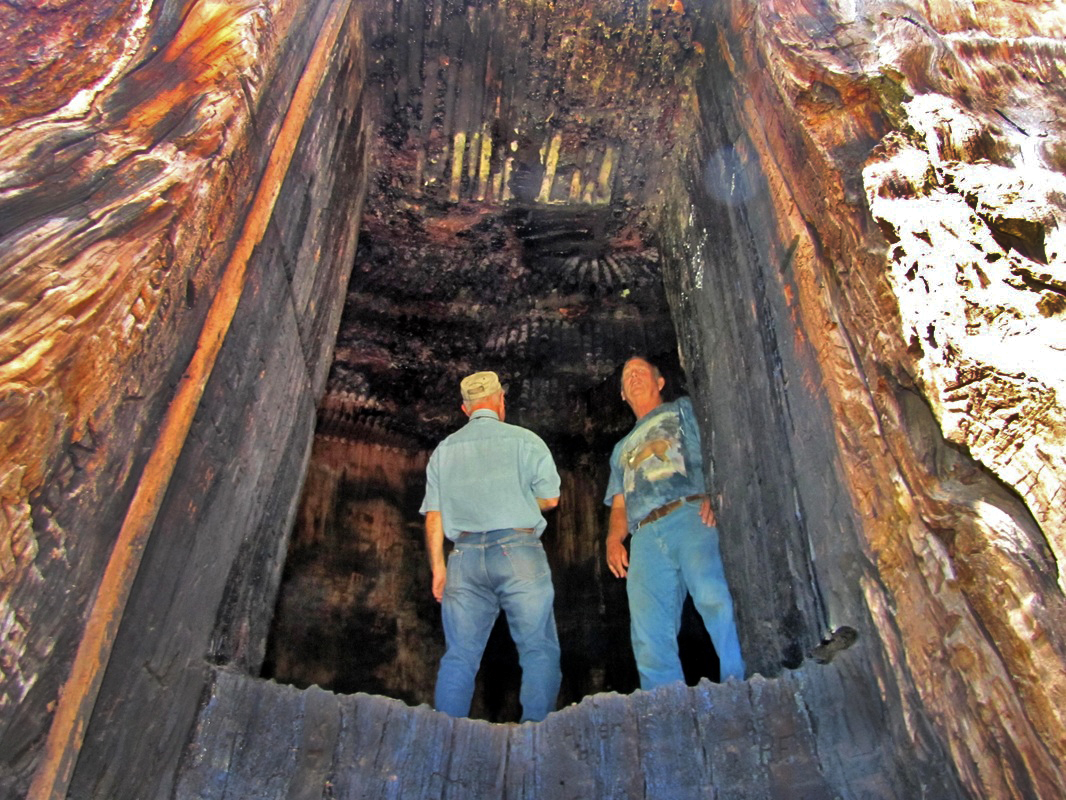
Click on photos for more information.
The Story of the Mountain Home Demonstration State Forest
by Louise Jackson
Dave Dulitz stands beneath the towering arms of a giant sequoia and spreads his own arms in a wide arc. A 2,000 to 3,000 year-old grove of trees surrounds him. “Look around you,” he says. “Everything you see except these redwoods has been logged two or three times and you can’t tell it.”
We are deep in Mountain Home Demonstration State Forest, located in the approximate center of Tulare County. The lush 4,800-acre public forest contains sequoia groves that, in 1875, John Muir called the very finest in the Sierra.
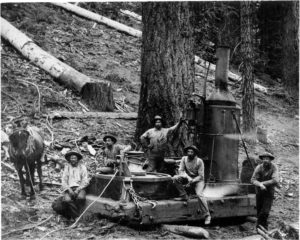
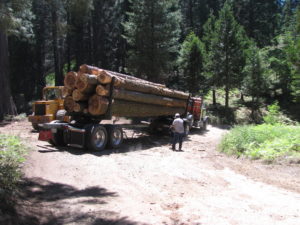
When the first settlers arrived in the area in the early 1860s they grazed sheep, cattle, and hogs in the meadows and some set up sawmills and shingle mills. Redwood lumber was a valuable sales commodity at the time and the industry quickly grew.
So did recreation. During the forest’s early settlement, several Central Valley grain farmers built small summer cabins in the area and other Valley residents soon followed. For years, six hundred to seven hundred visitors arrived each summer to spend extended vacations. In 1886, Andrew and Sarah Doty created the small resort community of Mountain Home and even more people came.
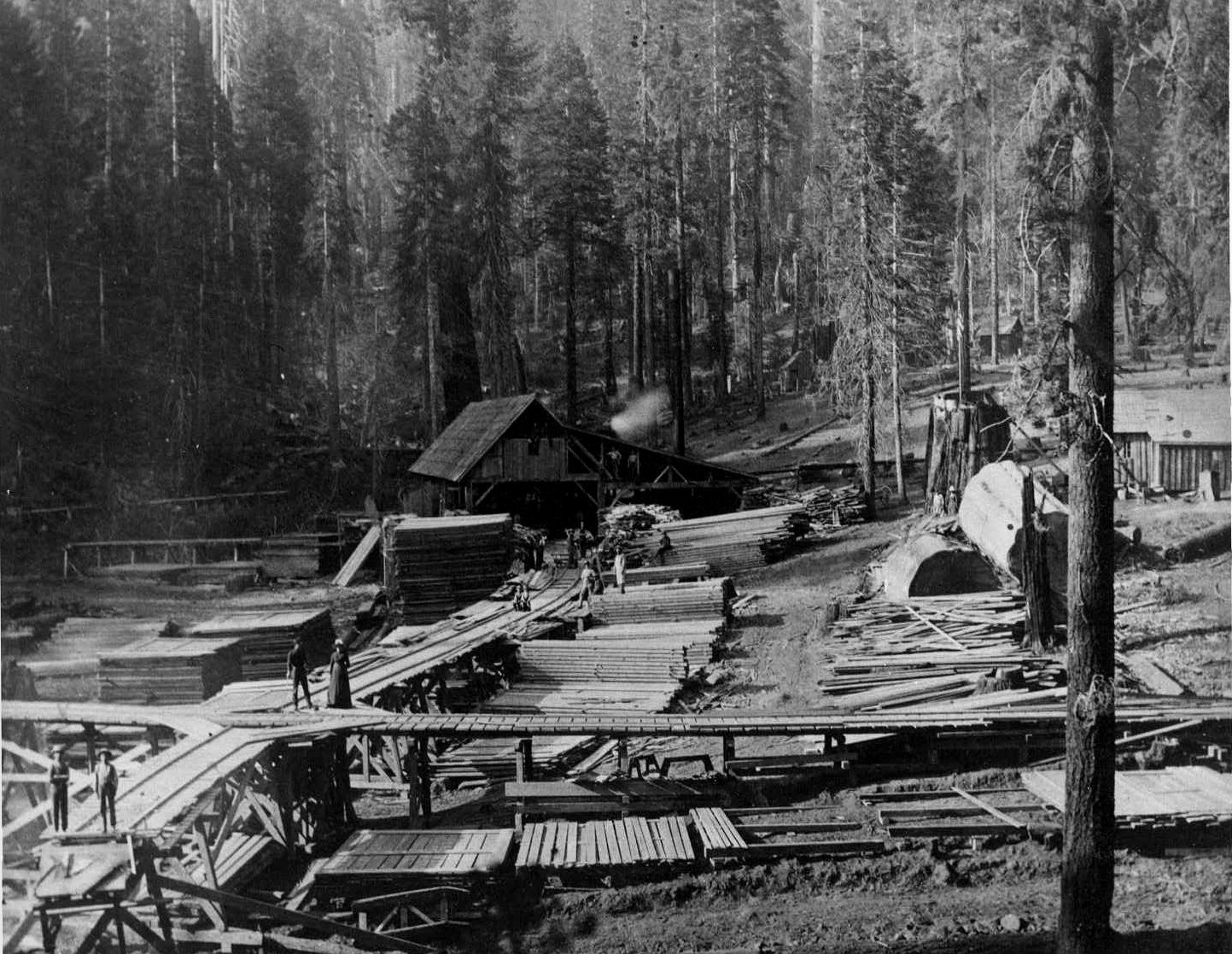
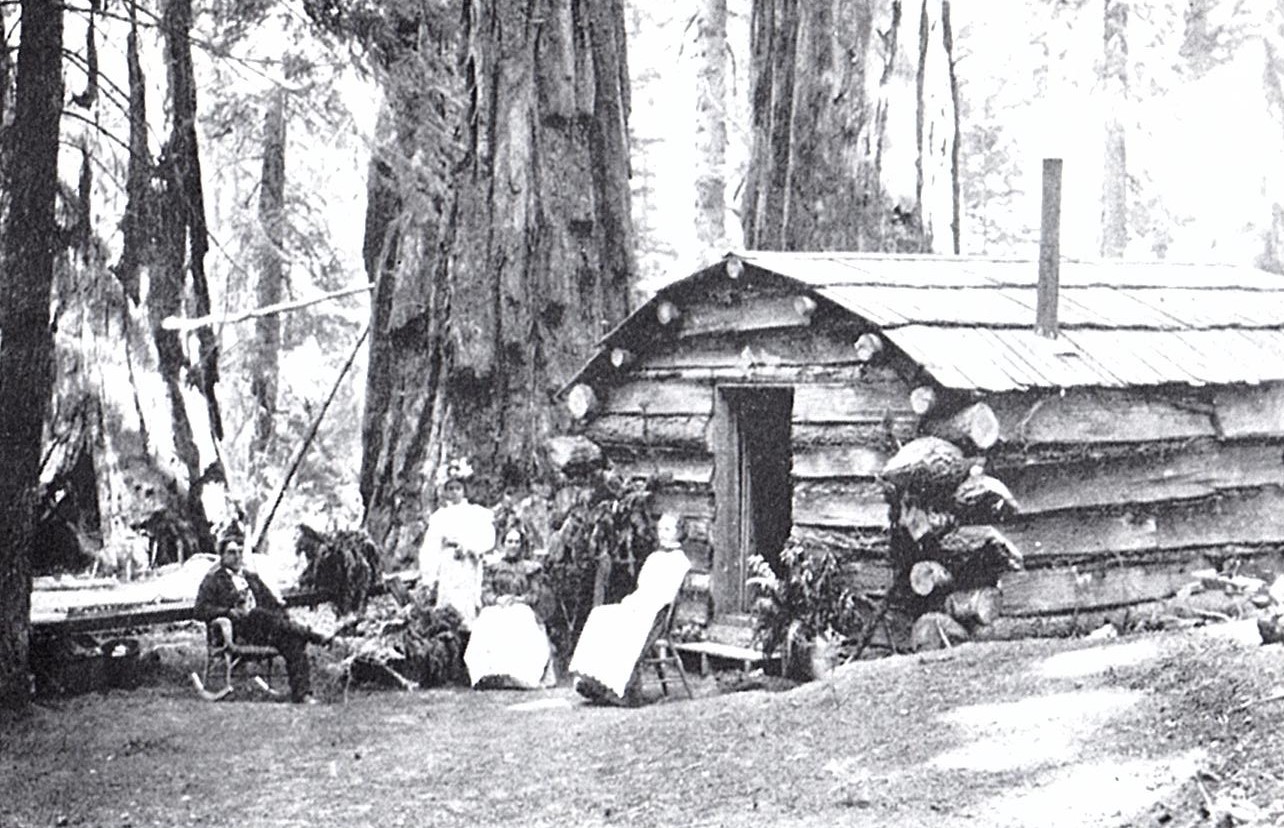
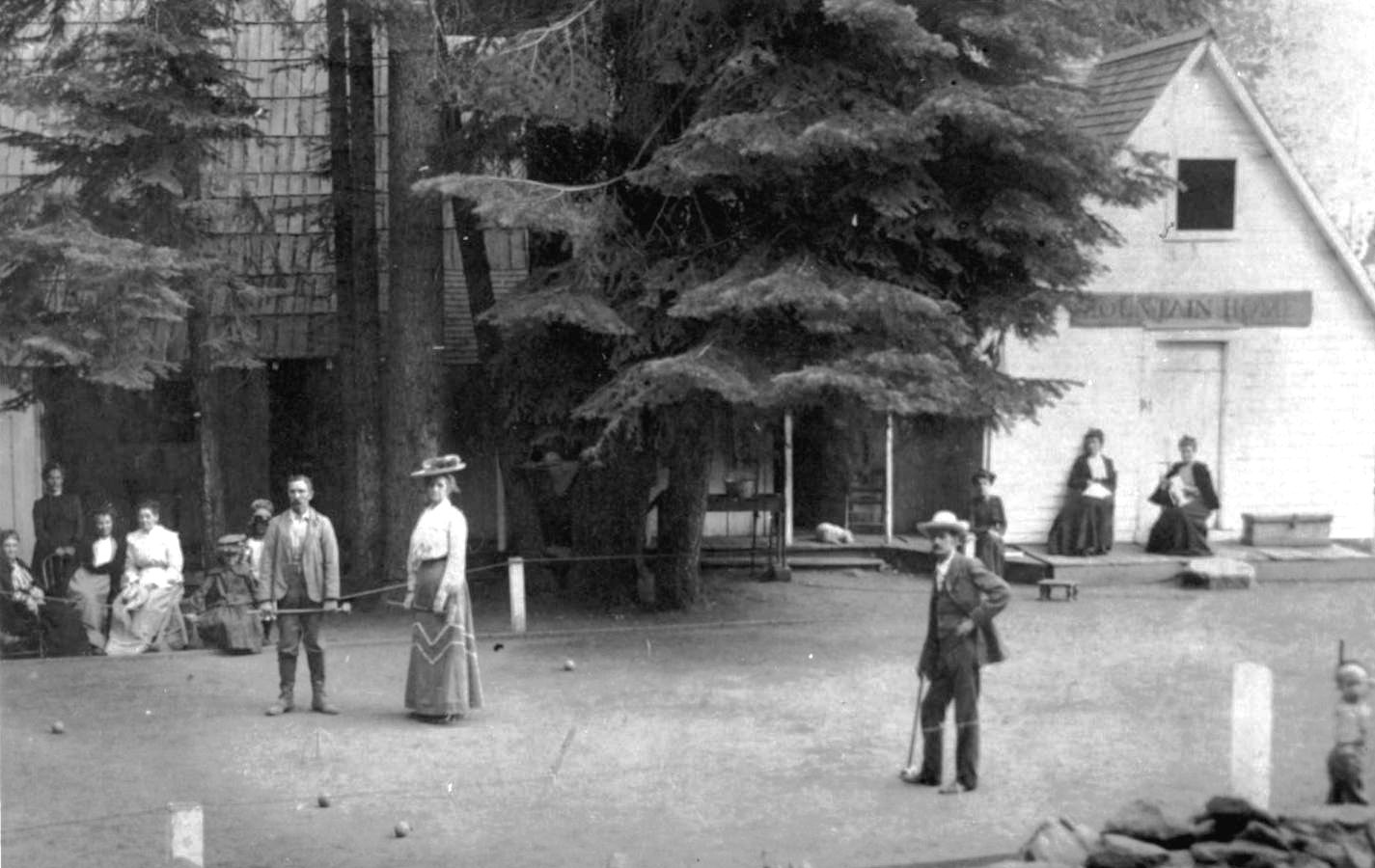
Then hard times hit. During the 1890s the mills began to close. In 1907 the Central California Redwood Company sold the largest tract of timberland to the Hume-Bennett Lumber Company, and when that company went into bankruptcy the mortgage company put the land up for sale again. But there were no takers. For over twenty years the forest lay commercially idle while campers, hunters, and fishermen used the old logging roads, streams, millponds, and stock trails without restriction.
The logging hiatus ended in 1930 after Donald “Dude” Sutch bought rights to cut fence posts from dead sequoia trees on the old Hume-Bennett acreage. Dude worked the forest deadfall until 1941, when efforts to sell the property began anew.
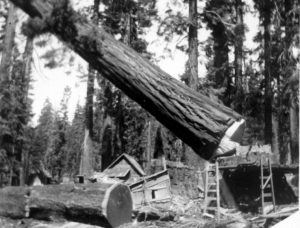
The Michigan Trust Company owned the property at the time. Jack Brattin, the company’s executive who handled the property, had determined the land was no longer a good prospect for commercial usage, so he offered the entire 4,800 acres for sale to the Forest Service—only to be turned down. Undeterred, Jack decided to create a compelling reason for a public agency to buy it. He authorized Dude Sutch to start felling live sequoia trees and also brought in two commercial lumber companies to do the same.
The ploy succeeded. Thousands of board feet of sequoias fell to axes and dynamite as recreationists, conservationists, newspapers, and over forty citizen groups and organizations set up a cry. Four years of haggling followed among the Forest Service, the State, and especially Arthur H. Drew, who heavily lobbied the state legislature as a representative of the Native Sons of the Golden West. Finally, the state capitulated. In 1946 the Mountain Home Demonstration State Forest was signed into law by then Governor Earl Warren and, amid much controversy, the State of California went into the forestry business.
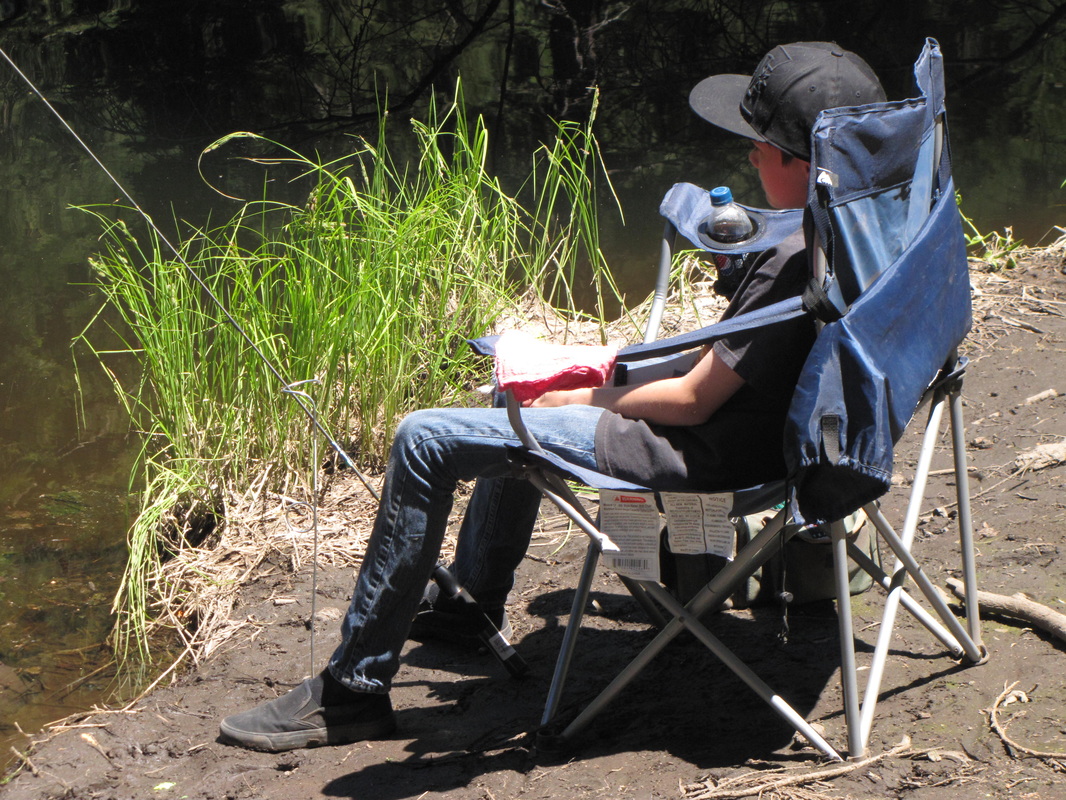
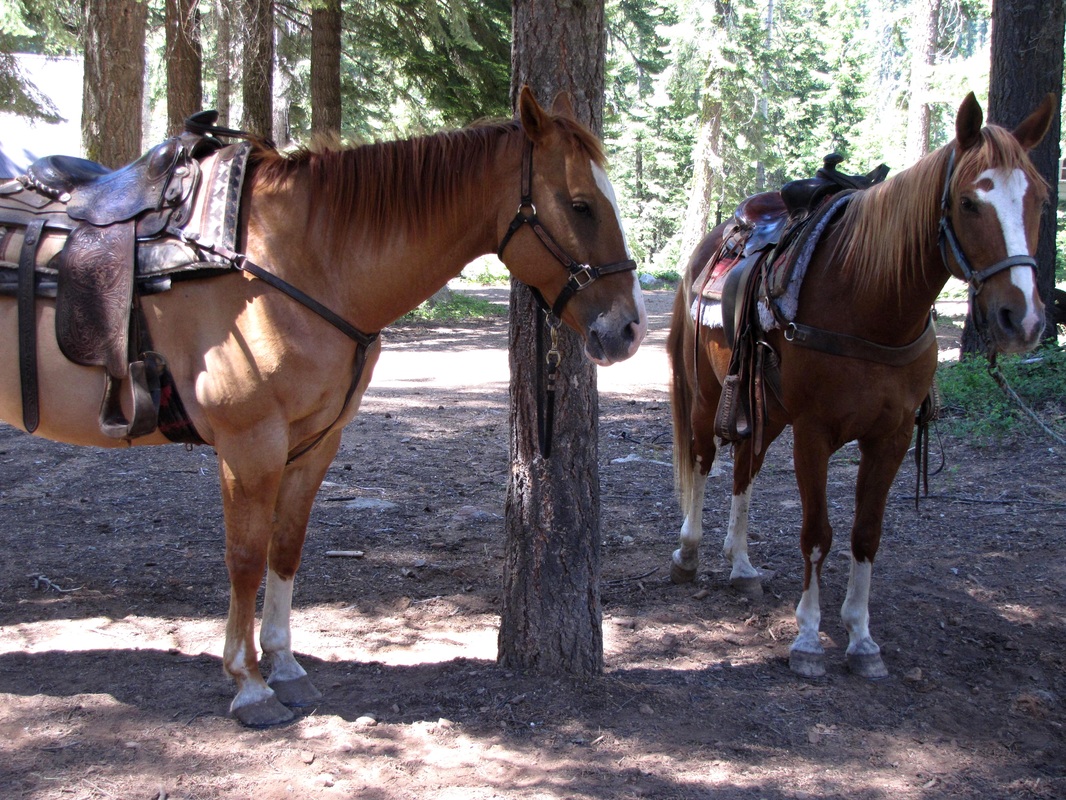
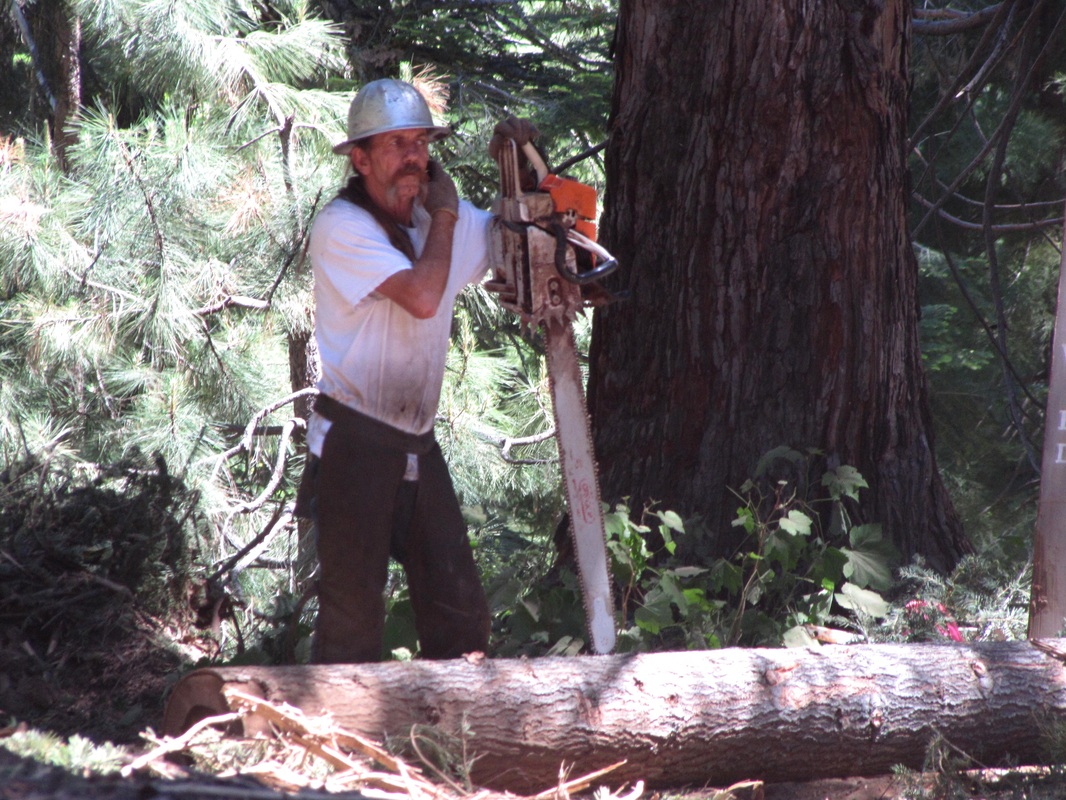
The act seemed necessary, in great part because the growing decimation of California’s forest lands was becoming an economic concern. Tourism, crucial watershed resources for agriculture, and the state’s ecological health were all being threatened. The Mountain Home Demonstration State Forest was created to address those concerns through scientific research and experimentation. It became the first of seven state forests, but remains unique as the only one dedicated to demonstrating the compatibility of recreation uses with timber growing and harvesting.
Dave Dulitz, who was the forest’s manager for twenty-six years, sees it as far more than that. Following in the dedicated footsteps of Deputy State Forester Cecil E. Metcalf and previous manager Floyd Otter, Dave considers Mountain Home to be not only a mandated research facility, but also an educational opportunity.
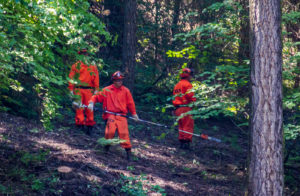
“It is a demonstration of cutting-edge forestry,” Dave says. “Trees are not cut for profit but to create funds for both recreation opportunities and better forest management.” The development of sustainable cutting practices; regeneration of the sequoias; implementation of tree planting, natural fertilization, and thinning techniques; creation of beneficial burn practices; the study of animal and human effects — all are part of the experimental studies of the forest. The findings are shared with other foresters and the public.
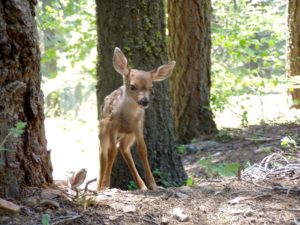
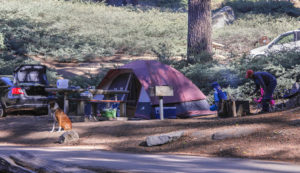
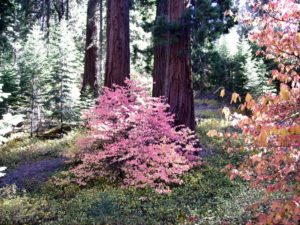
As our group of visitors walks through the forest, we inhale the mixed aromas of vegetation, rich soil, and fresh air. We notice hundreds of tiny sequoia trees sprouting at the edge of our trail that we now know will need to be cleared. We hear birds and the ripple of water near a cleared meadow. Laughter and the high shrills of playing children drift from a historic campground. We explore a site of immense granite basins that one member of our group tells us, according to legend, are the grinding holes of an ancient tribe of giants. In hushed silence, we stop for three deer that cross our path. And, with every step, we feel the immensity, the inconceivable age of a pristine forest that supports our way of life.
John Muir was right. This may be the finest sequoia forest in the Sierra. But today, because of the dedication of people with vision, it is even healthier, more beautiful, and open to our wonder than it was in John Muir’s day.
October, 2012
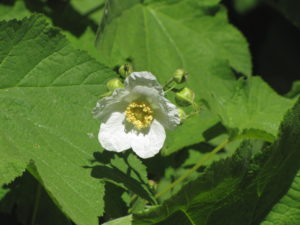
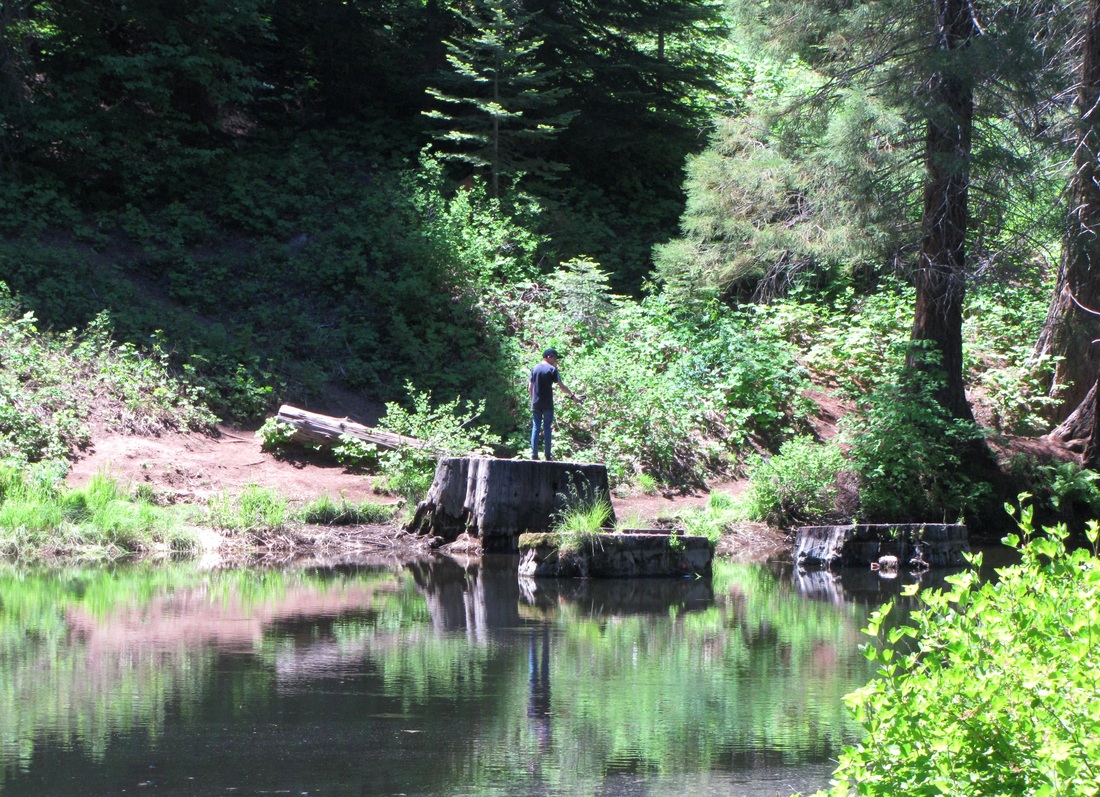
“The Mountain Home Tract Forest in Tulare County shall be developed and maintained . . . as a multiple-use forest, primarily for public hunting, fishing, and recreation.” State of California Public Resources Code, Section 4658
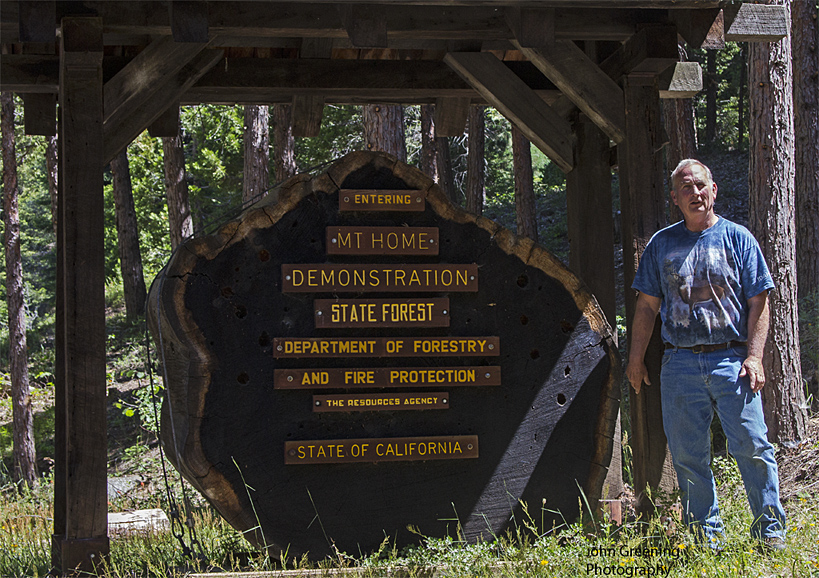
“Mountain Home Demonstration State Forest is the only giant sequoia forest in the world that is specifically set up to be managed as a working forest as opposed to a park.” — Floyd L. Otter
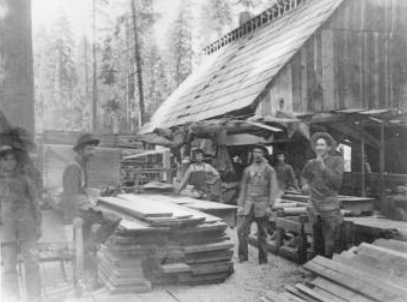
“I didn’t like to see the big trees go down any better than anyone else. But if I hadn’t cut them someone else would have. I used dynamite by the ton. If they had left me go another five years there wouldn’t have been any good redwood left.” — Dude Sutch
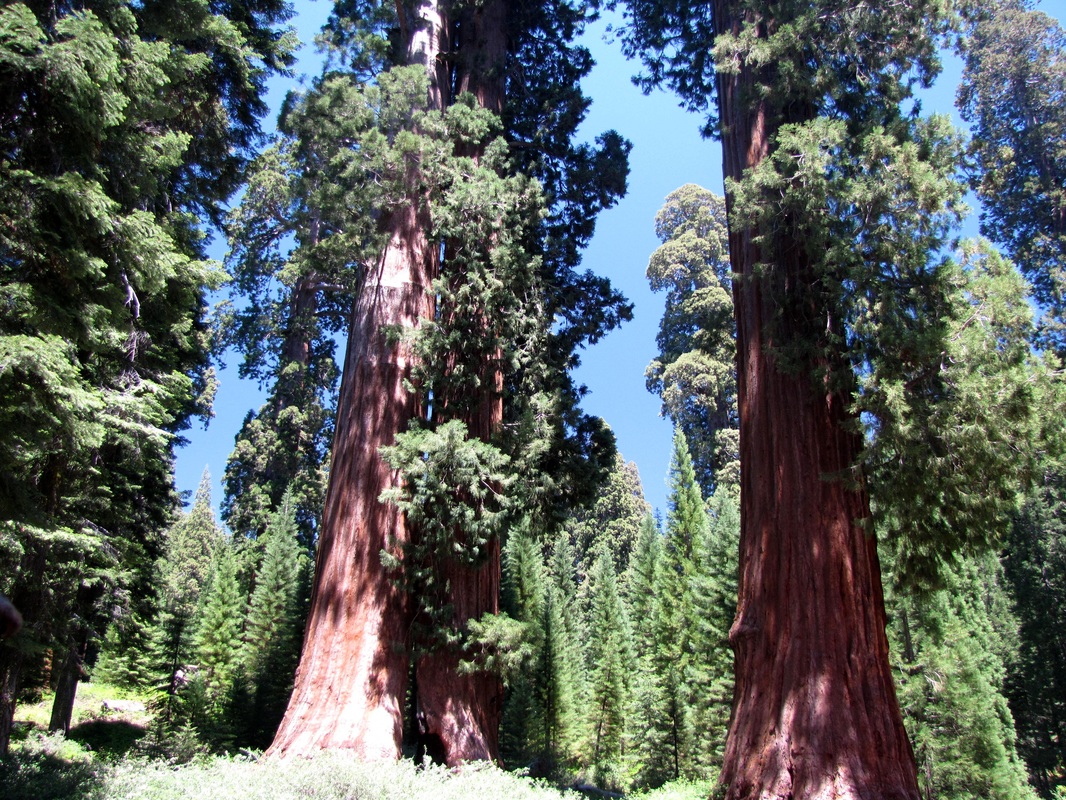
“Unless this tract is taken over by the State or some other agency before next season, the logging operations will continue on a larger scale and in a short course of time this magnificent growth of timber will be gone forever.” — Resolution of Native Sons of the Golden West, 1942
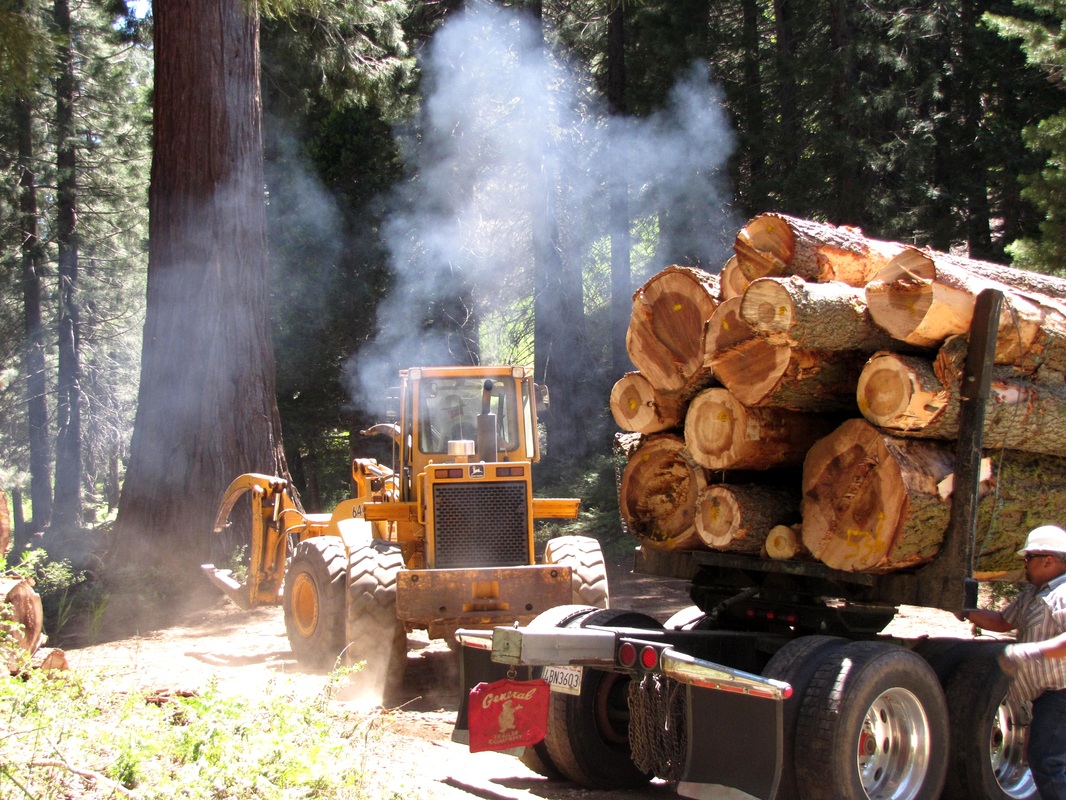
“This power of life or death over living things that can never be replaced in our lifetime, or the lifetimes of our children, has always seemed to me a highly important responsibility. Sometimes I felt that a forester, when marking trees to be cut, stands in God’s shoes at Judgment Day.” — FLoyd L. Otter
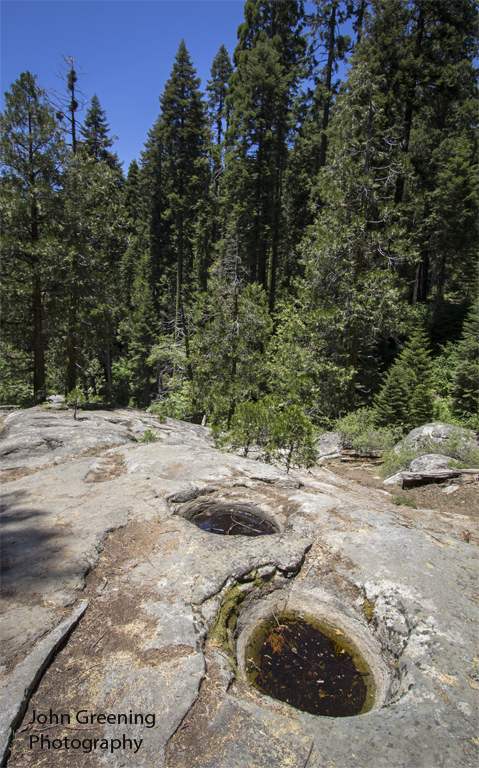
“My words are tied in one, With the great mountains, With the great rocks, With the great trees, In one with my body And my heart. Do you all help me, With supernatural power, And you, day, And you, night! All of you see me One with this world!” — Yokuts prayer recorded by Alfred Kroeber
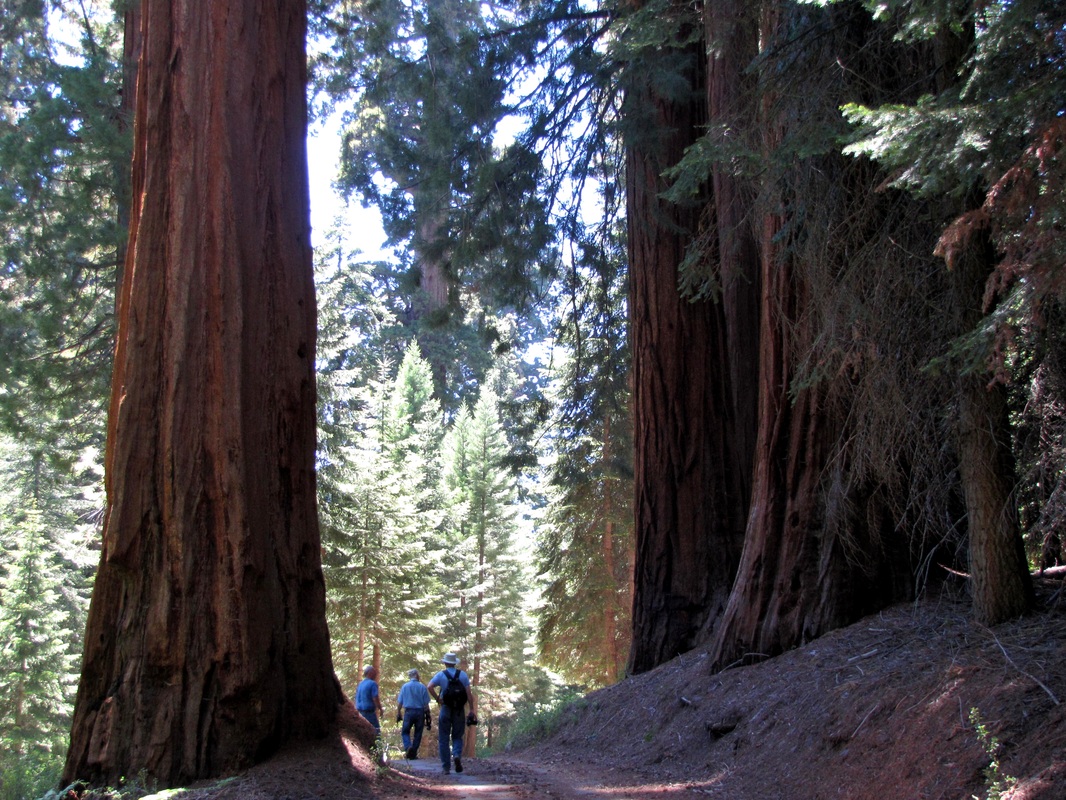
“Going to the mountains is going home.” — John Muir
[
36-14’24” N/Longitude: 118-40’20” W
36.2399453/Longitude: -118.6723141
From Visalia, the slightly quicker route is to go east on Hwy 198 to Spruce/Road 204. Go south (right) at the stoplight on Spruce to the junction with Hwy 65. Go east (left) onto Hwy 65 to Porterville and the junction with Hwy 190. Take Hwy 190 east to Springville. At the east end of Springville, take Balch Park Drive/Road J37 north (left). Then take Bear Creek Road/Road M220 east (right) to Mountain Home Demonstration State Forest.
For a loop trip, drive through Mountain Home Demonstration State Forest on Bear Creek Road to its junction with Balch Park Rd./Road M296. Go west (left) onto Balch Park Road and follow it back to its junction with Yokohl Valley Road. Here, you can either turn right onto Yokohl Valley Road and follow it back to Hwy 198 and Visalia, or you can turn left to stay on Balch Park Drive/J37 back to Springville, Hwy 190 to Porterville, and Hwy 65 back to Hwy 198 and Visalia.
]