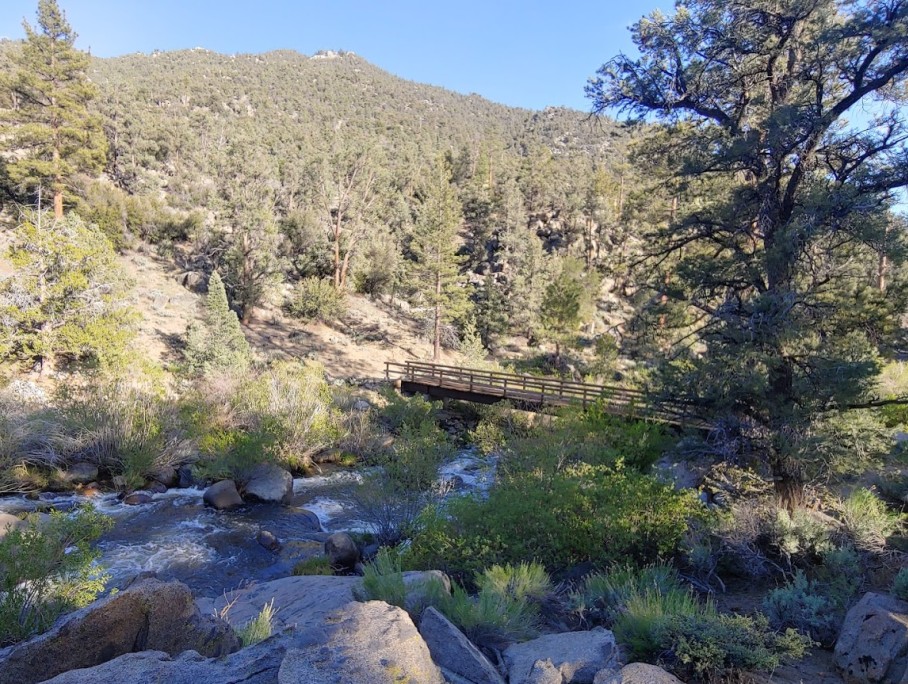
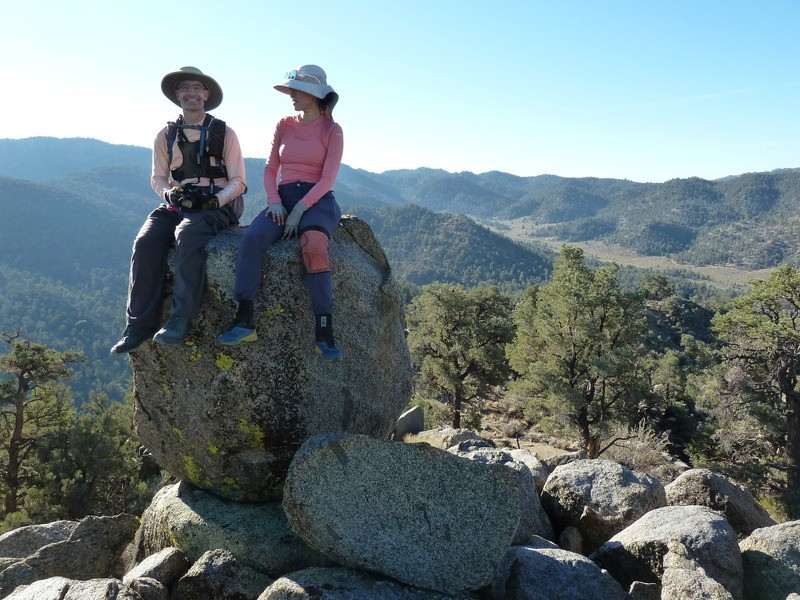
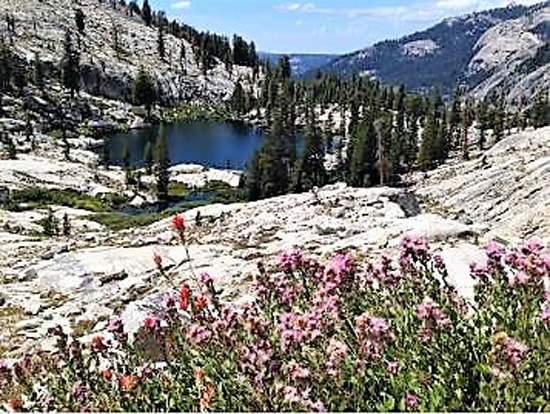
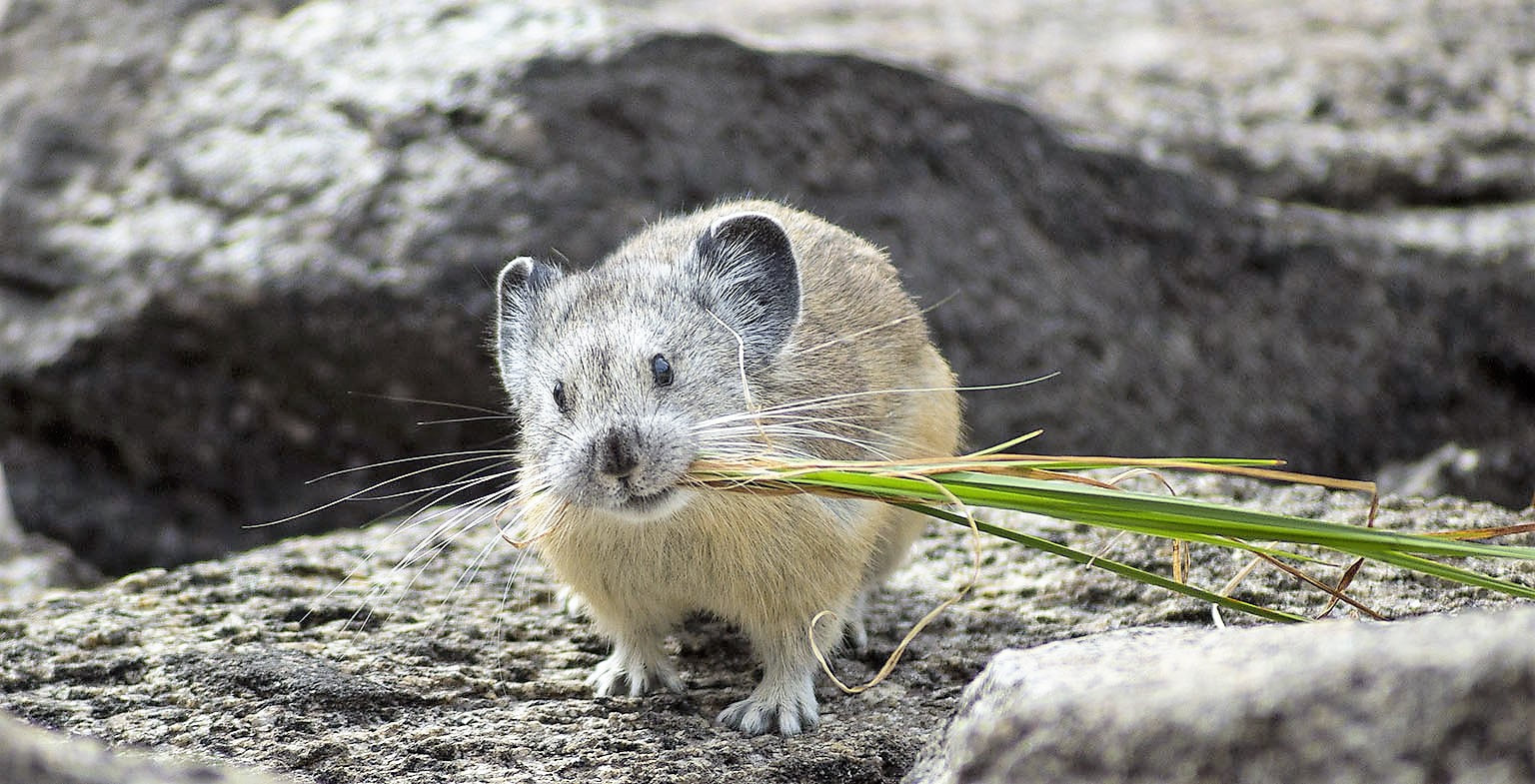
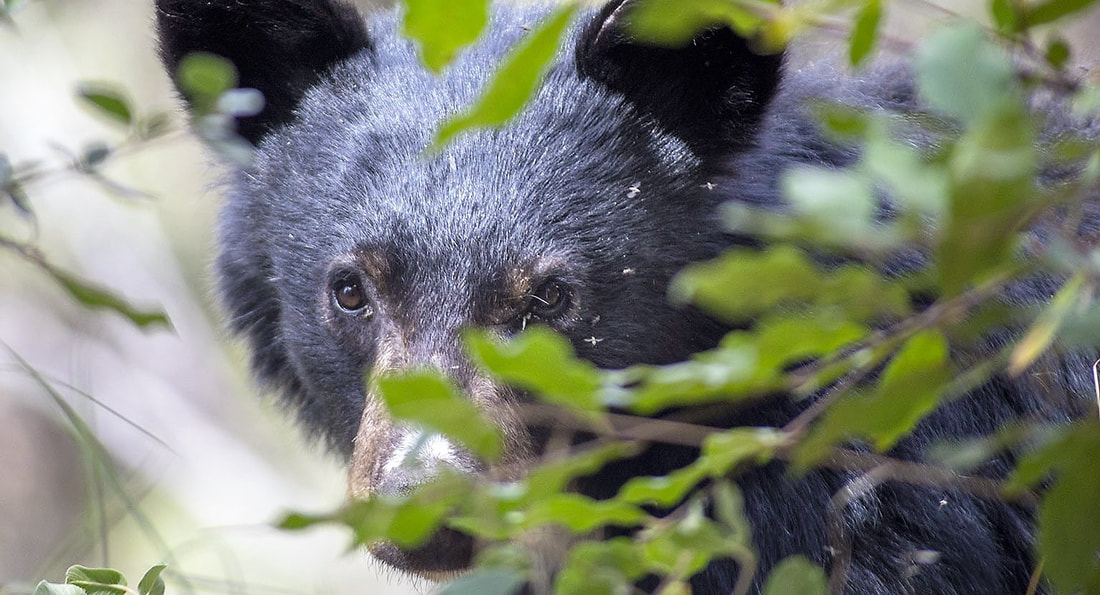
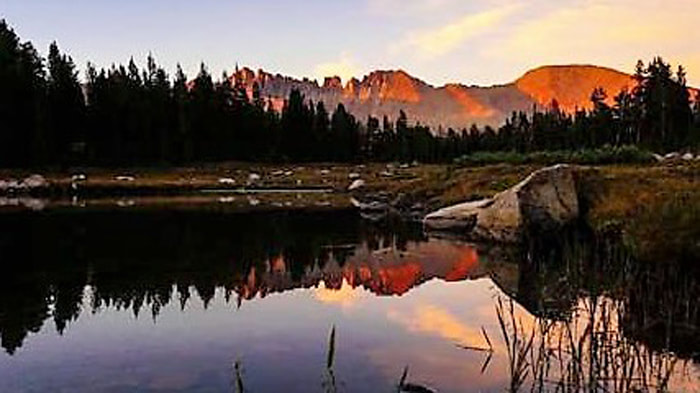
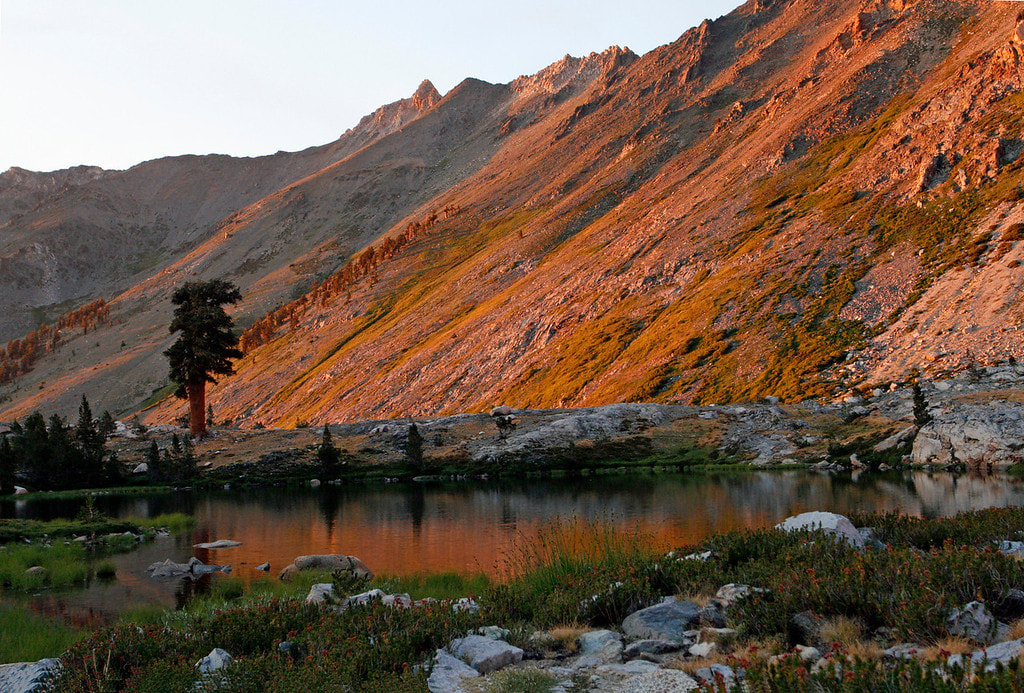
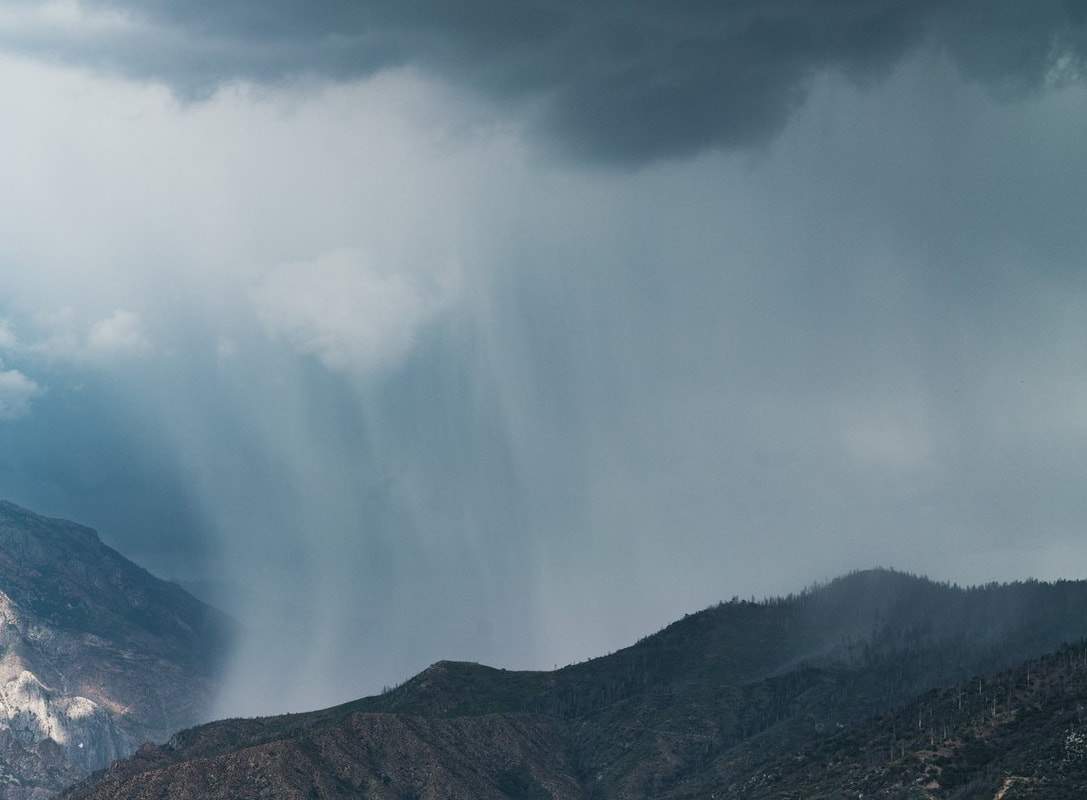
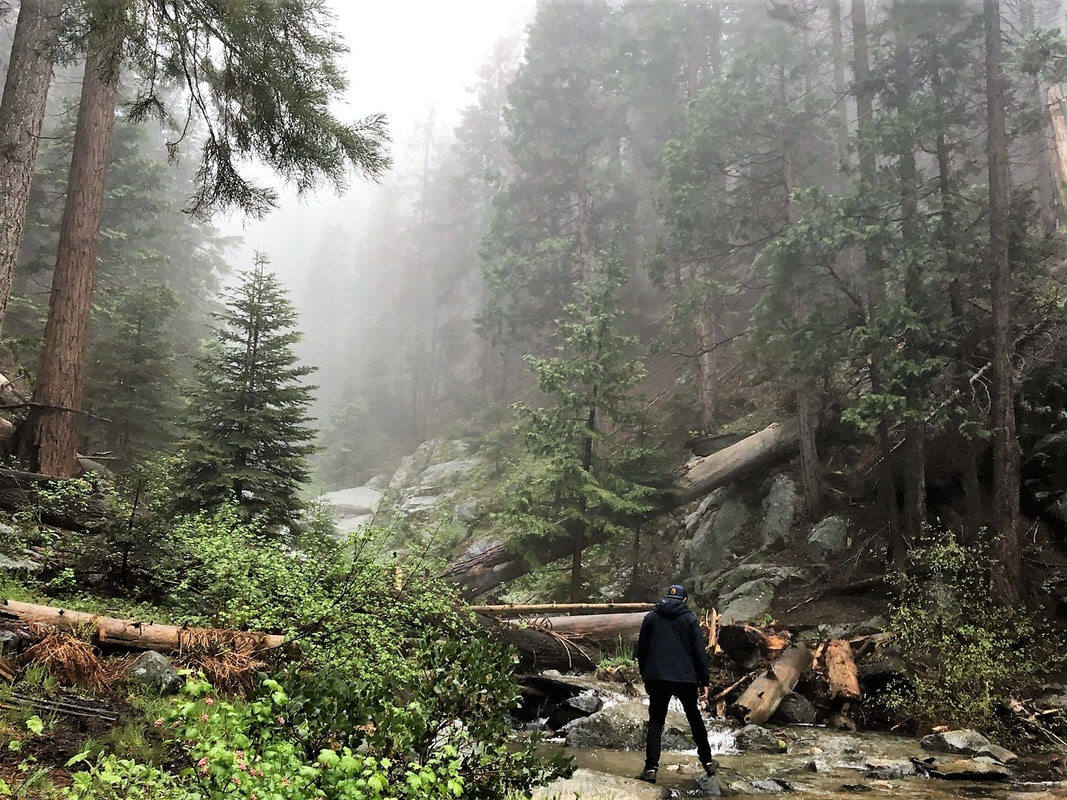
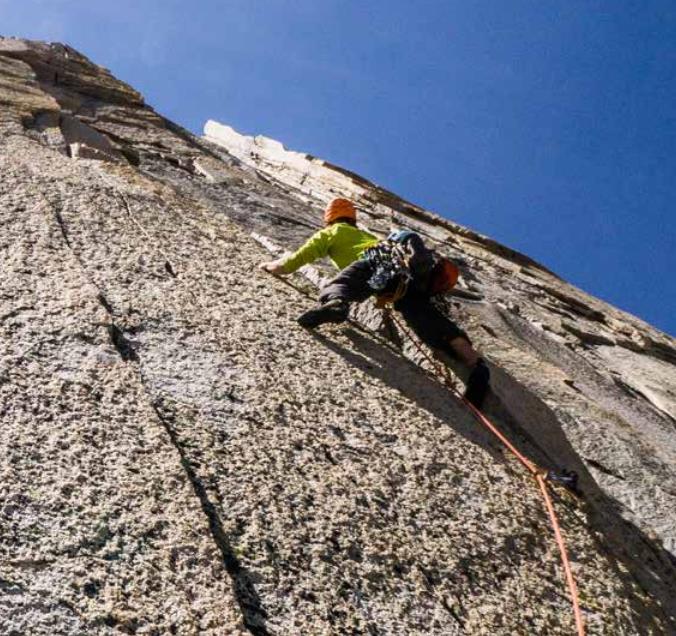
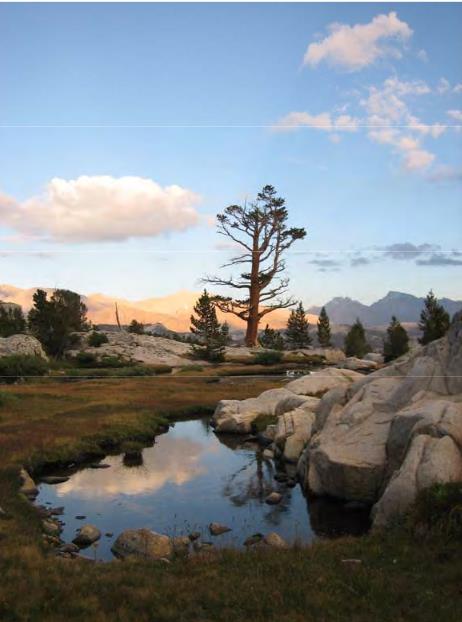
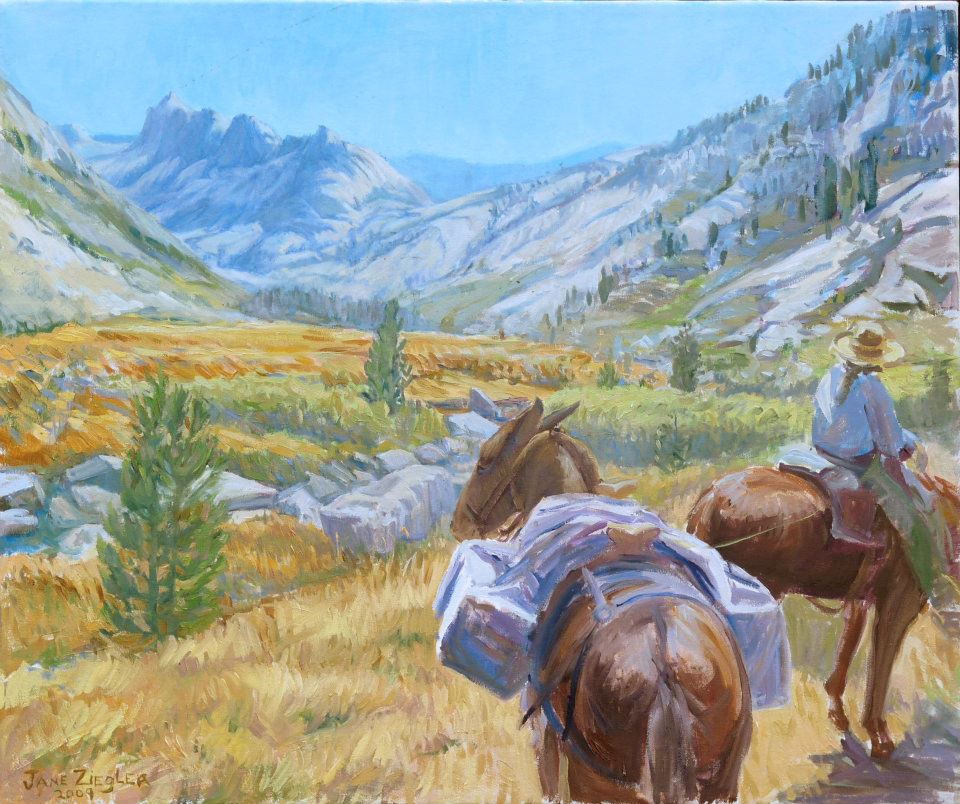
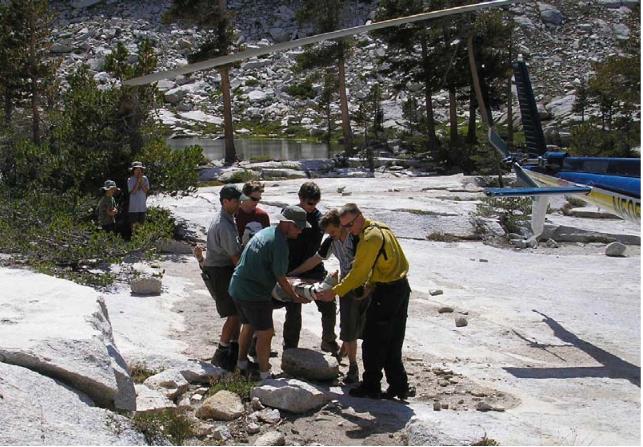
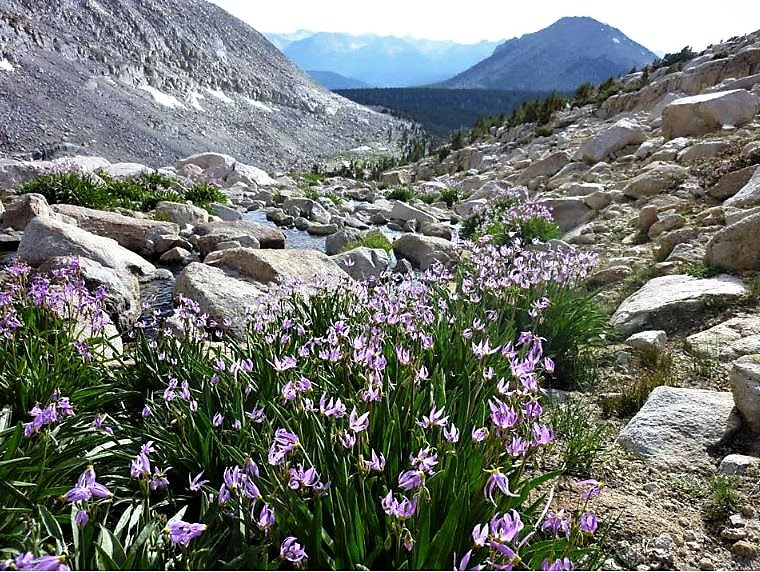
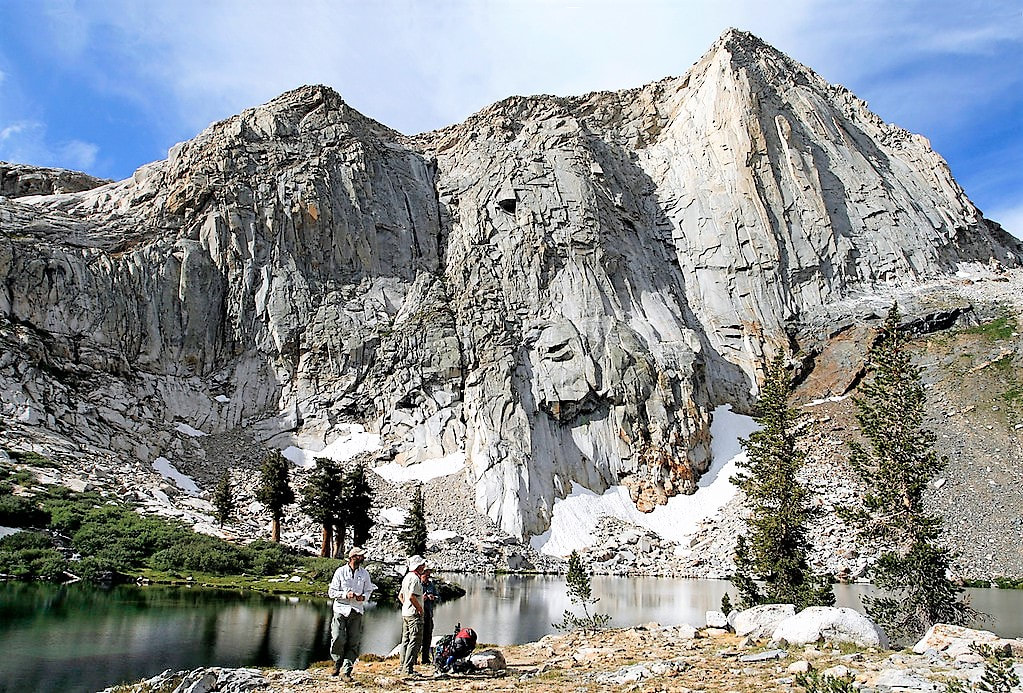
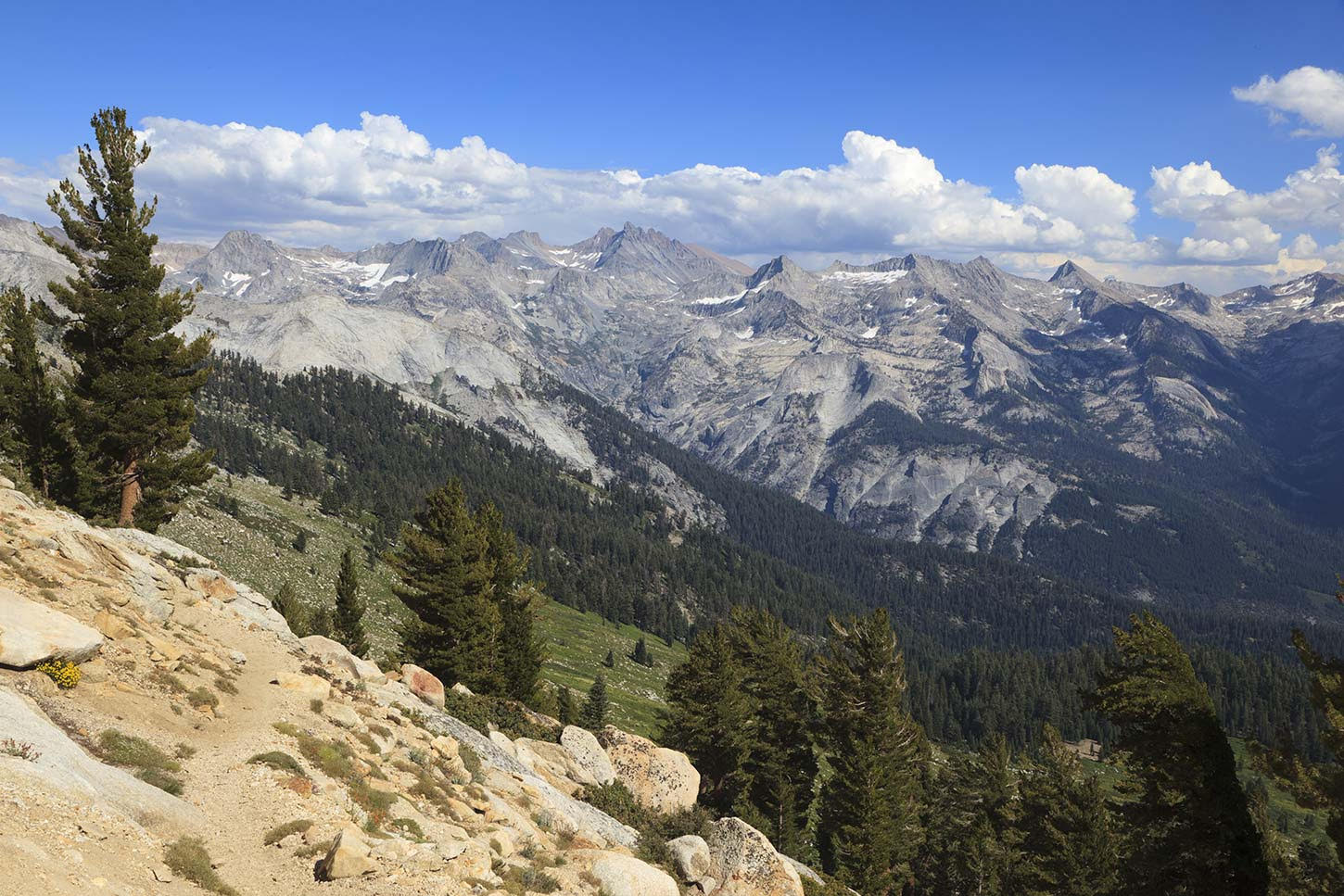
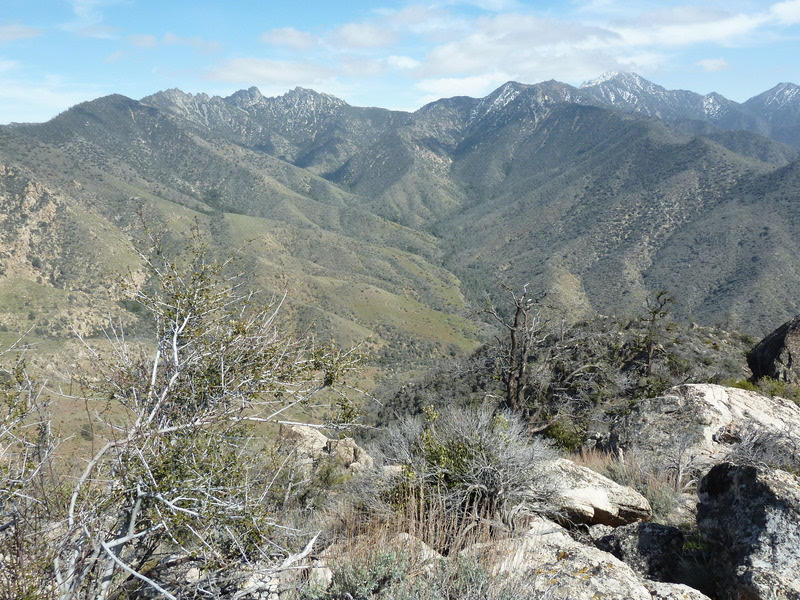
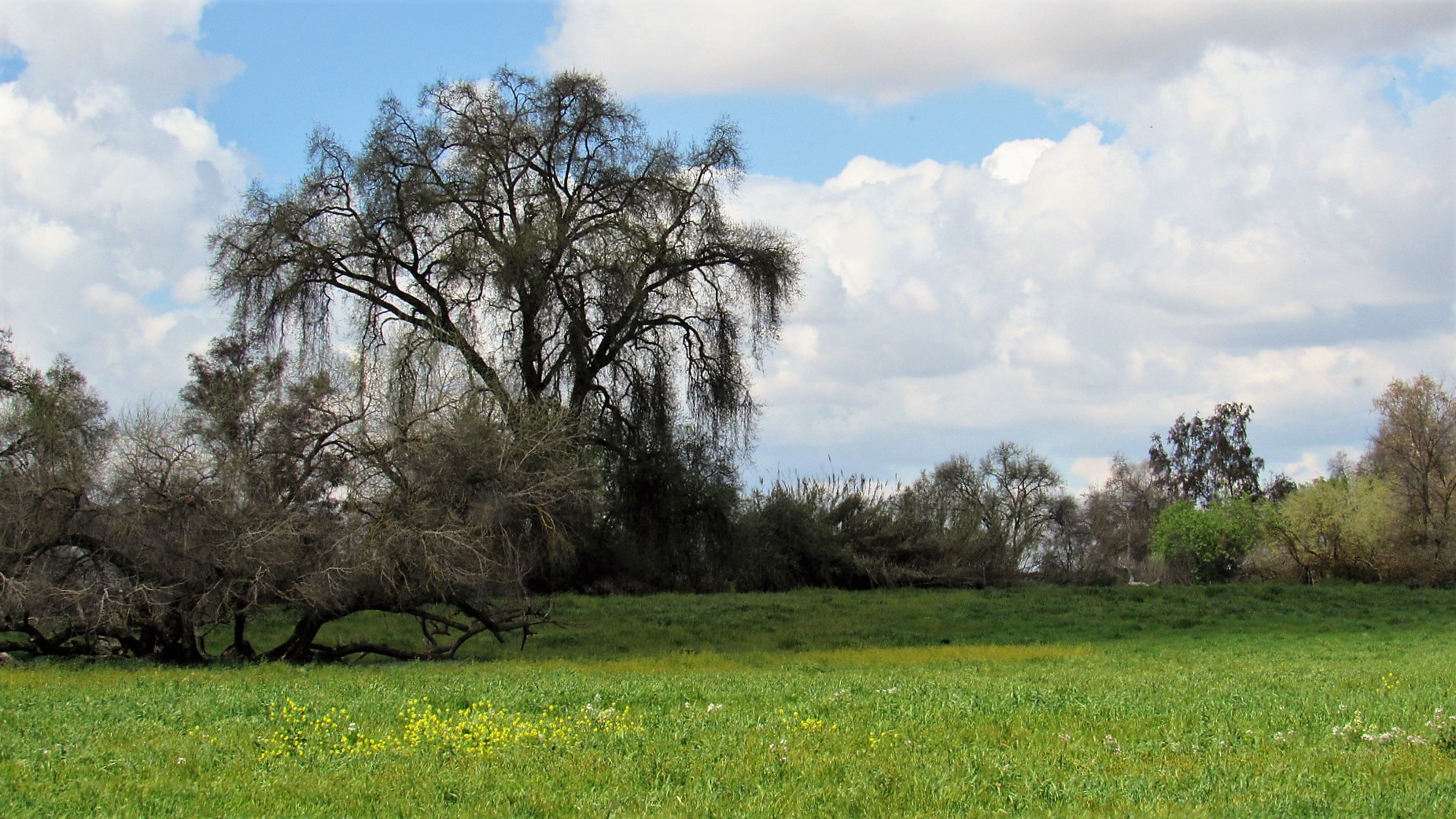
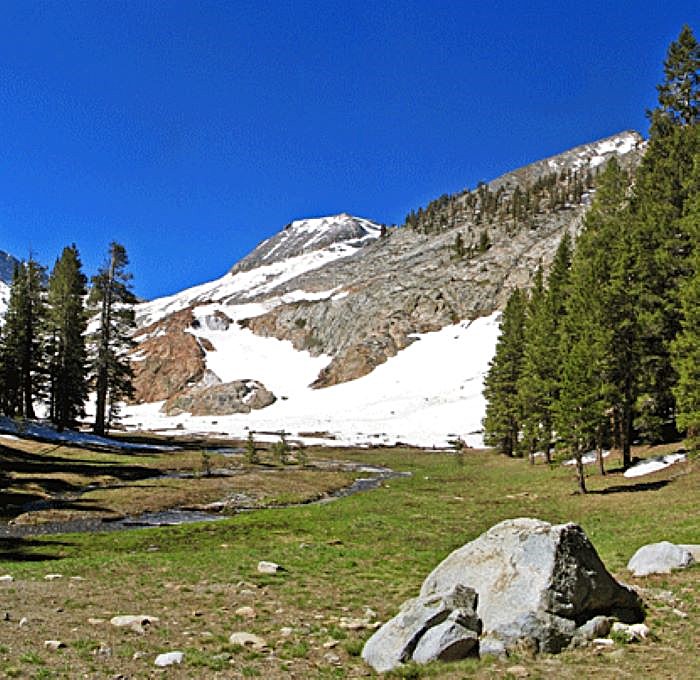
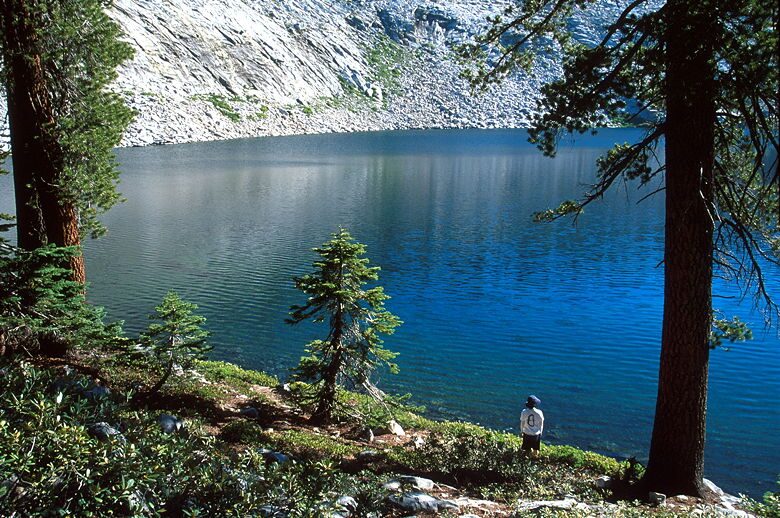
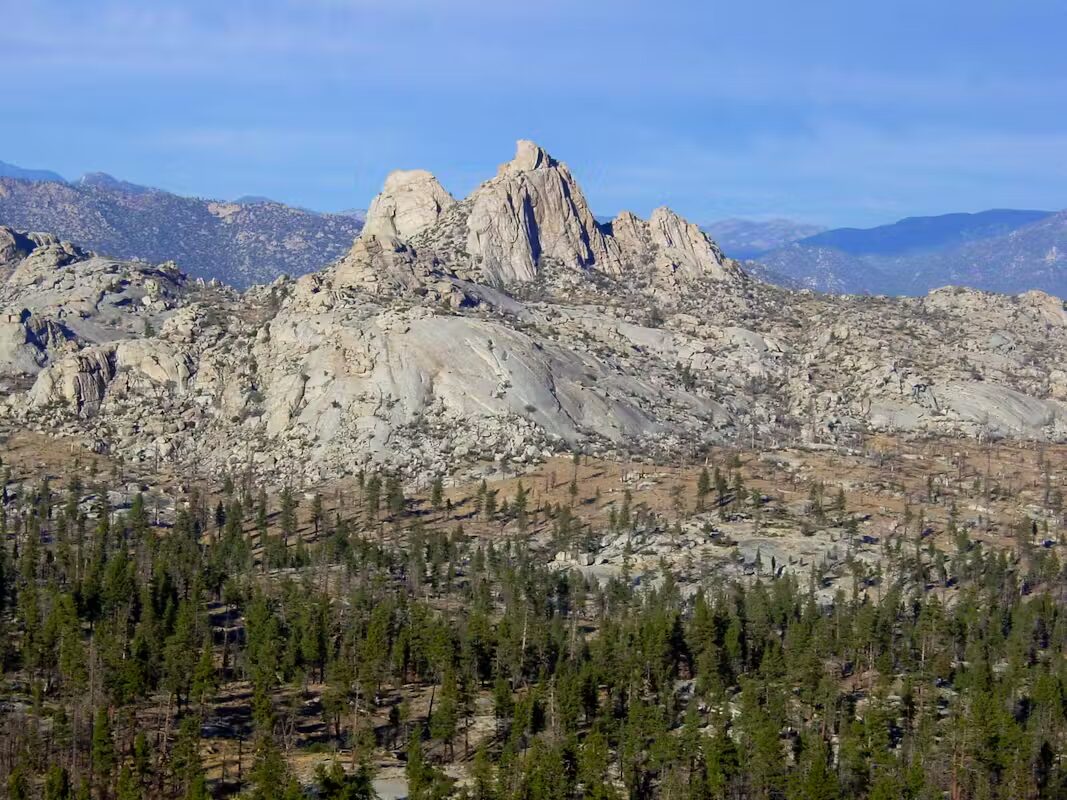
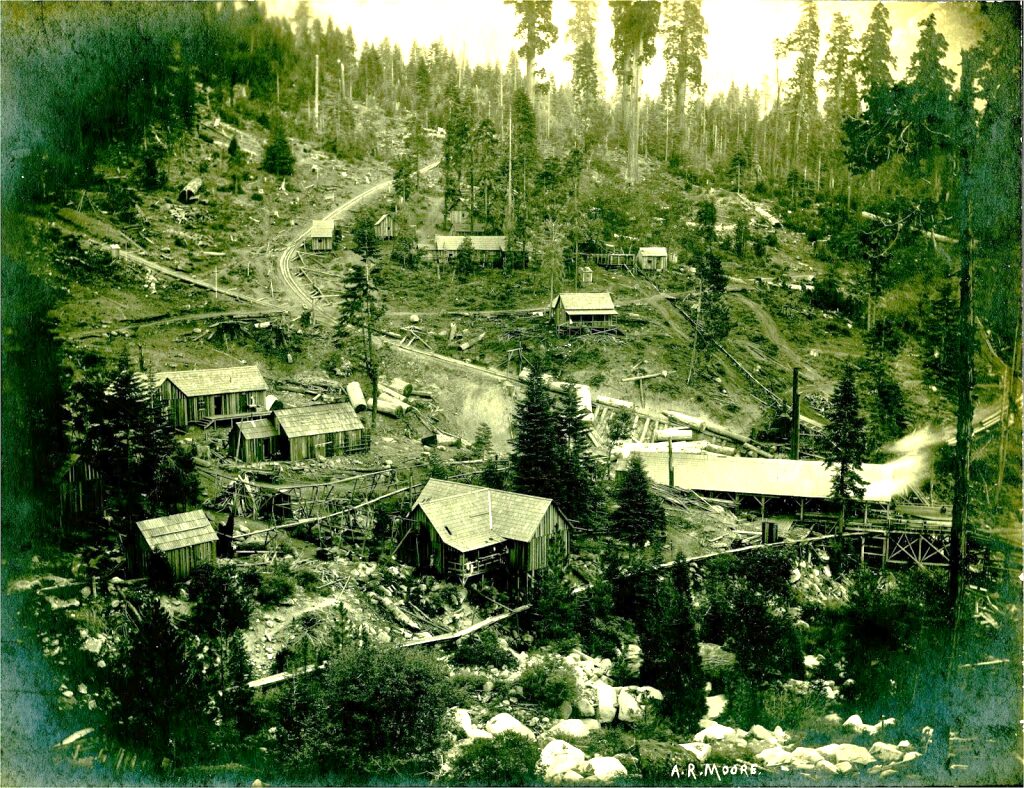
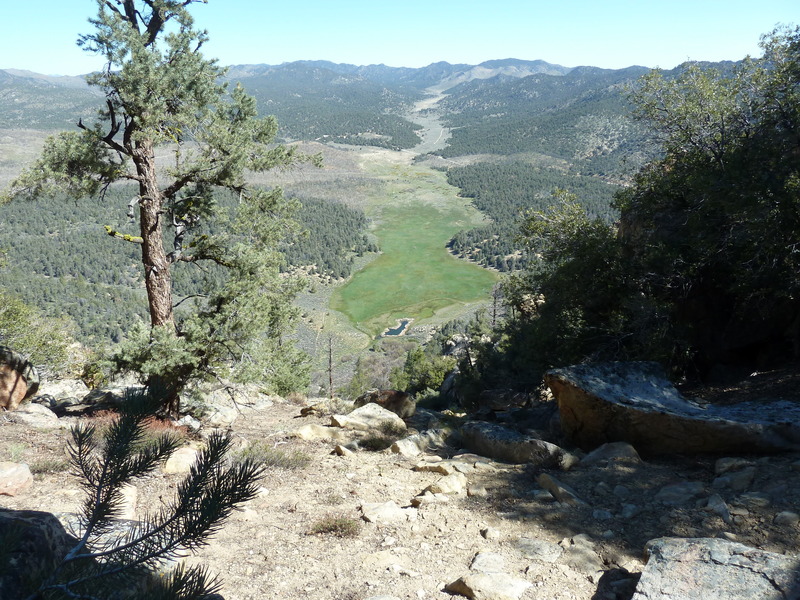
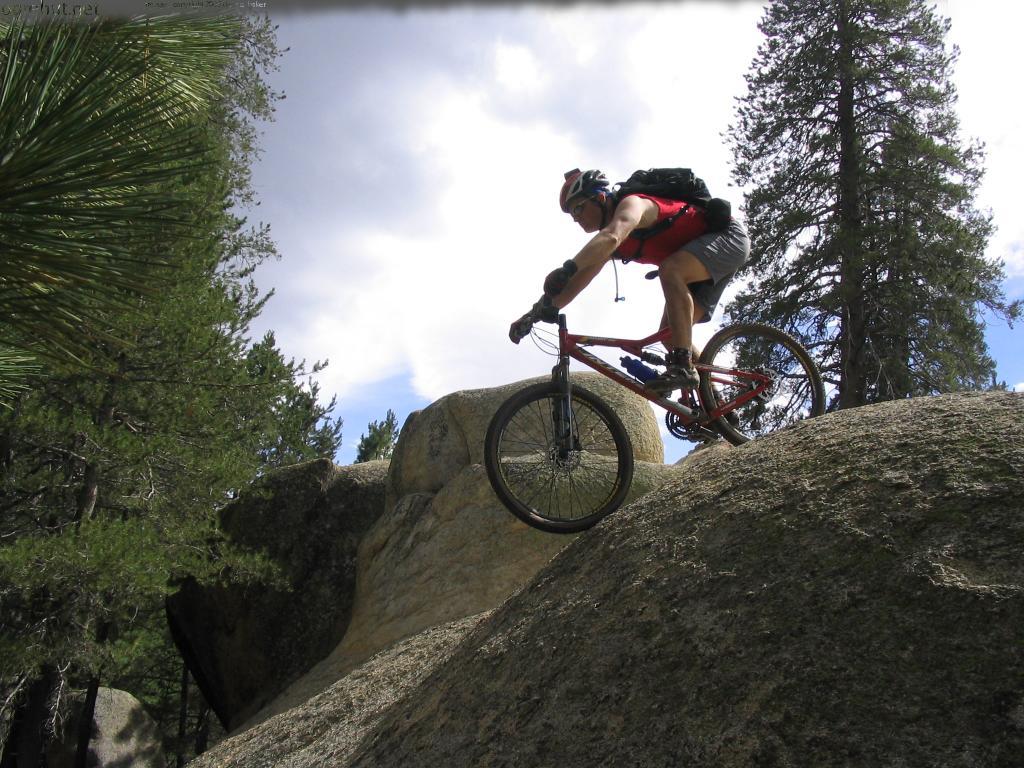
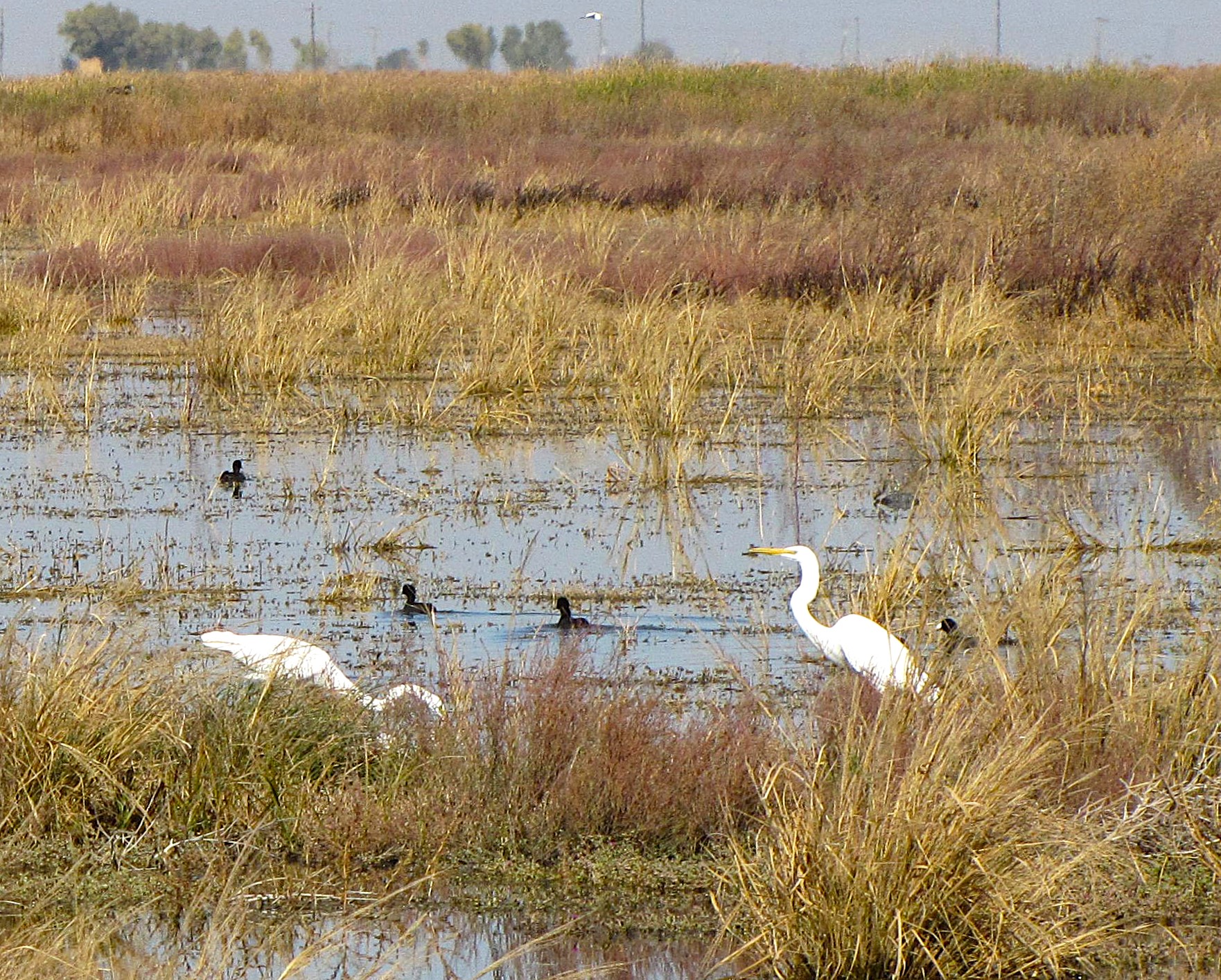
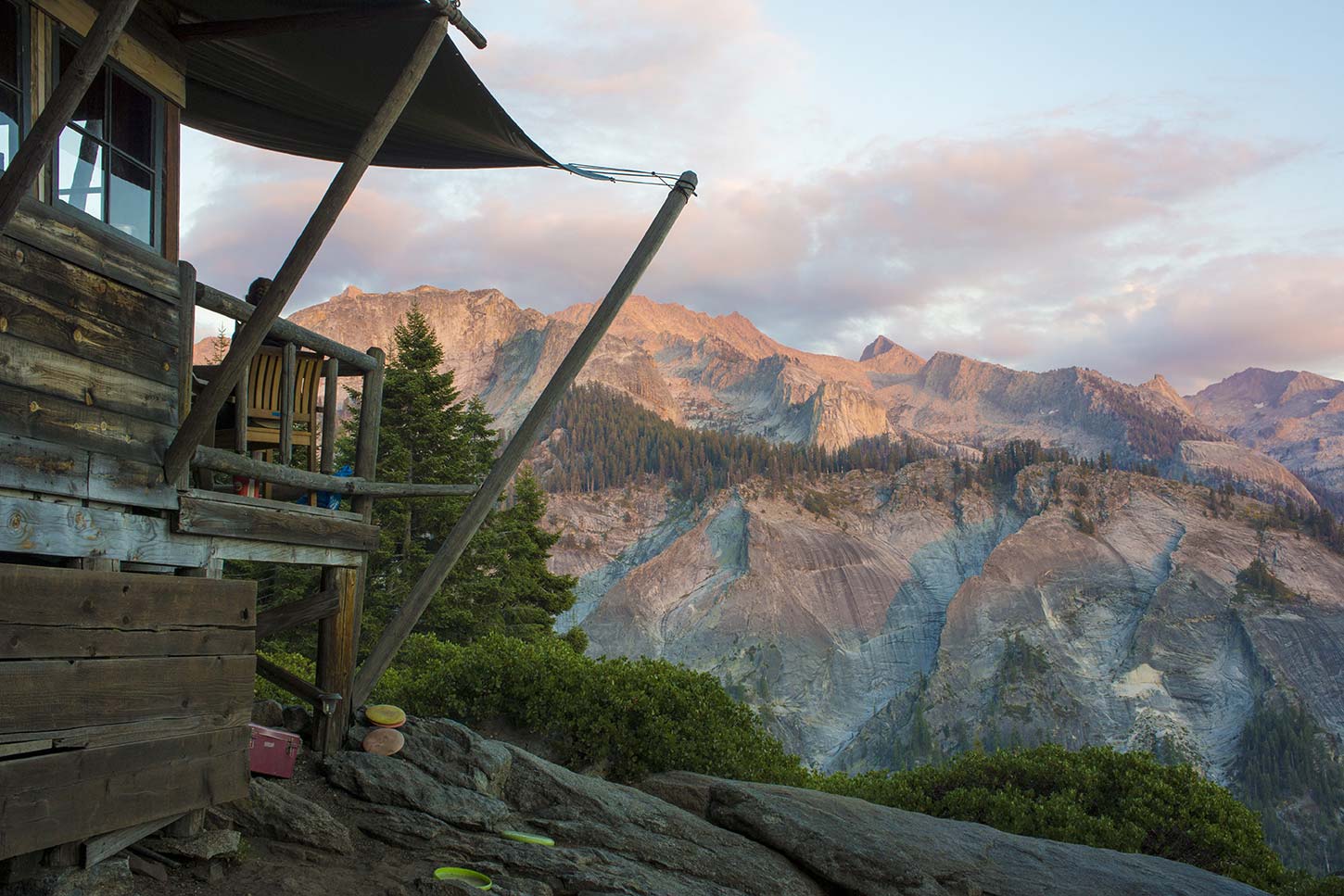
The wonderfully diverse, readily accessible, family friendly (especially the west side) South Sierra Wilderness includes miles of trails and waterways (highlights: the Pacific Crest National Scenic Trailand the Wild and Scenic South Fork of the Kern River), along with plentiful wildlife, California’s State Fish (the gleaming Golden Trout), long meadows flanked by rolling hills, rocky ridges, and many mountains to climb (elevations run from 6100′ at Kennedy Meadows to 12,000+’ atop Olancha Peak), and forests ranging from pinyon-juniper woodlands to Jeffrey, lodgepole, and red fir higher up. Don’t miss this inviting Wilderness.
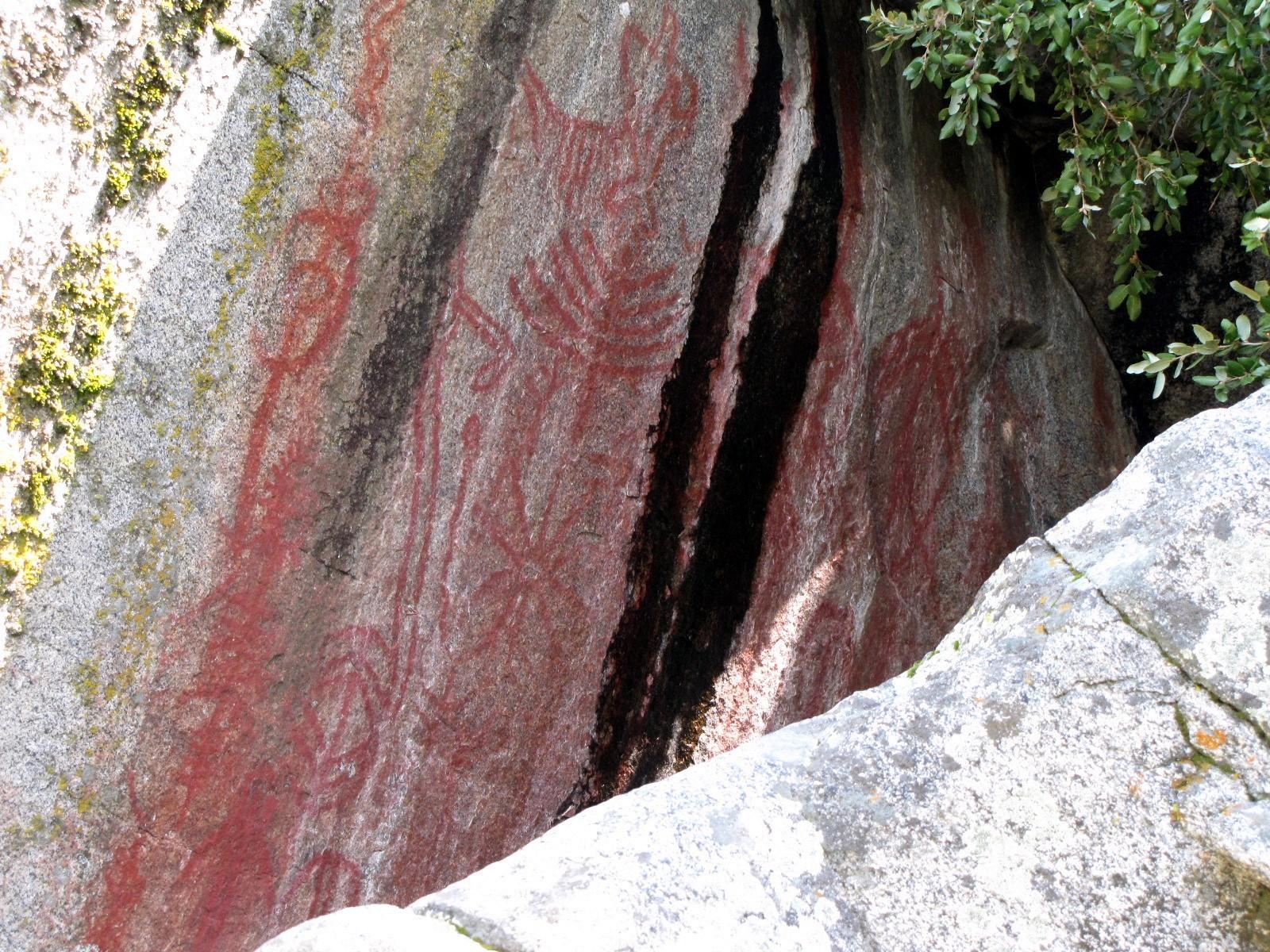
The South Sierra Wilderness was established by the California Wilderness Act of 1984, passed by the U.S. Congress that September, authorizing the addition of over three million acres within California to the National Wilderness Preservation System. Archaeological evidence, including bedrock mortars and obsidian tools and points, shows that Native Americans (likely Owens Valley Paiute and Panamint Shoshone) have inhabited this area for at least 6,000 years.
March, 2026
NOTE: The Project Team will be conducting research for a full article as volunteer time allows. Contact us if you’d like to help research, write about, and/or illustrate this Treasure!
Maps & Directions:
NOTE: There is no quick way to get to South Sierra Wilderness from Visalia.
From Visalia, go east on Hwy 198 and exit right onto Hwy 65 south. Go past Porterville to Ducor. Exit east at Ducor onto J22/Ave. 56 toward Fountain Springs. At Fountain Springs, continue east on M-56/Hot Springs Drive toward California Hot Springs. Continue past California Hot Springs to go north (left) at the junction with FR23S03/M-504. Take this Forest Road to Johnsondale and then continue east on M-99 to FR 22S06 (Sherman Pass Road) to its junction with Rd. J41/Kennedy Meadows Rd. Go left (north) on J41/FR 21S08 to the Kennedy Meadows trailhead and campground, a primary gateway to the South Sierra Wilderness and access to the Pacific Crest Trail.
You can also access the Kennedy Meadows trailhead from Hwy 395 on the Sierra’s east side by exiting on J41/Nine Mile Canyon Rd., which becomes Kennedy Meadows Rd.
To access the more northerly areas of this Wilderness from the east side of the Sierra, go south from Visalia on Hwy 99 to Bakersfield, then east from Bakersfield on Hwy 58 East to Hwy 14 north to Hwy 395 north to the Haiwee Pass Trailhead* at the end of Haiwee Canyon Rd. and/or the farther north Olancha Pass Trailhead via the Sage Flat Trailhead (to access Olancha Peak). *NOTE: As of 12/17/25 Inyo National Forest does NOT recommend entering/exiting South Sierra Wilderness via the Haiwee Pass trail as wildfires and flooding have damaged the trail.
Site Details & Activities:
Environment: 62,700 acre Wilderness spanning the Southern Sierra crest, elev. 6100′-12,132′; west of the crest is in Sequoia N.F., in Tulare County, with the balance in Inyo N.F. on the east; miles of the Wild and Scenic South Fork of the Kern River and the Pacific Crest National Scenic Trail on the relatively gentler west side with many meadows, extensive conifer forests (Jeffrey and lodgepole pine ranging up to red fir), and alpine flora in the northern section’s high peaks, all with corresponding wildlife and native plants, including some rare ones; borders Golden Trout Wilderness on the north and Domeland Wilderness on the south, affording extended Wilderness travels
Activities: backpacking, birdwatching, botanizing, camping (campfire permit [free] required for gas lanterns, stoves, BBQs,and campfires; available online at https://permit.preventwildfiresca.org/), dogs must be kept on 6′ leash and under owner’s control (must not harass wildlife), fishing (with valid licenses and in compliance with state and local regulations), hiking (including 7 miles of Pacific Crest National Scenic Trail, along the valley of the South Fork Kern River, with the Rockhouse Trail in Domeland Wilderness continuing 4 more miles along the river), horseback riding and packing, hunting (with valid licenses and in compliance with state and local regulations), mountaineering, peakbagging, photography, rock climbing, stargazing, wildflower and wildlife viewing
Open: The Wilderness is always open, depending on weather, except when closed due to emergency conditions; low water levels and hot temperatures occur in summer in the lower elevations. Always carry water; treat (filter or boil) water from streams or rivers.
Wilderness permits are not required for South Sierra Wilderness; they are required for traveling north of Olancha Peak into Golden Trout Wilderness. Obtain Wilderness permits from recreation.gov, 877-444-6777.
If traveling more than 500 miles on the PCT, a long-distance permit from the PCTA is required.
Site Stewards:Sequoia National Forest, Kern River Ranger District, 760-376-3781, SM.FS.SequoiaNF@usda.gov (west side, in Tulare County);
Inyo National Forest (east side of Sierra crest) as of 03/23/26 had no live contact information available; see Linksbelow for general information.
Opportunities for Involvement: donate National Forest Foundation [https://www.nationalforests.org/donate-support/] , volunteer Visit volunteer.govor reach out to your local National Forest or BLM office for information on opportunities near you. See also Forest Service Volunteer Opportunities [https://www.fs.usda.gov/working-with-us/volunteers/opportunities]and Forest Service Volunteers [https://www.fs.usda.gov/working-with-us/volunteers]
Links: South Sierra Wilderness west side (Sequoia National Forest) [https://www.fs.usda.gov/r05/sequoia/recreation/south-sierra-wilderness]
Sacatar Trail Wilderness, truly wild, straddles the Southern Sierra crest in southeastern Tulare County. Protecting highly diverse, almost trackless, pristine landscapes virtually unaltered by human presence, Sacatar invites visitors to experience public lands in their most natural state. Elevations from 3,500′ to 8,800+’ host plant life from cactus and desert shrubs through pinyon-juniper woodland to ponderosas and red fir stands, all with related wildlife. Hikers, backpackers, and peakbaggers who value solitude, discovery, and a sense of the unknown, and are experienced, self-reliant, and well-prepared, will relish time spent in this intriguing, wide-ranging wilderness.
The Sacatar Trail Wilderness was established on October 31, 1994, through the California Desert Protection Act (Public Law 103-433), which enlarged Death Valley and Joshua Tree National Monuments and converted them into National Parks, established the 1.6 million acre Mojave National Preserve, and set aside an unprecedented 9 million acres of Wilderness. (Motorized vehicles and equipment are now prohibited, with a very few exceptions, on all federal wilderness lands.) Ethnographically, the STW is within the region considered to be the territory of the Tubatulabal and Kawaiisu tribes, likely shared to some extent with their neighbors, the Owens Valley Paiute, Panamint Shoshone, and, possibly, the Chemehuevi.
Probably tracking a long-used Indian path for hunting, gathering, and trade, the Sacatar Trail was originally constructed to be a double-track wagon road, hacked out and up and over the crest of the Southern Sierra Nevada with great difficulty in the 1860s to facilitate travel of the military, cattle drovers, traders, and other commercial users between Rose Valley in the Owens Valley on the east and Kennedy Meadows and the Kern River Valley and San Joaquin Valley on the west side of the Sierra. But by the later 1800s, almost all the traffic that had been taking the Sacatar Trail had chosen to take the more southerly, and 2,000′ lower, route over Walker Pass instead. Today, the Sacatar wagon road, unmaintained for many years even as a foot trail, has dwindled to a mere “route,” as nature reclaims this ancient passageway through the wilderness.
March, 2026
NOTE: The Project Team will be conducting research for a full article as volunteer time allows. Contact us if you’d like to help research, write about, and/or illustrate this Treasure!
Maps & Directions:
NOTE: There is no quick way to get to Sacatar Trail Wilderness from Visalia.
From Visalia, go west on Hwy 198 and then south on Hwy 99 toward Bakersfield. At Delano, take Hwy 155 east (left) toward Glenville and Lake Isabella. Follow Hwy 155 as it goes south along the lake to its junction with Hwy 178. Go left (east) on Hwy 178 for about 30 miles to the Canebrake Flat area where you’ll go left (north) on rugged, graded-dirt, high-clearance, 4-wheel-drive vehicle recommended* Canebrake Road (AKA Chimney Peak Backcountry Byway) toward Chimney Creek campground.
Approximately 9 miles up from Hwy 178 is the junction of Canebrake and Long Valley/Chimney Basin roads. Continue on Canebrake Road past the campground and on to the junction with Road J41/Kennedy Meadows Road. Go left (north) on this road into Big Pine Meadow, at which point the Wilderness begins a short distance from the east (right) side of the road. (Chimney Peak Wilderness is on the west side of the road.) Farther north, a dirt road goes off to the right to a landing strip and Sacatar Meadow, at which point the Wilderness is again nearby on the right.
NOTE: There are no official trailheads for this western side of the Wilderness because there are no trails, but it can be accessed from a number of turnouts along J41 (AKA Sherman Pass Rd./Kennedy Meadows Rd.) through BLM land and also from the dirt ranch road to the north. Be aware of the “unattended property” regulation; it’s safest to not leave your vehicle for more than 71 hours. Also beware of trespassing; use GPS/surface management maps to ensure you’re not trespassing on or hiking over private, non-BLM lands.
Bakersfield BLM recommendsdriving about 1/4 mile south of the BLM Chimney Peak Work Center and Fire Station at 106490 Kennedy Meadows Rd. (AKA Sherman Pass Rd./J41) to find a couple of non-maintained dirt roads on the east side of J41 (35.866642, -118.008449). “The hike in depends on 4×4 capability and comfortability and you’ll hit Wilderness around .5 mi. to the east and 5 mi. to the north. It was signed at one point.”
You can also access this Wilderness from the east side of the Sierra if you stay on Hwy 178 east past Walker Pass and down to its junction with Hwy 14. Go north on Hwy 14 to its junction with Hwy 395 and go left (north) on 395 to just a few miles north of Little Lake in Rose Valley where you can find the Sacatar Trail, which goes up the edge of Little Lake Canyon to a 7,400′ pass in the Sierra and then descends on the west side via Sacatar Canyon. NOTE: Signage is minimal, making this trailhead difficult to find; carry a topo map (Little Lake quad) or BLM map of the area. Also, the ascent from the east side up to the pass is considerably steeper than the ascent from the west. ALSO: Per BLM-Ridgecrest, the Sacatar Trail could better be called a “route,” rather than a trail,since it has been unmaintained for many years. “The trailhead coordinates on Ridgecrest BLM land are 35.970704, -117.962829. The designated route is called RC997 off Hwy 395. This is the easiest way to access the wilderness and ‘trail'” on the east side.
*If your vehicle might have trouble with Canebrake Rd., you can continue on Hwy 178 past Canebrake to Hwy 14 north and Hwy 395 north to the junction with Rd. J41/Nine Mile Canyon Rd., which becomes Kennedy Meadows Rd., and follow it to Big Pine Meadow, as above.
Site Details & Activities:
Environment: High desert through foothills to pass (about 7,400′) over Southern Sierra crest, elevation 3,541-8,800+’, 51,900 rugged acres, very diverse ecosystems from desert to spring-fed riparian areas to bands of coniferous forest in the higher elevations, canyons, peaks, basically trail-less
Activities: backpacking, birdwatching, botanizing, camping (free campfire permit required for gas lanterns, stoves, and campfires; obtain permit at https://permit/preventwildfiresca.org), dogs must be under owner’s control at all times and must not harass wildlife, hiking, horseback riding and packing (permitted, but not recommended; see below), hunting (seasonal, with valid licenses and in compliance with state and local regulations), peakbagging, photography, rock climbing, stargazing, wildflower and wildlife viewing.
NOTE: There are no reliable water sources in the STW, so be sure to carry sufficient water for any visits to this Wilderness. This also means that while horseback riding and packing are allowed in the STW, they are not recommended due to the ruggedness of this trail-less country and the necessity of carrying in all feed and water that stock would need (there is no infrastructure in this Wilderness to support stock). While fishing is allowed (with valid licenses and in compliance with state and local regulations), there is little chance of any success as almost all the water sources in the STW are only intermittent at best. Do not drink any water found in this Wilderness without treating it (with sufficient filtering or boiling) first.
Open: The Wilderness is always open, depending on weather, except when closed due to emergency conditions.
Site Steward: Bureau of Land Management: Bakersfield Field Office, 661-391-6000, BLM_CA_Web_BK@blm.gov (36,000 acres west of the crest); Ridgecrest Field Office, 760-384-5400, BLM_CA_Web_RI@blm.gov (east of the crest)
Opportunities for Involvement: donate https://www.blm.gov/get-involved/donations , volunteer Visitvolunteer.govor reach out to your local BLM office for information about opportunities near you www.blm.gov/get-involved/volunteers/volunteer-opportunities
The Original Tule River Indian Reservation in Tulare County
by Laurie Schwaller
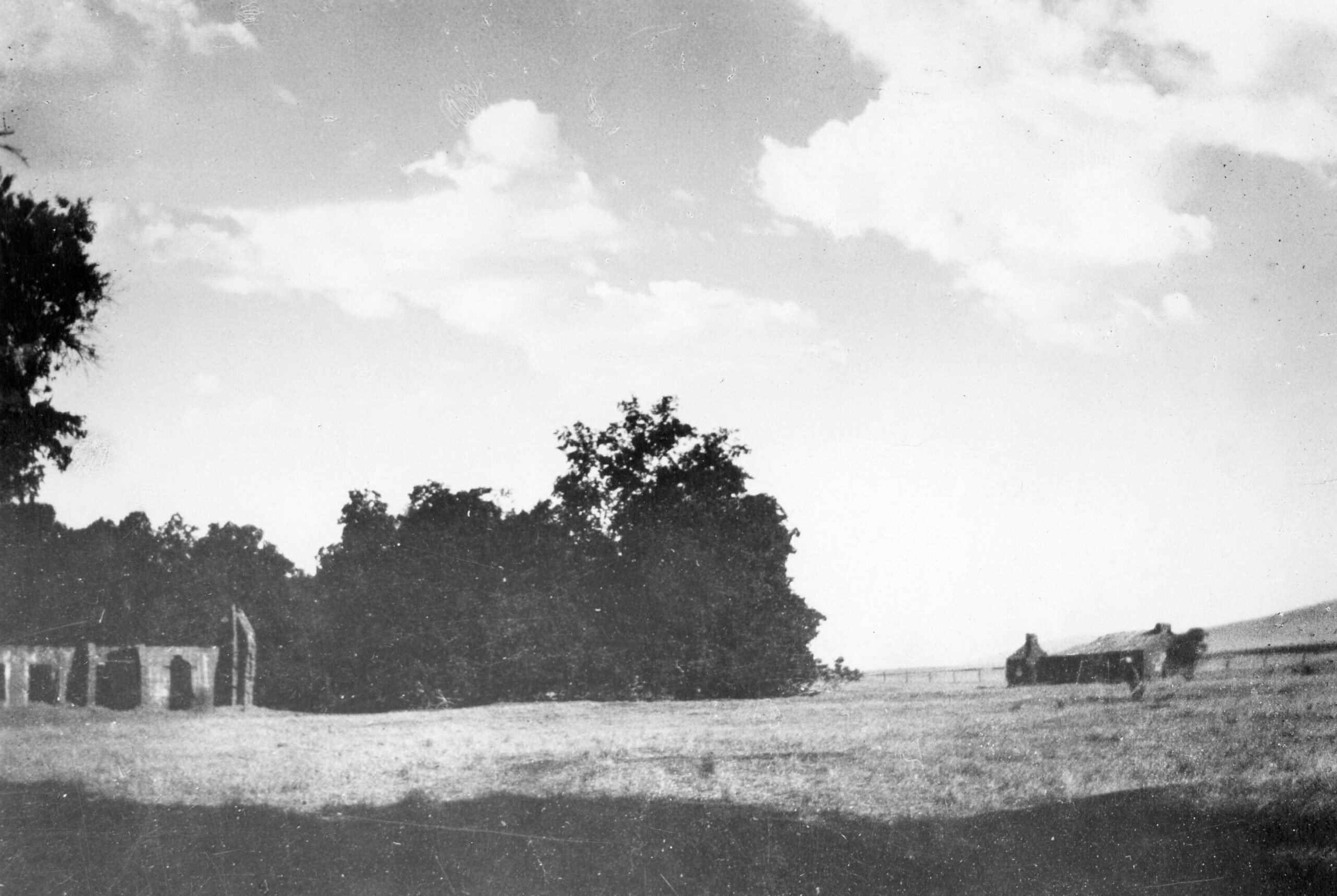
The original Tule River Indian Reservation in Tulare County was established in 1856 on prime farmland in what is now east Porterville. After California’s Gold Rush began in 1848, thousands of discouraged prospectors began settling instead in the Central Valley to farm its rich soil. Their rapidly increasing population and conversion of the natural landscape caused increasing conflict with the Yokuts-speaking people who had thrived here for thousands of years and were being rapidly dispossessed of their land and livelihood. In 1856, hundreds of the Yokuts were forced onto this “permanent homeland” reservation.
By 1857, Thomas Madden and two other local Indian agents illegally acquired state patents and title to most of the 2,240-acre original reservation, which came to be called the Madden Farm. The reservation Indians peaceably cultivated the farm’s fertile land and an additional 800 acres of adjacent federal land, producing abundant fruits, vegetables, wheat, and barley.
But by 1863, white settlers were agitating ever more insistently to push the Indians off their “permanent homeland” so that it could be opened to the whites. Consequently, in 1873, a new reservation was established about 15 miles to the east in foothill and mountain land. While the new reservation was much larger, 48,000 acres, only about 250 of its acres were farmable, so it could not begin to support the Indians. They refused to abandon their crops on the original reservation until, in 1876, they were violently relocated to the new one, where their enduring descendants continue to strive for self-government and self-sufficiency on that land today.
In 2025, the Tule River Indian Tribe regained 17,000 acres of its ancestral land, which it plans to restore to reconnect landscapes between the Giant Sequoia National Monument, the Tule River Indian Reservation, and San Joaquin Valley wetlands. Partnering with the California Department of Fish and Wildlife, the tribe has reintroduced beavers and tule elk to the land and is protecting the California condor’s historic range. The tribe’s management of the land is expected to improve groundwater recharge, reduce flood risks, and secure water supplies for disadvantaged communities downstream. So importantly, it is also a place for the tribe “to gather, heal, and simply be.”
March 2026
NOTE: The Project Team will be conducting research for a full article page as volunteer time allows. Contact Us if you’d like to help research, write about, and/or illustrate this Treasure!
Maps & Directions:
Address: 2293 E. Crabtree Ave., Porterville, CA; GPS 36.1991111, -119.342222
From Visalia, take Hwy 198 east to go south on Hwy 65 toward Porterville. Exit east (left) onto W. Linda Vista Ave. (there’s a stoplight) and then go south (right) on N. Main St. Go east (left) on E. Morton Ave., then south (right) on N. Conner St. Go east (left) on E. Olive Ave., which will curve south and become E. Doyle St. Turn west (right) onto E. Crabtree Ave. Alta Vista School will soon be on your left, at 2293 E. Crabtree.
Alternate route: Stay on Hwy 65 south to exit east onto Hwy 190. Exit Hwy 190 onto S. Plano St. north (left). Go east (right) on E. Date Ave., which will curve and become E. Springville Ave. Go north (left) on S. Page St., then east (right) onto E. Crabtree Ave. and follow it to Alta Vista School, which will be on your right at 2293 E. Crabtree.
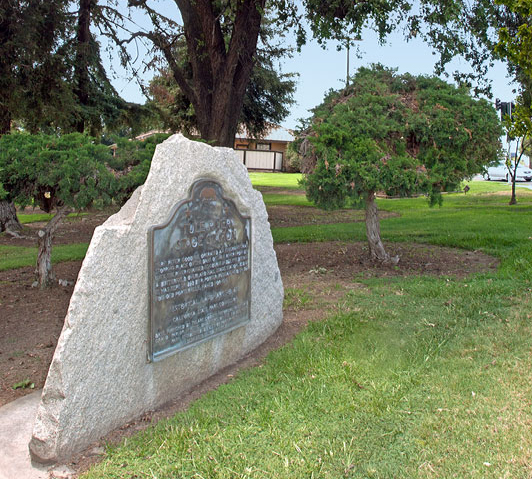
NOTE: Nothing is left of the original reservation, but you can stand where it was established. The historic marker reads: “TULE RIVER INDIAN RESERVATION A reservation was originally established in 1857. Indians from a widespread area were brought here. The natives of this vicinity were the Koyeti tribe toward the west and the Yaudanchi tribe toward the east. Both were branches of the Yokuts Indians that occupied the San Joaquin Valley. This location not proving satisfactory, the Tule Indian Reservation was moved to its present location, 10 miles southeast, in 1873. Marker placed by California Centennial Commission. Base furnished by Tulare County Historical Society. Dedicated October 16, 1949 Registration Date: 08/19/1947”
Nearby Treasures: Zalud House Museum, Porterville Historical Museum, Porterville Main Post Office, Tule River Parkway, Bartlett Park, First Congregational Church of Porterville (check open days and times before you go).
Site Details & Activities:
Environment: Valley; City of Porterville, at Alta Vista School
Activities: history, photography, tracing the history of Yokuts people in Tulare County
Open: The historic marker is outdoors and always visible; please do your part to keep its features clean and intact for future visitors to enjoy.
Site Steward: Tulare County Historical Society; tularecountyhistoricalsociety@gmail.com
Tulare Assembly Center-Temporary Detention Camp for Japanese Americans, California Historical Landmark #934.10
by Laurie Schwaller
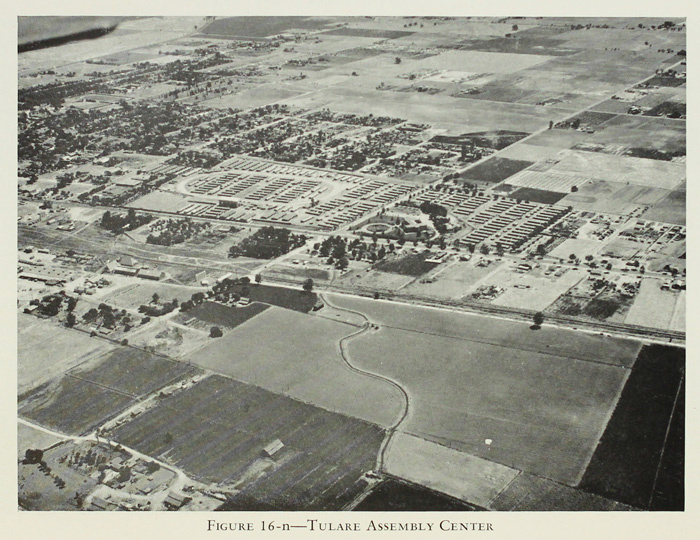
The Tulare Assembly Center at the Tulare County Fairgrounds (one of 16 Temporary Detention Camps for Japanese Americans) incarcerated almost 5,000 people in April-September, 1942. Most were then transferred to the hastily built Gila River concentration camp in Arizona and imprisoned there until autumn, 1945. (It was Executive Order 9066, issued in February, 1942, after Japan bombed Pearl Harbor, that a month later stripped of their rights about 120,000 persons of Japanese ancestry — 2/3 of whom were U.S. citizens — on the U. S. West Coast, followed by their forced imprisonment beginning in April.)
The military relocation order was finally rescinded in December, 1944, after the Supreme Court ruled that continued detention without cause was unconstitutional. The Gila River internees were released in phases, with the majority of the camp shut down in the fall of 1945.
While the Tulare Assembly Center (along with all the other temporary detention camps in California) was registered as a California Historical Landmark in 1980, the Tulare Center has never had a historical marker or any memorial erected at its site to commemorate and explain the unconstitutional continued detention without cause of the Japanese American internees in 1942.
Fortunately, that will change, as a group of history students at Tulare’s Mission Oak High School have been working for a number of years now to remedy this omission, with the Tulare County Fair Board’s approval and support.
The students’ ongoing efforts have already resulted in the creation of a 5’x8′ bronze bas relief sculpture by noted artist Sam Pena depicting internees arriving at the Center. It will be a major feature in the historical monument these scholars are planning to create and install prominently inside the fairgrounds’ main entrance. Amid Japanese garden-inspired landscaping, the memorial will include informational panels and bronze plates naming all those who were incarcerated in the Tulare Assembly Center.
The hundreds of thousands of diverse visitors to the fairgrounds’ events annually will be met and enlightened by this arresting display. And the monument will also focus a long-range educational program with local schools and the Tulare Historical Museum to continue the students’ mission to increase awareness and understanding of what happened here in 1942 — so that we will Never Forget that something like this must never happen again in our nation.
January, 2026
NOTE: The Project Team will be conducting research for a full article page as volunteer time allows. Contact Us if you’d like to help research, write about, and/or illustrate this Treasure!
Maps & Directions:
Address: 620 South K Street, Tulare, CA
From Visalia, take Hwy 198 west to go south onto Hwy 99 south to Tulare. Exit onto E. Bardsley Ave. going west right). Then go north (right) on South “K” Street, to 620 South “K” Street. The fairgrounds are on your right.
NOTE: The Tulare Assembly Center, although registered as a California Historical Landmark in 1980, has never had a historical marker or any other memorial erected at its site, so visitors as of 2026 can see only the fairgrounds. Meanwhile, a group of history students at Tulare’s Mission Oak High School have been working (researching, meeting, interviewing, designing, speaking, fundraising) for several years to create and install a monument inside the fairground’s main entrance. Their planned monument MIGHT be in place by the end of 2027, depending on when a major remodeling of that area of the fairgrounds is completed.
Nearby Treasures:Tulare Historical Museum, Tulare Union High School Auditorium (check open days and times before you go).
Site Details & Activities:
Environment: Valley, City of Tulare, Tulare County Fairgrounds
Activities: history, photography, tracing the history of World War II Japanese American incarceration in internment centers in Tulare County and beyond
Open: The fairgrounds are open several times a year for major events, such as the annual Tulare County Fair. To arrange to visit the Tulare Assembly Center monument at other times (once it has been installed), contact the Site Steward. The monument will be outdoors; please do your part to keep its features clean and intact for future visitors to enjoy.
Site Steward: Tulare County Fairgrounds Board of Directors (24th District Agricultural Association Board of Directors), 559-686-4707, customerservice@tcfair.org
Opportunities for Involvement: donate via www.tularememorial.org
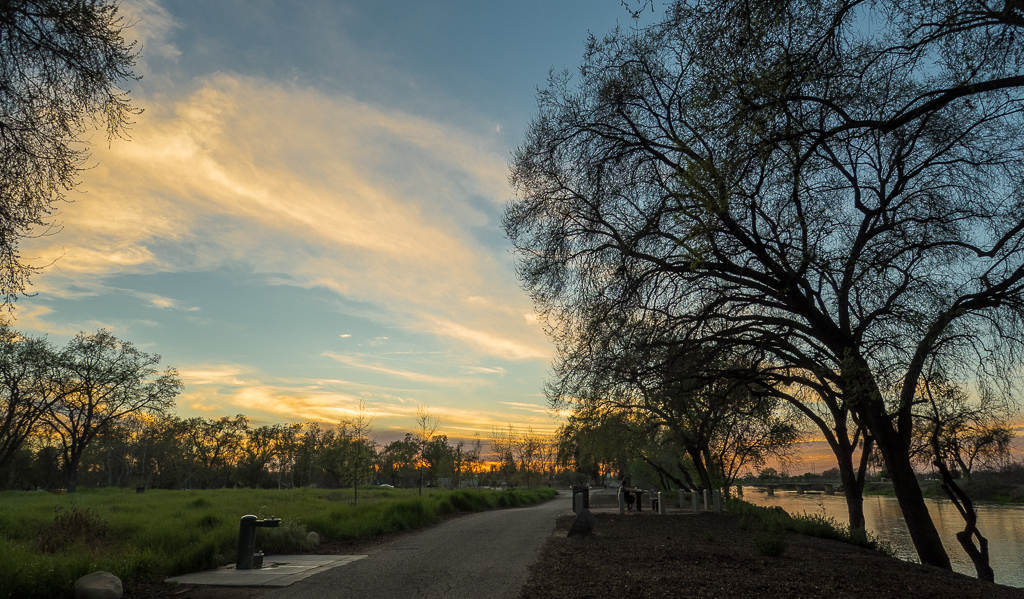
St. John’s River Trail is a scenic City of Visalia Treasure, inviting you to travel up to 4.4 level miles along its namesake river on a paved path suitable for people of all ages and abilities (and dogs, allowed on leash) to walk, hike, run, or wheel along while enjoying the views, reading the interpretive signs, admiring the areas where native trees and smaller plants have been restored, birdwatching, taking a break on a trailside bench, or visiting some of the adjacent parks via their short connecting trails. Early morning and sunset hours are most photogenic.
January, 2026
NOTE: The Project Team will be conducting research for a full article page as volunteer time allows. Contact Us if you’d like to help research, write about, and/or illustrate this Treasure
Maps & Directions:
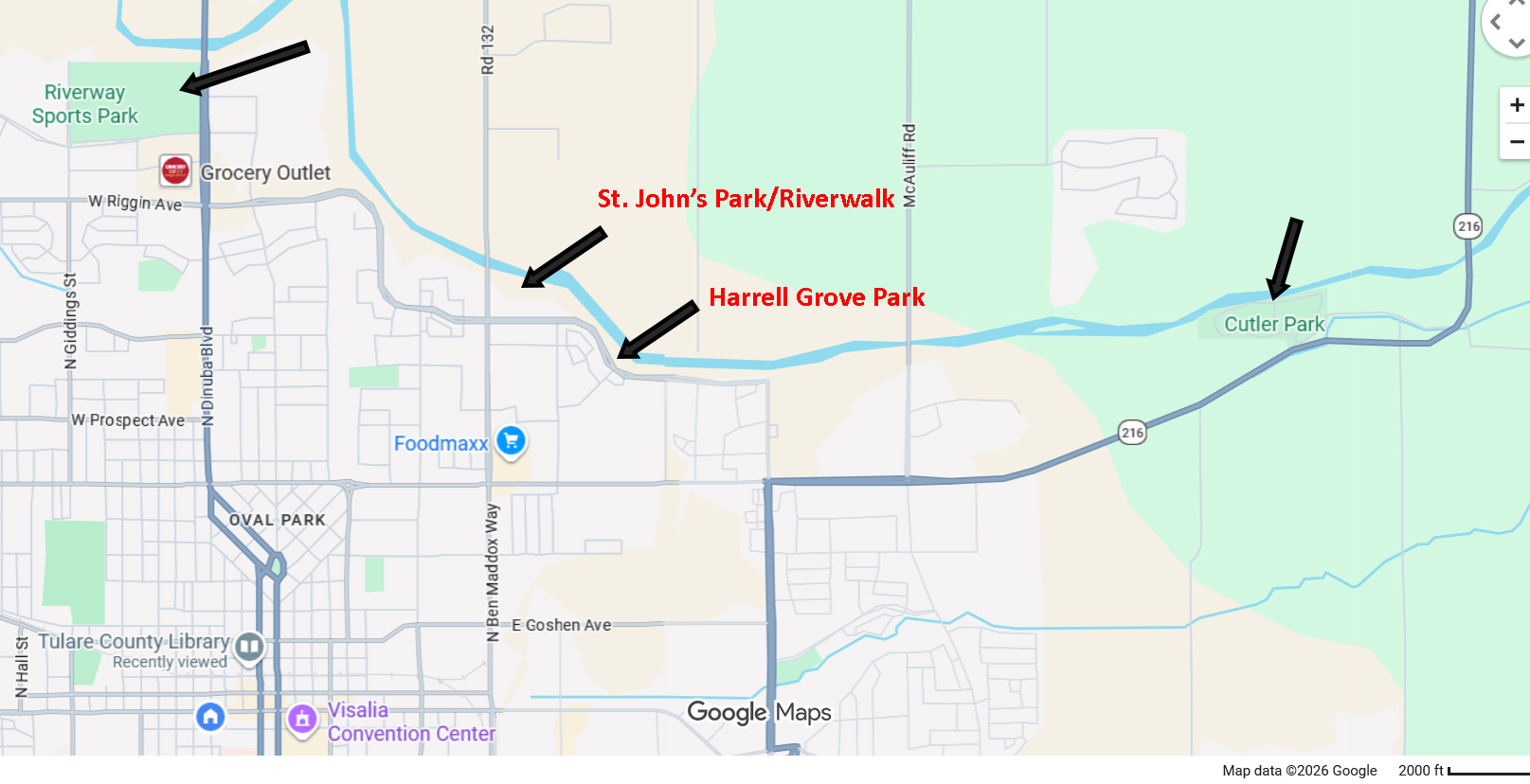
Addresses: Visalia’s paved, multi-use St. John’s River Trail travels 4.4 miles along its namesake river from Riverway Sports Park, 3611 North Dinuba Blvd. (Hwy. 63 N), on its west end, to Cutler Park, 15520 Ivanhoe Dr., on its east end. Both these sites have parking, potable water, picnic facilities, playground equipment, and restrooms, and are ADA accessible.
There are several other access sites along the trail (all with parking, but far fewer facilities): Riverwalk, located where N. Ben Maddox Way meets the river, has picnic tables and informational signage; St. John’s Park, at 2457 N. Ben Maddox, has picnic tables and playground equipment; Harrell Grove Park, 2604 E. St. John’s Parkway, has outdoor fitness equipment, a tot lot/playground, and picnic tables. There is also a small parking area with access to the trail at the north end of Lovers Lane.
Directions:
From downtown Visalia, take Hwy 198 east to exit north (left) on Ben Maddox Way and follow N. Ben Maddox to Riverwalk and/or St. John’s Park (2457 N. Ben Maddox).
Alternatively, to reach Riverway Sports Park from downtown Visalia, go north on Court Street and, at the Oval, take N. W. 3rd Ave. to go north (right) onto Hwy 63/N. Dinuba Blvd. Follow this road to Riverway Sports Park (3611 N. Dinuba), on your left, for parking and access in its northeast section to the River Trail.
To reach Cutler Park from downtown Visalia, go north on Court Street and, at the Oval, take N. E. 3rd Ave. to then go east (right) onto Hwy 216/Houston Ave. Follow this road past Lovers Lane, past Golden West High School, and then past 5th Ave. Cutler Park entrance will be on your left (north side of Hwy 216). Access to the River Trail is on the west side of Cutler Park. (Note that Cutler is a Tulare County park, not a City of Visalia park, so different regulations may apply there.)
Site Details & Activities:
Environment: Valley, paved trail (approx. 4.4 mi.) along south side of the St. John’s River, riparian areas include native oaks and extensive irrigated plantings of oaks and other drought-resistant native flora, trail is basically flat, offers occasional benches and trash cans, some stretches have no shade, occasional side trails lead to small parks or parking areas and sometimes connect to other trails, such as the Modoc Ditch Trail and the Santa Fe Trail
Activities: bicycling, birdwatching, dog walking (pets must be restrained on leash at all times; scoop poop and dispose of it in one of the trash cans along the trail), hiking, inline skating, interpretive signage, photography, walking (stroller and wheelchair friendly pavement with access at Riverway Sports Park and Cutler Park), wildflower and small wildlife viewing (seasonal) ; no horses (or other equines) or motorized equipment (including e-bikes, e-scooters, etc.) allowed
Open: The trail is open 5:00 a.m. – 10:00 p.m., unless closed for emergency or maintenance conditions (the trail is not lighted)
Site Steward: City of Visalia Parks & Trails Department, 559-713-4365
Opportunities for Involvement:donate Visalia Community Enhancement Foundation[https://www.supportvisaliaparks.com/about-5] , volunteer Visalia Community Enhancement Foundation [https://www.supportvisaliaparks.com/contact-8]
Links:City of Visalia Saint Johns River Trail [https://www.visalia.gov/facilities/facility/details/st-johns-river-trail-38]
The Tule River Stage Station – California Historical Landmark #473
by Laurie Schwaller
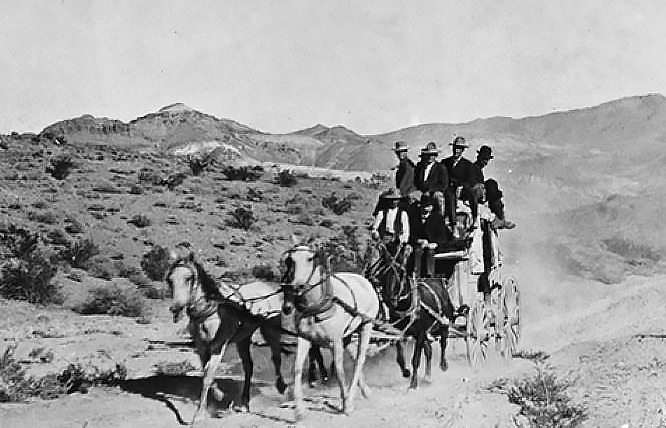
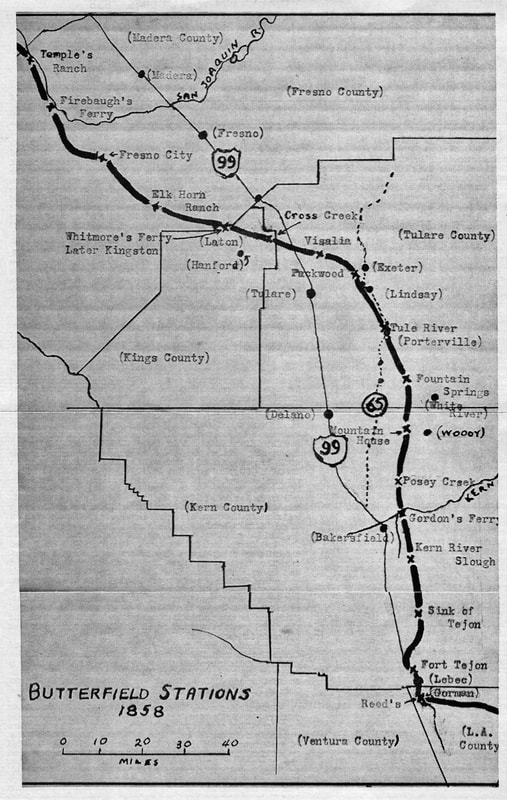
The Tule River Stage Station serving the Butterfield Overland Mail stage route through Tulare County in 1858-1861 was housed on this site (which had been a riverside stopover on the old emigrant trail since 1854). In 1860, Royal Porter Putnam was the station’s keeper. In 1862, a huge flood moved the Tule River’s course south a mile. Convinced that the river would stay in its new course, Putnam bought 40 acres of land around the station’s site, got the parcel surveyed, and laid out the plat of a new town, still called Porterville today.
January 2026
NOTE: The Project Team will be conducting research for a full article page as volunteer time allows. Contact Us if you’d like to help research, write about, and/or illustrate this Treasure!
Maps & Directions:
From Visalia, take Hwy 198 east to go south (right) onto Hwy 65 south toward Porterville.
Take the Linda Vista Ave. exit east (left) to N. Main St.
Go south (right) onto N. Main down to its intersection with Henderson Ave.
Go west (right) onto Henderson. The marker will be almost immediately on your left, on the SW corner of the intersection with Sunnyside Ave., in the small park dominated by the huge “Salute to the Farmer” statue.
Nearby Treasures:Porterville Historical Museum, Porterville Main Post Office, Tule River Parkway, First Congregational Church of Porterville, and the Zalud House Museum (check open days and times before you go, except for Tule River Parkway, which is always open, unless closed due to emergency conditions).
Site Details & Activities:
Environment: Valley, City of Porterville, small public park
Activities: history, photography, tracing the Butterfield Overland Stage route (and Porterville history) in Tulare County
Open: This site is outdoors and always accessible; please do your part to keep its features clean and intact for future visitors to enjoy.
Site Steward: City of Porterville Parks & Leisure Services, 559-791-7695, parks_leisure@ci.porterville.ca.us
Links: Butterfield Overland Stage Route in Tulare County [TCT WordPress Article Pending]
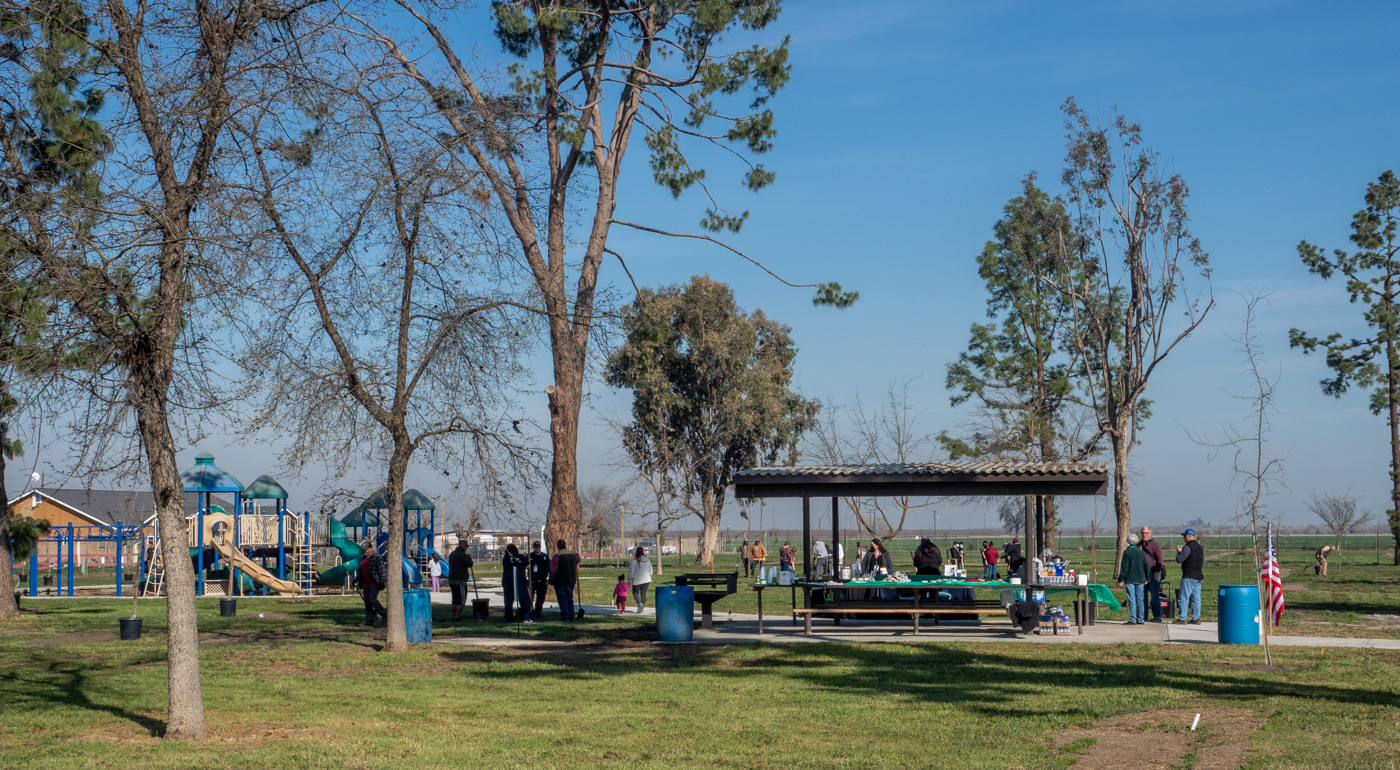
Woodville Park provides the small town of Woodville with a free, fenced, 10-acre gathering space for residents and visitors of all ages and abilities, offering shaded playground equipment, an arbor, 5 picnic tables with BBQ grills, a soccer field, a 9-hole disc golf course, a baseball diamond with backstop, a basketball court, horseshoe pits, paved pathways, open green spaces, and a restroom. Volunteers tend and add to the grounds (new plants, flagpole, baseball field), and put on events (movie nights, resource fairs, holiday celebrations) keeping the park alive and lively. Vive el parque!
January, 2026
NOTE: The Project Team will be conducting research for a full article page as volunteer time allows. Contact Us if you’d like to help research, write about, and/or illustrate this Treasure!
Maps & Directions:
Address: 16482 Avenue 168, Woodville, CA
From Visalia, take Hwy 198 east and exit south (right) onto Lovers Lane.
Follow Lovers Lane to its junction with Ave. 192 and turn east (left) toward Plainview and Strathmore, and then shortly turn south (right) onto Rd. 152/J15.
At Ave. 168, turn east (left) and you’ll soon come to the park entrance on the north (left) side of the road.
Nearby Treasures: In Porterville (about 12 miles to the east), you can visit the Porterville Historical Museum, Porterville Main Post Office, Tule River Parkway, First Congregational Church of Porterville, and the Zalud House Museum(check open days and times before you go).
Site Details & Activities:
Environment: Valley, in community of Woodville, level land, paved pathways
Activities: baseball diamond with backstop, basketball court, baile terapia/dance therapy (on basketball court), disc golf, dog walking (always on leash), horseshoe pits, playground equipment with sunshade, volleyball (set up temporary net on basketball court), picnicking, photography, soccer field, special events
Open: The park is closed on Tuesdays and Wednesdays. Park open hours vary seasonally; see https://tularecountyparks.org/parks-hours-fees
Site Steward: Tulare County Parks, 559-205-1100; Tulare County Parks online reservations https://tularecountyparks.org/reservations-special-events
Opportunities for Involvement: donate, volunteer; see https://tularecountyparks.org/support-the-parks
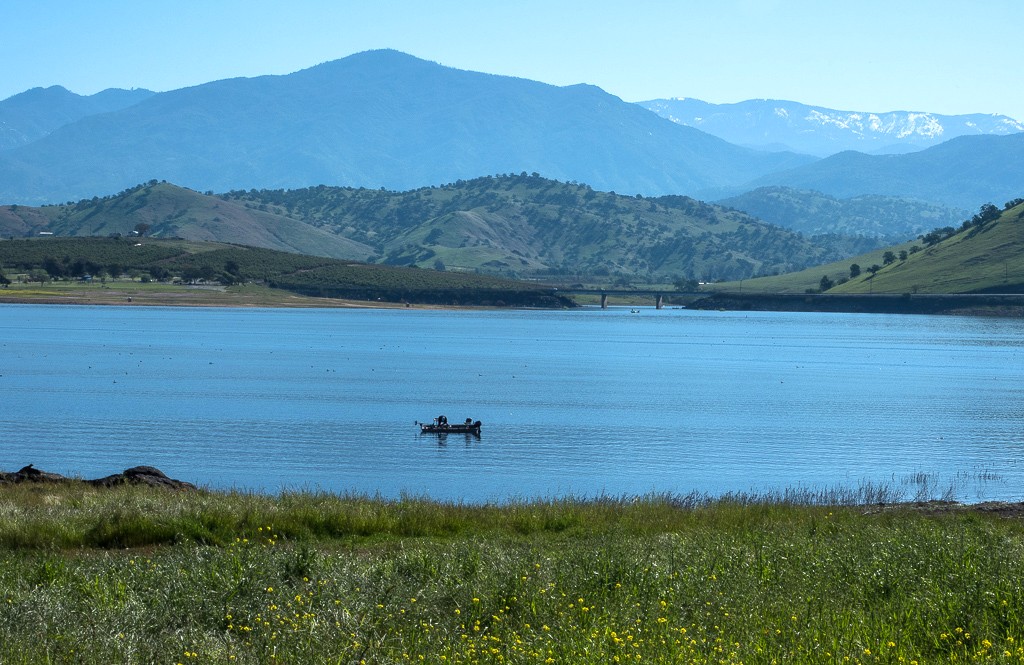
Success Lake beckons in the scenic Sierra Nevada foothills just 8 miles east of Porterville. The lake formed in 1961 after its huge earth-filled dam was completed by the U.S. Army Corps of Engineers to provide flood risk and water supply management, wildlife habitat, hydropower, and extensive recreation opportunities including biking, birdwatching, boating, camping, learning at campfire programs and Ranger talks, fishing, hiking, hunting, photography, picnicking, stargazing, swimming, and wildflower and wildlife viewing. Open year-round, the 2,450-acre reservoir and its neighboring 1500-acre wildlife refuge promise visitors of all ages and abilities a great day out in nature.
January, 2026
NOTE: The Project Team will be conducting research for a full article page as volunteer time allows. Contact Us if you’d like to help research, write about, and/or illustrate this Treasure!
Maps & Directions:
From Visalia, take Hwy 198 east to exit south (right) onto Hwy 65 toward Exeter and Porterville. At Porterville, take Hwy 190 east toward Success Lake and follow signs to the lake (on your left). This road gives you access to the office, the campground, the marina, and the lake at the well-developed Tule Recreation Area.
To access the west side of the lake, you will turn off Hwy 190 BEFORE you get to the lake: driving east from Porterville, you will turn left (north) onto Rd. 284 via the roundabout and at the T intersection turn right (east) onto Worth Dr. Continue past the entrance to Bartlett Park and go uphill to the lake and Rocky Hill Recreation Area.
To access the beautiful Big Sycamore Loop Trail, continue east on Hwy 190 after the roundabout and watch for the sign for the road exiting left to the Army Corps of Engineers headquarters (BEFORE you get to the dam) where the signed trailhead is near the parking lot.
To access the Kincade Cove Wildlife Management Area(wildlife refuge) bordering the lake’s northwest shoreline, come south on Hwy 65 to Strathmore (well north of Porterville) and exit east (left) onto county road J28 /Ave. 196, which will eventually curve right (south) as Rd. 276/J28 and then curve left (east) as Ave.176/J28. You’ll soon glimpse the lake on your right (unless it’s getting too low) and see a road on your right that goes south and southwest to the wildlife refuge and the northwest arm of the lake.
NOTE: If you continue east on J28, you’ll come to a T intersection with Hwy 190. If you turn right (west), you’ll soon come to the Tule Recreation Area and you can continue on from there to Porterville and Hwy 65, making a nice loop trip.
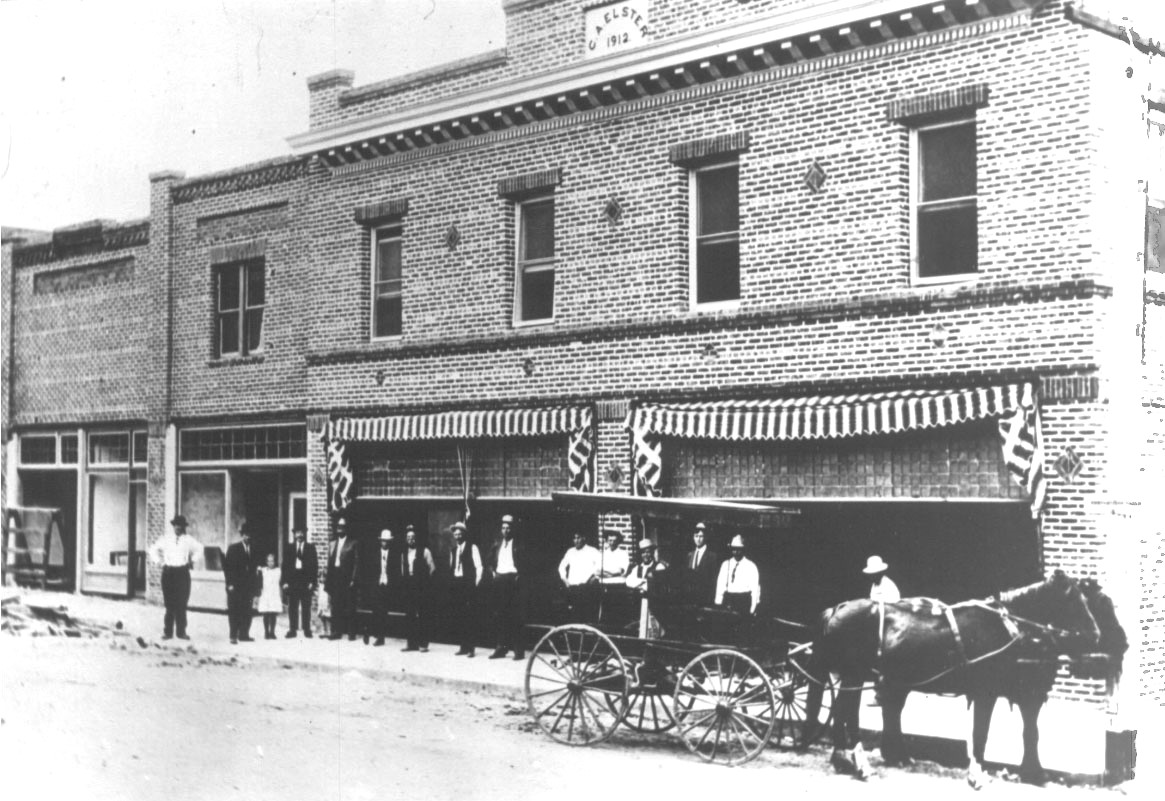
Nearby Treasures:Bartlett Park, Tule River Parkway, Zalud House Museum, First Congregational Church of Porterville, Porterville Main Post Office, SpringvilleHistorical Museum, Elster Building
Site Details & Activities:
Environment: Foothills on the west side of the Sierra Nevada, about 8 miles east of Porterville, 2,450 acre reservoir surrounded by open grassland with riparian areas in various coves of the lake and scattered oak woodland on the hills; 1500 acre wildlife management area; hot and dry in the summer (unless you’re in the lake)
Activities: bicycling, birding, boating, botanizing, camping (Tule campground), canoeing, dog walking (dogs must be on maximum 6′ leash at all times), fishing (license required, unless under age 16: www.wildlife.ca.gov/Licensing/Fishing): , hiking, horseback riding, hunting (seasonal, license and permit required: www.wildlife.ca.gov/Licensing/Hunting), kayaking, marina (has rentals; see below), picnicking, playground equipment, ranger interpretive and campfire programs, stargazing, swimming, wildlife and wildflower viewing, wildlife refuge management area (exit Hwy 65 to go east at Strathmore onto Ave. 196/Rd. J28 east to Rd. 276/J28 south to Ave. 176/J28 east; Kincade Cove Wildlife Management Area will be on your right very soon.
Open: Year-round, unless closed due to emergency conditions; office hours Monday-Friday: 7:45 a.m. -4:30 p.m.; Tule campground gates are closed from 10 p.m. to 6 a.m. (make reservations through [www.recreation.gov/camping/campgrounds/223655])
Site Steward: U.S. Army Corps of Engineers, 559-783-9200 (information, e.g., campground, reservations), 559-784-0215 (project office); success-info@usace.army.mil; marina phone: 559-539-2341, [www.successlakemarina.com]; Tule campground reservations: [www.recreation.gov/camping/campgrounds/223655]
Opportunities for Involvement: donate, volunteer
Links: U.S. Army Corps of Engineers Success Lake [https://www.spk.usace.army.mil/Missions/Recreation/Success-Lake/]
Visiting the Squatters Cabin in Sequoia National Park
by Laurie Schwaller
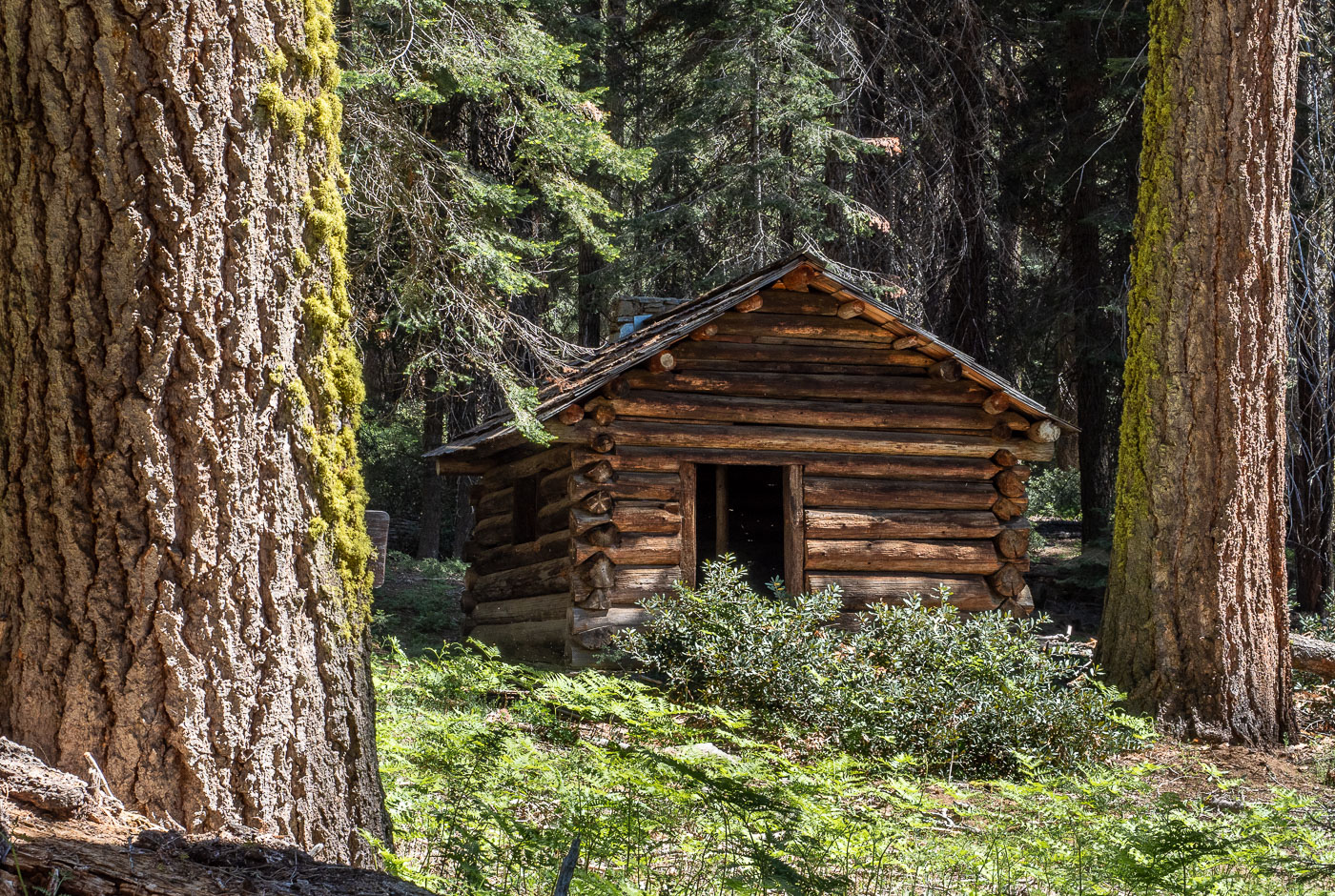
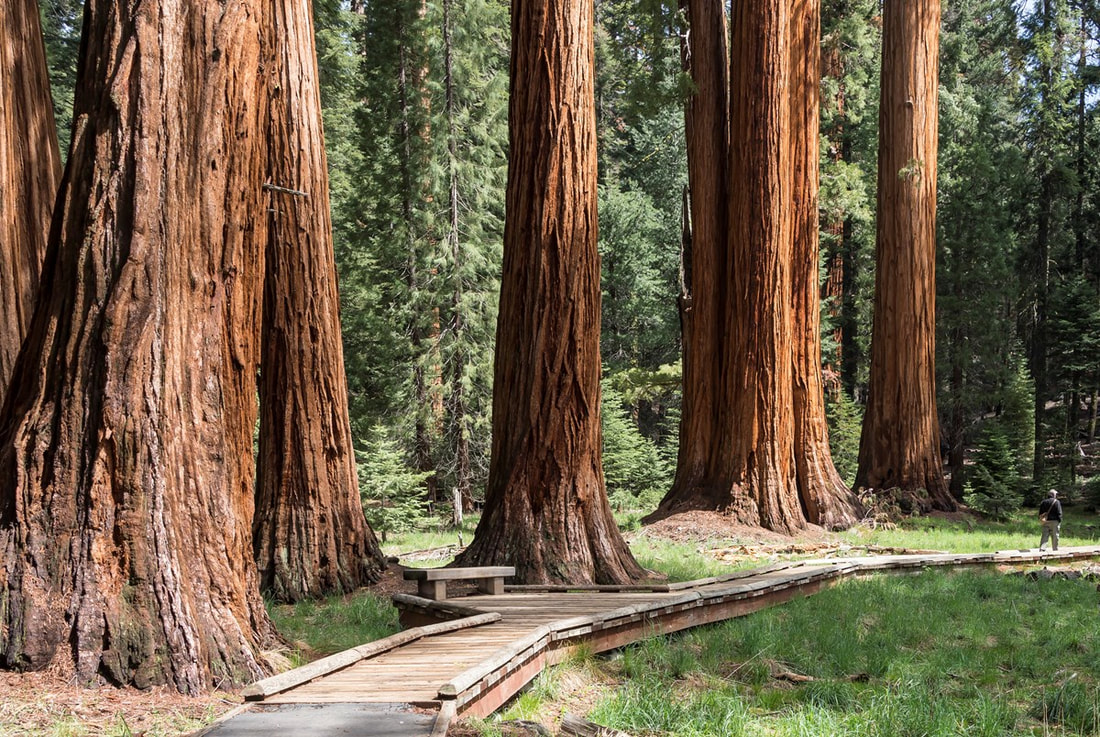
The Squatters Cabin, one of Sequoia National Park’s oldest remaining buildings, is also one of only two known remaining structures of the historic Kaweah Colony (along with the Colony Mill Road, now a hiking trail). The fascinating stories of this ill-fated idealistic, socialistic colony and the founding of our nation’s second great national park are deeply intertwined, centering issues, trends, philosophies, and controversies that are still very much alive today. This homestead cabin beside peaceful Huckleberry Meadow amid the ancient giant sequoias, stands literally and figuratively at a nexus of these ongoing conflicts. Discover this history!
December, 2025
NOTE: The Project Team will be conducting research for a full article as volunteer time allows. Contact us if you’d like to help research, write about, and/or illustrate this Treasure!
Maps & Directions:
From Visalia, go east on Hwy 198 through Three Rivers to the Sequoia National Park entrance station (fee), where Hwy 198 becomes the Generals Highway.
Continue up the mountain on the Generals Highway to just before the Giant Forest Museum, where you will turn right onto the Moro Rock/Crescent Meadow Road.
Follow this road (bearing left where the road to Moro Rock bears to the right) to the Crescent Meadow parking lot and the trailhead on the west (left-hand) side of Crescent Meadow going to Huckleberry Meadow.
(NOTE: Crescent Meadow Road may be closed in peak season (typically mid-May to mid-September) to private vehicle traffic; if so, you can park across the highway from the museum and then catch the Gray Route 2 shuttle to Crescent Meadow).
Maps & Directions:
Take the Crescent Meadow trail on the left (west) side of the meadow and go north to the first trail junction, where you’ll go left (west) toward Huckleberry Meadow.
At the next junction, go straight (west) toward Huckleberry Meadow. Soon you’ll see the Squatters Cabin, sitting just a bit above the meadow, on your left.
Nearby Treasures: Tharp’s Log, near the northwest edge of Log Meadow, trailhead at Crescent Meadow; Moro Rock Stairway, just a short loop drive off the Crescent Meadow Road.
Site Details & Activities:
Environment: giant sequoia grove, mixed conifer forest, lush meadows, creeks, rock outcrops, wildlife, many trails; carry a good map
Activities: birding, botanizing, hiking, history, photography, wildflower and wildlife viewing (NOTE: no water is available on the trails [any water in creeks, etc. must be purified before drinking]; water and restrooms are available at Crescent Meadow, except in snow season)
Open: daily, weather permitting (Crescent Meadow/Moro Rock road closed to vehicle traffic in snow season; road is open to hikers, snowshoers, and cross-country skiers), except in emergency conditions; park entrance fee
Site Steward: National Park Service, Sequoia National Park, 559-565-3341
Opportunities for Involvement:donate [www.nps.gov/seki/getinvolved/donate.htm and sequoiaparksconservancy.org/become-a-friend/] , volunteer [www.nps.gov/seki/getinvolved/supportyourpark/individual.htm and www.nps.gov/seki/getinvolved/volunteer.htm and , Sequoia Parks Conservancy [sequoiaparksconservancy.org]
Links:Sequoia Kings Canyon National Parks (NPS Site) [www.nps.gov/seki/index.htm]; Plan Your Visit, Permits, Current Conditions [https://www.nps.gov/seki/planyourvisit/index.htm]
Books:
1) Kaweah Remembered: The Story of the Kaweah Colony and the Founding of Sequoia National Park, by William C. Tweed (Sequoia Natural History Association, 1986)
2) Co-Operative Dreams – A History of the Kaweah Colony, by Jay O’Connell (Raven River Press, 1999)
3) Challenge of the Big Trees -The Updated History of Sequoia and Kings Canyon National Parks, by William C. Tweed and Lary M. Dilsaver (University of Virginia Press, 2017)
4) King Sequoia: The Tree That Inspired a Nation, Created Our National Park System, and Changed the Way We Think about Nature, by William C. Tweed (Heyday, 2016)
There are also many articles online about the Kaweah Colony and its lasting significance.
Sequoia and Kings Canyon National Parks Trail Crews – the People Whose Work We Walk on
by Laurie Schwaller
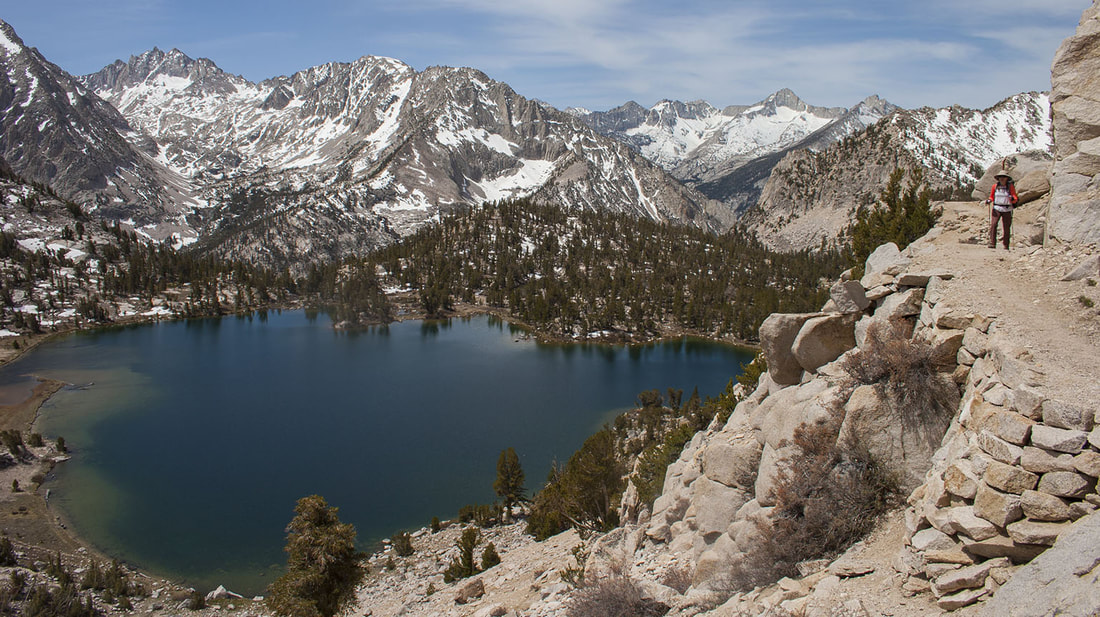
Over a million people a year walk, hike, or ride horseback on the amazingly diverse trails of Sequoia and Kings Canyon National Parks. From a short, easy stroll into a magnificent giant sequoia grove to a strenuous backpacking trip to the summit of rugged Mt. Whitney, the highest peak in the 48 contiguous states, these paths offer people of all ages, inclinations, and abilities a multitude of opportunities to experience the parks’ wonders in the very best way: at a walking pace, free to pause whenever they please, immersed in the sights, scents, sounds, and thrills of the wild world.
Ranging in elevation from less than 2,000 feet up to 14,500 feet, the trails traverse over a thousand miles to connect the major features and extraordinary environments of these spectacular parks. Who builds these beckoning byways, and who maintains them in the face of floods, fires, avalanches, rock slides, falling trees, deep snows, and thoughtless trail-cutters?
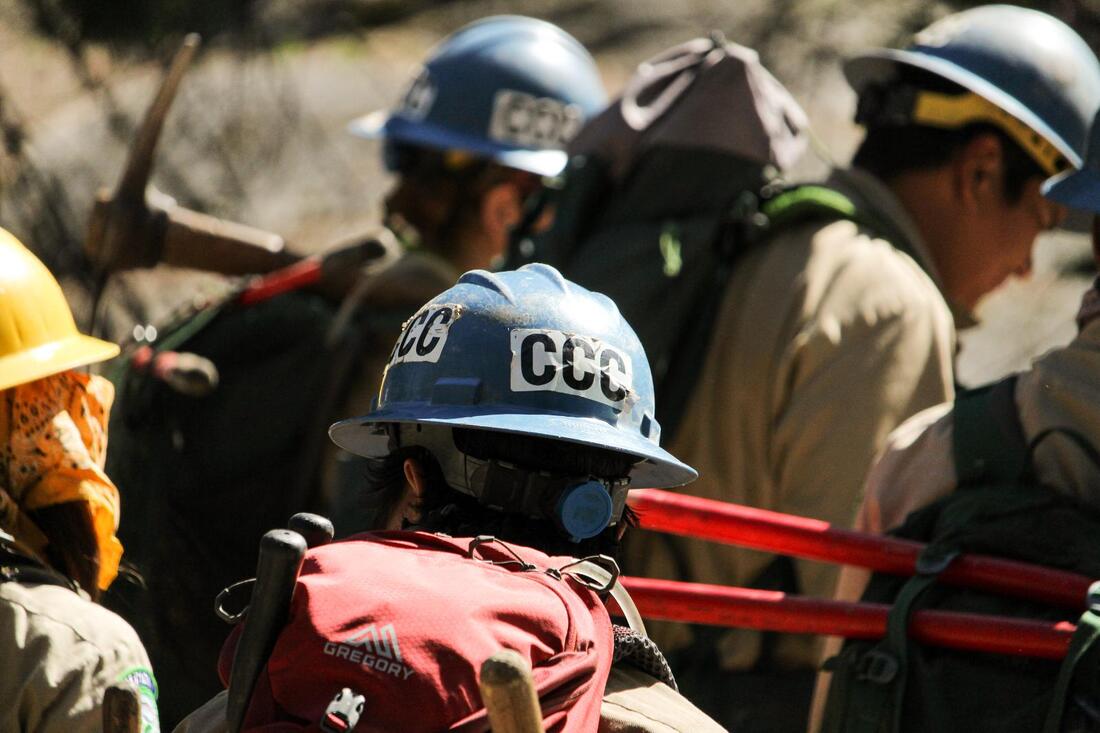
Since the National Park Service was established in 1916, this essential work has been carried out primarily by NPS Trail Crews (while Civilian Conservation Corps workers contributed a tremendous amount of trail maintenance from 1933 to 1942). Beginning in the 1970s, the parks have also been partnering with volunteer service organizations such as the Youth Conservation Corps to help maintain the miles of trails being “loved to death” by the increasing national interest in outdoor recreation.
It’s not easy to get hired on to a Sequoia and Kings Canyon National Parks trail crew. First, applicants must realize that their work locations may be in any area of these two parks, which are 93% wilderness and span “an extraordinary continuum of ecosystems, arrayed along the greatest vertical relief (1,370 to 14,495 feet elevation) of any protected area in the lower 48 states.”
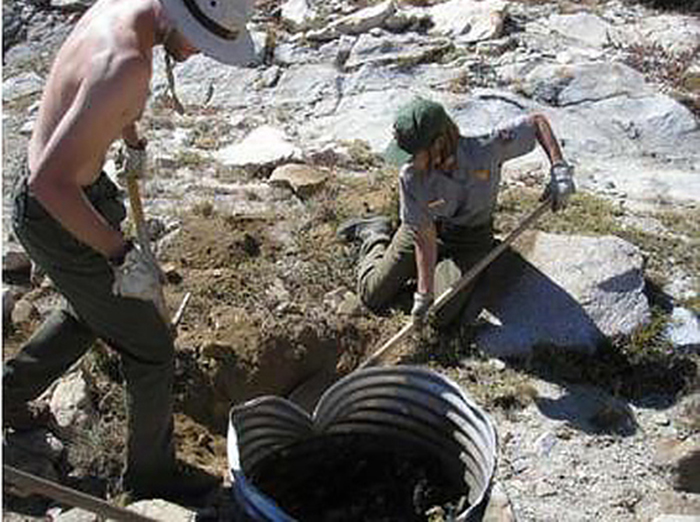
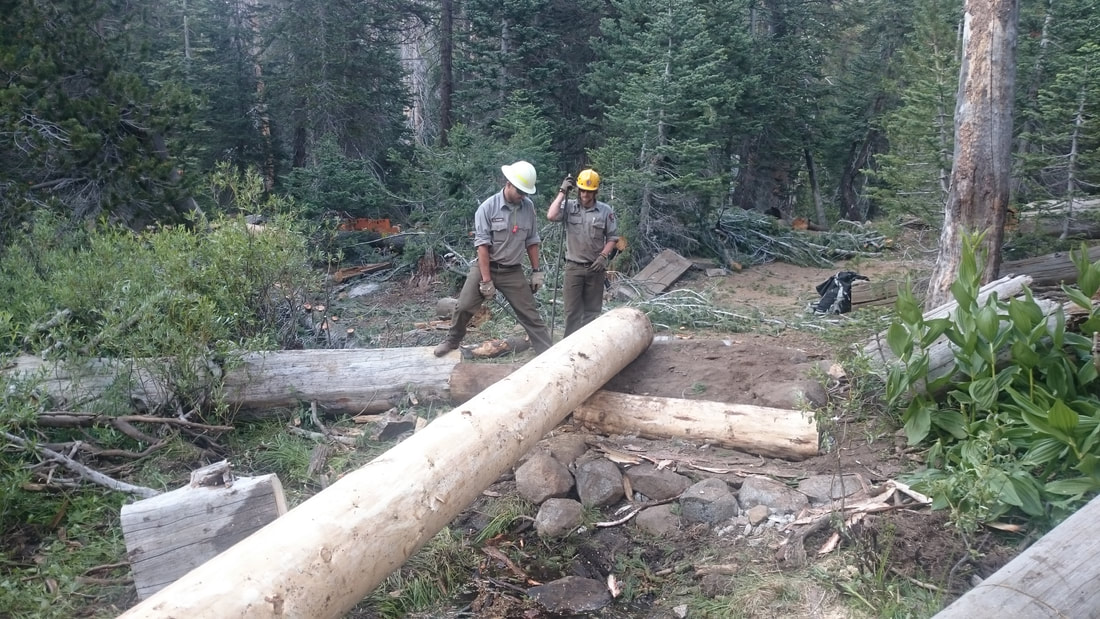
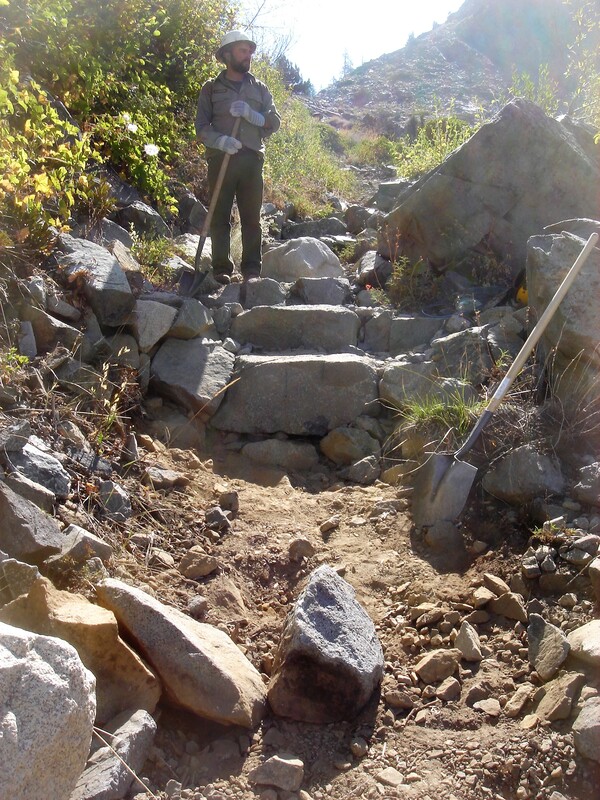
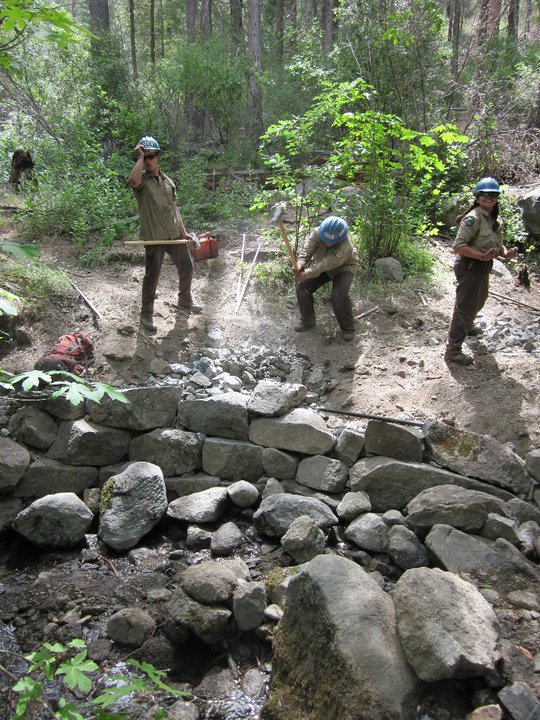
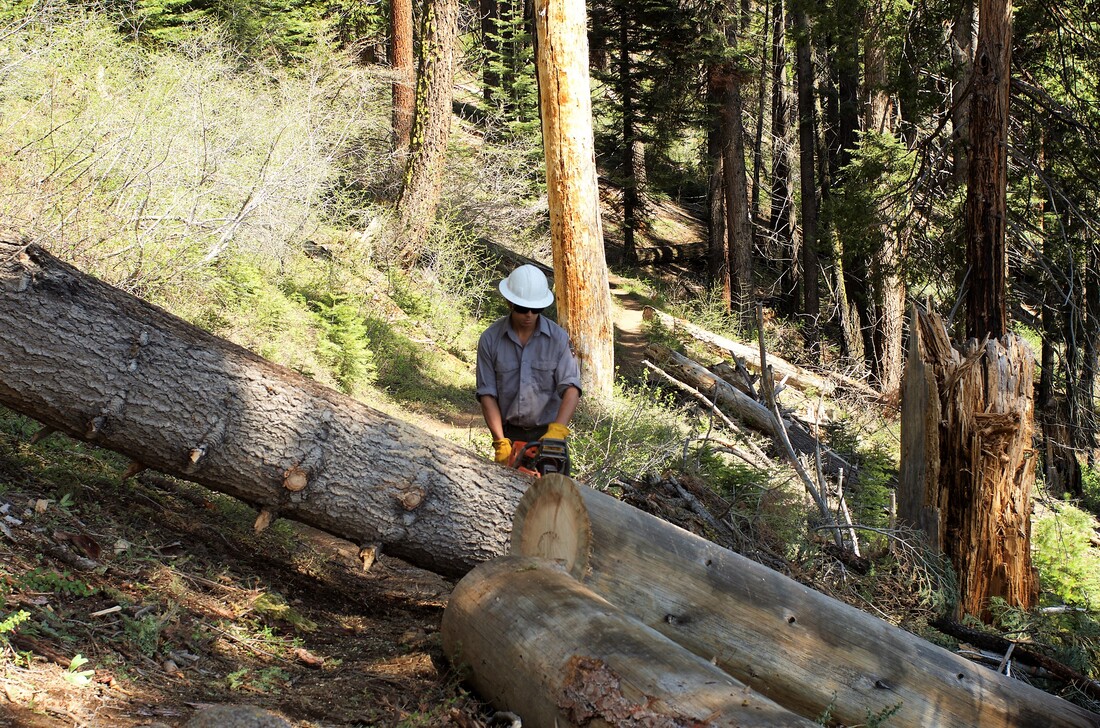
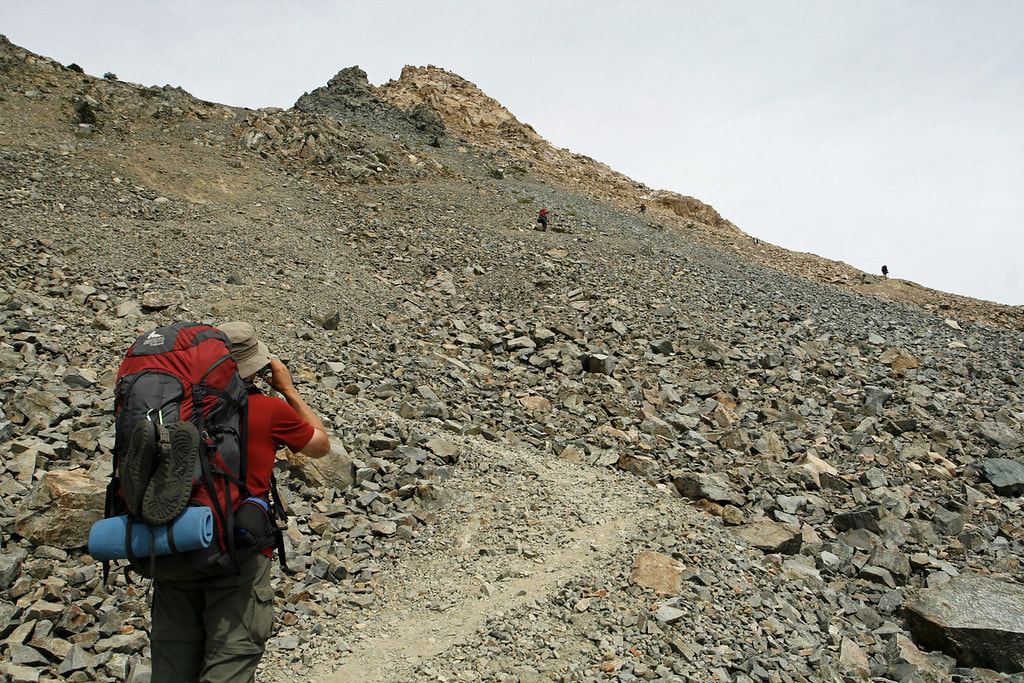
Trail crew positions require wilderness travel and camping skills; the ability to hike at high altitude for extended periods of time and up to 20 miles a day while carrying backpacks, tools, and supplies weighing at least 50 pounds; and the ability to perform masonry and carpentry work in addition to a full spectrum of basic trail work, including clearing fallen logs, removing encroaching vegetation, digging to maintain drainage structures or trail tread, and moving materials of all shapes and sizes in rugged terrain.
Are you still interested?
Trail crews in these parks work outdoors in temperatures varying from over a hundred degrees down to near ten degrees, and may experience heavy rain, hail, and falling snow. Typically, the work environment is hot, dusty, dirty, and sometimes noisy. Working long hours, hiking or riding horseback in rough country, crews may encounter hazards such as poisonous plants and animals and high, cold, swift water at stream crossings.
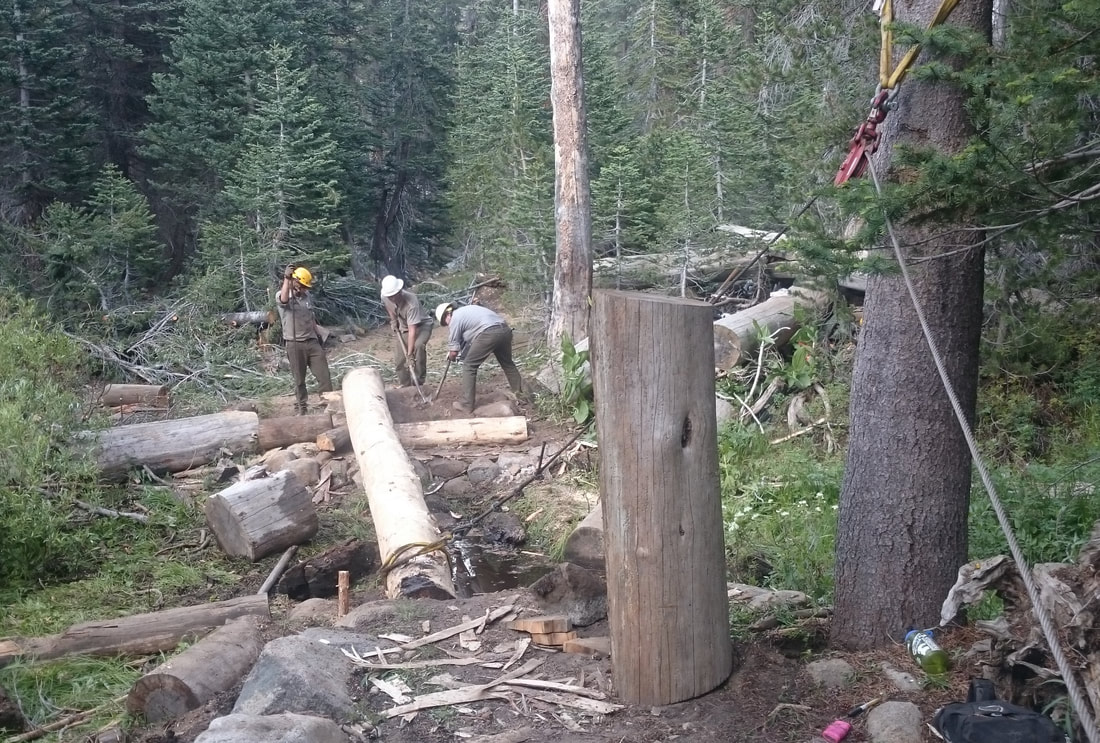
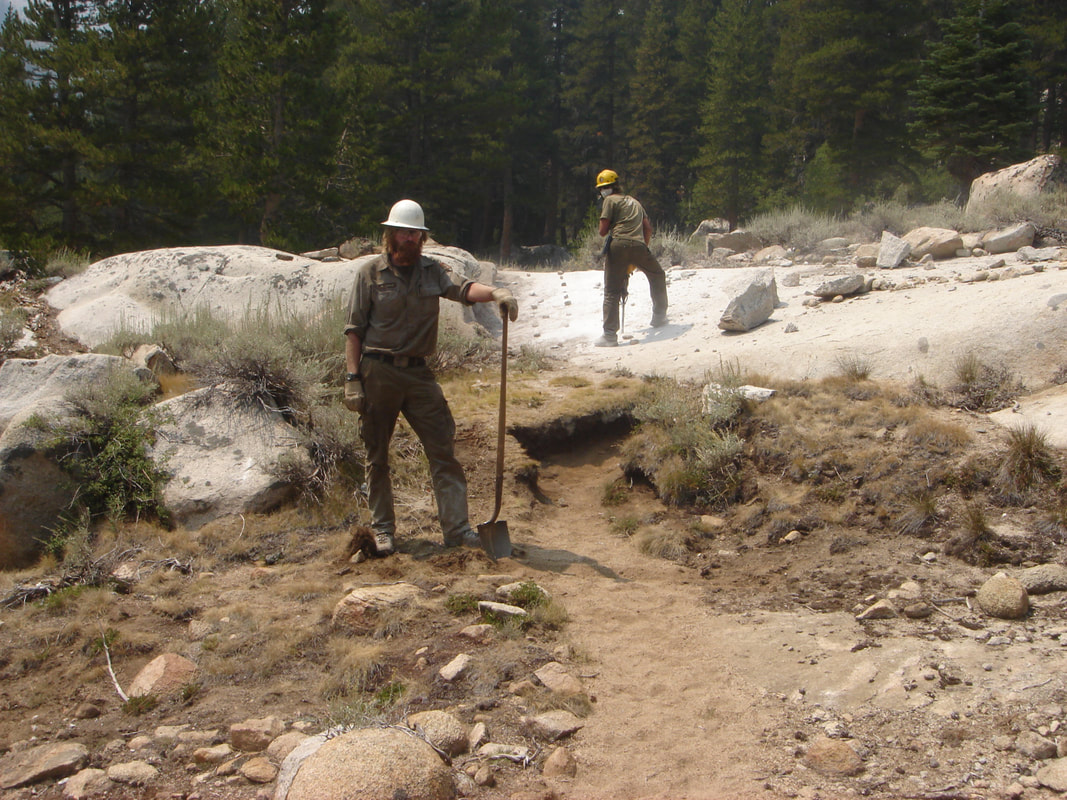
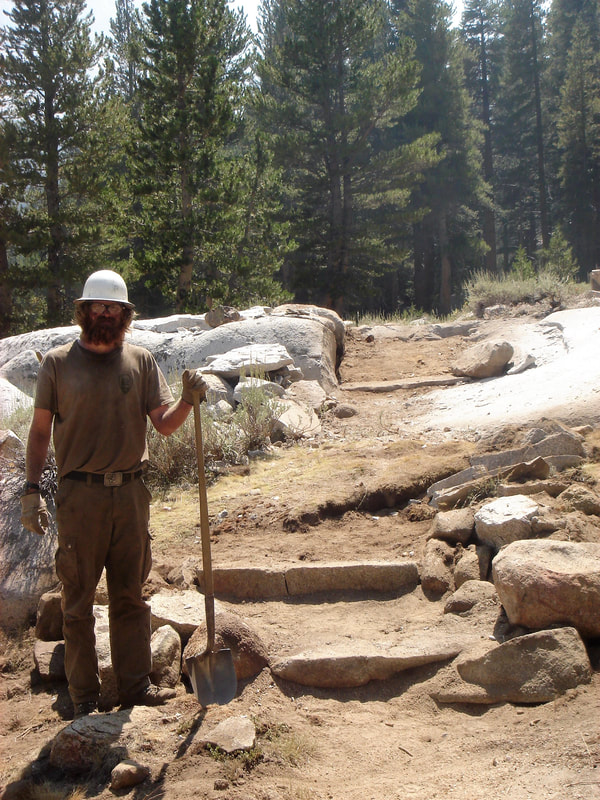
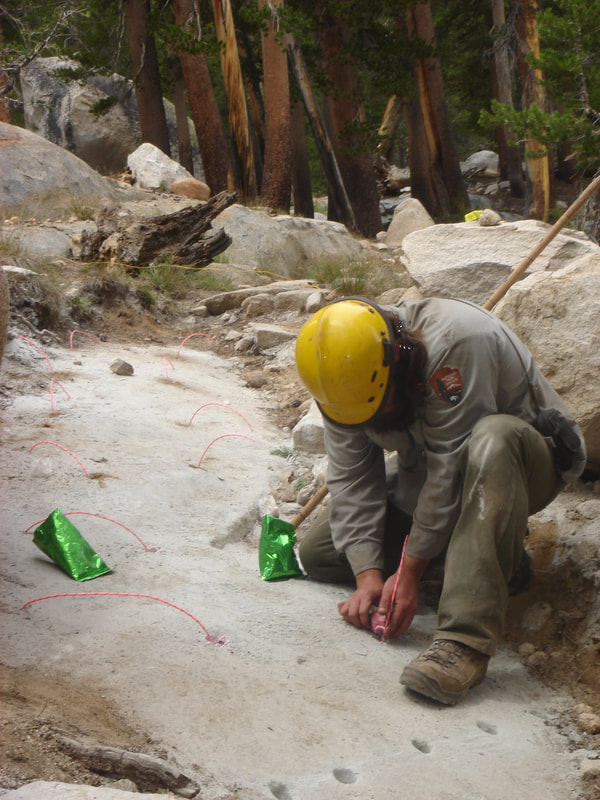
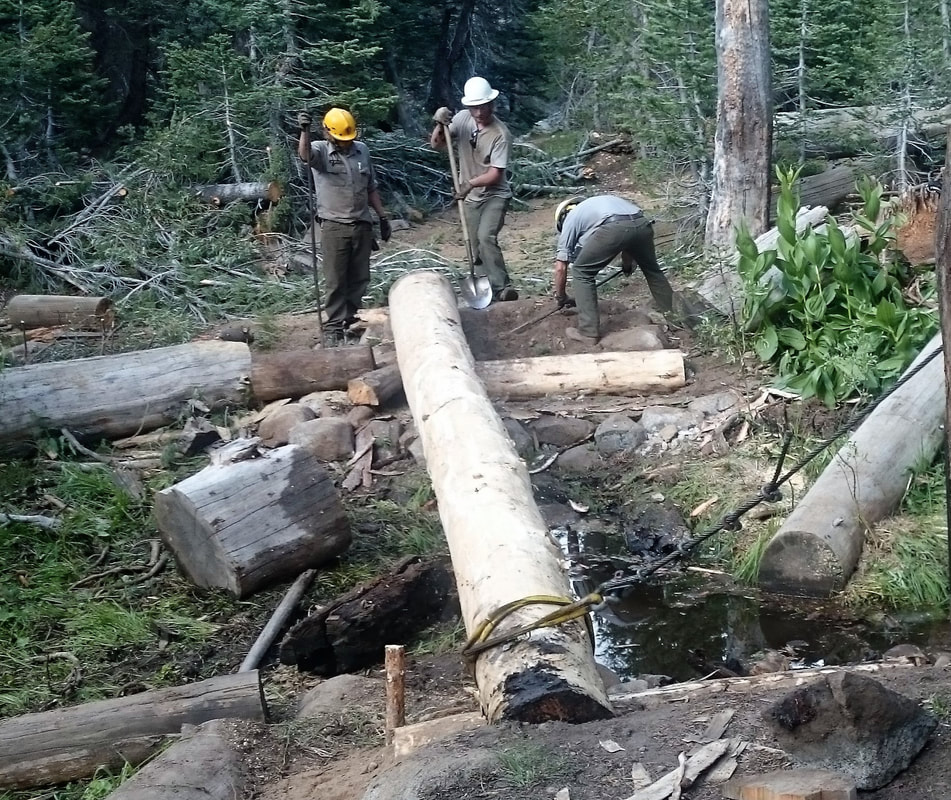
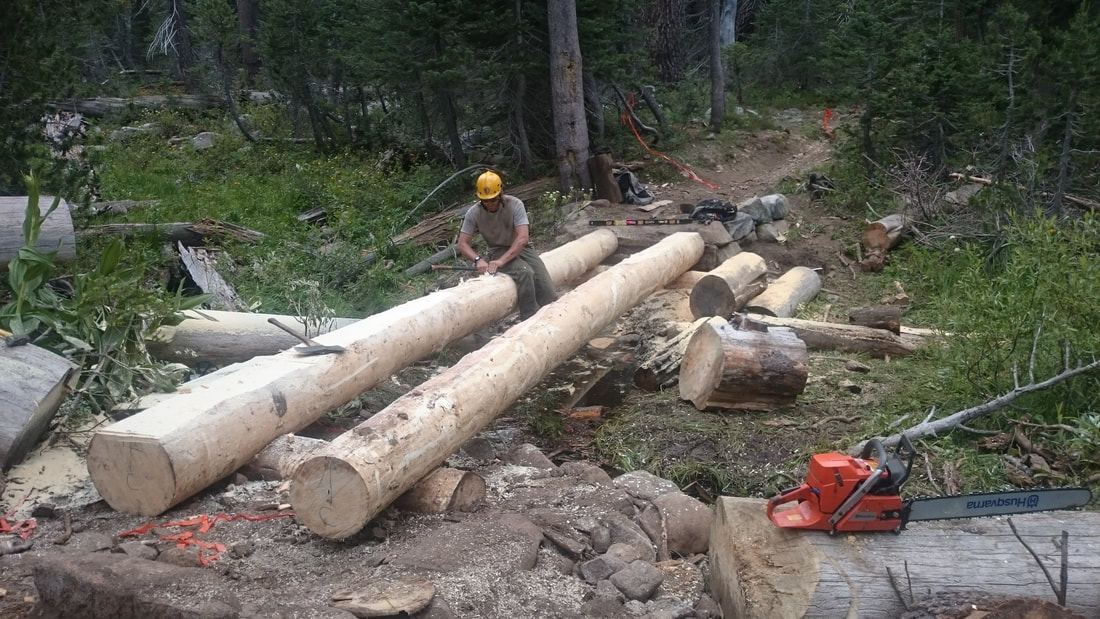
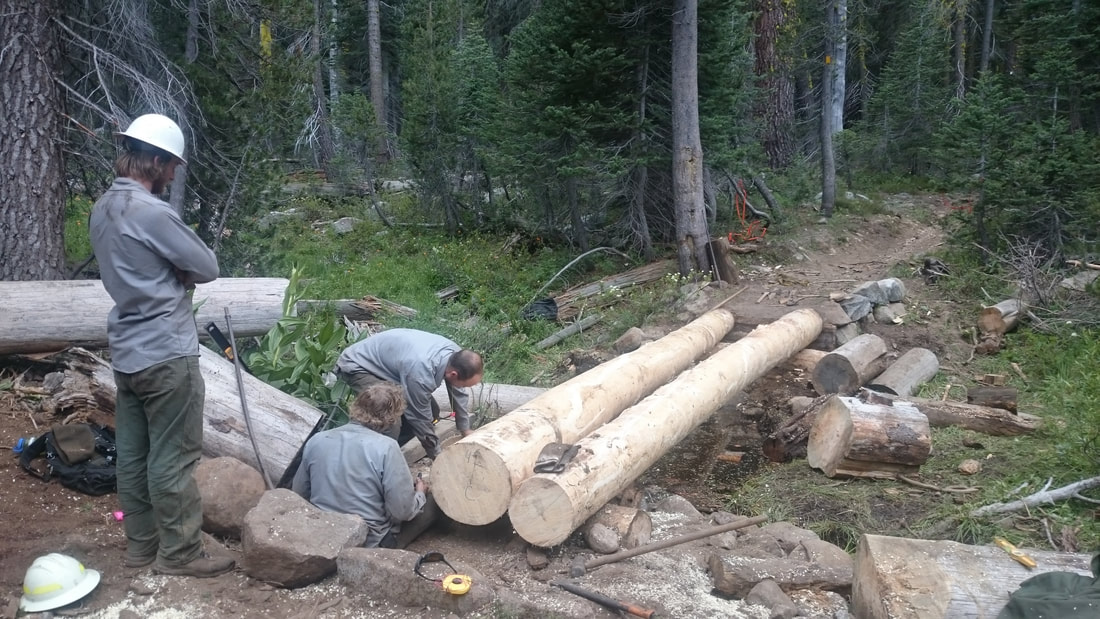
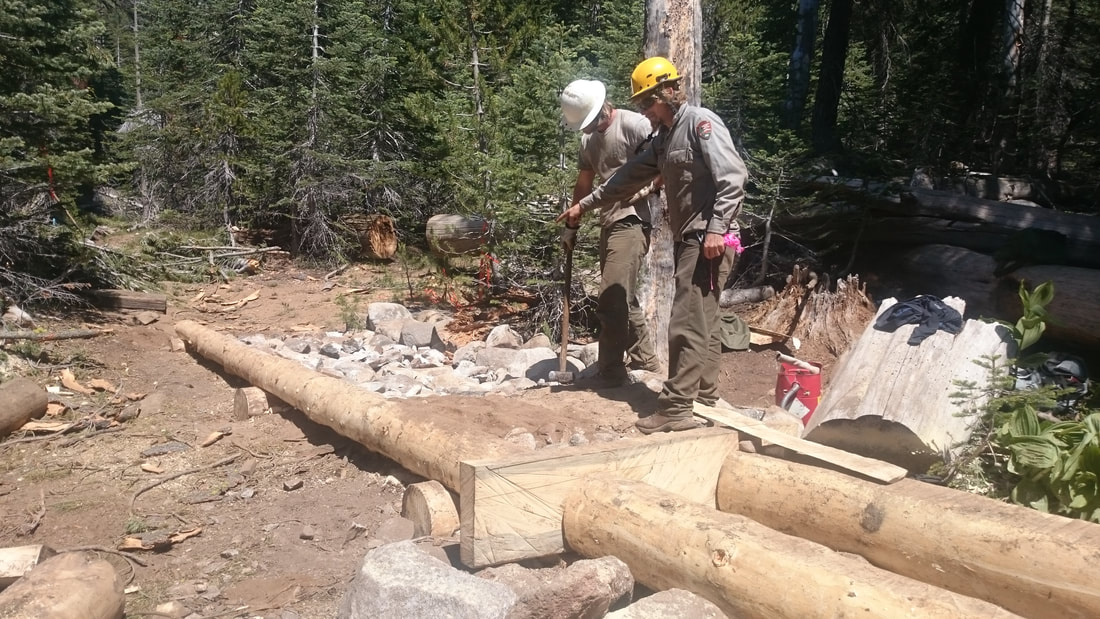
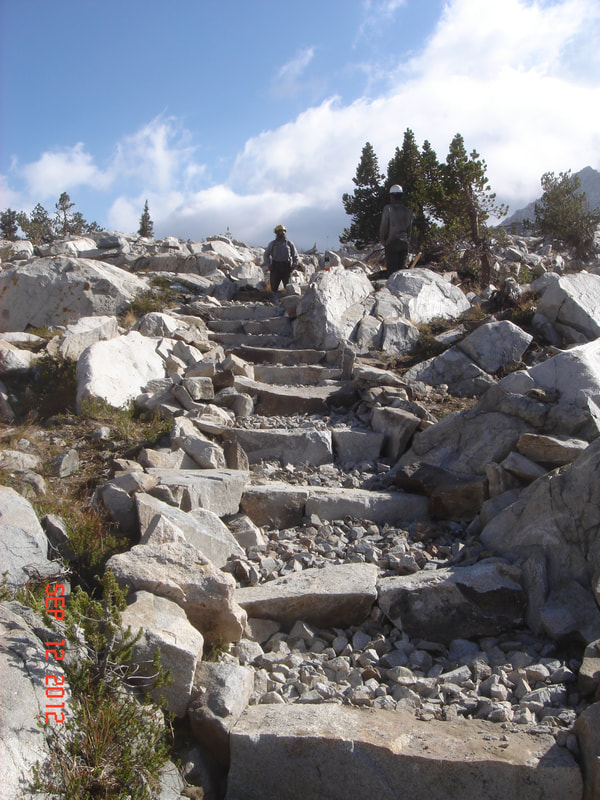
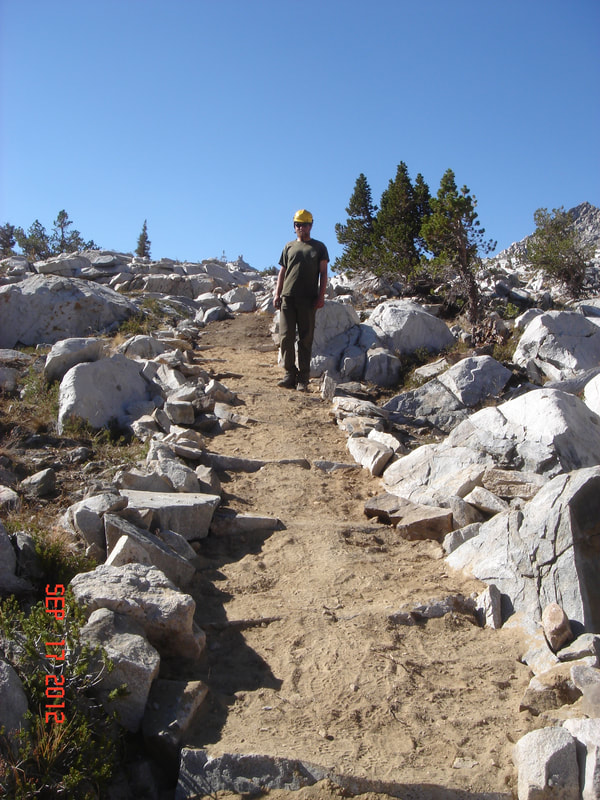
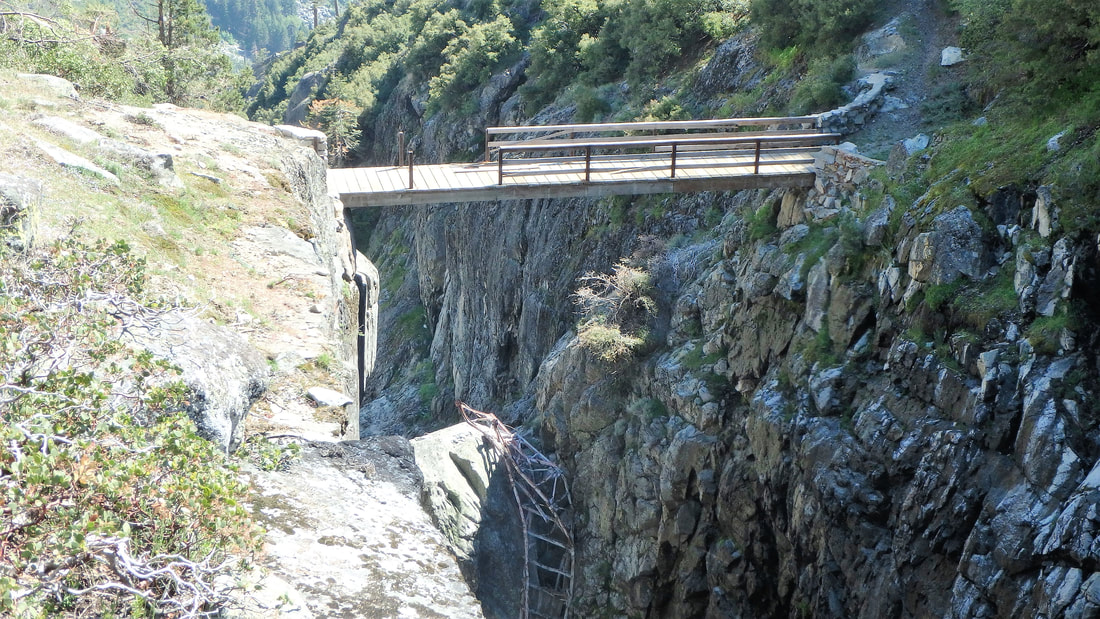
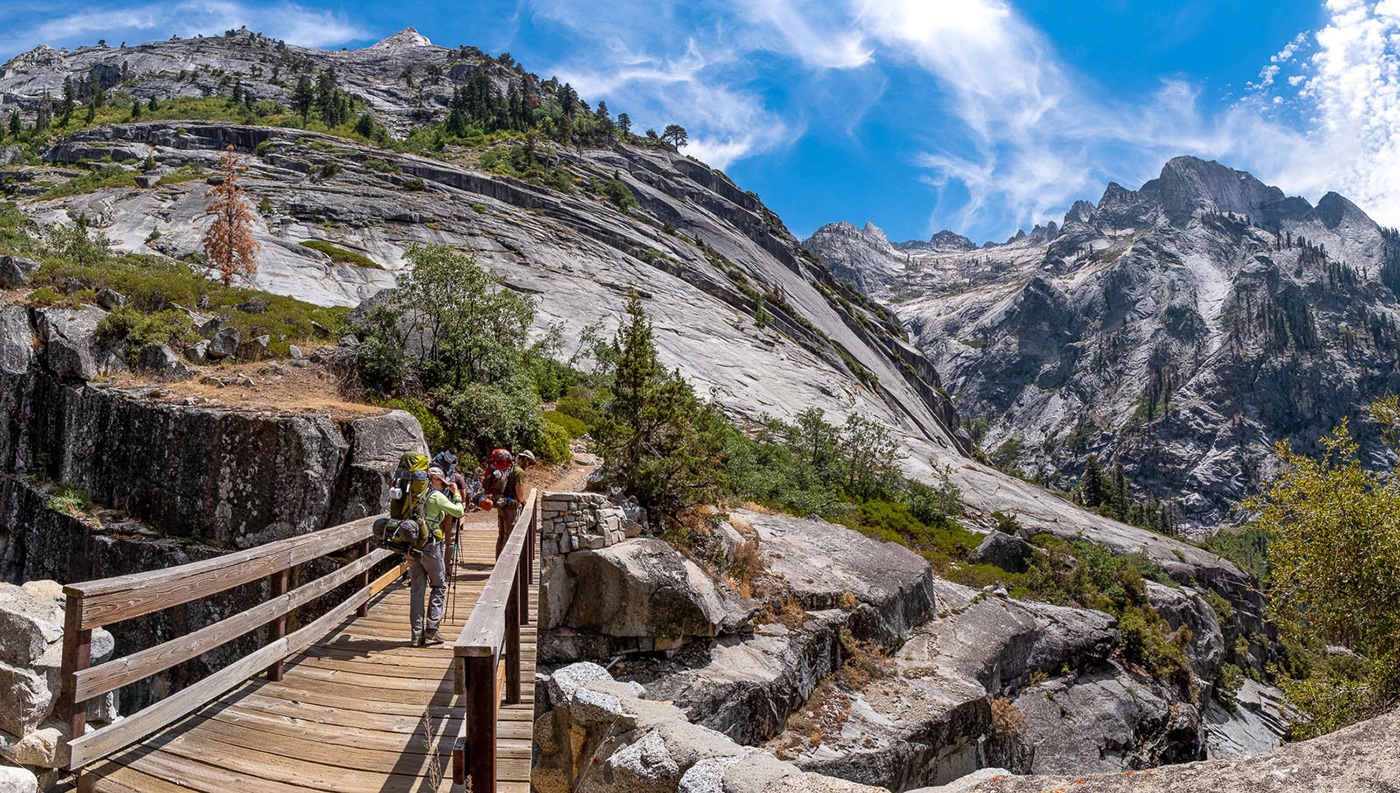
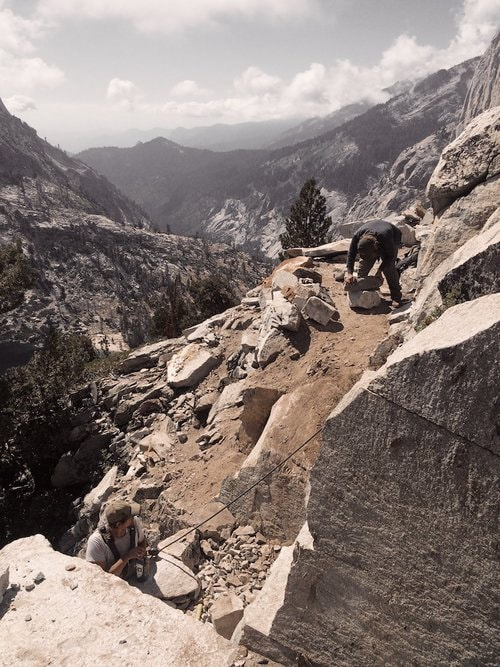
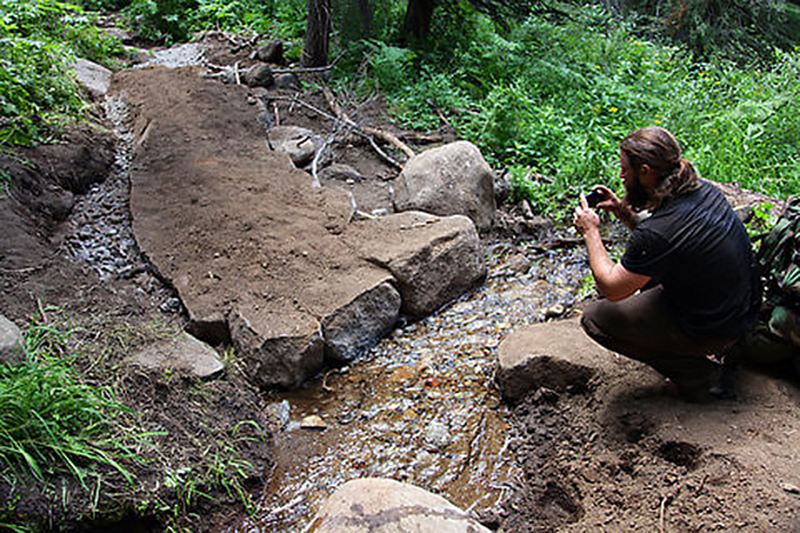
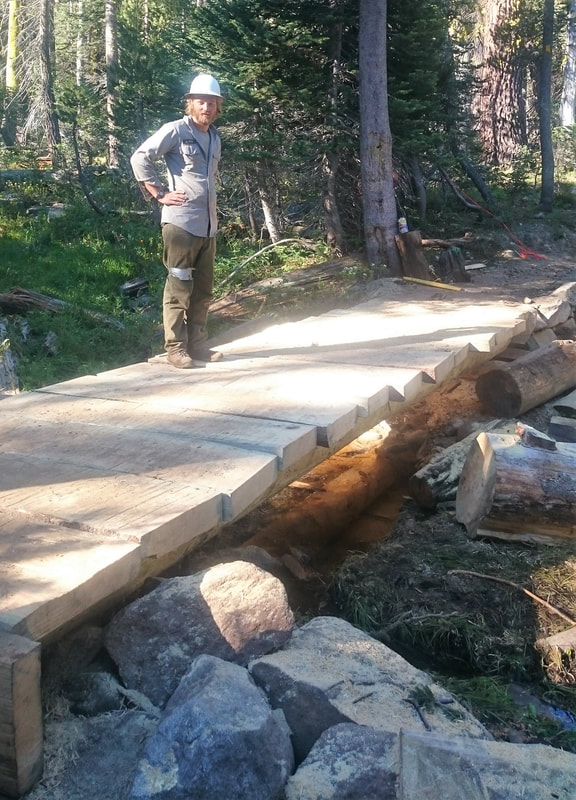
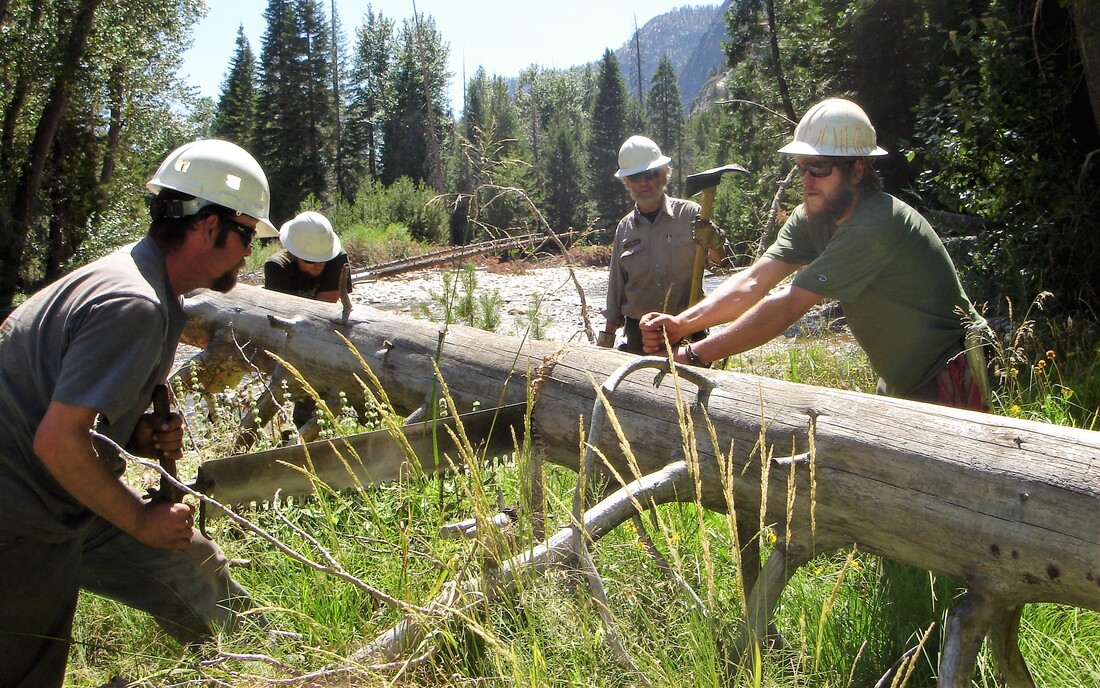
They construct, repair, and maintain bridges, abutments, aesthetically pleasing rock walls, walkways, causeways, trail tread, water bars and retainer steps. Their tools include rock bars and drills, jacks, chisels, a variety of saws, timber tongs, draw knives, planes, and other masonry and carpentry tools, which they also clean and repair.
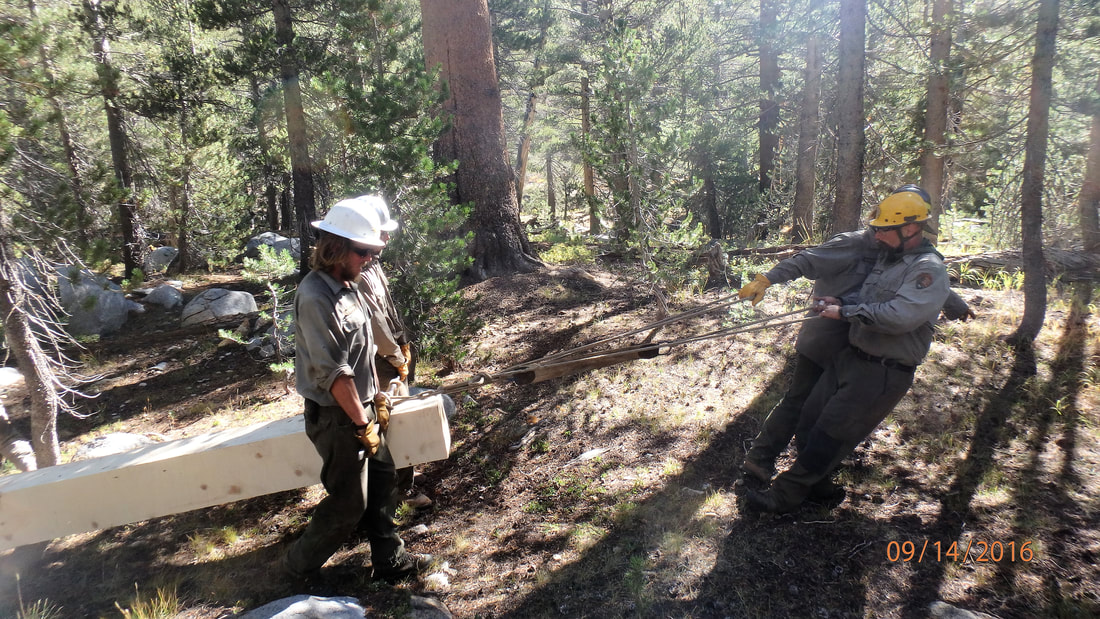
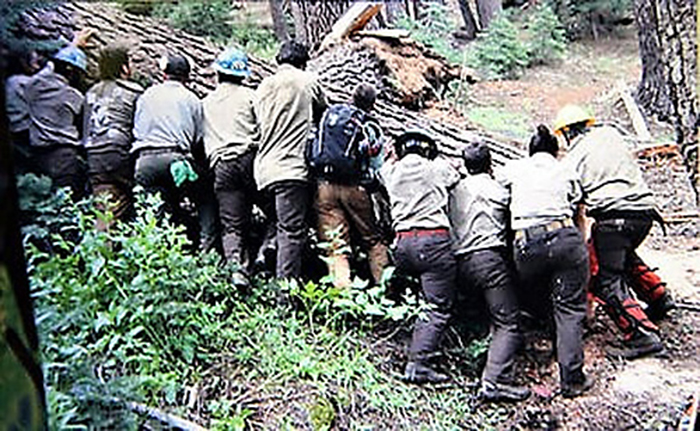
Heavy physical effort is required in using both hand and power tools; frequently lifting , carrying, or rolling objects such as rocks and logs weighing over 100 pounds; moving slabs and boulders weighing several tons with rock bars; using hammers to crush or shape rock; and shoveling extensively.
To provide for visitor access and safety, the crews build all kinds of trails, from accessible trails meeting Americans with Disabilities Act guidelines in some frontcountry sites to trails that climb to high mountain peaks in the backcountry. Laws including the National Historic Preservation Act, the National Trail System Act, the Wilderness Act, the National Environmental Policy Act, the Endangered Species Act, and the Clean Water Act all apply in Sequoia and Kings Canyon.
These laws require trails to avoid damaging habitats or disrupting important lands, waters, or historic or prehistoric sites. To protect cultural and natural resources, crews may route trails around sensitive areas, construct boardwalks over wetlands, or seasonally close trails during nesting or migration times.
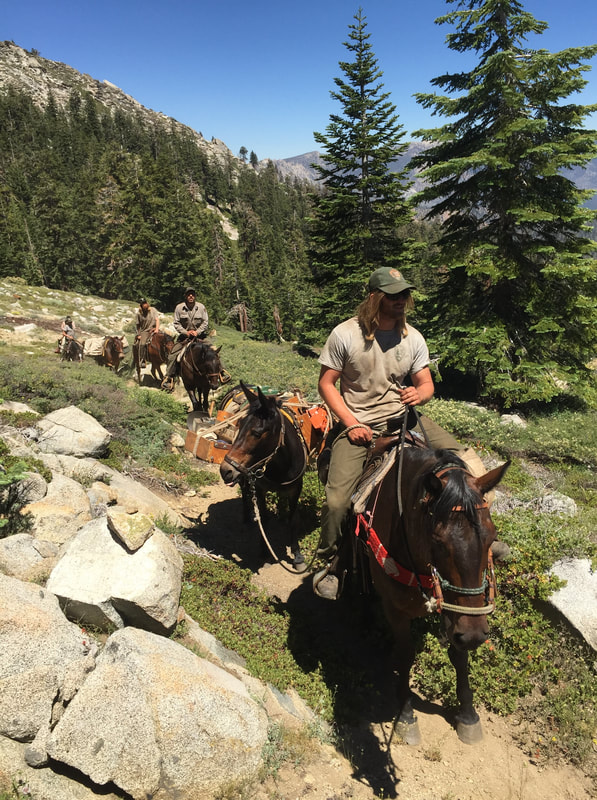
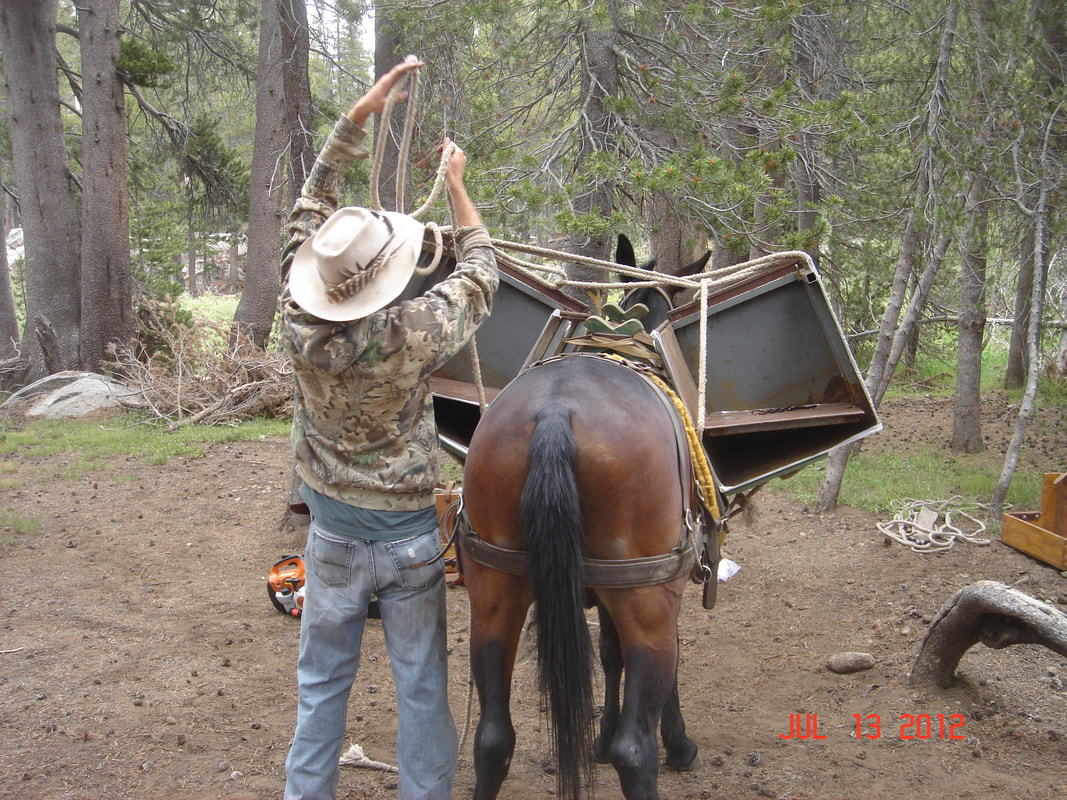
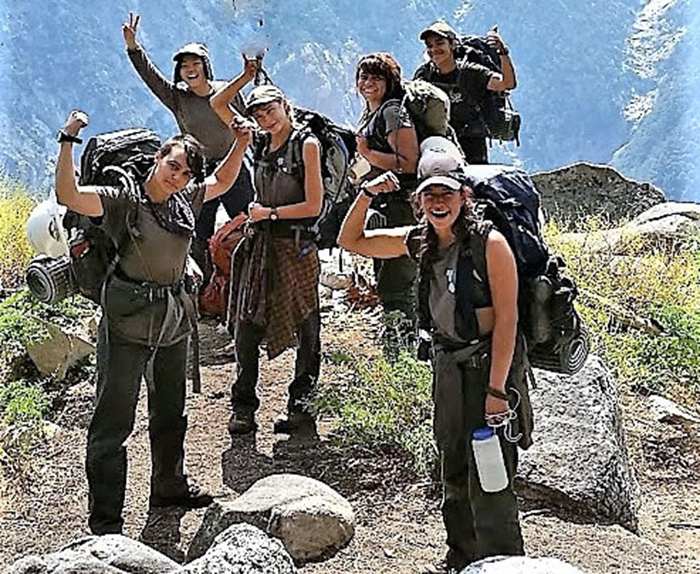
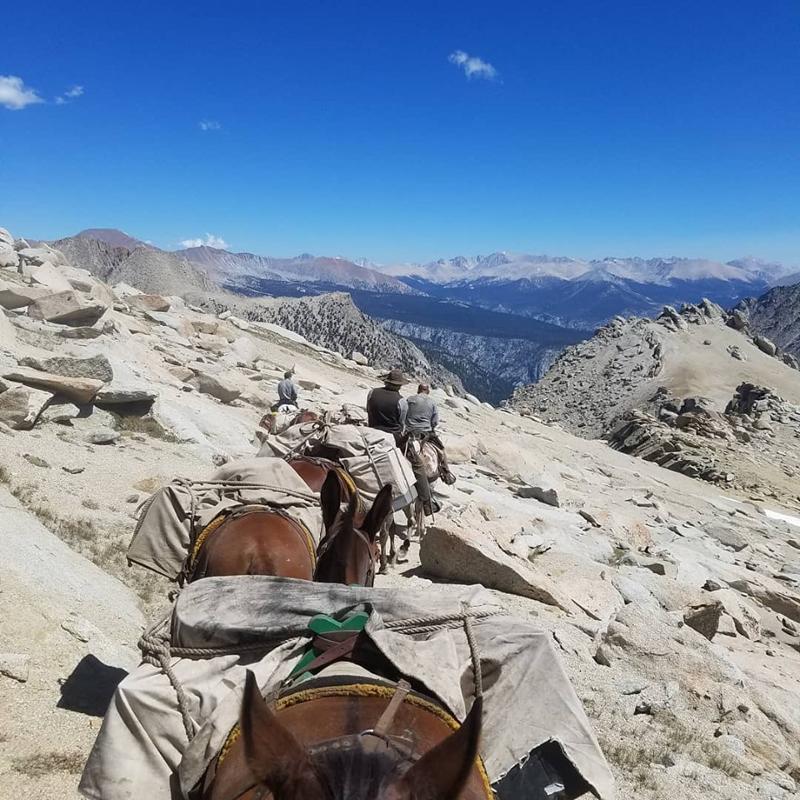
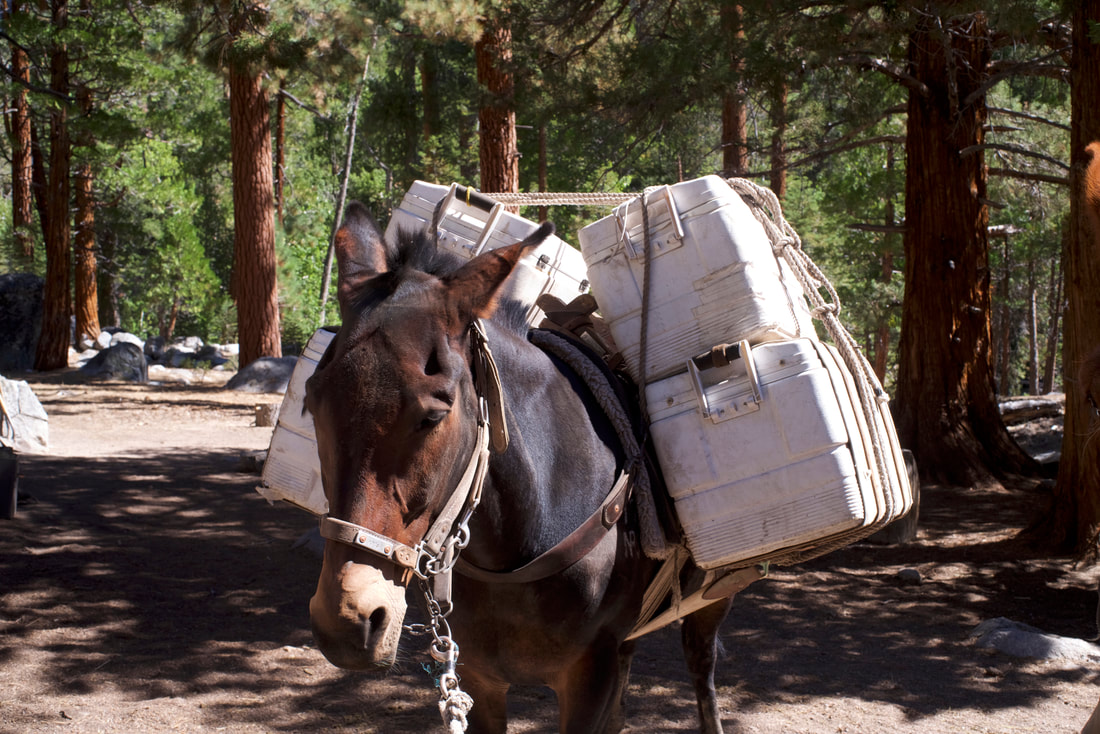
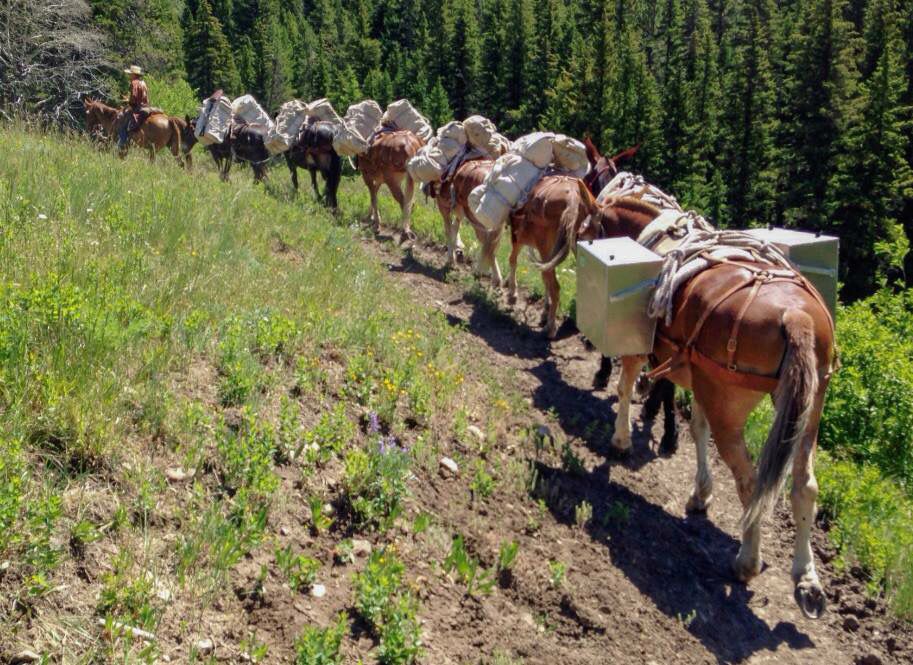
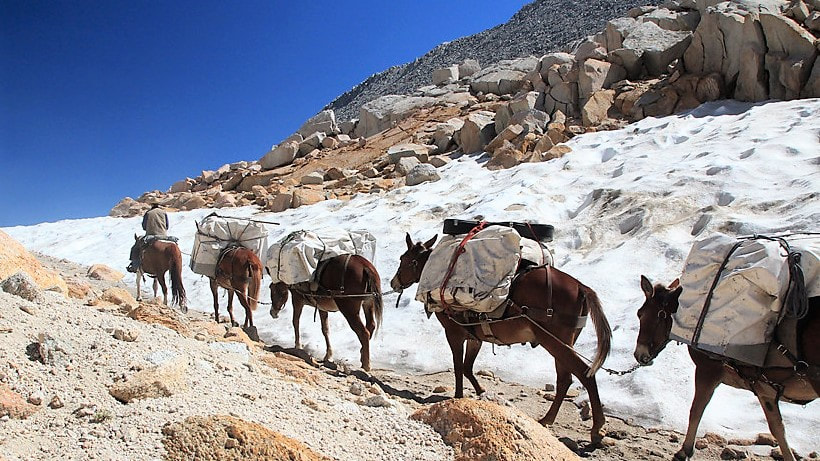
Crew members must also have the ability to live and work effectively in remote, primitive backcountry areas in close contact with small numbers of people for two to twelve weeks at a time. Crews typically consist of three to ten NPS workers, and a Cook for work in the backcountry. Crews may be supplemented by work groups from the California Conservation Corps, the Student Conservation Corps, Volunteers-in-Parks, and other programs. To support backcountry projects, pack trains periodically bring in food, mail, supplies, and equipment.
Would you like to gain the extra skills and responsibilities of a crew leader?
Trail crew leaders not only perform the full spectrum of trail work themselves. They also have to perform inspections, surveys, and inventories of facilities for maintenance needs to provide for accurate planning and scheduling of work, and make informed recommendations for operational improvements. They plan, lead, and supervise the crew’s work, provide training, emphasize and monitor safety, and, of course, write reports.
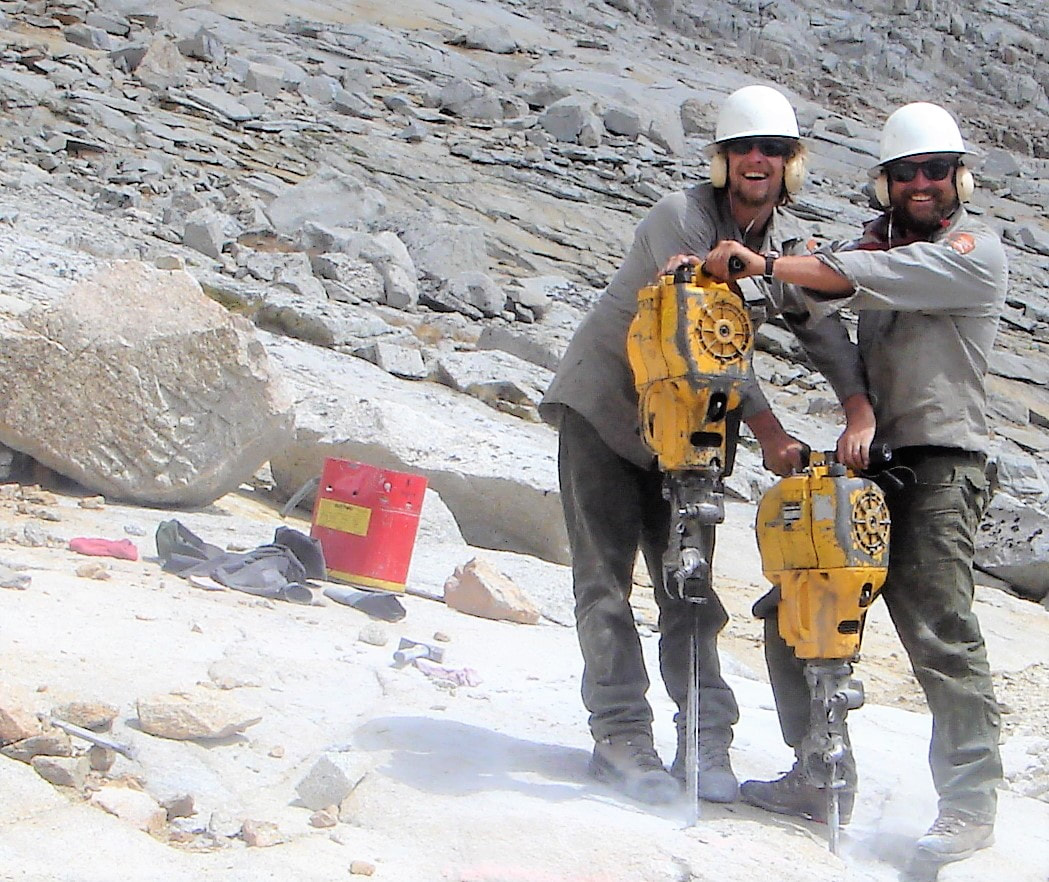
Additionally, crew leaders must possess and maintain an NPS Blasters License because they serve as Blaster in Charge to remove obstacles such as logs and rocks from trail tread, to quarry stone for masonry work, and to establish trail bench in bedrock areas. They also assist in mule and horse packing operations by riding on mountainous trails, preparing supplies and materials for mule transport, tying on loads, and leading pack animals. To move big boulders and logs in the wilderness, they set up and use human-powered winches and rigging such as high-lines.
The crews often coordinate with backcountry rangers to determine and prioritize projects in their work areas, and frequently assist park visitors by providing information about trails and weather, helping with communications and directions, and even participating in searches for persons reported missing or overdue.
Have you had the opportunity to thank a trail crew yet? Next time you’re traveling on some part of the tremendous trail network in Sequoia and Kings Canyon National Parks, pause to reflect on what you’re walking on and appreciate the work of the dedicated, skillful men and women who have labored for such long hours in such difficult conditions to make your journey as smooth and safe as they can.
As a young worker from the Eastern Sierra Conservation Corps serving in our parks put it, ” It takes tremendous grit and passion for a member of a national park trail crew to thrive. Though the days may be long, the physical demands arduous, and the unexpected challenges difficult to navigate, one thing is for sure: serving on a trail crew guarantees an unforgettable experience.”
(If you’d like to try to join a national park trail crew, check usajobs.gov and search for “maintenance worker trails”.)
May, 2020
NOTE: To find the “History of the Wilderness Trail System of Sequoia and Kings Canyon National Parks,“ see Granite Pathways, by William C. Tweed (Three Rivers, CA; Sequoia Parks Conservancy, 2021).
[
Quotes & More Photos:
“Nothing will give you as much appreciation for the trails you tread on than serving on a trail crew. The stunning vistas, backpacker-friendly schedule (many crews work 8-10 days on, 4-6 days off) and group camaraderie are just icing on the cake.” — Paul Chisholm, 2017
“Working at a National Park teaches you confidence and perseverance. I spent six months with the Backcountry Trails Program in Kings Canyon National Park . . . . [T]the commute was the worst part. . . . I had to move as fast as I could with a pack and tools — shovels, McLeod’s, loppers, Pulaskis, sledgehammers, 20-pound rock bars, grip hoists — uphill, nonstop, for miles . . . at elevations exceeding 13,000 feet. We were the highest-elevation trail crew in the country that year . . . .” — Anna Mattinger, 2018
“We used hand tools for everything. To the tune of snow, heat, river crossings, and mosquitoes, we turned big rocks into little rocks into littler rocks . . . to make a foundation of several feet of ‘crush’ hidden underneath dirt trails to prevent overgrowth . . . .” — Anna Mattinger, 2018
“Trail crews frequently work in isolated areas where medical facilities are not readily available, and transportation of an injured person is often difficult and dangerous. Good safety practices demand that each crew member keep in good physical condition and maintain a high level of safety consciousness at all times, in camp as well as on the job. . . . [E]very employee must be his or her own safety inspector on the job, work in a safe manner, and point out unsafe practices to other crew members.” — NPS Trails Management Handbook
“You’ll learn to fear lightning when you’re working above the timberline. You’ll learn drystone masonry and how to build rock walls and stairs without cement. The standards are high: If your work can’t be expected to withstand a century of continuous foot traffic and weather, it isn’t good enough. . . . . Doing this stuff, you’ll learn that granite weighs around 170 pounds per cubic foot.” — Anna Mattinger, 07/18/18
“The trail crew cleared and blasted granite footing and widened the area around the bluffs. Great work, mules will no longer bang their boxes on the upslope side, the impact pushing the animal toward the trail edge.” — Joe Ventura, Hockett Meadow Ranger, 2009
“It has to be sturdy enough to take the steady thudding of boots and hooves without disintegrating. It has to be angled so that the water pouring down a slope doesn’t course through it and turn it into a stream. It has to be high and dry enough that boots and hooves don’t sink knee-deep in mud. Oh, and it can’t have fallen trees blocking it. When about 700 trees . . . were left sprawled across the 10 -mile trail . . . by winter’s high snows and spring’s high winds, someone had to clear them away.” — Felicity Barringer, 2011
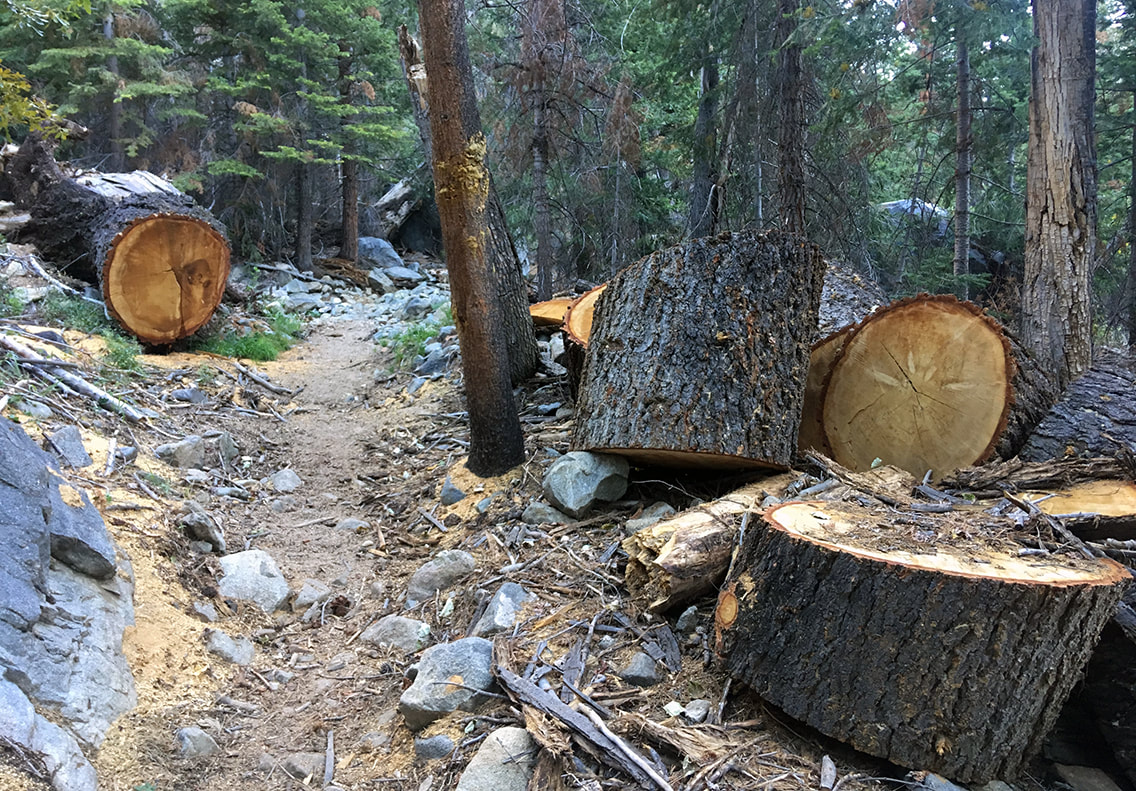
“The trail was still going down as I passed some huge logs, freshly cut into pieces. The smell of fresh sawdust still hung in the air. I am always amazed about the people who do all this work: maintaining the trails, fighting fires, building bridges and cutting up big trees that obstruct the trail. I realized that they must bring all their tools, probably by mules or horses, but still they must hike days on the same trail as I was doing.” — Overseas Hiker, 2018
“[T]he regular National Park Service trail crews were supplemented for six weeks by a 14-member crew organized by the California Conservation Corps. The crew included seven veterans (some recruited through the three-year-old Veterans Green Jobs nonprofit) and was part of a pilot program to give former service members training in land conservation.” — Felicity Barringer 2011
“The first few weeks on the job, I contemplated quitting . . . . I am glad I did[n’t], because I learned so much. I was able to participate in creating a bridge over a stream–from felling the tree to using a grip hoist to set the bridge into place. I also was able to help in transforming a rocky slope into a usable trail. I got to rework trails so that water would run off them and erosion would be minimized. I believe these skills will be useful in a future career in landscape architecture.” — joinhandshake.com, 2018
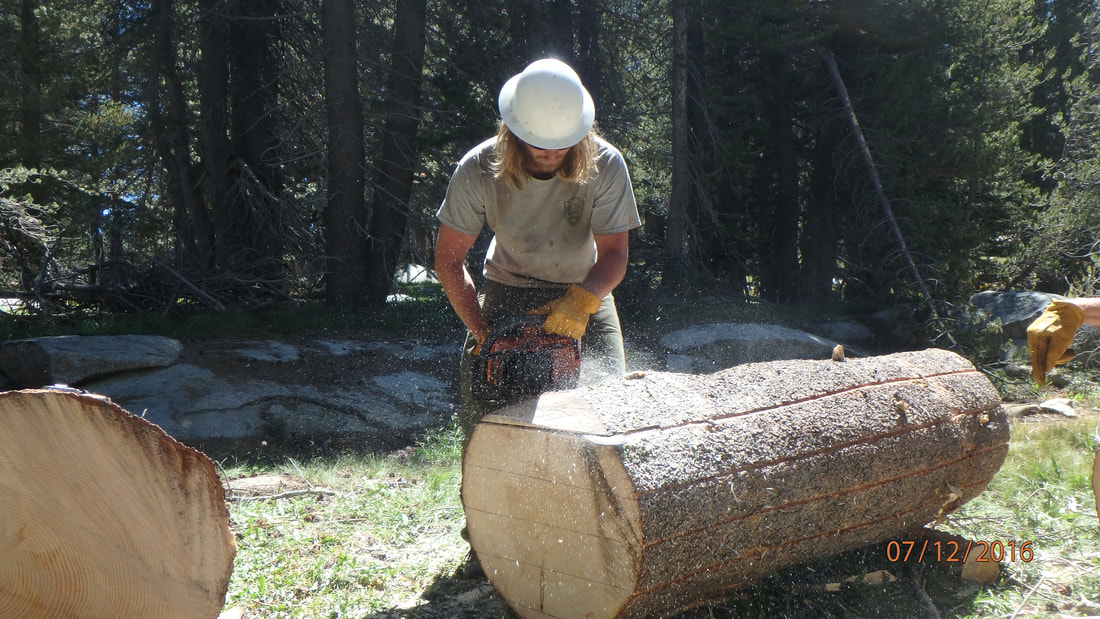
“Performs carpentry work, primarily using heavy log and rough-sawn lumber, on trail structures such as log checks, foot-bridges, multi-use bridges, corrals, hitch rails, and boardwalks.” Use a chain saw to “fell, buck, notch, and/or shape both native and pressure treated logs in the maintenance and construction of bridges, water bars and retainer steps, crib walls and steps, . . . and in clearing trails of down trees and brush. — from NPS job description
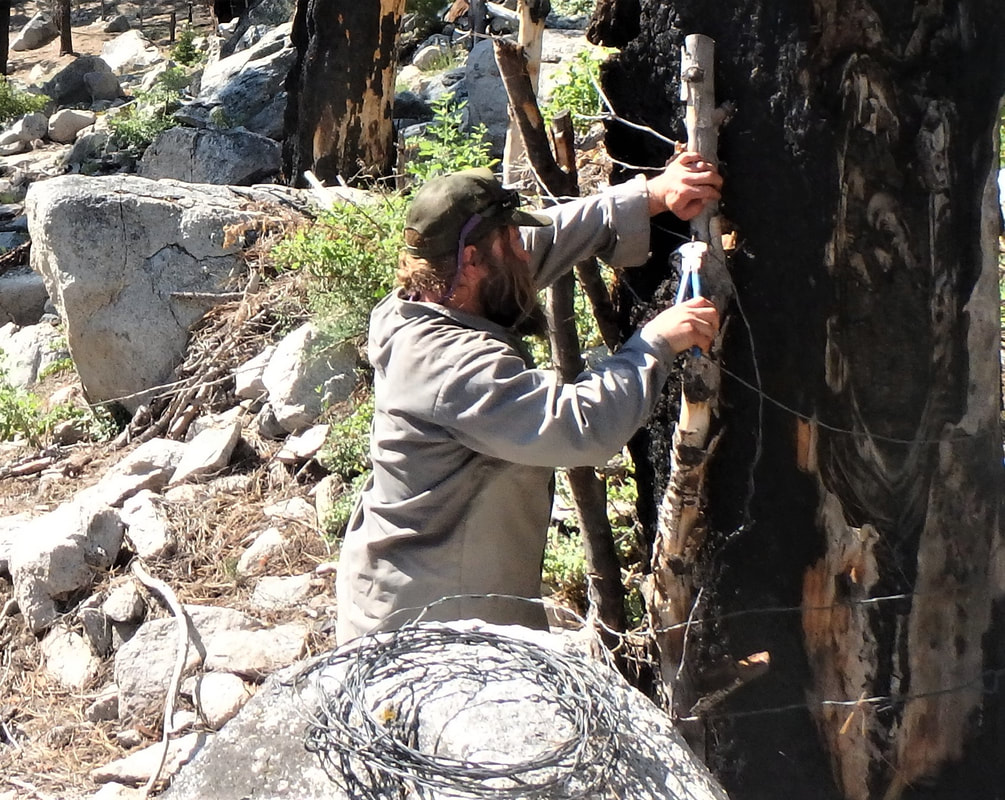
“In the summer of 1973, my backcountry crew and I were working at . . . Redwood Meadow . . . . An old fence, first built by the CCC . . . had long ago fallen into disrepair, so we started . . . replacing the rotten posts and stringing new wire. One afternoon . . . we uncovered an old metal bin [and] . . . found the carpentry tools the CCC had used to build the cabin at Redwood Meadow: double-bit axes, log carriers, drawknives, and a brace and bits. Their wooden handles were still dark from the oil and sweat of men working there thirty-five years earlier.” — Steve Sorensen, 2018
“[T]he [trail] crossing below [Redwood Meadow] . . . [needed] a series of wooden footbridges. . . . [A] lot of the satisfaction [in building the bridges] came from using those old tools . . . in the same way the CCC workers had used them long ago. . . . Before supper we’d hike down to Cliff Creek and jump . . . into a deep pool of clear water — the same place where the CCC boys had washed and played three decades earlier.” — Steve Sorensen, 2018
“During the trail crew visits . . . [w]ood was bucked up, split, hauled, etc. for the trail crew, Hockett ranger, wilderness seminar, and snow survey. Two new hitching rails were constructed . . . . One of the public outhouses was moved here at Hockett Meadow. Several days were spent . . . doing trail work (raking rocks) and on the new bridge near Horse Creek. ” — Lorenzo Stowell, Hockett Mdw. Ranger, 1992
“Once again, I received numerous glowing accolades from visitors regarding the quality of the trails in Sequoia and the friendliness and helpfulness of the crew members they encounter. Thanks, Sequoia Trails!” — Christina Gooch, Tyndall Creek Ranger, 2014
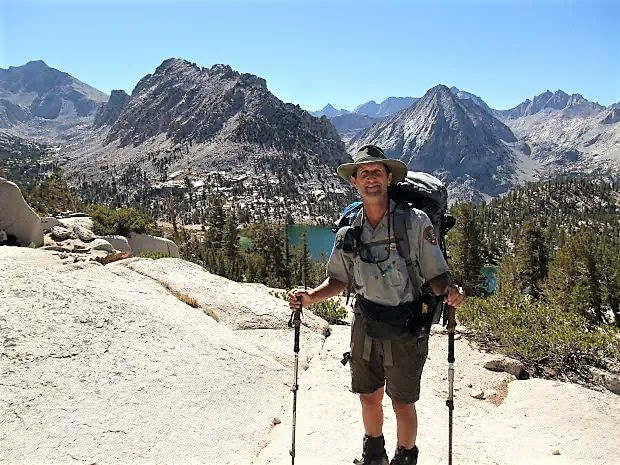
Backcountry Wilderness Rangers in Sequoia and Kings Canyon National Parks
by Laurie Schwaller
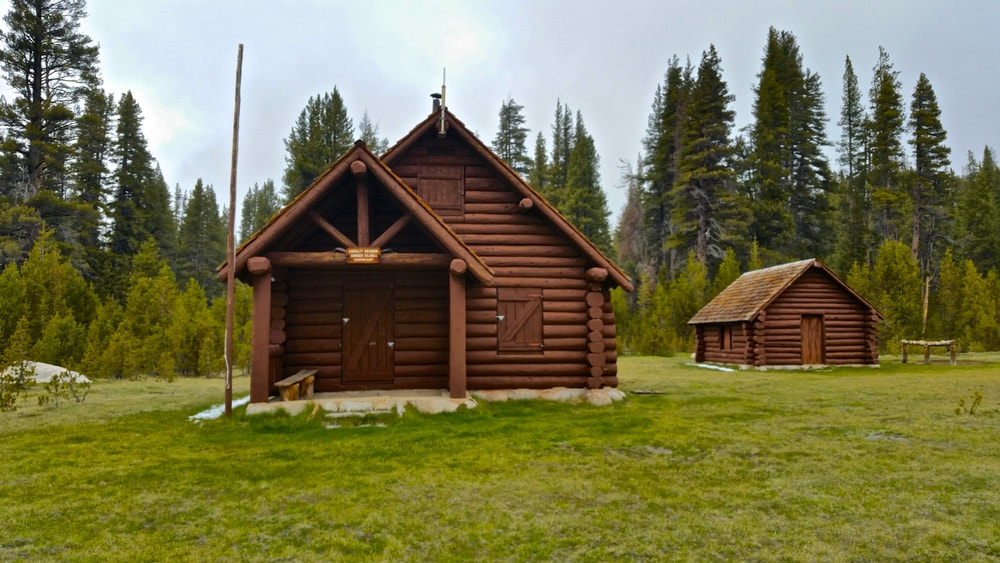
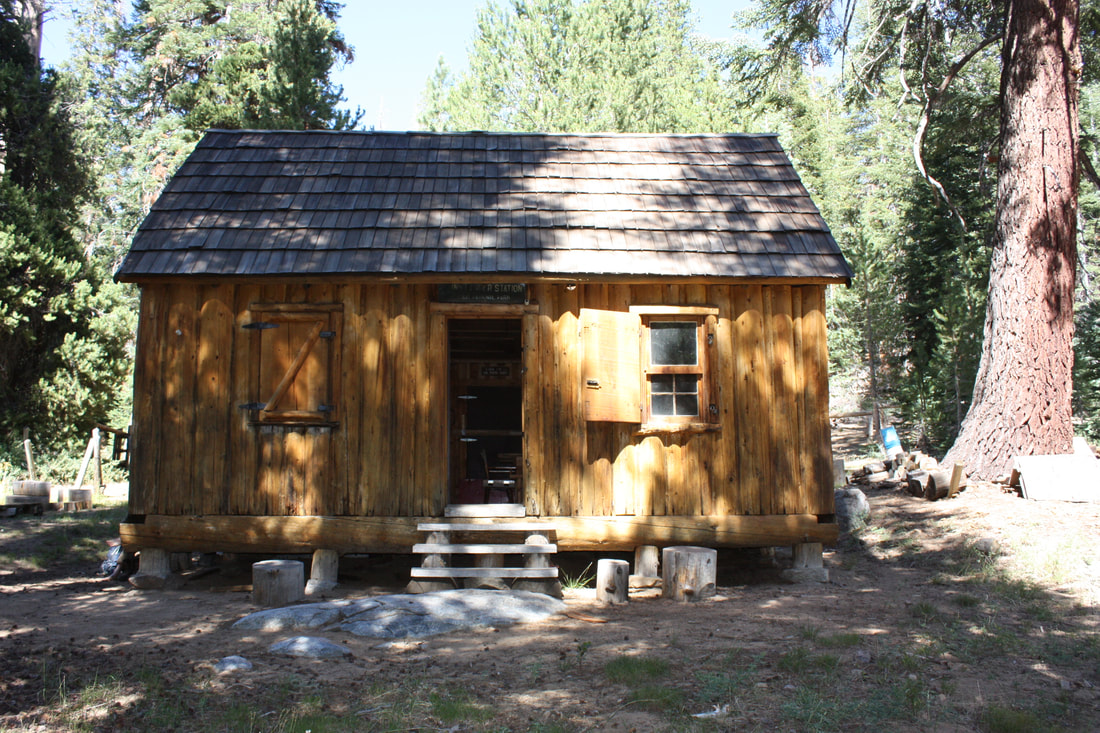
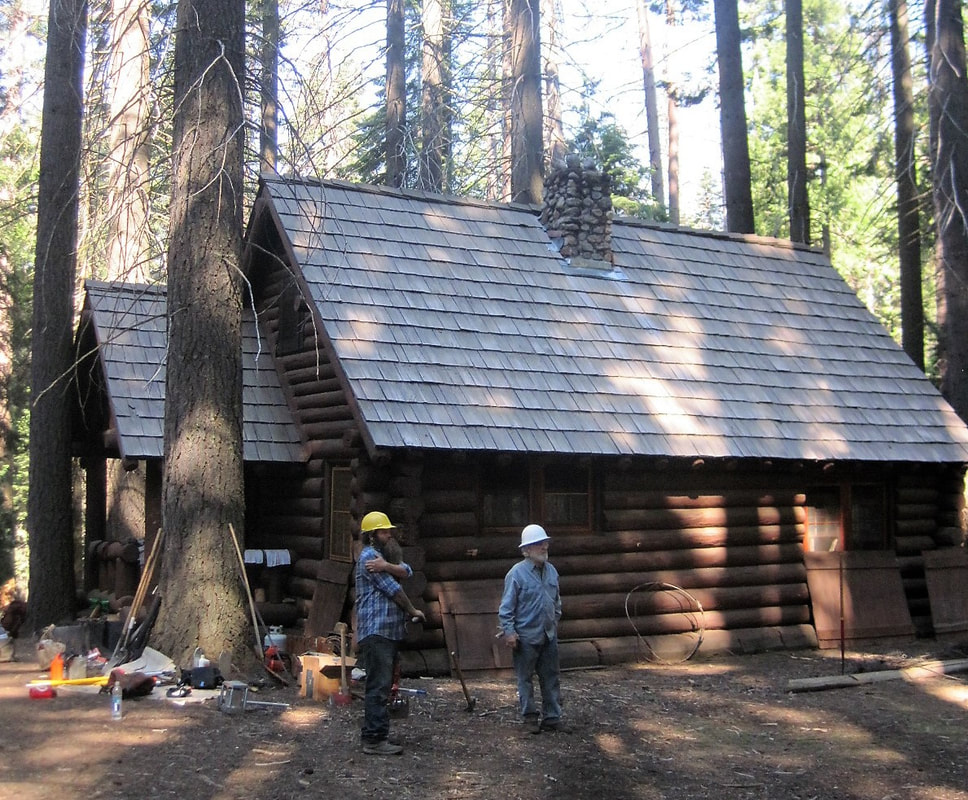
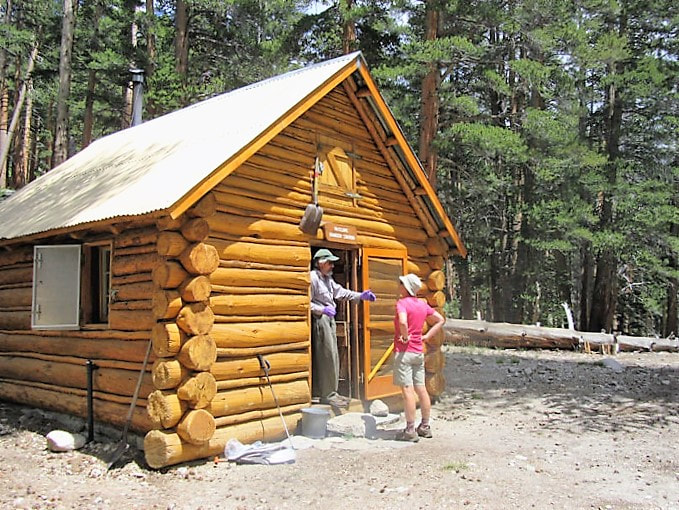
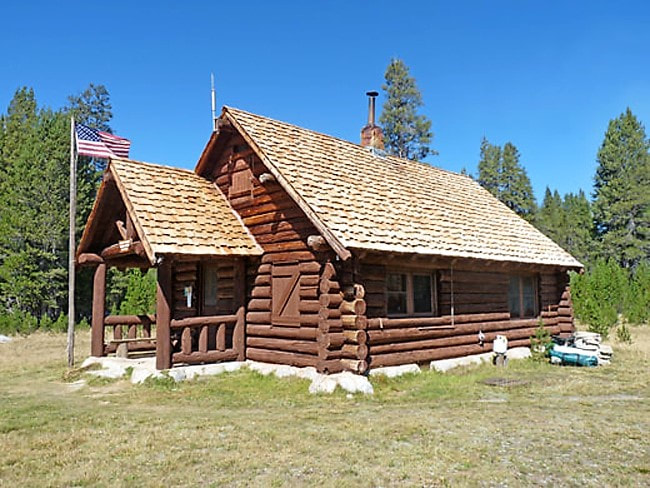
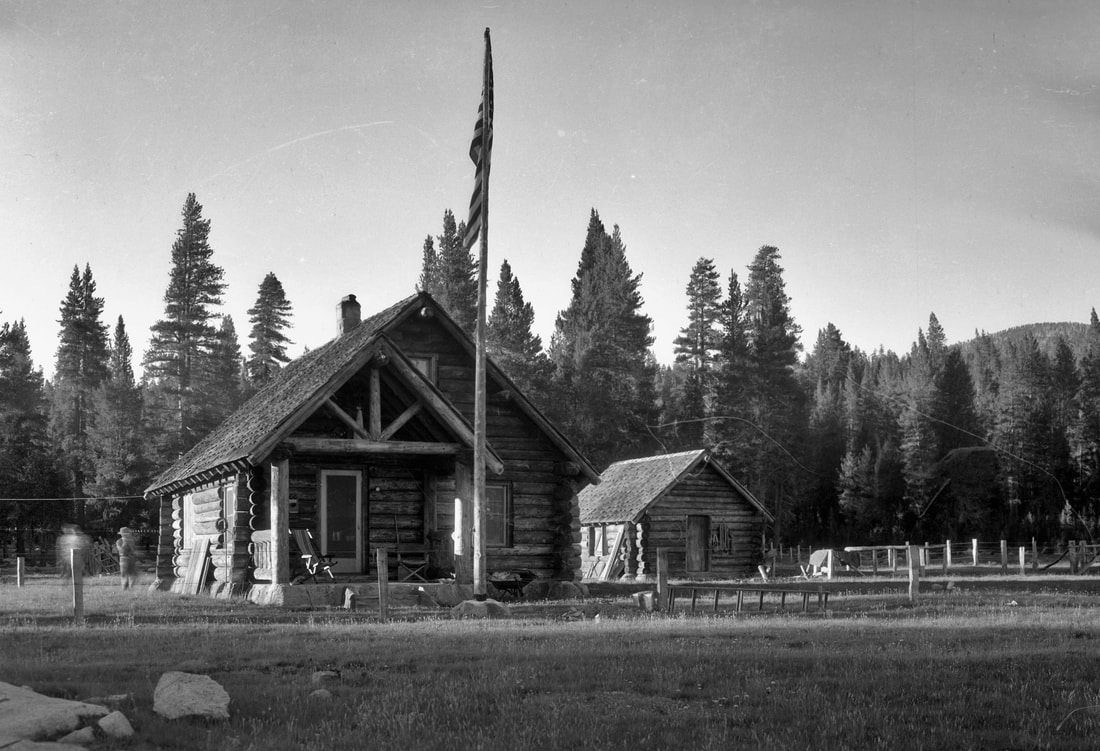
Sequoia National Park’s historic backcountry ranger stations and their adjacent barns, meadows, and nearby campsites serve the parks and the public in many ways. They accommodate not only rangers, but also trail crews, cultural resources crews, snow surveyors, occasionally monitors of meadows, water, wildlife, wildfires, and weather stations, and sometimes backcountry visitors in distress.
Their barns (also called tack sheds) store equipment and supplies used by these personnel, and their pastures provide grazing for their stock and, when conditions allow, for visitors’ animals also. Most of today’s backcountry visitors spend only a night or two in the campsites near these iconic cabins, but seasonal backcountry Wilderness rangers may be stationed in them or patrolling to them from May into October.
Redwood Meadow Ranger Station
This strenuous backcountry work is often carried out far from many comforts, conveniences, and sometimes even company. It can be dangerous, sometimes cut off from communications, and often far from help. Many of these Park employees are seasonals, whose paychecks start and end depending on when the snow melts enough to allow access to their work sites — and when autumn weather once again closes the trails. Yet many return year after year to the wilderness.
Like all Park employees, backcountry Wilderness rangers are charged under the National Park Service’s mission to preserve unimpaired the natural and cultural resources set aside by the American people for future generations. Rangers also strive through their visitor contacts to promote appreciation and stewardship of these resources and compliance with the regulations designed to protect them.
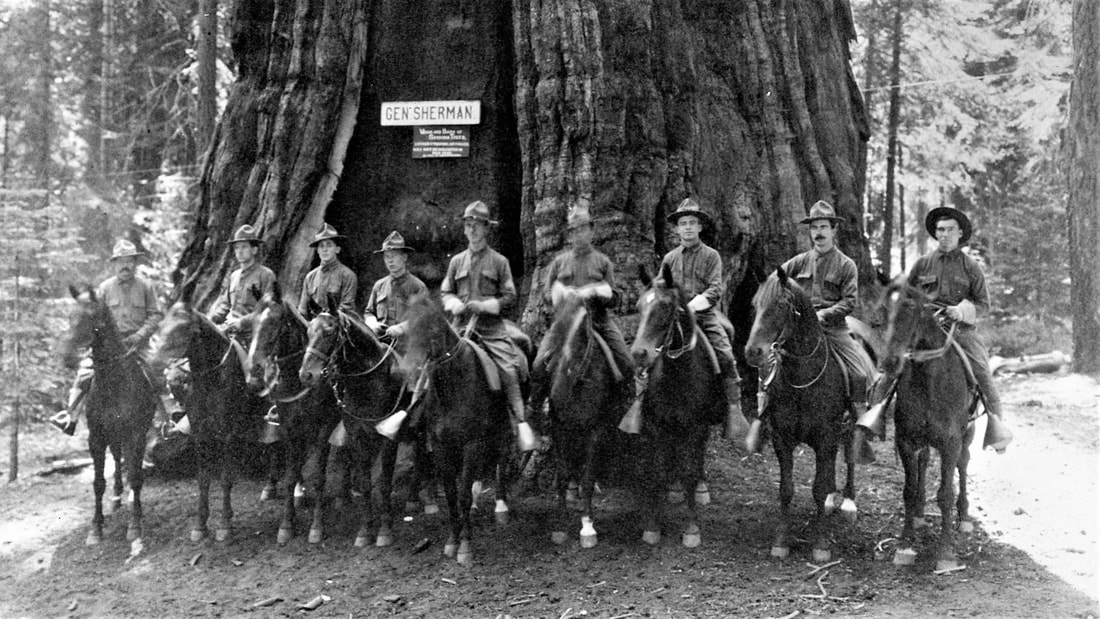
Captain Cornelius C. Smith, 14th CavalrySoldiers of the 14th Cavalry at the General Sherman Tree
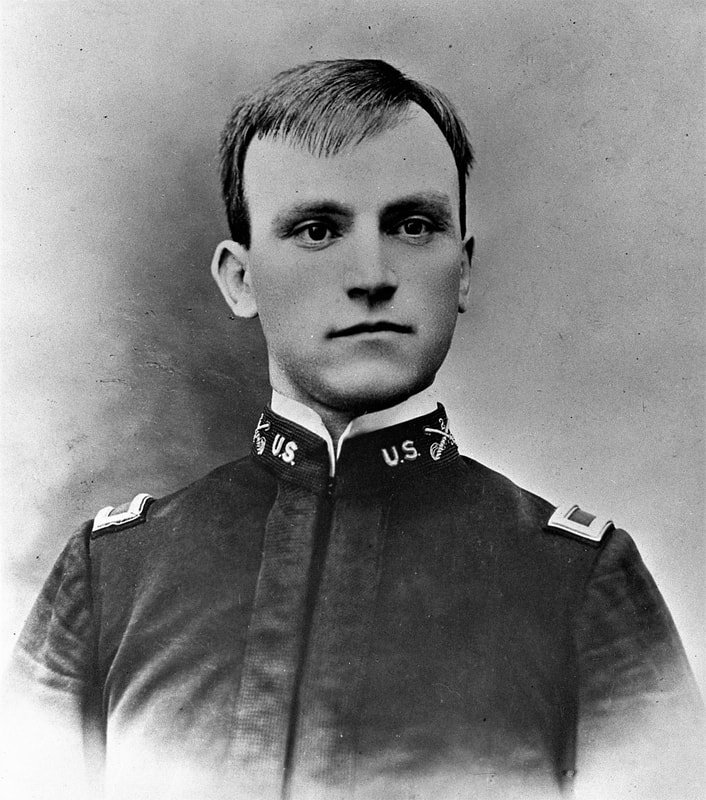
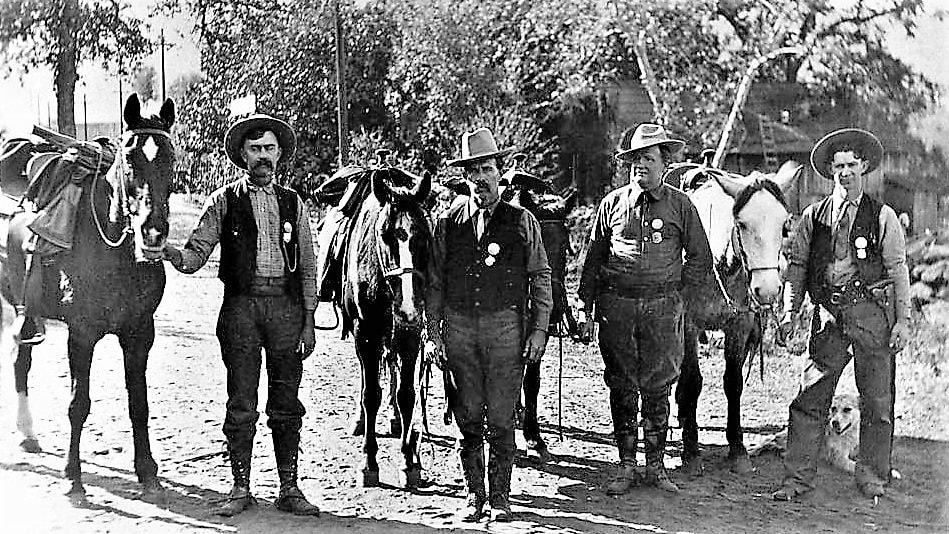
In 1906, when the national parks were still administered by the U.S. Army, prior to the creation of the National Park Service, Captain C.C. Smith, 14th Cavalry, Acting Superintendent of Sequoia and General Grant National Parks, defined the ranger’s qualifications to be “somewhat as follows: He must be an experienced mountaineer and woodsman, familiar with camp life, a good horseman and packer, capable of dealing with all classes of people; should know the history of the parks and their topography, something of forestry, zoology, and ornithology, and be capable of handling laboring parties on road, trail, telephone, bridge, and building construction. These men, in the performance of their duties, travel on horseback from 3,000 to 6,000 miles a year, must face dangers, exposure, and the risk of being sworn into the penitentiary through the evil designs of others.” In addition to the troops, four civilians were working as rangers in Sequoia and General Grant National Parks at that time.
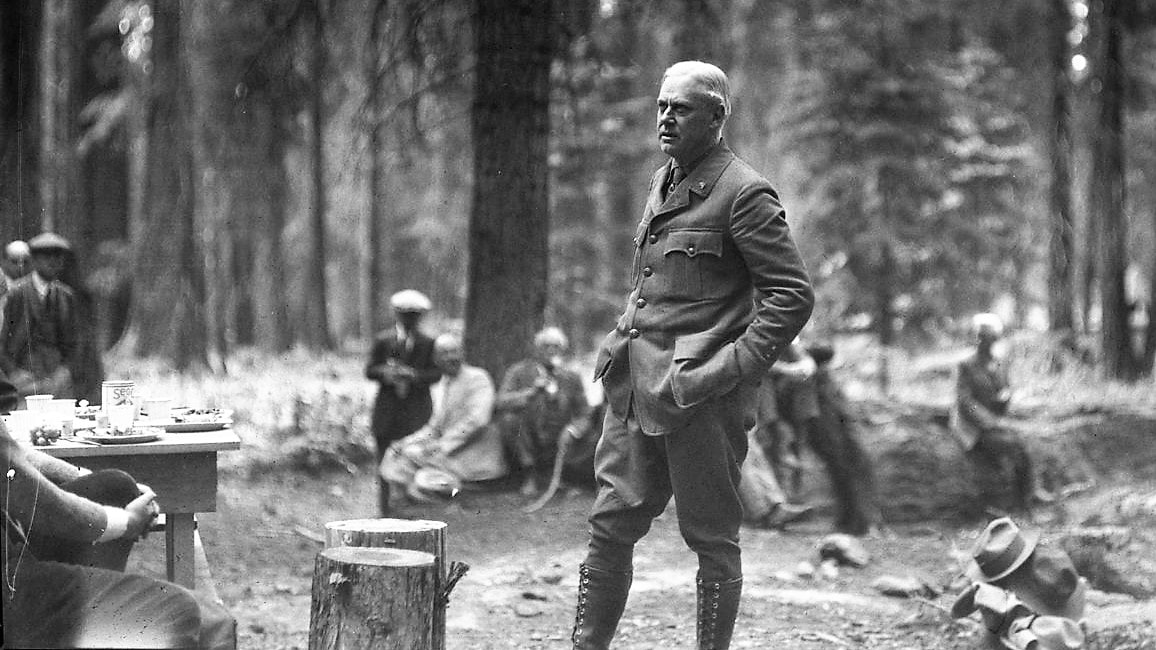
Stephen T. Mather, first Director of the National Park Service (established in 1916), described the early NPS rangers this way: “They are a fine, earnest, intelligent, and public-spirited body of men . . . . Though small in number, their influence is large. Many and long are the duties heaped upon their shoulders. If a trail is to be blazed, it is ‘send a ranger.’ If an animal is floundering in the snow, a ranger is sent to pull him out; if a bear is in the hotel, if a fire threatens a forest, if someone is to be saved, it is ‘send a ranger.’ If a Dude wants to know the why, . . . it is ‘ask the ranger.’ Everything the ranger knows, he will tell you, except about himself.”
First NPS Director Stephen T. Mather, 1927
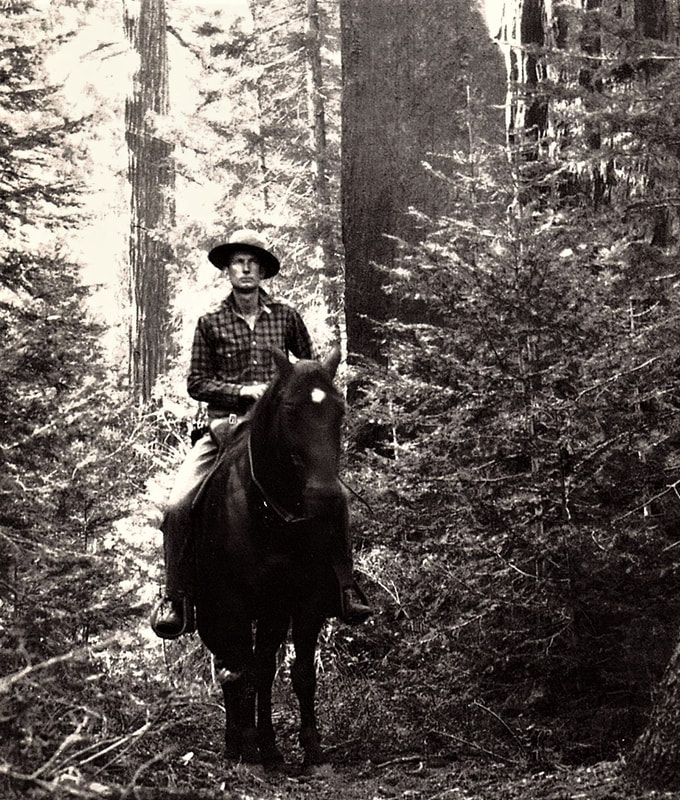
Author Eric Blehm describes the diversity of Sequoia’s modern seasonal backcountry Wilderness rangers and their commitment and dedication to their work: “[They] held master’s degrees in forestry, geology, computer science, philosophy, or art history. They were teachers, photographers, writers, ski instructors, winter guides, documentary filmmakers, academics, pacifists, military veterans, and adventure seekers who . . .were drawn to wilderness. In the backcountry, they were on call 24 hours a day as medics, law-enforcement officers, search-and-rescue specialists, and wilderness hosts. They were interpreters who wore the hats of geologists, naturalists, botanists, wildlife observers, and historians. On good days they were ‘heroes’ called upon to find a lost backpacker, warm a hypothermic hiker, or chase away a bear. On bad days they picked up trash, extinguished illegal campfires, wrote citations, and were occasionally called [bad names] simply for doing their jobs. On the worst days, they recovered bodies.
“Park Service administrators often referred to these rangers as ‘the backbone of the NPS.’ Still, they were hired and fired [laid off] every season. Their families had no medical benefits. No pension plans. They paid for their own law-enforcement training and emergency medical technician schooling. And . . . each one of them knew the deal when he or she took the job.”
In their end-of-season reports, the Wilderness rangers describe their patrols (miles on horseback, miles on foot, areas and sites patrolled), visitor services (contacts: backpackers, day hikers, park staff, private and Park stock users, and commercial stock users, both spot and full-service trips), law enforcement (contacts, warnings, education, citations). They report on search and rescue and medical incidents, opening and closing times and condition of the ranger station and grazing areas, signage issues, meadow health, and fencing. They discuss natural resources (wildlife, vegetation, water), cultural resources (historic and prehistoric sites, historic structures), and backcountry facilities (ranger stations, barns, outhouses, water and electrical and solar systems), sanitation (campsites, fire rings, pit toilets, “TP roses”), and food storage cables and bear boxes. Other areas covered include supply and equipment inventories and needs lists, aircraft observations, interface with area trail crews, and special projects and recommendations.
Backcountry Wilderness rangers also do their own cooking, clean and maintain their cabins and barns, trap hordes of invading mice, cut firewood for their cabin stoves, build and repair fences, doctor and shoe horses and mules, help to clear and maintain trails, and assist park scientists with projects such as residual biomass monitoring on meadows. Rangers remove hundreds of pounds of trash from trails and campsites, break up illegal fire rings and restore abused camp areas, look for lost stock and missing hikers, conduct hunter patrols in the fall, and rarely work an eight-hour day, as they are on call as long as they are in the backcountry.
Their work can be exhausting, and it goes on no matter what the weather. Bad weather or trail conditions are often when rangers’ aid is needed most, leading to some longer work days. And yet many of the parks’ Wilderness rangers return for duty repeatedly, as long as they can afford to. They love their jobs and the country they work in. There are hundreds of applicants for each opening every season.
Many cite the beauty of their surroundings, their wholehearted support of the Park Service mission, the pleasure of working with their dedicated colleagues. They care deeply about the health of the backcountry, its lakes and streams, grasses and trees, wildflowers, birds, insects, fish, and animals from little haystack-making pikas to big black bears. They appreciate the opportunity to meet and interact with park visitors, sharing their knowledge of and joy in the backcountry, and keeping the parks safe from the people and the people safe from the parks. And, as Ranger Randy Morgenson said, backcountry rangers get paid in sunsets.
“. . . July and August saw several days each of excellent afternoon thunderstorms complete with hail and strong winds. A family of six . . . were caught in one of the storms as they hiked back from Evelyn Lake to their camp at Hockett. At 6:30 pm the group had still not returned and I went out looking for them. I found the 8 year old and her 13 year old brother running down the trail about a half-mile from the station. . . . I sent these two who were soaked and shivering to the station where I had a fire going. . . . I continued up the trail and located the 10 year old and 16 year old . . . and a few minutes later I located [their parents].
“On the way back to the station I came upon two other backpackers, both soaked and cold. The cabin was crowded that evening with everyone crowded around the stove, drying wet clothing and attempting to keep warm. The trail crew served up some pasta and sauce for everyone and by 9 pm the rain had stopped. The family went to their respective tents and the two backpackers spent the night in the tack shed.” — Joe Ventura, Hockett Meadow Ranger, 2008
May, 2020
Quotes & More Photos:
In Their Own Words — Excerpts from Sequoia and Kings Canyon National Parks Backcountry Wilderness Rangers’ reports and articles:
” The backcountry ranger job is a very coveted park position and the one in Sequoia has got to be one of the best in the nation. . . . To get the gig, you have to . . . [g]o to USAJobs.com, fill out the resume . . . . score very well on the questionnaire . . . . [Y]ou have to have past experience . . . living in the wilderness . . . not to mention a lot of past time in the High Sierra or a comparable environment. You have to be an EMT, you have to qualify for the GS-5 using education or past government employment . . . . It’s actually a very difficult job to get.” — Chris Kalman, 2015
“[W]e are all visitors here in the parks . . . because we love their astounding beauty. Every time I met someone on the trail, I tried to engage them in conversation that would help them reach, recall, or revel in that conclusion on their own. . . . ” — Chris Kalman, 2015
“I felt connected to people from around the world. I eased visitors into the spirit of the place, offered route suggestions, passed on weather forecasts, repaired boots, supplied a little extra food, or just lent a compassionate ear. Under the open sky, people’s hearts come out to play.” — Rick Sanger, 2019
“Most visitors either want a weather forecast or just to visit the ranger and see the ranger station, and of course take a picture of the station and/or ranger.” — Dario Malengo, McClure Meadow Ranger, 2014
“We met with the Little Five ranger and collected nearly 800 pounds of his food and gear, and the next day Don and I saddled up 6 mules and our horses, and headed for Little Five via Pinto Lake.
“Chris did not tell us that there were 6 dozen fresh eggs in the loads. We packed it all up at Mineral King, rode to Pinto, unpacked for the night, repacked in the morning, rode over Blackrock Pass arriving at Little Five, without breaking a single egg.” — Joe Ventura, Hockett Meadow Ranger, 2015
“Training Curriculum for Level III certification requires the rider to overnight in the wilderness, and catch, pack, and lead a string of up to 4 pack animals . . . . Mineral King Trailhead Ranger Cody Cavill traveled to [Hockett] with me and led a string of pack animals. . . .
“Cody assisted in the search and capture of overdue stock, led three head cross-country from Wet Meadow to Quinn Patrol Cabin. He set up an electric fence there, took the stock to water and put three head in the fenced area and turned out the others.
“He caught the stock the next morning, saddled and packed and led the string back to Hockett. His training covered approximately 63 miles of riding and he is certified as a Level III rider.” — Joe Ventura, Hockett Meadow Ranger, 2015
“Due to heavy spring snow, I was flown into the Hockett Ranger Station on June 19th. . . . There was three to four feet of snow on the meadow and six to eight feet of snow covering the trails on the plateau with drifts to twelve feet.” — Cindy J. Wood, Hockett Meadow Ranger, 1995
“I brought my three head of stock into the backcountry on August 4th when the Atwell-Hockett trail was opened to stock. During the season, I patrolled 913 miles of trail. (527 miles patrolled on stock and 386 miles on foot.) I contacted 892 visitors this season. (5 day hikers, 517 backpackers, 6 hunters and 364 stock users with 550 head of stock.)” — Cindy J. Wood, Hockett Meadow Ranger, 1995
” On July 23 two pack mules and an 80 year old male on horseback went off the trail at Cabin Creek, about 1 mile from Atwell Mill. . . . The injured party was carried out by litter to Atwell Mill . . . and flown by Life Flight to UMC. By 10:30 pm I had the equipment, mules, and fellow companion of the injured party out to Atwell.” — Joe Ventura, Hockett Meadow Ranger, 2006
“It was a life steeped in beauty. . . . I woke with the chickaree’s chatter and eased into each morning with anticipation for the day’s adventure, whether a mellow exploration or a grand challenge. The summer’s passing was ticked off by the early season song of the hermit thrush, the bloom and fade of Jeffrey shooting stars, the height of the corn lilies, the late season calming of the stream’s frenzy.” — Rick Sanger, 2019
“The National Park Service preserves unimpaired the natural and cultural resources and values of the national park system for the enjoyment, education, and inspiration of this and future generations.’ I stand by that, and I believe it is one of the most important things the United States of America does as a nation.” — Chris Kalman, 2015
“There was never a U.S Flag in the cabin. I always brought in a new one each season . . . . The cabin just looked more handsome with the flag flying.” — Joe Ventura, Hockett Meadow Ranger, 2008
“I have told many of you of the times when sitting on the porch of the Hockett in the evening, . . . someone hikes in from the trees, views the meadow and the cabin, looks at me and says, ‘Wow, how does a person get a job like this?’
“So thanks to all of you for allowing me to enjoy the experience ‘of a job like this.’ It has been a genuine pleasure working for and with all of you.” — Joe Ventura, Hockett Meadow Ranger
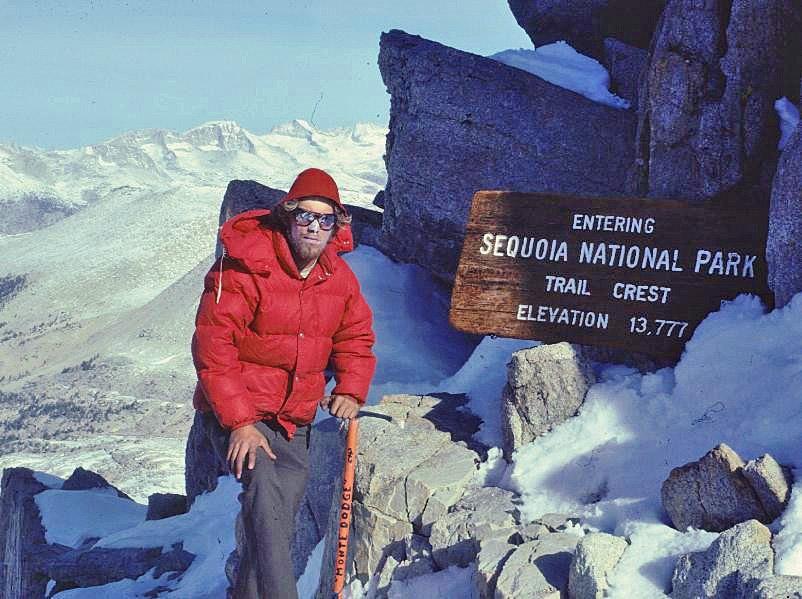
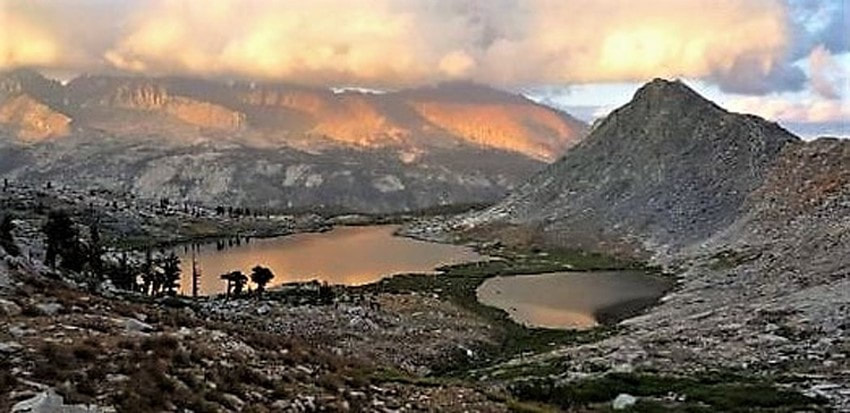
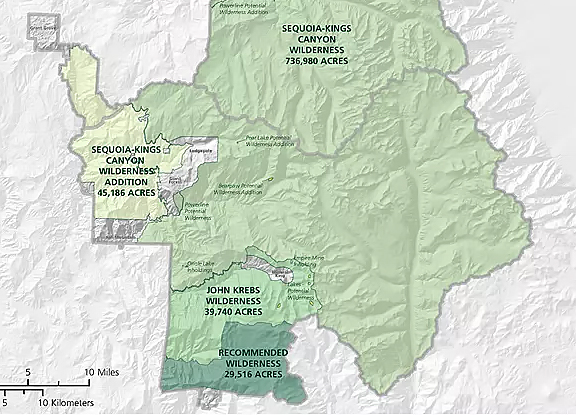
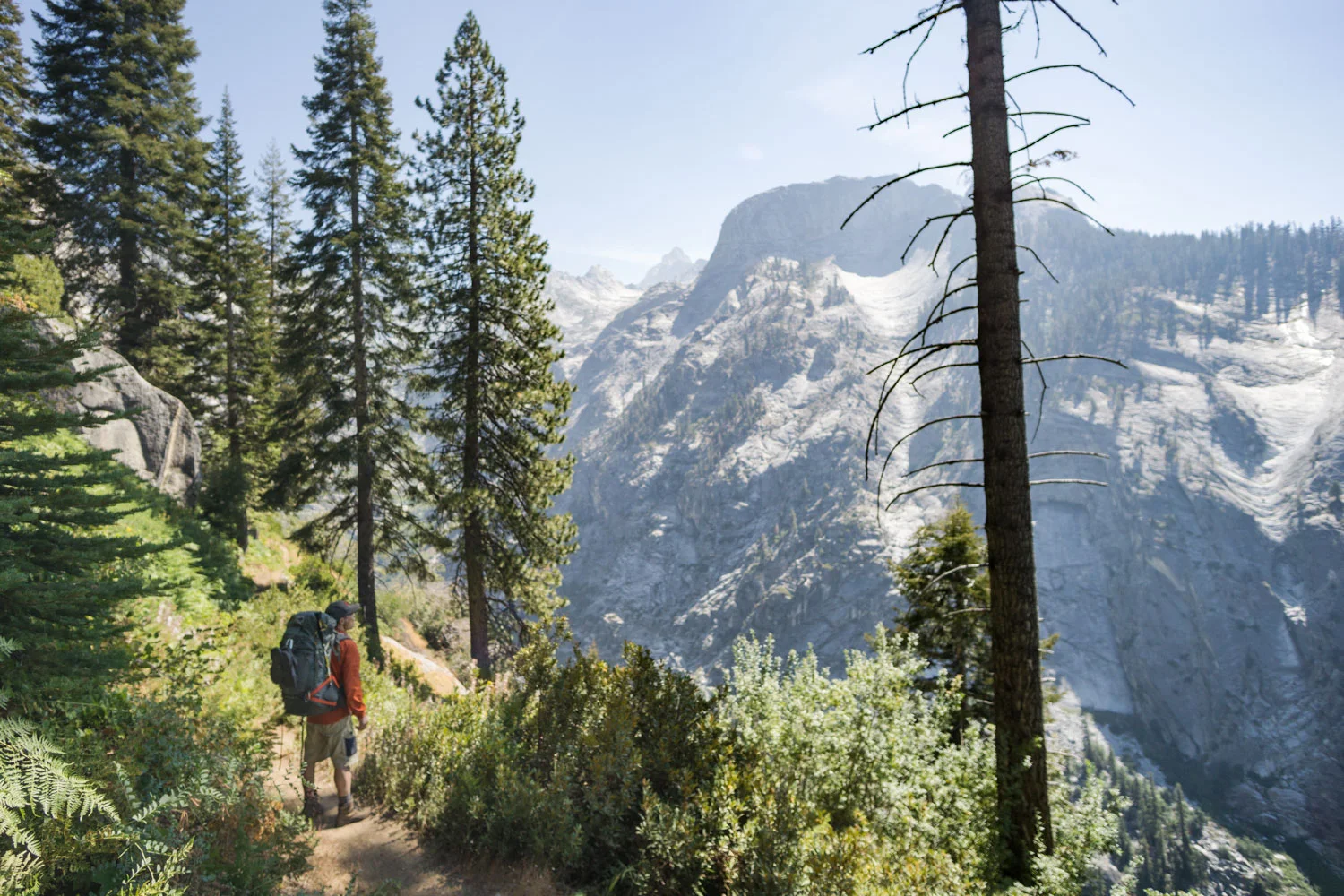
The glorious Sequoia-Kings Canyon Wilderness is huge (over 800,000 acres) and dramatically diverse, with elevations ranging from under 2,000′ to 14,505′ atop Mt. Whitney, threaded by over 800 miles of challenging trails traveling from foothill oak woodlands through varied coniferous forest belts over high passes and along rushing creeks and rivers, through flower-bright meadows, past hundreds of lakes and tarns, into the alpine zone and up to the top of the tallest mountain in the 48 contiguous U.S. states. The scenery is spectacular, the night skies sublime, wildlife abounds, the experience is life-changing, indelible.
December, 2025
NOTE: The Project Team will be conducting research for a full article as volunteer time allows. Contact us if you’d like to help research, write about, and/or illustrate this Treasure!
Maps & Directions:
There are many points of access into the huge Sequoia-Kings Canyon Wilderness. Here are most of the ones going north on, or not too far off, the Generals Highway:
From Visalia, go east on Hwy 198 through Three Rivers to the Sequoia National Park entrance station (fee), where Hwy 198 becomes the Generals Highway. Stop at the Ash Mountain Visitors Center and Wilderness Office for maps, current conditions, and your Wilderness Permit.
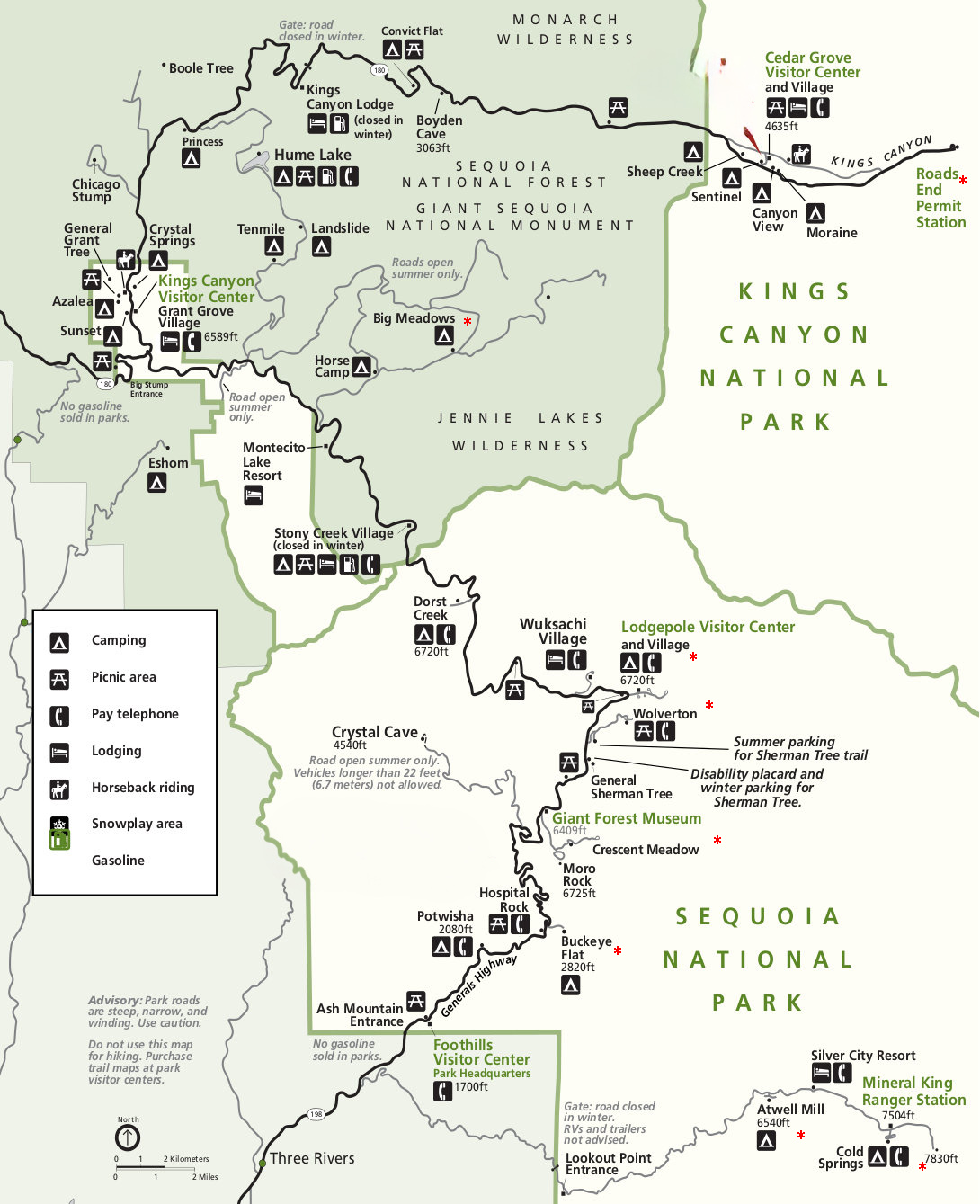
Access points to the Sequoia-Kings Canyon Wilderness trailheads include: Buckeye Flat road off Hospital Rock; Crescent Meadow road’s end (in Giant Forest); Wolverton parking lots; Lodgepole parking lots; Forest Road 14S11 east to Big Meadows, Rowell Meadow, and Horse Corral to Marvin Pass trailhead for access via Jennie Lakes Wilderness; at the junction with Hwy 180 to Grant Grove, leave the Generals Highway and follow Hwy 180 down into Kings Canyon all the way to Roads End and trailheads there into the Wilderness.
You can also access this Wilderness from the Mineral King Road out of Three Rivers. There are trailheads at Atwell Mill, Cold Springs Campground, and road’s end in Mineral King.
Site Details & Activities:
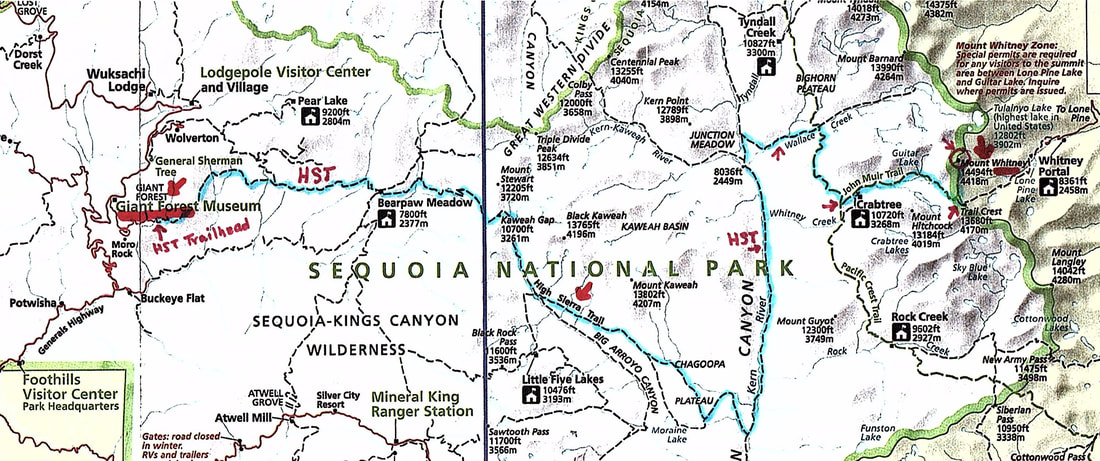
Environment: well over 800,000 acres, giant sequoia groves, extensive mixed conifer forests, lush meadows, creeks, rivers (including Wild and Scenic), waterfalls, lakes, tarns, vast areas above tree line, dozens of high peaks (including Mt. Whitney, the highest in the contiguous U.S., at 14,505′), huge canyons, wildflowers galore, wildlife at every elevation, over 800 miles of trails in all kinds of terrain (including about 100 miles of the John Muir Trail and the Pacific Crest National Scenic Trail, and all of the High Sierra Trail), and tremendous areas with no trails, for cross-country hikers seeking space, solitude, and the great gift of only natural sounds; carry good maps, plan your trip carefully and well in advance (Wilderness Permit required; quotas apply on many trails late May-late September)
Activities: backpacking, birding, botanizing, camping, caving, hiking, history/historical sites, horseback riding and packing, kayaking, fishing (license required), mountaineering, photography, rock climbing, stargazing, wildflower and wildlife viewing (Wilderness Permit required for overnight stays; no pets allowed)
Open: Sequoia and Kings Canyon National Parks are always open, weather permitting , except in emergency conditions; park entrance fee; Wilderness Permit required for overnighting; quotas apply on many trails, generally late May through late September, with Recreation fee required for entry during quota season; reservations may be made 6 months to 1 week before entry date; campfire permits may be required (NOTE that campfires are not permitted in some areas), maximum group sizes (including stock) apply.
Site Steward: National Park Service, Sequoia and Kings Canyon National Parks, 559-565-3341; Wilderness Office, 559-565-3766
Opportunities for Involvement: donate www.nps.gov/seki/getinvolved/donate.htm and https://sequoiaparksconservancy.org/become-a-friend/ , volunteer www.nps.gov/seki/getinvolved/supportyourpark/individual.htm and www.nps.gov/seki/getinvolved/volunteer.htm and Sequoia Parks Conservancy sequoiaparksconservancy.org
Links: Sequoia and Kings Canyon National Parks (NPS Site) www.nps.gov/seki/index.htm
Sequoia Park Shuttle www.nps.gov/seki/planyourvisit/parktransit.htm
Books: 1) Challenge of the Big Trees – The Updated History of Sequoia and Kings Canyon National Parks, by William C. Tweed and Lary M. Dilsaver (University of Virginia Press, 2017)
2) Granite Pathways: A History of the Wilderness Trail System of Sequoia and Kings Canyon National Parks, by William C. Tweed (Sequoia Parks Conservancy, 2021)
Porterville Historical Museum — “Your Resource for Porterville History”
by Laurie Schwaller
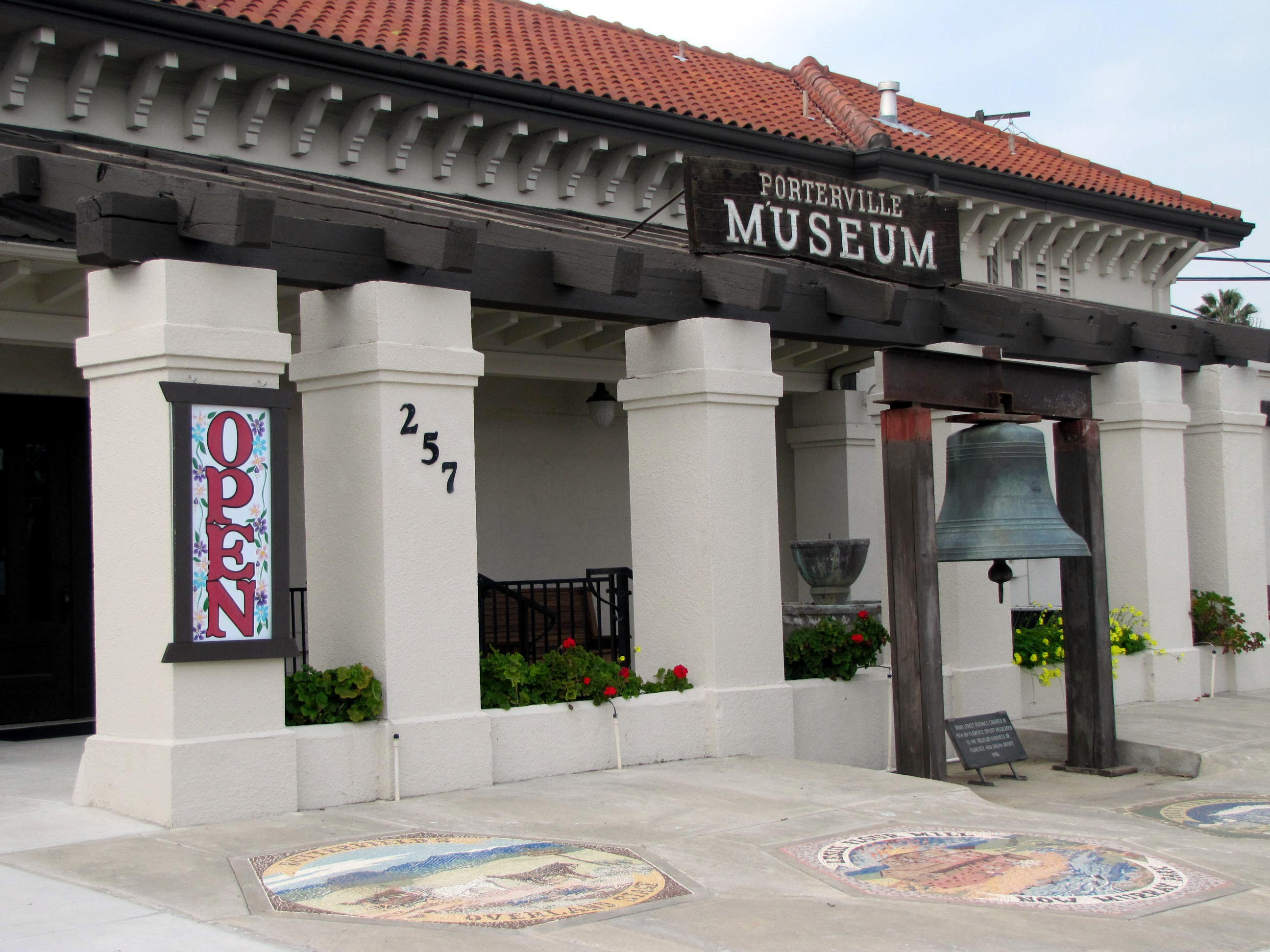
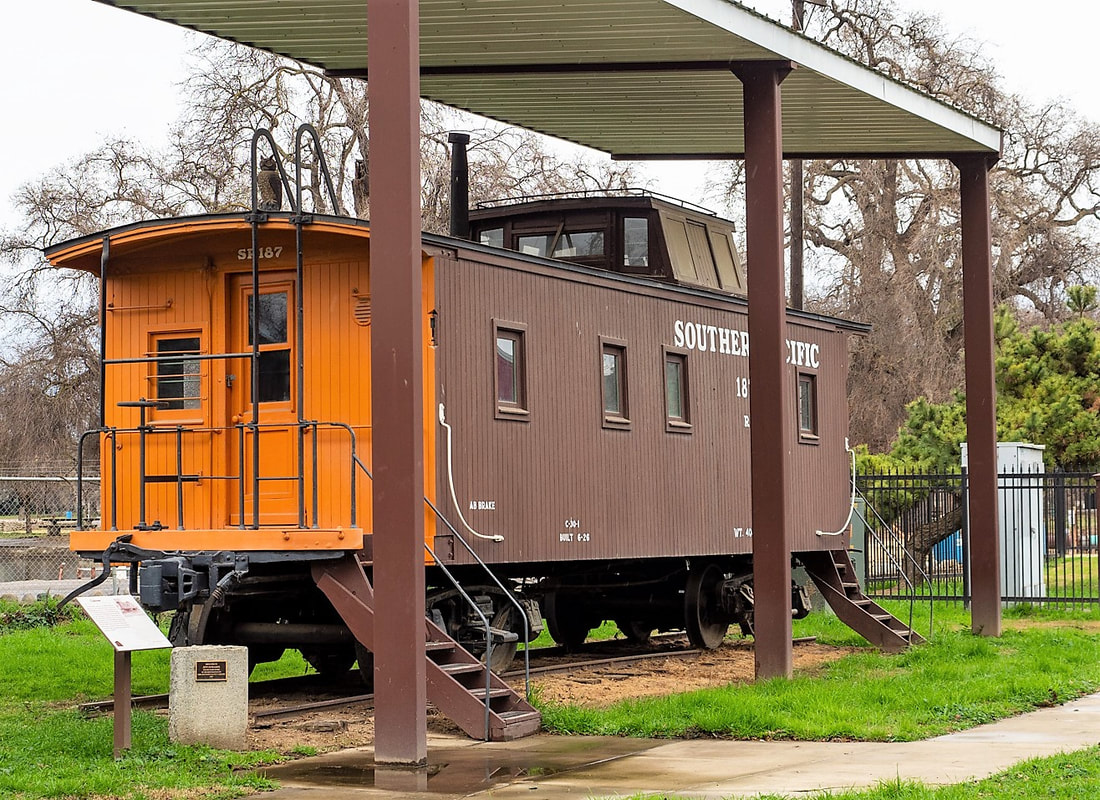
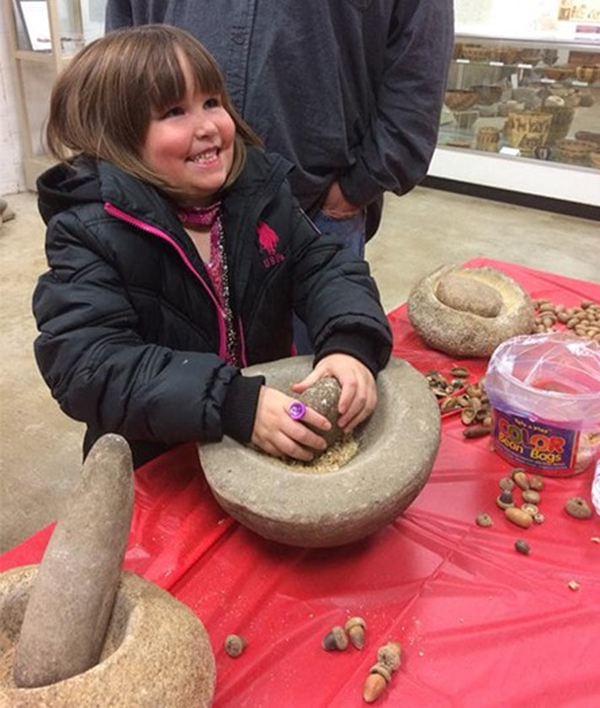
Porterville Historical Museum opened in 1965, in the classic Mission style Southern Pacific Railroad Depot that served the railroad from 1913 until the late 1950s. The museum has changed the historic structure as little as possible while installing a wonderful variety of exhibits, indoors and out, including Native American crafting, Porterville’s Pioneers, farm and fire equipment, Native Wildlife, a Salute to Veterans, and much more, along with special events such as lectures and appraisals, a big annual holiday toy and model train show, ghost hunting tours, and fundraising parties. Porterville’s history is kept alive and growing here.
December, 2025
NOTE: The Project Team will be conducting research for a full article page as volunteer time allows. Contact Us if you’d like to help research, write about, and/or illustrate this Treasure!
Maps & Directions:
Address: 257 North D Street, Porterville CA 93257
From Visalia, take Hwy 198 east to exit south (right) onto Hwy 65 toward Exeter and Porterville.
In Porterville, take the W. Olive Ave. exit and go east (left) to North D Street (has a stoplight).
Go north (left) on D St. to W. Putnam Ave. (has a stoplight).
Go left on Putnam for a very short distance to your first right turn: into the parking lot behind the museum.
Site Details & Activities:
Environment: Valley, in City of Porterville, 1913 Mission-style Southern Pacific Railroad Depot, indoor and outdoor exhibits
Activities: viewing historic exhibits, annual toy and model trains show, docent-guided tours, lectures and special events and exhibits, videos, gift shop, photography
Open: The museum is open on Fridays and Saturdays from 10:00 to 3:00, and for special events. Admission is free for children; suggested donation is $5/adult. Free parking behind the museum.
Site Steward: Porterville Historical Museum, 559-784-2053; portervillemuseum@gmail.com
Pixley Vernal Pools Preserve — Tulare County’s National Natural Landmark
by Laurie Schwaller
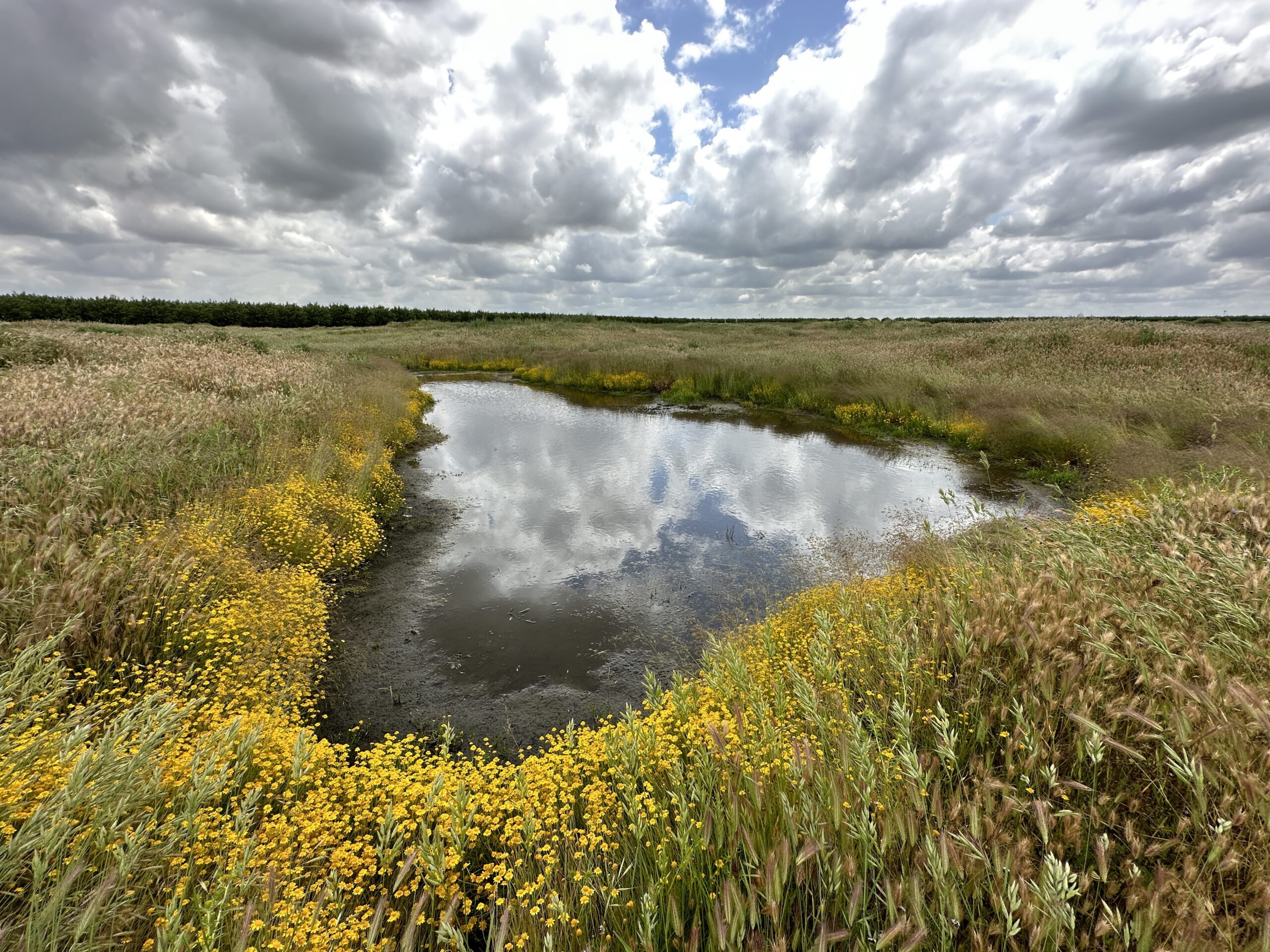
Pixley Vernal Pools Preserve, the only designated National Natural Landmark in Tulare County, is only about four miles from Pixley. Vernal pools were once common in much of our county. They form in shallow depressions in impermeable (hardpan) clay soils after sufficient winter rains. Now vernal pools are rare here because farming deep-rips the hardpan, draining the water away from the surface. Preserved hardpan depressions like Pixley’s hold the water that yields colorful “fairy rings” of spring wildflowers at the pools’ margins, and the fascinating tiny fairy shrimp, self-burying spadefoots, and other creatures that thrive within them. Burrowing owls, ground squirrels, and raptors thrive here, too.
December 2025
NOTE: The Project Team will be conducting research for a full article page as volunteer time allows. Contact Us if you’d like to help research, write about, and/or illustrate this Treasure!
Maps & Directions:
From Visalia, go west on Hwy 198 to go south on Hwy 99 toward Pixley.
Near Pixley, exit left (east) onto Avenue 120.
At the junction with Road 152, go right (south) and watch carefully for the tiny sign for Avenue 104.
Turn left (east) onto Avenue 104. Then turn left (north) onto the first paved road going north (this is Rd. 160, which may be unsigned).
Follow this road for about a quarter mile to a field of grass on your right, which is the preserve. Park on the wide dirt verge of Rd. 160.
Nearby Treasures:Pixley Park,Colonel Allensworth State Historic Park, Allensworth Ecological Reserve, Alpaugh Park, Atwell Recreation Area.
Related (vernal pool) Treasures:Hogwallow Preserve, Herbert Wetland Prairie Preserve
Site Details & Activities:
Environment: Valley, elevation around 325′, 40-acre preserve protecting increasingly rare remnant vernal pool/mima mound landscape and related habitat and plant and animal life, surrounded by agricultural land; uneven ground, no facilities or trails
Activities: birding, botanizing, photography, rare wildflower and wildlife viewing (seasonal; pools appear in the spring with adequate rainfall), no facilities or trails
Open: This National Natural Landmark site is owned by the Center for Natural Lands Management. Open only with owner’s prior permission. To arrange a visit, contact the preserve manager (see below). No trespassing, please.
Site Steward: Center for Natural Lands Management, Preserve Manager Bobby Kamansky, 760-731-7790 ext. 222; bkamansky@cnlm.org
Traveling the Pacific Crest Trail in Tulare County
by Laurie Schwaller
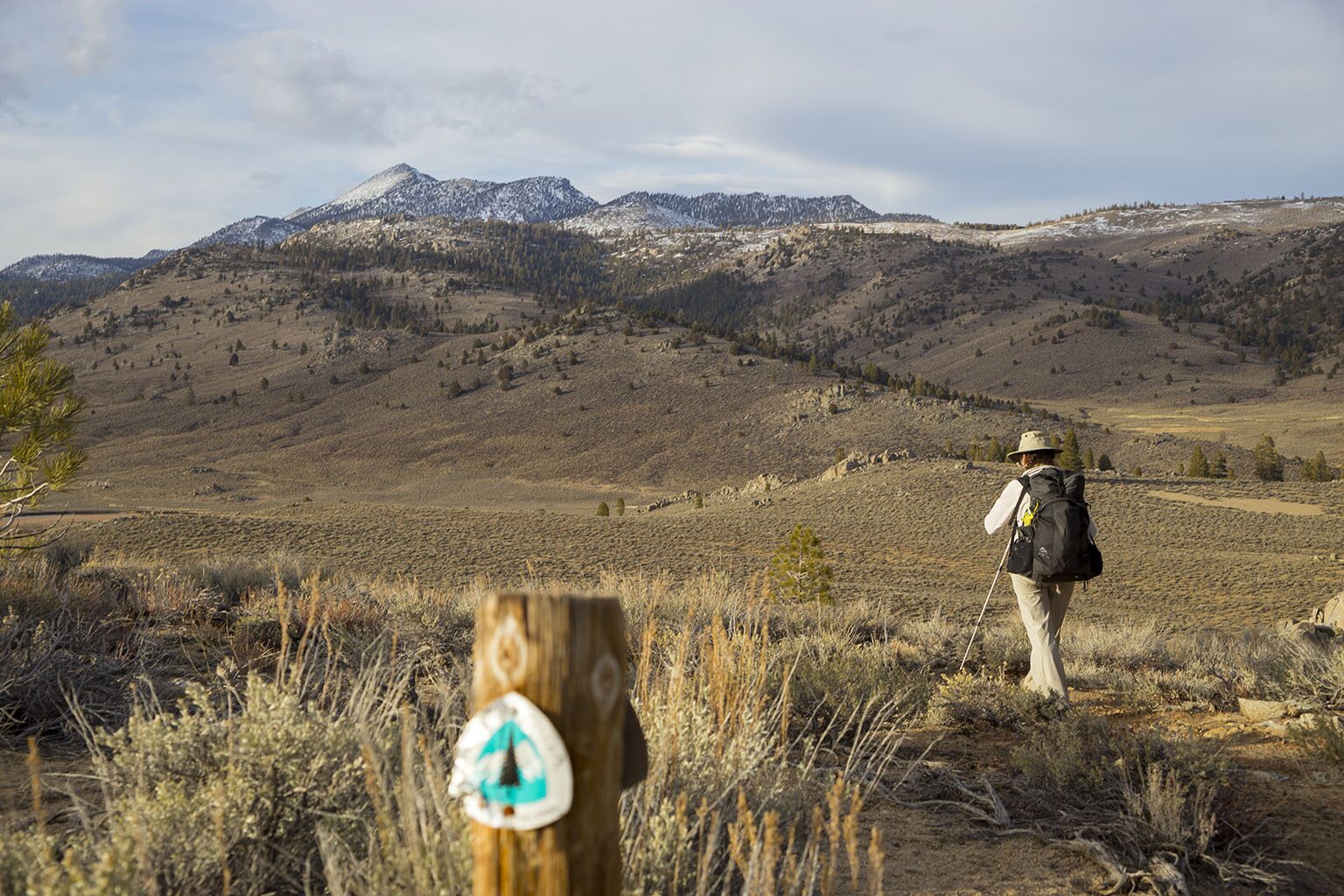
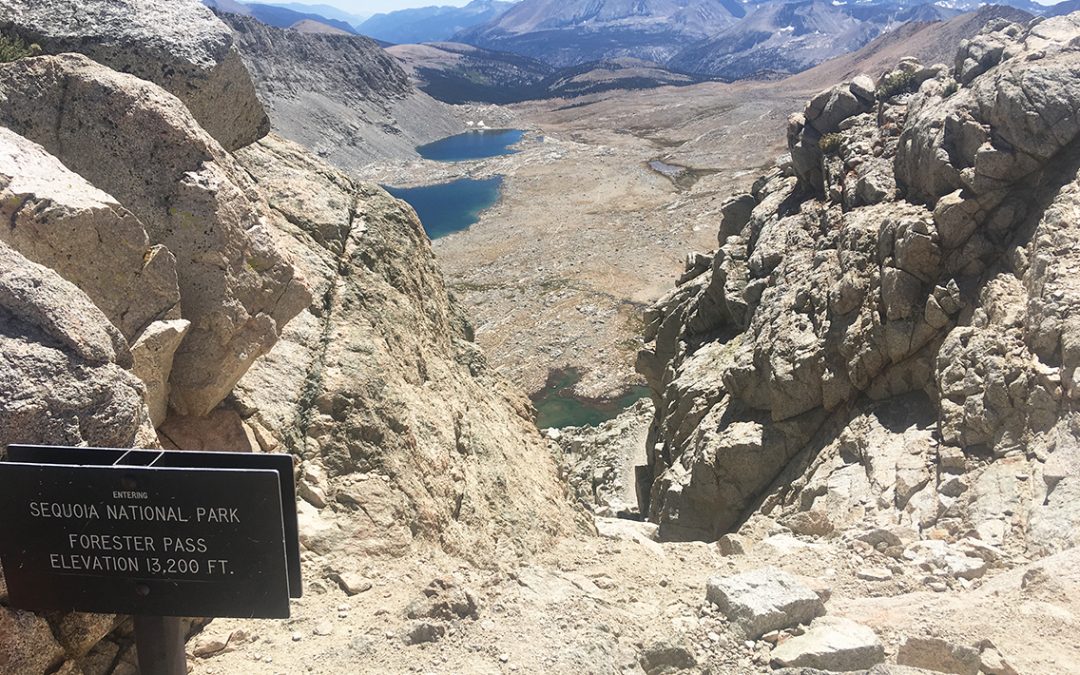
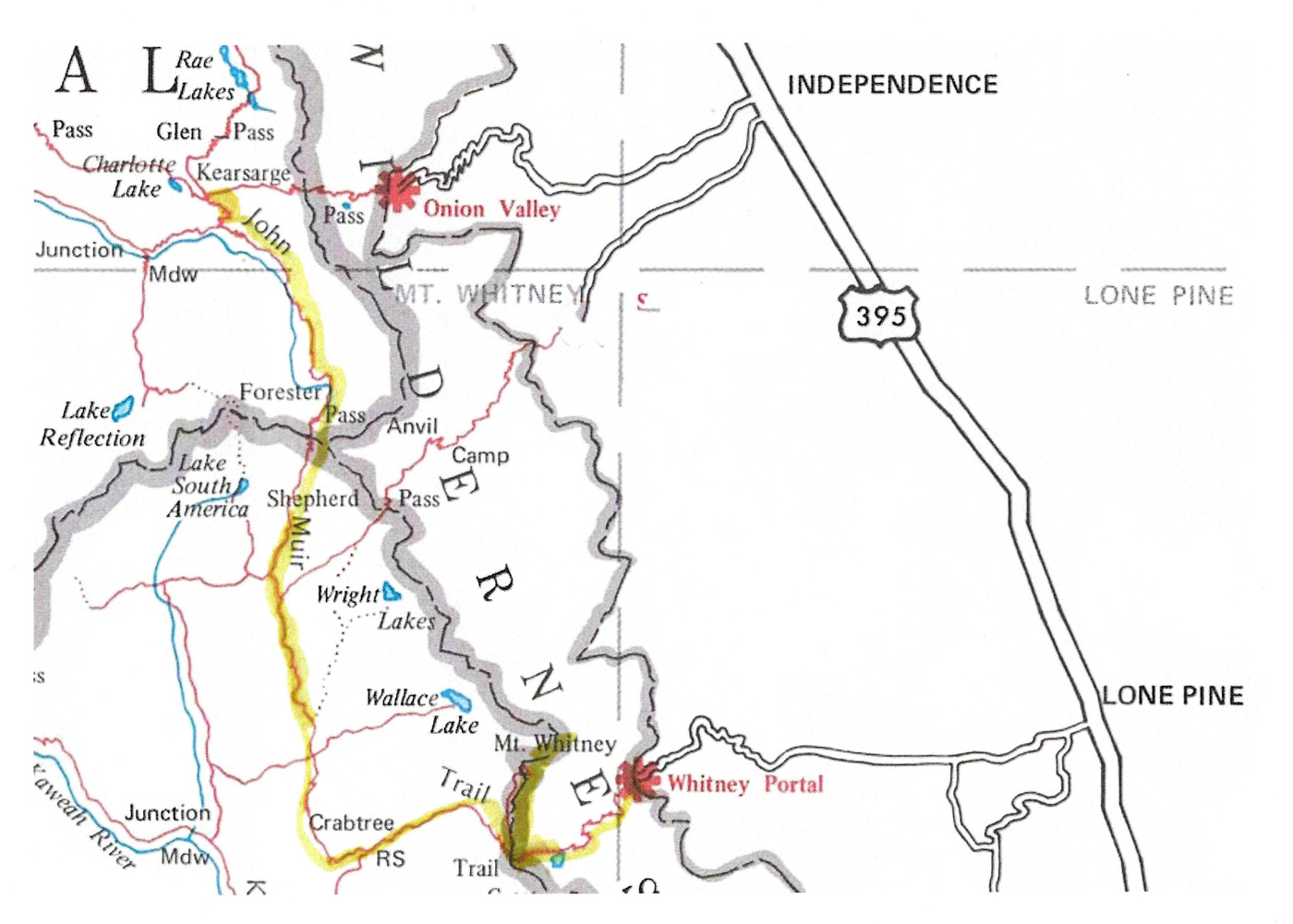
The Pacific Crest Trail travels about 125 miles within Tulare County, from mile-high high-desert expanses in the south through the trail’s highest point, atop Forester Pass (13,200′), in the High Sierra — living up to its National Scenic Trail designation all the way. With a shuttle set-up, you can hike Tulare County top to bottom (or vice-versa) on the PCT, or you can explore the PCT’s glorious TC landscapes in several shorter segments. If you can’t hike the whole 2,600-mile PCT, you can experience much of the awesome best of it right here in Tulare County.
December, 2025
NOTE: The Project Team will be conducting research for a full article as volunteer time allows. Contact us if you’d like to help research, write about, and/or illustrate this Treasure!
Maps & Directions:
NOTE: There is no quick way to access the PCT from Visalia and the west side of the Sierra Nevada, but there are a number of ways to access it, depending on whether you want to thru-hike the Tulare County segment on it, or hike it in shorter segments. Most of the options work better with a shuttle set-up, unless you don’t mind retracing your steps (since the views all look different when you’re going the other way, as may the weather and the wildlife).
For a bottom-to-top trip or vice-versa, logical trailheads to the PCT would be, in the south, at the Walker Pass trailhead on Hwy 178 (maybe 10 miles below the Tulare County line) or from the Chimney Creek Campground area (maybe 5 miles above the TC line) up from Canebrake Flat on Hwy 178 on Canebrake Road/Chimney Peak Backcountry Byway (see our Chimney Peak Wilderness page for details);
and in the north from the Onion Valley trailhead (west of Independence/Hwy 395) for the Kearsarge Pass Trail going west to its junction with the PCT a few miles north of the Tulare County line (see our John Muir Trailpage for details [the PCT joins the JMT for many miles in this area]). You could also consider leaving your north-end vehicle at Road’s End in Kings Canyon and hiking the Bubbs Creek Trail east to join the PCT/JMT a few miles south of the Kearsarge Pass Trail.
Directions to start from the south: From Visalia, go west on Hwy 198 and then south on Hwy 99 toward Bakersfield.
At Delano, take Hwy 155 east (left) toward Glenville and Lake Isabella. Follow Hwy 155 as it goes south along the lake to its junction with Hwy 178.
Go left (east) on Hwy 178 for about 30 miles to the Canebrake Flat area where you’ll go left (north) on rugged, graded-dirt, high-clearance, 4-wheel-drive-vehicle recommended Canebrake Road toward Chimney Creek campground. Approximately 9 miles up from Hwy 178 is the junction of Canebrake and Long Valley/Chimney Basin Roads. Per BLM, the best on-trail access is approximately 1.6 miles north of this junction at a small Pacific Crest National Scenic Trail trailhead.
Alternatively, continue past Canebrake on Hwy 178 to the Walker Pass PCT trailhead (with nearby campground).
To start from segments farther north, continue east past Canebrake on Hwy 178 to its junction with Hwy 395 and go north (left) to access trails such as those listed below:
NOTE: Several trails other than (and south of) Kearsarge Pass enable access to the PCT from Hwy 395 on the east side of the Sierra, e.g., Kennedy Meadows (via Nine Mile Canyon), Olancha Pass (via Olancha/Sage Flat Rd.), Mulkey Pass and Cottonwood Lakes (from Lone Pine and Lubken Canyon Road), etc.
Wilderness permits are required for overnight trips, and there are specific rules for PCT long-distance permit holders on camping and exiting the PCT corridor. Be sure to check the regulations for the specific areas you plan to hike before you go.
Site Details & Activities:
Environment: High Desert, Foothills, Mountains, cacti, sagebrush, chaparral, forests of various conifers, rivers, streams, cottonwoods and oaks in riparian zones, big meadows, lakes, high passes, huge canyons, major elevation gains and losses, optional summit of Mt. Whitney (elevation 14,505′); always carry water and good Pacific Crest Trail maps
Activities: backpacking, birding, botanizing, dogs (allowed on leash and constantly under owner’s control in BLM and National Forest lands, but not on National Parks trails or Wilderness), camping, hiking, history, horseback riding and packing, photography, stargazing, wilderness, wildflower and wildlife viewing; this can be a very strenuous adventure with all kinds of weather: plan far ahead, be well informed, and prepare and pack carefully
Open: The Pacific Crest Trail is always open, weather permitting, unless closed due to emergency conditions; park entrance fee; various permits required (depending on where you’re going)
Site Steward: The PCT in Tulare County passes through segments managed by different Site Stewards, including the Bureau of Land Management (BLM), the National Forest Service, and Sequoia and Kings Canyon National Parks. The PCT also merges with the John Muir Trail in the northern part of Tulare County. These agencies and trails have varying regulations and requirements; get fully informed, secure all relevant maps and permits, and plan and prepare carefully well in advance of your trip!
Traveling the PCT in Tulare County, you’ll be hiking mostly on Wilderness land, managed by BLM, National Forest Service, and Sequoia and Kings Canyon National Parks.
Opportunities for Involvement: donate , volunteer, Sequoia Parks Conservancy, volunteer.gov
Links:
Pacific Crest Trail Association:
https://www.pcta.org/Read this website thoroughly. Too much info to show here, but here’s a little start; then keep reading (this is your gateway):
Many books and maps about hiking the PCT are advertised and commented on online. (There are also many blogs and videos about hiking the PCT.) Be well informed and prepared; a successful hike on the PCT takes careful planning and conditioning well in advance of your wonder-full journey. Hike your hike!
Owens Peak, at 8,445′ the highest in the southern Sierra Nevada, rises in the center of its rugged 73,767-acre namesake wilderness. Here, the Great Basin, Mojave Desert, and Sierra Nevada ecoregions converge, providing a great diversity of plant life — from desert creosote, yucca, and cacti to numerous forested peaks — as well as two distinct climate zones, plenty of wildlife, vast views, and very starry night skies. Big canyons host springs, oaks, and cottonwoods. Trails include a stretch of the PCT and many use trails, such as peakbaggers’ routes to various summits. While summers are very hot here, conditions in the shoulder seasons are inviting, and spring wildflower shows after good rains can be amazing
November, 2025
NOTE: The Project Team will be conducting research for a full article as volunteer time allows. Contact us if you’d like to help research, write about, and/or illustrate this Treasure!
Maps & Directions:
NOTE: There is no quick way to get to Owens Peak Wilderness from Visalia and the west side of the Sierra Nevada.
From Visalia, go west on Hwy 198 and then south on Hwy 99 toward Bakersfield.
At Delano, take Hwy 155 east (left) toward Glenville and Lake Isabella.
Follow Hwy 155 as it goes south along the lake to its junction with Hwy 178.
Go left (east) on Hwy 178 for about 30 miles to the Canebrake Flat area, where you’ll go left (north) on rugged, graded-dirt, high-clearance, 4-wheel-drive-vehicle-recommended Canebrake Road (AKA Chimney Peak Backcountry Byway) toward Chimney Creek campground.
Owens Peak Wilderness will be all along the right side of this road. There’s PCT access about 2 miles south of the campground.
Site Details & Activities:
Environment: Wilderness, 73,767 acres, rugged topography, high desert to forested peaks (Owens Peak 8,445′), big canyons with springs and riparian habitat, Pacific Crest National Scenic Trail segment; bordered by Chimney Peak Wilderness on the west.
Activities: backpacking, birdwatching, botanizing, camping (free campfire permit required for gas lanterns, stoves, and campfires), dogs must be on leash and under owner’s control at all times and must not harass wildlife, fishing (with valid licenses and in compliance with state and local regulations), hiking (including Pacific Crest National Scenic Trail segment), horseback riding and packing, hunting (seasonal, with valid licenses and in compliance with state and local regulations), mountaineering, peakbagging, photography, stargazing, wildflower and wildlife viewing (NOTE: Always carry a good map and plenty of water; water sources are unreliable; filter water in Wilderness; watch for rattlesnakes and ticks.)
Open: The Wilderness is always open, depending on weather, except when closed due to emergency conditions.
Site Steward: Bureau of Land Management, Ridgecrest Field Office; 760-384-5400; BLM_CA_Web_RI@blm.gov
Opportunities for Involvement: Visit volunteer.gov or reach out to your local BLM office for information on opportunities near you.
Tulare County’s eighty-six acre Kings River Park is our only park that borders the Kings River and that allows hunting (for doves only, Parks tickets required). It also has a challenging 18-hole disc golf course, an arbor, a restroom, and grass-mowing cattle, but no maintained trails. River access is difficult, but there’s fishing (license required). The County’s 1971 proposed Master Plan for this park included a campground; children’s play areas; picnic tables; arbors; fire, horseshoe, and BBQ pits; a boat ramp; and a caretaker’s residence. Meanwhile, the park’s gate is locked. Contact County Parks for passes, hunting tickets, and fees.
November, 2025
NOTE: The Project Team will be conducting research for a full article page as volunteer time allows. Contact Us if you’d like to help research, write about, and/or illustrate this Treasure!
Maps & Directions:
From Visalia, take Hwy 99 north toward Kingsburg.
Exit right onto Ave. 384 (signed for Rest Area) and go right (south) at the T intersection.
Go past the gas station and motel and as the road turns left, take the first left you come to, onto Road 28.
Follow Road 28 north until it dead ends at the gate to Kings River Park.
Site Details & Activities:
Environment: Valley, 86.4 acres, open pastoral landscape, cattle grazing, bordering the Kings River, scattered trees, 18-hole disc golf course, arbor, restroom
Activities: birding, botanizing, disc golf, dove hunting (ticket required; contact County Parks), fishing (license required), hiking, photography, wildflower and wildlife viewing (seasonal)
Open: The park gate is locked. Contact County Parks to obtain a pass. The land beyond the park fence is private. No trespassing, please. County Parks are closed on Tuesdays and Wednesdays and on national holidays. Open Hours are seasonal; check Tulare County Parks website (see below) for hours.
Kings River Park Fees (in 2025; check County Parks for current fees):
Dove Hunting (per permit, Maximum 20 hunters per day) $5
Arbor #1 (Small) $50
Disc Golf Course (Please note that additional fees are assessed for tournaments based on amenities in the area of the tournament route) $100
Reserve Entire Park Base Fee $150
Site Steward: Tulare County Parks, 559-205-1100, https://www.tularecountyparks.org, tularecountyparks@tularecounty.ca.gov
Opportunities for Involvement: donate: https://tularecountyparks.org/support-the-parks, volunteer
Visiting Hospital Rock AKA Pah-Din in Sequoia National Park
by Laurie Schwaller
Hospital Rock is an excellent stop along Sequoia National Park’s Generals Highway. “Pah-Din” provides panoramic foothill, mountain, and river views; short trails leading to Native American pictographs, bedrock mortars, and cupules; the huge Rock’s “hospital”; a captivating beach and seasonal waterfall beside the rushing Kaweah River; informative interpretive panels; bird and wildlife watching; and picnic facilities, restrooms, and drinking water. For many hundreds of years, Yokuts, Mono, and Tubatulabal people met, gathered, and lived in the large village on this site. Savor, learn from, and remember this beautiful “place to go through.”
November, 2025
NOTE: The Project Team will be conducting research for a full article as volunteer time allows. Contact us if you’d like to help research, write about, and/or illustrate this Treasure!
Maps & Directions:
From Visalia, go east on Hwy 198 through Three Rivers to the Sequoia National Park entrance station (fee), where Hwy 198 becomes the Generals Highway. Hospital Rock is about 6 scenic miles farther up on the Generals Highway.
Site Details & Activities:
Environment: Foothills, abundant oak woodland, Kaweah River, long a large Native American village site (later a Sequoia National Park campground – with store, dining, and ranger station, and a Civilian Conservation Corps work site), Kaweah River access, scenic views, interpretive panels, picnic area, restroom and water fountain, short trails to pictographs, bedrock mortars, cupules; abundant wildlife and diverse plant life; nearby campground (seasonal) and hiking and backpacking trail to Redwood Meadow giant sequoia grove
Activities: birding, botanizing, camping (nearby), fishing (license required), hiking, history, interpretive panels, Native American artifacts, photography, picnicking, river access, wildflower and wildlife viewing (NOTE: this is a bear area; store all food securely and dispose of all waste properly; never feed wildlife – keep wild animals wild for your safety and theirs. The Kaweah River’s current can be deceptively fast and strong and nearby rocks extremely slippery; use great caution near, on, and in this river, and never leave children unattended near the river.)
Open: daily, weather permitting, except in emergency conditions; park entrance fee
Site Steward: National Park Service, Sequoia National Park, 559-565-3341
Opportunities for Involvement: donate , volunteer, Sequoia Parks Conservancy
Links: Sequoia Kings Canyon National Parks (NPS Site); Visit Sequoia.com; Plan Your Visit, Permits, Current Conditions; Sequoia Park Shuttle
Books: 1) Challenge of the Big Trees -The Updated History of Sequoia and Kings Canyon National Parks, rev. edition, by William C. Tweed and Lary M. Dilsaver (University of Virginia Press, 2017)
2) A Guide to the Sequoia Groves of California, by Dwight Willard (Yosemite Association, 2000)
3) King Sequoia: The Tree That Inspired a Nation, Created Our National Park System, and Changed the Way We Think About Nature, by William C. Tweed (Heyday, 2016)
4) Images of America Sequoia National Park, by Ward Eldredge (Arcadia Publishing, 2008)
Sequoia National Park’s 39,740 acre John Krebs Wilderness abounds with spectacular scenery, high peaks and passes, sparkling lakes and rushing streams, forests of aspen and conifers, giant sequoia groves, glorious skies both night and day, wonderfully diverse wildlife and wildflowers, challenging trails, and a roller-coaster history including the U.S. Cavalry, vagrant sheep, silver mines, cabin owners, a game refuge, recreationists, lumber and power companies, Walt Disney, environmentalists, a landmark Supreme Court case, and an arduous journey to becoming part of Sequoia National Park and a designated Wilderness. Two campgrounds and pie are nearby!
November, 2025
NOTE: The Project Team will be conducting research for a full article as volunteer time allows. Contact us if you’d like to help research, write about, and/or illustrate this Treasure!
John Krebs Wilderness
Maps & Directions:
From Visalia, go east on Hwy 198 through most of Three Rivers to the marked turn-off to the right onto Mineral King Road and follow that narrow, steep, winding road up to your trailhead. (Stay left on Mineral King Road at the junction with Hammond Rd. ) RVs and trailers are not recommended on Mineral King Rd. Drive cautiously and yield to oncoming traffic.
About 12-13 miles up Mineral King Rd. there is a National Park Service self-service fee station at Lookout Point.
There are trailheads at Atwell Mill, Cold Springs Campground, and road’s end in Mineral King. Wilderness Permit required for overnight visits in the Wilderness.
NOTE: Mineral King Road is closed below Lookout Point in winter. The road is open all the way to Mineral King Valley usually from about Memorial Day to mid-October, depending on weather. For road status and advisories, call 559-563-3341, then press 1, 1, 1.
NPS Advisory: Secure your vehicle from invasive, wire-chewing marmots by driving over a tarp and then wrapping it around your entire vehicle; cover the wheel wells. Don’t wrap with chicken wire, as marmots have learned to get around the wire. See https://www.nps.gov/seki/planyourvisit/marmots.htm
Site Details & Activities:
Environment: mostly steep; Foothills, Mountains, National Park, Wilderness, historical and cultural landscape; oak-dotted foothills, dense chaparral, riparian areas along perennial streams and the South and East forks of the Kaweah River, big canyons, six giant sequoia groves, aspen groves, extensive coniferous forests, big meadows, about 20 lakes, many peaks – some over 12,000′, sensational views from all trails (and off), abundant wildlife, highly diverse plant life, marvelous night skies, wonderfully accessible wilderness
Activities: backpacking, birding, botanizing, camping, caving, hiking, history/historical sites, horseback riding and packing, fishing (license required), mountaineering, photography, rock climbing, stargazing, wildflower and wildlife viewing (no mechanized/motorized equipment and no pets allowed in Wilderness)
Open: Sequoia and Kings Canyon National Parks are always open, weather permitting , except in emergency conditions; park entrance fee; Wilderness Permit required for overnight visits; quotas apply on many trails, generally late May through late September, with Recreation fee required for entry during quota season; reservations may be made 6 months to 1 week before entry date; campfire permits may be required (NOTE that campfires are not permitted in some areas), maximum group sizes (including stock) apply.
Site Steward: National Park Service, Sequoia and Kings Canyon National Parks, 559-565-3341; Wilderness Office, 559-565-3766
Opportunities for Involvement: donate, volunteer, Sequoia Parks Conservancy
Links: Sequoia Kings Canyon National Parks (NPS Site); Visit Sequoia.com; Plan Your Visit, Permits, Current Conditions;
Books: 1) Challenge of the Big Trees -The History of Sequoia and Kings Canyon National Parks, rev. edition, by William C. Tweed and Lary M. Dilsaver (University of Virginia Press, 2017)
2) Granite Pathways: A History of the Wilderness Trail System of Sequoia and Kings Canyon National Parks, by William C. Tweed (Sequoia Parks Conservancy, 2021)
Readily accessible from four trailheads, Sequoia National Forest’s 10,500 acre Jennie Lakes Wilderness offers 26 miles of hiking trails, beautiful lakes (Jennie and Weaver are the largest), perennial streams, lovely meadows, extensive coniferous forests, rocky peaks (especially 10,365′ Mitchell Peak) affording great views, beckoning spring wildflowers, watchable wildlife, and trail access to Sequoia and Kings Canyon National Parks’ backcountry (Wilderness permit required for travel into the Parks). Jennie Lakes Wilderness lies almost entirely above 7,000′, so it’s refreshingly cool in summer; winter access is limited by road closures and its steep, snowy terrain.
November, 2025
NOTE: The Project Team will be conducting research for a full article as volunteer time allows. Contact us if you’d like to help research, write about, and/or illustrate this Treasure!
Jennie Lakes Wilderness
Maps & Directions:
From Visalia, take Hwy 198 east through Three Rivers to the Sequoia National Park entrance station (fee), where the road becomes the Generals Highway. Follow it through Sequoia National Park and into Sequoia National Forest. Soon after the sign for Montecito Sequoia Camp, watch on your right for Big Meadows Forest Service Road (14S11). Take this road for about 5 miles to the Big Meadows trailhead (hiking trail 29E03) for a moderate to strenuous hike into the Jennie Lakes Wilderness. For the Rowell Meadows Trailhead (12 miles off of the Generals Highway), follow Big Meadows Road (14S11) and turn right onto Forest Road 13S14 for 2.5 miles to the trailhead (trail 30E08) providing an easy to moderate hike into the Wilderness. For the Marvin Pass trailhead (13 miles off of Generals Hwy), follow Big Meadows Road (14S11) and turn right onto Forest Road 13S12 for 2 miles to the trailhead (trail 30E06) providing an easy to moderate hike into the Wilderness.
Alternatively, from Visalia, take Hwy 63 north to go east (right) on Hwy 180 to the Big Stump entrance station (fee) to Kings Canyon National Park. At the upcoming “Y” junction, go right onto the Generals Highway, and then left (east) onto Big Meadows Forest Service Road (14S11). Proceed per directions above to the 3 trailheads.
The fourth trailhead (Stony Creek, trail 29E06), which is significantly the steepest, is located off the Generals Highway at the far end of Upper Stony Creek campground, which is located just a bit north of the small Stony Creek development near the south end of the Generals Highway segment in Sequoia National Forest. Turn east off the Generals Highway to access Upper Stony Creek campground and the trailhead.
Site Details & Activities:
Environment: Mountains, elevations about 7,000′ to 10,365′ (on Mitchell Peak), mixed conifer forests, six lakes, meadows, perennial streams, deep Boulder Creek canyon, 26 miles of trails
Activities: backpacking, birdwatching, botanizing, camping (free campfire permit required for gas lanterns, stoves, and campfires), dogs must be kept on 6′ leash under your control and must not harass wildlife , fishing (with valid licenses and in compliance with Federal, state, and local regulations), hiking, horseback riding and packing (maximum 15 people and 25 head of stock allowed on overnight trips), hunting (with valid licenses and in compliance with Federal, state, and local regulations), photography, rock climbing, wildflower and wildlife viewing (NOTE: hunting is NOT allowed in Sequoia and Kings Canyon National Parks, and dogs are NOT allowed in Sequoia and Kings Canyon National Parks Wilderness areas.)
Open: The Wilderness is always open, depending on weather, except when closed due to emergency conditions. NOTE: A Wilderness permit is not required to enter Jennie Lakes Wilderness, but IS required to enter Sequoia and Kings Canyon National Parks Wilderness areas. Permit (free) required for campfires (campfires may be prohibited, depending on fire danger). All mechanized/motorized vehicles and equipment are prohibited in the Wilderness. Maximum group size: 15 people/25 head of stock per party. Leave No Trace.
Site Steward: USDA, Sequoia National Forest, Hume Lake Ranger District, 559-338-2251
This Wilderness can be accessed from four Sequoia National Forest trailheads, and also from trailheads in Sequoia National Park and Kings Canyon National Park.
Opportunities for Involvement: Visit volunteer.gov or reach out to your local National Forest office for information on opportunities near you.
Sequoia National Park’s Incomparable High Sierra Trail
by Laurie Schwaller
Sequoia National Park’s fabulously scenic High Sierra Trail, “the most ambitious trail ever built by the National Park Service in the southern Sierra,” leads you in 62 rugged, up and down miles from lush, giant-sequoia-ringed Crescent Meadow, elevation 6700′, to the all-rock top of Mt. Whitney at 14,505′, the highest point in the lower 48 states. (It’s about 75 miles if you hike on down the east side to road’s end at Whitney Portal.) Built in 1928-1932, this classic, incomparable trail challenges and rewards its travelers with sights and experiences they never forget.
November, 2025
NOTE: The Project Team will be conducting research for a full article as volunteer time allows. Contact us if you’d like to help research, write about, and/or illustrate this Treasure!
High Sierra Trail from Giant Forest to Mount Whitney Summit
Maps & Directions:
From Visalia, go east on Hwy 198 through Three Rivers to the Sequoia National Park entrance station (fee), where Hwy 198 becomes the Generals Highway. About a mile up the road, stop at the Wilderness Office near the Foothills Visitor Center to pick up your required Wilderness Permit for the High Sierra Trail (see Links in the Site Details section below). Continue up the mountain on the Generals Highway to just before the Giant Forest Museum and turn right onto the Moro Rock/Crescent Meadow Road. Follow it to its end at the Crescent Meadow parking lot. Find the HST trailhead sign near the restroom.
HST hikers typically make this a shuttle trip. Most travel the HST from west to east, culminating in summiting Mt. Whitney, then descending the 11-mile trail to Whitney Portal on the east side to meet a vehicle that will take them home (or back to the car they left at the start of their trek).
NOTE: You must obtain a Wilderness permit for the High Sierra Trail before you hike it. If you wish to complete your trip by hiking out down the east side to Whitney Portal, the Inyo National Forest will accept your Wilderness permit issued by Sequoia National Park as long as you meet the requirements for continuous wilderness travel.
(See our Smithsonian Shelter on Mt. Whitney page for a sketch map of the trail down to Whitney Portal.)
Site Details & Activities:
Environment: Mountains, forests, rivers, streams, lakes, high passes, huge canyons, major elevation gains and losses, summit of Mt. Whitney (elevation 14,505′); carry good High Sierra Trail maps
Activities: backpacking, birding, botanizing, camping, hiking, history, photography, stargazing, wilderness, wildflower and wildlife viewing; this is a very strenuous adventure: plan it far ahead and prepare and pack carefully
Open: Sequoia and Kings Canyon National Parks are always open, weather permitting, unless closed due to emergency conditions; park entrance fee; High Sierra Trail Wilderness Permit required
Site Steward: National Park Service, Sequoia National Park, 559-565-3341
Opportunities for Involvement: donate , volunteer, Sequoia Parks Conservancy
high_sierra_trail_gentle_ribbon_of_rock Excellent film on the planning and construction of the High Sierra Trail, narrated by WilliamTweed; see it on You Tube
Books: 1) Granite Pathways: A History of the Wilderness Trail System of Sequoia and Kings Canyon National Parks, by William C. Tweed (Sequoia Parks Conservancy, August, 2021)
2) A number of books about hiking the HST are advertised online. (There are also many blogs and videos about hiking the HST.) Be informed and prepared; a successful hike on the HST takes careful planning and conditioning well in advance of your journey.
See also: high_sierra_trail_gentle_ribbon_of_rock Excellent film on the planning and construction of the High Sierra Trail, narrated by WilliamTweed; on You Tube
At their peak, in about 1940, Sequoia National Park’s concessionaire’s historic Giant Forest Lodge, Camp Kaweah, and Giant Forest Village had spread 400+ structures through a large part of the Giant Forest. continually increasing tourism and the concessionaire’s interest in building still more. In 1978, the Park qualified 71 of the most architecturally, culturally, and historically significant of these buildings for listing on the National Register of Historic Places.
But two years later, the park’s 1980 Development Concept Plan officially addressed the incompatibility of the sprawling facilities with the health and meaning of this world-famous forest that the Park had been created to protect. The plan proposed removing from the Giant Forest all of these structures, along with the neighboring Park-provided campgrounds, and all the roads and other infrastructure connecting and servicing these attractions and accommodations. The Park’s concessionaire, many Tulare County and Valley residents, and others from much farther away, decried the Park’s plan and the prospective loss of the beloved facilities that had hosted so many of them for decades.
It took almost two decades of preparing and presenting more detailed plans and alternate plans, public and private meetings, difficult negotiations, the siting and construction of new facilities outside of the Giant Forest, and years of hard physical and mechanical labor, but by 1999, only three of the historic structures remained. Virtually all the rest of the evidence of the many decades of development was gone, enabling the restoration of the Giant Forest we treasure today to begin.
And those three surviving structures? They’re still in use today. The Giant Forest Market, designed by renowned architect Gilbert Stanley Underwood, and built in 1928-1929, was extensively remodeled inside, to become the welcoming and enlightening Giant Forest Museum. The nearby comfort station (nowadays generally called “restroom”) still stands in service next to the Museum. And just a short walk away, and a little uphill, the iconic ranger residence continues to house park rangers.
These timeless examples of Parkitecture, constructed with native materials — wood and stone, and of a size and shape and coloring to blend and harmonize with their natural surroundings, are as attractive and admired today as they’ve been for nearly a hundred years already. Inside the Museum, you can learn when, where, why, and how all these momentous changes occurred in the life and character of the world’s irreplaceable Giant Forest. Then walk the Big Trees trail circling nearby Round Meadow and see what you think about the results.
November 2025
NOTE: The Project Team will be conducting research for a full article as volunteer time allows. Contact us if you’d like to help research, write about, and/or illustrate this Treasure!
Maps & Directions:
From Visalia, go east on Hwy 198 through Three Rivers to the Sequoia National Park entrance station (fee), where Hwy 198 becomes the Generals Highway.
Continue up the mountain on the Generals Highway to the Giant Forest Museum (formerly the Giant Forest Market), on your right. Park in the big lot across the road on your left and you’ll be able to easily walk to the only three remaining structures of the hundreds that thronged the Giant Forest by the 1940s.
If you can, take the time to walk the all-accessible trail around Round Meadow, and the trail out to Sunset Rock. Imagine what your experience would be if this forest were still filled with roads, cars, shops, motels, cabins, campgrounds, signs, litter, trash cans, artificial lights, outdoor cooking, cacophonous radios, wires, poles, parking lots, many beaten paths, and wildlife jonesing for snacks.
Nearby Treasures: Moro Rock Stairway is just a short loop drive down the Moro Rock/Crescent Meadow Road, starting at the west end of the parking beside the Museum. Tharp’s Log and the Squatter’s Cabin are two lovely walks away from the Crescent Meadow parking lot/trailheads.
Site Details & Activities:
Environment: Mountains, Giant Forest, giant sequoia groves, mixed conifer forest, lush meadows, creeks, rock outcrops, wildflowers, wildlife, many trails; carry a good Giant Forest trails map
Activities: birding, botanizing, camping (nearby, at Lodgepole), educational facilities, talks, and tours, hiking, history, photography, stargazing, wildflower and wildlife viewing; water and restrooms are available at the historic restrooms near the Museum (and near Moro Rock and at Crescent Meadow); camping and picnicking facilities are available nearby; overnight lodging and restaurant available at Wuksachi
Open: daily, weather permitting (Crescent Meadow/Moro Rock road closed to vehicle traffic in snow season), except in emergency conditions; park entrance fee
Site Steward: National Park Service, Sequoia National Park, 559-565-3341; https://www.nps.gov/seki/index.htm
Opportunities for Involvement: donate, volunteer, Sequoia Parks Conservancy; www.sequoiaparksconservancy.org
Links:
Sequoia and Kings Canyon National Parks (NPS Site)
Visit Sequoia.com
Plan Your Visit, Permits, Current Conditions
Sequoia Park Shuttle
Sequoia Kings Canyon Lodging
Books:
1) Challenge of the Big Trees -The Updated History of Sequoia and Kings Canyon National Parks, rev. edition, by William C. Tweed and Lary M. Dilsaver (George F. Thompson Publishing, L.L.C.,, 2016)
2) Images of America – Sequoia National Park, by Ward Eldridge (Arcadia Publishing, 2008)
3) King Sequoia: The Tree That Inspired a Nation, Created Our National Park System, and Changed the Way We Think about Nature, by William C. Tweed (Heyday, 2016)
The epic grand finale of the John Muir Trail is its spectacular last 25 miles in Tulare County, all above 10,000′, culminating in summiting 14,505′ Mt. Whitney, highest peak in the contiguous 48 states. This sensational home stretch includes the climb over Forester Pass, at 13,200′ the highest on the JMT, marvelous meadows, numerous lakes and rushing creeks, vast vistas on the Bighorn Plateau, diverse coniferous forests, plentiful wildlife, wonderful wildflowers, precipitous peaks and beautiful basins, brilliant night skies, and soul-filling days in John Muir’s Range of Light. A journey of a lifetime experience.
November 2025
NOTE: The Project Team will be conducting research for a full article as volunteer time allows. Contact us if you’d like to help research, write about, and/or illustrate this Treasure!
John Muir Trail – The Grant Finale
Maps & Directions:
The quickest way to get to the JMT in Tulare County is to drive to the other side of the Sierra and hike west to the JMT. A recommended route for hiking this epic section of the JMT is to access the JMT via Kearsarge Pass and to leave your hike via Whitney Portal. This requires a 2-vehicle shuttle arrangement, with one vehicle for your trip home available at Whitney Portal on your exit day and the other vehicle delivering you to Onion Valley.
Wilderness Permit required. There are quotas on this trail, so reserve it well in advance via Recreation.gov (see https://www.recreation.gov/permits/233262 Inyo National Forest Wilderness Permits if you’re entering the Wilderness via Kearsarge Pass trail; specify Mt. Whitney Trail Crest exit). Try 6 days for this approximately 75 mile hike (giving yourself an overnight at one of the campgrounds coming down from Trail Crest to Whitney Portal; your knees and feet will thank you!).
Directions:
From Visalia, go west on Hwy 198 to Hwy 99 south to Bakersfield and take Hwy 58 East over Tehachapi and down to the junction with Hwy 14. Go north on Hwy 14 to Hwy 395 north to Lone Pine, then take Whitney Portal Road about 13 miles to the parking area near the JMT trail (this road is usually open from May to early November).
To proceed to Onion Valley, return to Lone Pine and continue north on Hwy 395 about 16 miles to Independence (note that a commercial shuttle can be arranged also). In Independence, go left (west) on Market Street, which soon becomes Onion Valley Road, about 14 miles to Onion Valley and the Kearsarge Pass trailhead. Elevation at Onion Valley is about 9,200′-9,600′. Spend the night in the campground there to start getting acclimated if you can. Trailhead is at 9,200′; Kearsarge Pass is at 11,709′, where it enters Kings Canyon National Park. (Onion Valley Road is closed due to snow from approximately November to April.)
Site Details & Activities:
Environment: Mountains, mostly above 10,000′, diverse conifer forests, meadows, many lakes and tarns, rushing creeks, waterfalls, towering granite walls and peaks, almost barren Bighorn Plateau, abundant wildlife and wildflowers, challenging trails, superb scenery, highest pass (13,200′) on the JMT, exhilarating summit of Mt. Whitney (14,505′); Inyo National Forest, Kings Canyon National Park, and Sequoia National Park
Activities: backpacking, birding, botanizing, camping, hiking, history/historical sites, fishing (license required), mountaineering, photography, rock climbing, stargazing, wildflower and wildlife viewing (no mechanized/motorized equipment and no pets allowed in Wilderness)
Open: Inyo National Forest and Sequoia and Kings Canyon National Parks are always open, weather permitting , except in emergency conditions; Wilderness Permit required for overnight visits; quotas apply on many trails, generally late May through late September, with Recreation fee required for entry during quota season; reservations may be made 6 months to 1 week before entry date; campfire permits may be required(NOTE that campfires are not permitted in some areas), maximum group sizes (including stock) apply.
Site Stewards: Inyo National Forest, 760-876-6200 (reserve your Wilderness Permit via Recreation.gov ; see Link below); National Park Service, Sequoia and Kings Canyon National Parks, 559-565-3341; Wilderness Office, 559-565-3766
Opportunities for Involvement: donate, volunteer, Sequoia Parks Conservancy
Links: There are many books and online sources of information about hiking the John Muir Trail. Read as much as you can, plan thoroughly and far ahead of your trip time, study the permit system and hope you can get the dates that you want. Be prepared to be flexible. This hike is worth it.
Kearsarge Pass Trail to JMT: https://www.fs.usda.gov/sites/nfs/files/legacy-media/inyo/ROG%20Kearsarge%20Pass%20Trail.pdf
Wilderness Permit for Kearsarge Pass Trail entry through Whitney Portal Trail exit: www.recreation.gov/permits/233262 Inyo National Forest Wilderness Permits (be sure to select Overnight Exiting Mt. Whitney)
Spectacularly diverse Domeland Wilderness, in southeastern Tulare County, offers outdoor adventurers 45 miles of trails (with 7 miles of the Pacific Crest National Scenic Trail) into over 130,000 acres of overlapping ecosystems (elevations ranging from 2,800′ to 9,977′) including the Wild and Scenic South Fork of the Kern River, deep gorges, perennial streams, big meadows, pine forested mountains, high desert areas, abundant wildlife, striking granite outcroppings, and namesake huge smooth domes that are magnets for rock climbers, hikers, backpackers, equestrians, fisher folk, birdwatchers, botanizers, and lovers of wild spaces, marvelous night skies, and solitude.
November, 2025
NOTE: The Project Team will be conducting research for a full article as volunteer time allows. Contact us if you’d like to help research, write about, and/or illustrate this Treasure!
Maps & Directions:
lat/long: 35.79541389, -118.1397 (BLM)
Directions: NOTE: There is no quick way to get to Domeland from our side of the Sierra.
From Visalia, go east on Hwy 198 and exit right onto Hwy 65 south toward Porterville. At Porterville, exit onto Hwy 190 east toward Springville. Continue on Hwy 190 as it curves south as the Western Divide Highway and eventually reaches the junction with Forest Road 23S03.
Take this Forest Road to Johnsondale and continue east onto FR 22S06 (Sherman Pass Road) to exit south on FR 22S12 to the trailheads for Manter Meadow and Rockhouse Meadow; or go farther east on Sherman Pass Road to get to trails entering this Wilderness from the north.
Site Details & Activities:
Environment: 130,081 acres, rugged topography, elevation 2,800′ – 9,977′, pinyon and mixed conifer forests, perennial streams, Wild and Scenic South Fork Kern River, many granite domes and outcroppings, overlapping ecosystems supporting unique plant and animal communities, large meadows, riparian habitats, brilliant night skies, about 45 miles of trail
Activities: backpacking, birdwatching, botanizing, camping (free campfire permit required for gas lanterns, stoves, and campfires), dogs must be kept on 6′ leash and must not harass wildlife, fishing (with valid licenses and in compliance with state and local regulations), hiking (including 7 miles of Pacific Crest National Scenic Trail, along the valley of the South Fork Kern River, with the Rockhouse Trail continuing 4 more miles along the river), horseback riding and packing, hunting (with valid licenses and in compliance with state and local regulations), mountaineering, photography, rock climbing, stargazing, wildflower and wildlife viewing (watch for rattlesnakes, especially in the river area)
Open: The Wilderness is always open, depending on weather, except when closed due to emergency conditions; low water levels and very hot temperatures in the summer
Site Stewards: Sequoia National Forest, Kern River Ranger District, 760-376-3781; https://www.fs.usda.gov/r05/sequoia/recreation/kern-river-ranger-district and Bureau of Land Management, Bakersfield Field Office; 661-391-6000; https://www.blm.gov/office/bakersfield-field-officeandemail BLM_CA_Web_SO@blm.gov
This Wilderness can be accessed from numerous Sequoia National Forest trailheads, and several more remote BLM trailheads.
Opportunities for Involvement: Visit volunteer.gov/s or reach out to your local National Forest or BLM office for information on opportunities near you. Volunteer https://www.fs.usda.gov/r05/sequoia and https://www.blm.gov/office/bakersfield-field-office
Visiting the Dillonwood Grove and Dillon Mill Site in Sequoia National Park
by Laurie Schwaller
In 2001, the 1540-acre Dillonwood Giant Sequoia Grove and its historic Dillon Mill remains became part of Sequoia National Park, reuniting Dillonwood with its other half, the Garfield Grove, which had been protected in the park since its establishment in 1890. Straddling the north and south flanks of Dennison Ridge respectively, Garfield and Dillonwood comprise one of the five largest of all the Big Tree groves. But these two halves have very different histories: privately vs. publicly owned, logged vs. unlogged, almost unscathed vs. recently badly burned (NPS is planting restoration seedlings in the Dillonwood grove in 2025) — providing tremendous research opportunities and very different visitor experiences, with hope that Dillonwood may once again thrive anew.
November, 2025
NOTE: The Project Team will be conducting research for a full article as volunteer time allows. Contact us[INTERNAL LINK]if you’d like to help research, write about, and/or illustrate this Treasure!
Maps & Directions:
NOTE: Dillonwood is hard to get to, and two extreme wildfires have destroyed almost all the remains of the mill structures and many of the trees, so you may want to delay visiting until some restoration results can be seen. You’ll need a high-clearance, 4-wheel-drive vehicle to navigate the mostly unmaintained Forest Road 19S09 (which may become impassable) toward the National Park’s closed gate, beyond which you’ll have to walk a few miles to get into the Dillonwood grove.
Contact Sequoia National Park for current conditions before planning your trip.
The shortest driving route to Dillonwood is via Yokohl Drive/M-296 to its junction with Balch Park Drive, but it’s probably faster to go the longer route through Springville:
From Visalia, go east on Hwy 198 to take Hwy 65 south (left) near Exeter. Exit Hwy 65 left (east) onto Rd. J28 toward Strathmore and Springville. When Rd. J28 reaches its junction with Hwy 190, turn east (left) to Springville. Go through Springville to turn north (left) just before the really big white barn on your left, onto Balch Park Dr./Rd. J37. At the junction with Yokohl Drive, stay right on Balch Park Dr., but do NOT follow Balch Park Dr./J37 when it turns sharply right toward Mountain Home Demonstration State Forest. Instead, go straight ahead on Rd. 276 until you quickly reach little-maintained Forest Road 19S09 on your right. This is where you’ll need high-clearance four-wheel-drive to get toward the Park’s locked gate, beyond which you’ll have to hike a few miles to get into what’s left of the Dillonwood Grove and the very few remaining fragments of Dillon’s mill.
Nearby Treasures: [8 INTERNAL LINKS]Mountain Home Demonstration State Forest, Balch Park, SCICON, McCarthy Blue Oak Ranch Preserve,River Ridge Ranch and Institute, Springville Historical Museum, Success Lake, Bartlett Park.
Site Details & Activities:
Environment: Mountains, 5400′-8000′, resilient giant sequoia forest (repeatedly logged for a century, added to Sequoia National Park in 2001), source of the North Fork of the Tule River, creeks, meadows, cultural resources – Native American activity sites, site of the large Dillon’s sawmill and extensive logging operation, followed by the Dillon Wood Corporation, extensive regrowth of young sequoias after logging ceased, followed by devastating wildfires in 2020 and 2021
Activities: birding, botanizing, hiking (mostly cross-country, virtually no trails), history, photography, wildflower and wildlife viewing (NOTE: no facilities at Dillonwood; water in creeks, etc. must be purified before drinking)
Open: daily, weather permitting, except in emergency conditions (note that you cannot drive all the way to Dillonwood; the Forest Road is basically unmaintained and the Park gate is locked, so you must hike the last few miles up to the grove area). Contact Sequoia National Park for current conditions before planning your trip.
Site Steward:[EXTERNAL LINK] National Park Service, Sequoia National Park, 559-565-3341, [www.nps.gov/seki/index.htm]
Opportunities for Involvement:donate[2 EXTERNAL LINKS, via National Park Service www.nps.gov/seki/getinvolved/donate.htm, and via Sequoia Parks Conservancysequoiaparksconservancy.org/beome-a-friend/htm], volunteer [2 EXTERNAL LINKS www.nps.gov/seki/getinvolved/volunteer.htm], and www.nps.gov/seki/getinvolved/supportyourpark/individual.htm]
Links:[EXTERNAL LINK]Sequoia and Kings Canyon National Parks (NPS Site) www.nps.gov/seki/Index
Books: 1) Challenge of the Big Trees -The Updated History of Sequoia and Kings Canyon National Parks, by William C. Tweed and Lary M. Dilsaver (University of Virginia Press, 2017)
2) A Guide to the Sequoia Groves of California, by Dwight Willard (Yosemite Association, 2000)
3) King Sequoia: The Tree That Inspired a Nation, Created Our National Park System, and Changed the Way We Think about Nature, by William C. Tweed (Heyday, 2016)
54 The Men of Mammoth Forest: A Hundred-year History of a Sequoia Forest and its People in Tulare County, California, by Floyd L. Otter, 1963 (printed by BookCrafter’s, Inc., 1963, 1964, 1976, 1982, 1986, 1995)
Tulare County’s southeast corner contains most of rugged, scenic Chimney Peak Wilderness: over 13,000 acres of pinyon pine covered mountains (Chimney Peak reaches almost 8,000′), occasional springs and streams supporting lusher riparian areas (find trout in Chimney Creek), desert plants including Joshua trees and creosote bushes in the lower elevations, and sage brush in between, home to bears, mule deer, bobcats, mountain lions, wonderful wildflowers (seasonally), and plenty of solitude — plus eight miles of the Pacific Crest National Scenic Trail, and the Chimney Peak Backcountry Byway along its boundary line. Practice Leave No Trace principles while visiting this Wilderness, which was established by the U.S. Congress through the 1994 California Desert Protection Act. No motorized vehicles are allowed. Savor the sounds of nature uninterrupted.
November, 2025
NOTE: The Project Team will be conducting research for a full article as volunteer time allows. Contact us if you’d like to help research, write about, and/or illustrate this Treasure!
Maps & Directions:
From Visalia, go west on Hwy 198 and then south on Hwy 99 toward Bakersfield. At Delano, take Hwy 155 east (left) toward Glenville and Lake Isabella. Follow Hwy 155 as it goes south along the lake to its junction with Hwy 178. Go left (east) on Hwy 178 for about 30 miles to the Canebrake Flat area where you’ll go left (north) on rugged, graded-dirt, high-clearance, 4-wheel-drive-vehicle-recommended Canebrake Road (AKA Chimney Peak Backcountry Byway) toward Chimney Creek campground.
Approximately 9 miles up from Hwy 178 is the junction of Canebrake and Long Valley/Chimney Basin roads.* Chimney Peak Wilderness is on the left as you continue on Canebrake Road or on the right if you continue onto Long Valley/Chimney Basin Road.
*NOTE: Per BLM, best on-trail access to Chimney Peak Wilderness is on Canebrake Road approximately 1.6 miles north of the prominent junction of Canebrake Road and Long Valley/Chimney Basin Road at a small Pacific Crest National Scenic Trail trailhead
Site Details & Activities:
Environment: 13,140 acres, rugged topography, elevation 5,246′-7,951′, pinyon pine-covered rocky mountains, canyons, sagebrush, scattered springs and streams with riparian habitats, Mojave Desert plants (e.g., Joshua trees and creosote bushes on valley floors, foothills, and alluvial fans), and overlapping ecosystems, includes about 8 miles of the Pacific Crest National Scenic Trail; Chimney Peak Wilderness is bordered by Domeland Wilderness on the west and Owens Peak Wilderness and Sacatar Trail Wildernesson the east
Activities: backpacking, birdwatching, botanizing, camping (free campfire permit required for gas lanterns, stoves, and campfires: obtain at https://permit.preventwildfiresca.org/ ), dogs must be under owner’s control at all times and must not harass wildlife, fishing (with valid licenses and in compliance with state and local regulations), hiking (including 7 miles of Pacific Crest National Scenic Trail, along the valley of the South Fork Kern River, with the Rockhouse Trail continuing 4 more miles along the river), horseback riding and packing, hunting (seasonal, with valid licenses and in compliance with state and local regulations), mountaineering, peakbagging, photography, rock climbing, wildflower and wildlife viewing
Open: The Wilderness is always open, depending on weather, except when closed due to emergency conditions.
Site Steward: Bureau of Land Management, Bakersfield Field Office; 661-391-6000; BLM_CA_Web_BK@blm.gov
Opportunities for Involvement: donate [https://www.blm.gov/get-involved/donations], volunteer Visit volunteer.gov or reach out to your local BLM office for information on opportunities near you. See also . www.blm.gov/get-involved/volunteers/volunteer-opportunities
Cannell Meadow National Recreation Trail, Sequoia National Forest
by Laurie Schwaller
Sequoia National Forest’s super scenic Cannell Meadow National Recreation Trail runs south 23.7 rugged miles from 9200′ elevation at Sherman Pass on Sherman Pass Road/Forest Road 22S05 in Tulare County to about 2600′ elevation just south of our county line above Kernville and Lake Isabella. Open year-round (check for snow closures in winter; Sherman Pass Road is likely to close sometime in November until late May/early June, while the southern end of the trail may still be open). No fee or permit is required to use the trail (except for a free permit required for campfires). Adventurous, fit visitors can enjoy backpacking, birding, botanizing, camping, hiking, horseback riding, and mountain biking (middle section closed to mechanized/motorized use) on the challenging Cannell Trail. It travels through mixed pine and fir forests, meadows, and chaparral, with plenty of major ups and downs, ending in its epic 9-mile-long, 5,000′ Plunge into Kern County.
October. 2025
NOTE: The Project Team will be conducting research for a full article page as volunteer time allows. Contact us if you would like to help research, write about, and/or illustrate this Treasure!
Maps & Directions:
There is no quick way to get to the Cannell Meadow National Recreation Trail’s top end, on Sherman Pass Road, and you will likely want to arrange a shuttle to meet you at the south end, above Kernville and Camp Owen, on Rd M99/Sierra Way, at the Cannell Meadow trailhead (trail #33E32). These are long and winding roads over the Greenhorn Mountains .
From Visalia, take Hwy 198 east to Hwy 65 south past Porterville to Ducor. Go east (left) from Ducor on Sierra Ave./M-56/Hot Springs Drive through Fountain Springs and California Hot Springs to the junction with Rd 23S03 over Parker Pass to Johnsondale. (Do not go left [north] onto the Forest Hwy/Western Divide Hwy; continue east on Rd 23S03 and Kern River Hwy to Johnsondale.) Continue east on Kern River Hwy out of Johnsondale to the junction (just after you cross the bridge over the Kern River) with Rd 22S05/Sherman Pass Road and follow Sherman Pass Road to Sherman Pass Vista and the trail start (trail #33E32).
Sherman Pass Road is typically open late May/early June through mid-to-late November; check road conditions before your trip.
To get to the southern end of the trail, from Visalia, take Hwy 198 east to Hwy 65 south past Ducor to its junction with Hwy 155. Go east (left) on Hwy 155 to Wofford Heights, then north (left) on Hwy 495 to where you will cross the river to go north (left) up Hwy M99/Sierra Way past Camp Owen to the Cannell Meadow trailhead (trail #33E32) on your right; park beside road 33E32.
Site Details & Activities:
Environment: Varies widely with elevation: mixed pine and fir forest, lush meadows, creek crossings, arid hillsides, chaparral, lots of rock; trail is not paved and mostly rugged; the first 17 miles from the top end are all above 7000′; there are no “bail-out” points, and there is little to no cell service; carry a detailed map, food, water, and first aid kit.
Activities: backpacking, birding, botanizing, camping, (dogs not recommended on this trail; dogs must be on 6′ leash; poop must be scooped), hiking, horseback riding, photography, mountain biking, wildflower and wildlife viewing (NOTE: no water is available on the trail [any water in creeks, etc. must be purified before drinking] ; bring plenty — and food)
Open: daily, weather permitting (check for snow closure in winter), except in emergency conditions; no fee or permit required (except free permit required for campfire, available at all Forest Service offices and online [printer required] at permit.preventwildfiresca.org)
Site Steward: USDA-National Forest Service, Sequoia National Forest, Kern River Ranger District, Kernville Office, 730-376-3781, email SM.FS.SequoiaNF@usda.gov
Opportunities for Involvement: donate [www.fs.usda.gov/working-with-us/donations], volunteer https://www.fs.usda.gov/working-with-us/volunteers/opportunities]
The Fountain Springs Stop on the Butterfield Stage Trail
by Laurie Schwaller
The famous Butterfield Overland Mail Stage’s routethrough Tulare County in 1858 to 1861 included a station at Fountain Springs, where a small settlement arose some time before 1855, about 1-1/2 miles northwest of its California historical marker (#648, erected in 1958). At the junction of the Stockton-Los Angeles Road, followed by the Butterfield stage, and the route south to the gold strikes made in the early 1850s on the White and Kern rivers, the Fountain Springs stop slaked tired travelers’ thirst and offered brief relief from the rigors of the road.
[There’s basically nothing left to see of the Fountain Springs settlement, but the springs there do still produce some water (on land not open to the public).]
October, 2025
NOTE: The Project Team will be conducting research for a full article page as volunteer time allows. Contact us if you would like to help research, write about, and/or illustrate this Treasure!
Maps & Directions:
Coordinates: 35 53.559′ N, -118 55.112′ W
From Visalia, take Hwy 198 east and exit left (south) onto Hwy 65 toward Porterville. At Porterville, exit Hwy 65 onto Hwy 190 east and then go right onto Plano Road south to a sharp left onto Avenue 116, then bear right (south) onto M109-Old Stage Road to Fountain Springs at the junction with Avenue 56/County Road J22, where you’ll park to read the several historical markers. This is the southernmost Butterfield stage station marker in Tulare County.
*NOTE: There are several other Butterfield Overland Mail Stage markers and sites from Visalia to Fountain Springs along this route. See Butterfield Overland Mail Stage Route for other stops you might wish to make on your way to Fountain Springs.
For a quicker trip back to Visalia from this junction, you may want to take Avenue 56/Rd. J22 straight west to Ducor and then take Hwy 65 north back to Hwy 198 west to Visalia.
OR you may want to continue south about 8 miles on Old Stage Road/M109 to see Tailholt/White River, site of Tulare County’s gold rush in 1853.
Site Details & Activities:
Environment: Valley, pastoral landscapes, historical markers, no facilities (except when the small nearby store/bar/restaurant is open)
Open: The marker site is always open. Please do your best to leave the markers clean and unimpaired. The land behind the fences is private. No trespassing, please.
Site Steward: Tulare County Historical Society; https://www.tularecountyhistoricalsociety.org
Opportunities for Involvement: Tulare County Historical Society: donate, membership, volunteer: https://www.tularecountyhistoricalsociety.org/
Miles of scenic year-round multi-use hiking, biking, and equestrian trails in BLM’s Case Mountain Recreation Area lead through beautiful foothill oak woodlands, up the mountain to Salt Creek Falls, and on through mixed conifer forest to giant sequoia groves and panoramic vistas from the 6,800′ crest (over 10 miles and up to 5,600′ of elevation gain from the Skyline Drive and Craig Ranch trailheads in Three Rivers).
This grand landscape is easily accessible for backpackers, campers, dog walkers, equestrians, fisher folk and hunters (seasonal, license required), hikers and runners, picnickers, photographers, and wildflower and wildlife lovers. The night skies are wonderful, too (but the parking lots close at 8:00 p.m., so be sure your vehicle is outside the gate before then).
There are no facilities (except for some well-placed picnic tables) once you’re on the trails, so always practice Leave No Trace Outdoor Ethics while you’re here (there is a restroom in the parking lot). Carry plenty of water, carry out any waste, respect the wildlife (and the wandering cows and horses, too), be considerate of other visitors, and leave this special place as beautiful as you found it.
November, 2025
NOTE: The Project Team will be conducting research for a full article page as volunteer time allows. Contact Usif you’d like to help research, write about, and/or illustrate this Treasure!
Maps & Directions:
The Craig Ranch parking lot is at 36.453069, -118.862443; the Skyline lot is at 36.453059, -118.869752.
Directions:
From Visalia, go east on Hwy 198 into Three Rivers. About 2 miles past the Three Rivers Historical Museum, immediately after a small stone bridge, see the big sign for St. Anthony’s Retreat and turn right onto Craig Ranch Road. Follow the road straight ahead (do not turn left onto the road to the Retreat) for about one mile to the large BLM Craig Ranch parking lot (has trailer staging for equestrians).
Alternatively, in Three Rivers on Hwy 198, turn right just past the Memorial Building onto Skyline Drive and follow this narrow, very curving road for about a mile to the small parking lot at its end.
Both parking lots are trailheads. No motorized use on the trails or anywhere beyond the parking lots.
Parking area hours are 6:00 a.m. to 8:00 p.m. daily. Overnight parking is prohibited.
NOTE: Speed limit is 15 mph on both Craig Ranch Road and Skyline Drive. Do not block driveways or park on these streets.
Site Details & Activities:
Environment: Varies widely with elevation: mixed pine and fir forest, giant sequoia grove (Case Mt. grove elevation ~5740′), lush meadows, Salt Creek and Falls (seasonal), oak woodlands, dry hillsides, chaparral, unpaved multi-use trails (for hikers, bicyclists, and equestrians); open grazing land (watch for horses and cattle); little to no cell service; carry a good map, water, and first aid kit.
Activities: backpacking, birding, botanizing, camping (dispersed camping is permitted beyond a 3/4 mile radius from the trailhead), dog walking (dogs must be on leash; poop must be scooped; carry out all trash and dog waste bags), hiking, horseback riding, photography, mountain biking (on designated trails only; electric bikes must be Class 1-3 E-Bikes that can be pedaled by person power), stargazing, wildflower and wildlife viewing. (NOTE: no water is available on the trails [any water in creeks, etc. must be purified before drinking]; bring water. Trails are multi-use, shared by hikers, bikers, and horseback riders; hikers and bikers must yield to horses, and hikers must also yield to bikers.)
Open: daily, weather permitting (check for snow conditions in winter), except in emergency conditions; no fee or permit required (except free permit required for campfires; campfires usually not permitted from about May through October. Check BLM website for restrictions; get permit at https://permit.preventwildfiresca.org/)
Site Steward: Bureau of Land Management, Bakersfield Field Office; 661-391-6000; BLM_CA_Web_BK@blm.gov
Opportunities for Involvement: donate [https://www.blm.gov/get-involved/donations], volunteer Visit volunteer.gov or reach out to your local BLM office for information on opportunities near you. See also Volunteer Opportunities [www.blm.gov/get-involved/volunteers/volunteer-opportunities]
Links:
https://www.blm.gov/visit/case-mountain-extensive-recreation-management-area/ Visiting Case Mountain Recreation Area
A short, pleasant drive east of Visalia takes you to Tulare County’s beginning, in the shade of magnificent oak trees, just north of the Kaweah River and a half mile from Woodsville, the tiny “permanent” Euro-American settlement (and thus official seat) of this new county the State legislature created in April, 1852. Beneath this fabled Charter Oak (or one nearby), residents met in July, 1852, to vote in Tulare County’s first election, to organize the county. Then, In 1853, upstart Visalia was elected the county seat instead. Woodsville died. The oaks abide.
October, 2025
NOTE: The Project Team will be conducting research for a full article page as volunteer time allows. Contact Us if you’d like to help research, write about, and/or illustrate this Treasure!
Maps & Directions:
From Visalia, take Hwy 198 east to Road 182 north. At the junction with Ave. 304, go left (west) onto Ave. 304, then right (north) onto Rd. 180.
At the intersection with Charter Oak Dr., go left (west) on Charter Oak for about .3 miles, watching for the two markers and the great historic tree.
There, you’ll be standing where Tulare County got started, over 170 years ago — just a moment ago in time when you consider that the Yaudanchi Yokuts people and their forebears have called this area home for at least 7,000 years, and likely several thousand years before that — but how things have changed since 1872!
Nearby Treaures: Cutler Park (biking, dog walking (on 6′ leash, scoop poop), photography, picnicking, playground equipment, walking, restrooms, river access); Kaweah Oaks Preserve (birding, botanizing, hiking, photography, picnicking, special events, wildflower and wildlife viewing, restrooms); Hogwallow Preserve (birding, photography, vernal pools [seasonal], no facilities).
Site Details & Activities:
Environment: Valley, pastoral landscape near the Kaweah River, Valley oak grove, historic markers, no facilities
Activities: birding, botanizing, history, photography, pleasant rural drive (or bike), wildflower and wildlife viewing (seasonal)
Open: The marker site is always open. Please do your best to leave the markers clean and unimpaired. The land behind the fence behind the markers is private. No trespassing, please.
Site Steward: Tulare County Historical Society; https://www.tularecountyhistoricalsociety.org/new-contact/
Opportunities for Involvement: Tulare County Historical Society; donate, join, volunteer: https://www.tularecountyhistoricalsociety.org/
Visiting the Cattle Cabin in Sequoia National Park
by Laurie Schwaller
Find the historic CattleCabin in Sequoia National Park’s Giant Forest, just south of the majestic Founders Group on the scenic Circle Meadow Trail. This simple, sturdy shelter recalls the many years when foothill ranchers, beginning with Hale Tharp, in 1861, drove many hundreds of cattle here annually for summer grazing, and eventually added dairy operations — and a Circle Meadow slaughtering corral, to supply fresh milk and meat to the growing populations of workers and tourists thronging the Forest. Can you imagine those days in the timeless, irreplaceable landscape surrounding you today?
October, 2025
NOTE: The Project Team will be conducting research for a full article as volunteer time allows. Contact us if you’d like to help research, write about, and/or illustrate this Treasure!
Maps & Directions:
From Visalia, go east on Hwy 198 through Three Rivers to the Sequoia National Park entrance station (fee), where Hwy 198 becomes the Generals Highway. Continue up the mountain on the Generals Highway to just before the Giant Forest Museum, where you will turn right onto the Moro Rock/Crescent Meadow Road. Follow this road (bearing left where the road to Moro Rock bears to the right) to the Crescent Meadow parking lot and the trailhead at the end of the road.
(NOTE: Crescent Meadow Rd. may be closed in peak season (typically mid-May to mid-September) to automobile traffic; if so, you can catch the Gray Route 2 shuttle to Crescent Meadow). This road is also closed to vehicle traffic in snow season (no shuttle then).
SEE trail directions and partial trail map below:
Take the Crescent Meadow trail on the left (west) side of Crescent Meadow and go north to the first trail junction, where you’ll go left (not right toward Log Meadow). At the next junction, go right (north) toward Circle Meadow. Keep right again at the next junction, then go left at the ensuing junction to proceed north on the Circle Meadow trail and find the Cattle Cabin on your right, about 1.4 miles from your starting point.
Alternatively, you can hike to the Cattle Cabin from the General Sherman Tree, if you’re visiting that grandest giant sequoia. Find the nearby Congress Trail trailhead just to the east of the General and follow it south toward the Founders Grove; you’ll see many sensational sequoias on your way to the Cattle Cabin at Circle Meadow.
Nearby Treasures:Squatters Cabin, at the northeast edge of Huckleberry Meadow; Tharp’s Log, near the northwest edge of Log Meadow; Moro Rock Stairway, just a short loop drive off the Crescent Meadow Road.
Site Details & Activities:
Environment: giant sequoia groves, mixed conifer forest, lush meadows, creeks, rock outcrops, wildlife, many trails; carry a good map of Giant Forest
Activities: birding, botanizing, hiking, history, photography, wildflower and wildlife viewing (NOTE: no water is available on the trails [any water in creeks, etc. must be purified before drinking]; water and restrooms are available at Crescent Meadow, except in snow season.)
Open: daily, weather permitting (Crescent Meadow/Moro Rock road closed to vehicle traffic in snow season), except in emergency conditions; park entrance fee
Site Steward: National Park Service, Sequoia National Park, 559-565-3341
Opportunities for Involvement: donate [www,nps.gov/seki/getinvolved/donate.htm; sequoiaparksconservancy.org/become-a-friend/]; volunteer [www.nps.gov/seki/getinvolved/supportyourpark/individual and www.nps.gov/seki/getinvolved/volunteer.htm]
Links:Sequoia and Kings Canyon National Parks [www.nps.gov/seki/index.htm]
Parks’ Concessioners’ Information [Visit Sequoia.com]
Sequoia Park Shuttle [www.nps.gov/seki/planyourvisit/parktransit.htm]
Sequoia Parks Conservancy [sequoiaparksconservancy.org]
Books: 1) Challenge of the Big Trees -The Updated History of Sequoia and Kings Canyon National Parks, by William C. Tweed and Lary M. Dilsaver (University of Virginia Press, 2017)
2) Sequoia and Kings Canyon: Official National Park Handbook #145, by Division of Publications, National Park Service, 1992 (U.S. Government Printing Office, 1986)
3) A Guide to the Sequoia Groves of California, by Dwight Willard (Yosemite Association, 2000)
4) King Sequoia: The Tree That Inspired a Nation, Created Our National Park System, and Changed the Way We Think about Nature, by William C. Tweed (Heyday, 2016)
Visit the Historic Butterfield Overland Mail Stage Sites in Tulare County
by Laurie Schwaller
On October 8, 1858, near midnight, the first Butterfield Overland Mail Stage thundered into Visalia, inaugurating regular, reliable, twice-weekly mail delivery from the east coast for the first time in California’s history.
Both Tulare County and Visalia, its county seat, had been established only six years before, but Visalia, with about 500 residents, was also the oldest San Joaquin Valley town between Los Angeles and Stockton as well as the largest Butterfield way station in what was then a much larger Tulare County. And since Visalia served as an Overland Mail timetable location, it was listed on all of Butterfield’s stage schedule literature.
A big crowd on Visalia’s Main Street enthusiastically greeted the stage. After its 20-minute stop to change horses and allow the driver and his passenger some food and refreshment (there were no stops for sleep on the Butterfield line), the stage raced away, hailed by a memorable anvil salute. Two days later, the Overland Mail arrived at San Francisco’s post office, completing its arduous 2,800 mile trip from St. Louis in 23 days and 23-1/2 hours, a day ahead of its contract schedule.
On September 16, 1857, the U.S. government had awarded John Butterfield a $600,000 contract (the largest land-mail contract ever awarded in the U.S. to date) to transport mail twice weekly year-round between St. Louis, Missouri, and San Francisco within 25 days each way. He had to commence that vital service, at such unheard of speed, within just one year.
Butterfield invested (in association with the principals for Wells, Fargo & Co.) over a million dollars in building or repairing roads and bridges; creating around 150 way stations (eventually about 170), many with living quarters, corrals, barns, and wells; purchasing stagecoaches and ancillary wagons; buying horses, mules, livestock feed, and provisions for staff and passengers; and hiring 800 employees to man the service from Missouri through Arkansas, Indian Territory (now Oklahoma), Texas, New Mexico, Arizona, and California.
He chose this southern (“Oxbow”) route, although it was hundreds of miles longer than a direct route from St. Louis to San Francisco, because it would avoid the delays caused by having to cross the higher and more numerous mountain ranges to the north, with their severe winter weather.
His first Overland Mail Stage left St. Louis on September 15, 1858, exactly meeting his contract’s deadline. Abiding by his famous rule, that “Nothing on God’s earth must stop the United States mail,” the Overland Stages almost never failed to get their mail, freight, and passengers through within the 25-day limit. The nation’s rapidly expanding population was thrilled to find itself connected at this astonishing speed.
But in March, 1860, John Butterfield, facing escalating operational debts, was forced out as president of his Overland Mail Company, and Wells, Fargo and Co. directors (some of his main creditors) took it over. One year later, at the beginning of the Civil War, Congress ordered the overland mail stages to cease service on their suddenly unsafe southern route and move their operation to the “Central Overland California Route” (basically the route of the Pony Express, which operated from April, 1860, until October, 1861, when it was terminated as the transcontinental telegraph line was completed).
The central route traveled through Nebraska, crossed the Rockies over South Pass to Salt Lake City, then traversed the deserts of Utah and Nevada, struggled over the Sierra Nevada to Placerville, and terminated in San Francisco. Tulare County was no longer on its way.
The last Butterfield stage on the southern, Oxbow, run left St. Louis on March 18, 1861, and reached San Francisco on April 13. But Butterfield’s trail did not die. Since its inception, his southern route, with its clear course, many improvements, and vital developed water supplies, greatly encouraged and aided emigrant and other travel to the West and California, including Tulare County. Its substantial use continued until the completion of the railroad in 1880.
As President Buchanan foresaw, in his 1858 congratulatory letter to Butterfield when service commenced on his trail: “It is a glorious triumph for civilization and the Union. Settlements will soon follow the course of the road, and the East and West will be bound together by a chain of living Americans, which can never be broken.”
In 2023, the Butterfield Overland National Historic Trail (NHT) was added to the National Trails System to commemorate the Butterfield Overland Mail’s impact on the shaping of our nation. In Tulare County, several of the Butterfield stage station sites are commemorated with historic markers, and trail buffs can drive part of the stages’ route today on scenic paved roads.
Visalia’s marker, at 116 E. Main Street, celebrating the first Butterfield stage’s arrival, is very near where that stage actually stopped, greeted by that famous anvil chorus.
Lindsay’s marker, at the southwest corner of the junction of Highway 65 and Ave. 228/Hermosa St., memorializes the historic route. Lindsay also honors the Overland Stage with a big (10′ x 45′) colorful mural nearby, at 160 N. Elmwood Avenue.
Porterville’s Tule River Stage Station marker stands in a little city park, where “Peter Goodhue operated an emigrant trail stopping place on the banks of the Tule River from 1854 until the river changed its course in 1862. This became a Butterfield Overland Mail Stage Station, 1858-61.”
From Porterville, the historic Old Stage Road leads south to Fountain Springs, where the road’s memorial marker sketches its long history. “Running north and south, following an older Indian Trail is the route . . . [that became] the first public road in Tulare County.” It then lists some of the road’s famous travelers, from Gabriel Moraga’s expedition of 1806 through the Butterfield Overland Stage, 1858-1861.
An adjacent Fountain Springs marker reads, “One and one-half miles northwest of this point the settlement of Fountain Springs was established before 1855 . . . . From 1858 to 1861, Fountain Springs was a station on the Butterfield Overland Mail route.”
At Fountain Springs, your wheels have followed Butterfield’s on his legendary trail to its southernmost markers in Tulare County. Imagine how long your trip today would have taken and in what comfort you would have traveled 170 years ago in a storied, jam-packed, jolting Butterfield Overland Mail Stage.
June, 2024
Maps & Directions:
In Visalia, the Butterfield Overland Mail marker is on the north side of E. Main Street, just east of Court St. (and west of N. Church St.), near 116 East Main Street, at 36 19.814N, 119 17.523 W.
From Visalia, take Hwy 198 east to go south (right) onto Hwy 65 to Lindsay.
As you come to Lindsay, at the second stoplight, the intersection of Hermosa St. (Ave. 228) and Hwy. 65, turn right (west) and drive into the gas station on the corner on the south side of the street (235 N. Fremont Dr.). The Butterfield historic marker is just east of the gas station alongside Hwy 65 (at 36 12.148 N, 119 6.256 W; 36.203153, -119.105028), beside a marker for the Fremont Trail.
To see the big outdoor Butterfield mural nearby (at N36 12.198 W119.95.414), take W. Hermosa St. east (it will become E. Hermosa St.) to Elmwood Ave. Turn right [south] on Elmwood and find the mural south of Samoa St. and just north of Honolulu St. at 160 N. Elmwood.
Return to Hwy 65 and go south to Porterville. Take the Henderson Ave. exit east toward N. Main St. The marker is on the SW corner of the intersection with Sunnyside Ave. on your right in the small park dominated by the huge “Salute to the Farmer” statue (N36 04.788, W 119 01.188, 115 E 318132, N 3994687).
Now, go south to Fountain Springs. Proceed east on Henderson to turn south (right) onto N. Plano St. Follow Plano (it will become S. Plano and then Rd. 252) as it finally curves left and becomes Ave. 116. Follow Ave. 116 as it curves south (right) onto Rd. 264 (Old Stage Road) toward Fountain Springs and follow it to its junction with Ave. 56/J22 and Hot Springs Drive to read the historical markers there about Fountain Springs and the Old Stage Road. (Note that the actual Fountain Springs was about 1.5 miles northwest of this intersection.)
(To continue your drive through history, you may want to continue south on Old Stage Road [M-109] to White River and theTailholt State Historical Landmark in Tulare County’s historic gold rush territory.)
To return to Visalia, go west on Ave. 56/J22 to Ducor and there go north (right) on Hwy 65 back to Hwy 198 west (left) back to Visalia.
(When leaving Visalia on its way to San Francisco, the Butterfield trail went west to approximately the present route of Hwy 99, where it turned north along that route at Goshen and traced it to about present-day Traver, where it turned west again, leaving Tulare County to cross the Kings River and head for Pacheco Pass.)
Site Details & Activities:
Environment: Valley, Visalia, Lindsay, Porterville, and Fountain Springs
Activities: history, photography, tracing the Butterfield Overland Stage route through Tulare County (and visiting the Butterfield Overland Stage mural in Lindsay)
Open: These sites are all outdoors and always accessible; please do your part to keep these sites clean and intact for future visitors to enjoy.
Links:https://www.nps.gov/buov/index.htm, NPS Butterfield Overland National Historic Trail
The Classic 1912 Elster Building, Springville’s Retail Center Then & Now
by Laurie Schwaller
Charles Augustus Elster built a two-story brick business block on Main Street in the little foothill community of Springville in 1912. For well over a hundred years now, this classic structure has anchored Springville’s “downtown.” It has had many different owners and tenants and survived two fires, but its handsome Main Street exterior remains almost unchanged from the long-ago day of its grand opening, and it continues to house a variety of businesses serving locals and visitors alike.
Charles’s parents, Alonzo and Rebecca Elster, arrived in Tulare County with their eight children in 1866, when Charles was three. They settled first in Visalia, then moved to the foothills of the Tule River watershed to engage in logging, milling, and ranching, which, for over forty years, through booms and busts, were staples of the area’s industries.
Charles bought his first land claim before he was 21, labored hands-on and learned his way up through the hard jobs in the forest, and in 1903, built his own mill just a few hundred yards above the old Mountain Home Hotel.
In 1888, he wed 20-year-old Eva May Hubbs, daughter of local pioneer timber man James R. Hubbs. Two years later, Eva May died soon after birthing Charles’s only son, Irvy. In 1892, he married Eva’s younger sister, Mary Arminda “Minnie” Hubbs, age 17, who bore Charles’s only daughter, Lora, in 1894.
Despite financial difficulties as the area’s timber industry began shutting down in 1904, the amputation of most of son Irvy’s right leg in 1902, and the death of daughter Lora, age 13, in 1907, Charles and his family persevered. Charles turned to ranching and stock raising and became active in large enterprises, including developing reliable water supplies and distribution, rail transportation, electric power — and Springville as a business center — all essential to the commercial success of these industries and the Springville region.
He and other visionaries formed the Tulare County Power Company and secured valuable water rights on the Middle Fork of the Tule, which would be developed to provide electricity to the growing town. Their corporation also worked to bring an electric railroad to Springville, but a competing, steam-powered line, the Porterville Northeastern Railroad, got there first, with its inaugural engine rolling into town on September 9, 1911.
The advent of electricity and rail transport boosted Springville into the modern age. In 1911, the community’s first “permanent” structure, the Wilkinson Building (now the Springville Inn) was erected on Main Street (now Highway 190). In 1912, Charles, having acquired 47 acres of property in the townsite, built the prominent, two-story, brick Elster Building right across the street.
Springville became a weekend resort destination as the train and improving local roads sped visitors from the valley up to the dance halls on Main Street and at the nearby Soda Spring, tennis courts in town, and regular baseball games that drew large crowds. The new Elster Building became the retail center of Springville, and Charles became one of the largest taxpayers in the community. (He also owned an olive nursery, an orchard, and a large, comfortable residence near by.)
Located on a main corner, the 48′ x 60′ Elster building cost $12,000. It was designed in an impressive architectural style found in many small California towns of the period, and its handsome front and east facades remain virtually unchanged today.
Its various tenants have included the Pioneer Bank (1912-1918), the post office, the Odd Fellows Fraternal Hall, a drug store, the first telephone in town (1912), a meat market, a restaurant, many different professional offices, a bar, a drywall company, a real estate office, a personal trainer, a grocery store, and the Springville Visitors Center. Its basement housed the first ice plant in town. Its second floor provided lodging for tourists and new arrivals to Springville. The solid, attractive, busy building marked the prosperity and growth of its community and rural Tulare County.
Charles got back into the lumber business with his Hot Springs sawmill by 1914, and then, in 1920, a new sawmill at Harper’s Point, near Mountain Home, that he established with A.M. Coburn. But hard times came again. Coburn died in an auto accident in 1921. Charles’s wife, Minnie, only 54, died of pneumonia in 1929. Less than three weeks later, the Elster Building was owned by the J.D. Miller Realty Company.
As America sank into its Great Depression in 1930, Charles and his son, Irvy, were regularly receiving delinquent tax notices on their Springville properties, including the Elster Building, which they no longer owned. Charles sold his mill property in 1941 and died two years later, at age 84. (Irvy, known today mostly as the storied “Hermit of SCICON,” never married; he was found dead in his mountain cabin in 1965.)
The Elster Building continued to change hands, in 1930, 1931, 1932, 1939, 1959, and 1964. In 1974, it was acquired by Leland E. Sweetser, an officer of Lesco Ltd., of Compton, California (who may have been urged by Springville residents to save the town’s principal building by acquiring and restoring it), and then by Lesco Ltd. in 1976.
When Lesco purchased the Elster, then known as “the old Palace Hotel,” it had been condemned by the County and required major renovation to meet building codes for safety, plumbing, structural, and electrical requirements. Lesco spent over $250,000 on a new foundation, exit stairwells, structural support, and reconstructed office space, ensuring that the work would comply with the standards of the National Register of Historic Places, on which it got listed in 1982.
Fire damaged the building in 1983, but Lesco again restored it to NRHP standards, and in 1985 quitclaimed the deed back to Sweetser. In 1997, Robert Gillett of Porterville purchased the Elster, then sold it in 2003 to Max and Valerie Walden, the developers of Hanford’s Courthouse Square.
The Elster Building is currently owned by Bob Tucker, who had been coming to Springville since boyhood and loved the small community. In the 1970s, he bought a ranch nearby, and in 2019 he bought the building that he had long admired and considered to be a Springville focal point. “The building has good bones,” says Bob, who taught Industrial Decoration Arts for decades and enjoys doing historical restoration work himself. Bob’s nephew, Derrick Usher, a realtor, is managing the Elster from his upstairs office onsite. And so it appears that this classic edifice is once again in good hands for the next chapter of its long life as Springville’s landmark commercial center, still linking its community’s past to its future.
September, 2025
Maps & Directions:
The Elster Building is located on the southeast corner of Hwy 190 and Tule River Dr. in Springville, 32588 CA-190, Springville, CA 93265.
From Visalia, go east on Hwy 198 to its junction with Hwy 65 (near Exeter). Go right (south) on Hwy 65 to its junction with Hwy 190. Exit onto Hwy 190 and go east toward Springville. In Springville, see the Elster Building on the right (south) side of the highway, at its junction with Tule River Drive.
Environment: At the historic center of the small foothill town of Springville, 2 blocks north of the Tule River, across the street from the Springville Inn (built in 1911)
Activities: Architecture study, history, photography, picnic facilities nearby in Veterans Memorial Park, 35638 CA-198 (Main Street)
Open: The various businesses in the Elster Building have various open hours.
Site Steward: Derrick Usher, a realtor, is managing the Elster Building from his upstairs office onsite 559-719-0304
Links:National Register of Historic Places Nomination Form (npgallery.nps.gov/Asset Detail/NRIS/82002279)
Books:The Men of Mammoth Forest, A Hundred-year History of a Sequoia Forest and its People in Tulare County, California, by Floyd L. Otter; printed by BookCrafters, Inc., 1963, 1964, 1976, 1982, 1986, 1995
Atwell Recreation Area AKA Atwell Island Restoration Project AKA Atwell Island Land Retirement Demonstration Site
by Laurie Schwaller
Conserving 8,000 acres in southwest Tulare County, the Atwell Recreation Area/Atwell Island Restoration Project offers opportunities for bird watching, botanizing, hiking, photography, wildlife viewing, and the enjoyment of wide open spaces and quiet solitude. Visit in the cooler, moister months (usually October to March) and try to imagine how this vast, flat valley land looked a little over a hundred years ago, when it was the site of America’s largest freshwater lake west of the Mississippi , and home for well over 12,000 years to a substantial population of indigenous people who thrived on the great variety of plant and animal life that abounded in its waters and along its shores and neighboring uplands.
It was also a vital resting, feeding, and nesting site for the millions of migratory birds traveling the Pacific Flyway every year. But this tremendously productive ecosystem was almost completely lost due to intensive irrigated agriculture’s extensive damming, diversions, and pumping of water, eradication of native plants, plowing, planting of commercial crops, and heavy chemical use. These operations on the area’s perched water table eventually prohibited proper drainage in the root zone, which led to deadly salinization, uneconomical farming, and the Central Valley Improvement Act (CVIA) of 1992.
Since then, the Bureau of Land Management and many partners, including the Bureau of Reclamation, the Fish and Wildlife Service, public interest and environmental organizations, schools, AmeriCorps crews, and lots of volunteers have been working to assess the effects of voluntary land retirement on drain water and ground water levels and its potential to decrease bioavailable selenium and other toxic compounds, along with developing and determining costs of effective restoration technologies for re-establishing native plants and animals on these sites and determining wildlife’s responses to these efforts.
Nowadays, visitors enjoy walking the trail that circles the restored wetland area, and birdwatching from its viewing platform above the water. Beyond the wetland, hundreds of acres of voluntarily-retired marginal farmland are being restored to native valley grassland and alkali sink habitats, providing living space for animals such as mountain plovers, Tipton’s kangaroo rats, San Joaquin kit foxes, burrowing owls, horned lizards, tricolored blackbirds, blunt-nosed leopard lizards, and other imperiled species. Someday, perhaps even natives such as pronghorn and Tule elk could be returned to roam the Atwell plains again. What a gift that would be for wildlife and for those exploring this vast, revitalizing ecosystem.
August, 2025
NOTE: The Project Team will be conducting research for a full article as volunteer time allows. Contact us if you’d like to help research, write about, and/or illustrate this Treasure.
Maps & Directions:
Latitude/longitude: 35.84506, -119.4975
From Visalia, take Hwy 198 west to Hwy 99 south to Earlimart. There, take exit #65 west (right) onto County Road J22/Avenue 56 (which becomes Avenue 54) to Alpaugh (about 12 miles west of Earlimart).
In Alpaugh, turn left (south) on Road 38, which will soon jog east and then continue south as Road 40, about 2 miles to the signs for Atwell Island. Continue straight on the graveled road and follow signs about 1 mile to the wildlife viewing platform in the Ton Tache Wetlands.
Environment: Valley; south of Alpaugh; restored wetlands, wildlife viewing platform; 8,000 acres of native valley grassland and alkali sink habitats being restored on an area farmed for the past century (now voluntarily retired); no other visitor facilities yet
Activities: birding, botanizing, hiking, nature study, photography, wildlife viewing; viewing platform and limited dirt roads are only visitor facilities to date (camping available nearby at Colonel Allensworth State Historic Park; picnic tables, playground, and restroom at Alpaugh Park)
Open: daily, sunrise to sunset, weather permitting, unless closed due to emergency conditions; no fee
Site Steward: U.S. Department of the Interior, Bureau of Land Management, Bakersfield Field Office; 661-391-6000; https://
Bearpaw High Sierra Camp for “Luxuries” in the Wilderness
by Laurie Schwaller
Tucked at 7800 feet elevation into the north slope of the vast valley of the Middle Fork of the Kaweah River in Sequoia National Park, iconic Bearpaw High Sierra Camp offers travelers on the spectacularly scenic High Sierra Trail the luxuries of cozy beds, tent cabins, real meals, and hot showers in the wilderness. It opened in 1934, is listed on the National Register of Historic Places, and, accommodating only 12 guests per night, by reservation only, to rave reviews, is still the sole wilderness lodging in Sequoia and Kings Canyon national parks. However, most unfortunately, due to major destruction from extreme weather events, disastrous wildfires in the Park, and some other complications over the last several years, Bearpaw has been CLOSED and is continuing to be closed until further notice. Generations of Bearpaw visitors and would-be visitors fervently hope that this beloved historic lodging will be restored and rebuilt as soon as possible so that it may welcome weary, hungry High Sierra Trail travelers to its delights for at least another 90 years.
May, 2025
NOTE: The Project Team will be conducting research for a full article as volunteer time allows. Contact us if you’d like to help research, write about, and/or illustrate this Treasure!
Maps & Directions:
Latitude: 36.565330 Longitude: -118.620986
Bearpaw High Sierra Camp is accessible only by foot/stock on the High Sierra Trail in Sequoia National Park.
From Visalia, drive east on Hwy 198 through Three Rivers to the Park entrance (fee). Continue on Hwy 198 (now Generals Highway) up the mountain to just before the Giant Forest Museum and turn right onto the Moro Rock/Crescent Meadow Road. Bear left when the Moro Rock road goes off to the right and continue to the end of the Crescent Meadow Road. The High Sierra trailhead is near the restrooms at the southeast end of the parking lot. (Shuttle transportation to Crescent Meadow is also available in the summer.)
Bearpaw High Sierra camp is about 11.5 miles up the High Sierra Trail.
NOTE: Wilderness permit required to overnight on the High Sierra Trail. Reservation required to stay overnight at Bearpaw High Sierra Camp.
Site Details & Activities:
Environment: Mountains, mixed conifer forest, great views, elevation 7,800′, alongside the High Sierra Trail
Activities: architecture study, backpacking, birdwatching, botanizing, camping, fishing (with valid license and in compliance with state and local regulations), hiking, picnicking, photography, visiting giant sequoia groves (at Crescent Meadow), wildflower and wildlife viewing
Open: Sequoia National Park is always open, weather permitting, unless closed due to emergency conditions; park entrance fee. Bearpaw High Sierra Camp is typically open mid-June to mid-September, depending on weather and road conditions. Reservations are required and often fill quickly, though cancellations may open a spot. Wilderness permit required to overnight on the High Sierra Trail.
NOTE: Bearpaw High Sierra Camp is currently unavailable until further notice.
Site Steward: Sequoia National Park concessioner, currently Delaware North Companies: for reservations and more information, visit www.visitsequoia.com or call 866-807-3598.
Opportunities for Involvement: donate: https://www.nps.gov/seki/getinvolved/donate.htm; volunteer: https://www.nps.gov/seki/getinvolved/volunteer.htm, https://www.nps.gov/seki/getinvolved/supportyourpark/individual.htm; Sequoia Parks Conservancy: https://sequoiaparksconservancy.org/become-a-friend/ ; employment at Bearpaw High Sierra Camp (Delaware North Companies): https://careers.delawarenorth.com/sequoia-kings-canyon/
The valley sink scrub community found at Allensworth Ecological Reserve is one of the best remaining examples of this rare alkali habitat in the southern San Joaquin Valley. Since 1980, the state of California has been purchasing land in this area, initially to protect habitat for imperiled species including the San Joaquin kit fox, blunt-nosed leopard lizard, and Tipton kangaroo rat, along with several other special status species and natural communities. The property was designated as an ecological reserve by the State Fish and Game Commission in 1983.
Funding for these ongoing purchases has come largely through the State Wildlife Conservation Board, which does not provide funds for managing the lands. Thus, while the Reserve is conserved in perpetuity for the protection of lands vital to sensitive native species included in the Recovery Plan for Upland Species of the San Joaquin Valley, funds for management, monitoring, and maintenance by the California Department of Fish and Wildlife depend on allotments from the state’s general fund.
Visitors exploring this flat land of valley sink scrub and valley saltbush scrub will see iodine bush, goldenbush, atriplex, and San Joaquin saltbush, ground squirrels, and possibly a coast horned lizard or two, along with native and migrating birds in season. Caution: Summer temperatures are very high, there are no visitor facilities, and there is virtually no shade. Carry water.
March, 2022
NOTE: The Project Team will be conducting research for a full article as volunteer time allows. Contact us if you’d like to help write about this Treasure
Maps & Directions:
From Visalia, take Hwy 99 south to Earlimart and exit west on County Road J22 (Ave. 56).
In about one mile, turn left (south) onto Howard Road.
In about two miles, turn right (west) onto Avenue 40.
Proceed about one mile to the Allensworth Ecological Reserve gate, where parking is available.
Environment: Valley; south of County Rd. J22, mostly between Hwy 99 and Hwy 43; over 5,000 acres of mostly flat native valley sink scrub and saltbush scrub habitat on land previously used primarily for farming, grazing, and non-toxic waste disposal; no visitor facilities yet
Activities: birding, botanizing, hiking, nature study, photography, wildflower and wildlife viewing (seasonal); foot travel only for visitors inside the reserve; no visitor facilities (camping available nearby at Colonel Allensworth State Historic Park; picnic tables, playground equipment, and restroom at Alpaugh Park); all visitors are responsible for knowing and following public use regulations for this area: see CDFW Public Lands Regulations
Open: daily, sunrise to sunset, weather permitting, unless closed due to emergency conditions; no fee
Site Steward: California Department of Fish and Wildlife, Central Region; 559-243-4014
Visiting Cabin Creek Ranger Residence and Dormitory
by Laurie Schwaller
Civilian Conservation Corps (CCC) workers in Sequoia National Park built the Cabin Creek Ranger Residence and Dormitory in the summers of 1934-1935. The National Register of Historic Places listed these buildings in April, 1978, as excellent examples of National Park Service rustic architecture, which emphasized the design relationship between structures and their natural setting.
These two small buildings nestle within the dense growth of the mixed conifer forest that screens them from the park’s busy Generals Highway, at 6,800′ elevation. Their simple, single-story design, with wooden walls and shingled roofs, stone chimneys, brown and green exterior paint, sheltering porches front and rear, and native granite facing on their concrete foundations, blends them harmoniously with the surrounding trees. They face east, toward Cabin Creek.
The residence and dormitory provided housing for rangers staffing the new park entrance station (long since closed) at Lost Grove on the just-completed section of the Generals Highway linking Sequoia National Park and Grant Grove National Park (which became part of Kings Canyon National Park when it was established in 1940). In 2009, the Parks’ historic preservation crew, led by Thor Riksheim, authentically restored these structures. And so, these pleasingly rustic buildings continue to look as they always have, tucked familiarly among the tall trees that shelter them, and still serving to lodge Park personnel and work crews.
March, 2022
NOTE: The Project Team will be conducting research for a full Treasure Tale article page as volunteer time and resources allow. Contact Us if you’d like to help research, illustrate, and/or write about this Treasure!
Maps & Directions:
Directions:
Cabin Creek Ranger Residence and Dormitory are located in Sequoia National Park, near Dorst Campground.
From Visalia, drive east on Hwy 198 through the town of Three Rivers to the Park entrance (fee). Follow Hwy 198 (called the Generals Highway in the Park) up the mountain to Dorst Campground.
The Ranger Residence and Dormitory are located approximately two miles beyond (northwest of) the campground and down a driveway off the east side of the highway.
NOTE: These buildings are Park residences. Please respect the occupants’ privacy. Do not approach these buildings.
Site Details & Activities:
Environment: Mountains, mixed conifer forest, elevation 6,800 feet, in Sequoia National Park
Open: Sequoia National Park is always open, weather permitting, unless closed due to emergency conditions; park entrance fee. Note: These buildings are Park residences. Please always respect the occupants’ privacy. Do not approach these buildings.
Opportunities for Involvement: Donate, volunteer [URLs for Donate = www.nps.gov/seki/getinvolved/donate.htm and sequoiaparksconservancy.org/become-a-friend/; URLs for volunteer = www.nps.gov/seki/getinvolved/volunteer.htm and www.nps.gov/seki/getinvolved/supportyourpark/individual.htm]
In January, 1935, the Tulare County Board of Supervisors purchased land in the little town of Alpaugh to be used for parks and other county purposes. County workers developed approximately two acres to serve as the community’s park. They planted a lawn and young fruitless mulberry trees, then added several picnic tables and a fire pit. Alpaugh Park now includes a restroom building and a shady picnic arbor that can be reserved. In 2020, the County installed colorful modern play structures near the old metal slide for youngsters to enjoy.
March, 2024
NOTE: The Project Team will be conducting research for a full article page as volunteer time allows. Contact us if you would like to help research, write about, and/or illustrate this Treasure!
Maps & Directions:
Directions:
From Visalia, take Hwy 198 west to Hwy 99 south to Earlimart and exit west on County Road J22 to Alpaugh (about 13 miles west of Earlimart).
In Alpaugh, turn right (north) on Road 38. The park is on Road 38 at the northwest corner of Tule Road and Park Avenue, across from the Alpaugh Memorial Building.
Environment: Valley; in Alpaugh; approximately 2 acres; trees, lawn, restroom, picnic arbor, picnic tables, fire pit, playground equipment, small sports field
Activities: dog-walking (on leash; scoop poop), picnicking, playground equipment (slides and swings with shade structures)
Open: daily Thursday-Monday for day use only (closed Tues. and Wed.); Summer (June 1-September 8): 8:00 a.m.-8:00 p.m.; Fall (Sept. 9-Oct. 31): 8:00 a.m. – 7:00 p.m. on Sat. and Sun.; Winter (Nov.-Feb.): 8:00 a.m.-5:00 p.m.; Spring (Mar.-May): 8:00 a.m.-5:00 p.m. on Mon., Thurs., and Fri.; 8:00 a.m.-7 p.m. on Sat. and Sun. No entrance fee. Reservations for picnic arbors are taken throughout the year.
Site Steward: Tulare County Parks and Recreation Division, 559-205-1100; same number for reservations. Reservations can also be made online (see Link below).
Nestled within the oak preserve protected by Visalia’s Mooney Grove Park, the Tulare County Museum complex holds a vast collection of our county and state’s history, including one of the largest Native American basket collections in California. It also displays a great variety of artifacts of the pioneer era, a trove of historic agricultural equipment, dozens of restored structures from the late 1800s on, and many other treasures, appealing to all ages, that tell the history of Tulare County.
The seed of the Museum was planted in 1934, when Hugh Mooney and his family donated five thousand dollars to fund the building of a museum in Mooney Grove, which had itself been sold to the county in 1909 by his parents and is the oldest county park in California. But it wasn’t until 1947 that approval was given by the county Board of Supervisors to begin building the museum on the specified site.
In 1948, construction began with the laying of corner stones and a dedicatory address by Dan McFadzean, who was one of the County Historical Society’s first members and also the attorney who had prepared the legal papers for the County’s acquisition of the park from the Mooneys in 1909. The museum was opened to the public on July 1, 1949, and the Tulare County Historical Society ran its operations from 1948 to 1956, when the county took over that responsibility.
For almost three quarters of a century, the Tulare County Museum has actively partnered with the County Board of Supervisors, the County Historical Society, members of the county’s varied and historic cultures and communities, and many other local organizations and institutions “To protect, preserve and promote a shared understanding of Tulare County’s past and its place in the future by providing the community with innovative, diverse, and engaging exhibits and events.”
The 1948 structure was originally a single gallery, now known as the Middle Room. Today, it houses a military display, tractor exhibit, Sequoia and Rankin fields aviation display, a Visalia Electric Railroad model train, and the Mountain Connection exhibit, which highlights the Sierra Nevada mountains.
The East Wing, holding the native basket collection, was added in 1956 and the West Wing, or Annie Mitchell Room, with displays of living styles and early county families was added in 1967, making a total of three galleries. Around 1970, the Gun and Saddle gallery was added onto the main gallery to house the growing collection of firearms and tack, including several of the famous Visalia Saddles.
The beautiful Masonic Building Façade was donated in 1961 and placed behind the original museum building to create an enclosed space for the Main Street gallery, which holds life-sized replicas of historic business establishments. During the 1960s, many structures, such as the Surprise School, the Emken House, and Visalia’s first jail, were added to a Pioneer Village of original historic buildings and preserved on the museum grounds.
The museum’s newest addition is the History of Tulare County Farm Labor & Agriculture Museum. This building’s displays include a large steam tractor and a Hackney Auto Plow, along with a reconstructed Linnell Camp house that was used to shelter migrant farm workers. But the main focus of this Museum is its cultural gallery that highlights, one at a time, each of sixteen different cultural groups and their contributions to our county’s agricultural history.
Each new exhibit brings new involvement in the museum as members of each group provide many of the photos and items on display. The Tulare County Office of Education also produces a video to accompany each exhibit, featuring interviews of local members of the highlighted group. An opening reception with food, guest speakers, and often music offers another opportunity for the Museum to connect with each community in a wonderful way.
Over the years, the Museum has collaborated closely with the Tulare County Historical Society to acquire historical items for display and to host fundraising events that support vital restoration projects throughout the museum complex. The Clocktower that houses the clock that used to be in the Bank of Visalia building downtown, the Southern Pacific Caboose that was used on the Visalia Electric Railroad, the facade of the Masonic Building that used to be in downtown Visalia, the Main Street gallery, and recently the Agricultural Equipment project have all been funded by these events.
The Agricultural Equipment Project has been in the works for several years with two components – restoration of displayed equipment, and construction of a building in which to showcase it. Don Vieira and Carl Switzer, members of the Tulare County Historical Society, have been integral in the conception of the project as well as bringing it to fruition.
Through their efforts, the Museum has partnered with local high schools whose students have been working to restore several pieces of equipment from the collection that have been weathered by the elements over the years. The students’ research on each piece of restored equipment will contribute to the timeline of the history of local agriculture, a main focus of the new building.
As the Tulare County Museumcontinues to expand its collection and its educational programming — including yearly classroom tours, lectures, publications, and events — community engagement is vital in making those efforts successful. The Main Street Jamboree is one such free and fun event for the whole family that has helped to connect the museum to the community. Held each year on the last Saturday in April, the Jamboree provides many new and fun ways for visitors to learn about Tulare County history and its important part in the life and growth of California.
The Tulare County Museum, with its constantly growing and improving displays and events, lies at the core of our county’s history. Set in one of the most beautiful oak groves in Tulare County, it is the perfect place to discover the wonderful preservation of our fascinating past. History can be intriguing. It can be fun. Come join us!
March, 2021
Slideshow:
1949 Museum Cornerstone
Museum Under Construction
Cliff Witt Working in Blacksmith Shop
Pioneer Women Re-enactors
Pilot’s Gear Display
Linnell Camp Housing Display
Japanese Drummer
Margaret Moholt, Chinese Brush Painting
Quotes & More Photos:
“The location itself is historic, being part of the great oak forest that extended from the foothills to old Tulare Lake along the delta of the Kaweah River.” — Joseph E. Doctor
“A statue depicting Mooney and his favorite hunting dog was dedicated to his memory in June, 2006, by the Tulare County Historical Society.” — Visit Visalia
Entering the museum, one is met by a seven-and-a-half-foot tall statue of Minerva, the goddess of wisdom. She stood atop the dome of the old Tulare County courthouse from when it was built in 1876-77 until it was razed after the 1952 Tehachapi earthquake. — from Terry Ommen and Tulare County Historical Society, in Los Tulares, March, 1968
Alsalio Herrera and Ricardo Mattley worked with Juan Martarel at his Visalia saddle shop in 1869. Martarel radically changed the Mexican stock saddles used by the California vaqueros, making them lighter, stronger, and more comfortable for both rider and horse. Herrera, a skilled silversmith, made bits, spurs, ornaments, and metal parts for saddles and bridles, while for 20 years Mattley made all of the saddle trees used by Martarel and his successor, David E. Walker, who bought the business in 1870. — from Annie R. Mitchell, in Los Tulares, September, 1959
“D.E. Walker . . . was something of a merchandising genius and made ‘Visalia’ a by-word among stockmen.” — Tulare County Historical Society, in Los Tulares, March, 1968
“The Yokuts Indians were among the best basket weavers and until recent years a few were still being made. In other cases are displayed arrow points, charm stones, arrow straighteners, ceremonial blades, [and]. . . portable rock mortars and metates. In the center case is a display showing how acorn flour was prepared . . . .” — Tulare County Historical Society, in Los Tulares, March, 1968
“”[T]he old Masonic building in Visalia . . . was constructed in 1873 and 1874 and at the time was the largest building between Stockton and Los Angeles. It was a social, political, fraternal, and governmental center for much of the county and the valley. . . . It represents a noble type of architecture which has virtually disappeared from California. . . . a magnificent example of the work of the old-time builders in wood . . . constructed almost entirely of redwood . . . .” — Joseph E. Doctor, President, Tulare County Historical Society, 1957
“The Tulare County Historical Society was privileged in 1961 to receive a donation of the Emken house from Marcus and Victor Emken. This lovely typical farm house was moved [from its original location west of Strathmore] into the historical village. The village is a delight to history buffs and is greatly used by various schools in Tulare and surrounding counties.” — Tulare County Historical Society, in Los Tulares, March, 1994
“The Farm Labor and Agriculture Museum recognizes the importance of the farmers . . . those special hardy men, women, and children from the many cultural and ethnic groups that tilled the soil. Well worth a visit.” –Terry Ommen
“It is difficult for the present generation to realize how people lived without high speed automobiles, TV, radio, even without electricity for any purpose. When chores meant filling the wood-box after school every day, when mom had to wash and polish the lamp chimneys and when kids’ spending money might be a penny or two.” — Tulare County Historical Society, in Los Tulares, March, 1968
“From the beginning, the Tulare County Historical Society has been involved in the development of the museum, donating money for additions and repairs to the museum, as well as members’ time and effort. It would be impossible to think of the Tulare County Museum without thinking of Annie Mitchell. In 1947, . . . [she] was appointed Museum Curator. She was a member of the Board of Directors longer than anyone, and it was with regret that she resigned in January 1998 due to ill health.” — Tulare County Historical Society, in Los Tulares, September, 1998
“A historical society . . . fundamentally . . . is a trustee of the past and its culture. As such, it faces the challenge of preserving not only what obviously has value now, but also what will have significance in the future.” — William B. Osgood; June, 1957
The first Surprise School dated back to 1876. It was replaced in 1906. When use of the 1906 school was discontinued in 1962, the Surprise Community Club raised money to move it from near Woodville to the Museum. “The belfry was lifted off and the roof removed to avoid cutting utility lines.” — Tulare County Historical Society, in Los Tulares, March, 1968
Maps & Directions:
Directions:
Address: 27000 South Mooney Blvd., Visalia, CA 93277
From Visalia, go south from Hwy 198 in downtown Visalia on Mooney Blvd./Hwy 63 for 3.5 miles and turn left (east) into Mooney Grove Park.
Follow the park road to the original Museum building, which will be on your right.
NOTE: Admission to the Museum (as well as the Farm Labor & Agriculture Museum) is via the office in the original Museum building (except during special events).
Site Details & Activities:
Environment: Valley, outskirts of City of Visalia, inside Mooney Grove Park
Activities: Pioneer village, cultural center, tours of museum for schools, special events
Open: Thursday – Monday 10:00 a.m. – 4:00 p.m. April through October; in November through March weekend hours are reduced to noon — 4:00 p.m. School tours can be arranged by calling the office during open hours at 559-624-7326, or email aking1@tularecounty.ca.gov (reservations are required for school field trips; admission fee: $1.00/student [no charge for teachers or chaperones], plus $6/vehicle other than school bus). Admission: free for the public (included in Mooney Grove Park entrance fee: $6/vehicle, $3 for seniors, collected at park entrance gate Friday-Sunday during March-October). Donations greatly appreciated.
Site Steward: Amy L. King-Sunderson, curator, 559-624-7326, aking1@tularecounty.ca.gov
Sequoia and Kings Canyon National Parks Trail Crews – the People Whose Work We Walk on
by Laurie Schwaller
Over a million people a year walk, hike, or ride horseback on the amazingly diverse trails of Sequoia and Kings Canyon National Parks. From a short, easy stroll into a magnificent giant sequoia grove to a strenuous backpacking trip to the summit of rugged Mt. Whitney, the highest peak in the 48 contiguous states, these paths offer people of all ages, inclinations, and abilities a multitude of opportunities to experience the parks’ wonders in the very best way: at a walking pace, free to pause whenever they please, immersed in the sights, scents, sounds, and thrills of the wild world.
Ranging in elevation from less than 2,000 feet up to 14,500 feet, the trails traverse over a thousand miles to connect the major features and extraordinary environments of these spectacular parks. Who builds these beckoning byways, and who maintains them in the face of floods, fires, avalanches, rock slides, falling trees, deep snows, and thoughtless trail-cutters?
Since the National Park Service was established in 1916, this essential work has been carried out primarily by NPS Trail Crews (while Civilian Conservation Corps workers contributed a tremendous amount of trail maintenance from 1933 to 1942). Beginning in the 1970s, the parks have also been partnering with volunteer service organizations such as the Youth Conservation Corps to help maintain the miles of trails being “loved to death” by the increasing national interest in outdoor recreation.
It’s not easy to get hired on to a Sequoia and Kings Canyon National Parks trail crew. First, applicants must realize that their work locations may be in any area of these two parks, which are 93% wilderness and span “an extraordinary continuum of ecosystems, arrayed along the greatest vertical relief (1,370 to 14,495 feet elevation) of any protected area in the lower 48 states.”
Trail crew positions require wilderness travel and camping skills; the ability to hike at high altitude for extended periods of time and up to 20 miles a day while carrying backpacks, tools, and supplies weighing at least 50 pounds; and the ability to perform masonry and carpentry work in addition to a full spectrum of basic trail work, including clearing fallen logs, removing encroaching vegetation, digging to maintain drainage structures or trail tread, and moving materials of all shapes and sizes in rugged terrain.
Are you still interested?
Trail crews in these parks work outdoors in temperatures varying from over a hundred degrees down to near ten degrees, and may experience heavy rain, hail, and falling snow. Typically, the work environment is hot, dusty, dirty, and sometimes noisy. Working long hours, hiking or riding horseback in rough country, crews may encounter hazards such as poisonous plants and animals and high, cold, swift water at stream crossings.
They construct, repair, and maintain bridges, abutments, aesthetically pleasing rock walls, walkways, causeways, trail tread, water bars and retainer steps. Their tools include rock bars and drills, jacks, chisels, a variety of saws, timber tongs, draw knives, planes, and other masonry and carpentry tools, which they also clean and repair.
Heavy physical effort is required in using both hand and power tools; frequently lifting , carrying, or rolling objects such as rocks and logs weighing over 100 pounds; moving slabs and boulders weighing several tons with rock bars; using hammers to crush or shape rock; and shoveling extensively.
To provide for visitor access and safety, the crews build all kinds of trails, from accessible trails meeting Americans with Disabilities Act guidelines in some frontcountry sites to trails that climb to high mountain peaks in the backcountry. Laws including the National Historic Preservation Act, the National Trail System Act, the Wilderness Act, the National Environmental Policy Act, the Endangered Species Act, and the Clean Water Act all apply in Sequoia and Kings Canyon.
These laws require trails to avoid damaging habitats or disrupting important lands, waters, or historic or prehistoric sites. To protect cultural and natural resources, crews may route trails around sensitive areas, construct boardwalks over wetlands, or seasonally close trails during nesting or migration times.
Crew members must also have the ability to live and work effectively in remote, primitive backcountry areas in close contact with small numbers of people for two to twelve weeks at a time. Crews typically consist of three to ten NPS workers, and a Cook for work in the backcountry. Crews may be supplemented by work groups from the California Conservation Corps, the Student Conservation Corps, Volunteers-in-Parks, and other programs. To support backcountry projects, pack trains periodically bring in food, mail, supplies, and equipment.
Would you like to gain the extra skills and responsibilities of a crew leader?
Trail crew leaders not only perform the full spectrum of trail work themselves. They also have to perform inspections, surveys, and inventories of facilities for maintenance needs to provide for accurate planning and scheduling of work, and make informed recommendations for operational improvements. They plan, lead, and supervise the crew’s work, provide training, emphasize and monitor safety, and, of course, write reports.
Additionally, crew leaders must possess and maintain an NPS Blasters License because they serve as Blaster in Charge to remove obstacles such as logs and rocks from trail tread, to quarry stone for masonry work, and to establish trail bench in bedrock areas. They also assist in mule and horse packing operations by riding on mountainous trails, preparing supplies and materials for mule transport, tying on loads, and leading pack animals. To move big boulders and logs in the wilderness, they set up and use human-powered winches and rigging such as high-lines.
The crews often coordinate with backcountry rangers to determine and prioritize projects in their work areas, and frequently assist park visitors by providing information about trails and weather, helping with communications and directions, and even participating in searches for persons reported missing or overdue.
Have you had the opportunity to thank a trail crew yet? Next time you’re traveling on some part of the tremendous trail network in Sequoia and Kings Canyon National Parks, pause to reflect on what you’re walking on and appreciate the work of the dedicated, skillful men and women who have labored for such long hours in such difficult conditions to make your journey as smooth and safe as they can.
As a young worker from the Eastern Sierra Conservation Corps serving in our parks put it, ” It takes tremendous grit and passion for a member of a national park trail crew to thrive. Though the days may be long, the physical demands arduous, and the unexpected challenges difficult to navigate, one thing is for sure: serving on a trail crew guarantees an unforgettable experience.”
(If you’d like to try to join a national park trail crew, check usajobs.gov and search for “maintenance worker trails”.)
May, 2020
NOTE: To find the “History of the Wilderness Trail System of Sequoia and Kings Canyon National Parks,“ see Granite Pathways, by William C. Tweed (Three Rivers, CA; Sequoia Parks Conservancy, 2021).
[
Quotes & More Photos:
“Nothing will give you as much appreciation for the trails you tread on than serving on a trail crew. The stunning vistas, backpacker-friendly schedule (many crews work 8-10 days on, 4-6 days off) and group camaraderie are just icing on the cake.” — Paul Chisholm, 2017
“Working at a National Park teaches you confidence and perseverance. I spent six months with the Backcountry Trails Program in Kings Canyon National Park . . . . [T]the commute was the worst part. . . . I had to move as fast as I could with a pack and tools — shovels, McLeod’s, loppers, Pulaskis, sledgehammers, 20-pound rock bars, grip hoists — uphill, nonstop, for miles . . . at elevations exceeding 13,000 feet. We were the highest-elevation trail crew in the country that year . . . .” — Anna Mattinger, 2018
“We used hand tools for everything. To the tune of snow, heat, river crossings, and mosquitoes, we turned big rocks into little rocks into littler rocks . . . to make a foundation of several feet of ‘crush’ hidden underneath dirt trails to prevent overgrowth . . . .” — Anna Mattinger, 2018
“Trail crews frequently work in isolated areas where medical facilities are not readily available, and transportation of an injured person is often difficult and dangerous. Good safety practices demand that each crew member keep in good physical condition and maintain a high level of safety consciousness at all times, in camp as well as on the job. . . . [E]very employee must be his or her own safety inspector on the job, work in a safe manner, and point out unsafe practices to other crew members.” — NPS Trails Management Handbook
“You’ll learn to fear lightning when you’re working above the timberline. You’ll learn drystone masonry and how to build rock walls and stairs without cement. The standards are high: If your work can’t be expected to withstand a century of continuous foot traffic and weather, it isn’t good enough. . . . . Doing this stuff, you’ll learn that granite weighs around 170 pounds per cubic foot.” — Anna Mattinger, 07/18/18
“The trail crew cleared and blasted granite footing and widened the area around the bluffs. Great work, mules will no longer bang their boxes on the upslope side, the impact pushing the animal toward the trail edge.” — Joe Ventura, Hockett Meadow Ranger, 2009
“It has to be sturdy enough to take the steady thudding of boots and hooves without disintegrating. It has to be angled so that the water pouring down a slope doesn’t course through it and turn it into a stream. It has to be high and dry enough that boots and hooves don’t sink knee-deep in mud. Oh, and it can’t have fallen trees blocking it. When about 700 trees . . . were left sprawled across the 10 -mile trail . . . by winter’s high snows and spring’s high winds, someone had to clear them away.” — Felicity Barringer, 2011
“The trail was still going down as I passed some huge logs, freshly cut into pieces. The smell of fresh sawdust still hung in the air. I am always amazed about the people who do all this work: maintaining the trails, fighting fires, building bridges and cutting up big trees that obstruct the trail. I realized that they must bring all their tools, probably by mules or horses, but still they must hike days on the same trail as I was doing.” — Overseas Hiker, 2018
“[T]he regular National Park Service trail crews were supplemented for six weeks by a 14-member crew organized by the California Conservation Corps. The crew included seven veterans (some recruited through the three-year-old Veterans Green Jobs nonprofit) and was part of a pilot program to give former service members training in land conservation.” — Felicity Barringer 2011
“The first few weeks on the job, I contemplated quitting . . . . I am glad I did[n’t], because I learned so much. I was able to participate in creating a bridge over a stream–from felling the tree to using a grip hoist to set the bridge into place. I also was able to help in transforming a rocky slope into a usable trail. I got to rework trails so that water would run off them and erosion would be minimized. I believe these skills will be useful in a future career in landscape architecture.” — joinhandshake.com, 2018
“Performs carpentry work, primarily using heavy log and rough-sawn lumber, on trail structures such as log checks, foot-bridges, multi-use bridges, corrals, hitch rails, and boardwalks.” Use a chain saw to “fell, buck, notch, and/or shape both native and pressure treated logs in the maintenance and construction of bridges, water bars and retainer steps, crib walls and steps, . . . and in clearing trails of down trees and brush. — from NPS job description
“In the summer of 1973, my backcountry crew and I were working at . . . Redwood Meadow . . . . An old fence, first built by the CCC . . . had long ago fallen into disrepair, so we started . . . replacing the rotten posts and stringing new wire. One afternoon . . . we uncovered an old metal bin [and] . . . found the carpentry tools the CCC had used to build the cabin at Redwood Meadow: double-bit axes, log carriers, drawknives, and a brace and bits. Their wooden handles were still dark from the oil and sweat of men working there thirty-five years earlier.” — Steve Sorensen, 2018
“[T]he [trail] crossing below [Redwood Meadow] . . . [needed] a series of wooden footbridges. . . . [A] lot of the satisfaction [in building the bridges] came from using those old tools . . . in the same way the CCC workers had used them long ago. . . . Before supper we’d hike down to Cliff Creek and jump . . . into a deep pool of clear water — the same place where the CCC boys had washed and played three decades earlier.” — Steve Sorensen, 2018
“During the trail crew visits . . . [w]ood was bucked up, split, hauled, etc. for the trail crew, Hockett ranger, wilderness seminar, and snow survey. Two new hitching rails were constructed . . . . One of the public outhouses was moved here at Hockett Meadow. Several days were spent . . . doing trail work (raking rocks) and on the new bridge near Horse Creek. ” — Lorenzo Stowell, Hockett Mdw. Ranger, 1992
“Once again, I received numerous glowing accolades from visitors regarding the quality of the trails in Sequoia and the friendliness and helpfulness of the crew members they encounter. Thanks, Sequoia Trails!” — Christina Gooch, Tyndall Creek Ranger, 2014