Click on photos for more information.
The Story of Redwood Meadow Ranger Station
by Laurie Schwaller and William C. Tweed
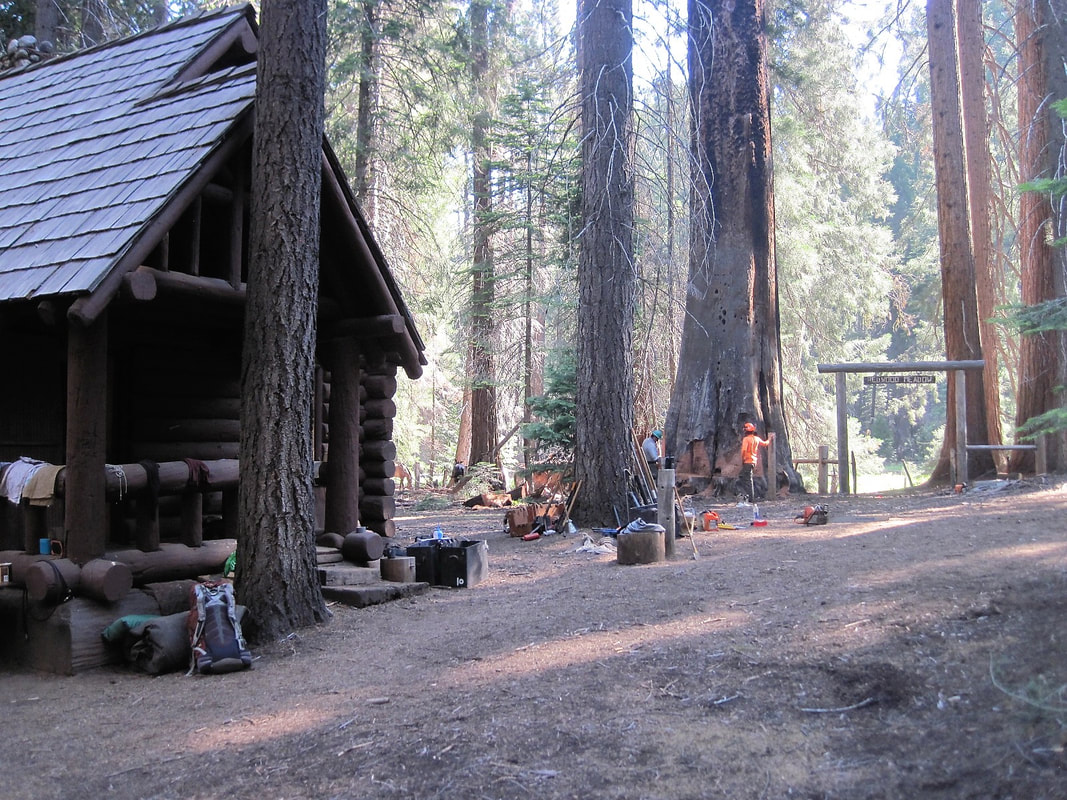
Sequoia National Park’s Redwood Meadow Ranger Station, built in 1938-1939, is a virtual twin of the park’s Hockett Meadow Ranger Station built in 1934. Constructed by the Civilian Conservation Corps to serve as ranger residences and headquarters, these classic stations stand about 20 miles apart. Both are located on significant backcountry trails and adjoin fine meadows for pasturing pack and riding stock.
In 1938 Redwood Meadow was considered a strategically important site for such a facility. Park planners at the time could not foresee the forces that in just a few years would change that view.
Both of these handsome, well-maintained structures are listed on the National Register of Historic Places. They are prime examples of iconic National Park Service rustic architecture, embodying its philosophy of harmonizing buildings with their environment by using local natural materials and avoiding an overly smooth, too-finished appearance. While reflecting the look of local pioneer structures, they admirably display the skilled craftsmanship of the workers who built them during the Depression under the national CCC program.
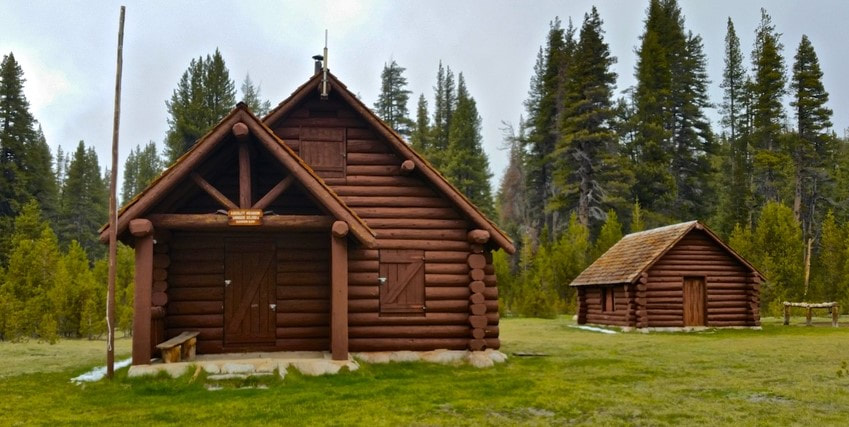
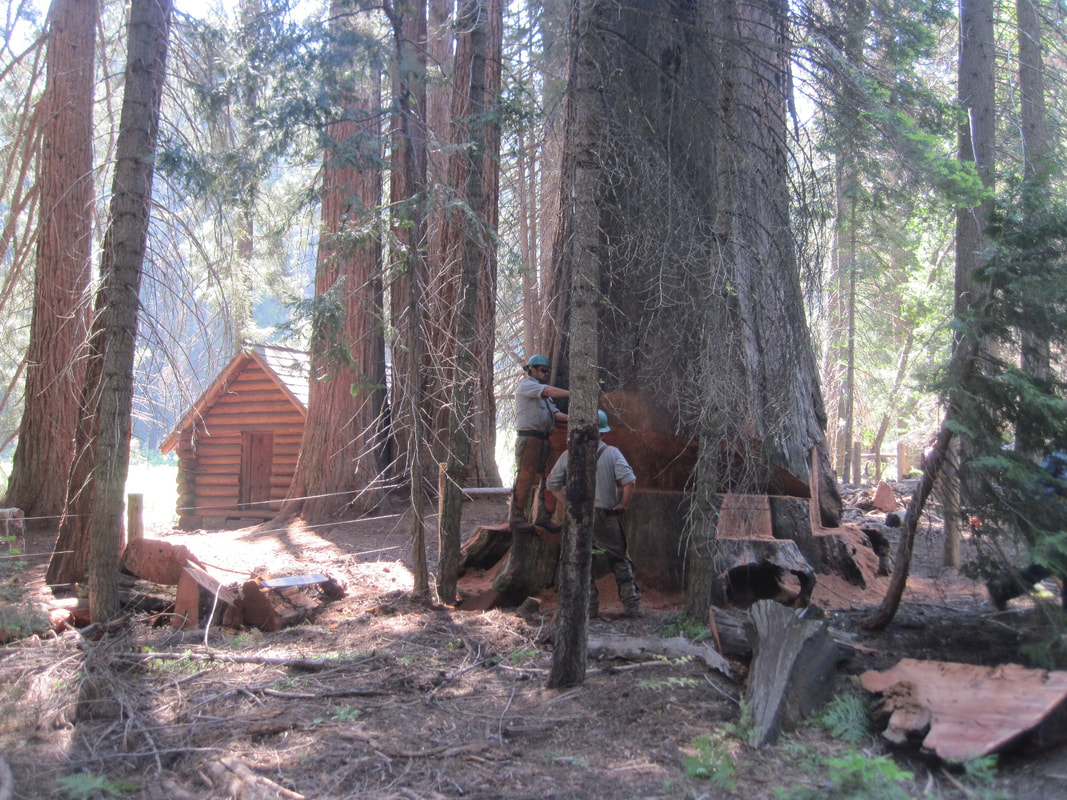
Both stations were preceded by smaller, simpler buildings. The original Hockett station was built in 1906 to protect the park’s southern boundary area. There, before the Park was established, the lush meadows of the Hockett Plateau were grazed by many thousands of sheep as part of a major Valley rancher’s summer mountain operations.
Redwood Meadow did not become part of Sequoia National Park until 1926, when Congress more than doubled the Park’s acreage. For decades before that time, cattleman James Lake Hamilton drove livestock from his Yokohl Valley ranch to use the meadow as summer pasture.
Hamilton had a silver claim in Mineral King in 1874, and he was one of the first cattlemen to range his animals in the mountain meadows on a continuing basis. He acquired ownership of this prime seasonal grazing land via the 1850 Federal Swamp and Overflow Lands Act, which gave the states title to all lands within their boundaries that would require drainage or levees in order to be cultivated. Once surveyed by their respective counties, and their surveys approved by the Surveyor General, these lands could be sold by the states.
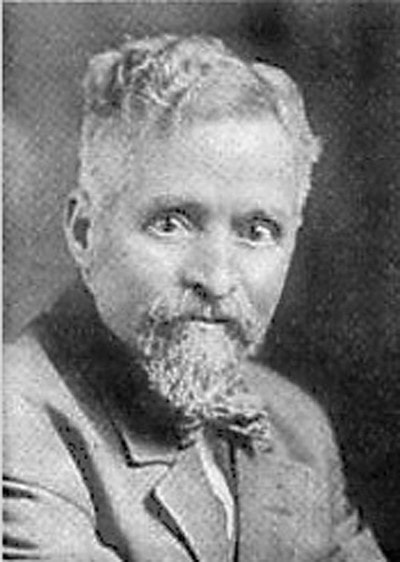
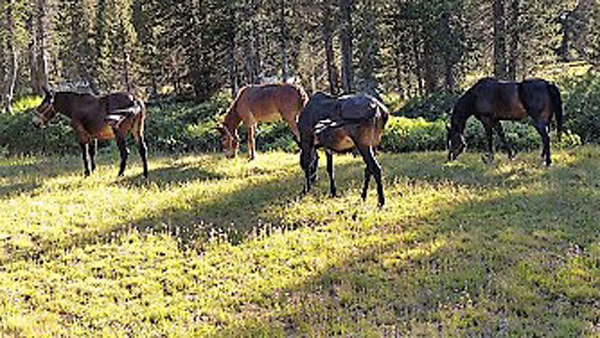
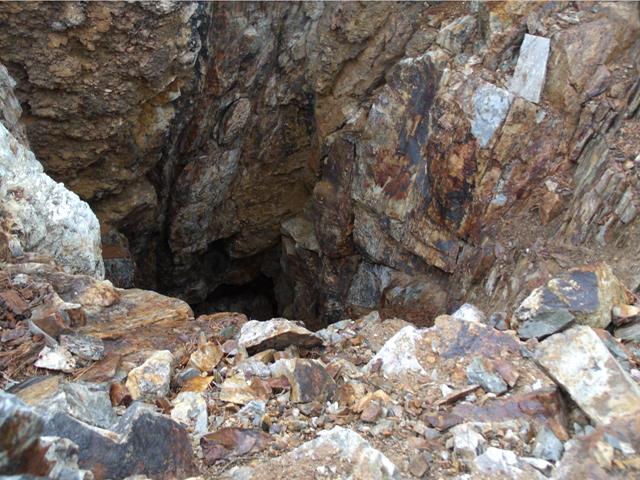
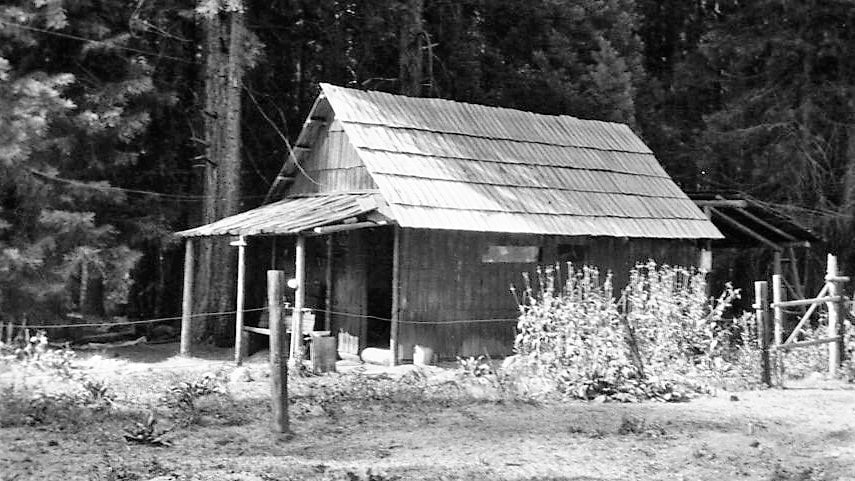
Thus, Hamilton was able to buy Redwood, Quaking Aspen, and Wet meadows out of the public domain. When the surrounding Sierra Forest Reserve was established in 1893 (and became Sequoia National Forest in 1908), he retained the right to take his cattle through the forest to graze his private inholdings at the head of the Middle Fork of the Kaweah. To support his summer livestock operations, he erected several rustic buildings in the area, one of which became the original Redwood Meadow Ranger Station.
In 1916, the National Park Service was founded and took over the administration of Sequoia and General Grant national parks. The Service’s first director (1916-1929) was Stephen T. Mather. Among Mather’s goals was his determination to eliminate as many of the private land inholdings as possible (since the parks’ mission was to be for all the people to enjoy).
He was also intent on greatly expanding Sequoia National Park. Additionally he declared that scenery and significant objects were to be preserved for the public, while cutting trees, grazing cattle, and constructing roads and buildings were to be permitted only if absolutely necessary.
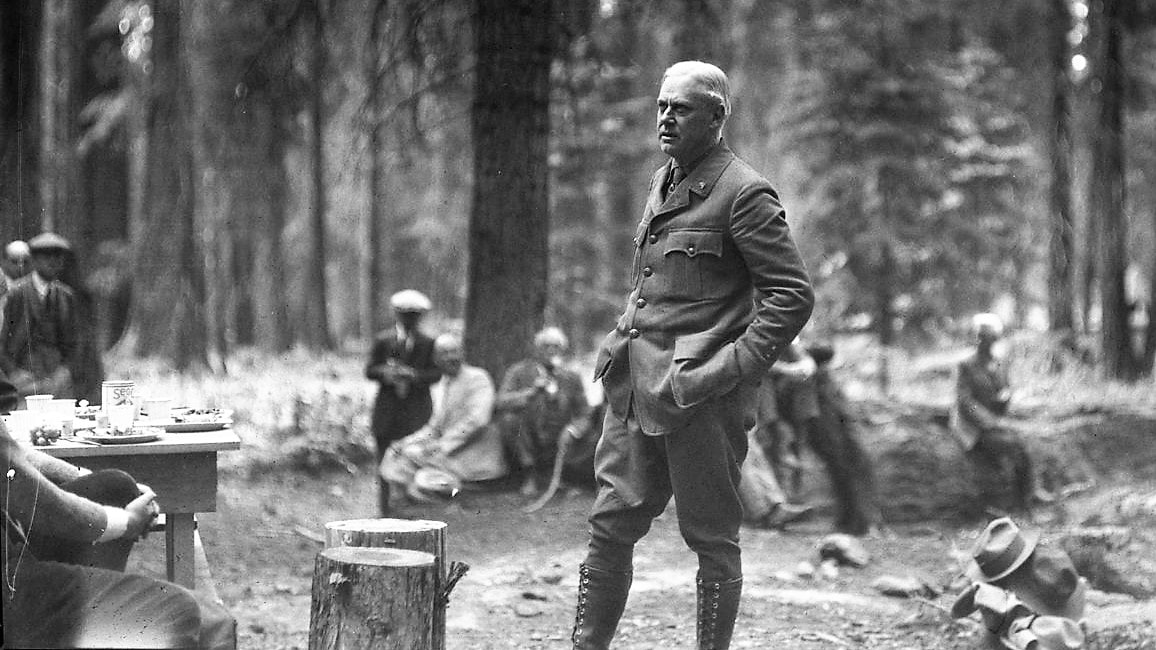
Mather used his own funds and secured donations from other wealthy individuals and from organizations such as the National Geographic Society and the Tulare County Board of Trade to buy privately-held land not only inside the existing park boundary, but also in the area where he hoped to expand Sequoia. These parcels included Redwood, Wet, and Funston meadows.
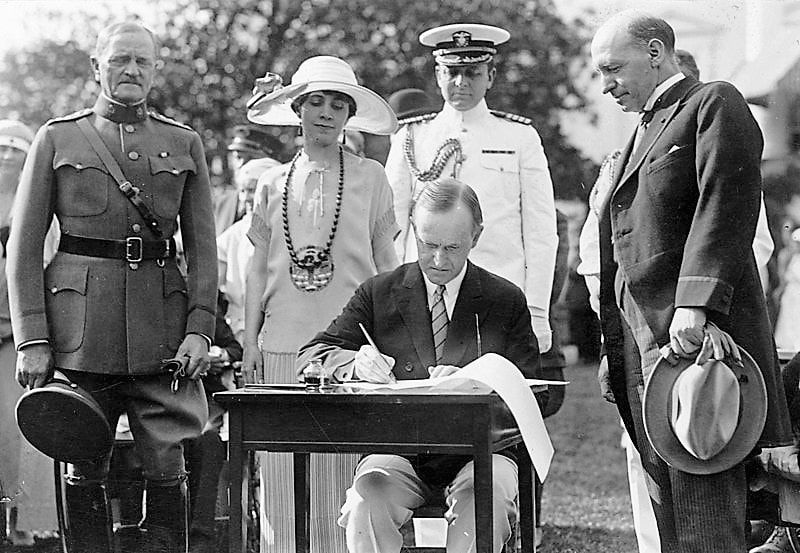
Thus, by the time President Calvin Coolidge signed the bill that greatly enlarged the park in July, 1926, Jim Hamilton had already sold his meadow inholdings. The Sierra Club held title to the property until turning it over to the park after its expansion.
Redwood Meadow’s location and resources were deemed strategic to Sequoia National Park at that time when there were only two roads into the park, one ending at Giant Forest, the other at Mineral King Access to the park’s vast backcountry for rangers, recreationists, trail crews, and fire fighters was by a network of trails, and Redwood Meadow was mid-way between Giant Forest and Mineral King on the trail system.
It was also a key stop on the main trail from Giant Forest to the Kern River country and Mt. Whitney, via Black Rock Pass. And, of course, its namesake redwoods (giant sequoias), thriving in the mixed conifer forest surrounding the meadow, were a major attraction.
In those days, most people traveled the trails on horseback, with pack mules carrying their equipment and supplies. Therefore, Redwood Meadow’s excellent forage for stock was also strategically important. Additionally, some of Hamilton’s buildings were still there to be used, including a small rustic cabin that became Sequoia’s original Redwood Meadow Ranger Station.
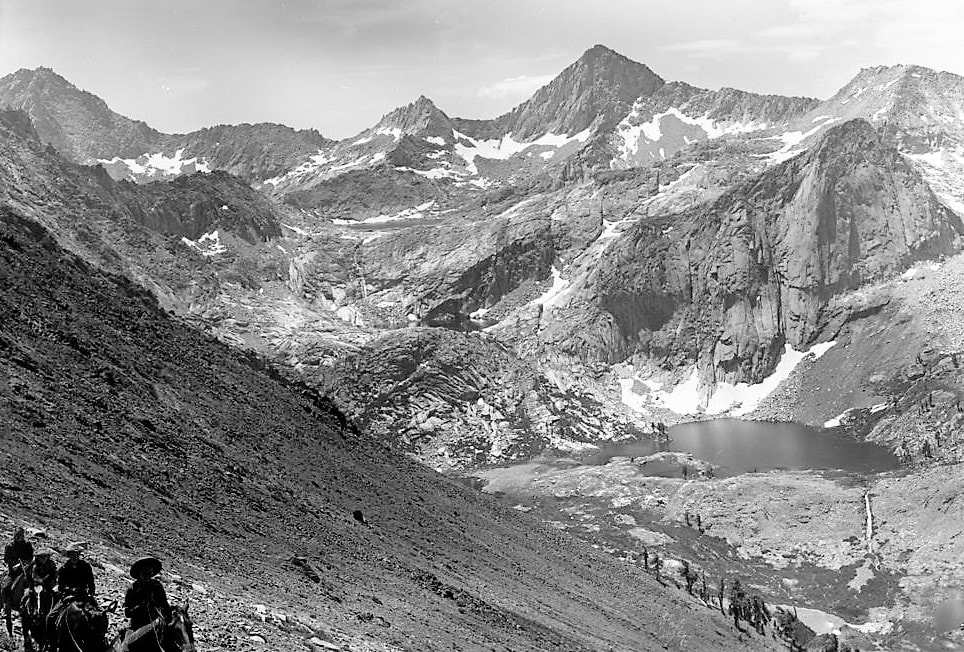
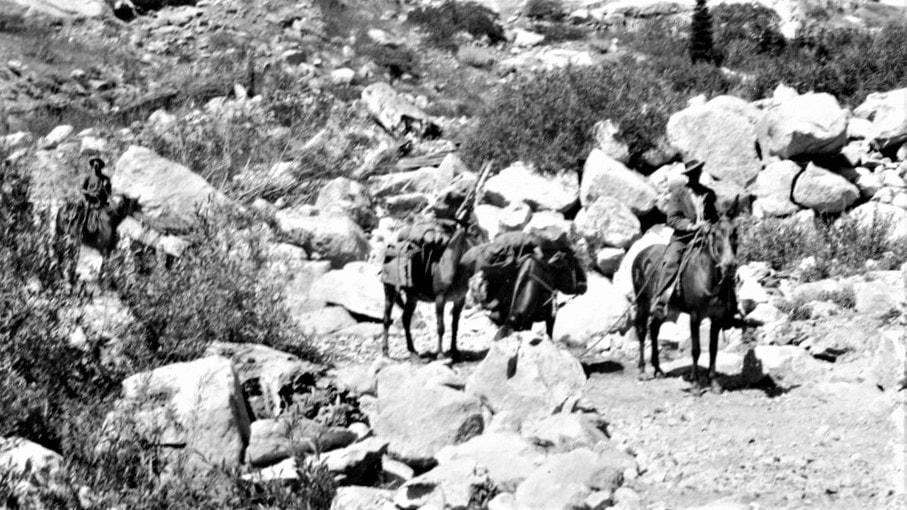
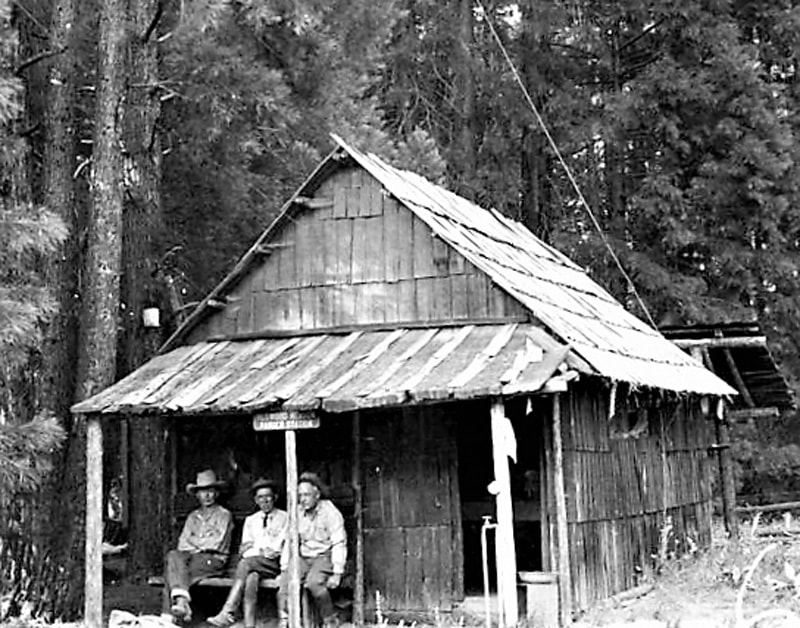
In the late 1930s, the park decided to take advantage of the Civilian Conservation Corps program to replace Hamilton’s ramshackle old cabin with a considerably better structure and to add a barn to store supplies, equipment, and tack for horses and mules. To save time and money, the design for the Hockett Meadow ranger station and barn built in 1934 was used for Redwood’s facilities.
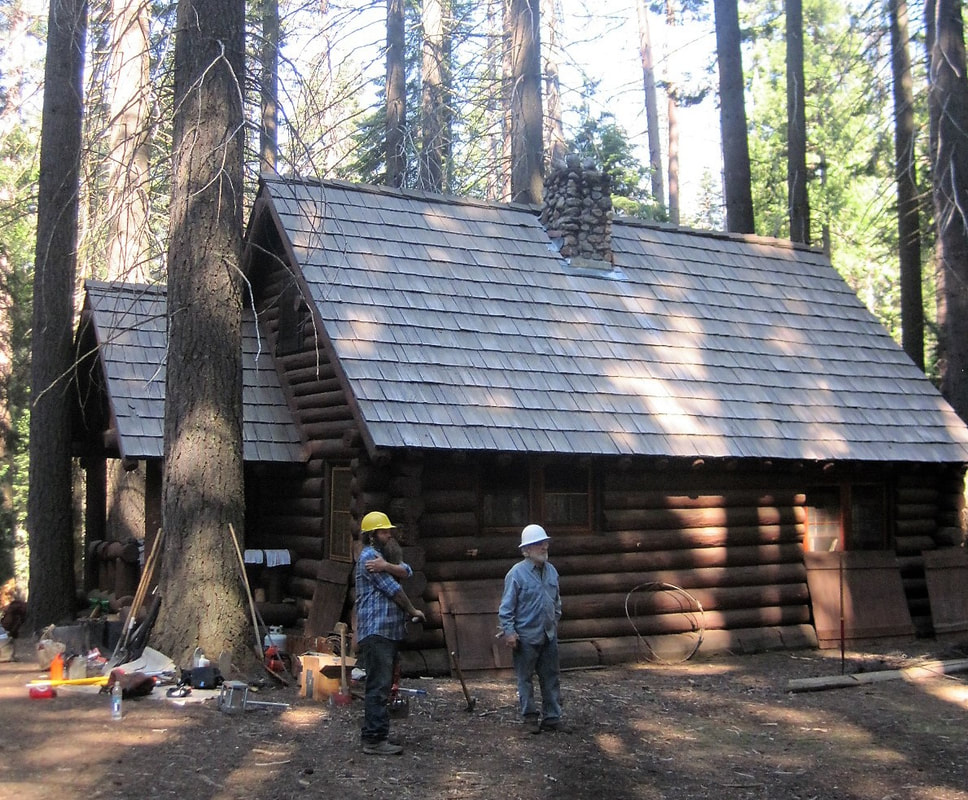
Thus, Redwood’s cabin measures 23 x 33 feet, its barn 17 x 26 feet. Their walls are made of peeled pine and fir logs, log rafters support their gable roofs covered with shakes, and a central stone chimney ventilates the cabin’s wood-burning cooking range.
Redwood cabin’s 7′ x 12′ porch is just like Hockett’s except its floor is wooden, while Hockett’s is stone. And at Redwood the cabin walls rest on a foundation of big blocks of giant sequoia wood, while Hockett’s foundation is concrete veneered with stone. Redwood’s interior includes two bedrooms, a combination living room/kitchen, and a bathroom, while Hockett’s bathroom has always been an outhouse (and an outdoor shower). Both cabins’ interior rooms are finished with plywood paneling.
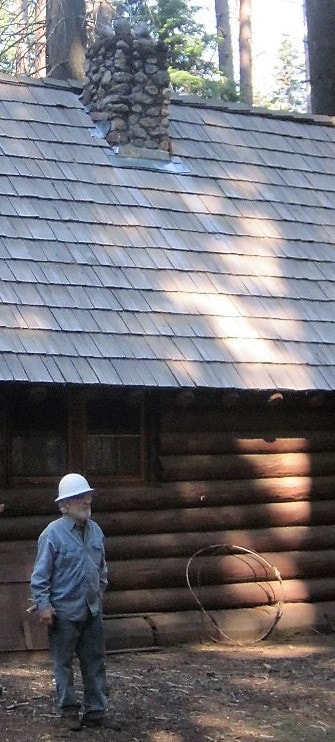
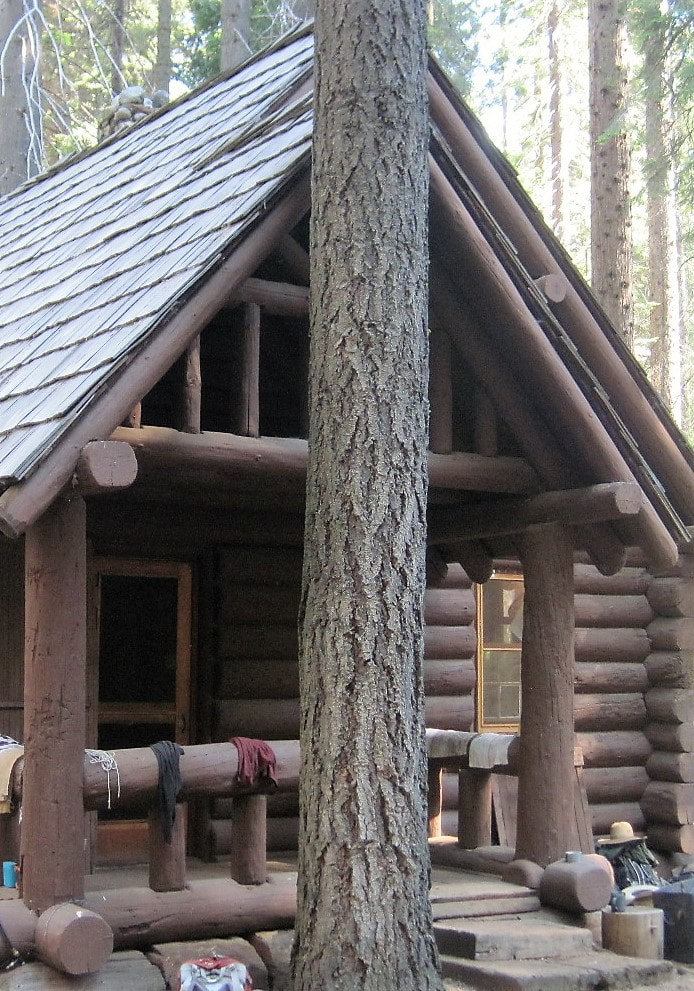
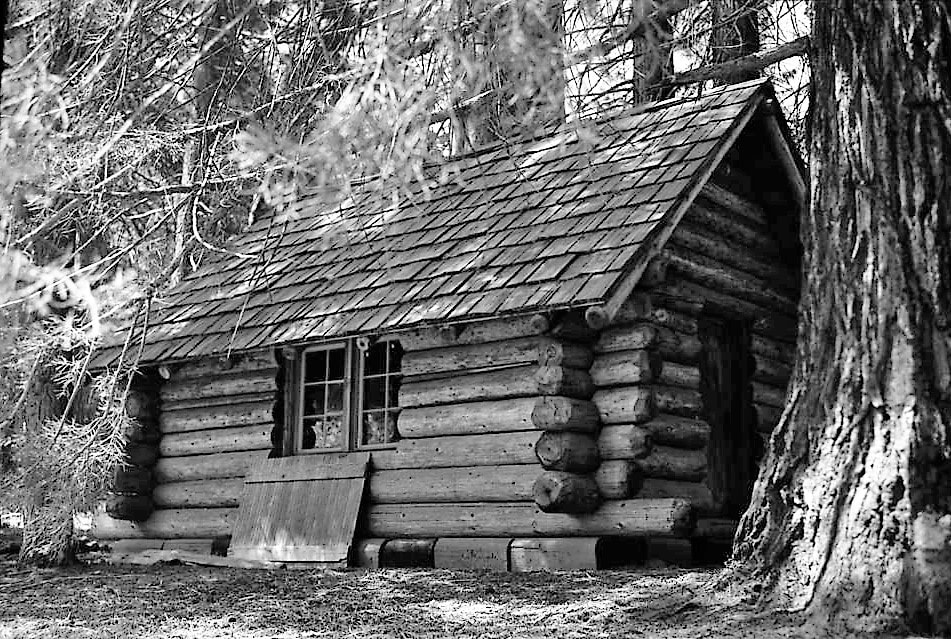
Redwood’s barn stands just across the Redwood Meadow Trail from the ranger station, inside a fenced pasture. Its interior, like Hockett’s, is finished with 3/8″ x 4″ tongue and groove lumber. All these buildings were constructed by CCC workers using mostly native materials harvested from their sites, although the cut lumber, including that for the floors and ceilings, was packed in. Redwood’s ranger residence was built during the summers of 1938 and 1939, its barn in 1939-1941.
Ironically, soon after the new Redwood Meadow facilities were completed, backcountry visitation dropped drastically as the U.S. entered World War II. After the war, backpacking gradually began to replace horse packing, and many hikers preferred the “Cadillac” High Sierra Trail route — completed in 1932 — from Giant Forest to the Kern River Canyon, because it crossed the Great Western Divide via Kaweah Gap, well over a thousand feet lower than Black Rock Pass.
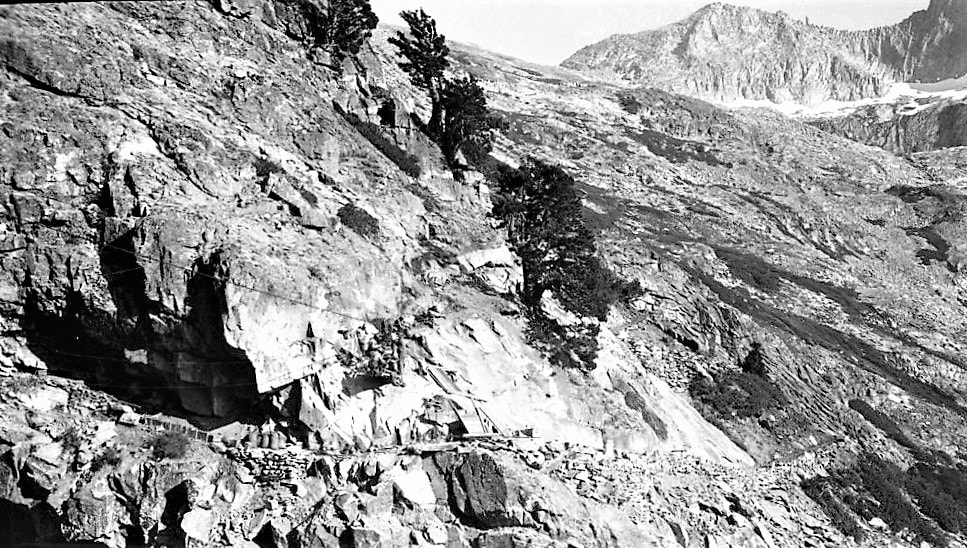
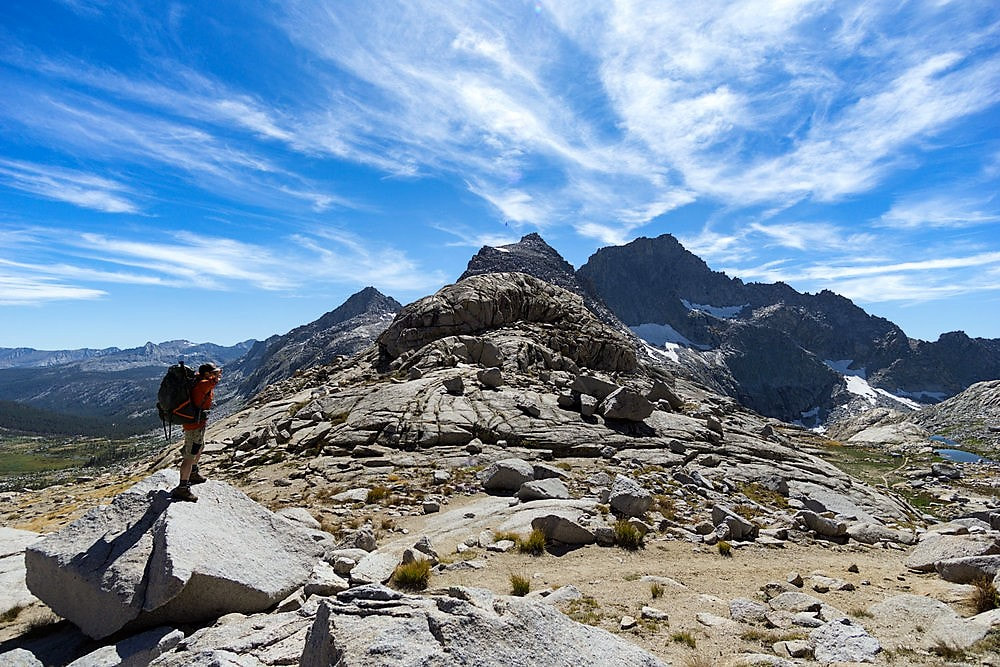
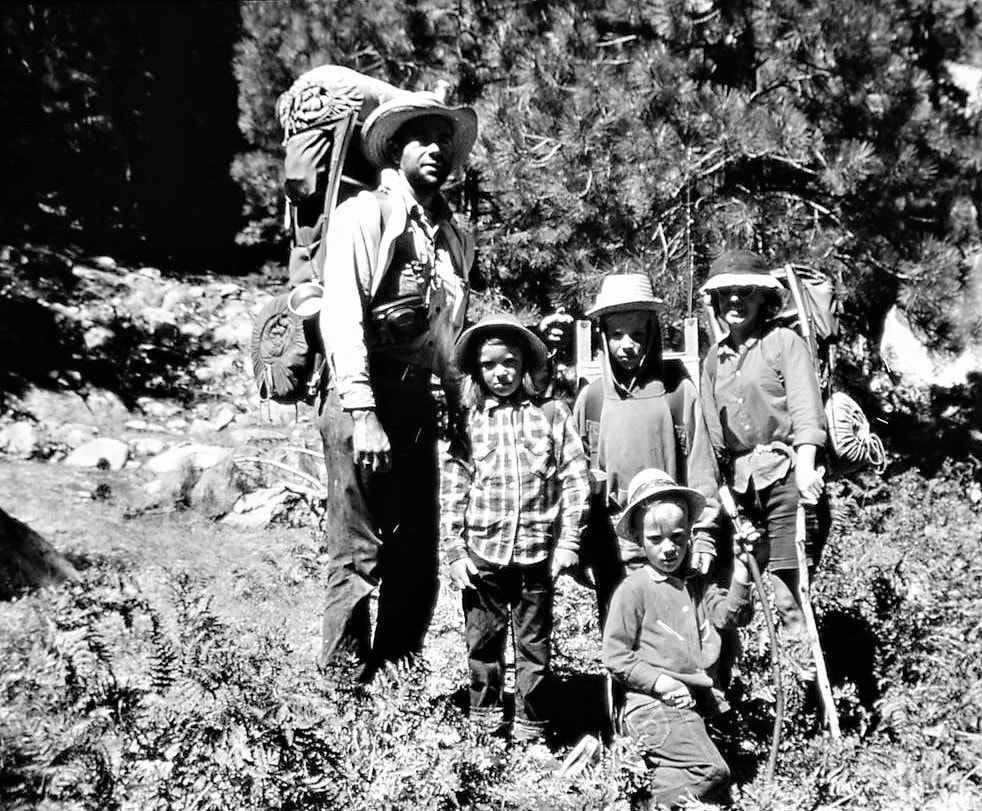
Backpackers also preferred Bearpaw Meadow over Redwood for their first camping site heading east, since it was directly on the High Sierra Trail at 7800′ in elevation and offered “full-service” camping at Bearpaw High Sierra Camp. In the 1950s and ’60s, radical advances in the design of backpacks and related equipment, along with the use of new materials and significant reductions in weight, drove a backpacking boom, and stock and foot traffic to Redwood Meadow continued to decline.
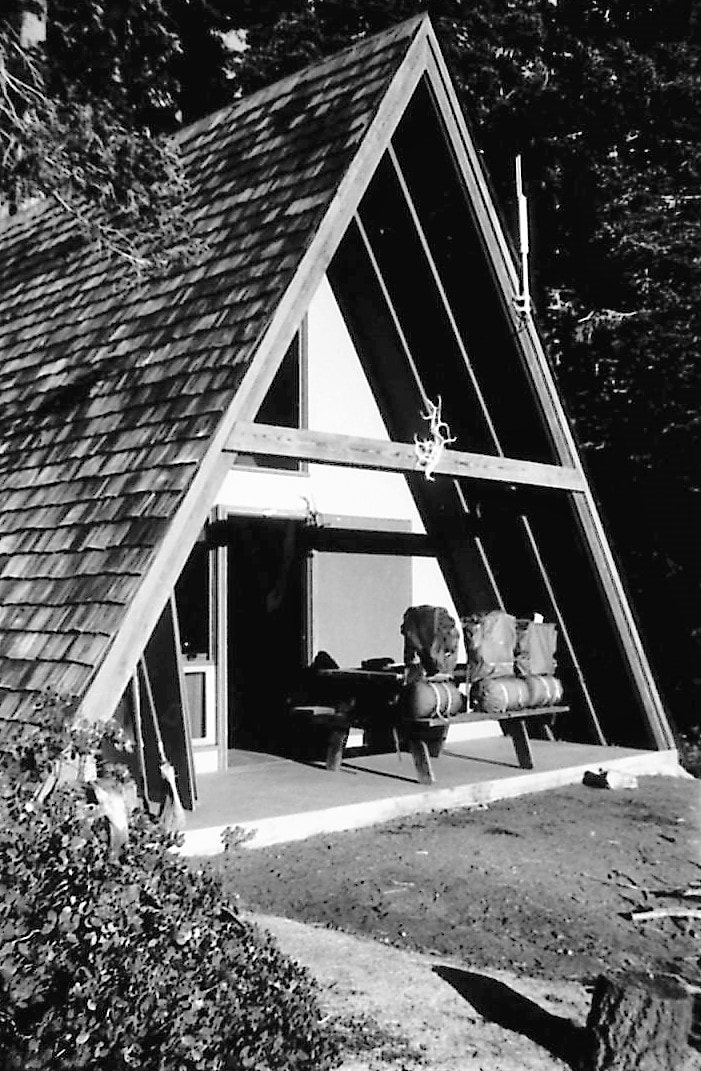
As a result, in 1960, Redwood Meadow Ranger Station was demoted. The Park Service built a modern A-frame ranger station (since razed and replaced) at Bearpaw and made it the headquarters of the upper Middle Fork’s backcountry ranger.
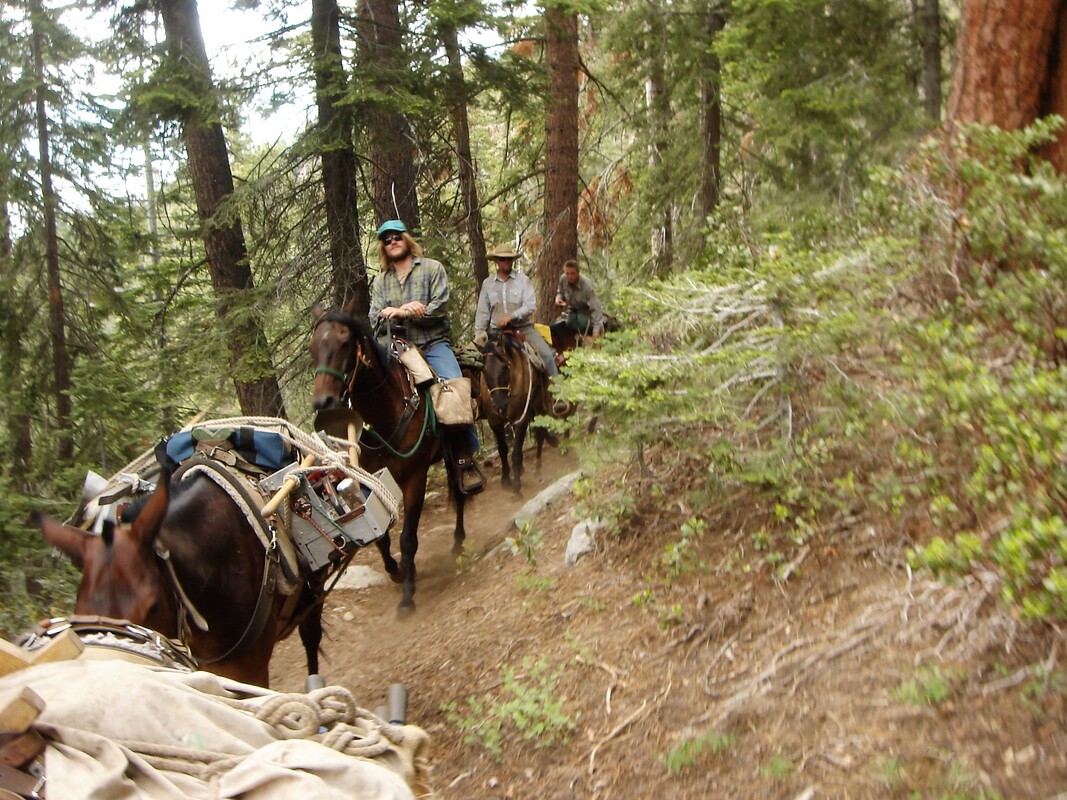
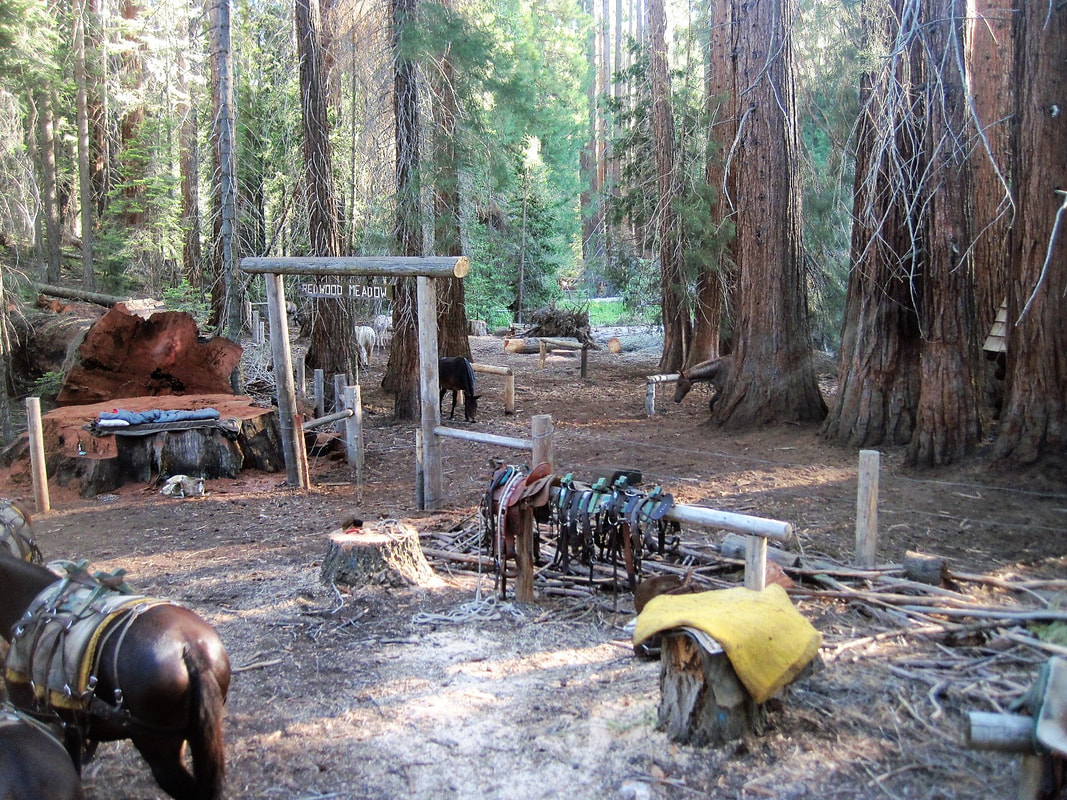
Since then, Redwood Meadow Ranger Station is periodically patrolled by the Bearpaw ranger and serves primarily as a base for backcountry trail crews. Their horses and mules graze the verdant meadow, the barn holds their equipment and supplies, and the classic cabin accommodates the crews.
Redwood’s “demotion,” however, can be a real plus for backpackers and equestrians wishing to experience the magnificence of a beautiful giant sequoia grove much as visitors could in the past, without the crowds, the noise, and the developments for comfort and convenience that so often characterize these very special places today.
Those prepared to hike or ride a horse about 13 fairly strenuous miles each way can camp under the stars in the stillness of the sequoias near the historic Redwood Meadow Station. Mid-week in the shoulder seasons, you might even have this splendid, remote grove of Big Trees all to yourself.*
*Be sure to check trail and camping conditions before you go: in spring, high water from snow melt may make stream crossings difficult; in summer and fall, water sources may be dry at Redwood Meadow.
May, 2020

Now read the article about: Sequoia and Kings Canyon National Parks Trail Crews
Slideshow:
-
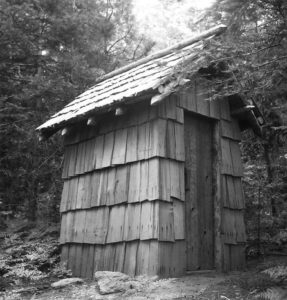
Redwood Meadow Comfort Station
-
-
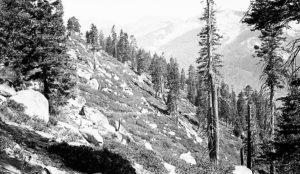
Trail Approaching Redwood Meadow
-
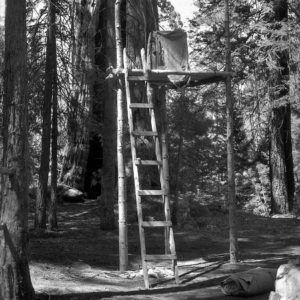
Food Storage Platform
-
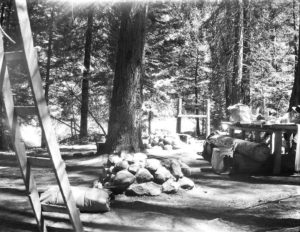
Redwood Meadow Tourist Camp, 1937
-
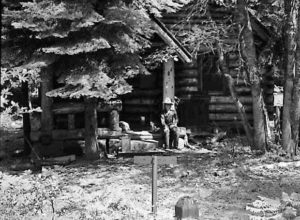
Unidentified Person on Station Porch, 1959
-
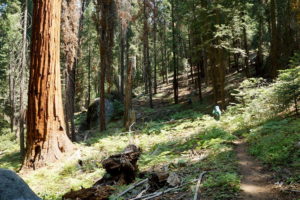
Hiker Approaching Redwood Meadow
-
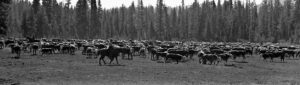
Cattle Grazing in Meadow
-
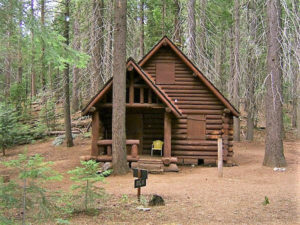
Yellow Chair on Station Porch
-
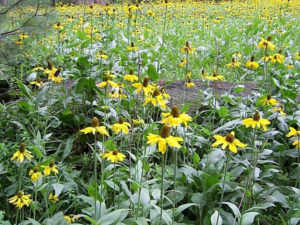
Redwood Meadow Coneflowers
Quotes & More Photos:
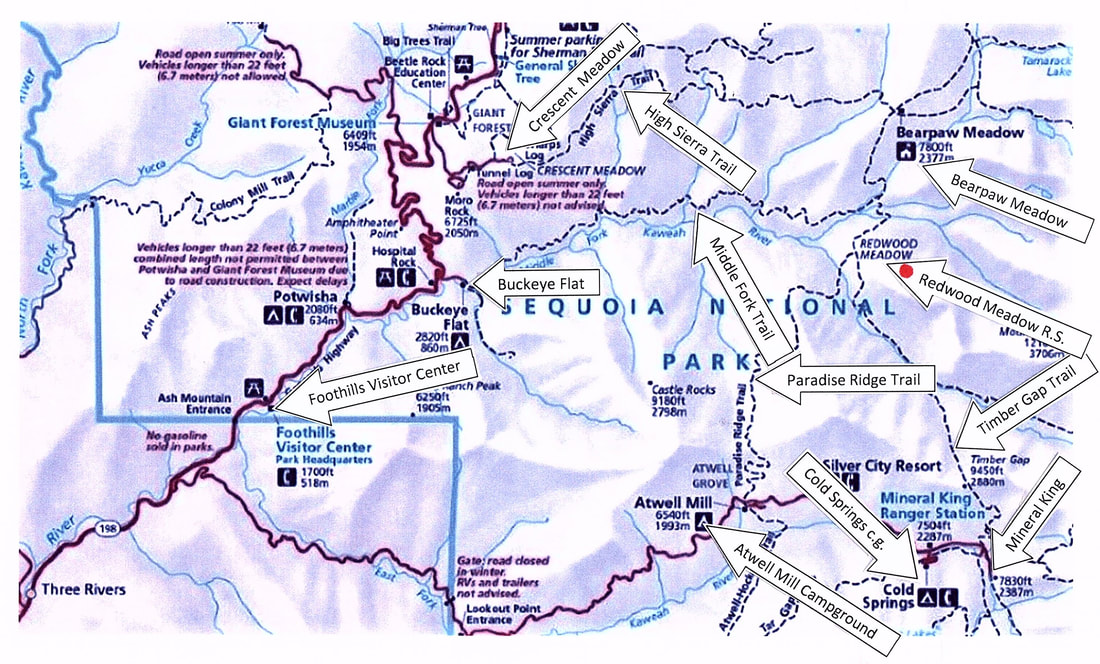
Redwood Meadow Ranger Station is about 12-13 miles in from most of these usual trailheads. (See directions below.)
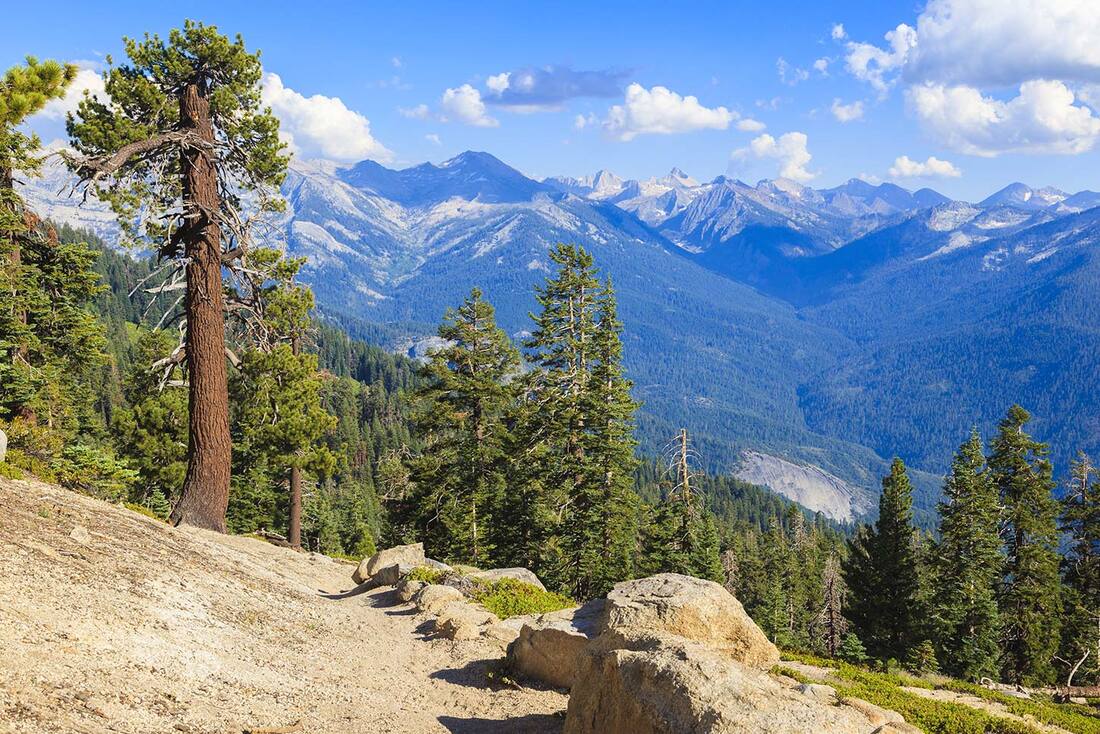
“Once the Giant Forest Road was in place, in 1903, a network of well-graded trails was extended across Sequoia Park. The Alta Trail connected Giant Forest with Alta Meadow, and the Seven Mile Hill Trail led from near Alta Meadow to Redwood Meadow and the Mineral King country.” — William C. Tweed and Lary M. Dilsaver
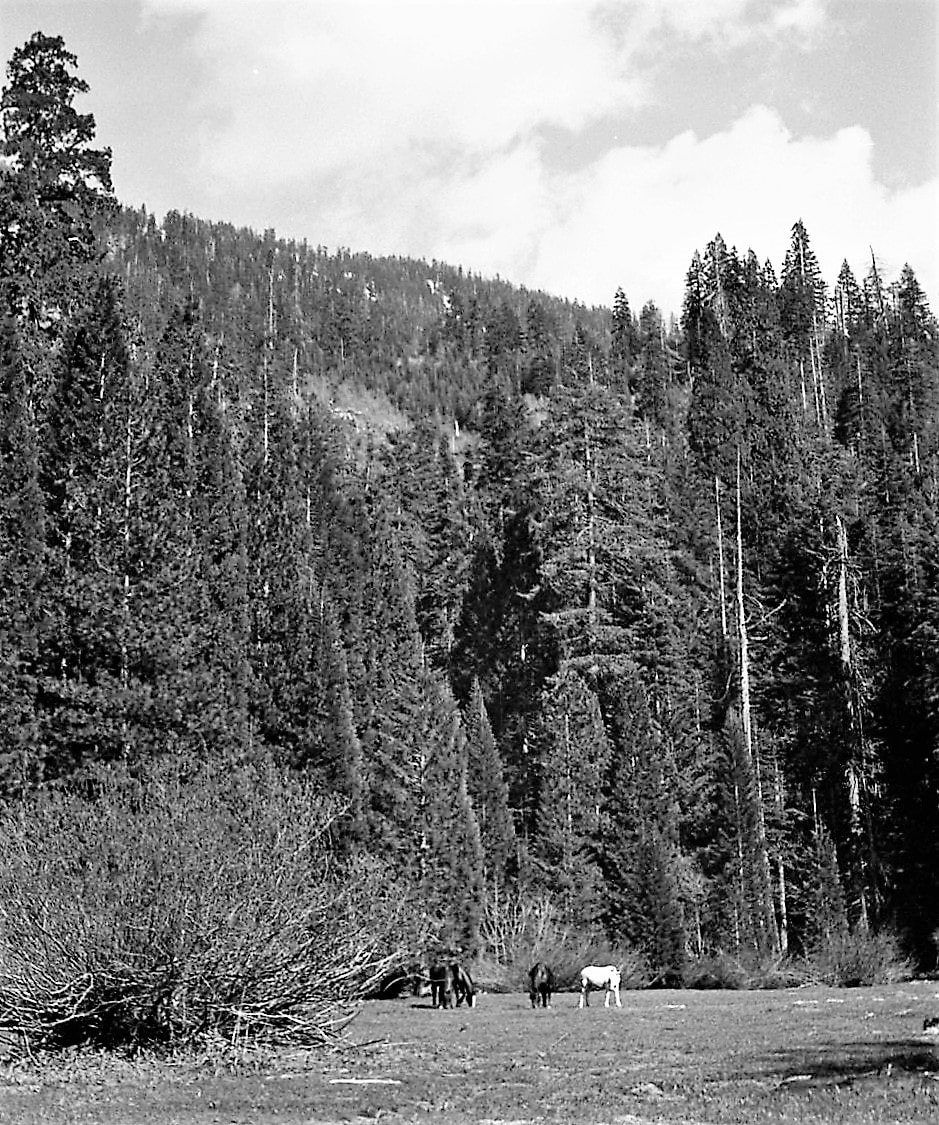
“Redwood Meadow is a lovely green gem that lies at an elevation of 6,400 feet on the western slope of the Great Western Divide between Granite and Cliff creeks, tributaries of the Middle Fork of the Kaweah River. About thirty acres in size, it sits in the midst of a modest-sized grove of Sequoiadendron giganteum that is characterized by a mixture of ancient giants and prolific young growth.” — Ranger Gordon Wallace, 1936
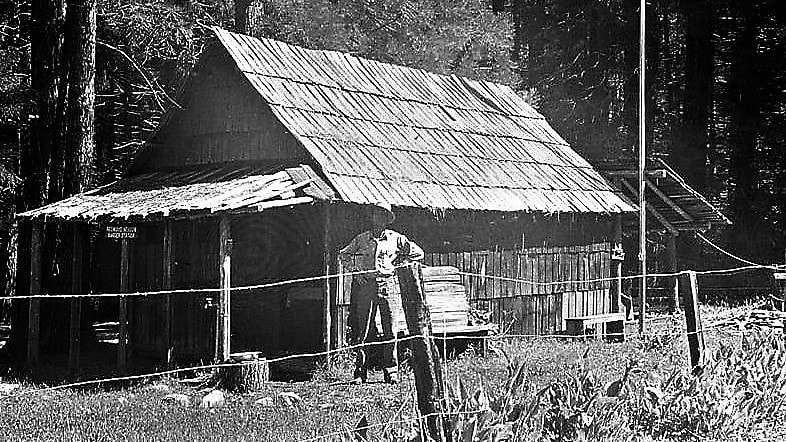
“A little-traveled trail runs along its western fringe, and a snow-fed rivulet gurgles through its center. At the eastern edge, half-hidden in a clump of young Sequoia trees, sat a rustic one-room cabin that was now my home. The walls and pitched roof were constructed with shakes, and the floor consisted of rough-hewn split timber, polished smooth by the years of wear. . . . Erected . . . before this area became a part of the park, its character, together with the setting enhanced by isolation, gave it the ambiance of an earlier day when solitary mountain men pioneered the region.” — Ranger Gordon Wallace, 1936
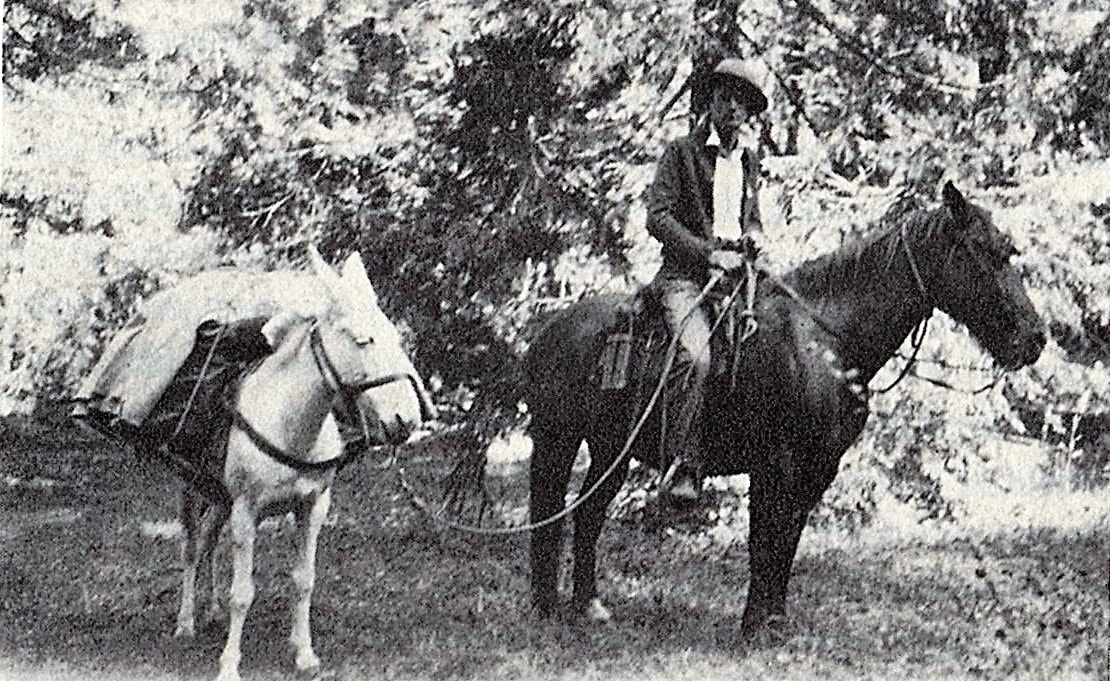
“. . . I continued to make the patrols that were necessary to contact visitors to protect them as well as the park, to improve campgrounds, and to keep fishermen in line. . . . Although I rode more than seven hundred miles on patrol, I still put in fifteen days on duty at my ranger station. These were used to assist passersby, do my laundry, chop firewood, shoe my horses and mule, write reports, and entertain any guests who happened to be on hand.” — Ranger Gordon Wallace, 1937
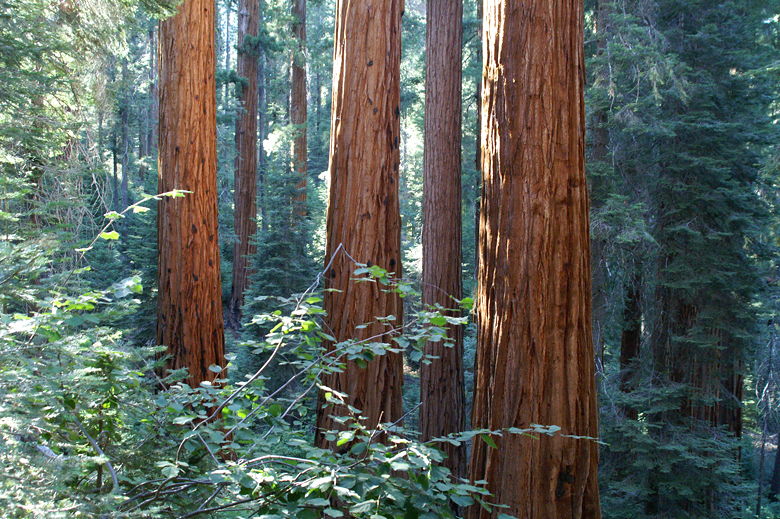
“[W]e suddenly emerged from a dense forest and came into Redwood Meadow . . . The sun projected long fingers of shade as it lowered in the West, and . . . the orange trunks of the Sequoias at the edge of the meadow became pillars of fire topped with blue-green.” — Ranger Gordon Wallace, 1937
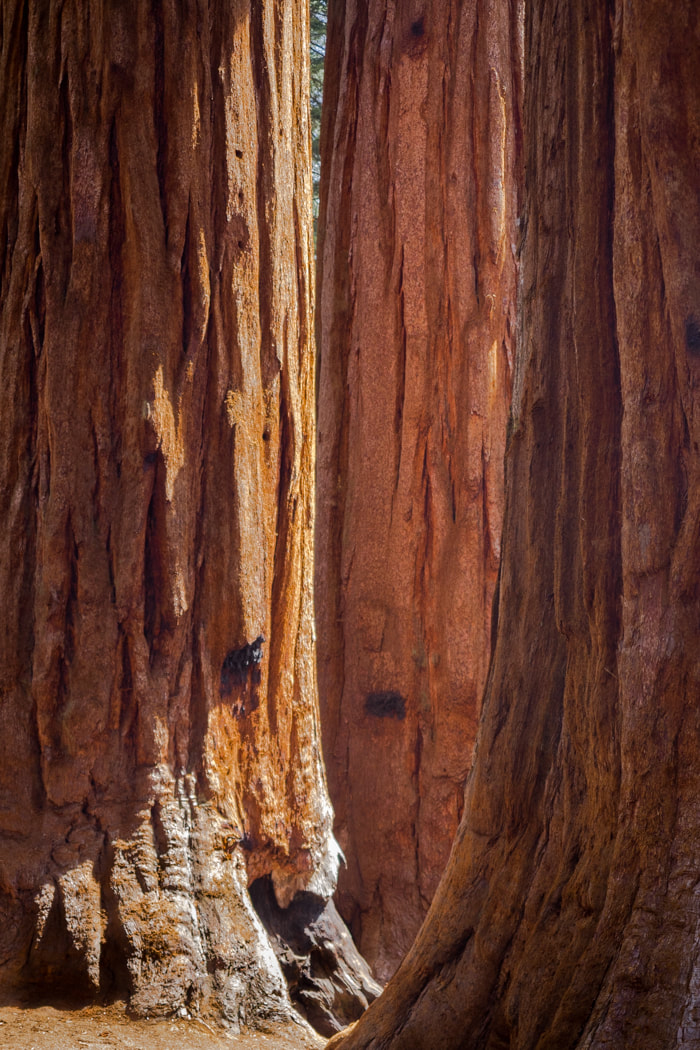
“Lie at the base of one of these forest giants, staring up at the massive expanse of cinnamon-red bark, and consider John Muir’s introduction to the stately sequoias: ‘When I entered this sublime wilderness, the day was nearly done, the trees with rosy, glowing countenances seemed to be hushed and thoughtful and one naturally walked softly and awestricken among them.’ [A]t Redwood Meadow, you can still experience the big trees as Muir did — in the wilderness, full of wonder, without the carloads of camera-wielding tourists.” — Dennis Lewon, 2017
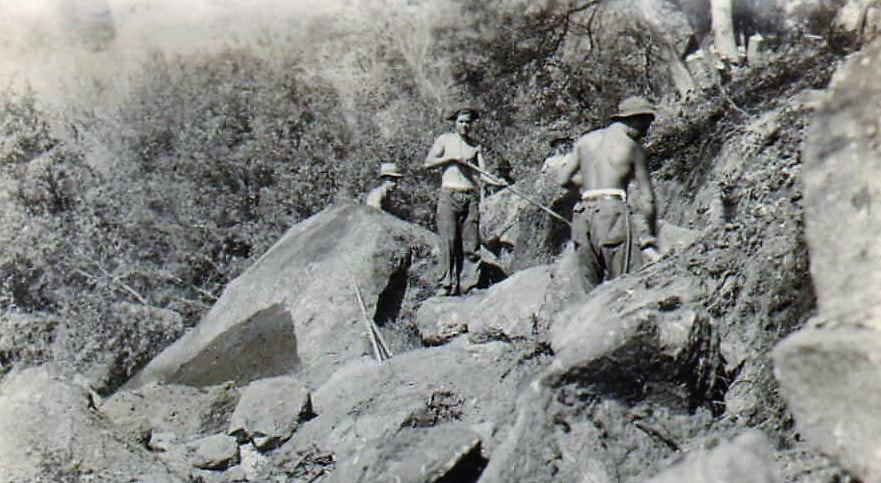
“I had several CCC crews of 810 men, each headed by an ECW foreman, at my disposal when I took over as the Middle Fork District Ranger stationed at Redwood Meadow in 1936 and ’37. A great deal was accomplished: Campgrounds were cleaned up and improvements constructed; old pasture fences, drift fences, and gates were repaired and new ones installed; foot logs were placed across streams; old trails were maintained and new ones built; . . . existing water systems were repaired and improved and new ones built; . . . and a telephone line was installed. . . . [T]he CCC was a godsend . . . to the NPS as a caretaker of our great national playgrounds and historic shrines.” — Gordon Wallace, District Ranger, 1936-37
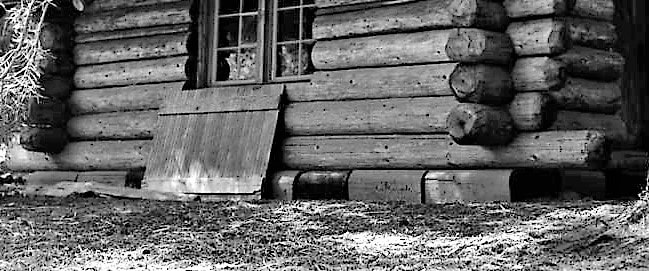
“[The] Civilian Conservation Corps built a fine old cabin there, known as the Redwood Meadow cabin, which stands on a foundation of rough-hewn redwood slabs so large, they had to be dragged into place by teams of mules. It’s a beautiful example of CCC craftsmanship.” — Steve Sorensen, 2018
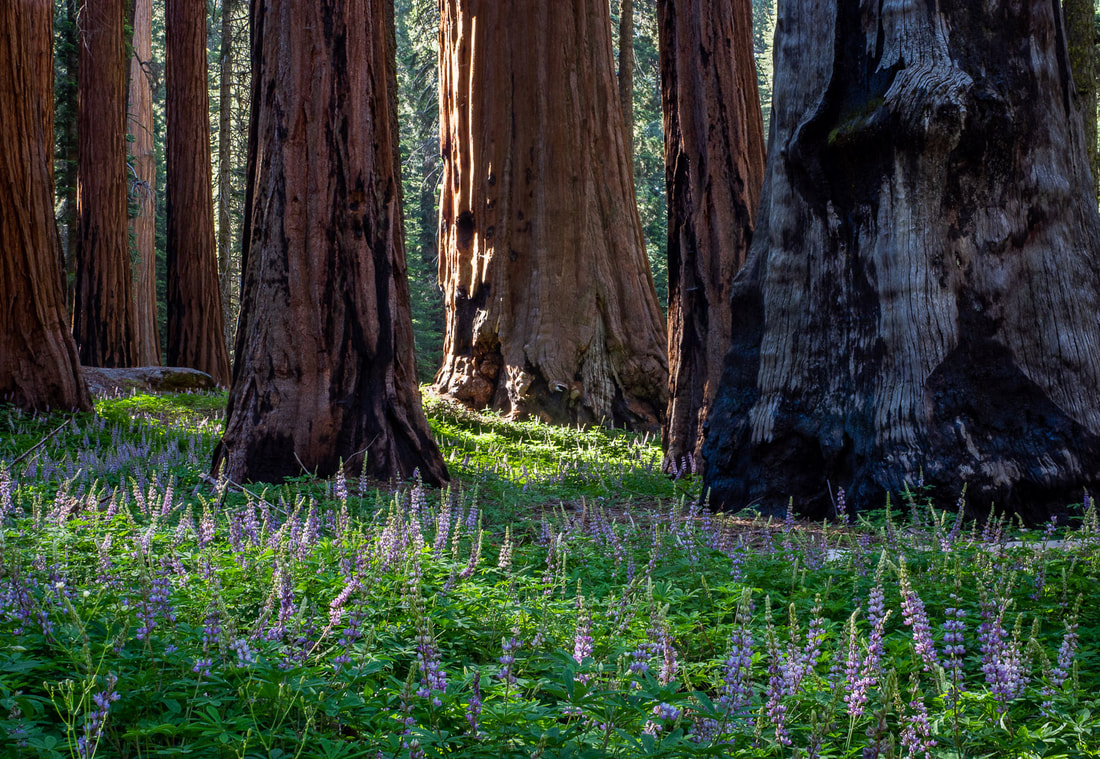
“Places become imbued with the spirit of the people who lived and worked there . . . [T]hose young men in the CCC spent what might have been the happiest days of their lives working there. Then they went off to fight in World War II, and a lot of them never came back. Redwood cabin is infused with their memories. You can see the marks they made with their draw knives on the walls, see their fingerprints in the linseed oil coating the kitchen shelves.” — Steve Sorensen, 2018
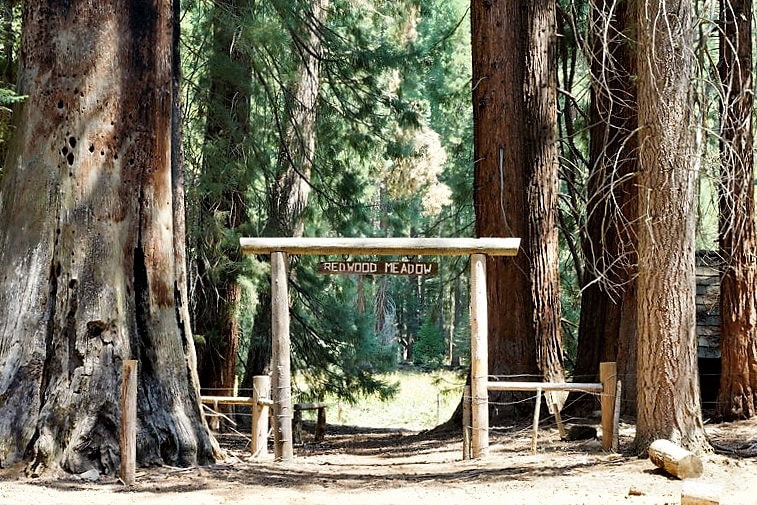
“In the heart of Redwood Meadow Grove, we stop for lunch at the unoccupied ranger station, lounging in an eclectic variety of old, outdoor chairs left outside the log building. We had visited the Giant Forest . . . before starting out on this backpacking trip, and it’s majestic — but almost as busy as a shopping mall. Now, as the only people out here, we feel like the Lilliputians in Gulliver’s Travels. Trees stand too tall for us to see their crowns, with trunks so big around that all six of us could not link arms around some of them, and branches as thick as the base of a Douglas fir.” — Michael Lanza, 2019
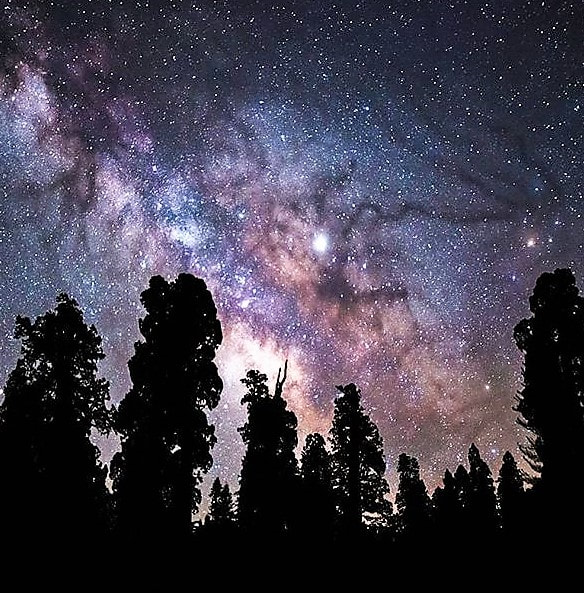
“[G]iant sequoias loom overhead, surrounding the campsites at Redwood Meadow. This special area offers a rare opportunity within one of America’s most visited parks — to experience the giant sequoias . . . free from crowds, cars and ambient light. They exude a witchy and ancient wisdom when the sun sets, creating a perfect ambiance for storytelling by the fire.” — Emily Pennington, 2017
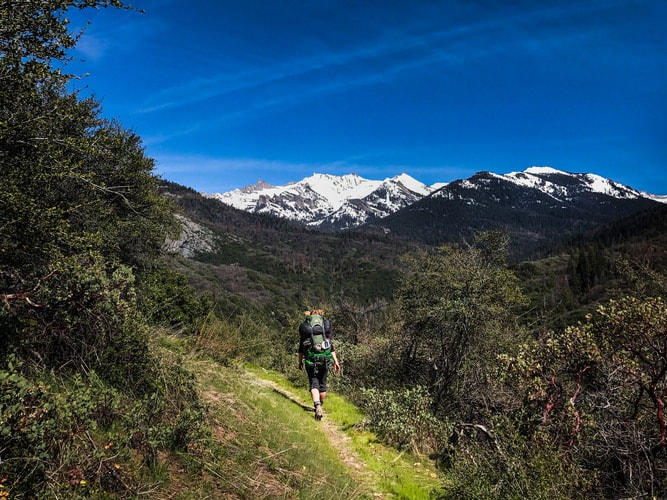
“If your goal is to find a wooded, mountainous backpacking adventure free of snow in the early spring, Redwood Meadow is the perfect place to lay your head and dream of the national parks of days past.” — Emily Pennington, 201
Directions:
NOTE: Wilderness Permit required for overnight trips (see Links below in Site Details). Always check trail, weather, water, and snow conditions ahead of travel. High water may make stream crossings difficult; water sources may be dry at Redwood Meadowl. Trailheads at several starting points provide access to Redwood Meadow (see trails map in Quotes section above), which is about 12-13 miles in from most of them (farther from Crescent Meadow):
- (from Hospital Rock/Buckeye Flat via the Middle Fork Trail,
- from Mineral King via the Timber Gap Trail/Redwood Meadow Trail,
- from Atwell Mill campground area via the Paradise Ridge Trail, or
- from Giant Forest/Crescent Meadow via the High Sierra Trail/Redwood Meadow Trail).
1. From Hospital Rock/Buckeye Flat area:
From Visalia, take Hwy 198 east through Three Rivers to the park entrance station. About a mile up the road, stop at the Wilderness Office near the Foothills Visitor Center to pick up your Wilderness Permit prior to any overnight stay in the Wilderness. Proceed on the Generals Highway to the Hospital Rock/Buckeye Flat area. Take the road toward Buckeye Flat and then the dirt road to the Middle Fork Trail trailhead.
Directions:
2. Mineral King area Timber Gap and Atwell Mill Paradise Ridge Trailheads :
From Visalia, take Hwy 198 east through most of Three Rivers. Two miles before the main Sequoia park entrance, watch for the National Park mileage sign on your right, at the junction with Mineral King Road.
NOTE: Mineral King Road is narrow (sometimes single lane), steep, winding, and partly unpaved, and is not recommended for RVs or trailers.
In about 23 miles from this junction, just past Cold Springs Campground, stop at the Mineral King Ranger Station (on your left) where you must pick up your Wilderness Permit prior to overnight stays in the Wilderness (see Links below in Site Details).
Then proceed to the parking area near the end of the road for the Timber Gap Trail trailhead,
OR backtrack to the Atwell Mill campground area for the Paradise Ridge Trail trailhead.
Directions:
3. Giant Forest/Crescent Meadow High Sierra Trailhead:
From Visalia, take Hwy 198 east through Three Rivers to the park entrance station (fee).
About a mile up the road, stop at the Wilderness Office near the Foothills Visitor Center to pick up your Wilderness Permit prior to any overnight stay in the Wilderness (see Links below in Site Details).
Proceed on the Generals Highway to just before the Giant Forest Museum area and turn right onto the Moro Rock/Crescent Meadow Road.
From the parking area at the end of the road at Crescent Meadow, follow the signs to the High Sierra Trail trailhead.
Site Details & Activities: