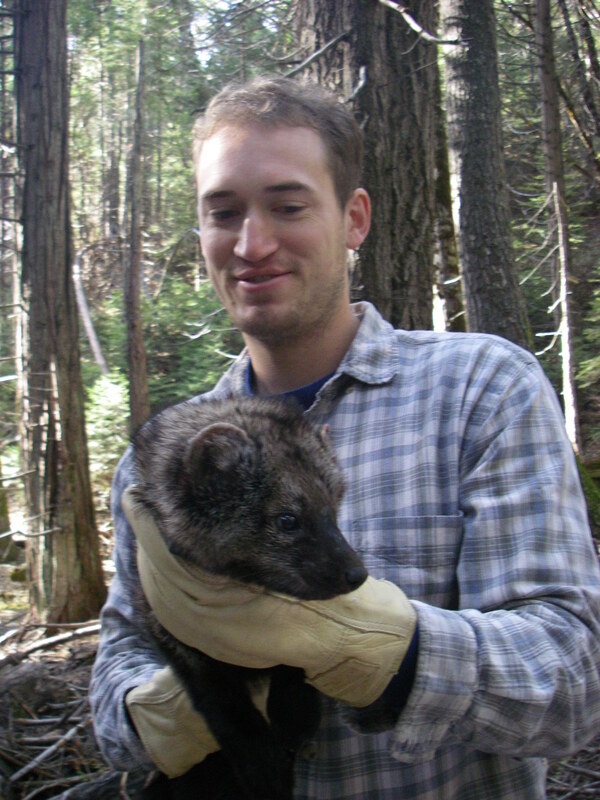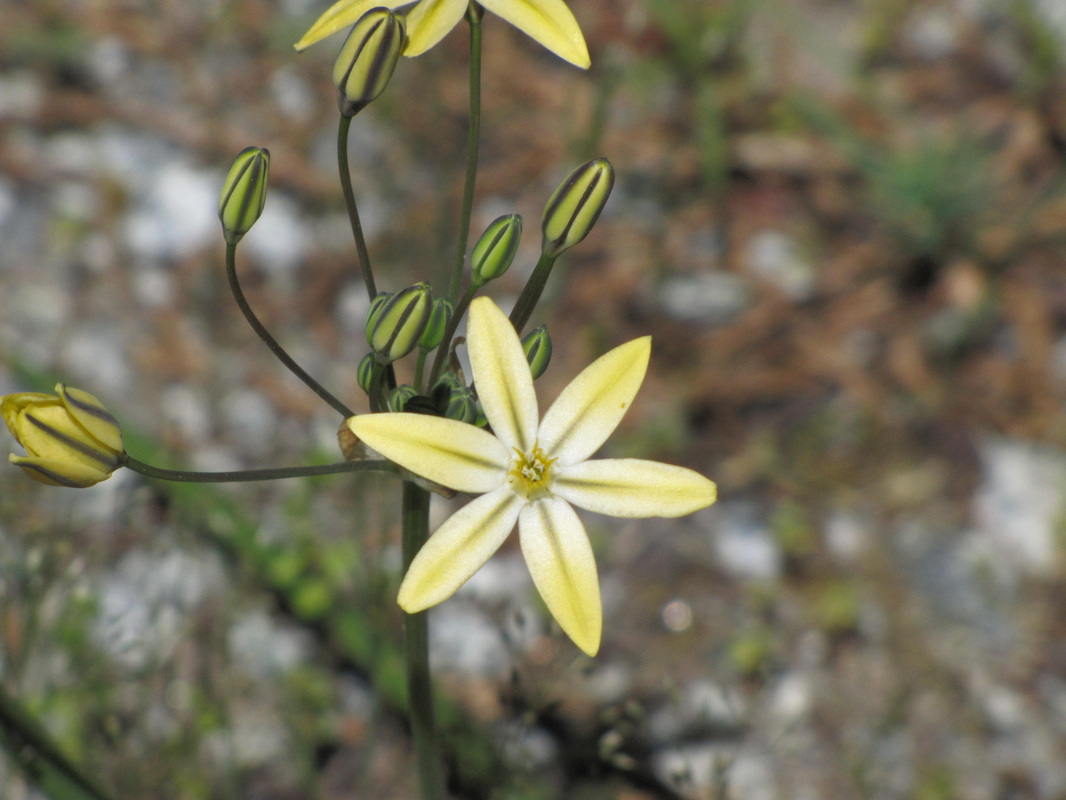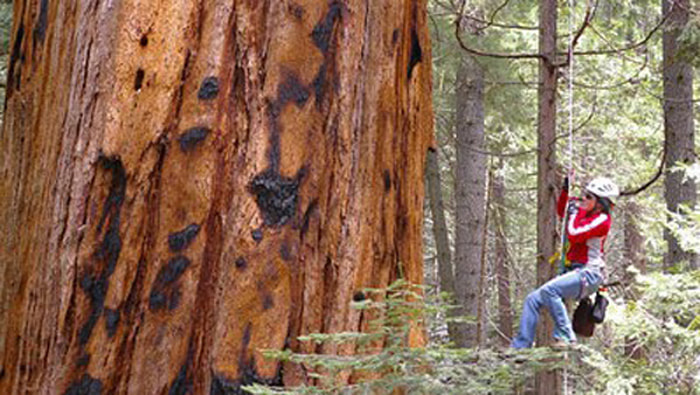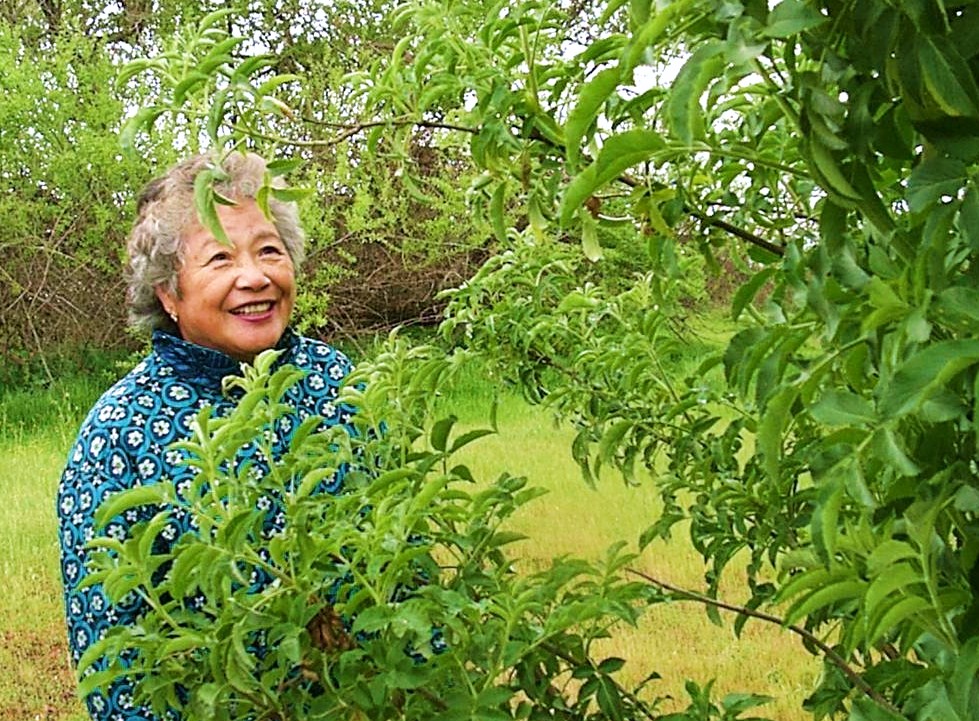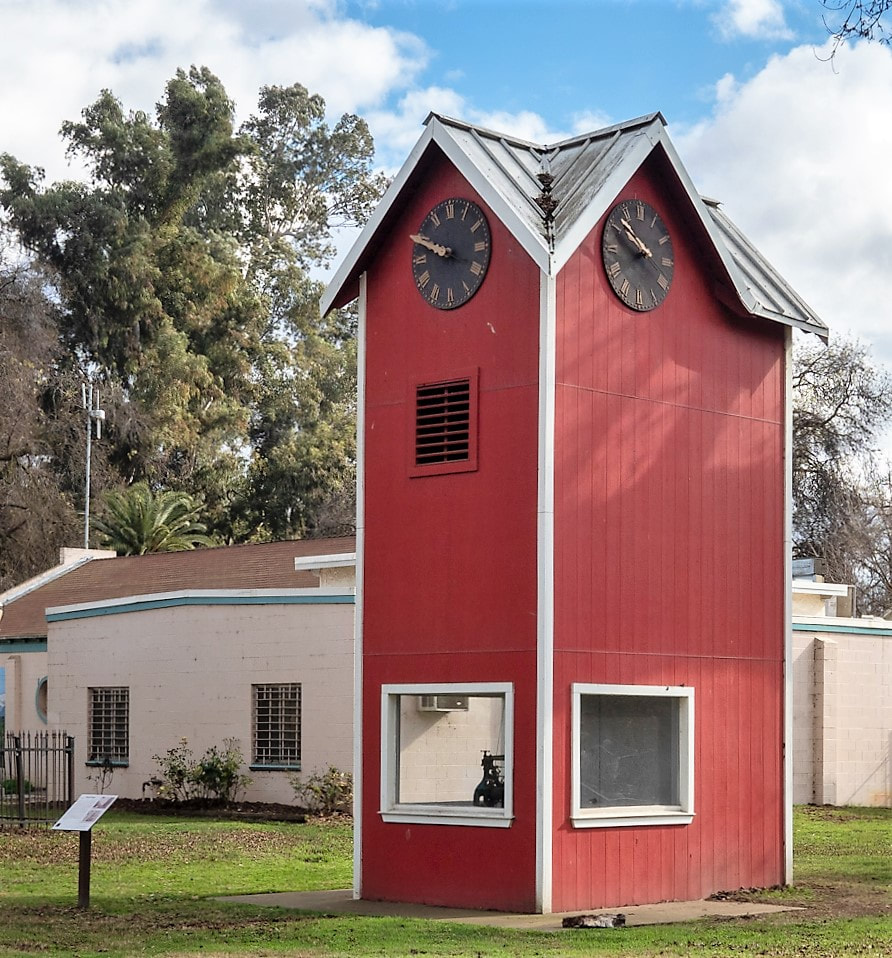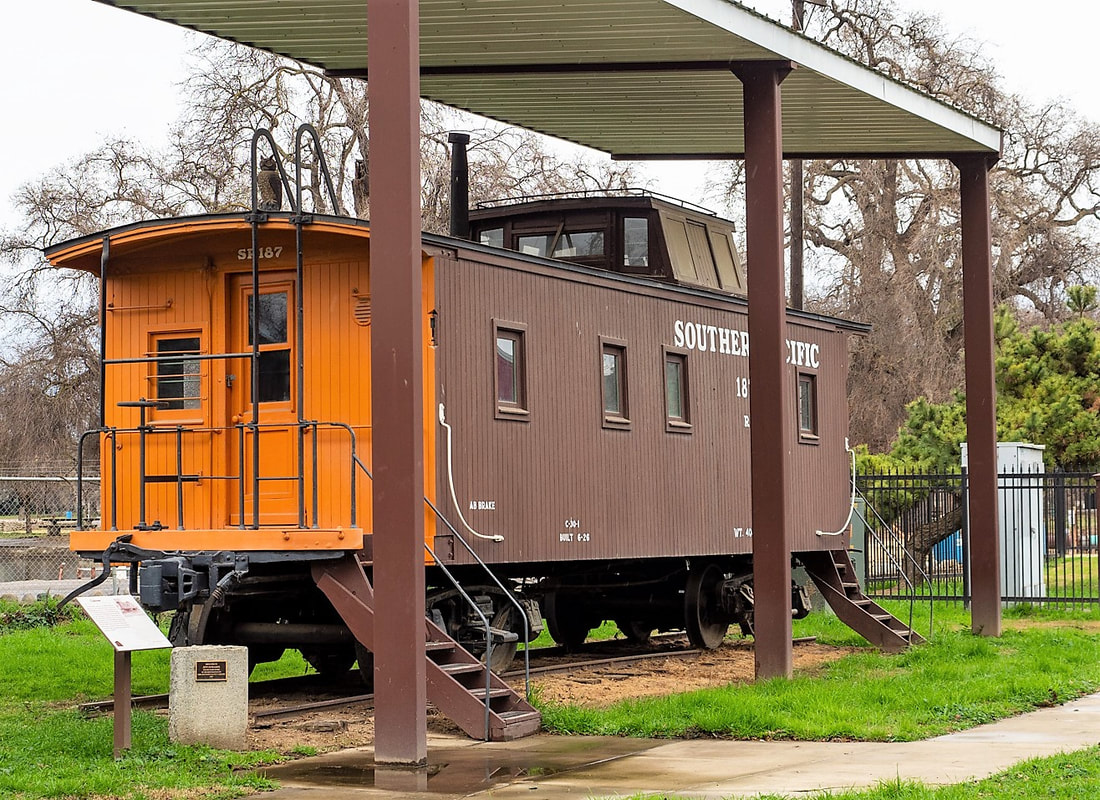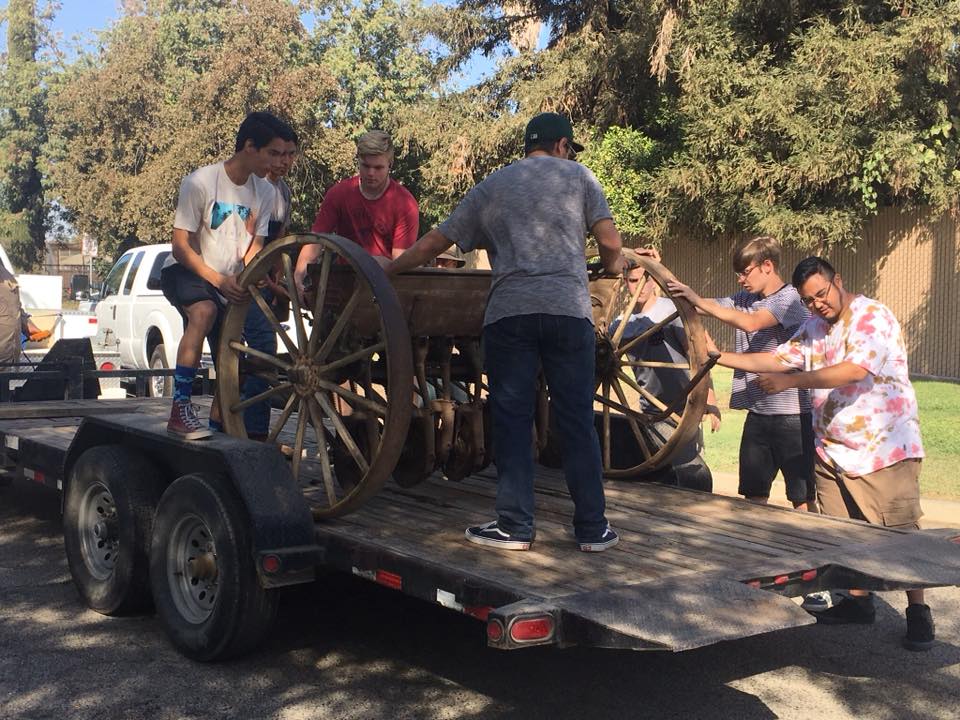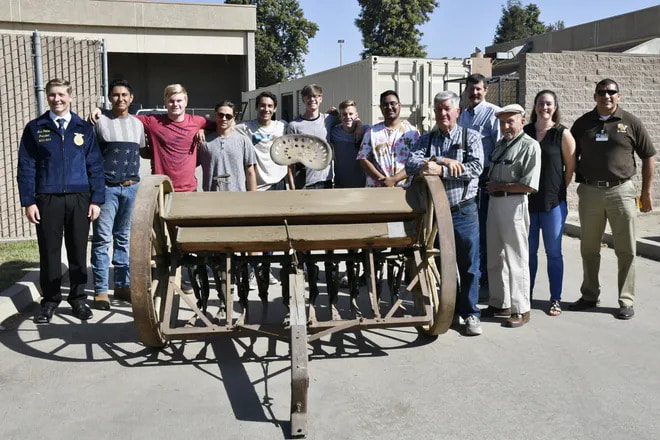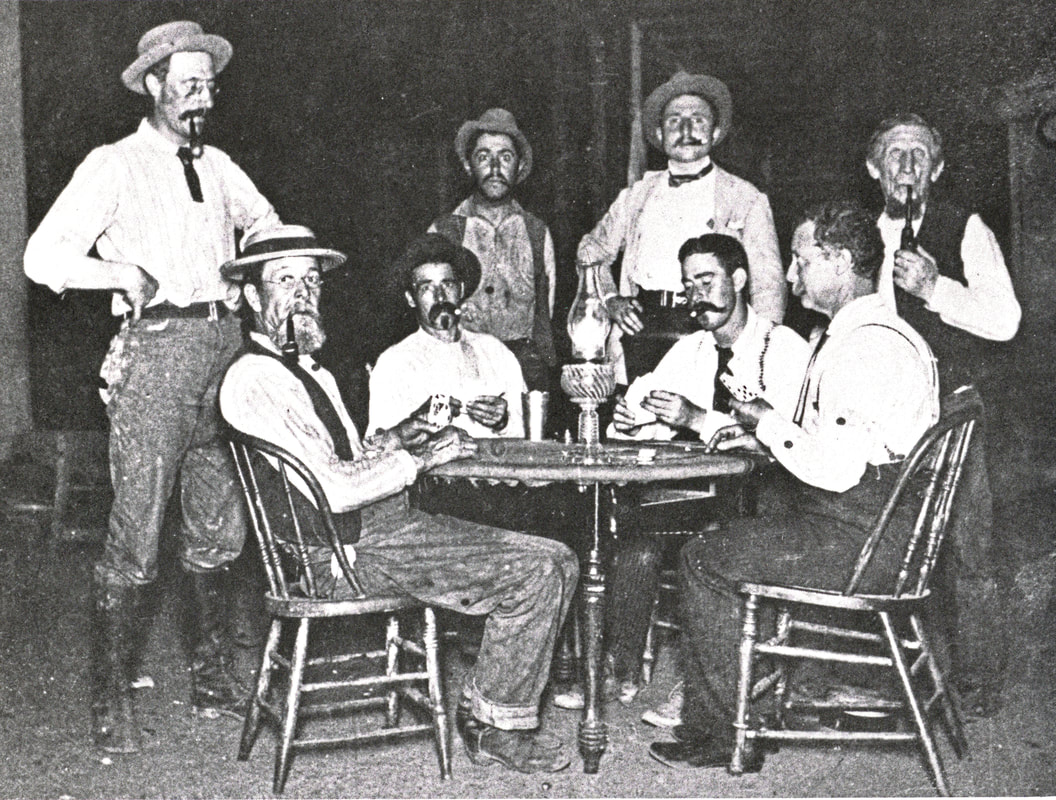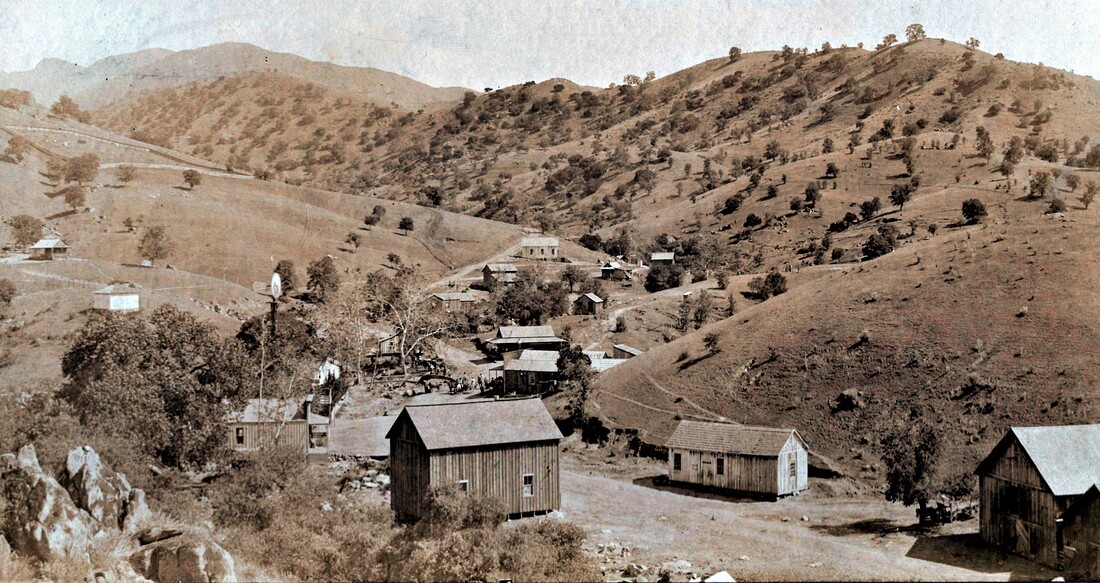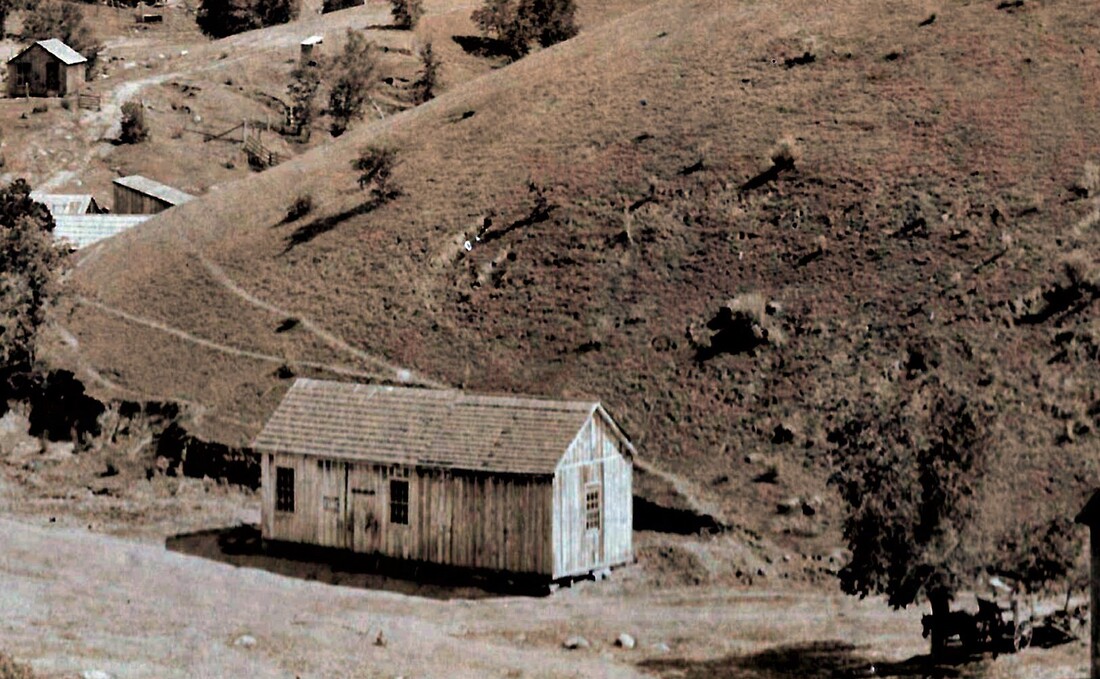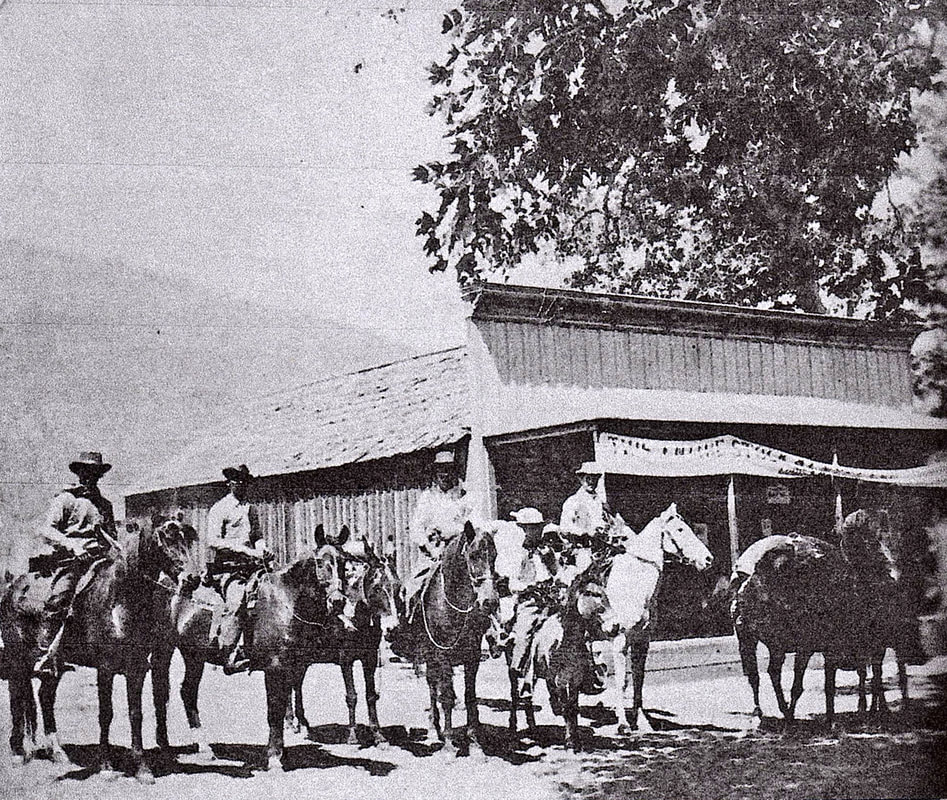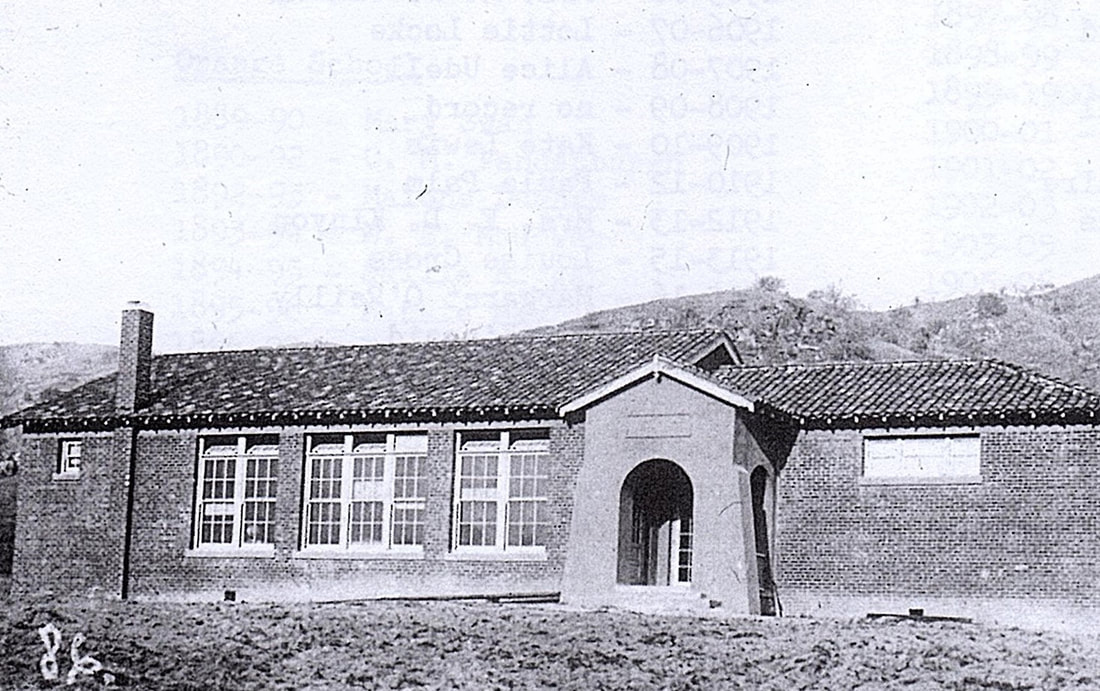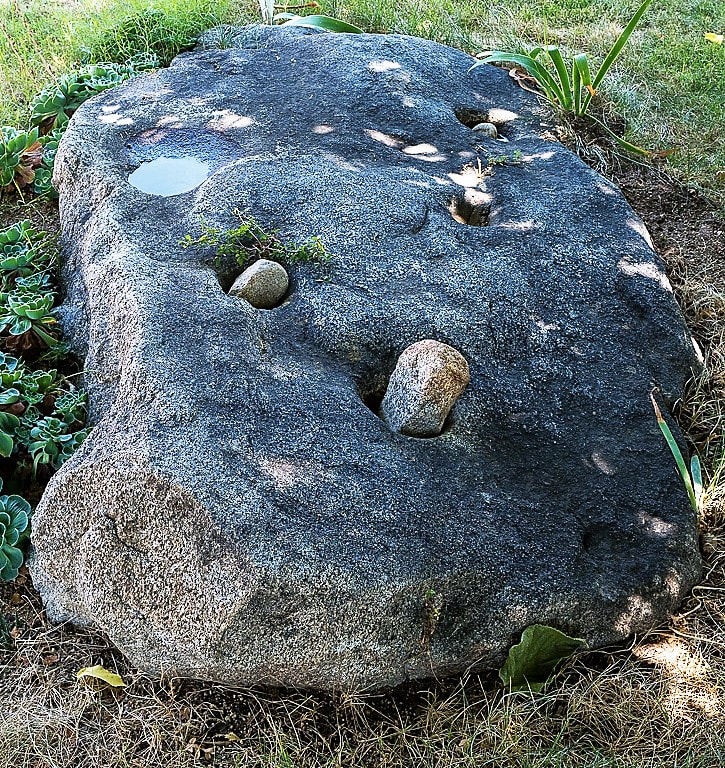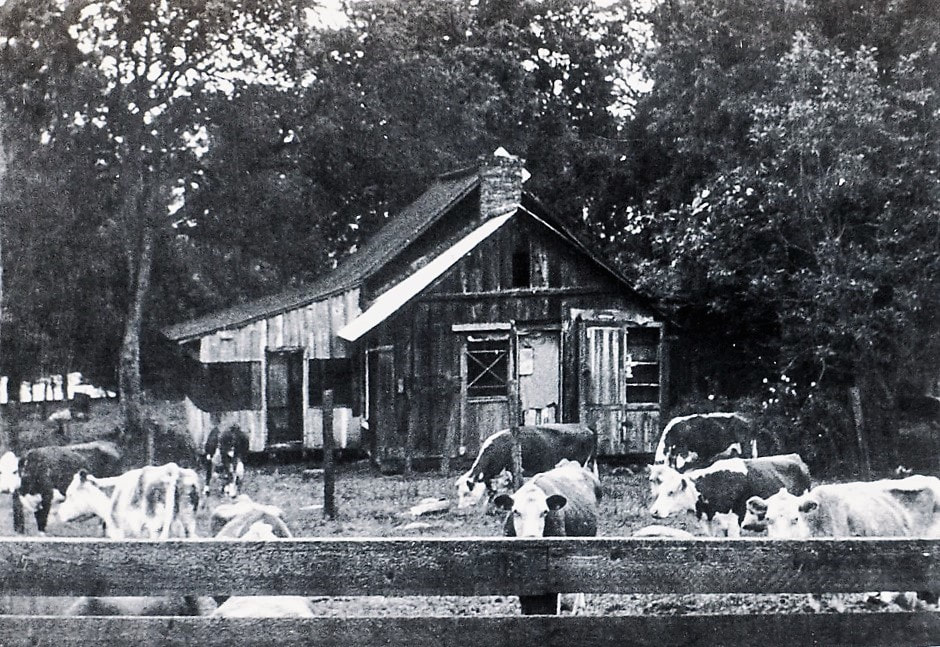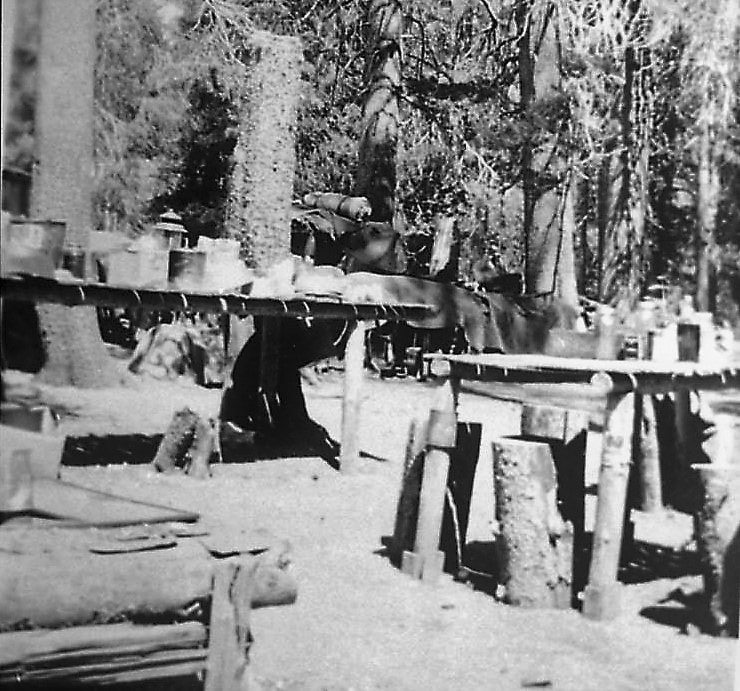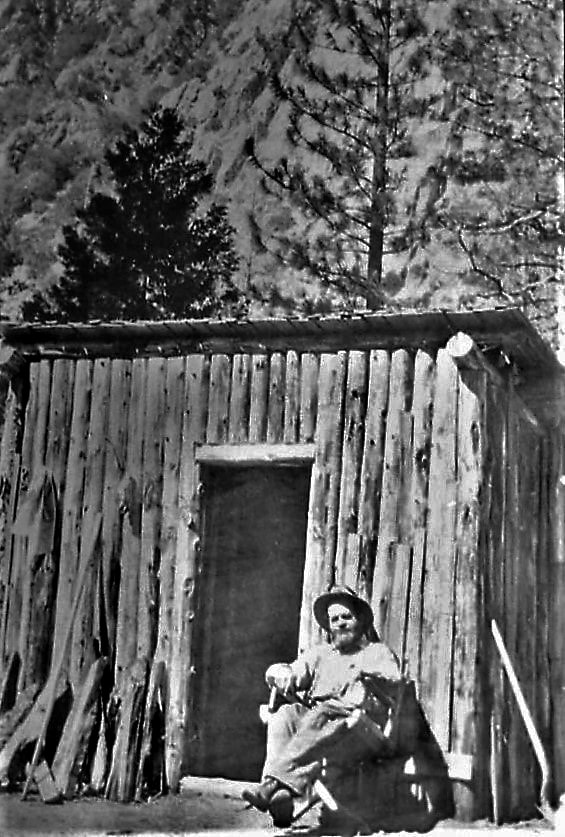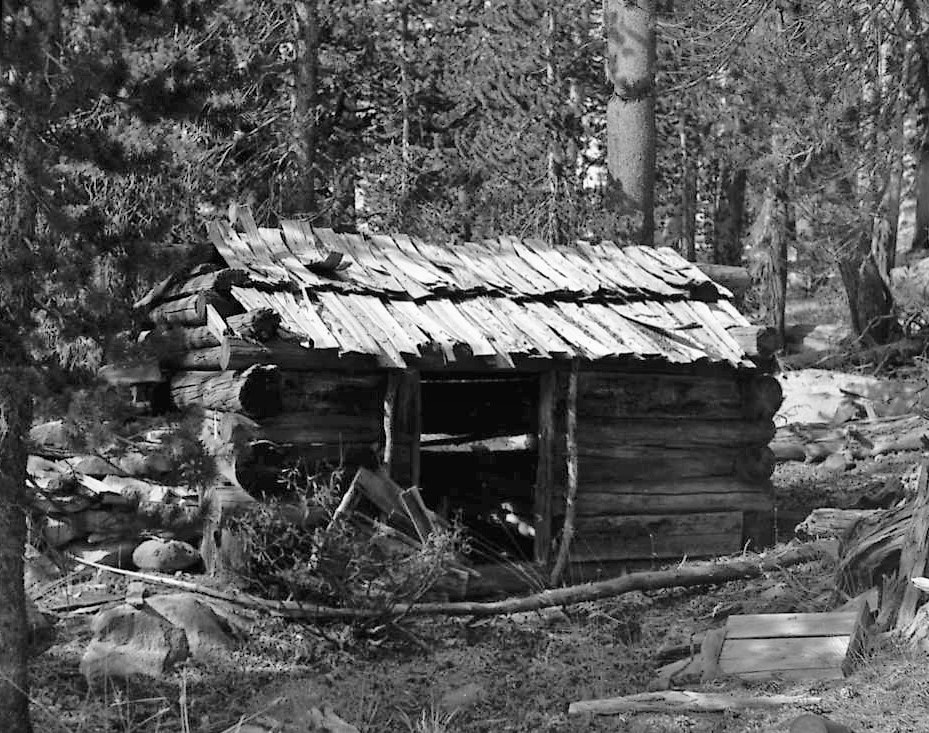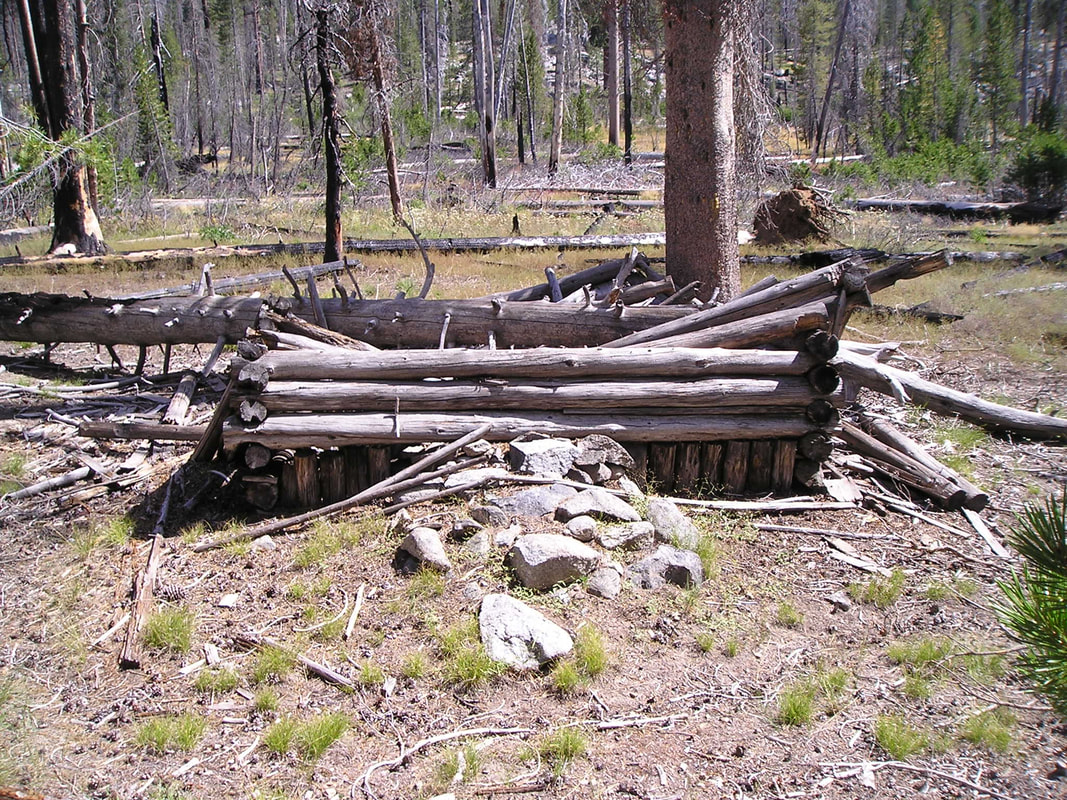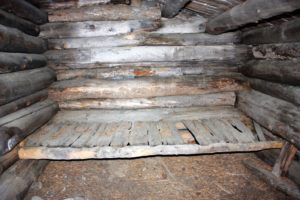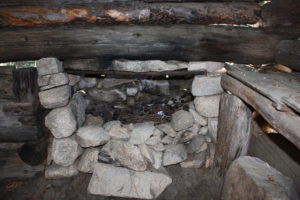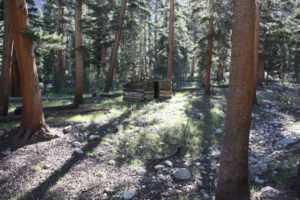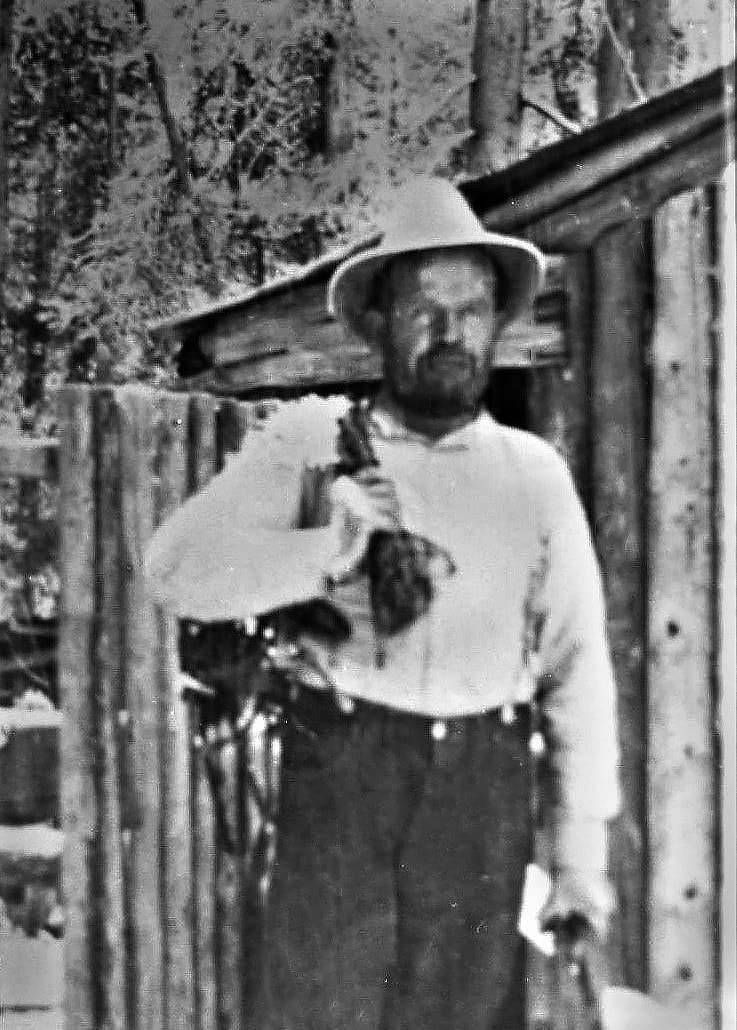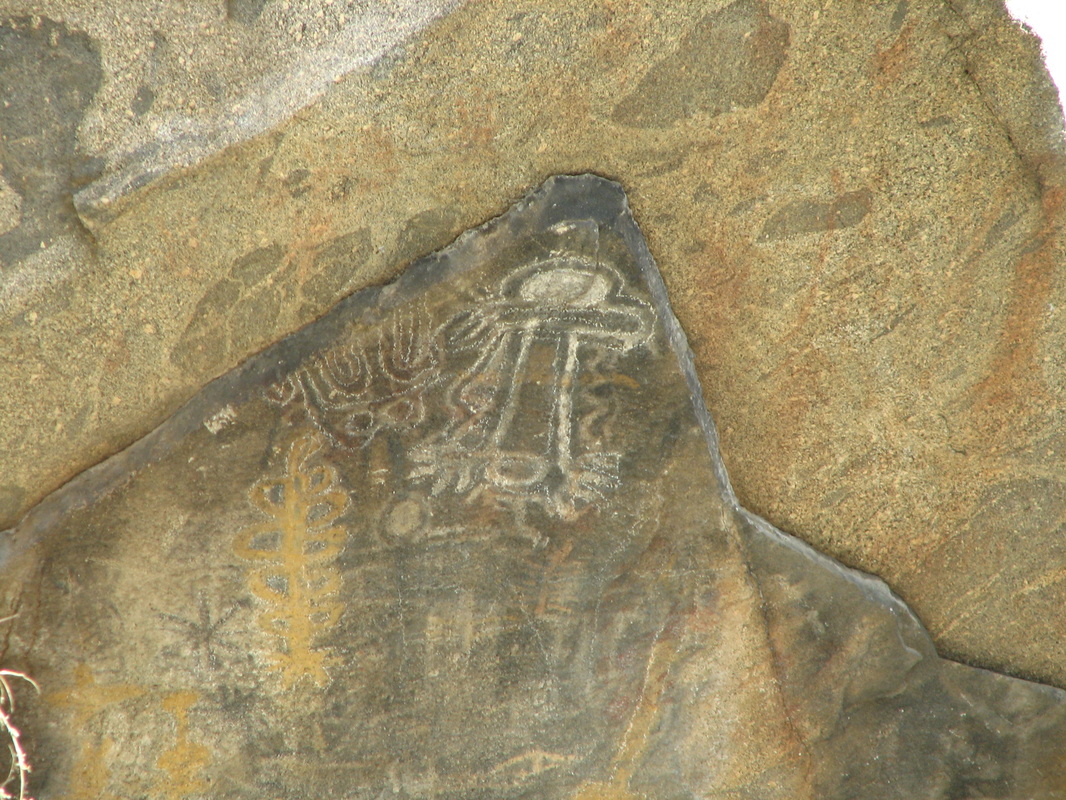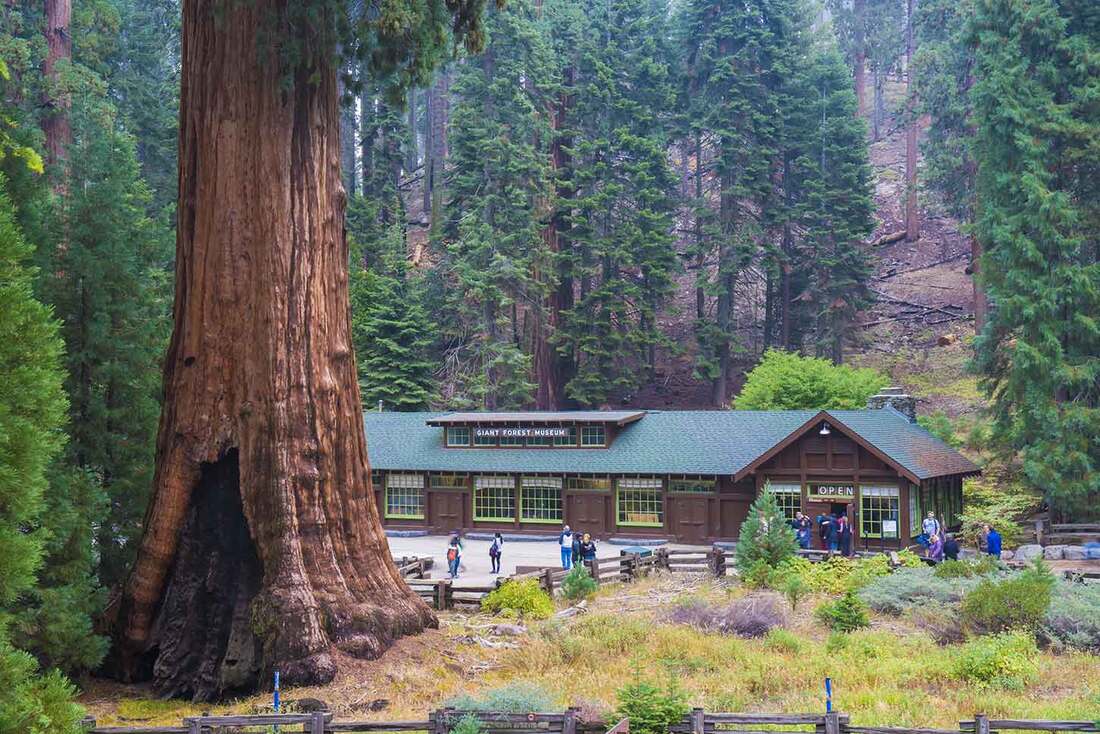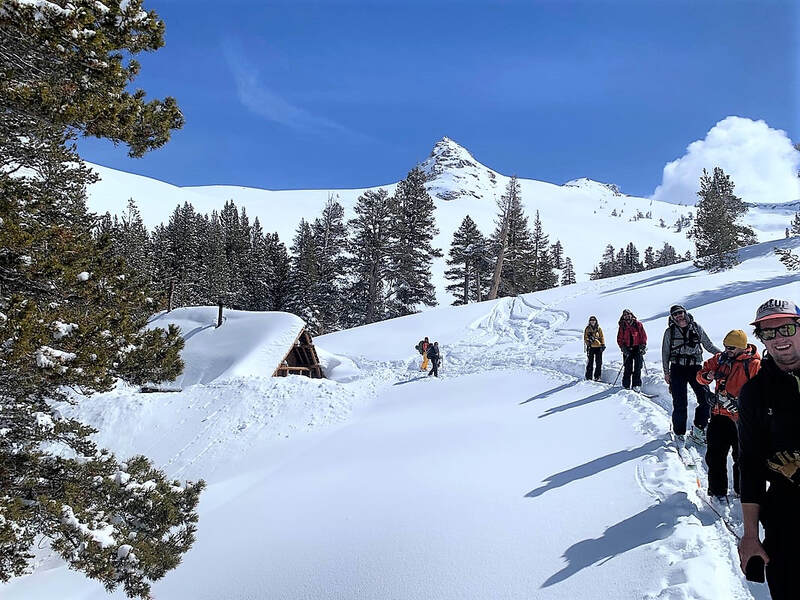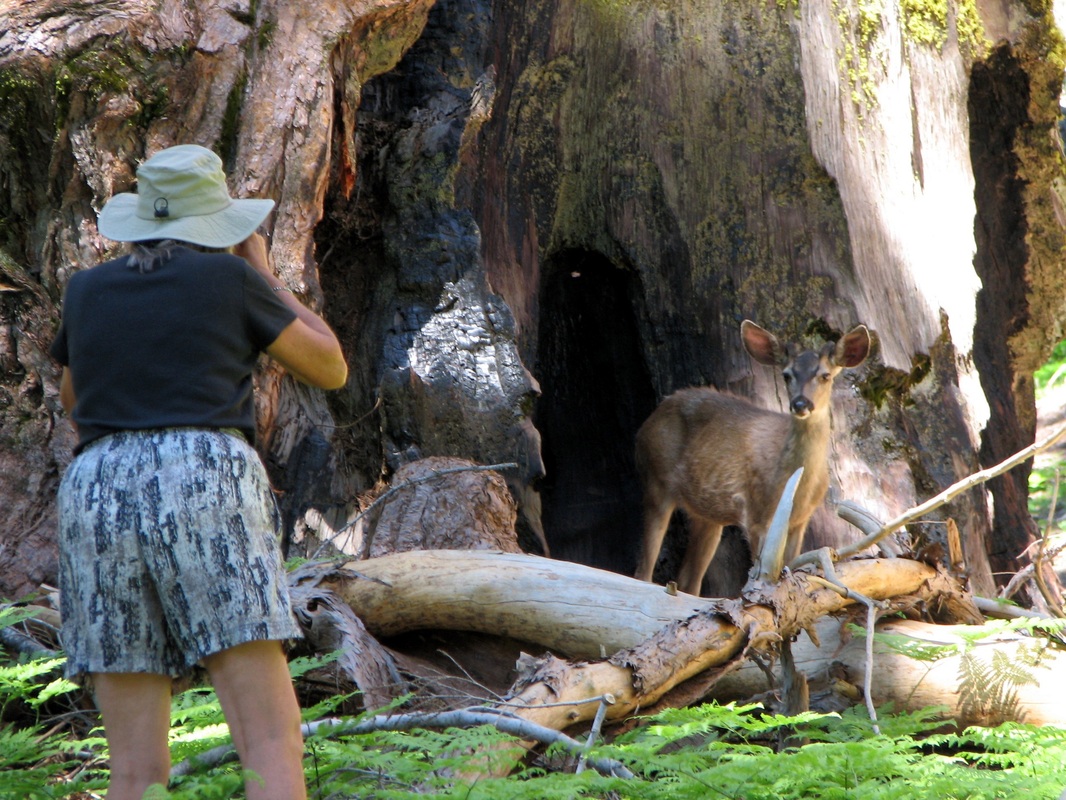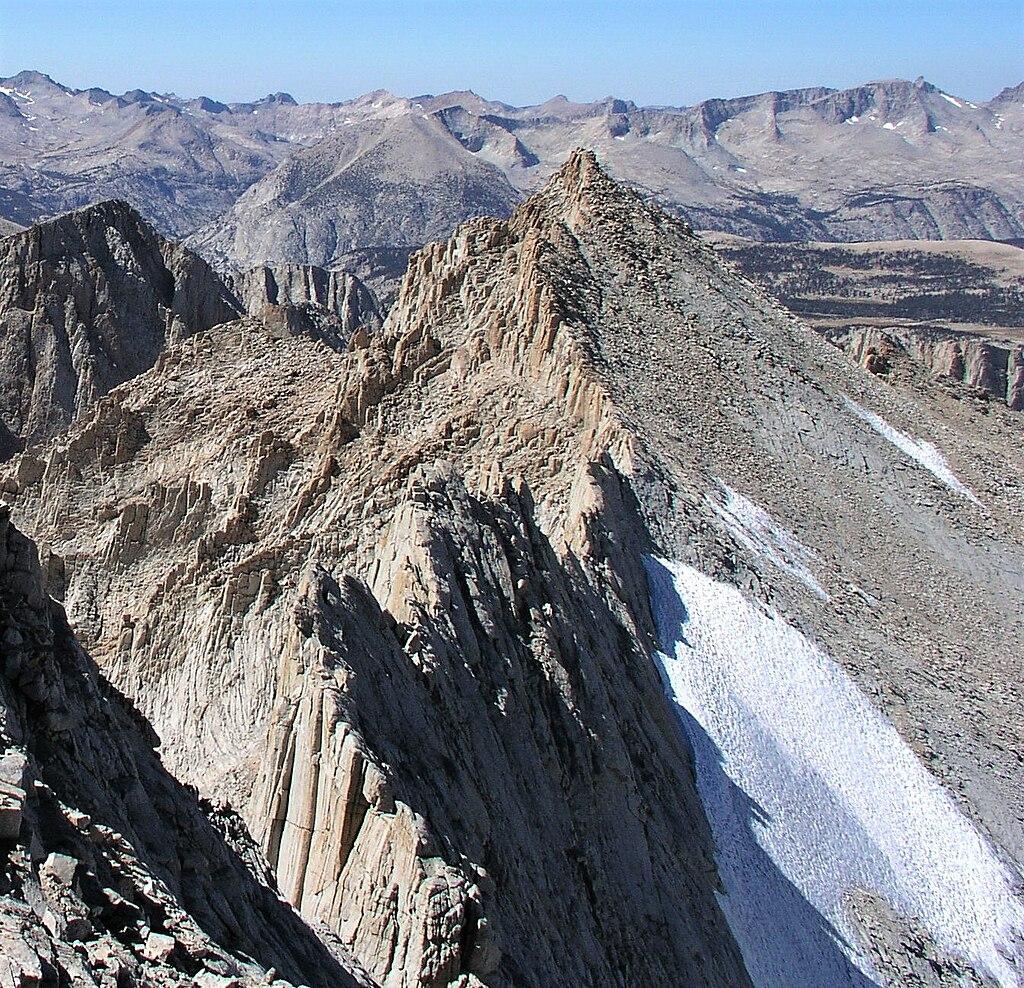
Click on photos for more information.

Backcountry Wilderness Rangers in Sequoia and Kings Canyon National Parks

by Laurie Schwaller

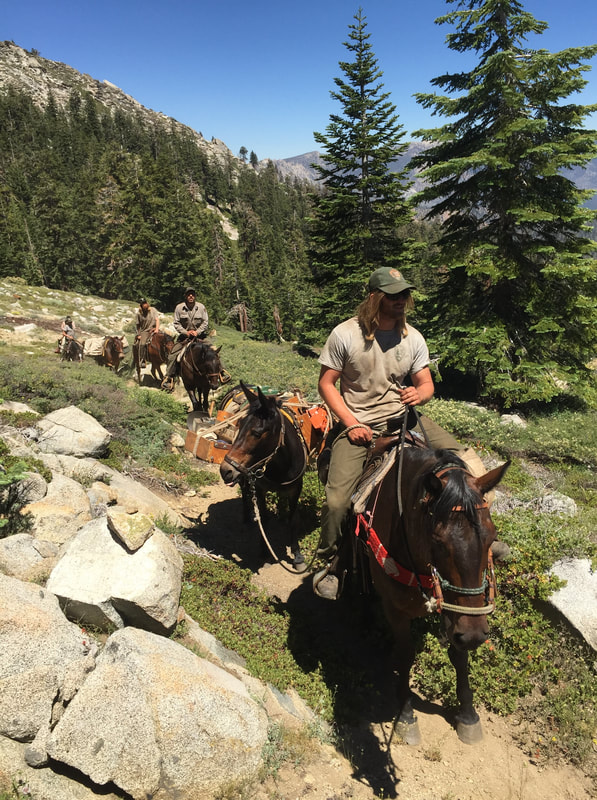
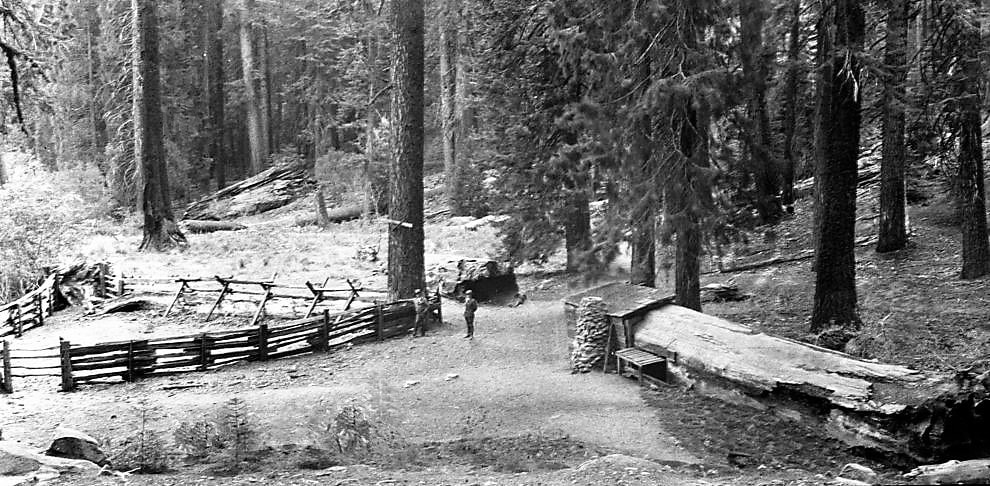
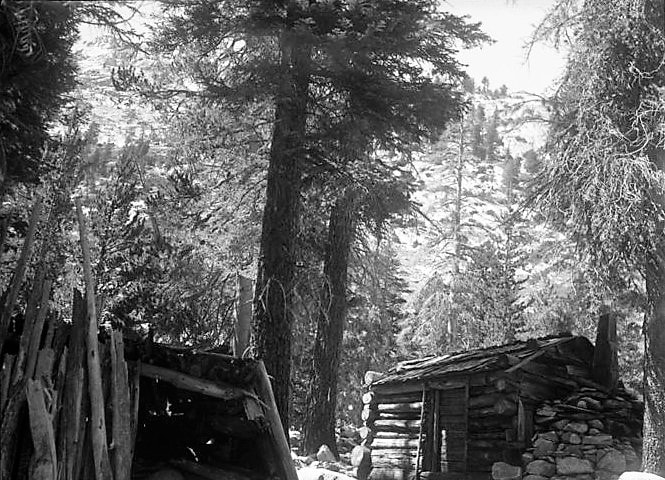
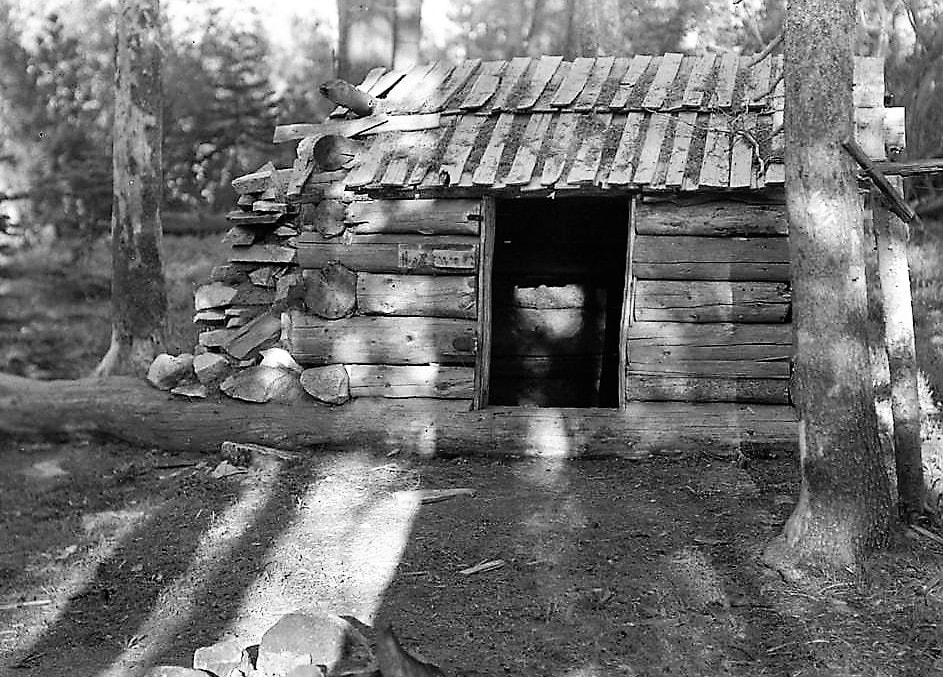
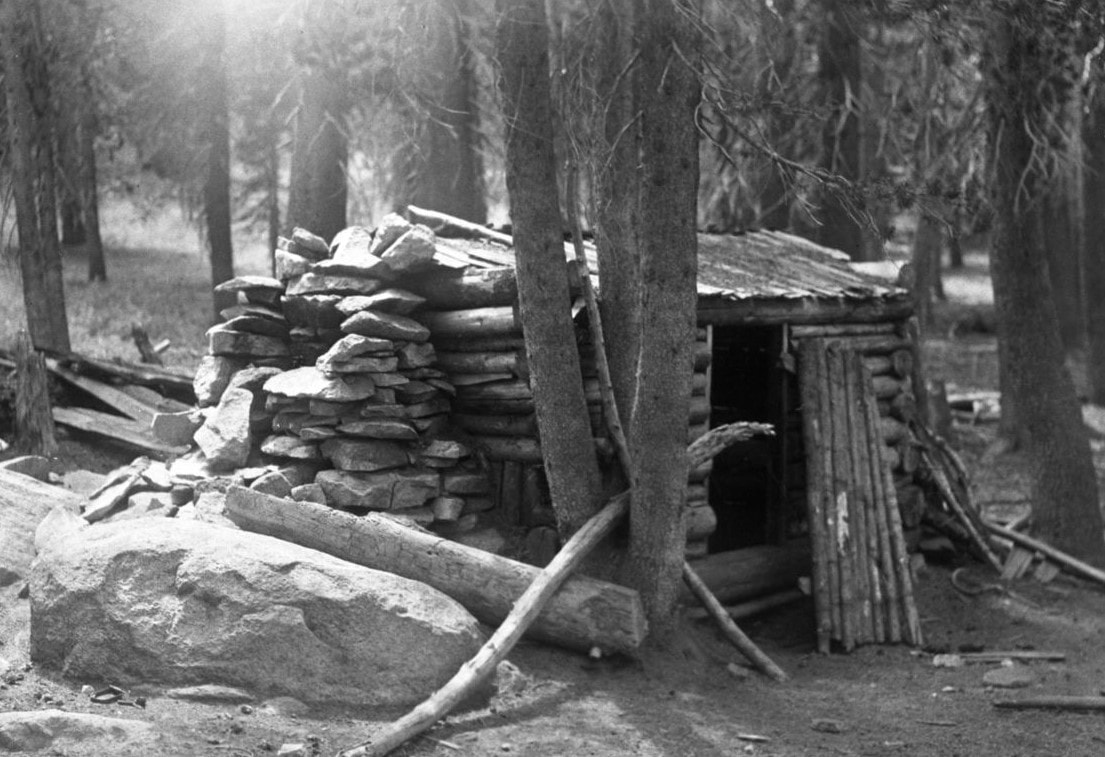
     Sequoia National Park’s historic backcountry ranger stations and their adjacent barns, meadows, and nearby campsites serve the parks and the public in many ways. They accommodate not only rangers, but also trail crews, cultural resources crews, snow surveyors, occasionally monitors of meadows, water, wildlife, wildfires, and weather stations, and sometimes backcountry visitors in distress.

     Their barns (also called tack sheds) store equipment and supplies used by these personnel, and their pastures provide grazing for their stock and, when conditions allow, for visitors’ animals also. Most of today’s backcountry visitors spend only a night or two in the campsites near these iconic cabins, but seasonal backcountry Wilderness rangers may be stationed in them or patrolling to them from May into October.
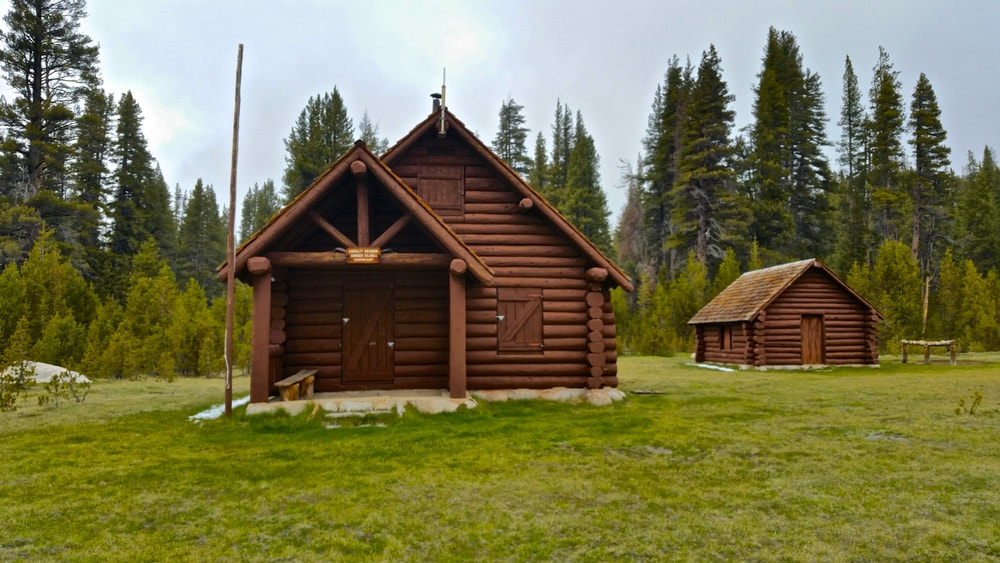
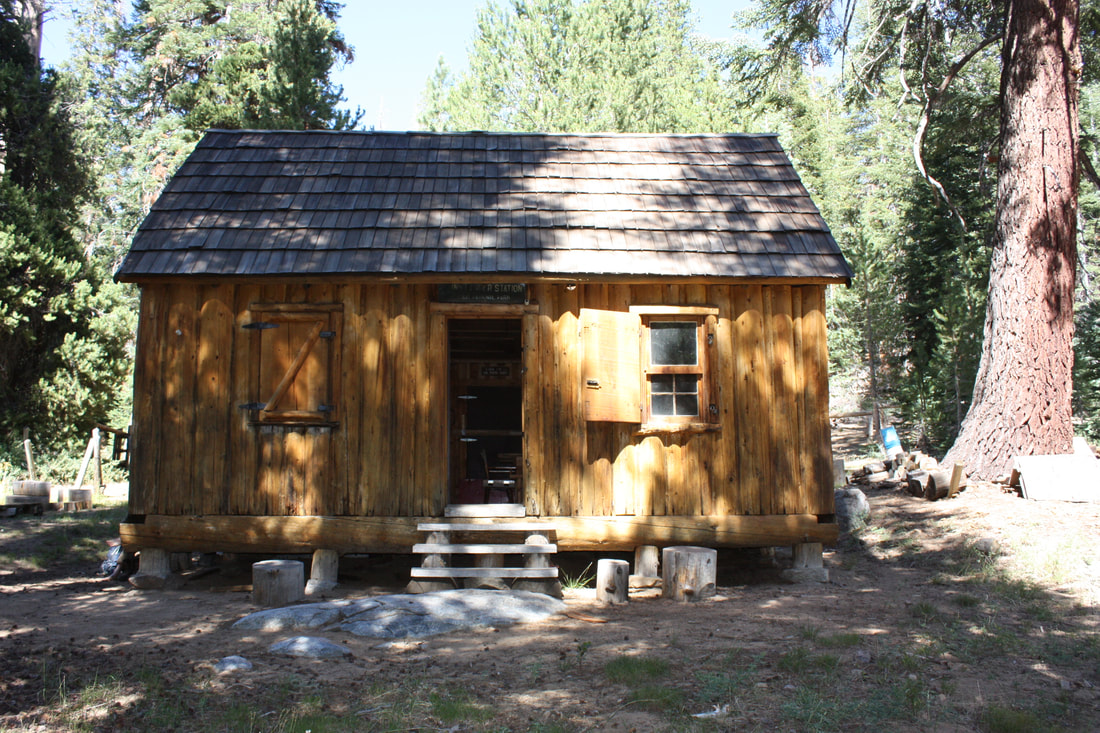
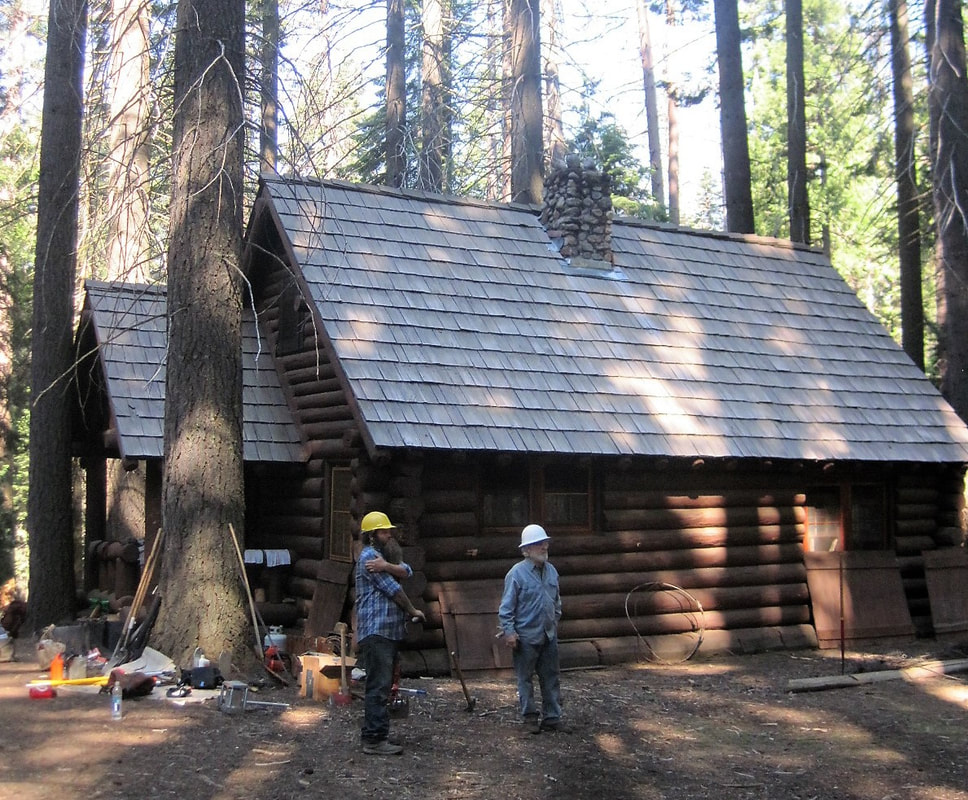
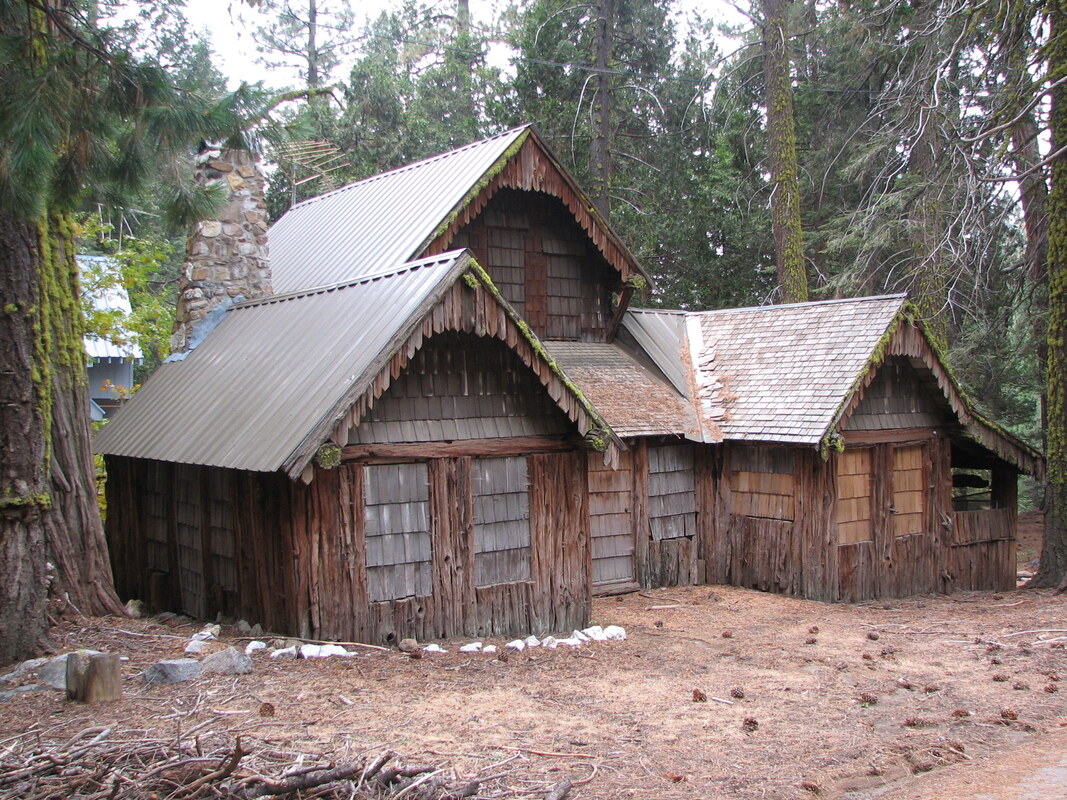
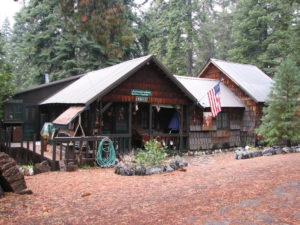
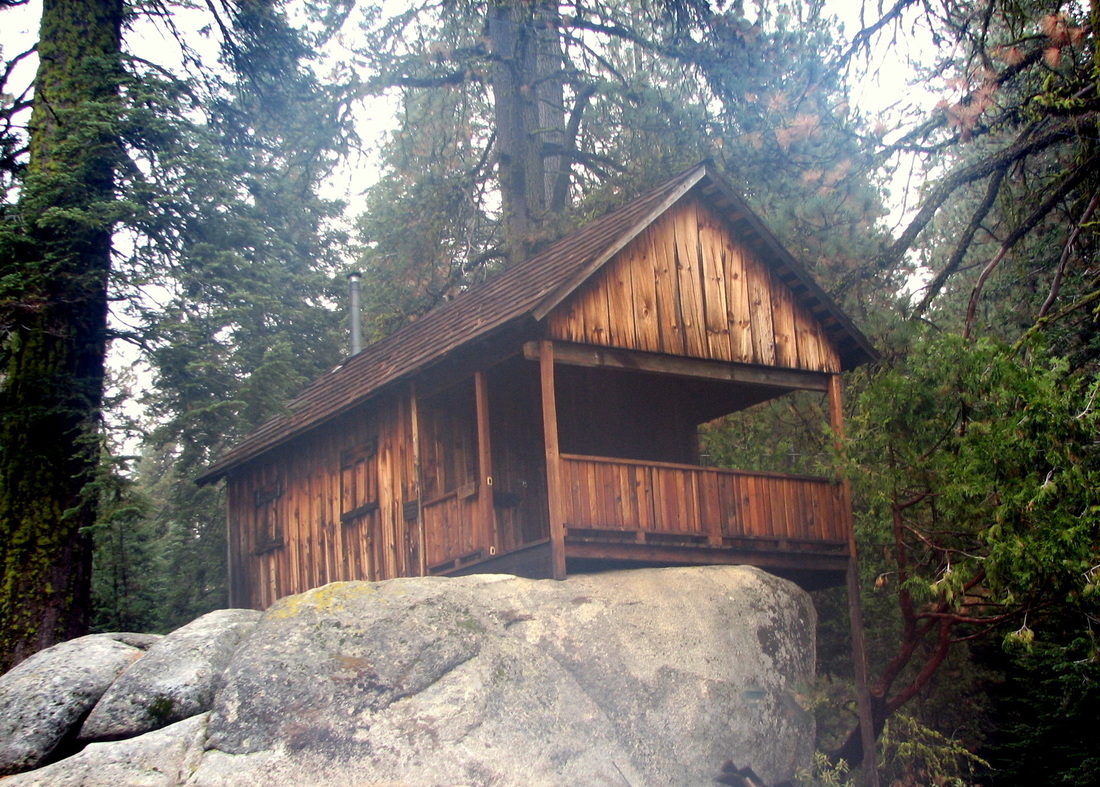
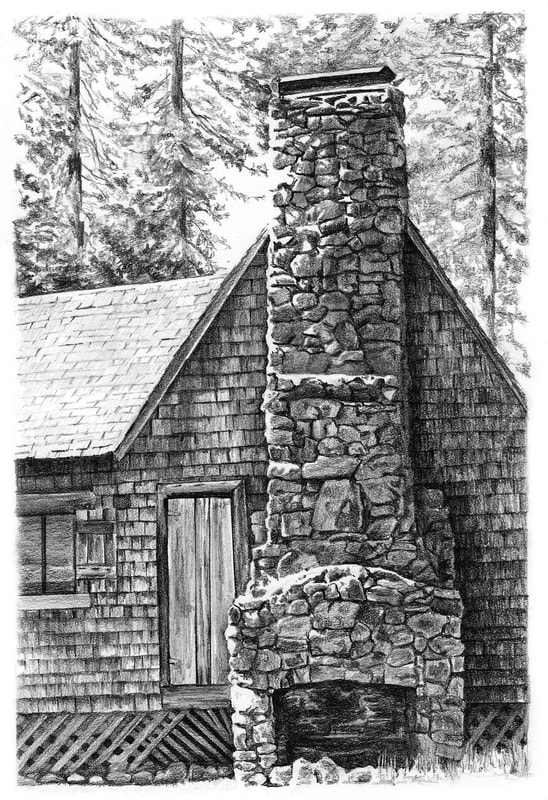
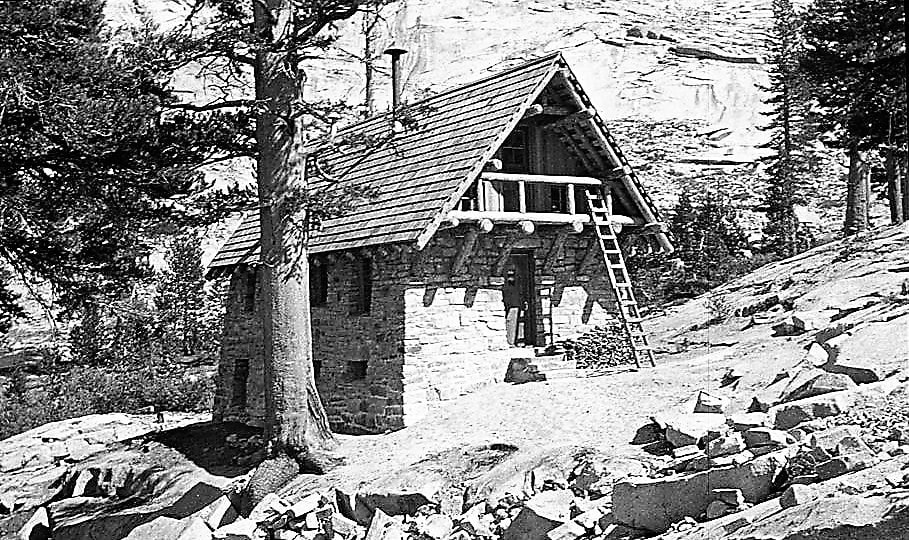
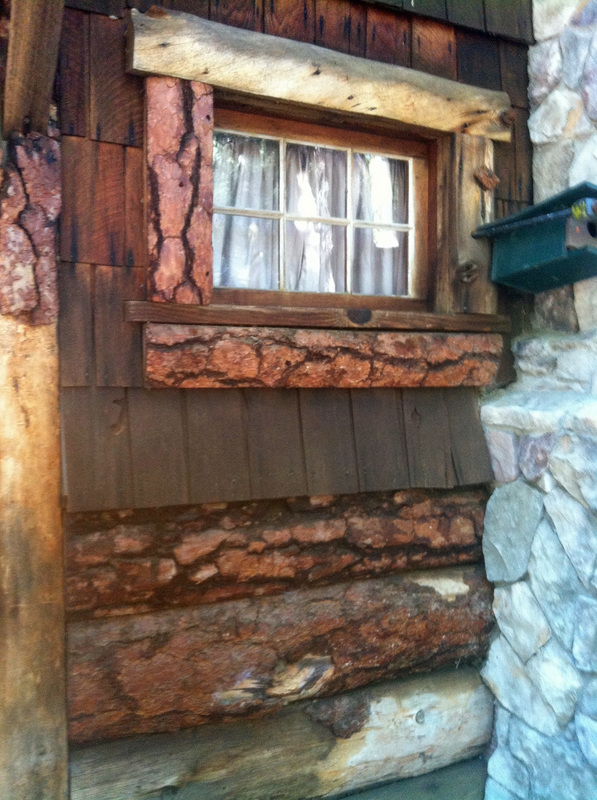
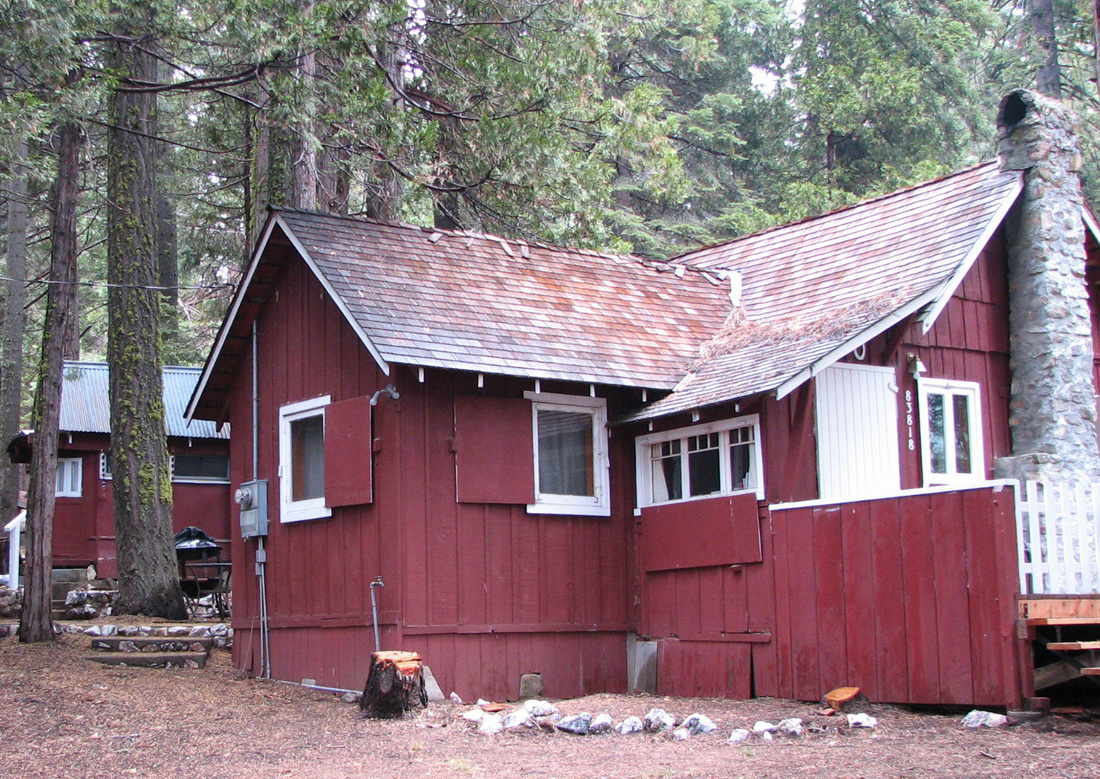
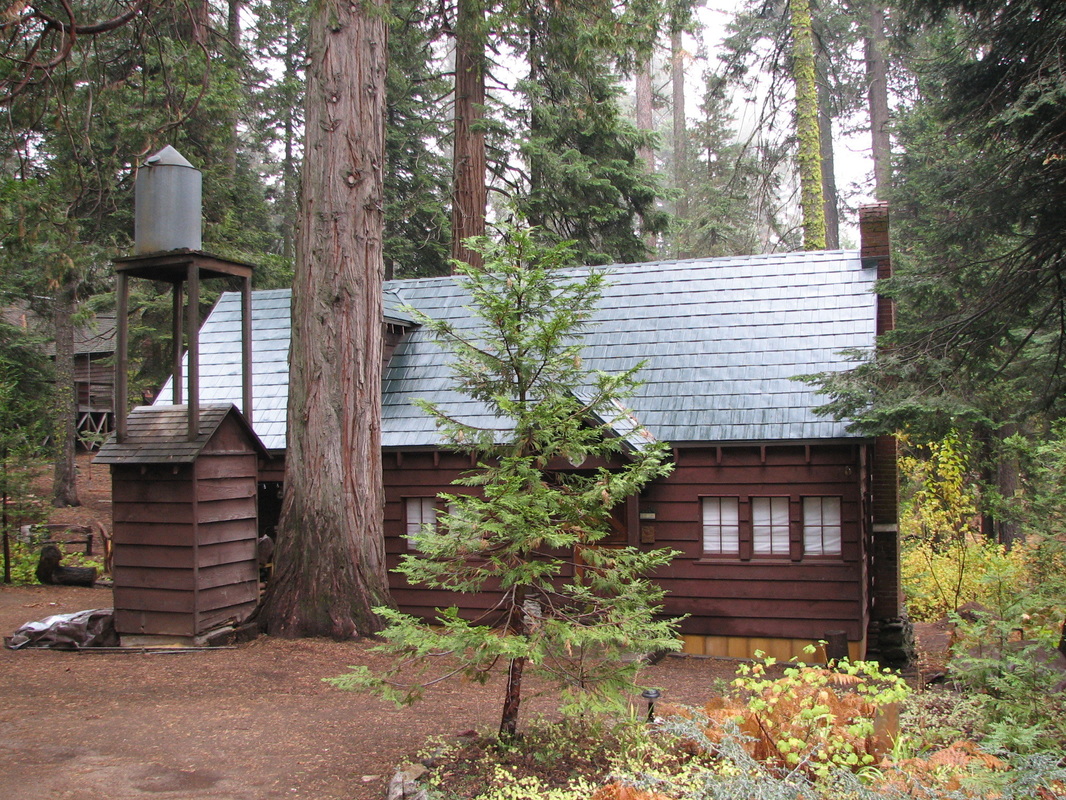
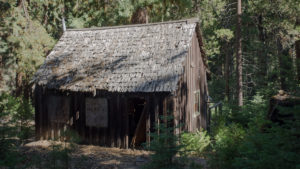
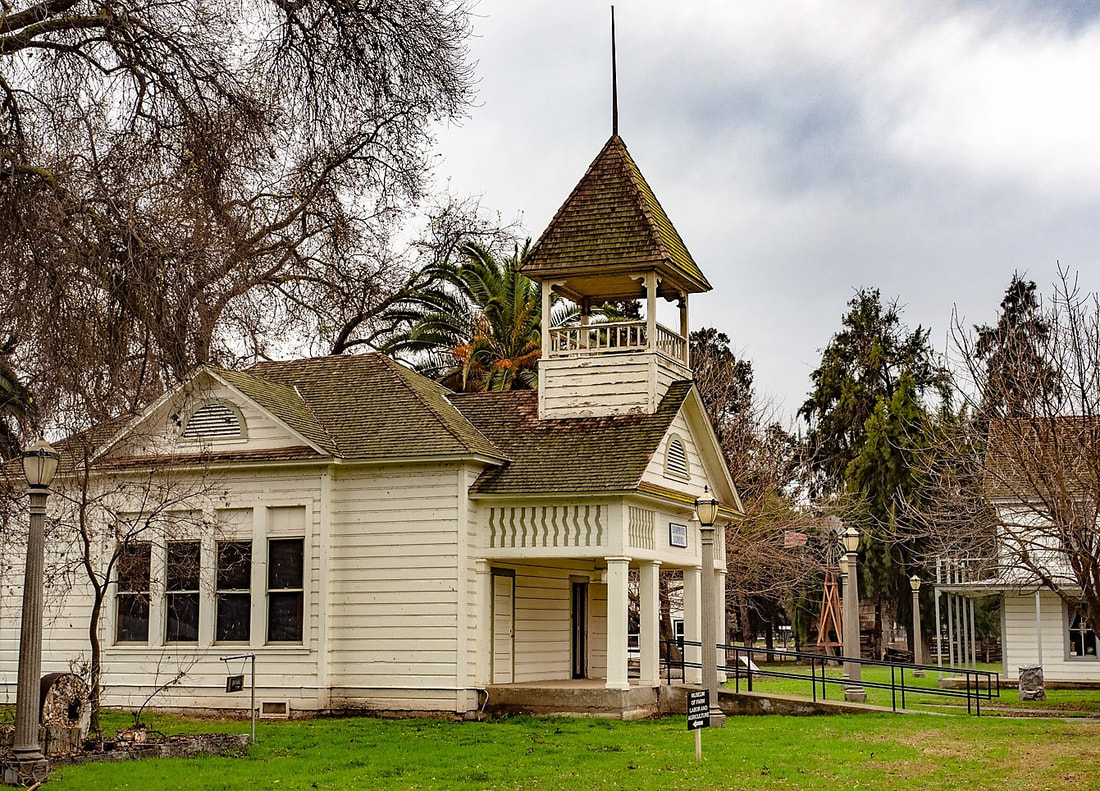
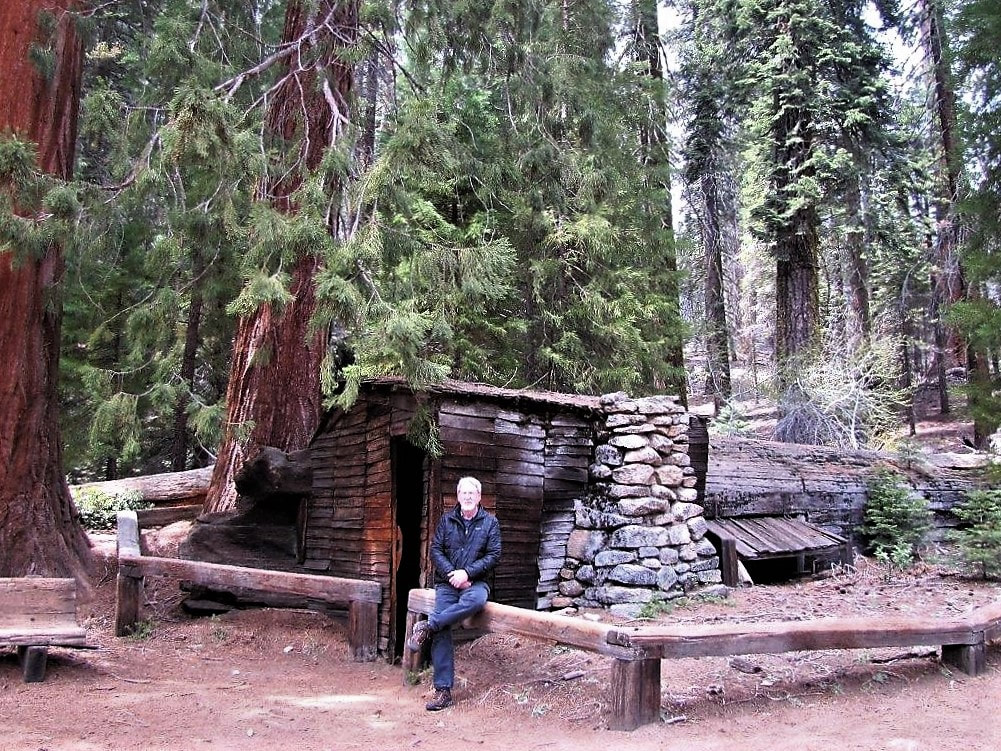
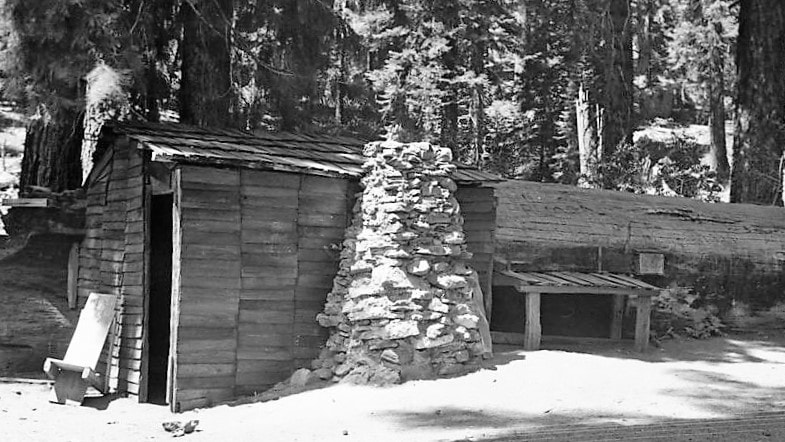
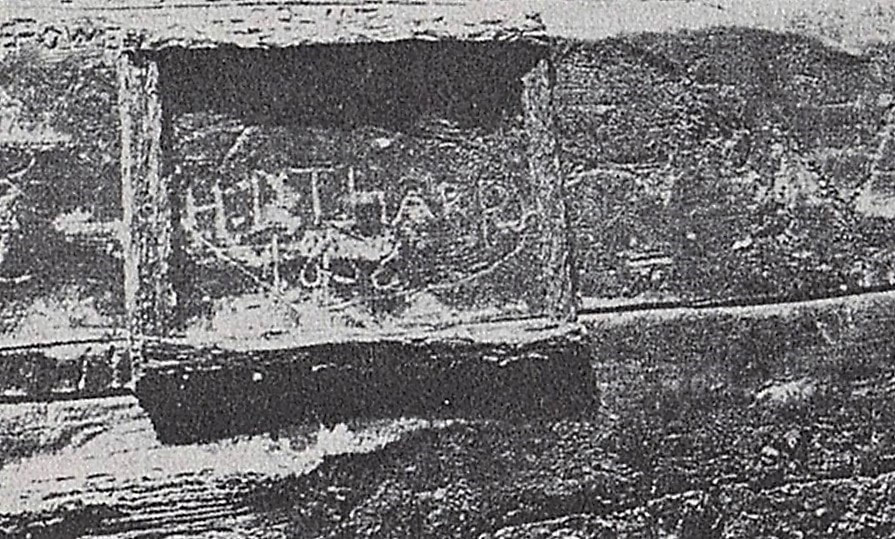
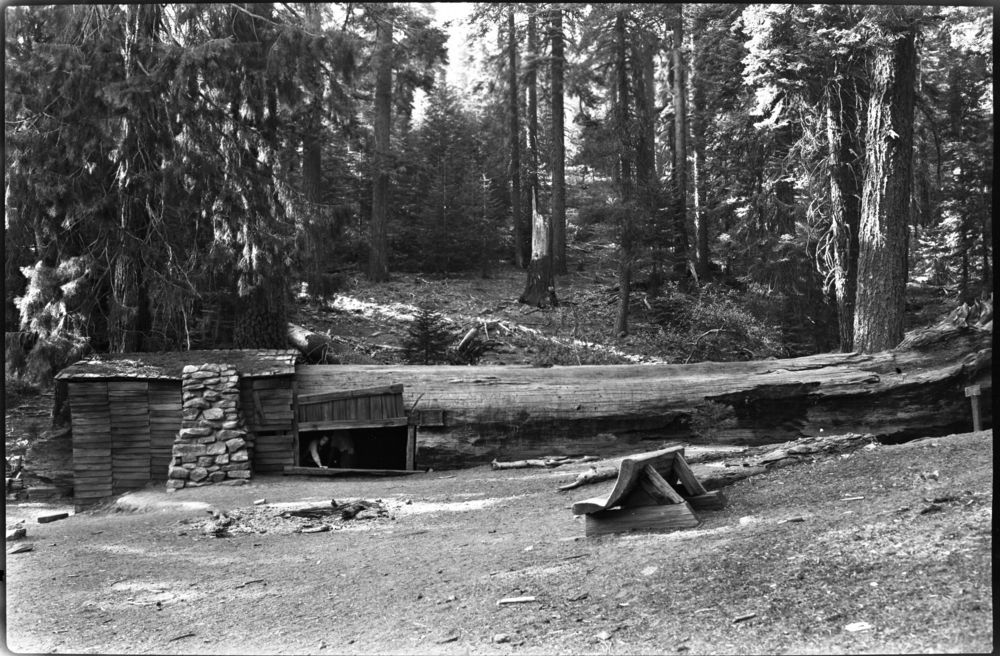
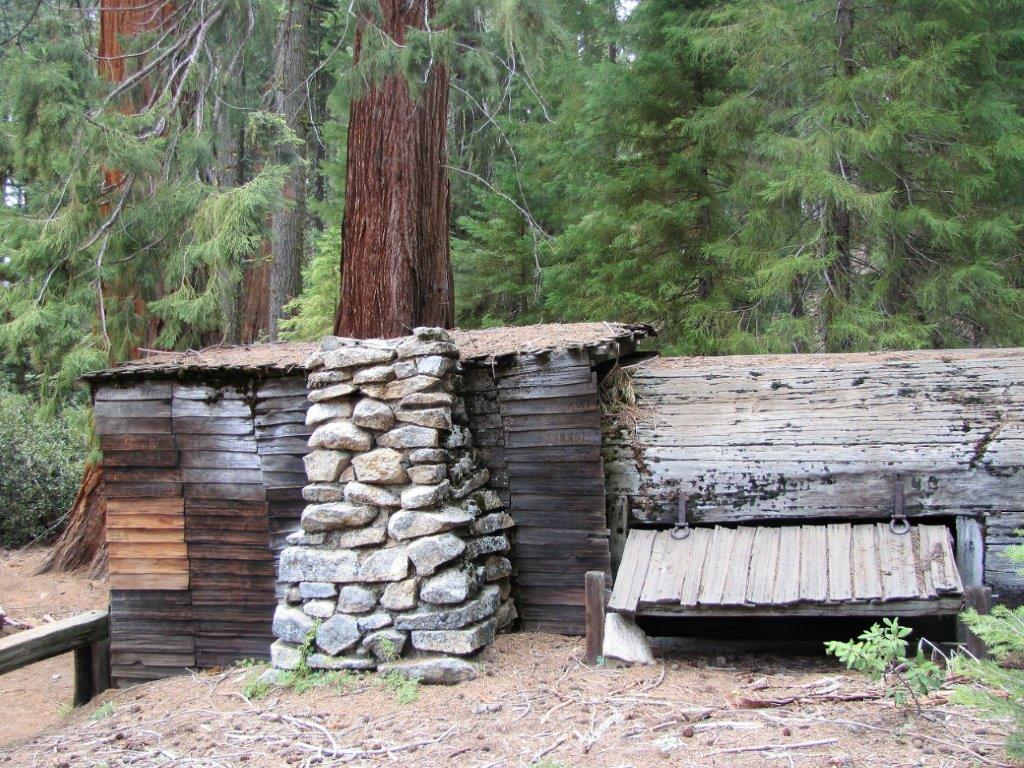
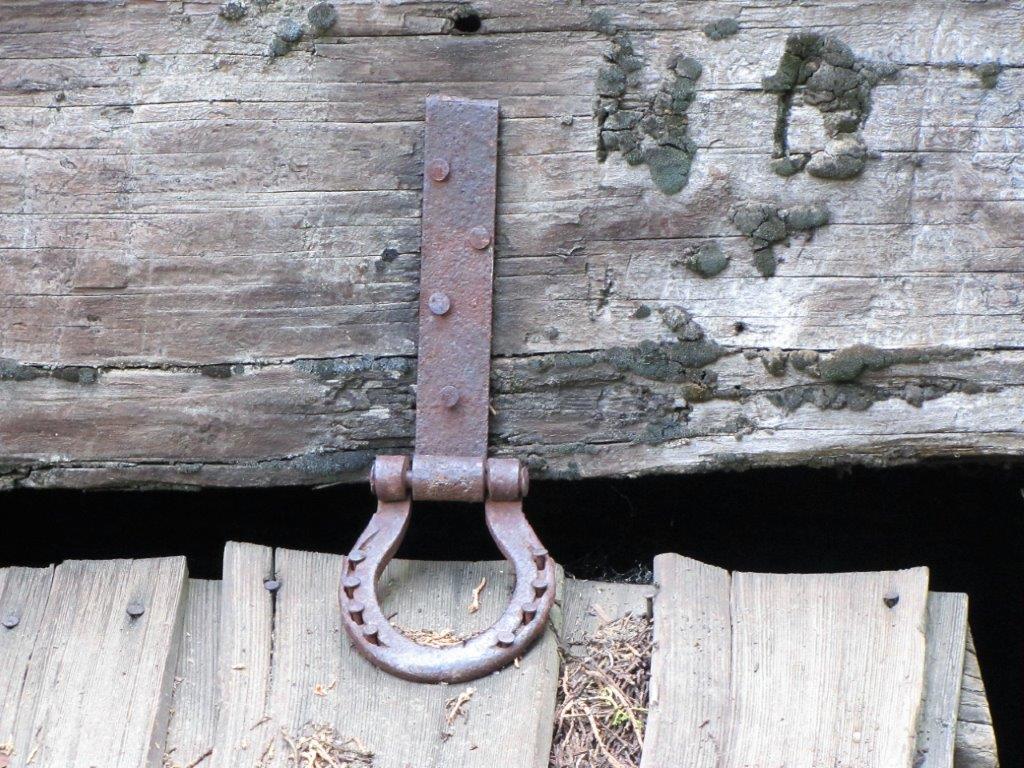
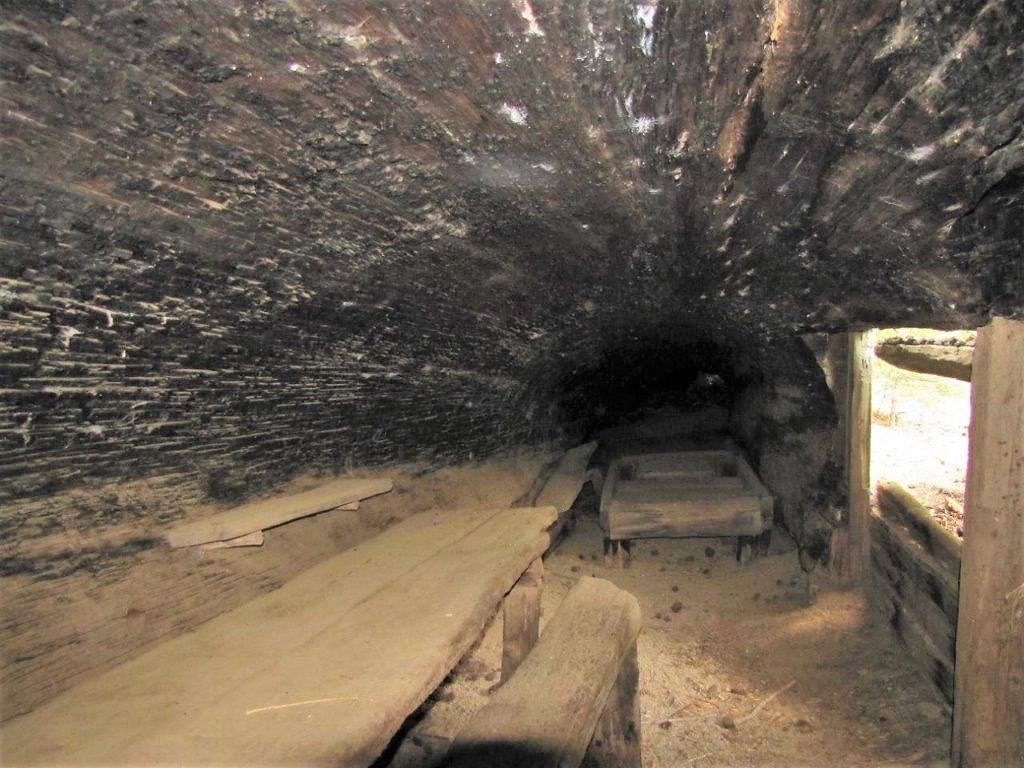
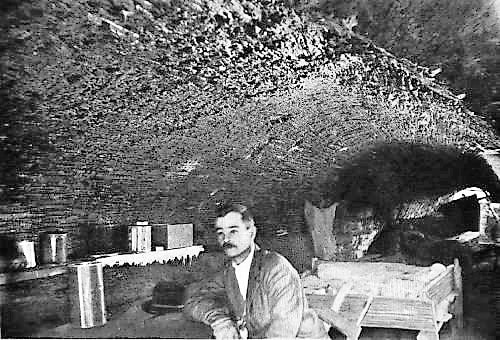
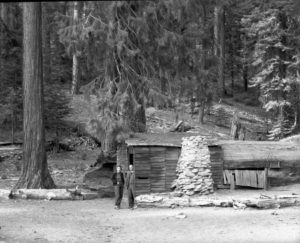
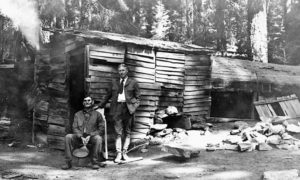
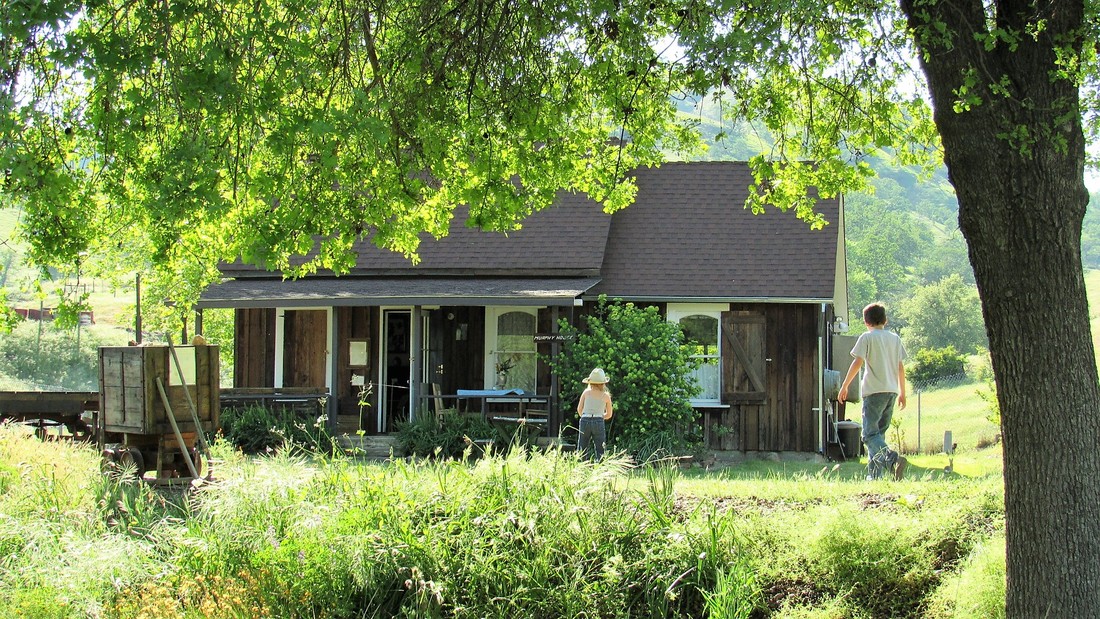
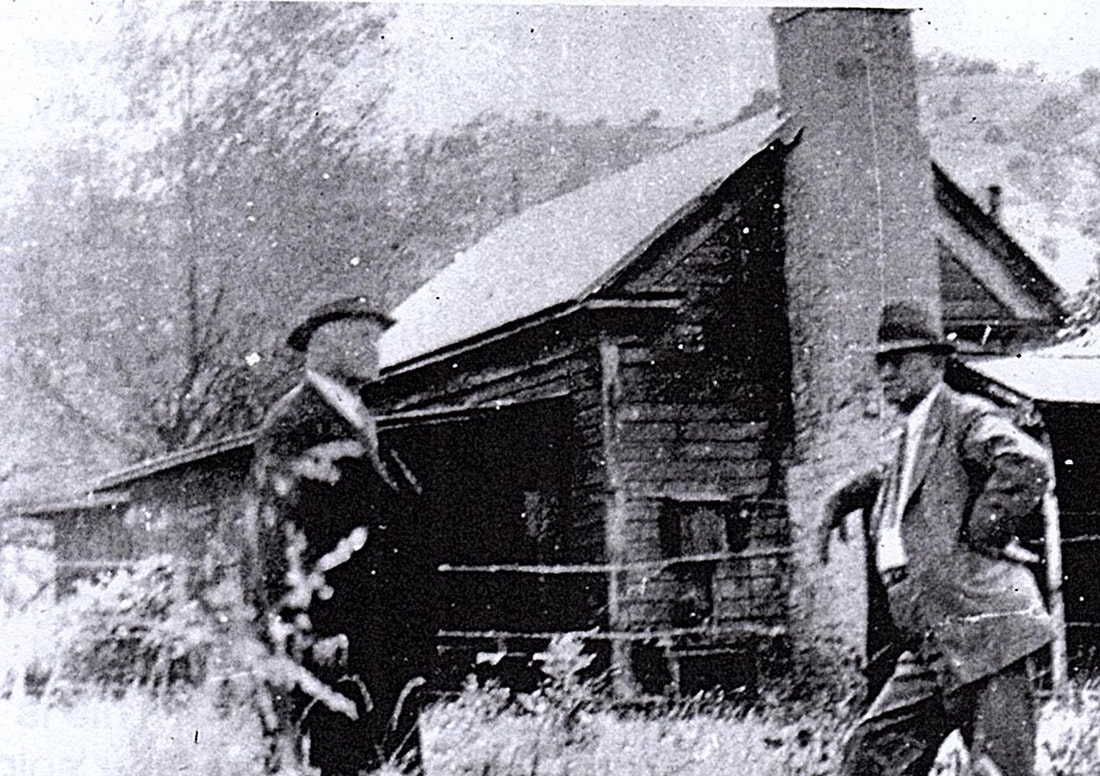
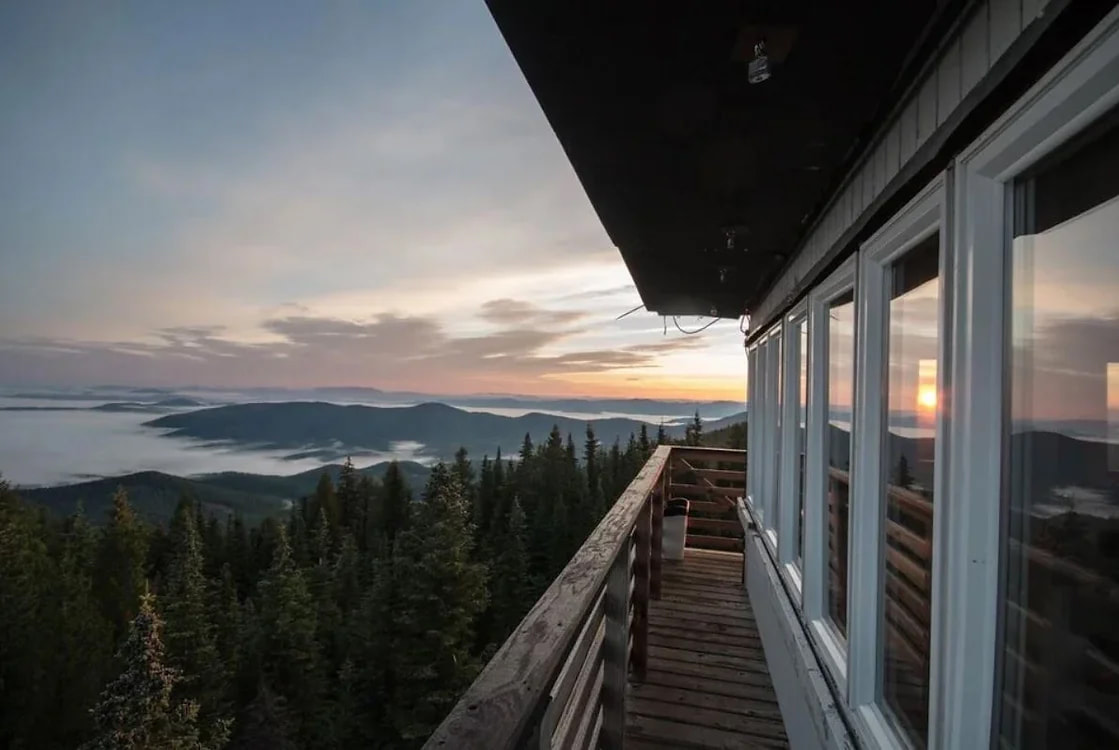
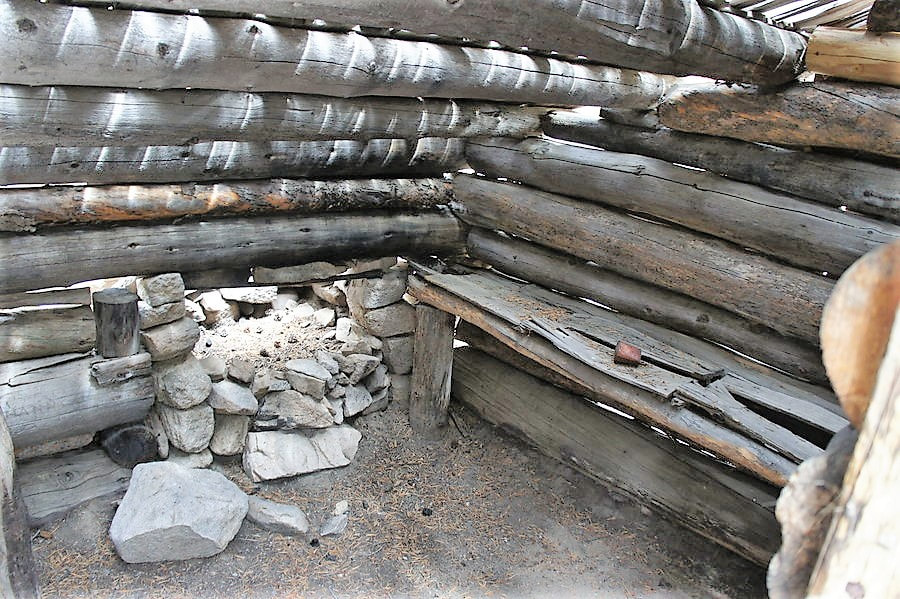
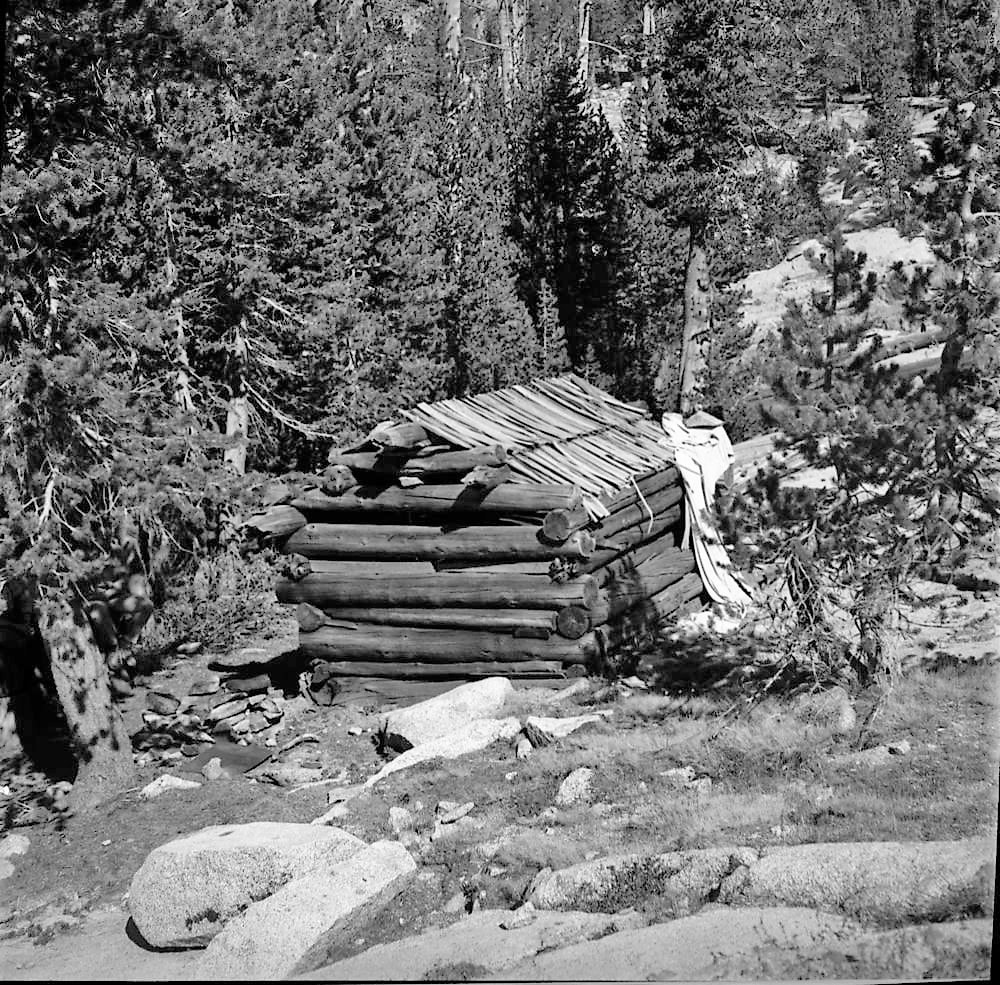
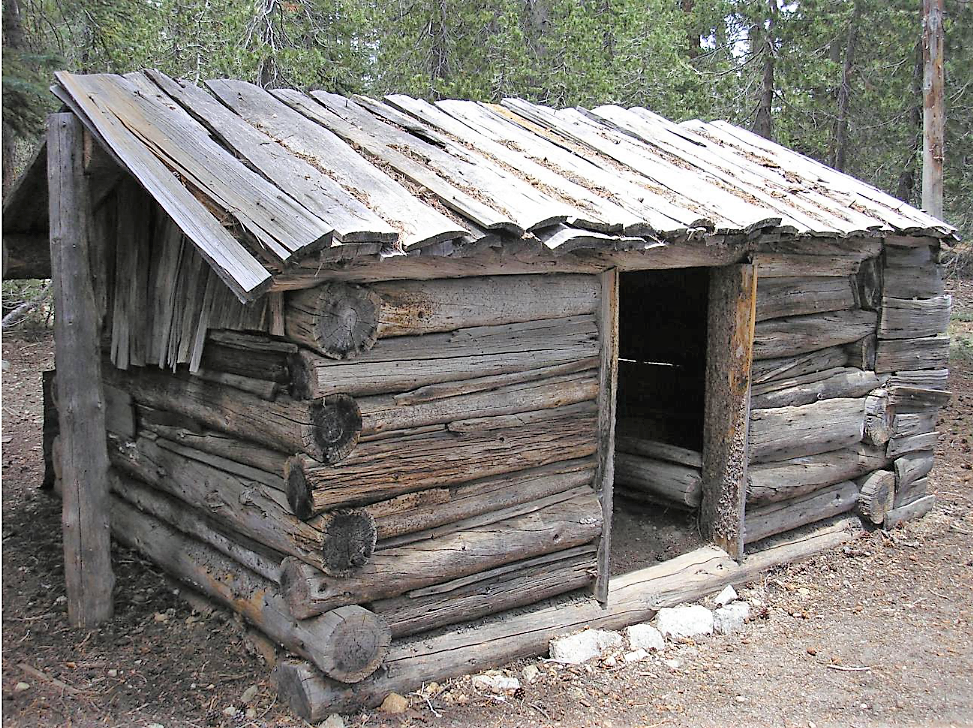
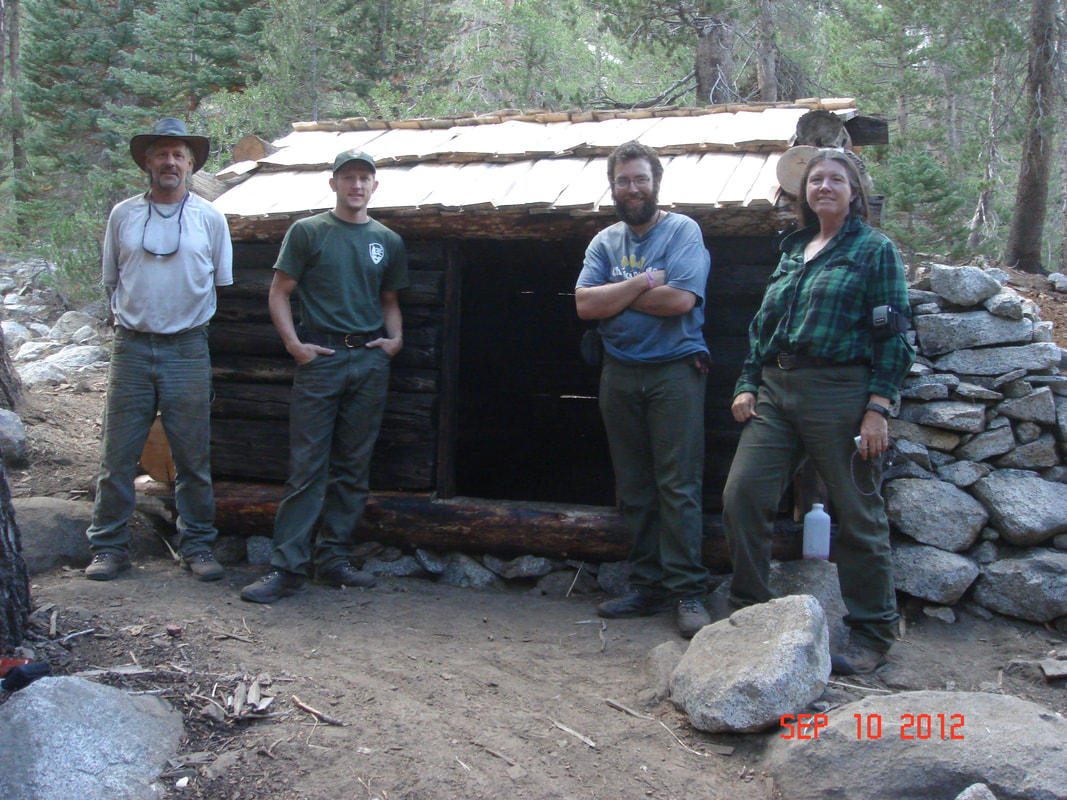
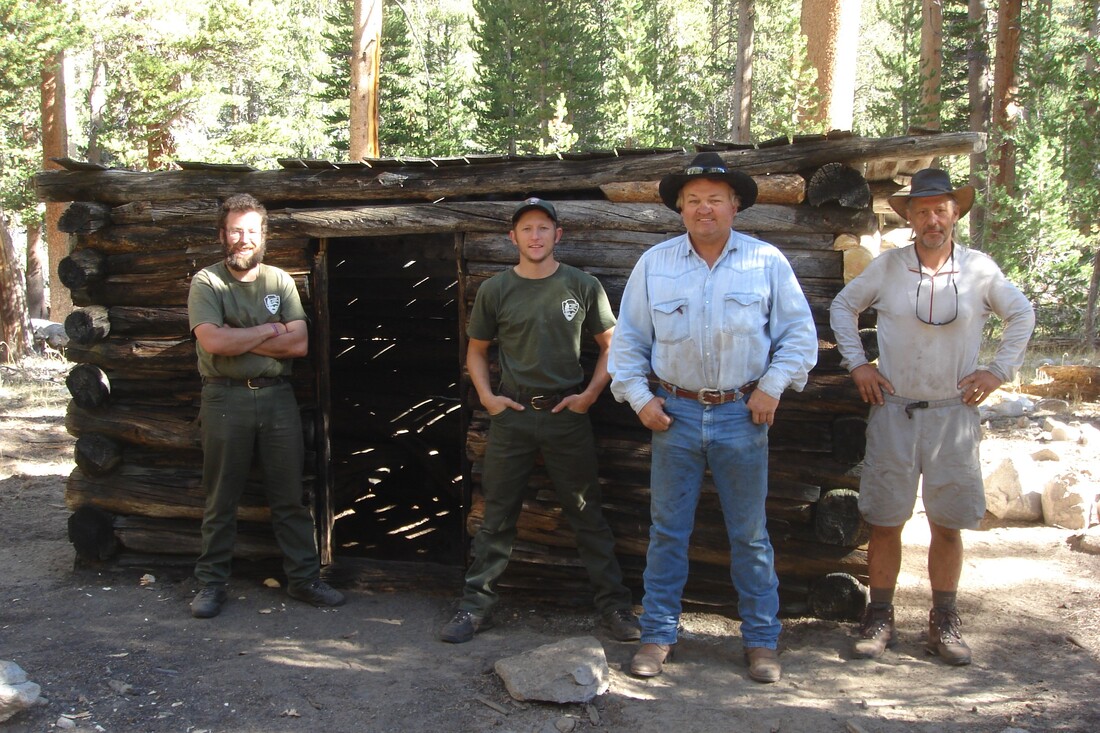
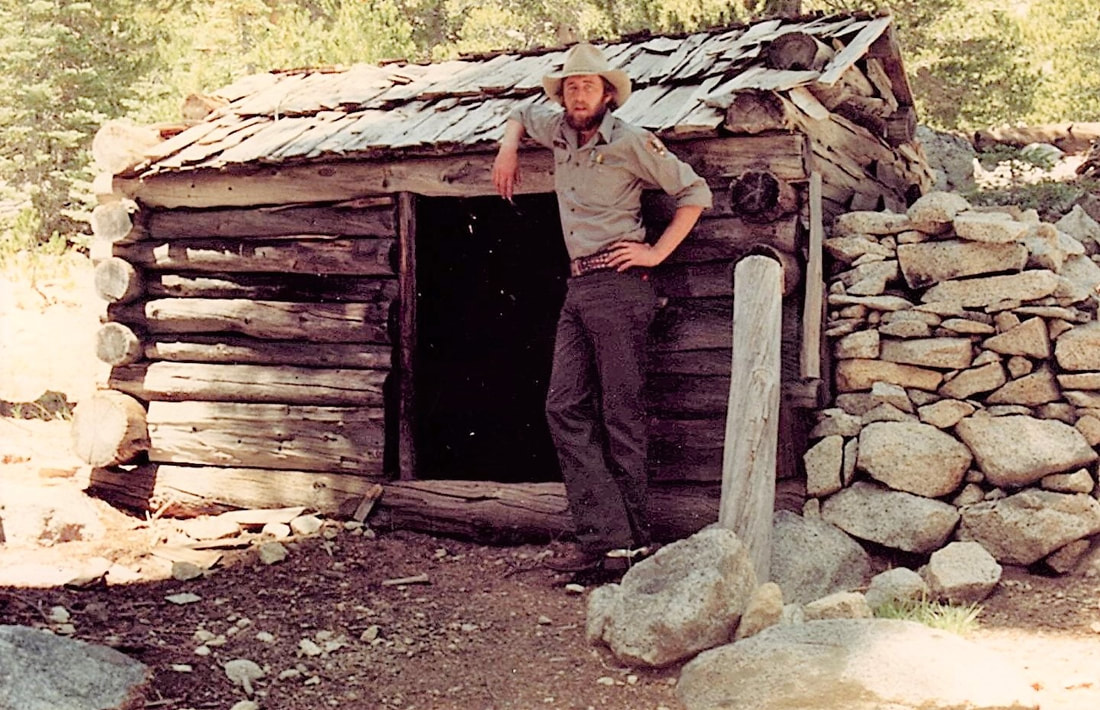
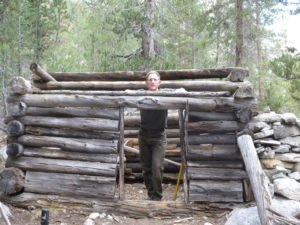
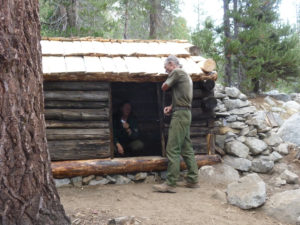
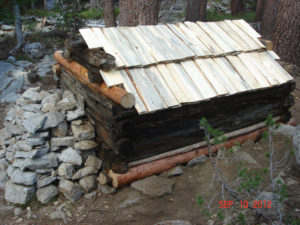
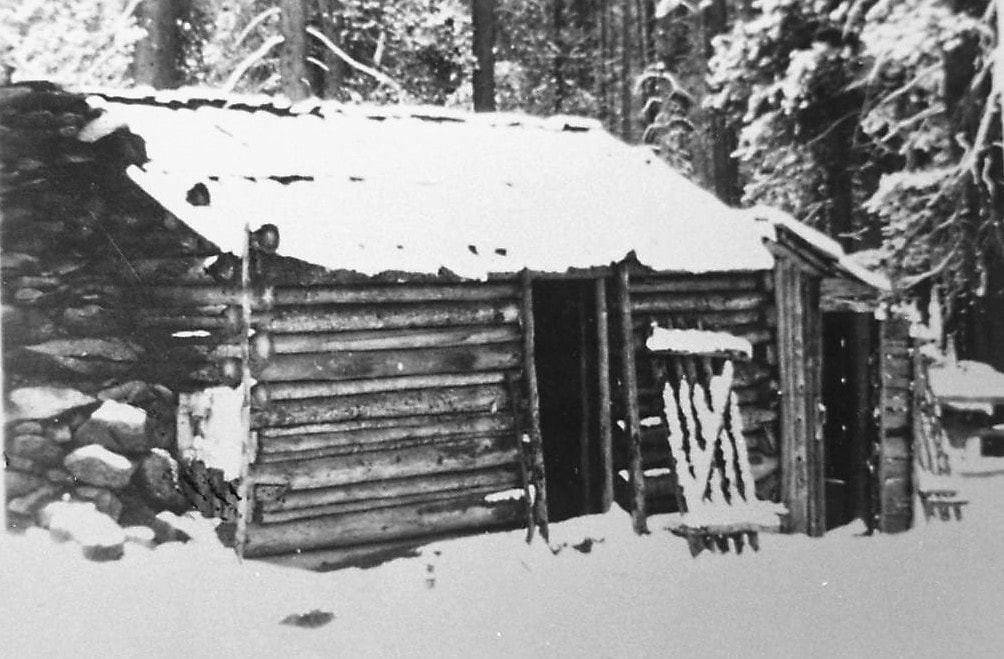
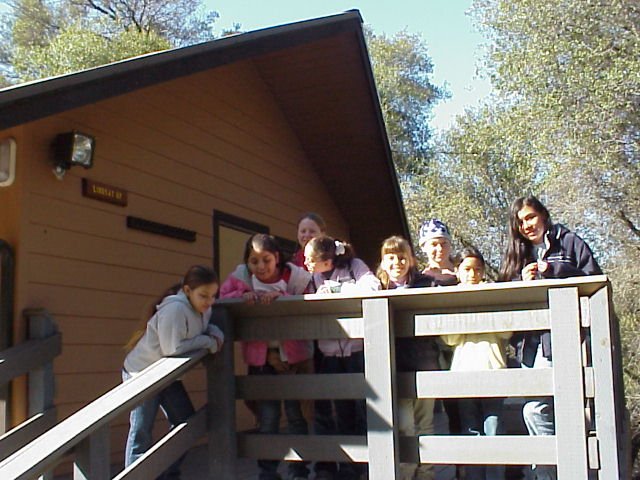
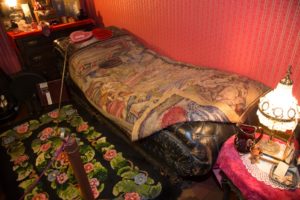
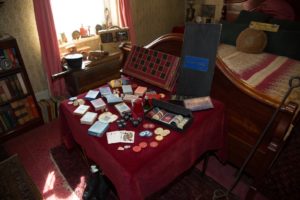
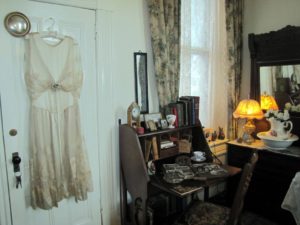
Redwood Meadow Ranger Station

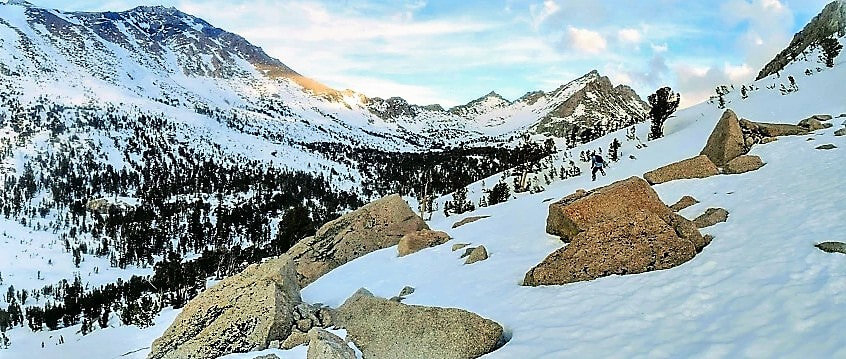
     This strenuous backcountry work is often carried out far from many comforts, conveniences, and sometimes even company. It can be dangerous, sometimes cut off from communications, and often far from help. Many of these Park employees are seasonals, whose paychecks start and end depending on when the snow melts enough to allow access to their work sites — and when autumn weather once again closes the trails. Yet many return year after year to the wilderness.

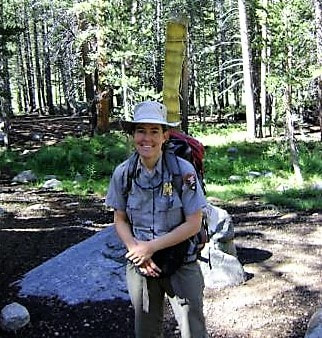
     Like all Park employees, backcountry Wilderness rangers are charged under the National Park Service’s mission to preserve unimpaired the natural and cultural resources set aside by the American people for future generations. Rangers also strive through their visitor contacts to promote appreciation and stewardship of these resources and compliance with the regulations designed to protect them.
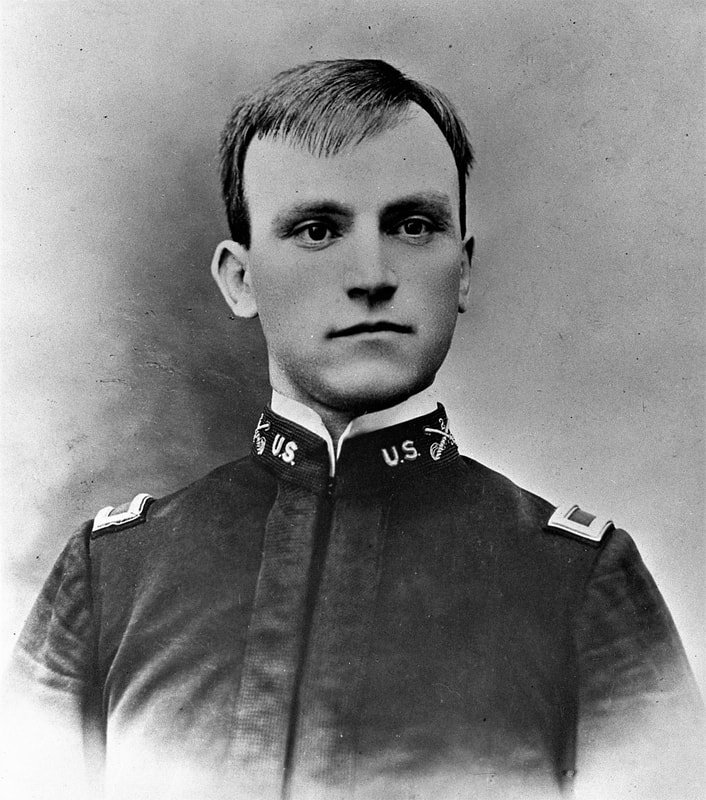
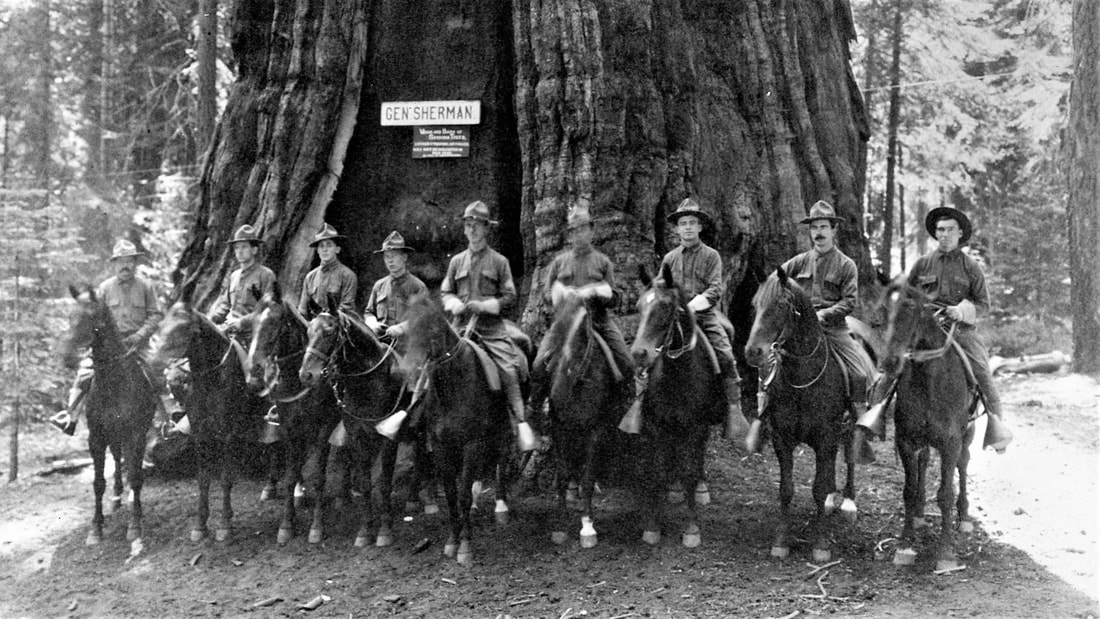
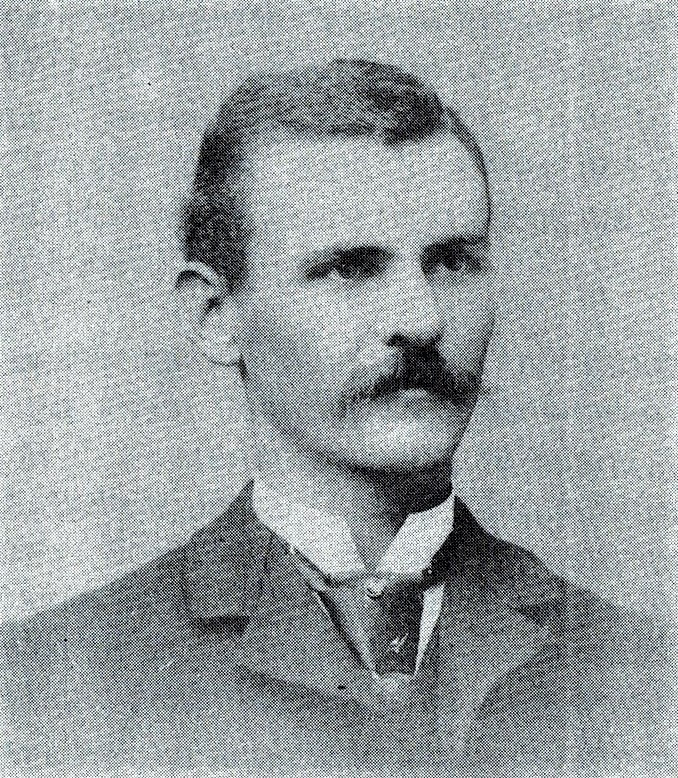
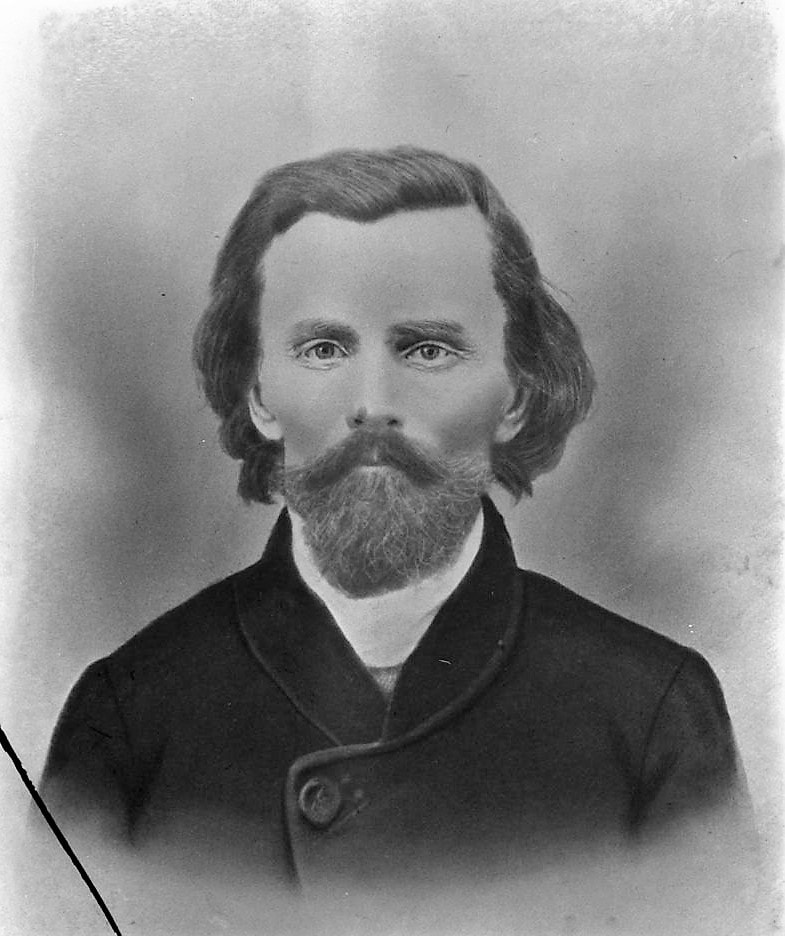
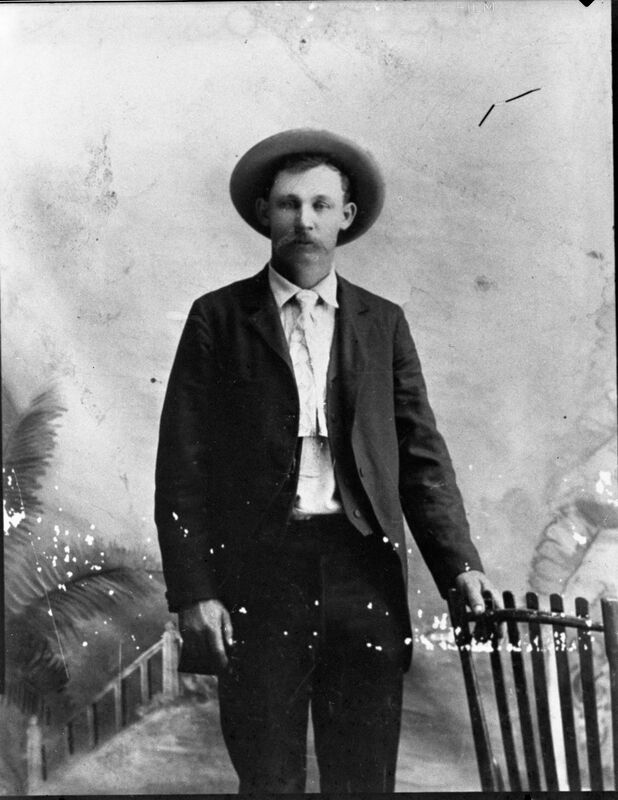
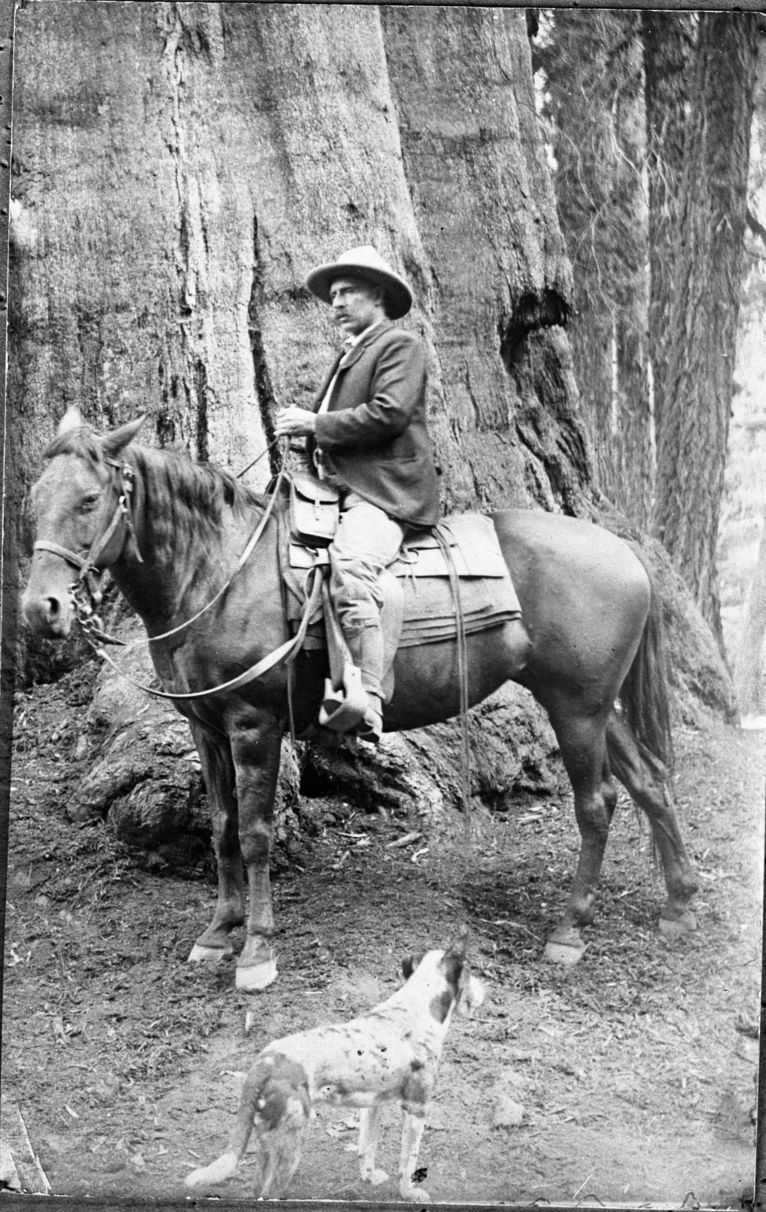
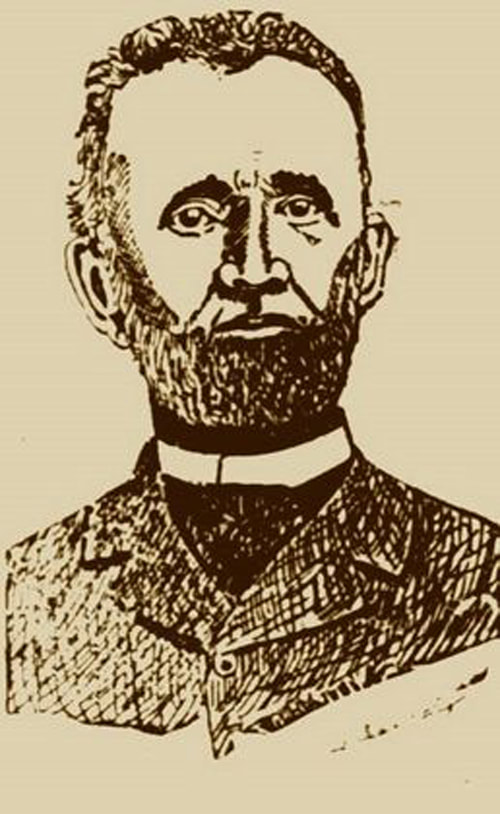
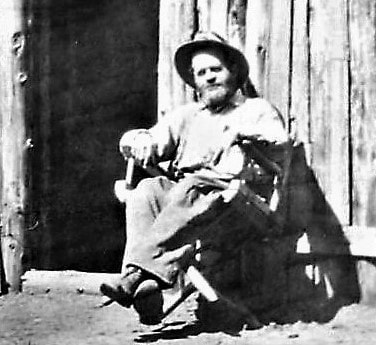
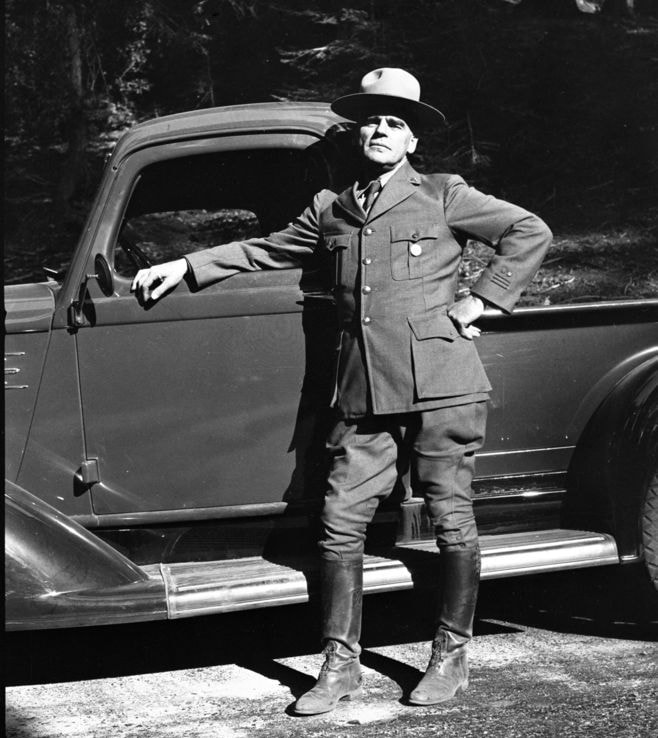
Captain Cornelius C. Smith, 14th Cavalry
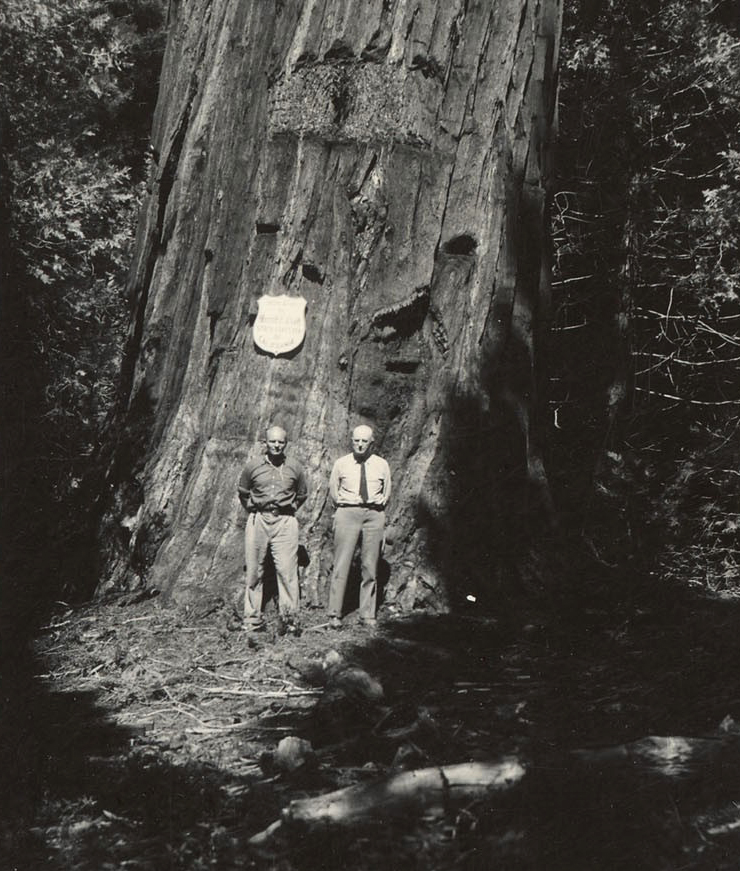
Soldiers of the 14th Cavalry at the General Sherman Tree

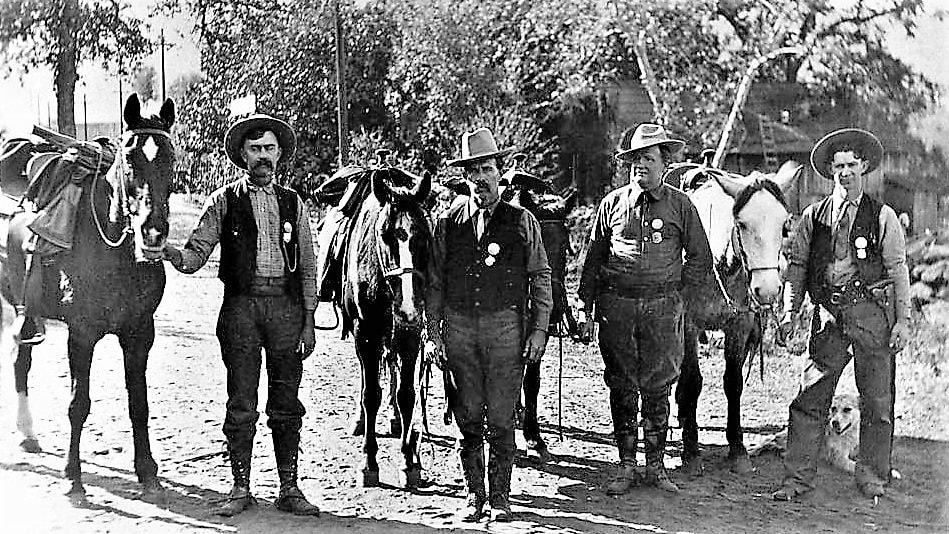
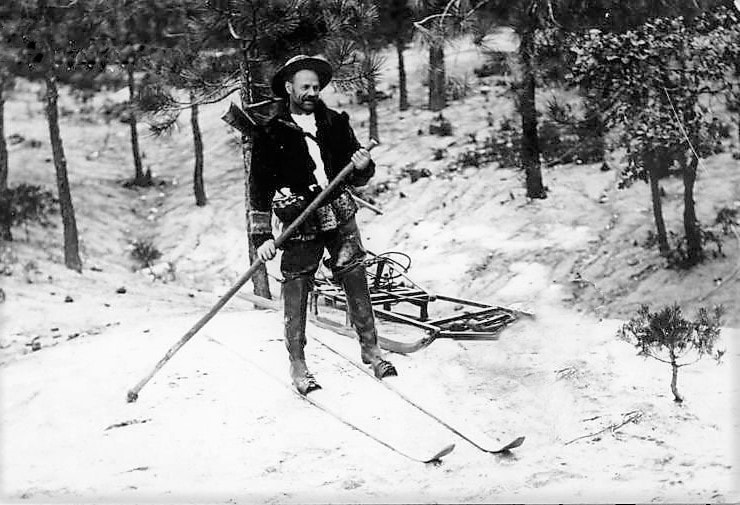
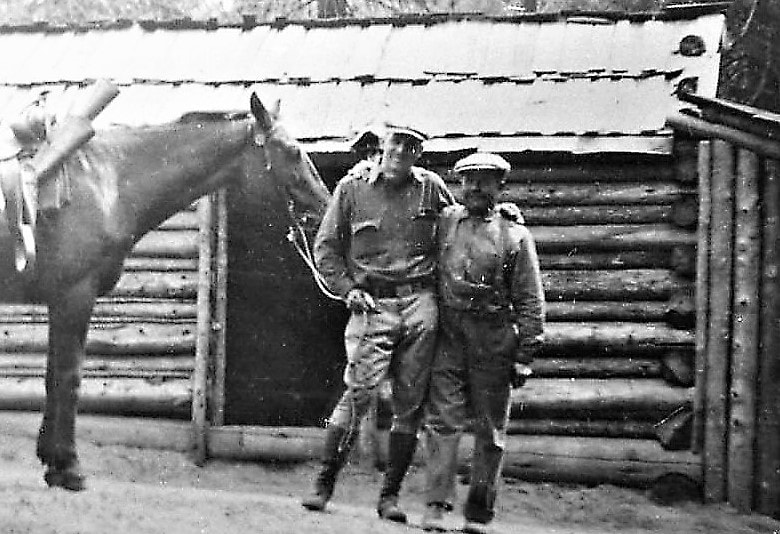
     In 1906, when the national parks were still administered by the U.S. Army, prior to the creation of the National Park Service, Captain C.C. Smith, 14th Cavalry, Acting Superintendent of Sequoia and General Grant National Parks, defined the ranger’s qualifications to be “somewhat as follows: He must be an experienced mountaineer and woodsman, familiar with camp life, a good horseman and packer, capable of dealing with all classes of people; should know the history of the parks and their topography, something of forestry, zoology, and ornithology, and be capable of handling laboring parties on road, trail, telephone, bridge, and building construction. These men, in the performance of their duties, travel on horseback from 3,000 to 6,000 miles a year, must face dangers, exposure, and the risk of being sworn into the penitentiary through the evil designs of others.” In addition to the troops, four civilians were working as rangers in Sequoia and General Grant National Parks at that time.

     Stephen T. Mather, first Director of the National Park Service (established in 1916), described the early NPS rangers this way: “They are a fine, earnest, intelligent, and public-spirited body of men . . . . Though small in number, their influence is large. Many and long are the duties heaped upon their shoulders. If a trail is to be blazed, it is ‘send a ranger.’ If an animal is floundering in the snow, a ranger is sent to pull him out; if a bear is in the hotel, if a fire threatens a forest, if someone is to be saved, it is ‘send a ranger.’ If a Dude wants to know the why, . . . it is ‘ask the ranger.’ Everything the ranger knows, he will tell you, except about himself.”
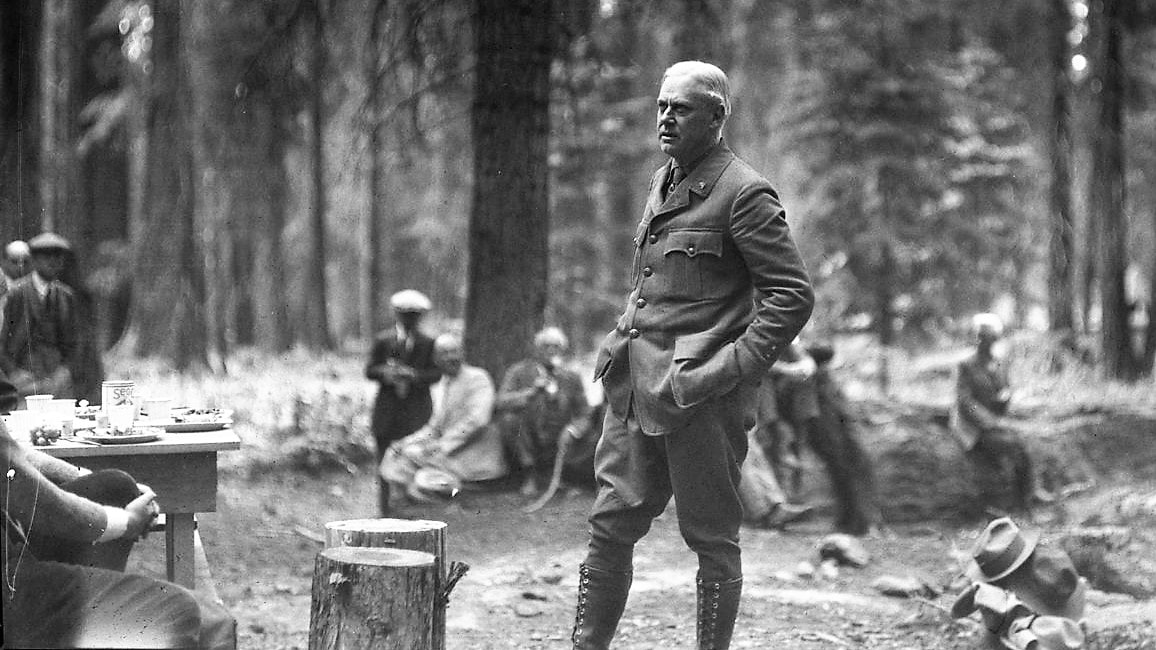
First NPS Director Stephen T. Mather, 1927

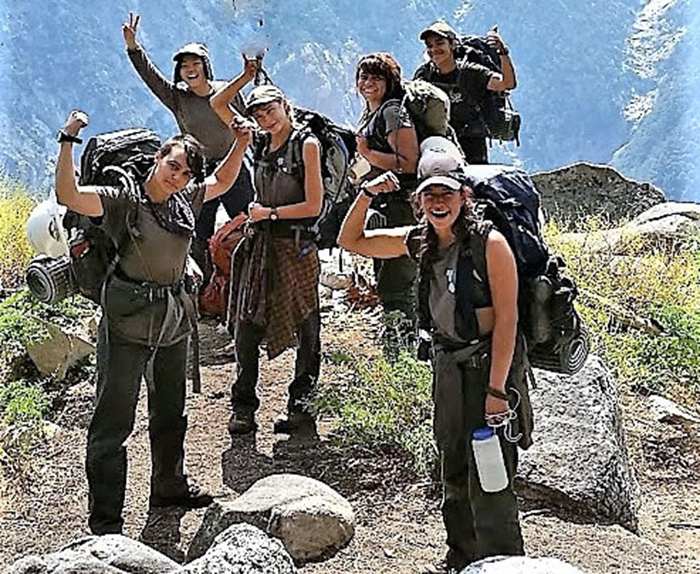
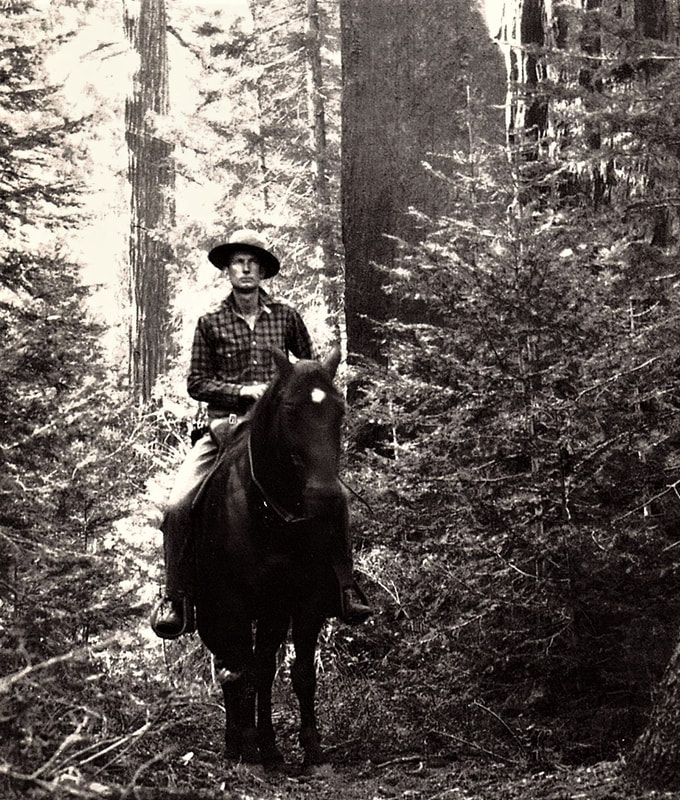
     Author Eric Blehm describes the diversity of Sequoia’s modern seasonal backcountry Wilderness rangers and their commitment and dedication to their work: “[They] held master’s degrees in forestry, geology, computer science, philosophy, or art history. They were teachers, photographers, writers, ski instructors, winter guides, documentary filmmakers, academics, pacifists, military veterans, and adventure seekers who . . .were drawn to wilderness. In the backcountry, they were on call 24 hours a day as medics, law-enforcement officers, search-and-rescue specialists, and wilderness hosts. They were interpreters who wore the hats of geologists, naturalists, botanists, wildlife observers, and historians. On good days they were ‘heroes’ called upon to find a lost backpacker, warm a hypothermic hiker, or chase away a bear. On bad days they picked up trash, extinguished illegal campfires, wrote citations, and were occasionally called [bad names] simply for doing their jobs. On the worst days, they recovered bodies.

     “Park Service administrators often referred to these rangers as ‘the backbone of the NPS.’ Still, they were hired and fired [laid off] every season. Their families had no medical benefits. No pension plans. They paid for their own law-enforcement training and emergency medical technician schooling. And . . . each one of them knew the deal when he or she took the job.”
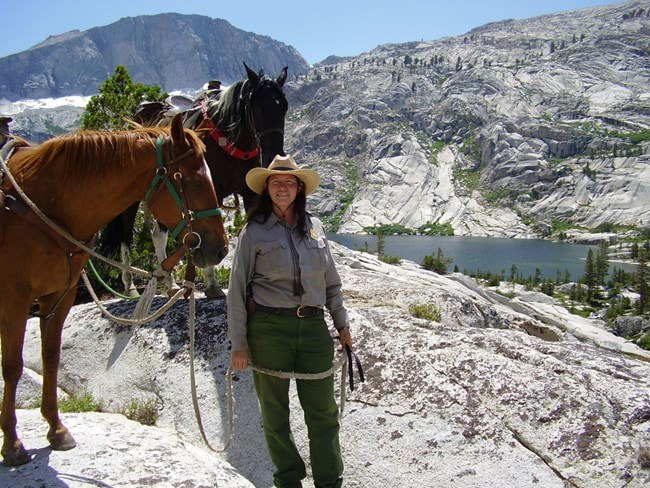
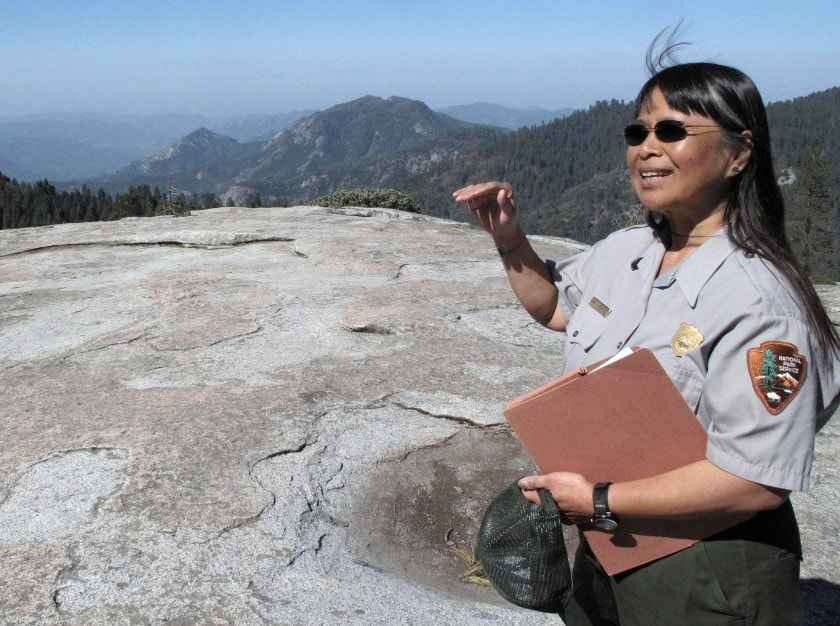
     In their end-of-season reports, the Wilderness rangers describe their patrols (miles on horseback, miles on foot, areas and sites patrolled), visitor services (contacts: backpackers, day hikers, park staff, private and Park stock users, and commercial stock users, both spot and full-service trips), law enforcement (contacts, warnings, education, citations). They report on search and rescue and medical incidents, opening and closing times and condition of the ranger station and grazing areas, signage issues, meadow health, and fencing. They discuss natural resources (wildlife, vegetation, water), cultural resources (historic and prehistoric sites, historic structures), and backcountry facilities (ranger stations, barns, outhouses, water and electrical and solar systems), sanitation (campsites, fire rings, pit toilets, “TP roses”), and food storage cables and bear boxes. Other areas covered include supply and equipment inventories and needs lists, aircraft observations, interface with area trail crews, and special projects and recommendations.

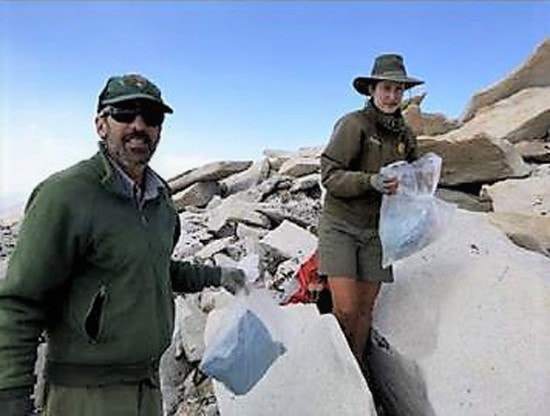
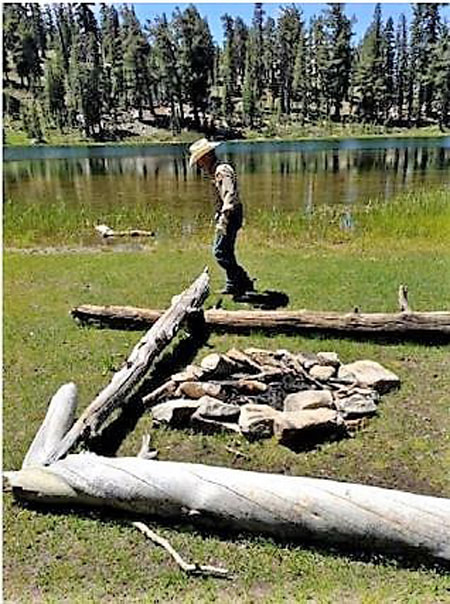
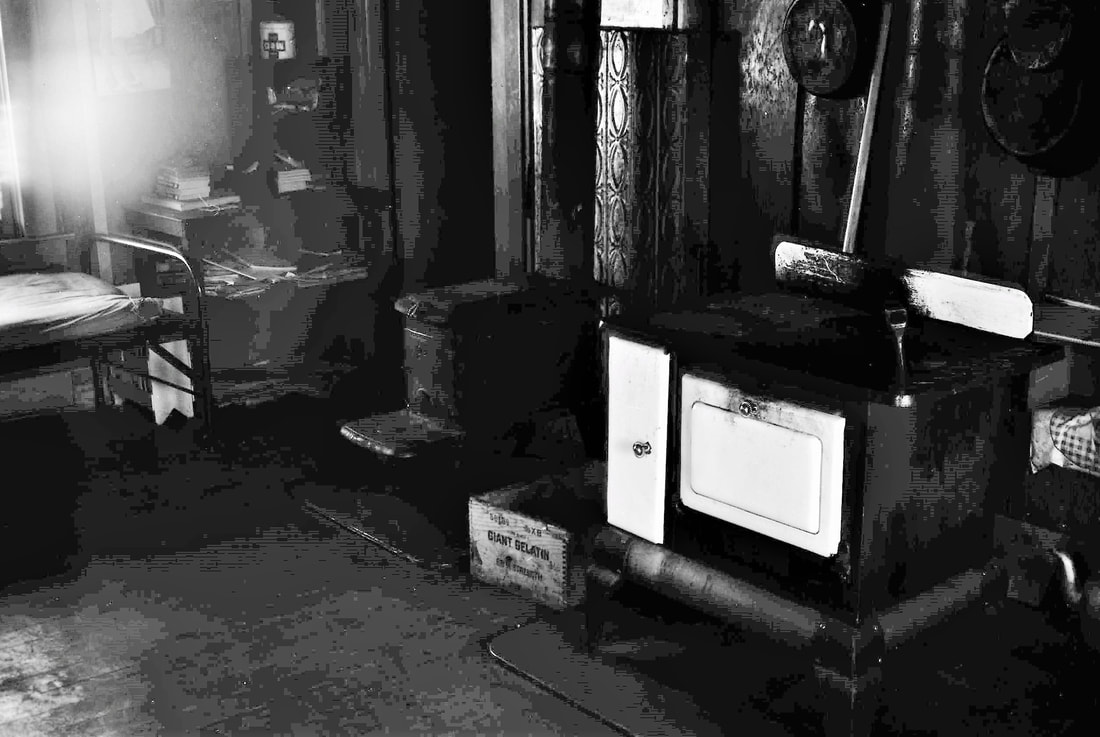
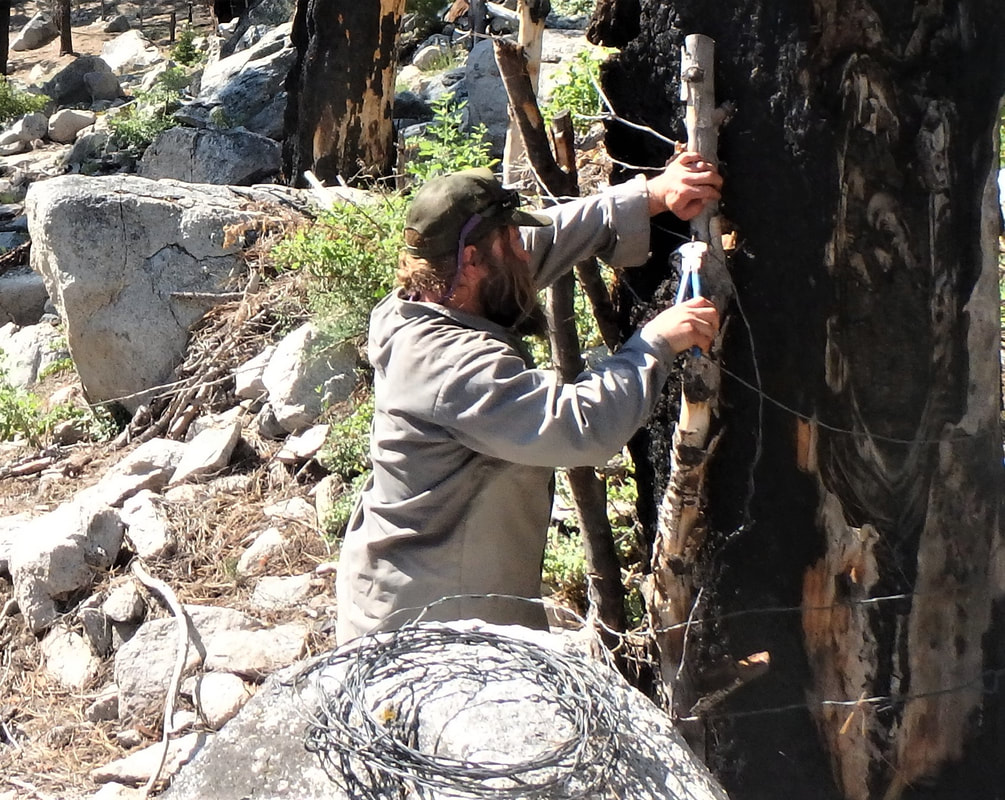
     Backcountry Wilderness rangers also do their own cooking, clean and maintain their cabins and barns, trap hordes of invading mice, cut firewood for their cabin stoves, build and repair fences, doctor and shoe horses and mules, help to clear and maintain trails, and assist park scientists with projects such as residual biomass monitoring on meadows. Rangers remove hundreds of pounds of trash from trails and campsites, break up illegal fire rings and restore abused camp areas, look for lost stock and missing hikers, conduct hunter patrols in the fall, and rarely work an eight-hour day, as they are on call as long as they are in the backcountry.
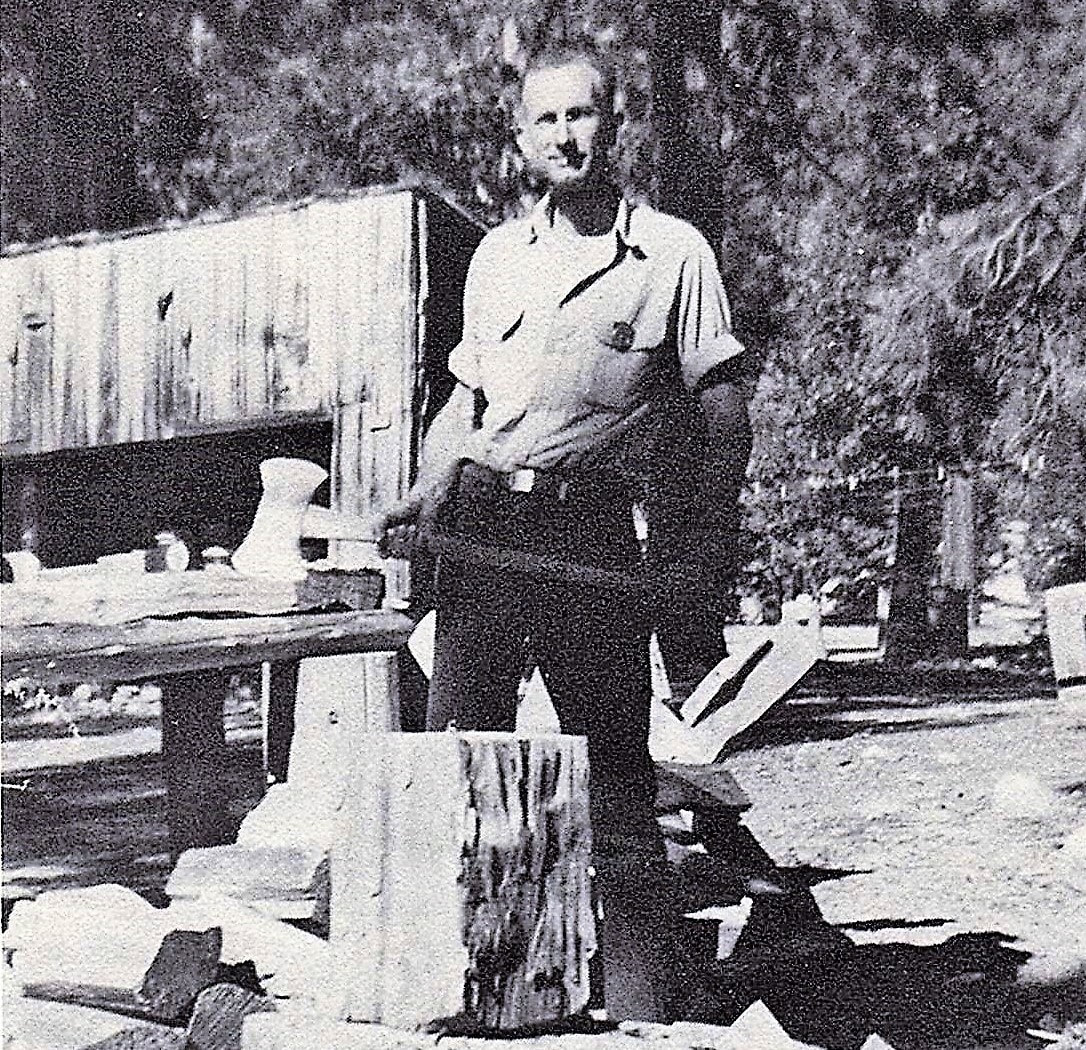
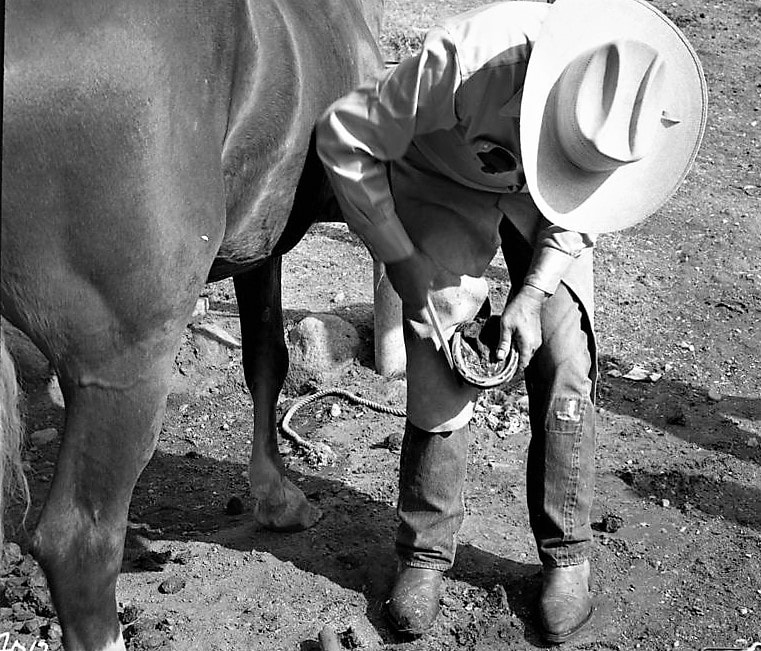
     Their work can be exhausting, and it goes on no matter what the weather. Bad weather or trail conditions are often when rangers’ aid is needed most, leading to some longer work days. And yet many of the parks’ Wilderness rangers return for duty repeatedly, as long as they can afford to. They love their jobs and the country they work in. There are hundreds of applicants for each opening every season.
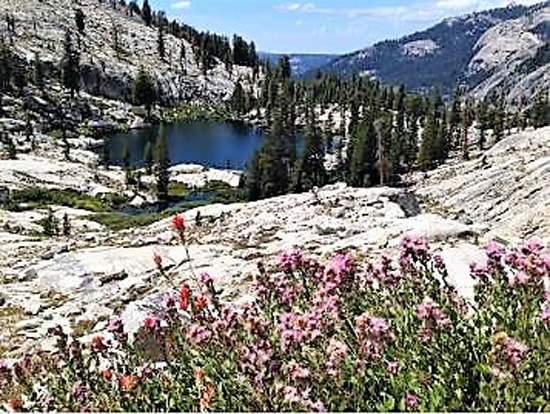

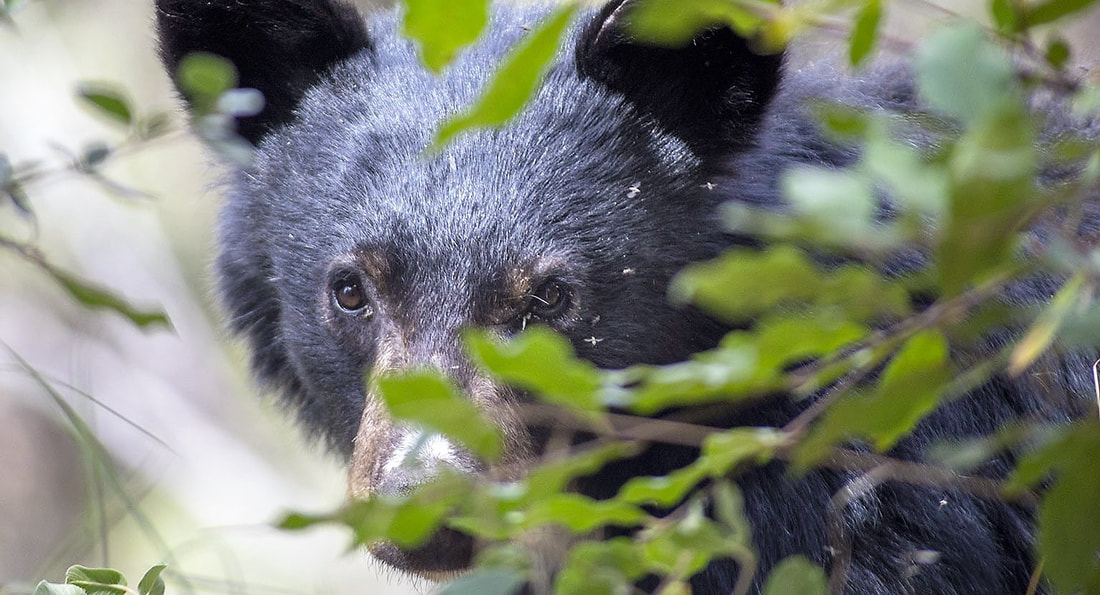
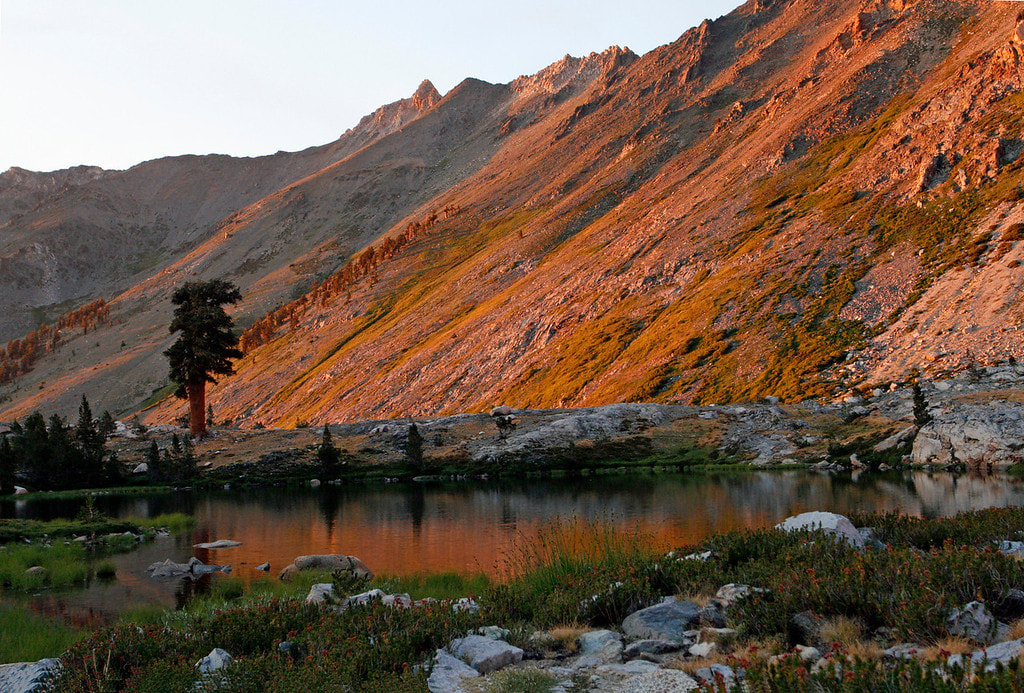
     Many cite the beauty of their surroundings, their wholehearted support of the Park Service mission, the pleasure of working with their dedicated colleagues. They care deeply about the health of the backcountry, its lakes and streams, grasses and trees, wildflowers, birds, insects, fish, and animals from little haystack-making pikas to big black bears. They appreciate the opportunity to meet and interact with park visitors, sharing their knowledge of and joy in the backcountry, and keeping the parks safe from the people and the people safe from the parks. And, as Ranger Randy Morgenson said, backcountry rangers get paid in sunsets.
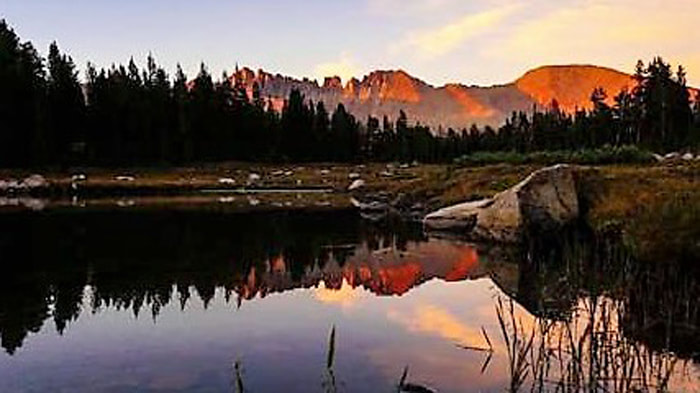
 “. . . July and August saw several days each of excellent afternoon thunderstorms complete with hail and strong winds. A family of six . . . were caught in one of the storms as they hiked back from Evelyn Lake to their camp at Hockett. At 6:30 pm the group had still not returned and I went out looking for them. I found the 8 year old and her 13 year old brother running down the trail about a half-mile from the station. . . . I sent these two who were soaked and shivering to the station where I had a fire going. . . . I continued up the trail and located the 10 year old and 16 year old . . . and a few minutes later I located [their parents].
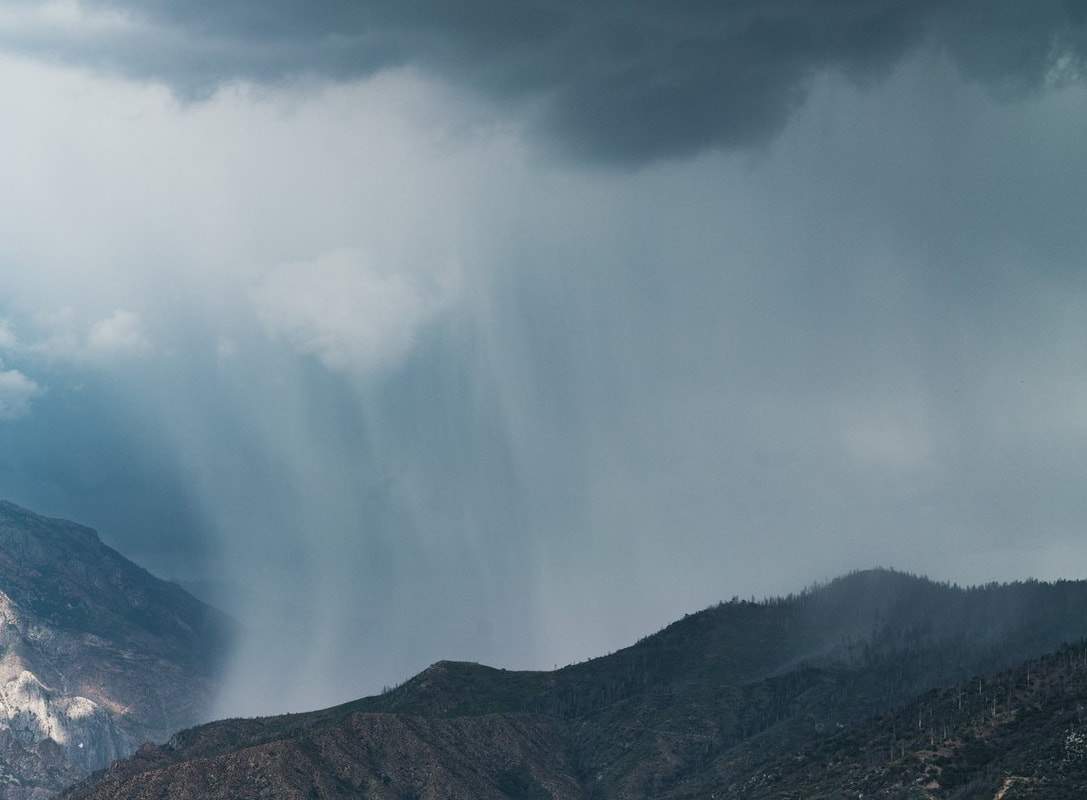
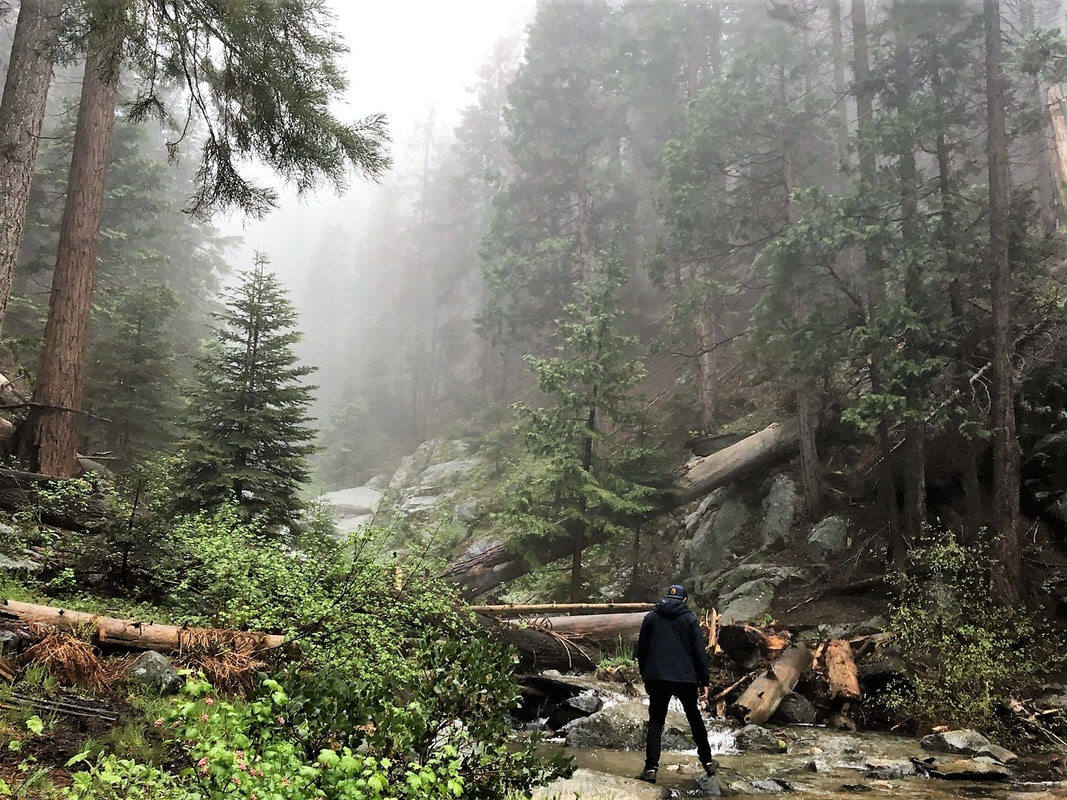
 “On the way back to the station I came upon two other backpackers, both soaked and cold. The cabin was crowded that evening with everyone crowded around the stove, drying wet clothing and attempting to keep warm. The trail crew served up some pasta and sauce for everyone and by 9 pm the rain had stopped. The family went to their respective tents and the two backpackers spent the night in the tack shed.” — Joe Ventura, Hockett Meadow Ranger, 2008

May, 2020

Quotes & More Photos:

In Their Own Words — Excerpts from Sequoia and Kings Canyon National Parks
Backcountry Wilderness Rangers’ reports and articles:


” The backcountry ranger job is a very coveted park position and the one in Sequoia has got to be one of the best in the nation. . . . To get the gig, you have to . . . [g]o to USAJobs.com, fill out the resume . . . . score very well on the questionnaire . . . . [Y]ou have to have past experience . . . living in the wilderness . . . not to mention a lot of past time in the High Sierra or a comparable environment. You have to be an EMT, you have to qualify for the GS-5 using education or past government employment . . . . It’s actually a very difficult job to get.” — Chris Kalman, 2015
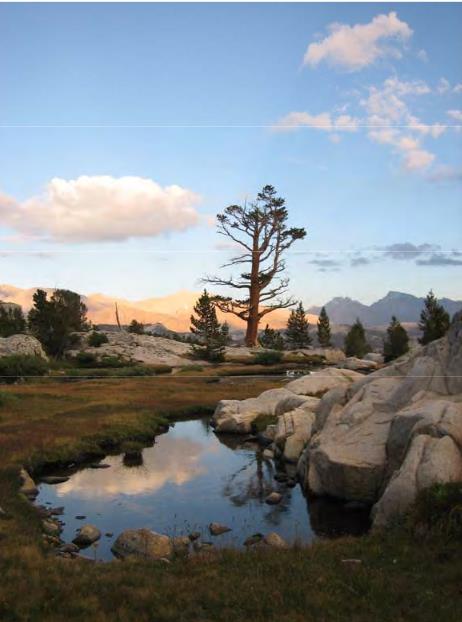
“[W]e are all visitors here in the parks . . . because we love their astounding beauty. Every time I met someone on the trail, I tried to engage them in conversation that would help them reach, recall, or revel in that conclusion on their own. . . . ” — Chris Kalman, 2015
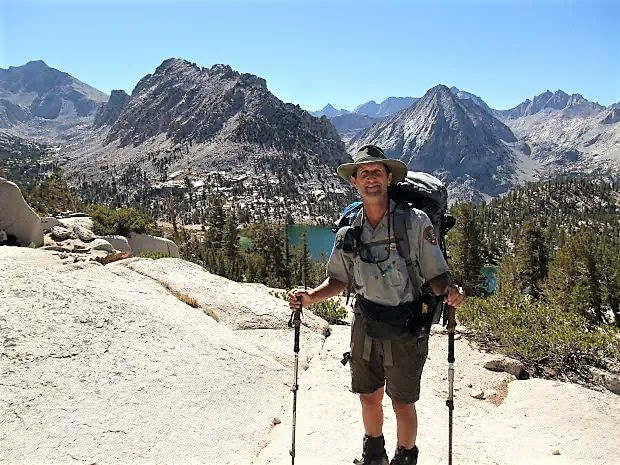
“I felt connected to people from around the world. I eased visitors into the spirit of the place, offered route suggestions, passed on weather forecasts, repaired boots, supplied a little extra food, or just lent a compassionate ear. Under the open sky, people’s hearts come out to play.” — Rick Sanger, 2019
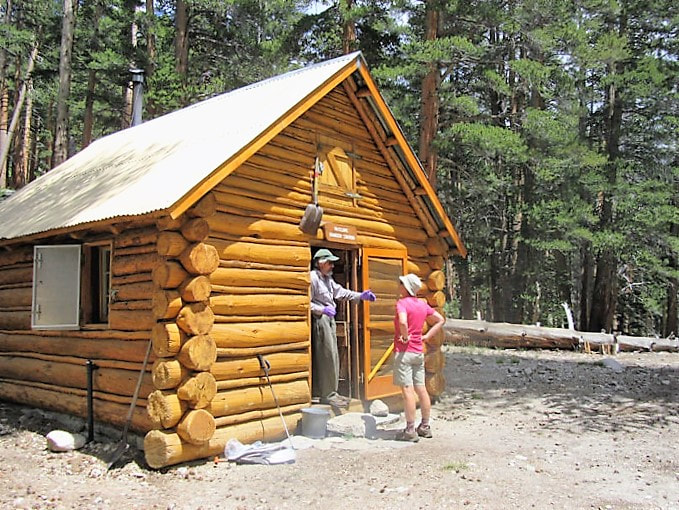
“Most visitors either want a weather forecast or just to visit the ranger and see the ranger station, and of course take a picture of the station and/or ranger.” — Dario Malengo, McClure Meadow Ranger, 2014
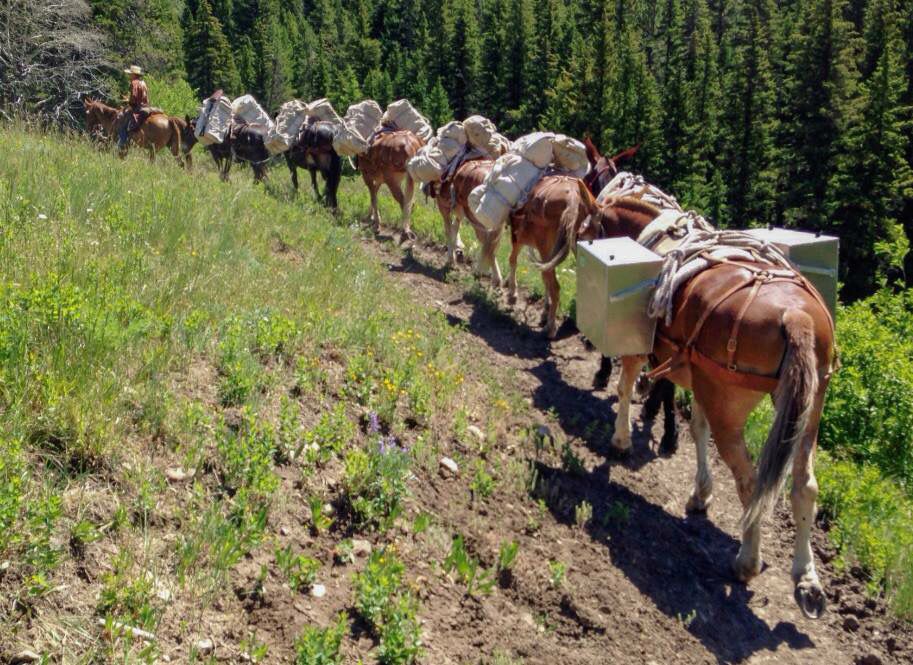
“We met with the Little Five ranger and collected nearly 800 pounds of his food and gear, and the next day Don and I saddled up 6 mules and our horses, and headed for Little Five via Pinto Lake.
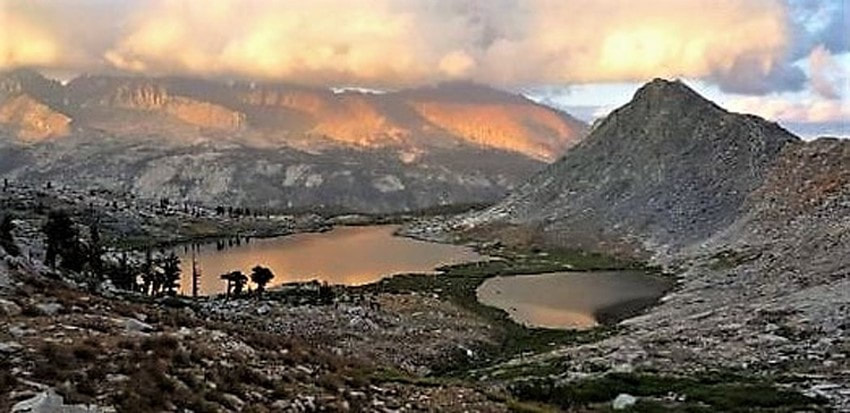
“Chris did not tell us that there were 6 dozen fresh eggs in the loads. We packed it all up at Mineral King, rode to Pinto, unpacked for the night, repacked in the morning, rode over Blackrock Pass arriving at Little Five, without breaking a single egg.” — Joe Ventura, Hockett Meadow Ranger, 2015
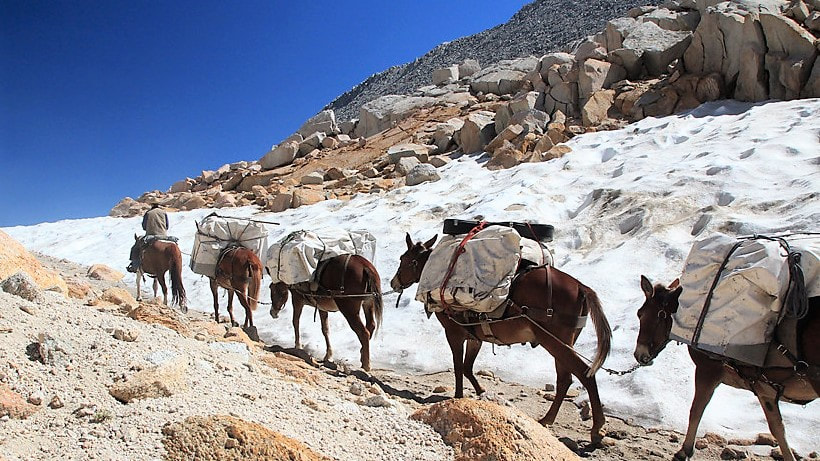
“Training Curriculum for Level III certification requires the rider to overnight in the wilderness, and catch, pack, and lead a string of up to 4 pack animals . . . . Mineral King Trailhead Ranger Cody Cavill traveled to [Hockett] with me and led a string of pack animals. . . .
“Cody assisted in the search and capture of overdue stock, led three head cross-country from Wet Meadow to Quinn Patrol Cabin. He set up an electric fence there, took the stock to water and put three head in the fenced area and turned out the others.
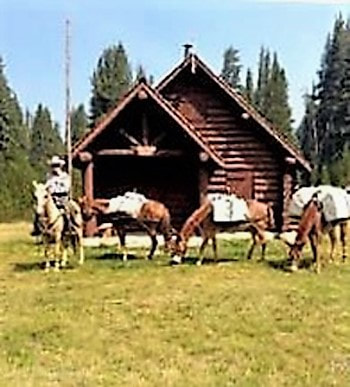
“He caught the stock the next morning, saddled and packed and led the string back to Hockett. His training covered approximately 63 miles of riding and he is certified as a Level III rider.” — Joe Ventura, Hockett Meadow Ranger, 2015
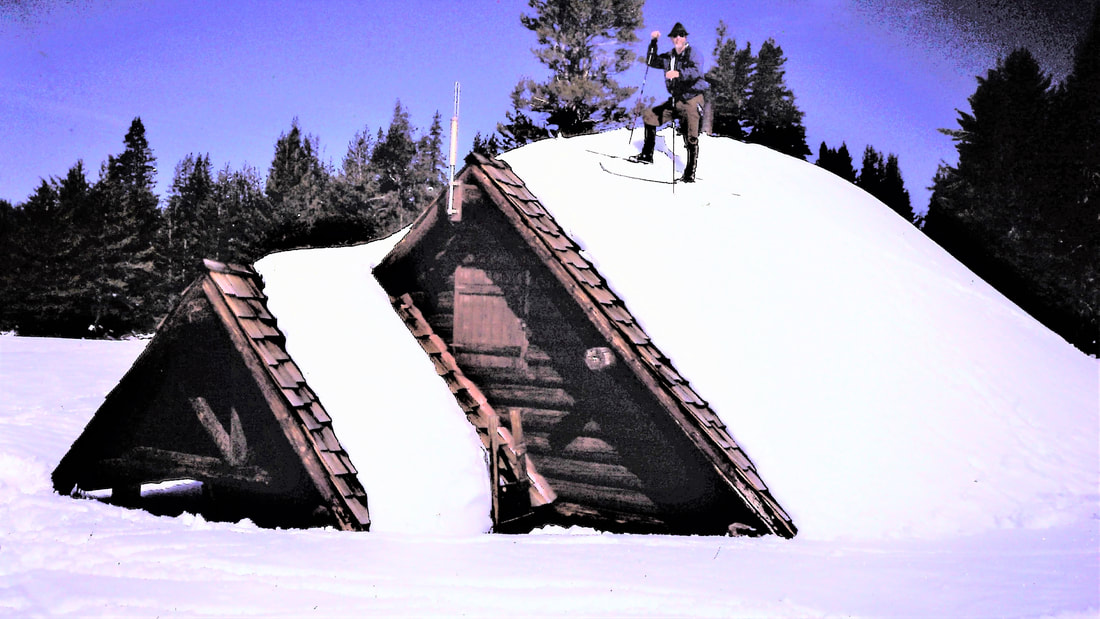
“Due to heavy spring snow, I was flown into the Hockett Ranger Station on June 19th. . . . There was three to four feet of snow on the meadow and six to eight feet of snow covering the trails on the plateau with drifts to twelve feet.” — Cindy J. Wood, Hockett Meadow Ranger, 1995
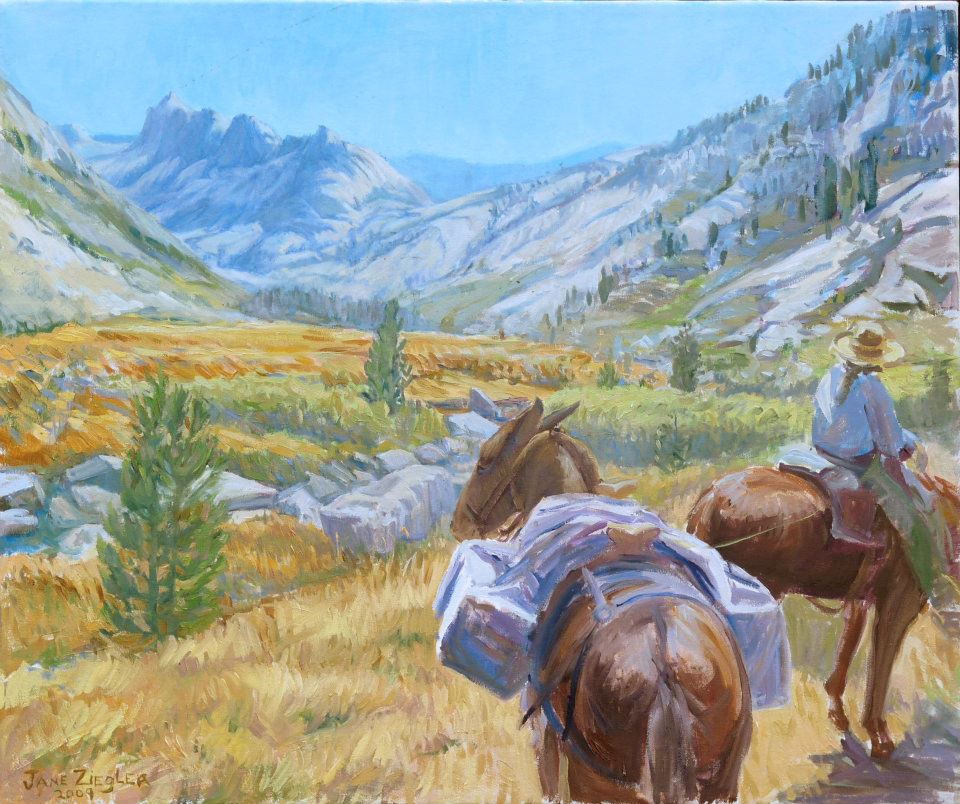
“I brought my three head of stock into the backcountry on August 4th when the Atwell-Hockett trail was opened to stock. During the season, I patrolled 913 miles of trail. (527 miles patrolled on stock and 386 miles on foot.)  I contacted 892 visitors this season. (5 day hikers, 517 backpackers, 6 hunters and 364 stock users with 550 head of stock.)” — Cindy J. Wood, Hockett Meadow Ranger, 1995
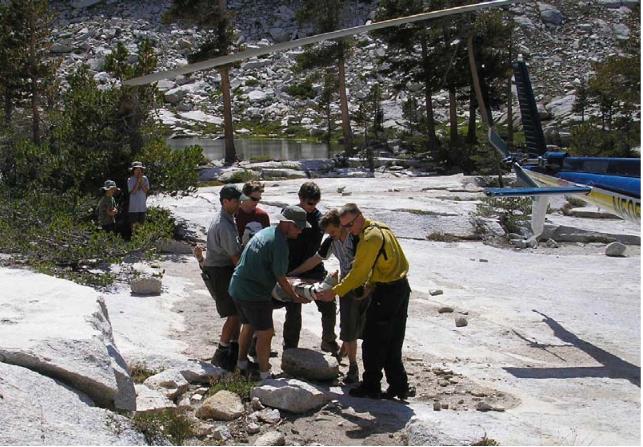
” On July 23 two pack mules and an 80 year old male on horseback went off the trail at Cabin Creek, about 1 mile from Atwell Mill. . . . The injured party was carried out by litter to Atwell Mill . . . and flown by Life Flight to UMC. By 10:30 pm I had the equipment, mules, and fellow companion of the injured party out to Atwell.” — Joe Ventura, Hockett Meadow Ranger, 2006
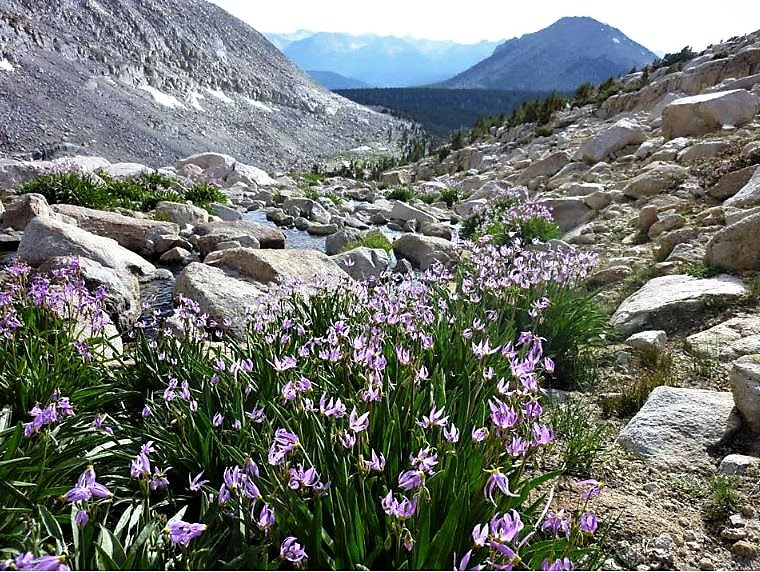
“It was a life steeped in beauty. . . . I woke with the chickaree’s chatter and eased into each morning with anticipation for the day’s adventure, whether a mellow exploration or a grand challenge. The summer’s passing was ticked off by the early season song of the hermit thrush, the bloom and fade of Jeffrey shooting stars, the height of the corn lilies, the late season calming of the stream’s frenzy.” — Rick Sanger, 2019
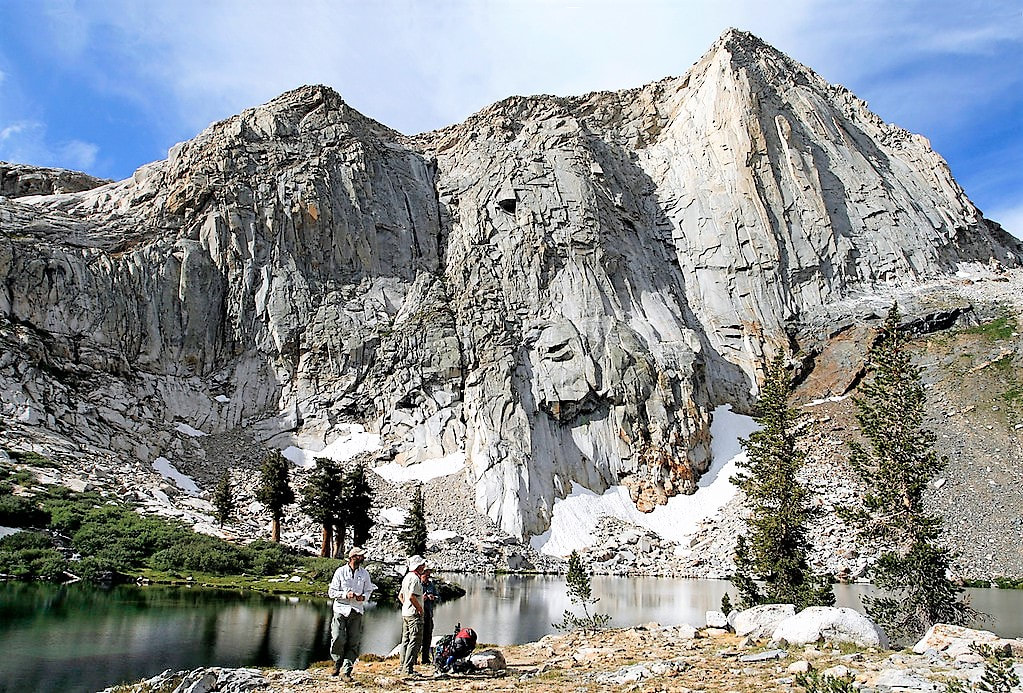
“The National Park Service preserves unimpaired the natural and cultural resources and values of the national park system for the enjoyment, education, and inspiration of this and future generations.’ I stand by that, and I believe it is one of the most important things the United States of America does as a nation.” — Chris Kalman, 2015
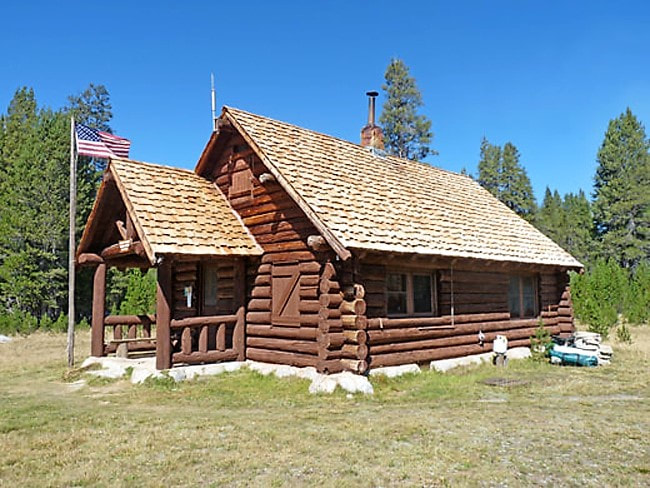
“There was never a U.S Flag in the cabin. I always brought in a new one each season . . . . The cabin just looked more handsome with the flag flying.” — Joe Ventura, Hockett Meadow Ranger, 2008
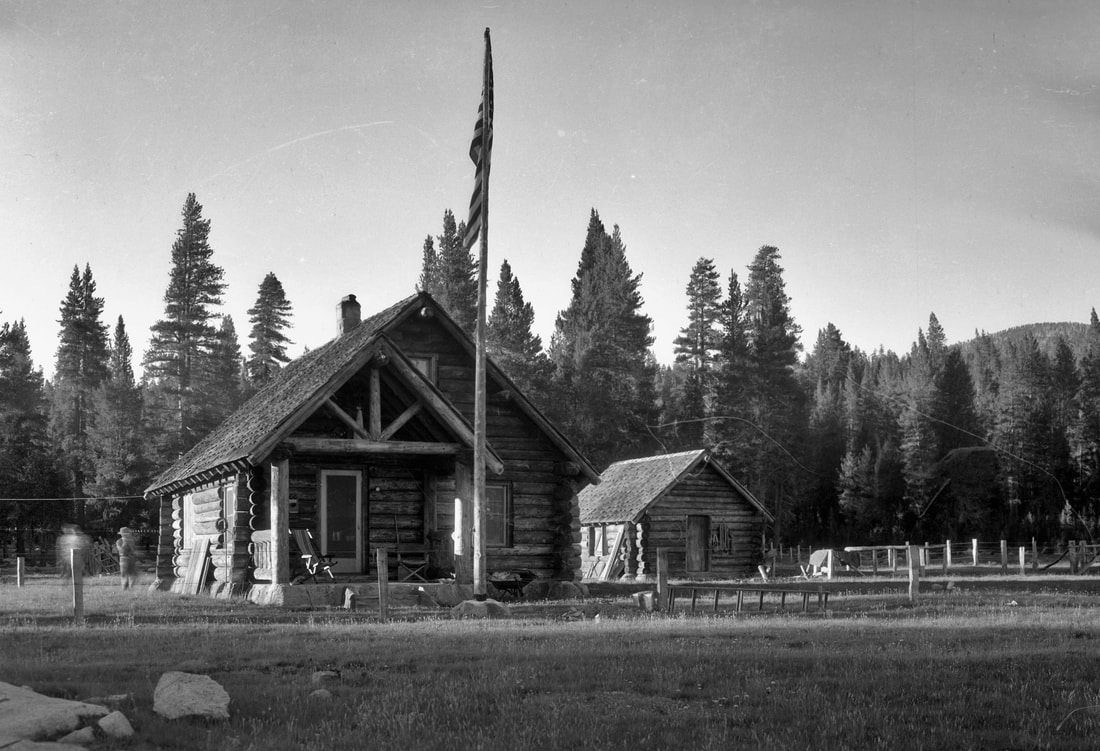
“I have told many of you of the times when sitting on the porch of the Hockett in the evening, . . . someone hikes in from the trees, views the meadow and the cabin, looks at me and says, ‘Wow, how does a person get a job like this?’
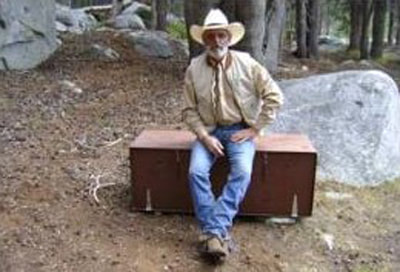
“So thanks to all of you for allowing me to enjoy the experience ‘of a job like this.’ It has been a genuine pleasure working for and with all of you.” — Joe Ventura, Hockett Meadow Ranger                                                                        

 

[

Click on photos for more information.

Sequoia and Kings Canyon National Parks Trail Crews  –  the People Whose Work We Walk on

by Laurie Schwaller

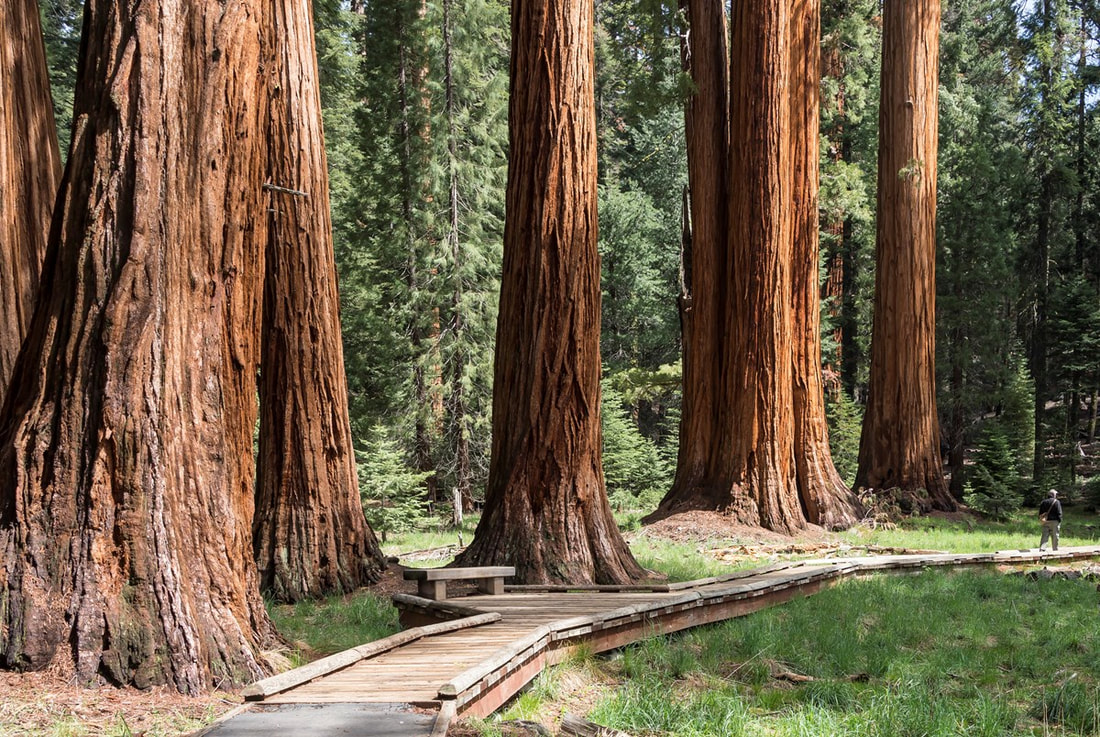
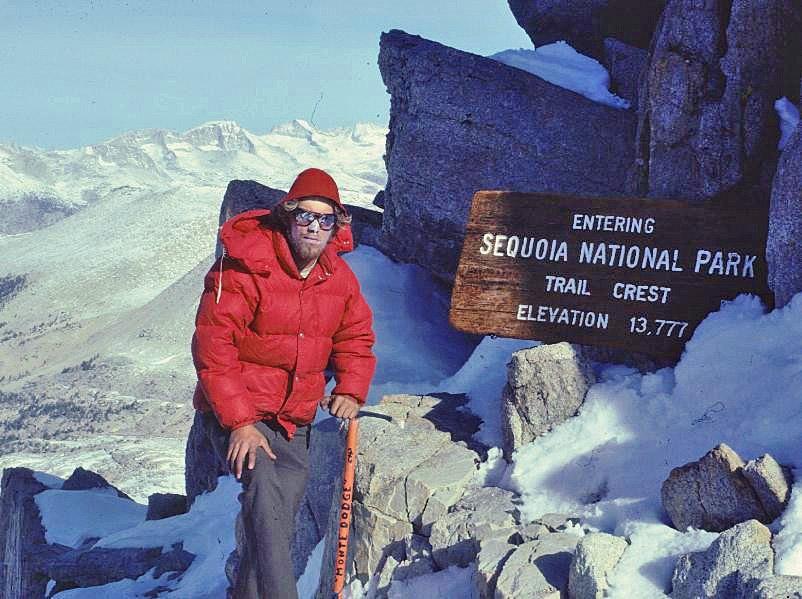
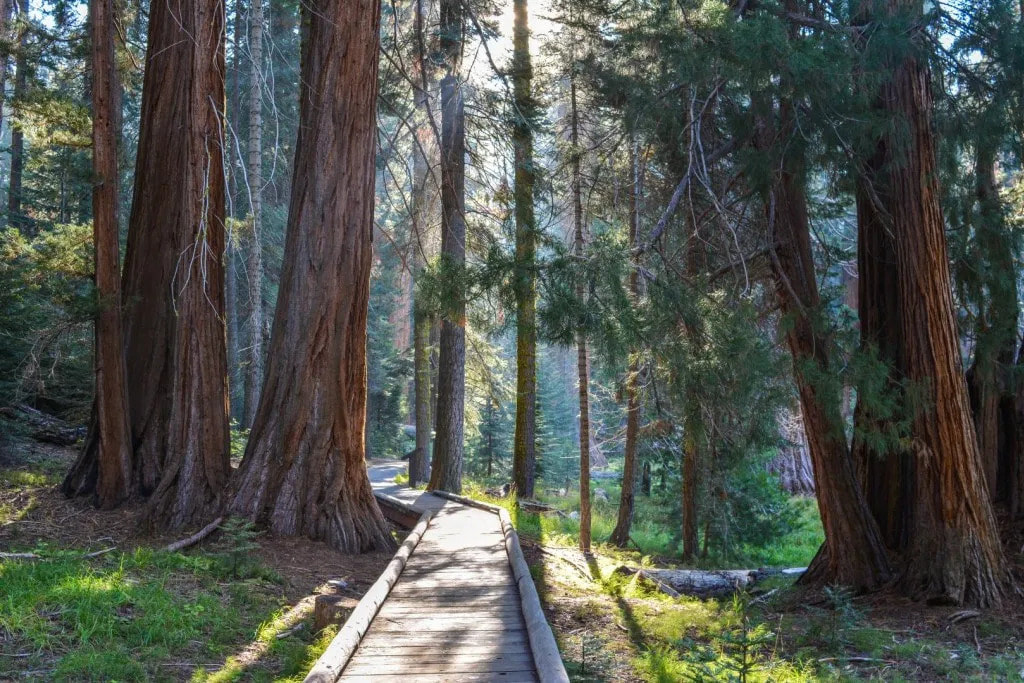
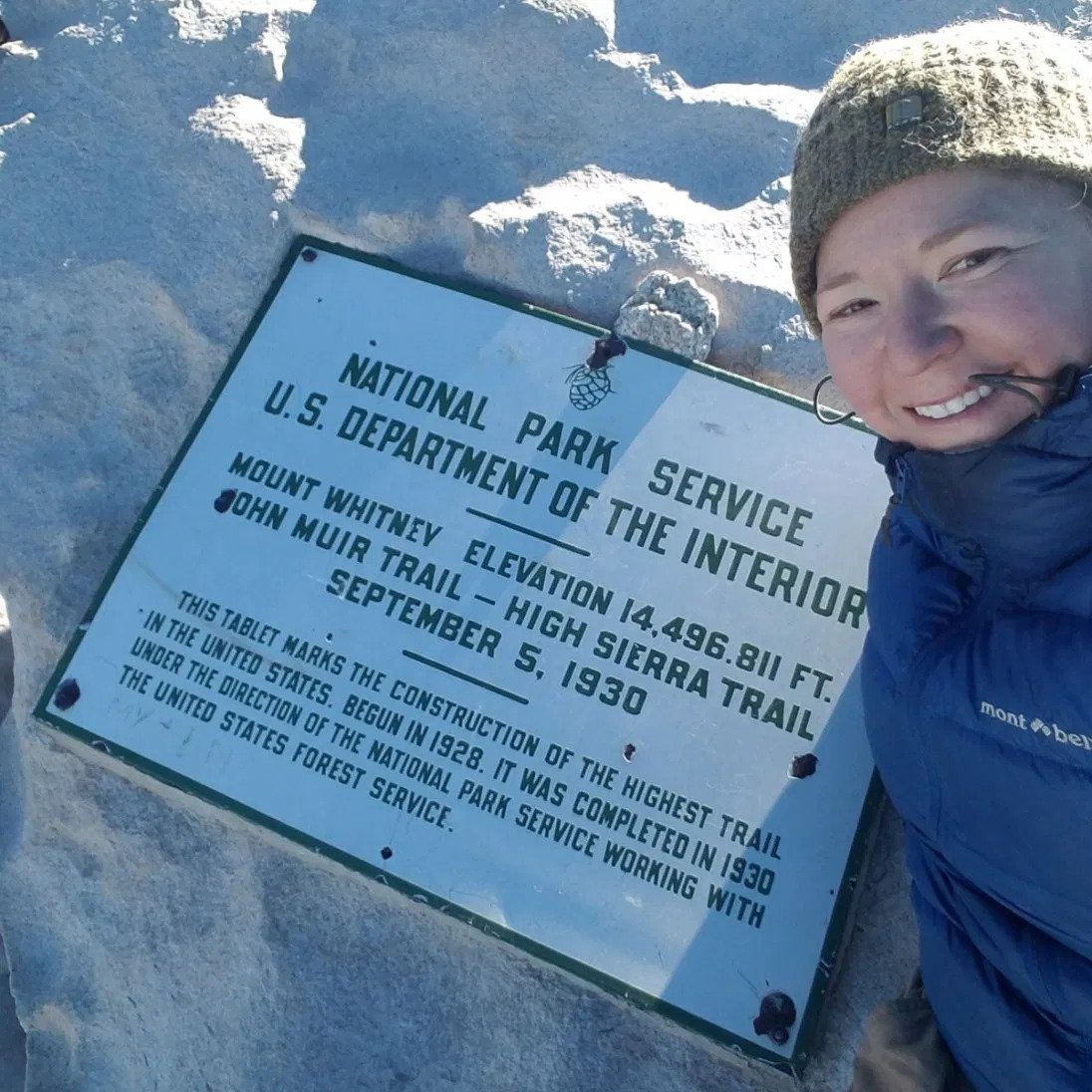
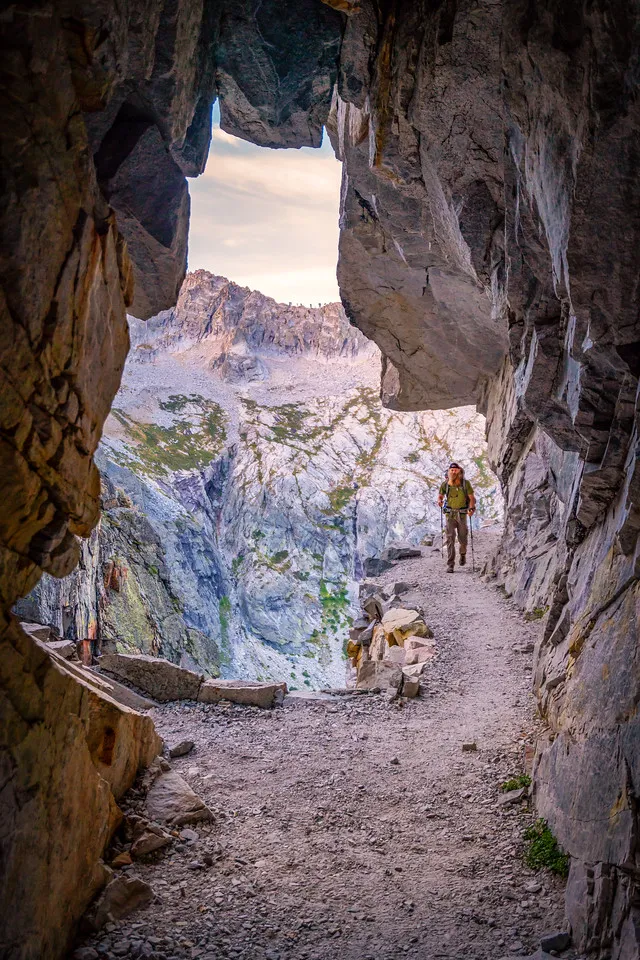
     Over a million people a year walk, hike, or ride horseback on the amazingly diverse trails of Sequoia and Kings Canyon National Parks. From a short, easy stroll into a magnificent giant sequoia grove to a strenuous backpacking trip to the summit of rugged Mt. Whitney, the highest peak in the 48 contiguous states, these paths offer people of all ages, inclinations, and abilities a multitude of opportunities to experience the parks’ wonders in the very best way: at a walking pace, free to pause whenever they please, immersed in the sights, scents, sounds, and thrills of the wild world.

     Ranging in elevation from less than 2,000 feet up to 14,500 feet, the trails traverse over a thousand miles to connect the major features and extraordinary environments of these spectacular parks. Who builds these beckoning byways, and who maintains them in the face of floods, fires, avalanches, rock slides, falling trees, deep snows, and thoughtless trail-cutters?

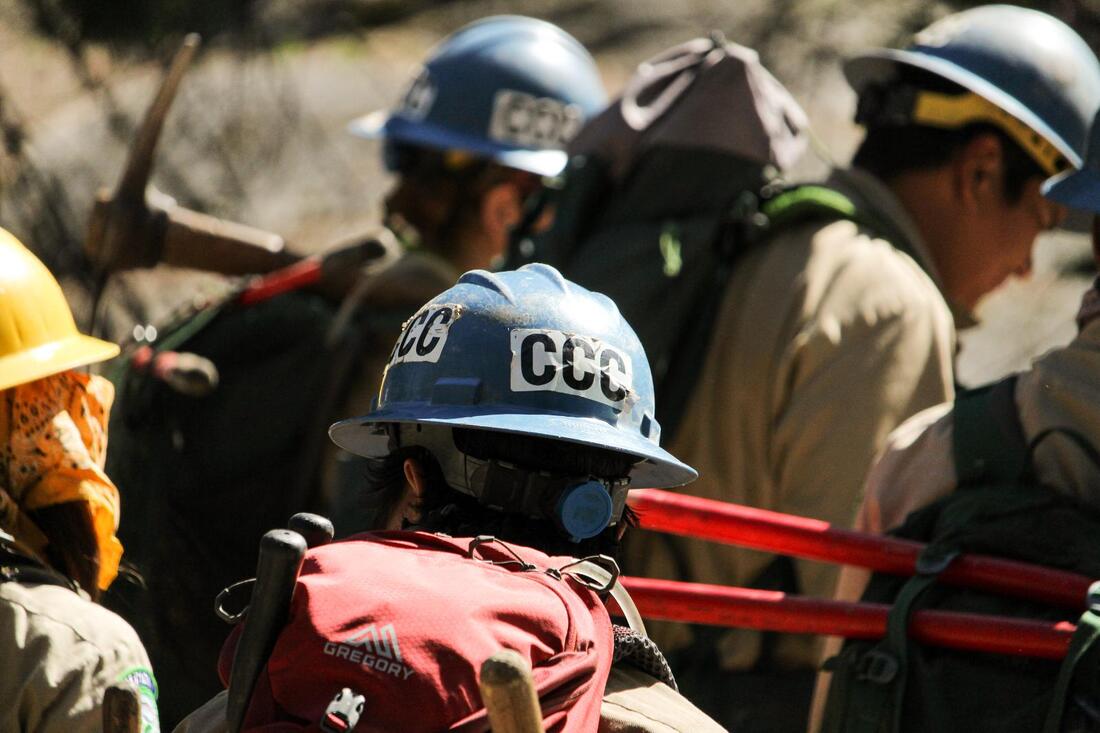
     Since the National Park Service was established in 1916, this essential work has been carried out primarily by NPS Trail Crews (while Civilian Conservation Corps workers contributed a tremendous amount of trail maintenance from 1933 to 1942). Beginning in the 1970s, the parks have also been partnering with volunteer service organizations such as the Youth Conservation Corps to help maintain the miles of trails being “loved to death” by the increasing national interest in outdoor recreation.

     It’s not easy to get hired on to a Sequoia and Kings Canyon National Parks trail crew. First, applicants must realize that their work locations may be in any area of these two parks, which are 93% wilderness and span “an extraordinary continuum of ecosystems, arrayed along the greatest vertical relief (1,370 to 14,495 feet elevation) of any protected area in the lower 48 states.”

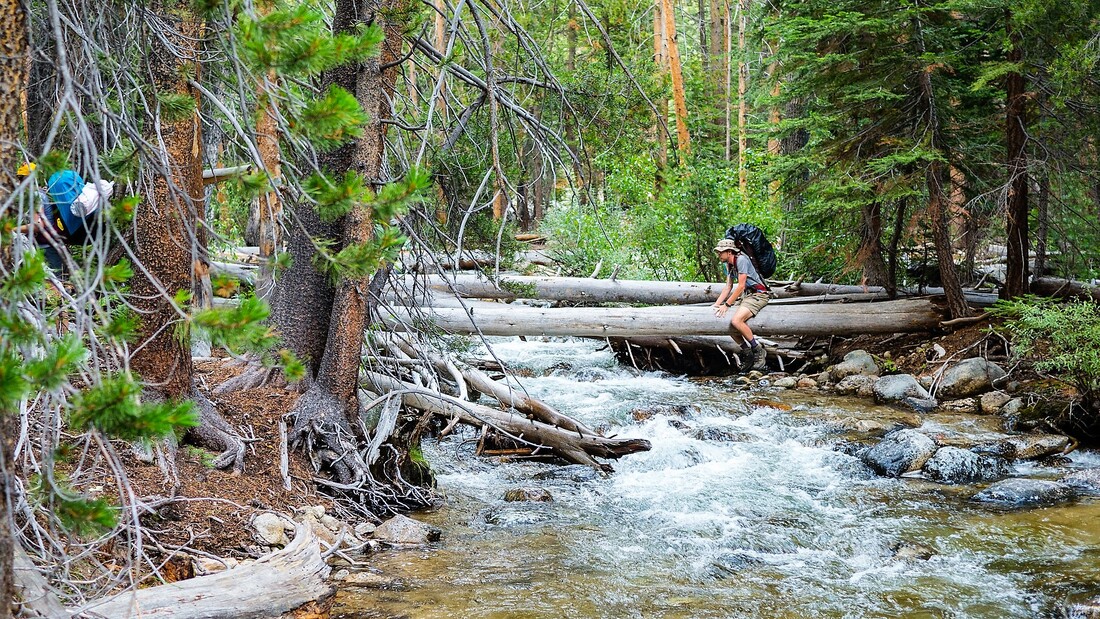
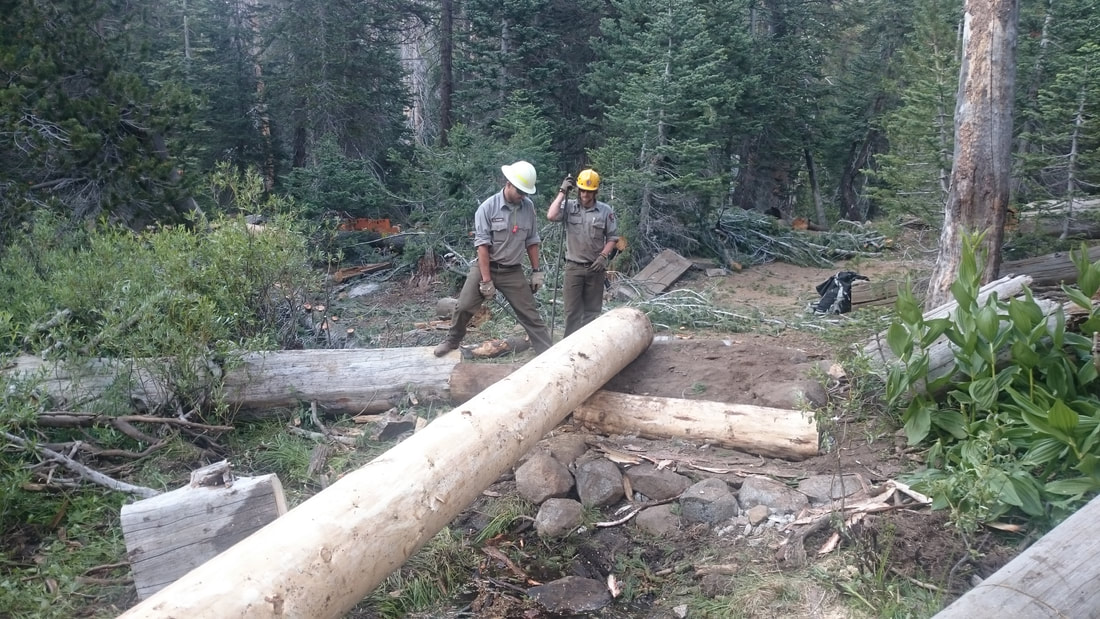
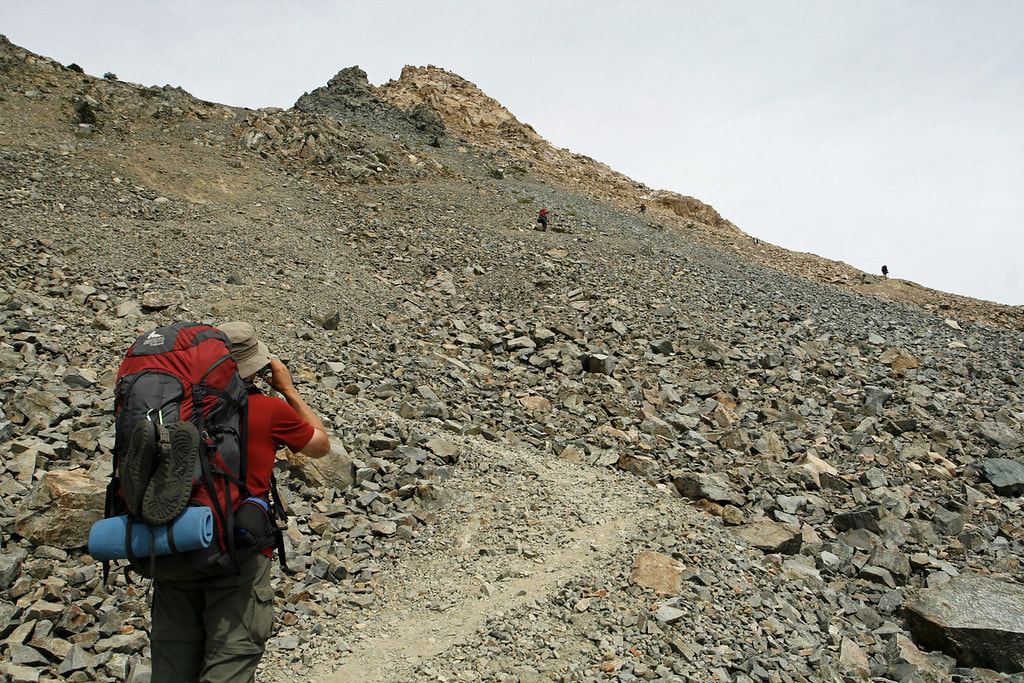
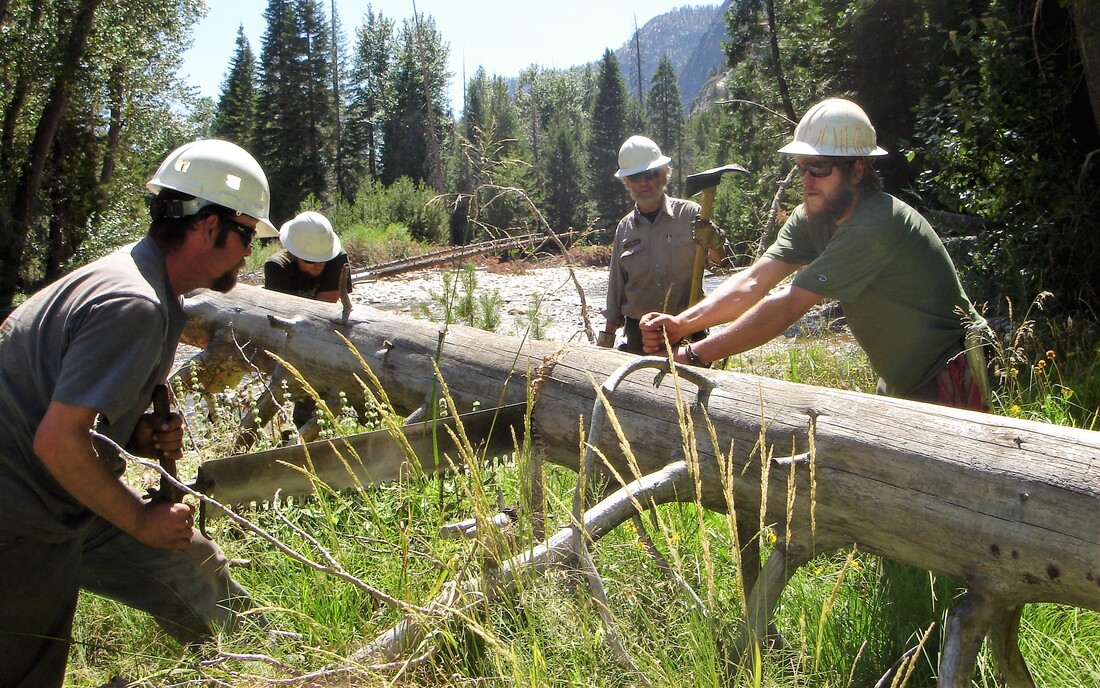
     Trail crew positions require wilderness travel and camping skills; the ability to hike at high altitude for extended periods of time and up to 20 miles a day while carrying backpacks, tools, and supplies weighing at least 50 pounds; and the ability to perform masonry and carpentry work in addition to a full spectrum of basic trail work, including clearing fallen logs, removing encroaching vegetation, digging to maintain drainage structures or trail tread, and moving materials of all shapes and sizes in rugged terrain.

     Are you still interested?

     Trail crews in these parks work outdoors in temperatures varying from over a hundred degrees down to near ten degrees, and may experience heavy rain, hail, and falling snow. Typically, the work environment is hot, dusty, dirty, and sometimes noisy. Working long hours, hiking or riding horseback in rough country, crews may encounter hazards such as poisonous plants and animals and high, cold, swift water at stream crossings.

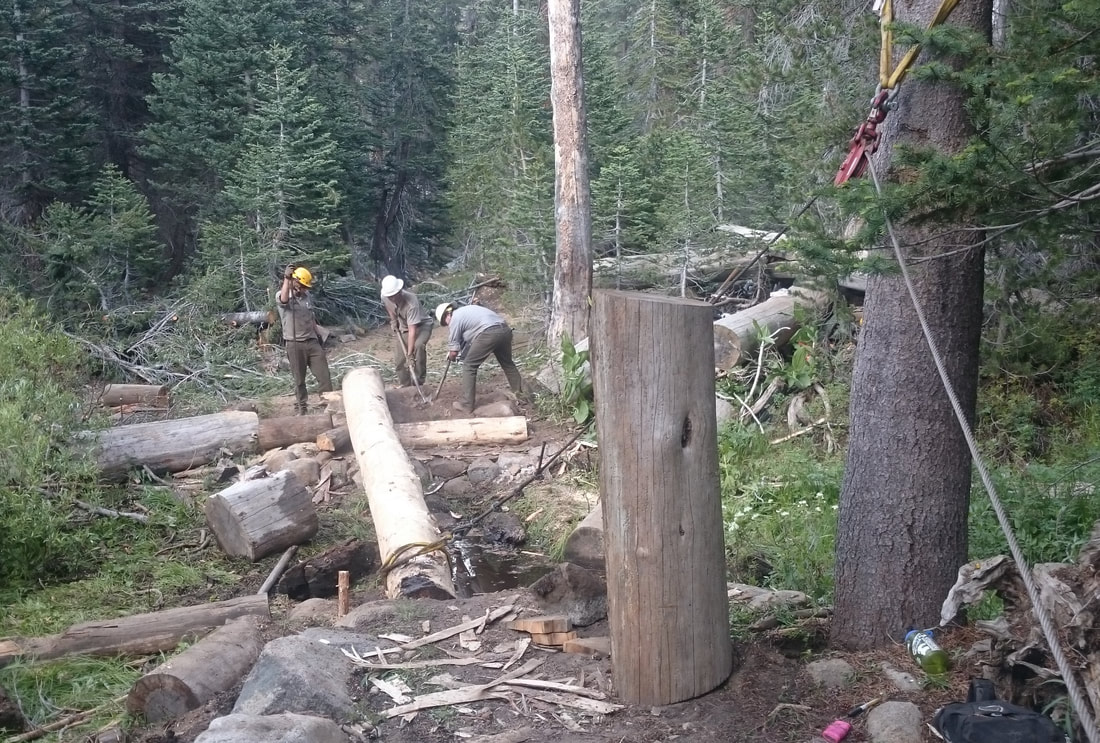
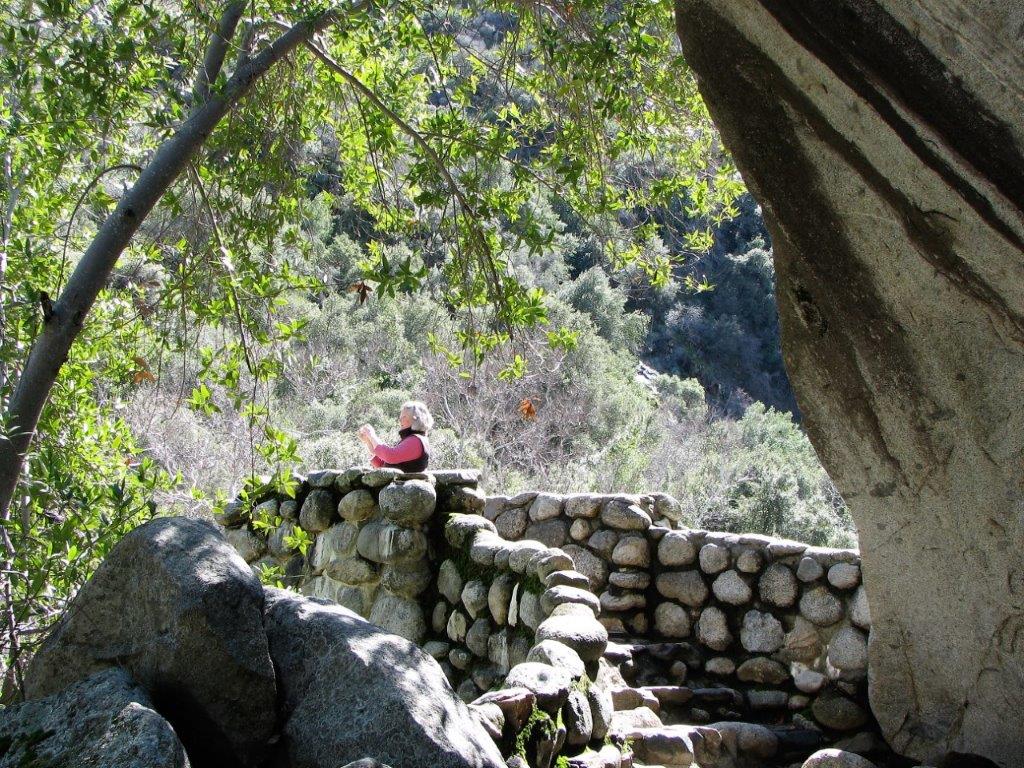
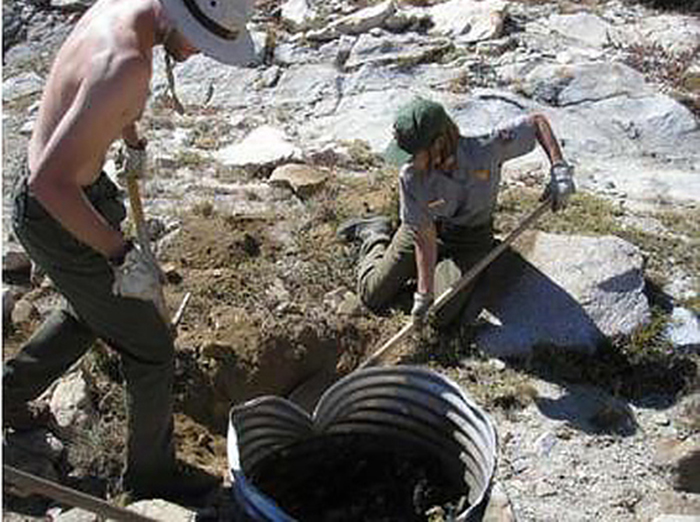
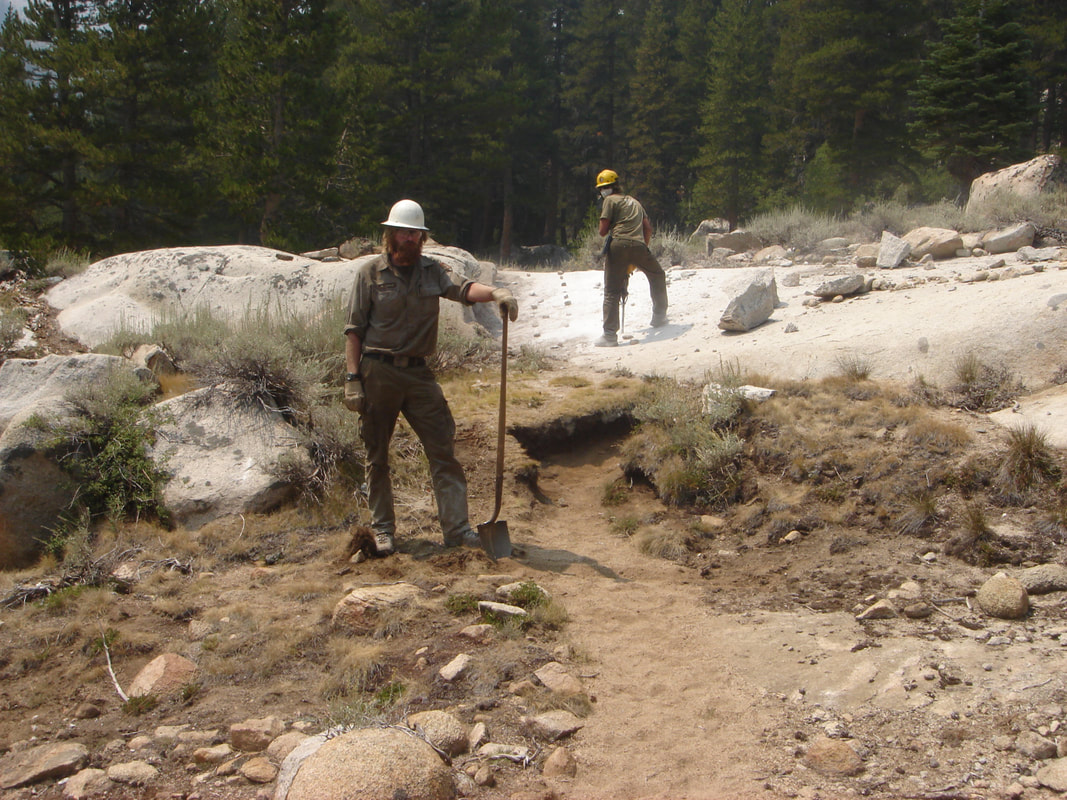
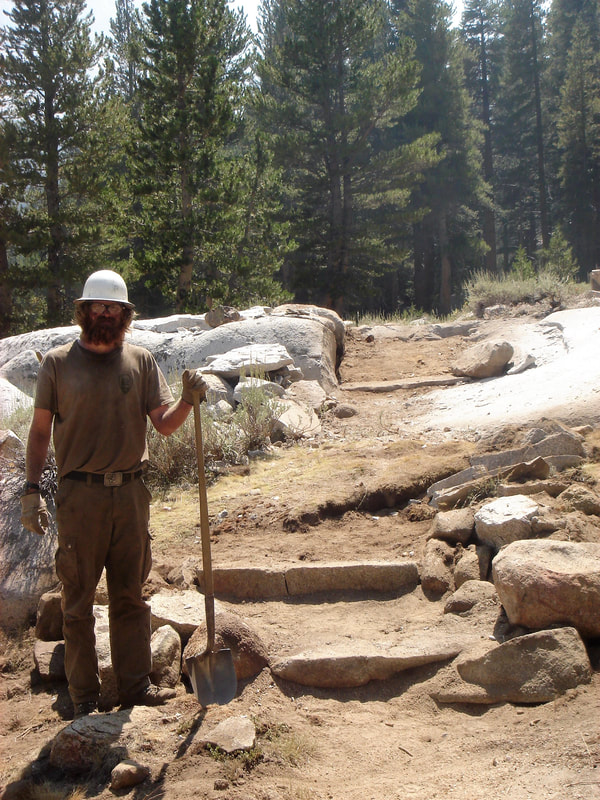
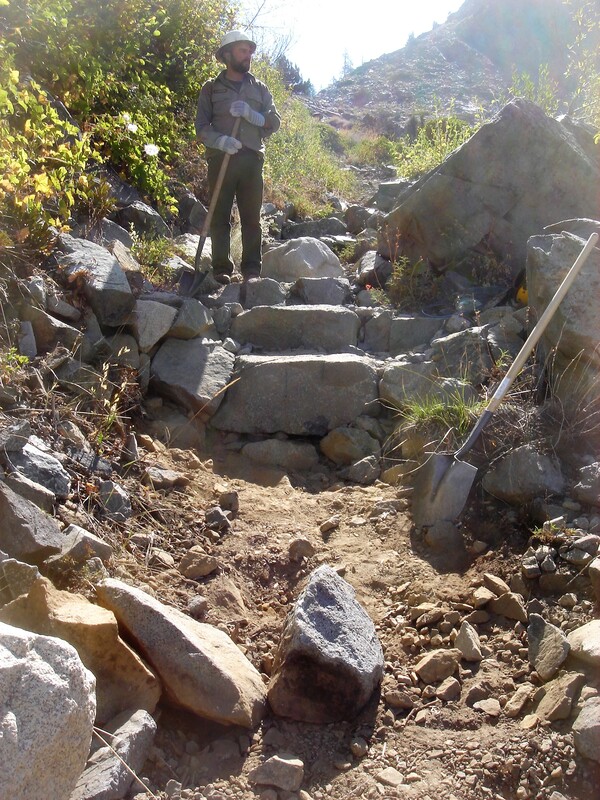
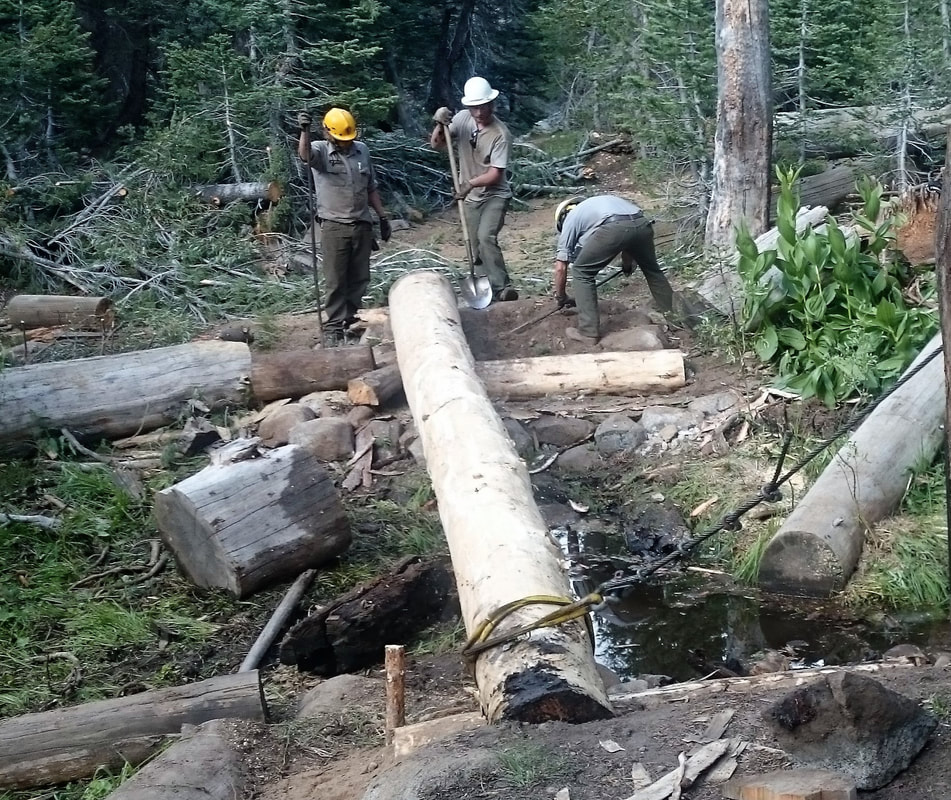
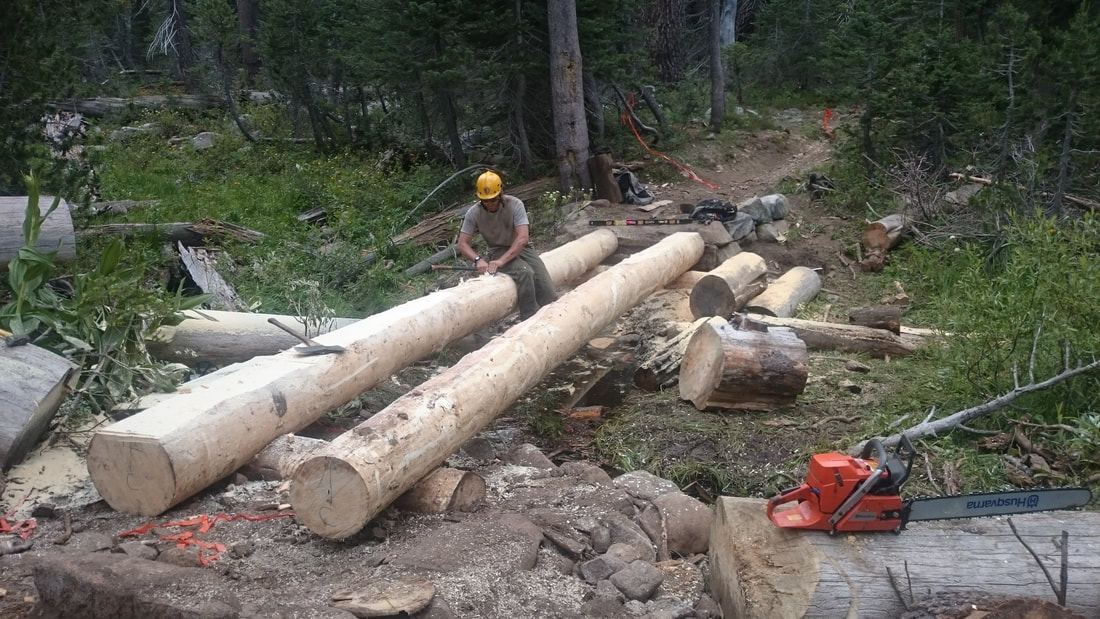
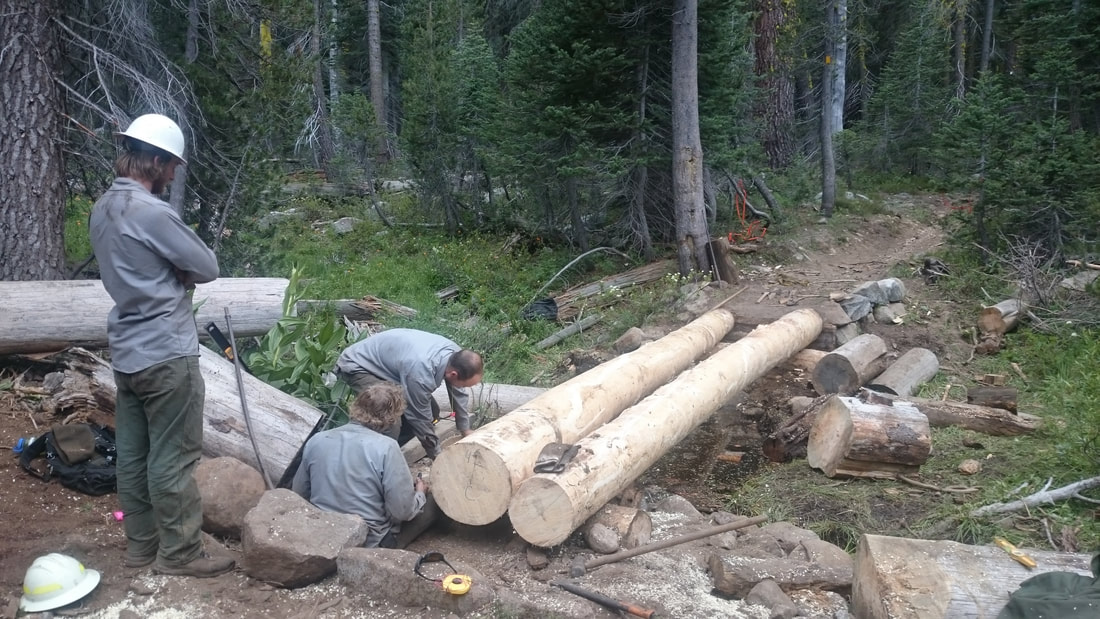
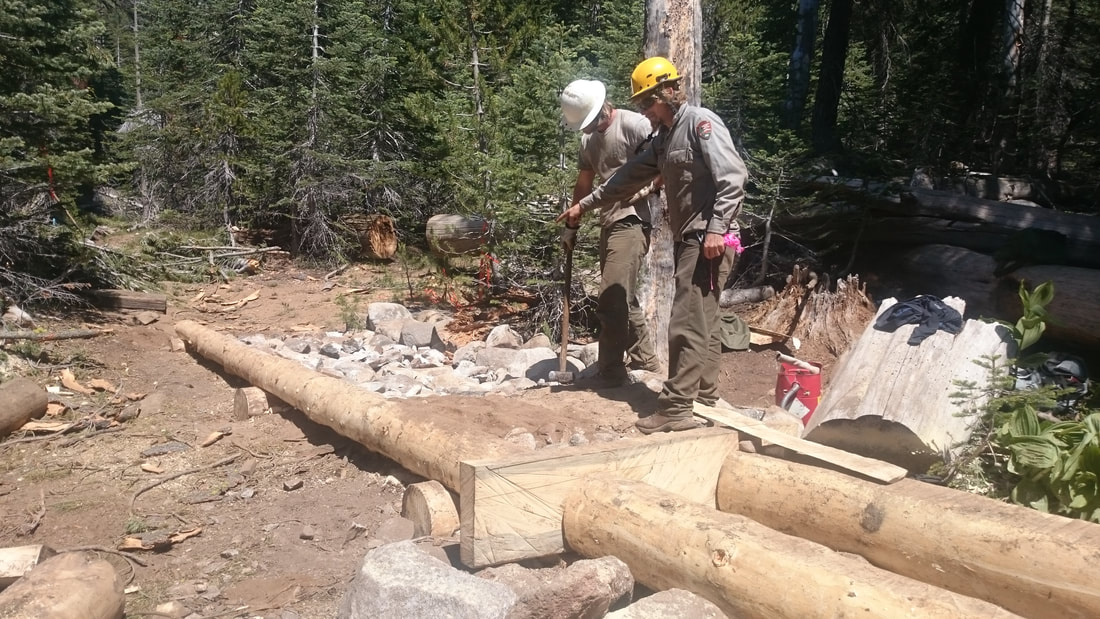
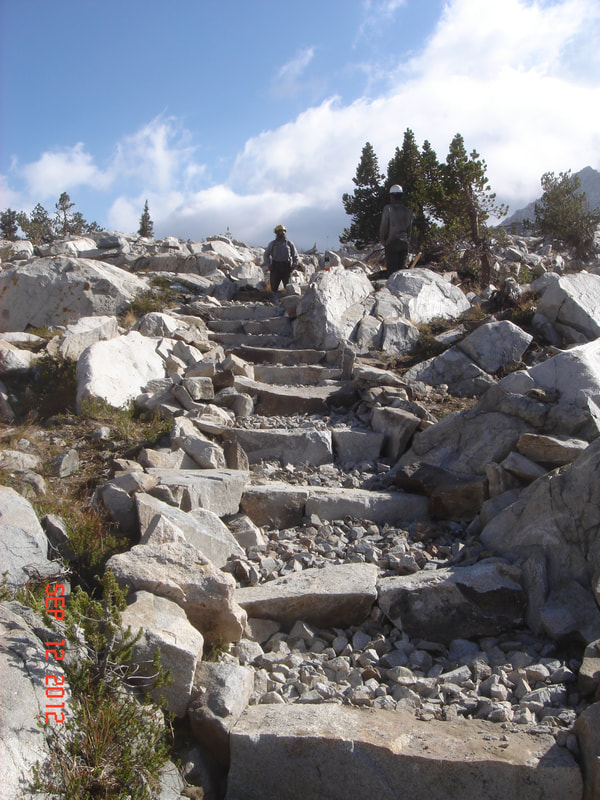
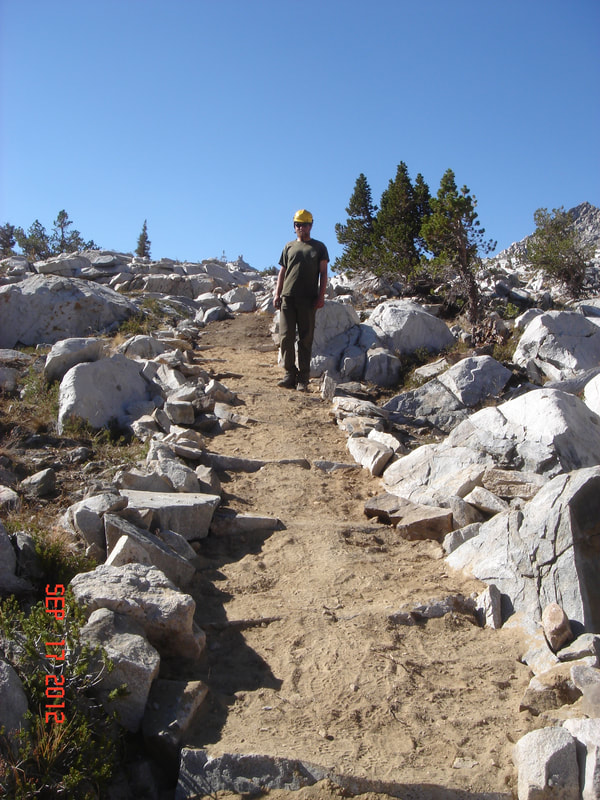
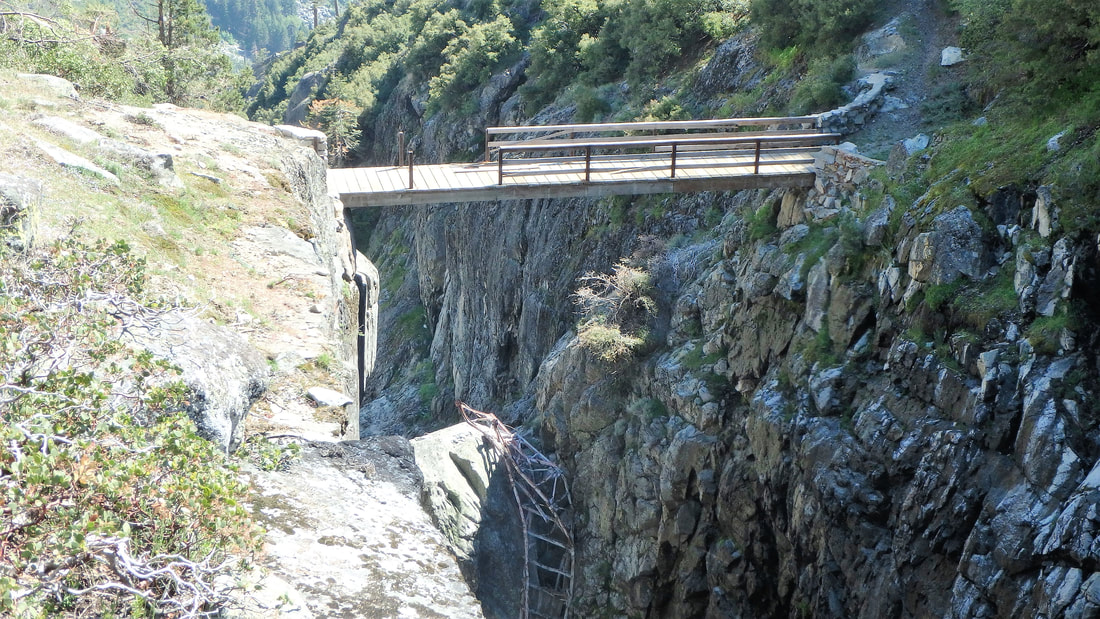
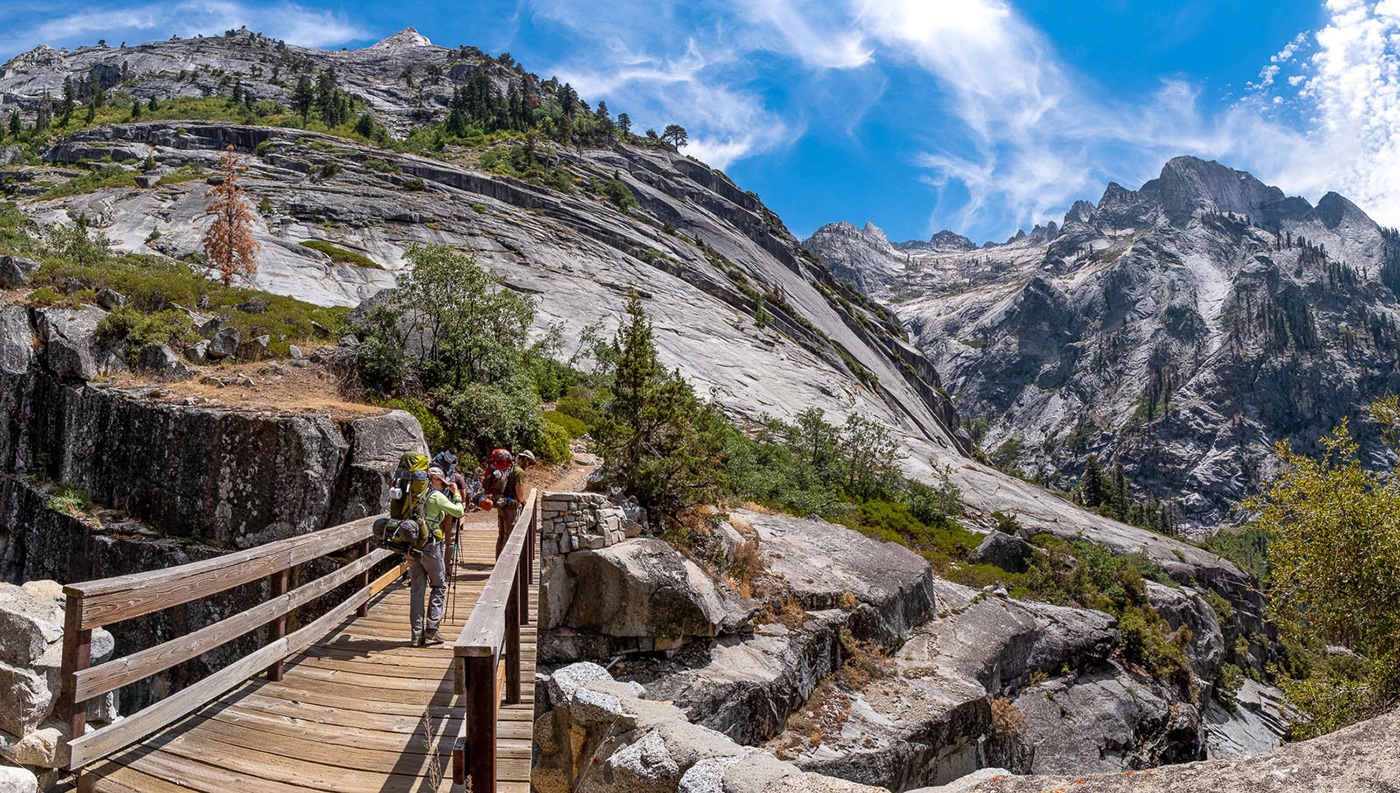
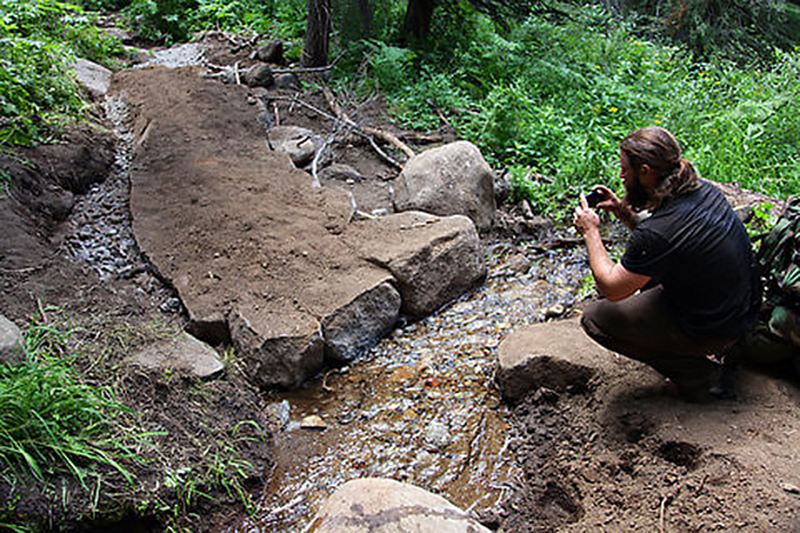
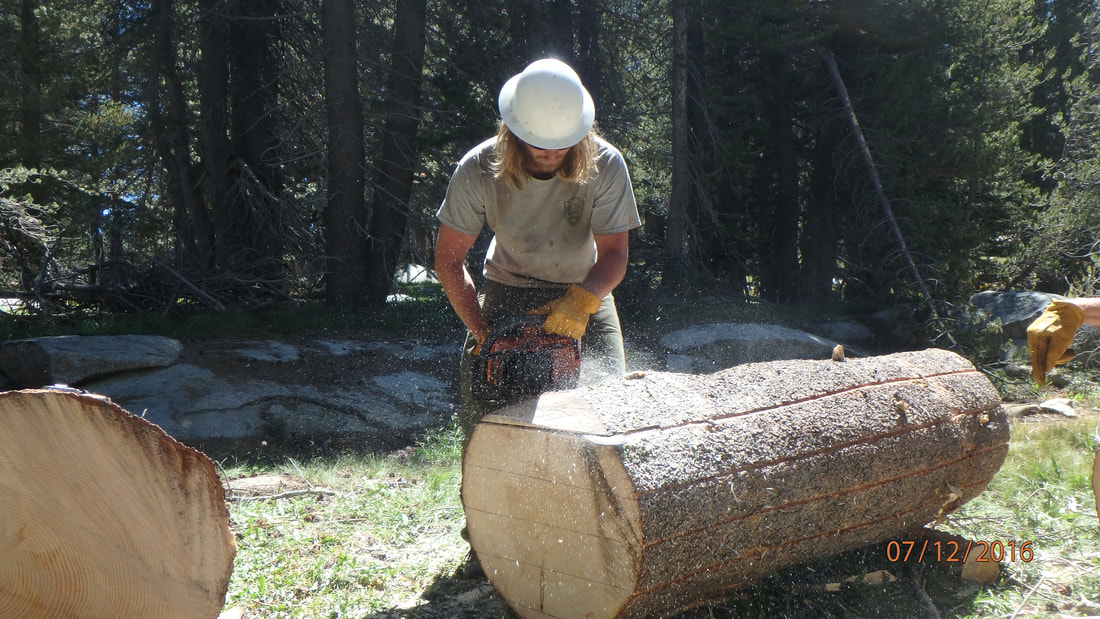
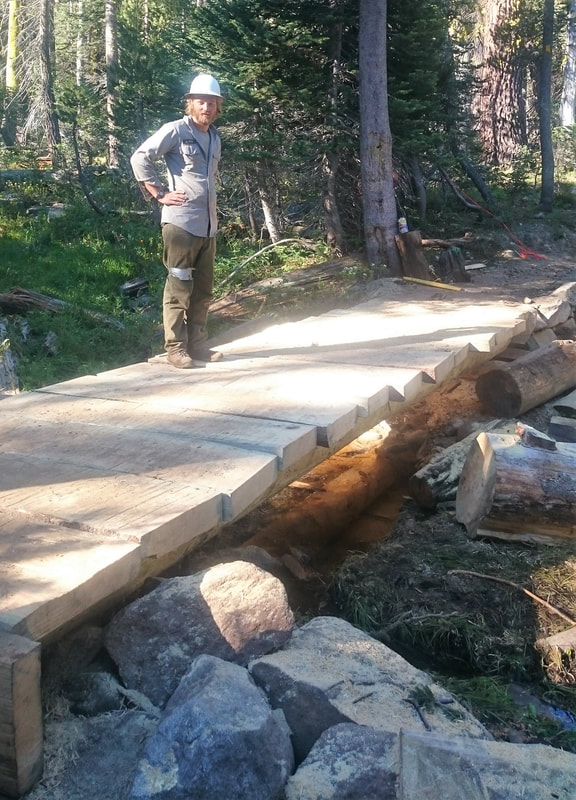
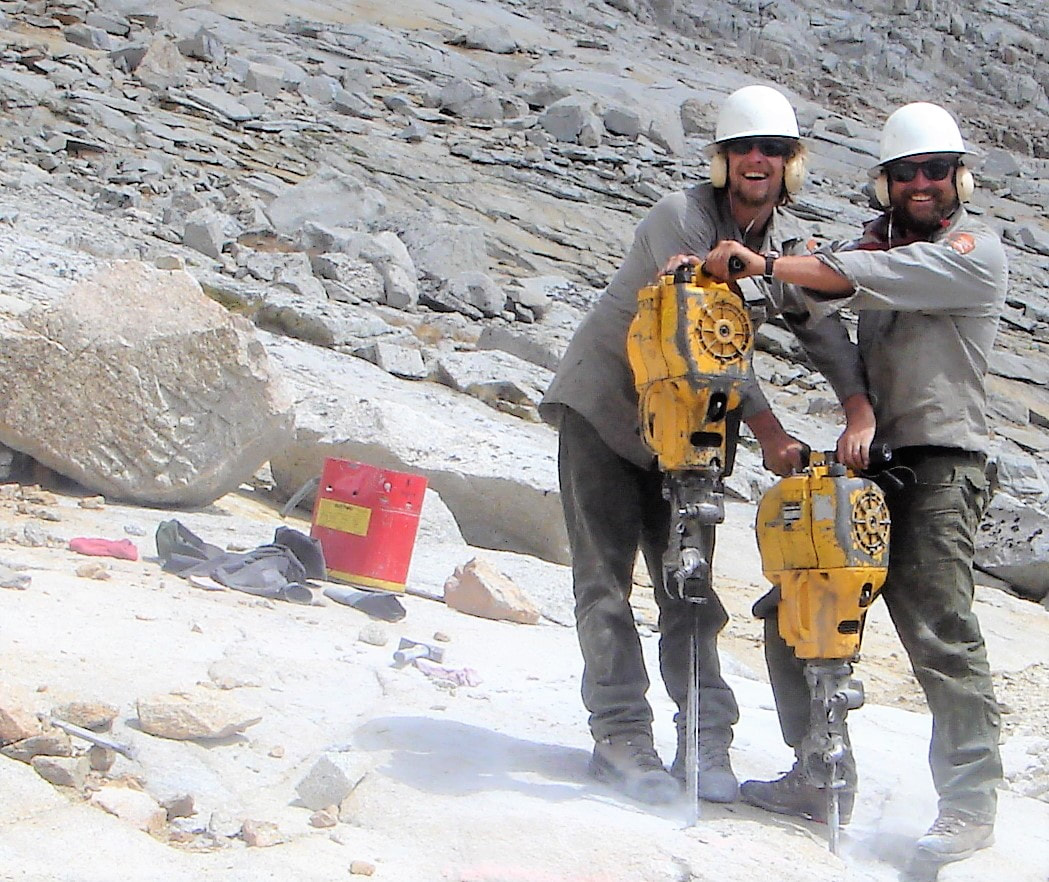
     They construct, repair, and maintain bridges, abutments, aesthetically pleasing rock walls, walkways, causeways, trail tread, water bars and retainer steps. Their tools include rock bars and drills, jacks, chisels, a variety of saws, timber tongs, draw knives, planes, and other masonry and carpentry tools, which they also clean and repair.

     Heavy physical effort is required in using both hand and power tools; frequently lifting , carrying, or rolling objects such as rocks and logs weighing over 100 pounds; moving slabs and boulders weighing several tons with rock bars; using hammers to crush or shape rock; and shoveling extensively.

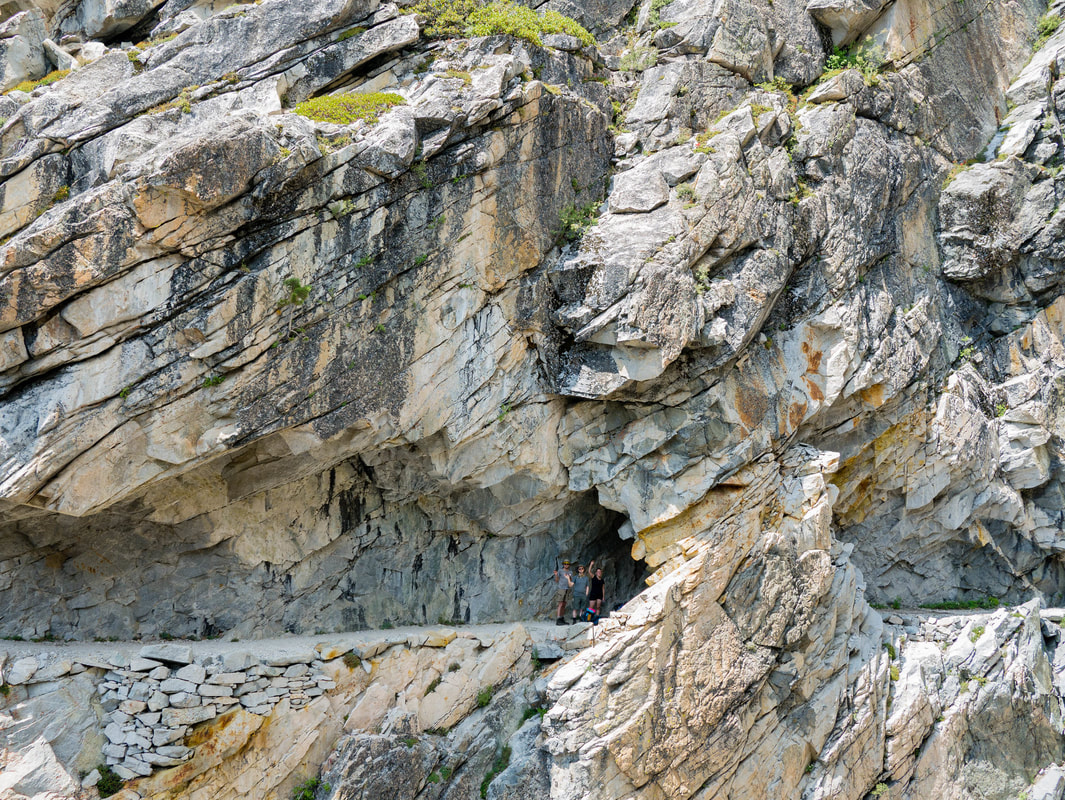
     To provide for visitor access and safety, the crews build all kinds of trails, from accessible trails meeting Americans with Disabilities Act guidelines in some frontcountry sites to trails that climb to high mountain peaks in the backcountry. Laws including the National Historic Preservation Act, the National Trail System Act, the Wilderness Act, the National Environmental Policy Act, the Endangered Species Act, and the Clean Water Act all apply in Sequoia and Kings Canyon.

     These laws require trails to avoid damaging habitats or disrupting important lands, waters, or historic or prehistoric sites. To protect cultural and natural resources, crews may route trails around sensitive areas, construct boardwalks over wetlands, or seasonally close trails during nesting or migration times.

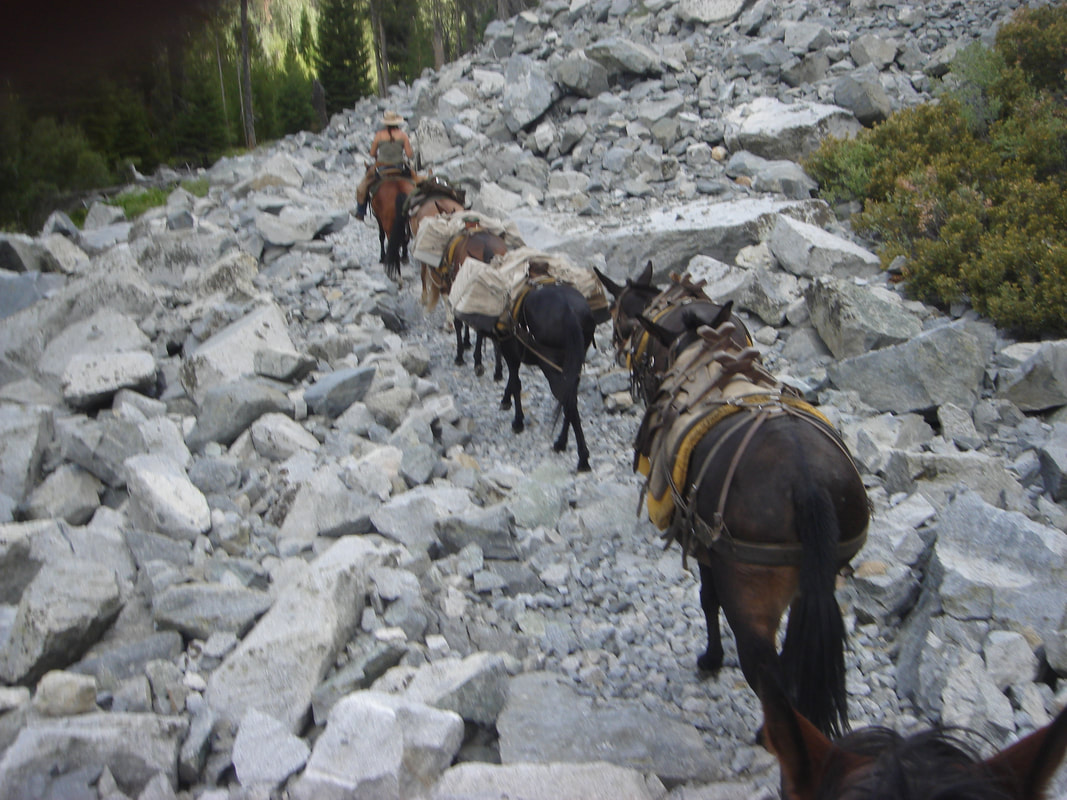
     Crew members must also have the ability to live and work effectively in remote, primitive backcountry areas in close contact with small numbers of people for two to twelve weeks at a time. Crews typically consist of three to ten NPS workers, and a Cook for work in the backcountry. Crews may be supplemented by work groups from the California Conservation Corps, the Student Conservation Corps, Volunteers-in-Parks, and other programs. To support backcountry projects, pack trains periodically bring in food, mail, supplies, and equipment.

     Would you like to gain the extra skills and responsibilities of a crew leader?

     Trail crew leaders not only perform the full spectrum of trail work themselves. They also have to perform inspections, surveys, and inventories of facilities for maintenance needs to provide for accurate planning and scheduling of work, and make informed recommendations for operational improvements. They plan, lead, and supervise the crew’s work, provide training, emphasize and monitor safety, and, of course, write reports.

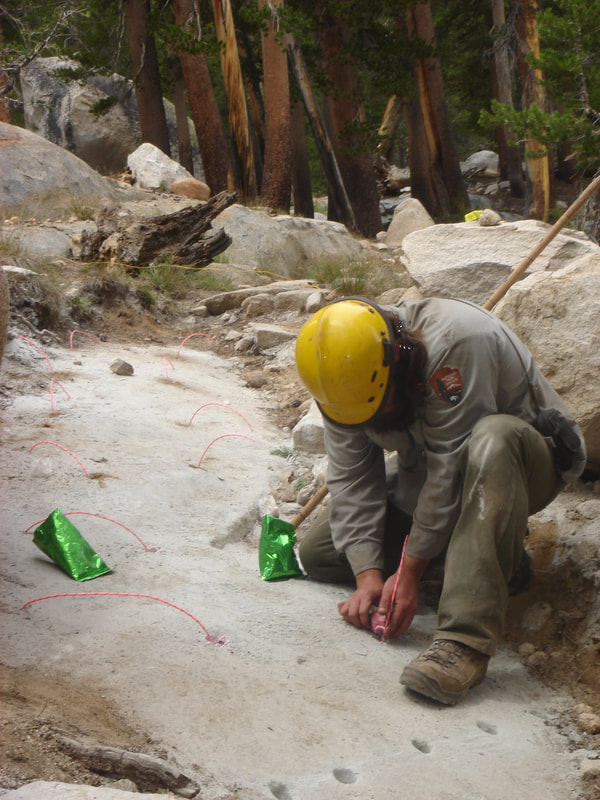
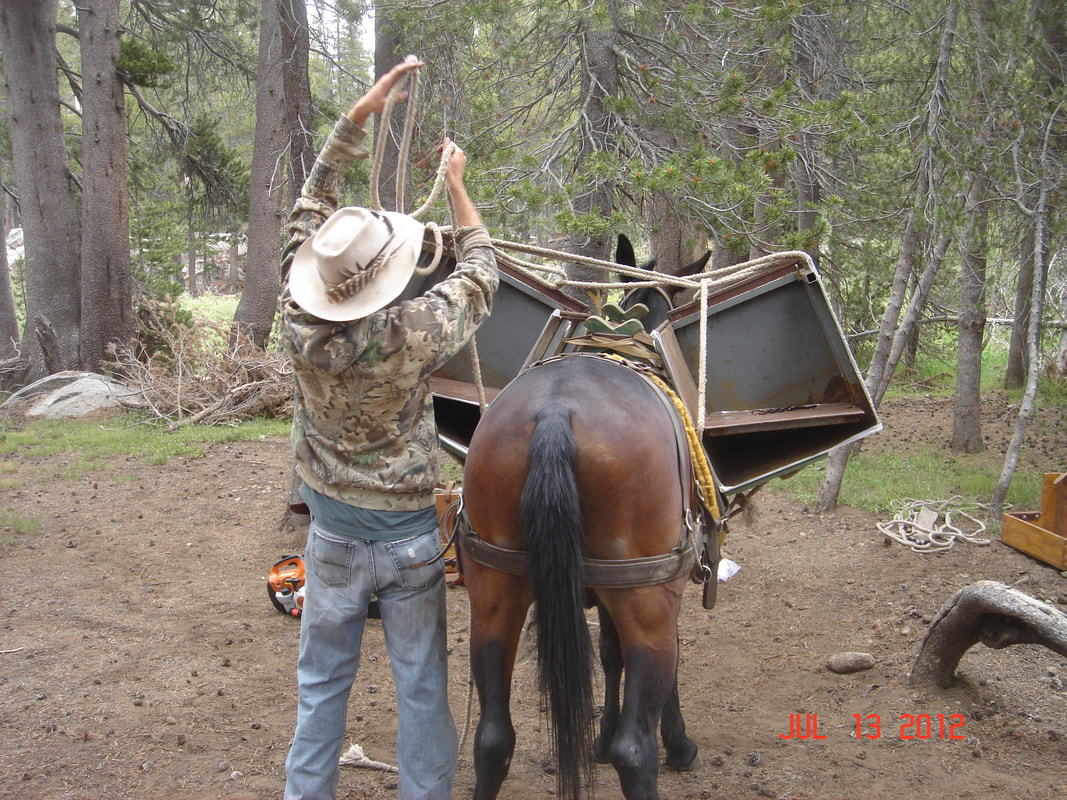
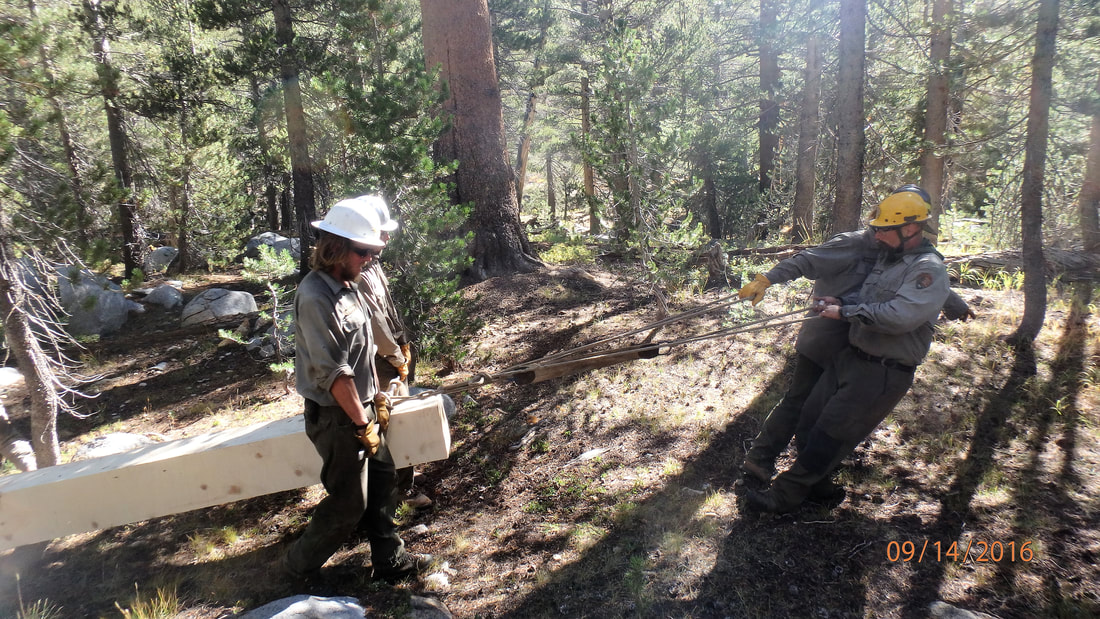
     Additionally, crew leaders must possess and maintain an NPS Blasters License because they serve as Blaster in Charge to remove obstacles such as logs and rocks from trail tread, to quarry stone for masonry work, and to establish trail bench in bedrock areas. They also assist in mule and horse packing operations by riding on mountainous trails, preparing supplies and materials for mule transport, tying on loads, and leading pack animals. To move big boulders and logs in the wilderness, they set up and use human-powered winches and rigging such as high-lines.

     The crews often coordinate with backcountry rangers to determine and prioritize projects in their work areas, and frequently assist park visitors by providing information about trails and weather, helping with communications and directions, and even participating in searches for persons reported missing or overdue.

     Have you had the opportunity to thank a trail crew yet? Next time you’re traveling on some part of the tremendous trail network in Sequoia and Kings Canyon National Parks, pause to reflect on what you’re walking on and appreciate the work of the dedicated, skillful men and women who have labored for such long hours in such difficult conditions to make your journey as smooth and safe as they can.

     As a young worker from the Eastern Sierra Conservation Corps serving in our parks put it, ” It takes tremendous grit and passion for a member of a national park trail crew to thrive. Though the days may be long, the physical demands arduous, and the unexpected challenges difficult to navigate, one thing is for sure: serving on a trail crew guarantees an unforgettable experience.”

     (If you’d like to try to join a national park trail crew, check usajobs.gov and search for “maintenance worker trails”.)

May, 2020


NOTE:  To find the “History of the Wilderness Trail System of Sequoia and Kings Canyon National Parks, see Granite Pathways, by William C. Tweed (Three Rivers, CA; Sequoia Parks Conservancy, 2021).

[


Quotes & More Photos:

“Nothing will give you as much appreciation for the trails you tread on than serving on a trail crew. The stunning vistas, backpacker-friendly schedule (many crews work 8-10 days on, 4-6 days off) and group camaraderie are just icing on the cake.” — Paul Chisholm, 2017

“Working at a National Park teaches you confidence and perseverance. I spent six months with the Backcountry Trails Program in Kings Canyon National Park . . . . [T]the commute was the worst part. . . . I had to move as fast as I could with a pack and tools — shovels, McLeod’s, loppers, Pulaskis, sledgehammers, 20-pound rock bars, grip hoists — uphill, nonstop, for miles . . . at elevations exceeding 13,000 feet. We were the highest-elevation trail crew in the country that year . . . .” — Anna Mattinger, 2018

“We used hand tools for everything. To the tune of snow, heat, river crossings, and mosquitoes, we turned big rocks into little rocks into littler rocks . . . to make a foundation of several feet of ‘crush’ hidden underneath dirt trails to prevent overgrowth . . . .” — Anna Mattinger, 2018

“Trail crews frequently work in isolated areas where medical facilities are not readily available, and transportation of an injured person is often difficult and dangerous. Good safety practices demand that each crew member keep in good physical condition and maintain a high level of safety consciousness at all times, in camp as well as on the job. . . . [E]very employee must be his or her own safety inspector on the job, work in a safe manner, and point out unsafe practices to other crew members.” — NPS Trails Management Handbook

“You’ll learn to fear lightning when you’re working above the timberline. You’ll learn drystone masonry and how to build rock walls and stairs without cement. The standards are high: If your work can’t be expected to withstand a century of continuous foot traffic and weather, it isn’t good enough. . . . . Doing this stuff, you’ll learn that granite weighs around 170 pounds per cubic foot.” — Anna Mattinger, 07/18/18

“The trail crew cleared and blasted granite footing and widened the area around the bluffs. Great work, mules will no longer bang their boxes on the upslope side, the impact pushing the animal toward the trail edge.” — Joe Ventura, Hockett Meadow Ranger, 2009

“It has to be sturdy enough to take the steady thudding of boots and hooves without disintegrating. It has to be angled so that the water pouring down a slope doesn’t course through it and turn it into a stream. It has to be high and dry enough that boots and hooves don’t sink knee-deep in mud. Oh, and it can’t have fallen trees blocking it. When about 700 trees . . . were left sprawled across the 10 -mile trail . . . by winter’s high snows and spring’s high winds, someone had to clear them away.” — Felicity Barringer, 2011

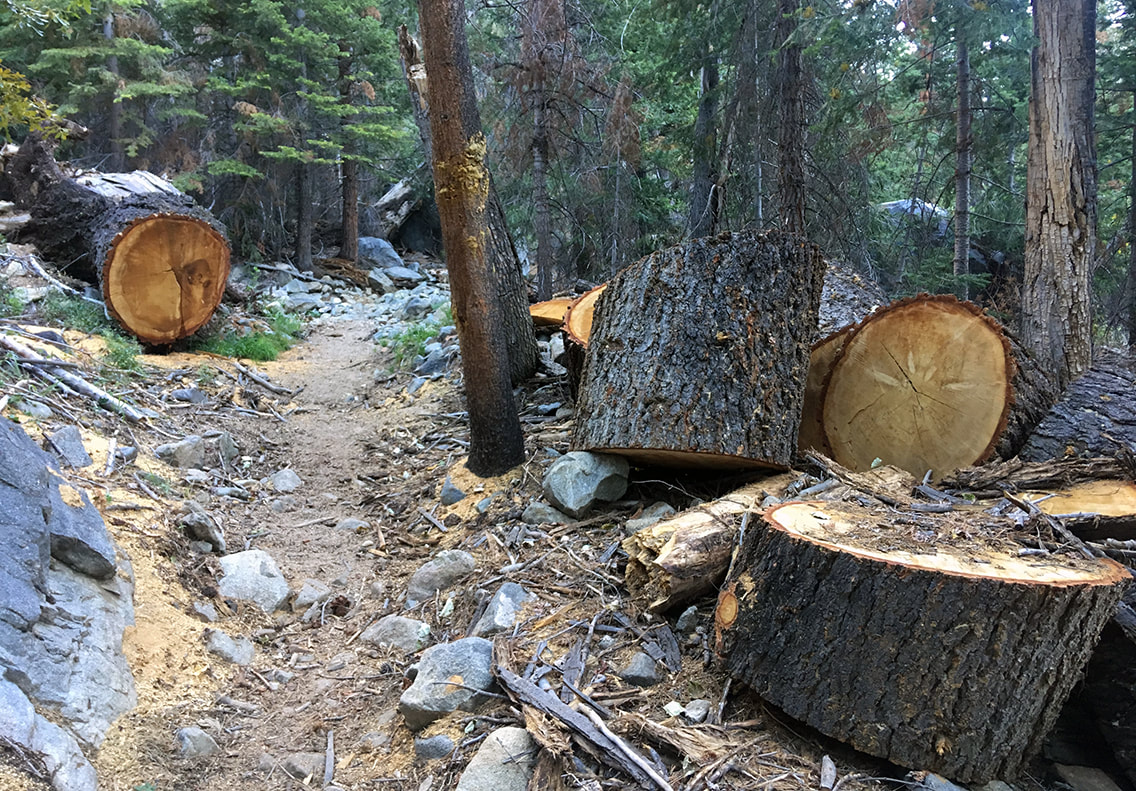
“The trail was still going down as I passed some huge logs, freshly cut into pieces. The smell of fresh sawdust still hung in the air. I am always amazed about the people who do all this work: maintaining the trails, fighting fires, building bridges and cutting up big trees that obstruct the trail. I realized that they must bring all their tools, probably by mules or horses, but still they must hike days on the same trail as I was doing.” — Overseas Hiker, 2018

“[T]he regular National Park Service trail crews were supplemented for six weeks by a 14-member crew organized by the California Conservation Corps. The crew included seven veterans (some recruited through the three-year-old Veterans Green Jobs nonprofit) and was part of a pilot program to give former service members training in land conservation.” — Felicity Barringer 2011

“The first few weeks on the job, I contemplated quitting . . . . I am glad I did[n’t], because I learned so much. I was able to participate in creating a bridge over a stream–from felling the tree to using a grip hoist to set the bridge into place. I also was able to help in transforming a rocky slope into a usable trail. I got to rework trails so that water would run off them and erosion would be minimized. I believe these skills will be useful in a future career in landscape architecture.” — joinhandshake.com, 2018

“Performs carpentry work, primarily using heavy log and rough-sawn lumber, on trail structures such as log checks, foot-bridges, multi-use bridges, corrals, hitch rails, and boardwalks.” Use a chain saw to “fell, buck, notch, and/or shape both native and pressure treated logs in the maintenance and construction of bridges, water bars and retainer steps, crib walls and steps, . . . and in clearing trails of down trees and brush. — from NPS job description

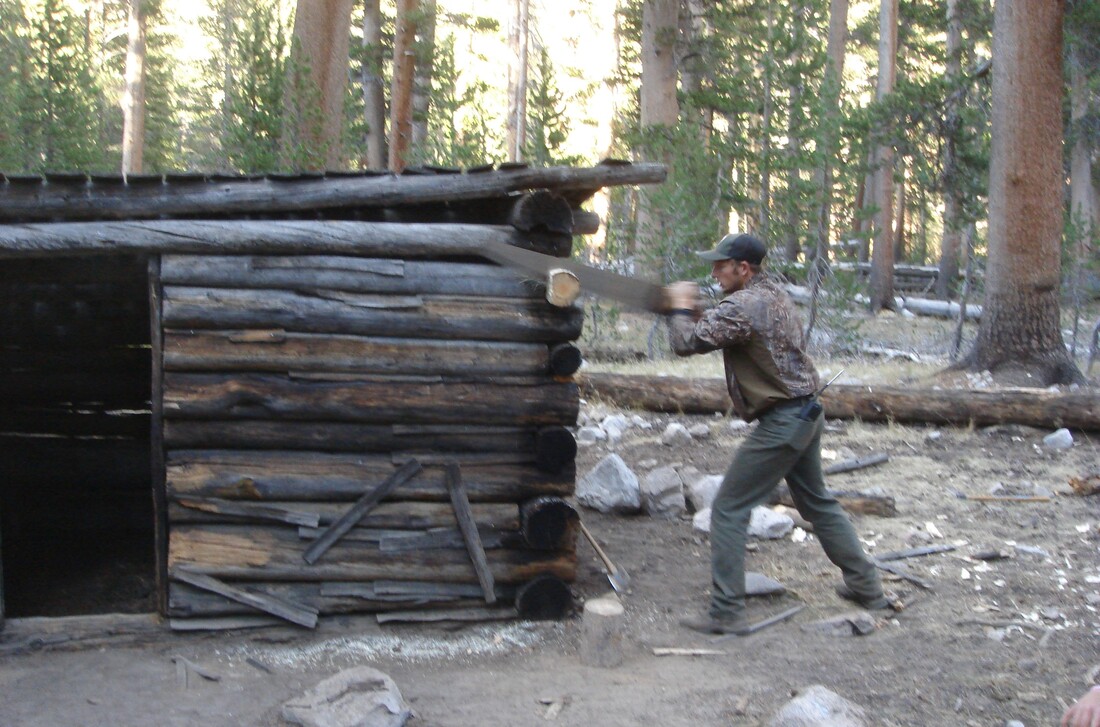
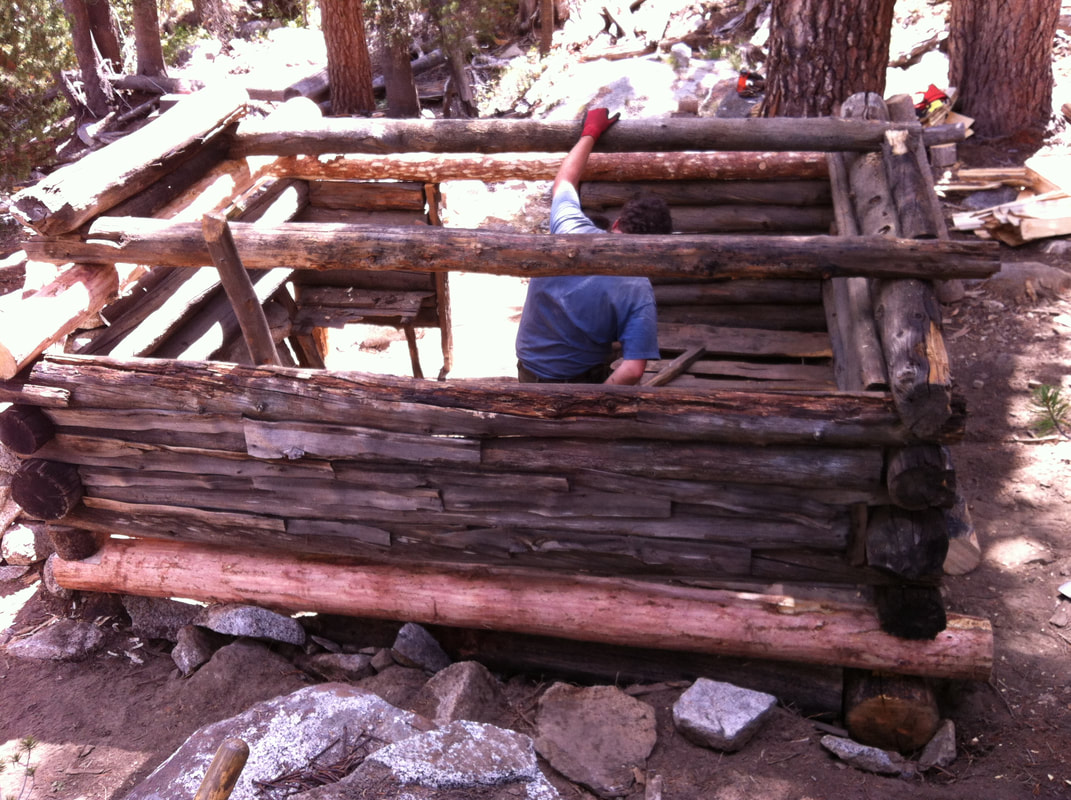
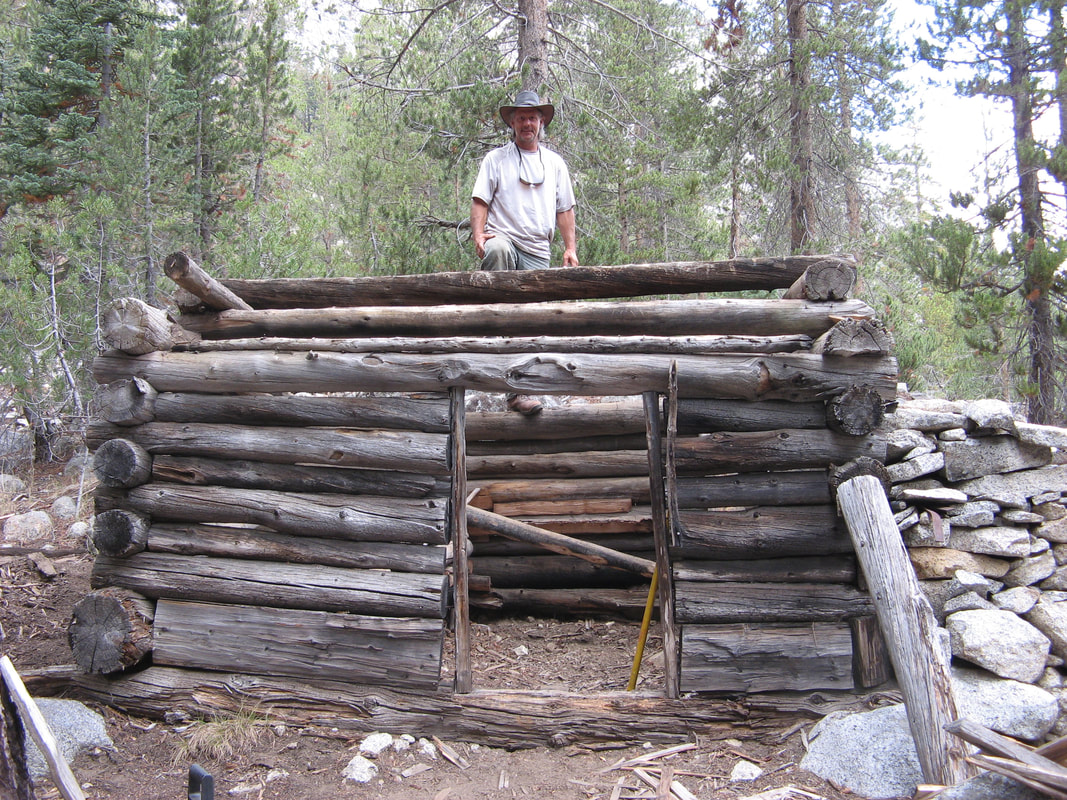
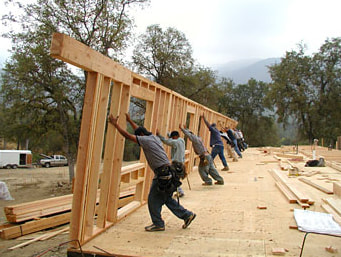
“In the summer of 1973, my backcountry crew and I were working at . . . Redwood Meadow . . . . An old fence, first built by the CCC . . . had long ago fallen into disrepair, so we started . . . replacing the rotten posts and stringing new wire. One afternoon . . . we uncovered an old metal bin [and] . . . found the carpentry tools the CCC had used to build the cabin at Redwood Meadow: double-bit axes, log carriers, drawknives, and a brace and bits. Their wooden handles were still dark from the oil and sweat of men working there thirty-five years earlier.” — Steve Sorensen, 2018

“[T]he [trail] crossing below [Redwood Meadow] . . . [needed] a series of wooden footbridges. . . . [A] lot of the satisfaction [in building the bridges] came from using those old tools . . . in the same way the CCC workers had used them long ago. . . . Before supper we’d hike down to Cliff Creek and jump . . . into a deep pool of clear water — the same place where the CCC boys had washed and played three decades earlier.” — Steve Sorensen, 2018

“During the trail crew visits . . . [w]ood was bucked up, split, hauled, etc. for the trail crew, Hockett ranger, wilderness seminar, and snow survey. Two new hitching rails were constructed . . . . One of the public outhouses was moved here at Hockett Meadow. Several days were spent . . . doing trail work (raking rocks) and on the new bridge near Horse Creek. ” — Lorenzo Stowell, Hockett Mdw. Ranger, 1992

“Once again, I received numerous glowing accolades from visitors regarding the quality of the trails in Sequoia and the friendliness and helpfulness of the crew members they encounter. Thanks, Sequoia Trails!” — Christina Gooch, Tyndall Creek Ranger, 2014

Click on photos for more information.

The Story of Yaudanchi Ecological Reserve

by Paul Hurley

     Earth Day was still an infant, and the modern environmental movement was just getting its legs when the Yaudanchi Ecological Reserve was created in 1975.

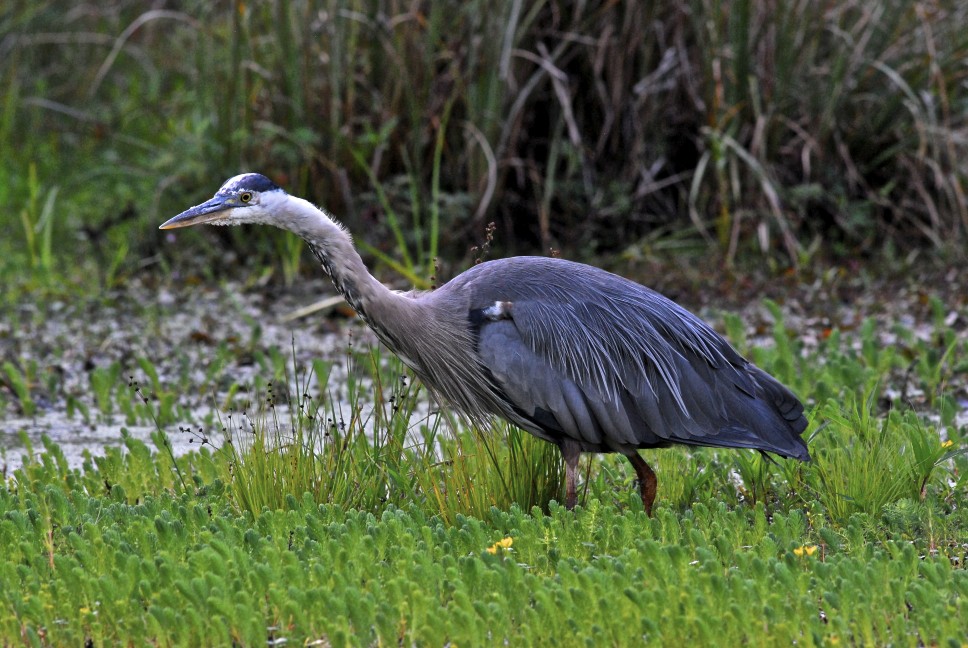
     Back then, when most people probably couldn’t define the word “ecological,” the folks at the California Department of Fish and Game (now the California Department of Fish and Wildlife) noticed that a patch of unused former Tule River bottomland near the Porterville State Hospital was a popular breeding site for great blue heron, a wading bird partial to wetlands and the largest species of North American heron.

     That recognition became the starting point for a remarkable collaboration of interests that included the Tule River Indian tribe, state and local office-holders, local environmental activists, the Boy Scouts, the hospital, local farms and businesses, water districts, and many volunteers in creating a nature preserve.

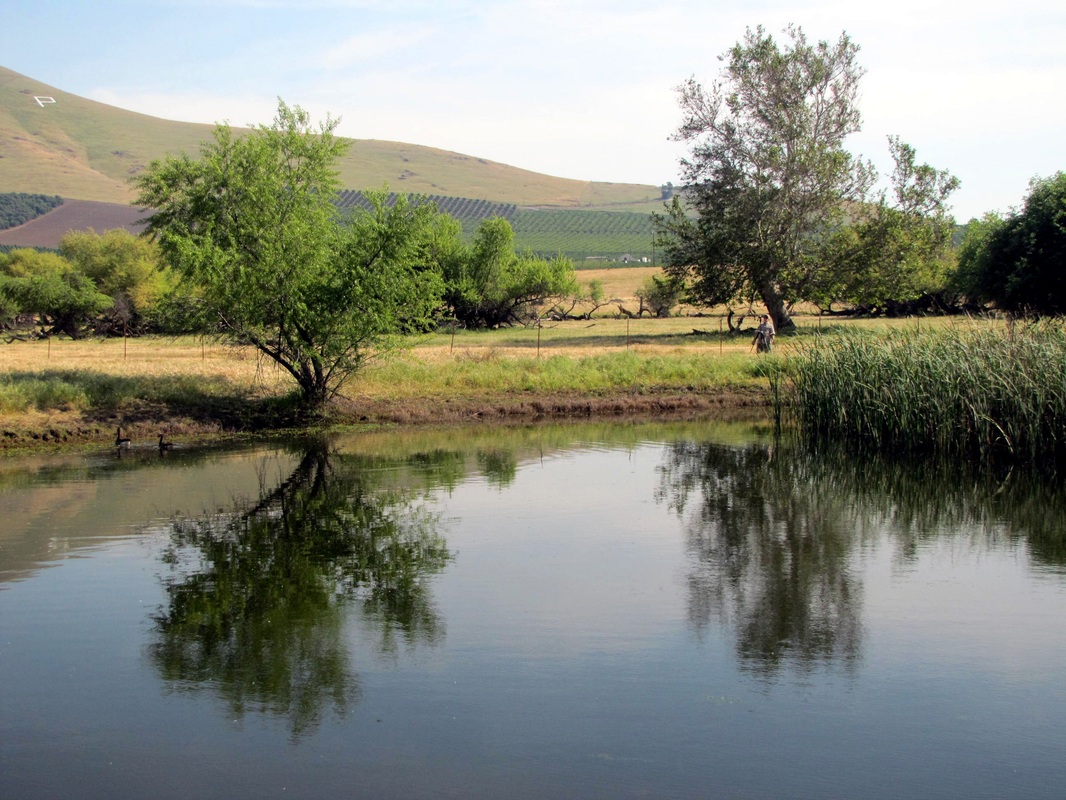
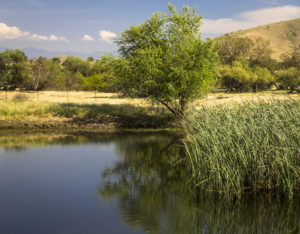
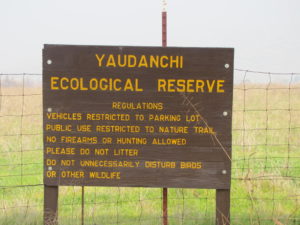
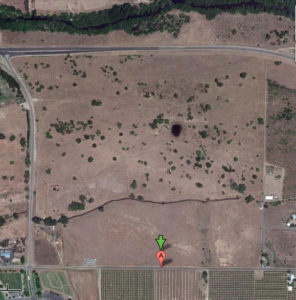
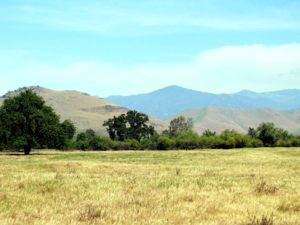
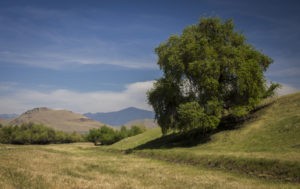
     Today, the Yaudanchi Ecological Reserve continues to live up to its name on 164 acres adjacent to what is now called the Porterville Developmental Center. The account of how the site was defined and preserved comprises a series of changing players, fits and starts, and shifting motivations. The end result is a rarity in Tulare County: A sizable tract of foothills valley rangeland that is left almost entirely to the designs of nature, where indigenous animals, native plants, a pond, remnants of a riparian woodland, and migrating birds constitute the main attractions, and the public is welcome to walk among them.

     The Yaudanchi site was owned for many decades by the Porterville State Hospital, housing its sewage treatment plant and related buildings. But by the 1970s, those buildings were long gone, and the land had reverted to a wild, vacant tract. Thus, in 1975, the state of California announced its intentions to sell as surplus property the unused 88 acres next to the hospital.

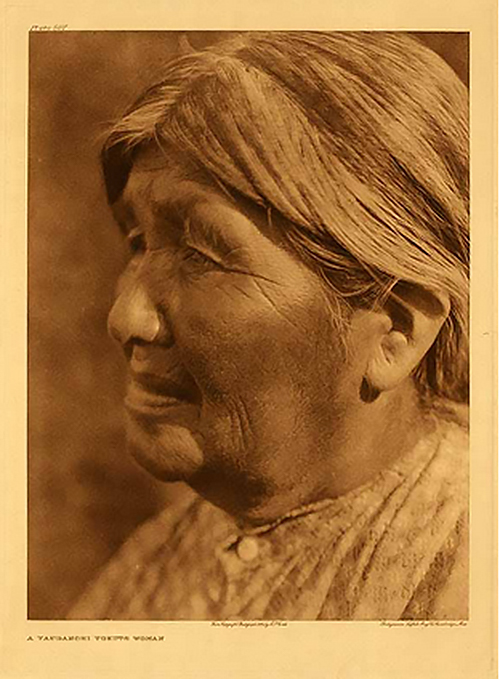
     The movement to make this land a preserve was initiated by a rookery of great blue heron, the Porterville Garden Club, and the Tule River Indian tribe. The Garden Club was the first to identify the site as the home to a sizable rookery of the huge birds. The Tule River Tribal Council named the site “Yaudanchi” as homage to the original native Yaudanchi Yokuts residents of the Porterville area.

     Several local interests, including the Porterville Environmental Council, mobilized to preserve the heron rookery. Among community groups that joined were two local water districts, the Tea Pot Dome Water District and the Vandalia Water District; the local chapter of the Safari Club; the Boy Scouts; and eventually the Friant Water Users Authority and the California Department of Fish and Game.

     An important development occurred in October, 1975, when the Porterville State Hospital advisory committee supported a resolution for a wildlife reservation and heron rookery on the property. Made up of prominent citizens and health-care professionals from throughout the San Joaquin Valley and beyond, the committee included Dr. Jack Ramos of Fresno, Sue B. Ely of Tulare, Helen Hansen of Menlo Park, Margaret Foley of Visalia, and Howard Smith of Porterville. Medical Director Dr. James T. Shelton welcomed the resolution and suggested the property be sold to a non-profit for $1.00 so that it would remain preserved.

     The plan, however, needed the approval of the state Legislature. In early 1976, the Porterville Recorder reported that Assemblyman Gordon Duffy said the state would not sell the property but would retain it as a heron rookery.

     By then, a great number of groups were supporters, notably the Sierra Club; the American Association of Retired Persons; the American Association of University Women; the Audubon societies of Tulare, Kern, and Fresno counties; the Tulare County Board of Supervisors; the Porterville City Council; and the Porterville Farm Bureau.

     In mid-1976, the finishing touches were put on an agreement that would preserve the Yaudanchi property in perpetuity as a nature reserve. The agreement maintained that the preserve would continue to be owned by the state of California and managed by the Department of Fish and Game.

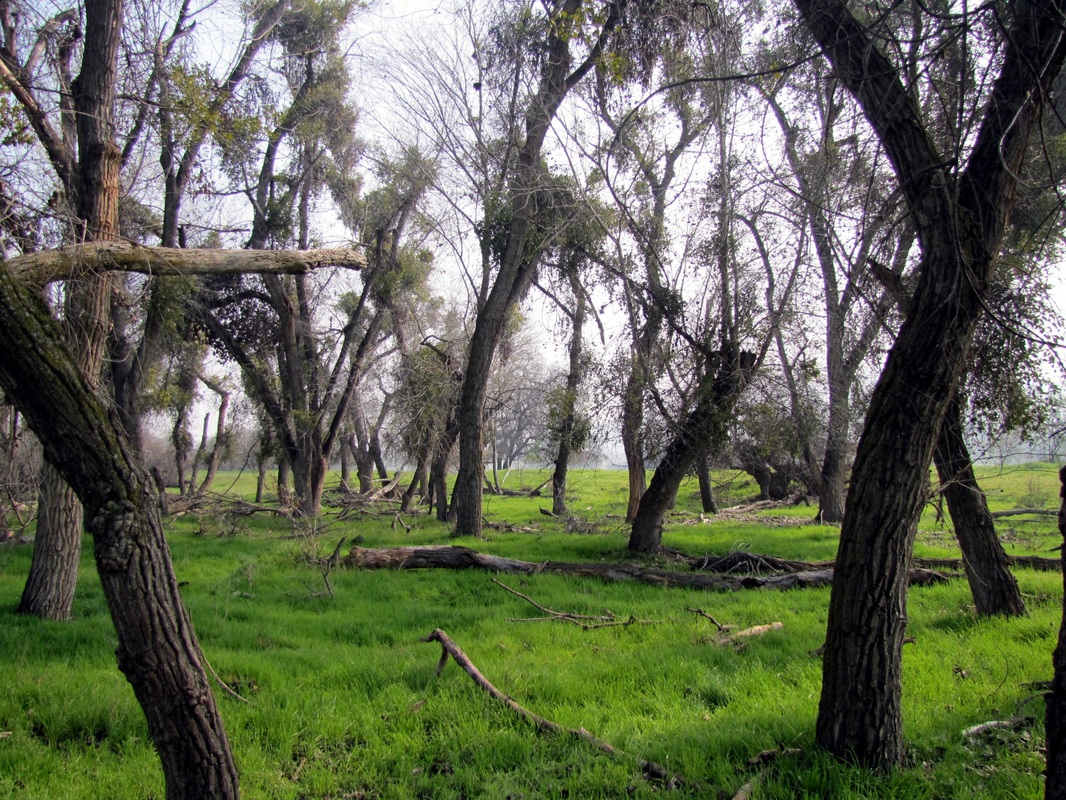
     For most of the next 20 years, however, there was little management, and severe drought in the 1980s devastated the grove of cottonwood and sycamore trees that was essential to the blue heron rookery. The big birds began moving away.

     Yaudanchi started on the road to its current status as a true ecological reserve with a couple of related developments in the 1990s. First, the California Sierra Chapter of Safari Club International, an organization that was among Yaudanchi’s original supporters, began some management of the site, promoting wildlife and restoring habitat.

  Then in 1997, the Department of Fish and Game received a $20,000 grant from the U.S. Bureau of Reclamation to make improvements in the site’s water supply, including lining some ponding basins and directing water to and from wetlands habitat. The Sierra Safari Club matched the grant with $10,000 of its own and donated more than 400 volunteer hours to developing the site.

     By that point, Fish and Game wildlife biologists noted that Yaudanchi was already a valuable habitat for wildlife, including bobcats, ducks, the San Joaquin kit fox, several species of hawks, great horned owls, and various wading and shore birds, including migrating species.

     The reported size of the Yaudanchi Ecological Reserve has fluctuated over the years, because an exact survey was never made and some land was added to the original site. Several sources identified it as 88 acres in 1975. The city of Porterville’s current general plan site map defines it as 164 acres, slightly more than a quarter section.

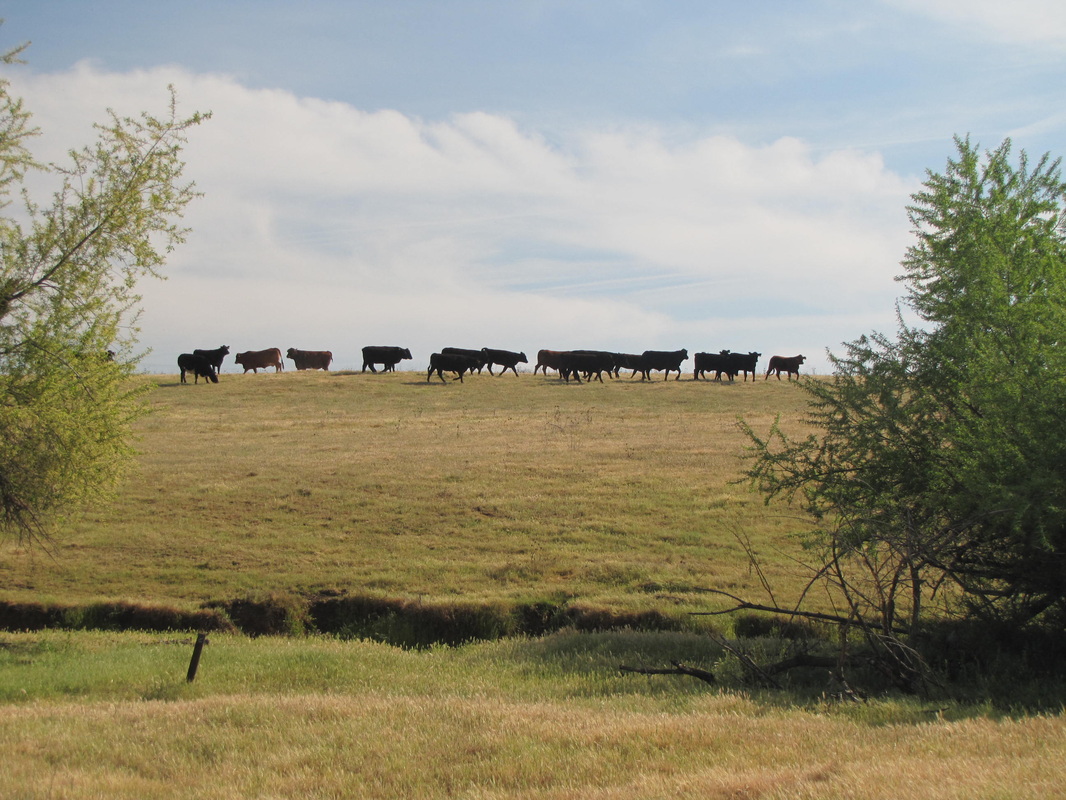
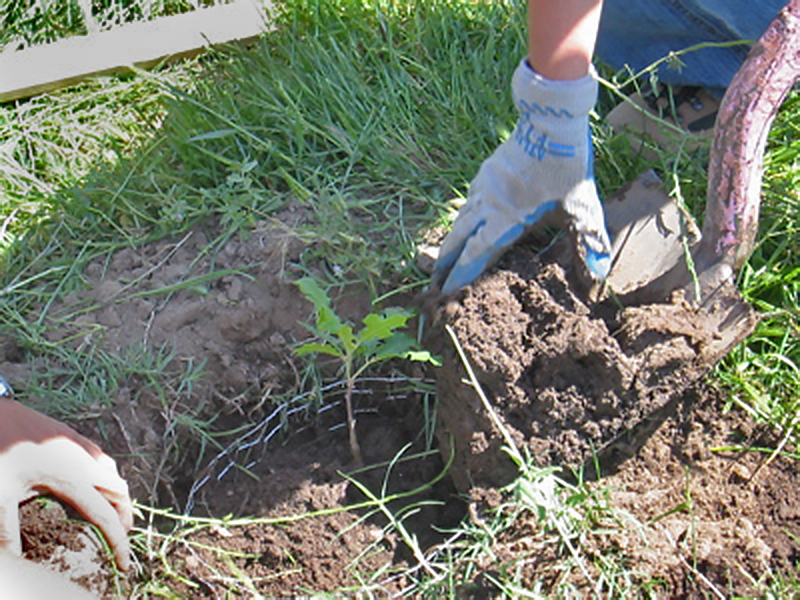
     The reserve also has continued to receive assistance. The Safari Club has worked to create habitat for many local birds and animals (more than 75 species) as well as migrators. Community groups and schools are invited to help by planting trees and other vegetation. The Tule River Parkway Association donated hundreds of oaks. Volunteers from organizations such as WildPlaces have periodically removed non-native invasive species. Managed uses include cattle grazing and groundwater recharge.

     Today, Yaudanchi Ecological Reserve enables us to amble through a landscape that after many years and many changes once again resembles this countryside as it appeared over a hundred years ago, now managed to abet the land’s service to nature. Visitors are invited for nature walks, bird-watching, field studies, photography, volunteering, and exploring the habitat of one of the San Joaquin Valley’s natural treasures.

                                                                                                                                                                           June, 2013

2017 Update: Yaudanchi Ecological Reserve is currently closed to the public. Its status as an Ecological Reserve and as a TCT Treasure is to be determined. As the TCT Project team learns more, we will post further updates.


Slideshow:


Quotes & More Photos:

“Our duty is to use the land well and, sometimes, not to use it at all. This is our responsibility as citizens, but more than that, it is our calling as stewards of the Earth. Good stewardship of the environment is not just a personal responsibility; it is a public value. Americans are united in the belief that we must preserve our natural heritage and safeguard the land around us.” — George W. Bush

“As recent[ly] as a hundred years ago, the Yaudanchi Ecological Reserve in California’s San Joaquin Valley was part of the lush, watery home of the Yaudanchi Indians. A rich riparian habitat filled with deer, coyotes, foxes and bobcats flourished alongside the perennial Tule River. Adjacent to the river, a vast alluvial floodplain hosted a wetland oasis for millions of native and migrating waterfowl . . . that stopped over during their winter trip down the Pacific Flyway.” — “Safari” magazine, March/April 1998

“The Tule River Tribal council has voted its approval of naming the great blue heron rookery near State hospital, the ‘Yaudanchi Wildlife Preserve,’ in honor of the Yokut subtribe of Indians which once lived in this area. . . . the proposed name will help honor the first Americans who lived in the Porterville area, perpetuating their name, and give an identity to the site . . . . ” — The Porterville Recorder, October 2, 1975

“Whenever I walk with a child, I think how much I have seen disappear in my own life. What will there be for this person when he is my age?” — Barry Lopez

“Only in space do you understand what incredible happiness it is just to walk, to walk on Earth.” — Alexander Laviekin

“The true meaning of life is to plant trees under whose shade you do not expect to sit.” — Nelson Henderson


Maps & Directions:


Address: Intersection of Road 265 and Worth Ave. about 4 miles east of Porterville

Coordinates: 36.0444, -118.9750

From Visalia, take Hwy 198 east to Hwy 65 south to Porterville. 

From Porterville, take Hwy 190 east about 4 miles to exit south on Road 265 (Blue Heron Parkway) toward the Developmental Center.

At the “T” junction with Worth Avenue (Ave. 140), turn left; the Reserve’s shelter and gravel parking lot are just ahead on the left.

NOTE:  The Reserve’s shelter was removed in 2017 and the Reserve was closed to the public when the Porterville Developmental Center terminated the agreement with the California Department of Fish and Wildlife to manage the Reserve.


Site Details & Activities:

​Environment: Foothills, grassland, ecological reserve, wildlife habitat
Activities: Birding, dog walking (on a 6′ leash; scoop poop), hiking, photography, wildflower and wildlife viewing
Open: The reserve is currently CLOSED to the public (since October 2017)
Site Steward: The management agreement with the California Department of Fish and Wildlife was terminated by the Porterville Developmental Center, effective October 2017.
Opportunities for Involvement: volunteer


Click on photos for more information.

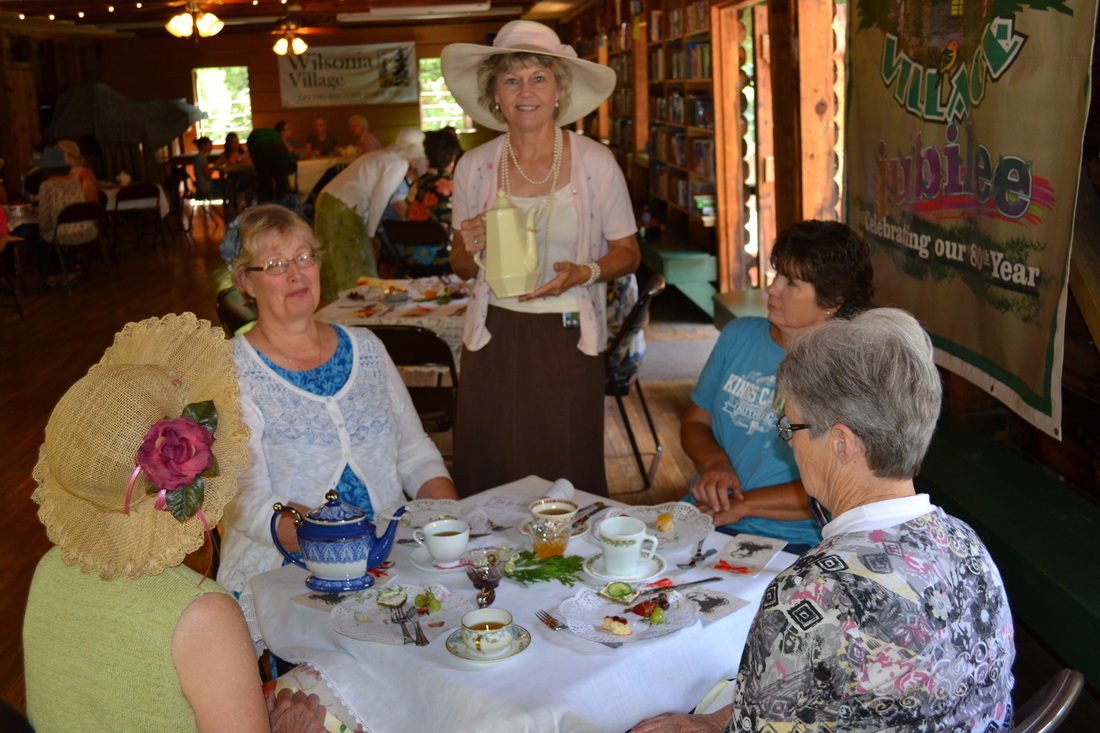
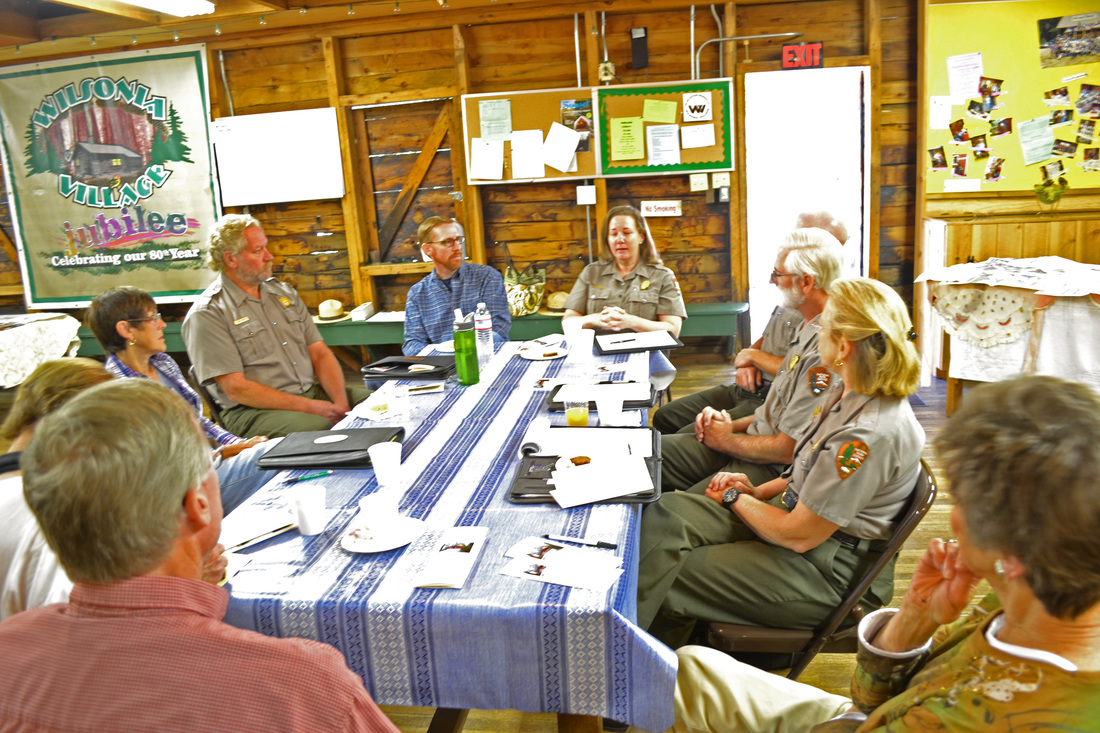
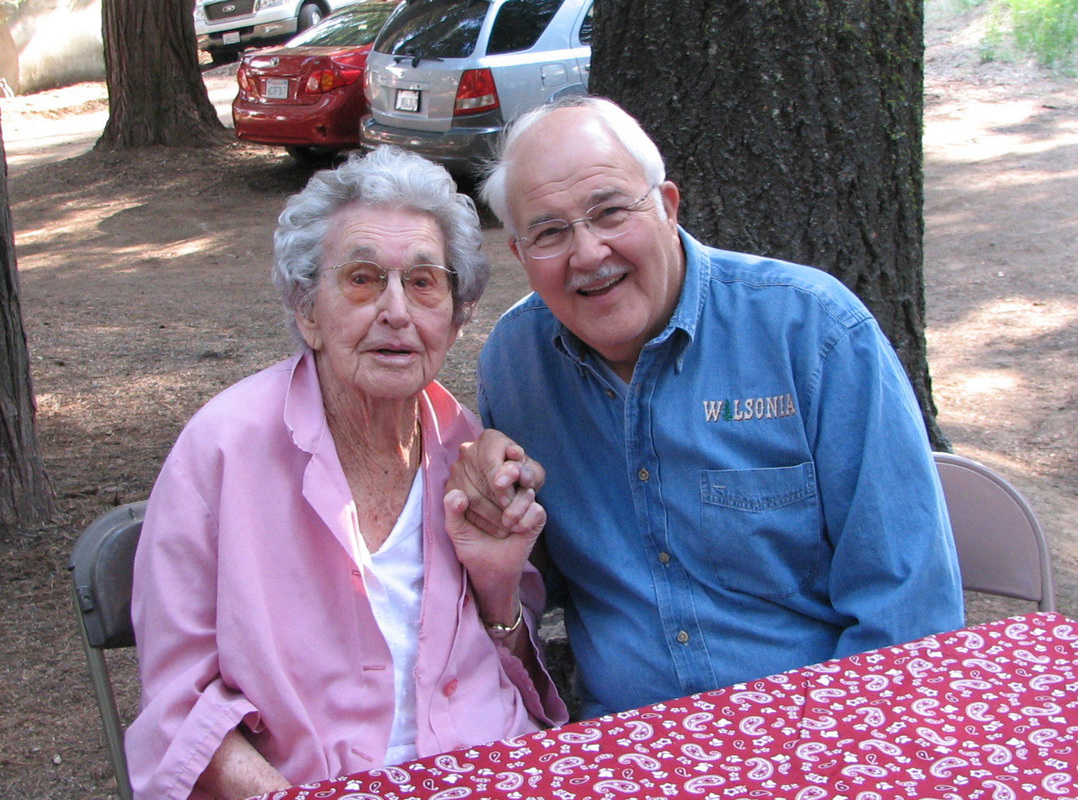
The Story of Wilsonia:
The Life and Times of a Mountain Town

by Louise Jackson

     To walk the streets of Wilsonia is to walk through a living past. Perhaps nowhere is there a better example of the ever-changing American dream.

     The mid to late 1800s was a time of dreams, especially in the far western United States. Freedom, equal opportunity, and settlement of vast, unoccupied government lands were seen as the unquestioned rights of every citizen. In sprawling, newly formed Tulare County, the forests were there for the taking, to explore, settle, and cut without restrictions, to divide into sections of ownership, to use and abuse at will. There was certainly more than enough for everyone.

     In 1857, Joseph Hardin Thomas set up a lumber mill in the county’s high timberlands near today’s town of Pinehurst. That opened settlement and logging in a prime area of Giant Sequoia trees until the 1870s, when a growing conservation-conscious public began an effort to save the grove.

     Daniel M. Perry held a homestead claim for 160 acres that lay just outside the grove. He watched as the conservation efforts grew through the years, and finally sold the parcel to lumberman Smith Comstock—just one year before the formation of General Grant National Park, in 1890. Times turned hard in the 1890s, the land changed hands several times, and no extensive logging on it ever took place.

     The turn of the 20th century heralded astounding changes for Tulare County. With the mass production of automobiles, recreational roads began to wind into the mountains, and interest in preservation of the forests gave way to new leisure-time pursuits.

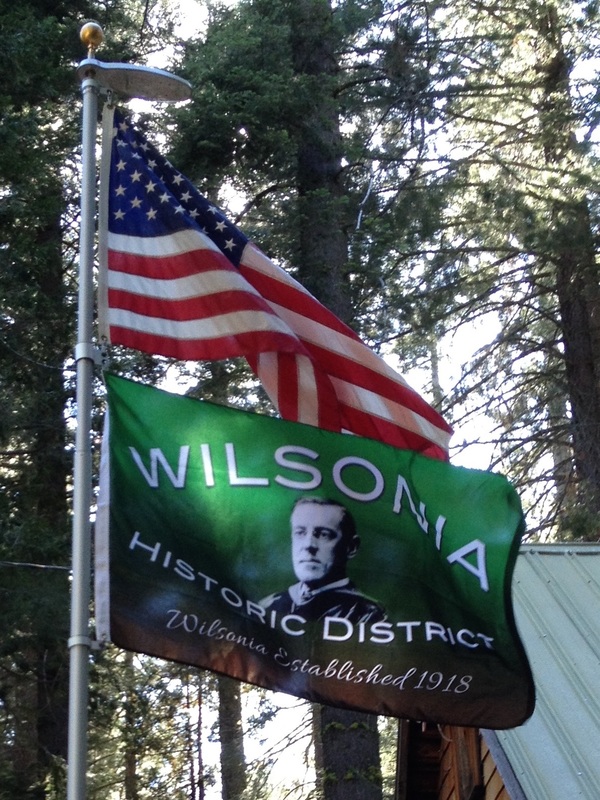
     California Fish and Game Commissioner Andrew Ferguson could see the potentials. He gained private title to the Perry tract in 1918 and turned a portion of it into a summer home subdivision. A staunch Democrat and ardent admirer of then President Woodrow Wilson, Ferguson placed a large sign with a portrait of the President at the entrance to the subdivision, proclaiming it “Wilsonia.” He also placed some restrictions. No meadows could be sold and no trees over six inches in diameter could be cut without consent of Wilsonia’s governing body.

     In 1919 Ferguson sold 20 of the 160 acres to a group known as The Masonic Family Club, and the self-governing group built 24 cabins as a separate part of the Wilsonia community. The rest of the land continued to be subdivided until, by the late 1920s, the tract had 180 landowners and 150 homes.

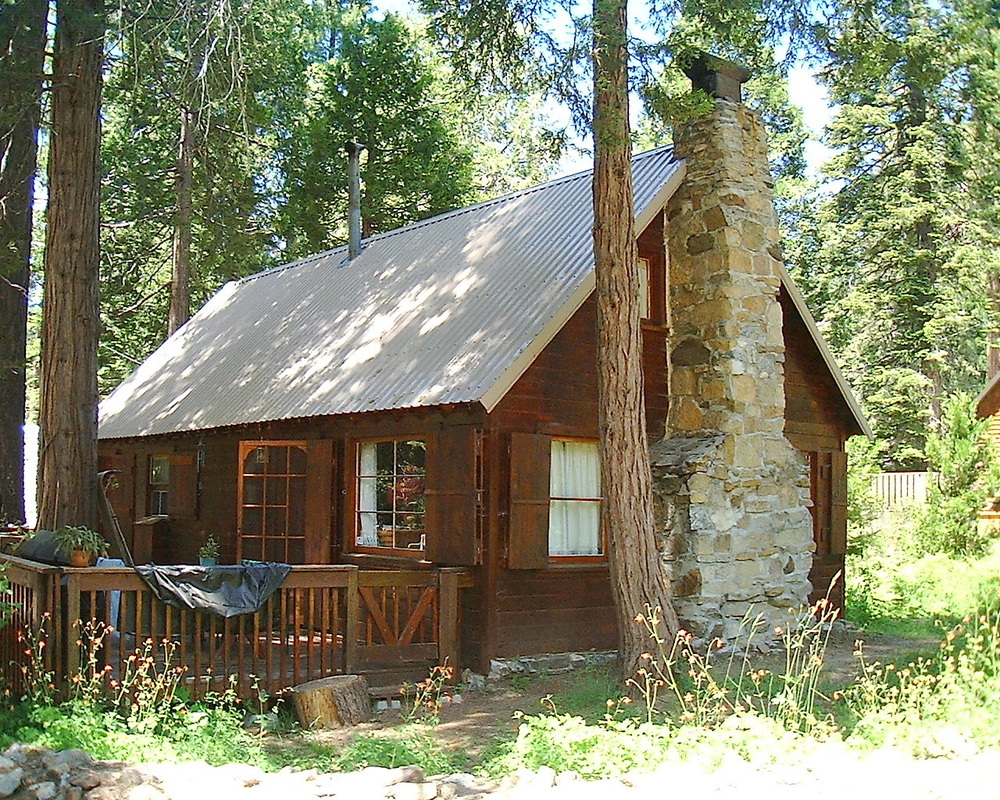
     Wilsonia was the perfect example of a recreational mountain community of its times. It was a family retreat, with the women and their children making the rustic cabins their full-time summer homes. Dances, social gatherings, neighborhood barbecues, cooperative campfire programs with the Park, hikes, horseback riding, and functions to raise money for a community clubhouse filled the summer days.

     But it didn’t last. In 1931, Andrew Ferguson died, and his son Thomas sold 20 acres of the Wilsonia tract to the federal government for a new approach to General Grant Park’s headquarters. Next, Thomas sold a 40-acre strip along the eastern boundary to a private individual. Finally, he sold the remaining unimproved land to the Park Service. This gave the federal government a large stake in the community and was to portend even more unsettling changes.

     The biggest change came in 1940, when General Grant National Park became part of the new, greatly expanded Kings Canyon National Park. Overnight, Wilsonia was transformed from a private National Forest residential enclave into a National Park inholding.

     Since the 1930s, the National Park Service had made it clear that one of its goals was to eliminate private inholdings in parklands. But it wasn’t until the 1960s, after the Great Depression, World War II, and recovery from them finally ended, that a new wave of conservation and preservation efforts could be addressed.

     Sequoia and Kings Canyon National Parks then included Wilsonia on a list of their historic cultural resources; but they also began working toward a now-mandated Park Service policy to eliminate private inholdings. With passage of the federal Land and Water Conservation Fund in 1965, the parks set up a “willing seller-willing buyer” program to acquire as many inholdings as possible. Kings Canyon National Park used the funds to buy as many cabins and commercial properties in Wilsonia as possible..

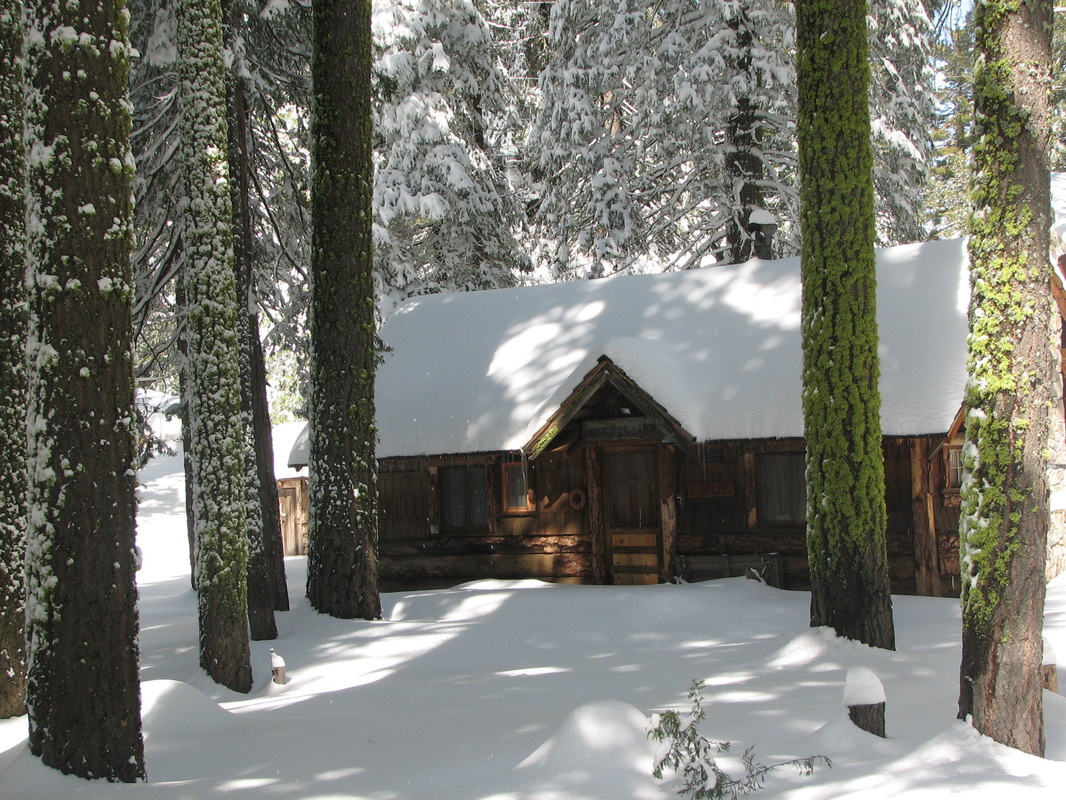
     One commercial owner and 12 cabin owners took long-term leases and continued occupancy until their leases expired. Eleven of those cabins remain as historic structures. The Park burned or razed others to return the sites to their natural state, but left intact some that might possibly be used for park administration, only to let the structures deteriorate. It denied uses such as horse corrals on some of the open lands, leaving them untended and uncared for, while it actively pursued more landowners who might be willing to sell. And the historic community began to disintegrate.

     The Park Service continued its land acquisitions until only 100 private acres remained. It also changed its management guidelines with a requirement that private property holders get approval from the Park Service before making any changes that might be deemed incompatible with the surrounding park.

     In 1978, a group of Wilsonia residents took a complaint to the United States House of Representatives, protesting the new Park policies that had not had adequate public hearings. Their action helped establish new legal guidelines for public input on government policies. Still, the policies didn’t change, and the community continued to decline.

     Finally, in the summer of 1991, another community group met to determine what could be done to save Wilsonia. Political action had achieved few results; perhaps national and state preservation guidelines would. If they could get Wilsonia listed on the National Register of Historic Places, further destruction of the community’s historic buildings might be stopped.

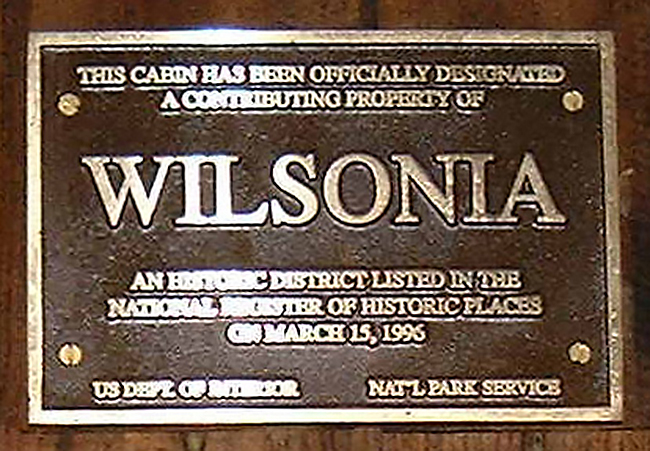
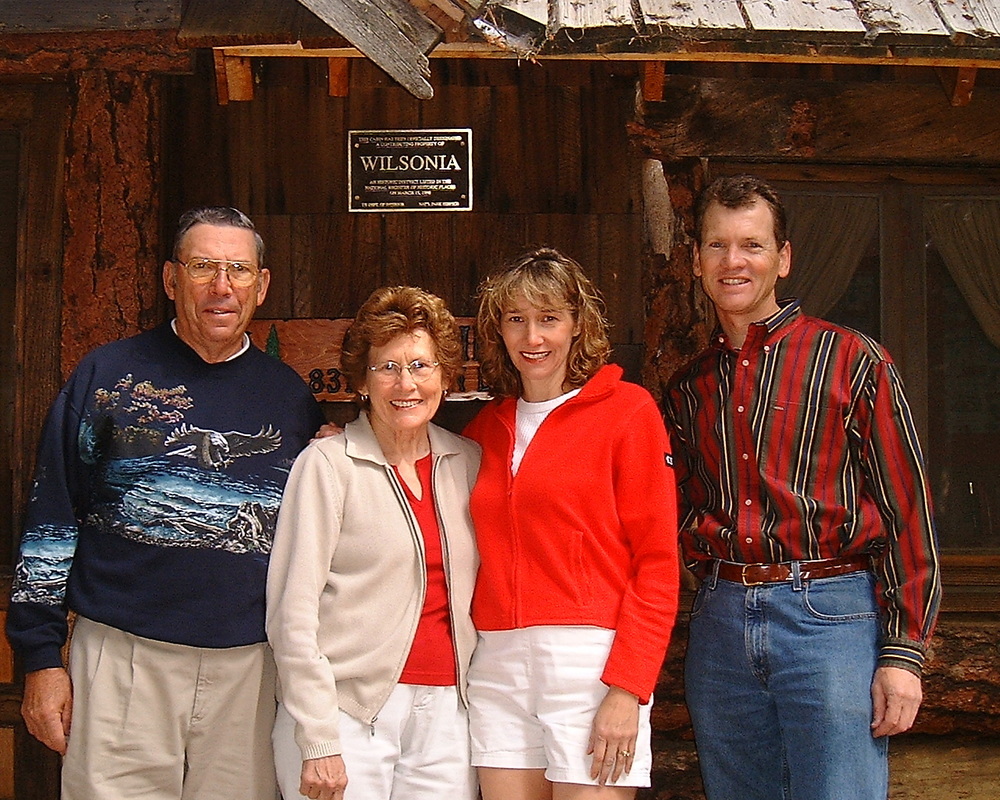
     The project took years of effort. The community raised funds to employ a professional historian who documented the private holdings and history of the community. Then it hired a Los Angeles firm to guide it through a long process of California State Office of Historic Preservation determination of eligibility. After that, the Department of Interior reviewed the findings. Finally, on March 14, 1996, the Wilsonia Historic District was officially listed on the National Register of Historic Places.

     In the following years, Sequoia and Kings Canyon National Parks have worked together with the community to maintain and improve the district’s lands and structures. Once again, changing times have helped the process. For the Parks, not only the listing’s required need for historic preservation, but a growing American emphasis on public/private partnerships, has opened opportunities for new programs and cooperation.

     For Wilsonia, its recognition as an important historical resource has been the fulfillment of an American dream. That dream may continue to change, but the community and its vital history will live on for us to share.

April, 2016


Slideshow:


Quotes & More Photos:

“The mission of the Wilsonia Historic District Trust is to preserve, interpret, and perpetuate our community’s history, unique quality of life, intense and long-term family commitment, and natural resources that have been handed down over generations. Specific attention is given to the many cultural artifacts and natural resources which contribute to keeping Wilsonia a vibrant Historic community.” — Wilsonia Historic District Trust

“The oldest extant cabins in Wilsonia date from 1919, the year after the first tract in Wilsonia was subdivided and lots went on sale.” — National Register of Historic Places (NRHP) Registration Form

“. . . the majority remain modest and simple, reflecting the seasonal nature of their occupancy and the outdoor focus of life in Wilsonia.” — NRHP Registration Form

“Wilsonia still conveys a strong impression of a recreational mountain community devoted to single family use typical of those built between 1918 and 1945. [The] combination of built and natural elements creates a cultural and historic resource unusual within the State of California.” — NRHP Registration Form

“Every summer we spent weeks at the cabin. It was fun to pump water, bathe in a big wash tub in front of the wood stove, and read or play games by lantern light before going to bed in the big dormitory room upstairs. The highlight of the week was the square dance at the club house on Friday or Saturday evenings. . . . ” — Patty Runyon, Wilsonia cabin owner, in The Wilsonia Experience

“California’s Sierra Nevada mountain resorts, cottages, cabins and summer homes built within or near national forests between 1850 and 1950, played a significant role in the development and appreciation of California’s natural environment . . .” — NRHP Nomination Form

“Quite a few families brought horses up for a few weeks [or] the entire summer and they were kept in public corrals or in backyards. Our horses were trailered up, but some horse owners rode up from the valley, making the trip in one or two days.” — Pat Hillman, in The Wilsonia Experience

“During the late 19th century, recreation became a means to escape the role of domesticity for women who began to engage in fishing, hiking and mountaineering for the first time. By the turn-of-the-century, outdoor recreation . . . was becoming available to the middle and working classes due to increased leisure time and wealth resulting from urbanization.” — NRHP Nomination Form

“‘The National Park Service is trying to eradicate Wilsonia from the map,’ declares Phi Nelson, board chairman of Wilsonia Village, Inc., the property owners’ association. . . . Henry Schmidt, superintendent of Sequoia-Kings Canyon National Park, agrees that the government wants eventually to eliminate the historic village. . . . What the villagers really feel is that Wilsonia has been there for years and they want it to stay the way it is. So far the little village is still on the map — the little village that refuses to sell out.” — The Christian Science Monitor, September 26, 1975

“We live in an era now where . . . people do away with the old. . . . I think to lose the historical art contained in those old structures is a tragedy. It’s to lose a little bit of ourselves.” — Jana Botkin

“Preserving historic structures and sites has been one of the duties of the National Park Service since its creation in 1916. But until recently the NPS focused its historic preservation attention on the most obvious and traditional sorts of history. Indian ruins, colonial plantations, cavalry forts, and the like, dominated the Service’s definition of history. During the past few years, however, as a result of the National Historic Preservation Act, the Park Service has begun to identify and preserve a much wider variety of buildings and sites within its areas.” — The Sequoia Bark, Sequoia and Kings Canyon National Parks, July 13-July 27, 1978

“Park Service naturalist and historian Bill Tweed . . . says Wilsonia residents and the Park Service share the same goals: to preserve Wilsonia’s rustic, rural character. . . . To preserve its historical status, Tweed said Wilsonia residents know they must preserve their cabins in a primitive, eccentric manner consistent with the community as a whole.” — Visalia Times-Delta, July 4, 1997

“We no longer belong to that group who are racing through life. We are anchored by the draw of . . .  that little red cabin in the  Sierras. Wilsonia now holds us in her arms and under her spell. We feel we belong to this forest, heart and soul . . . .” — Nancy A. Patterson, in The Wilsonia Experience

“In memory of its past; in respect for its present; in hope for its future; . . . For the majesty of its trees; the songs of its birds, the color of its wild flowers, the blue of its sky, the glory of its mountains; . . . For the joy of family and friends; for parents and grandparents; for children and grandchildren; for generations and generations to come; We dedicate Wilsonia.” — from dedication service of NRHP plaque at Wilsonia Clubhouse; July 4, 1997


Maps & Directions:


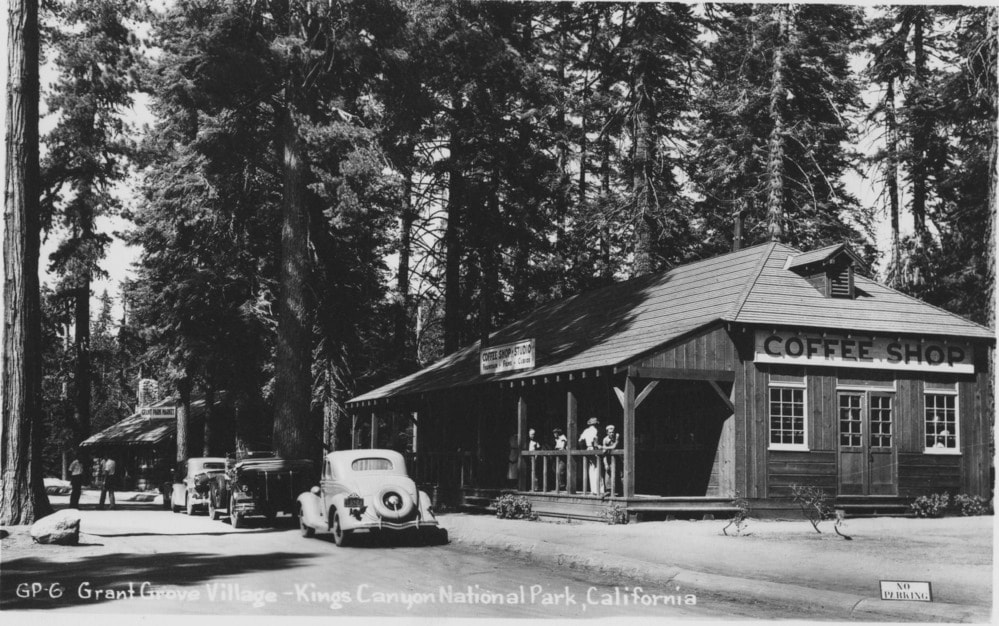
From Visalia, take Hwy 63 north to Hwy 180 east to Kings Canyon National Park. At the “Y” about 1.75 miles after the park entrance station, turn left toward Grant Grove. Shortly before reaching Grant Grove Village, turn right at the sign for Wilsonia.

NOTE: Wilsonia predates Kings Canyon National Park and continues as private property.  Please always be respectful of owners’ property and privacy.


Site Details & Activities:

Environment: Mountains, historic private cabin community in mixed conifer forest, elevation about 6,600 feet; inholding within Kings Canyon National Park, near Grant Grove Village
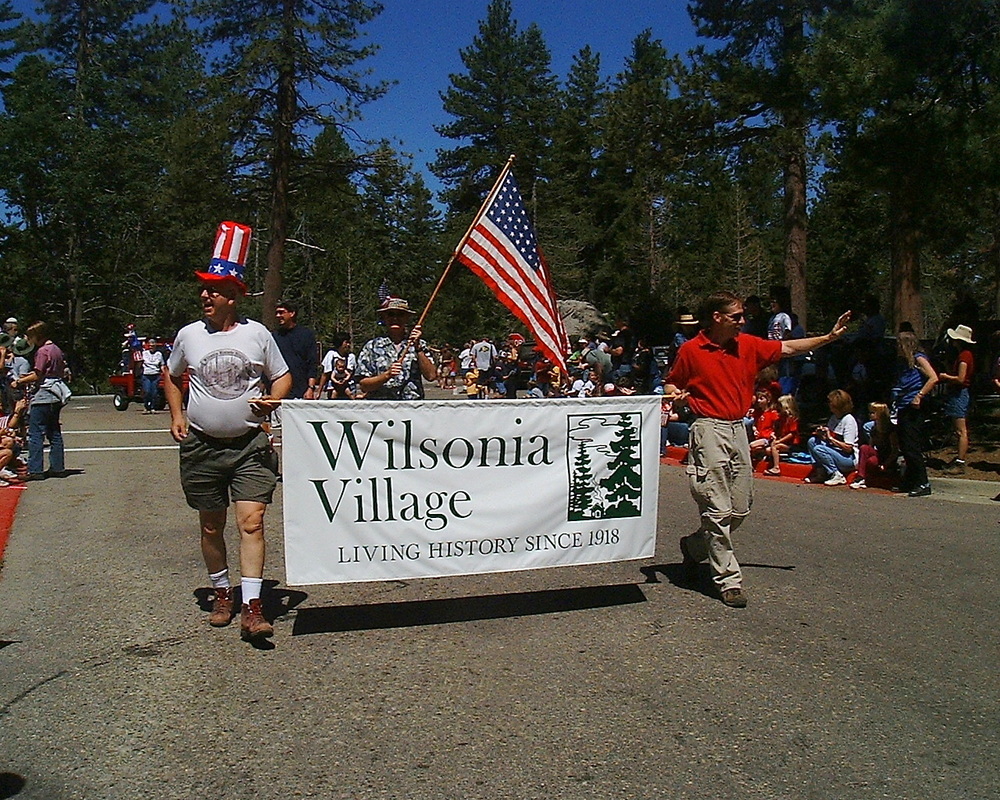
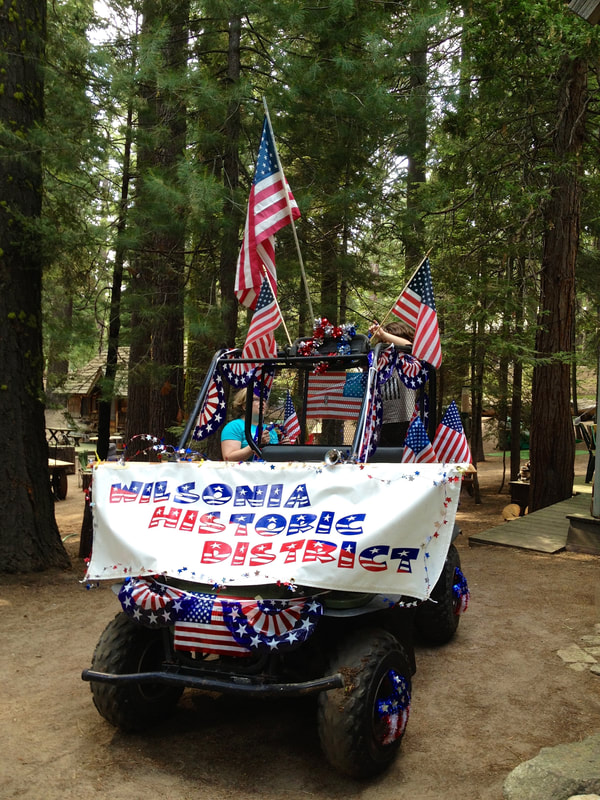
Activities: visiting a historic cabin community listed on the National Register of Historic Places, annual 4th of July parade
Open: Daily, depending on weather, summer through early fall; roads are not maintained in winter, so no visits then
Site Stewards: Wilsonia Historic District Trust; National Park Service
Opportunities:
Links:
Books: 1) The Wilsonia Experience, Jubilee Edition, 1918-1998, by Fern Tripp (self-published at Craig Meadors Advertising, Dinuba)


Click on photos for more information.

The Story of Whitaker’s Forest

by John Greening

     Located in a beautiful giant sequoia grove on Redwood Mountain, adjacent to Kings Canyon National Park, and now surrounded by Giant Forest National Monument, Whitaker’s Forest maintains the oldest permanent research plots (established in 1915) in California. There, the University of California, Berkeley’s (UCB) Center for Forestry studies vegetation, breeding birds, resident mammals, controlled burning, and giant sequoia growth and regeneration. At Whitaker’s Forest Research Station these types of studies will have been conducted for over one hundred years as of 2015.

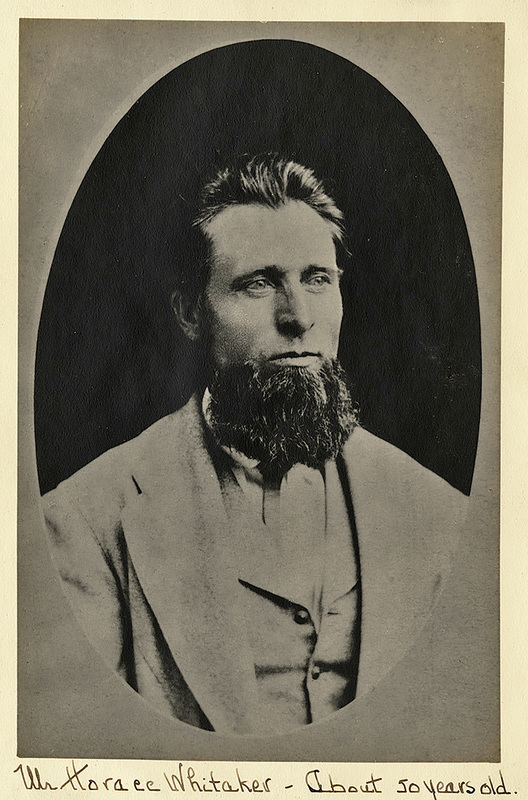
     In 1910, Horace Whitaker donated all 320 acres of Whitaker’s Forest to UCB, with the restriction that the land be “held in its present condition for forestry investigation and research.” Whitaker had moved from the East Coast to California in 1856, and to Tulare County in 1858. Near Orosi he established a stock ranch in Stokes Valley.

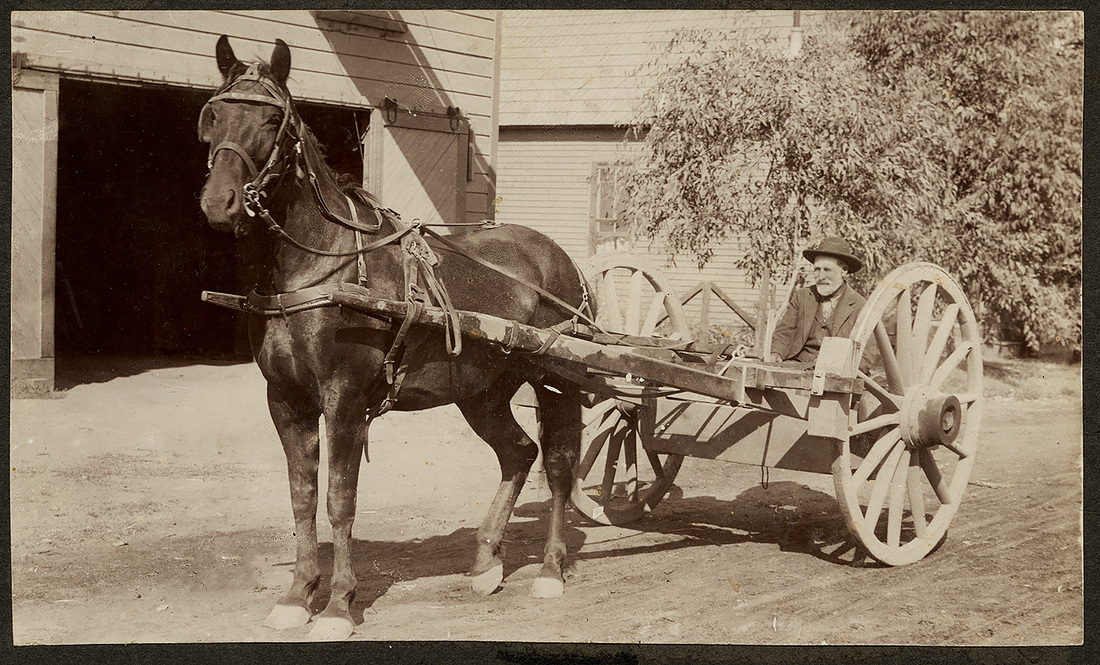
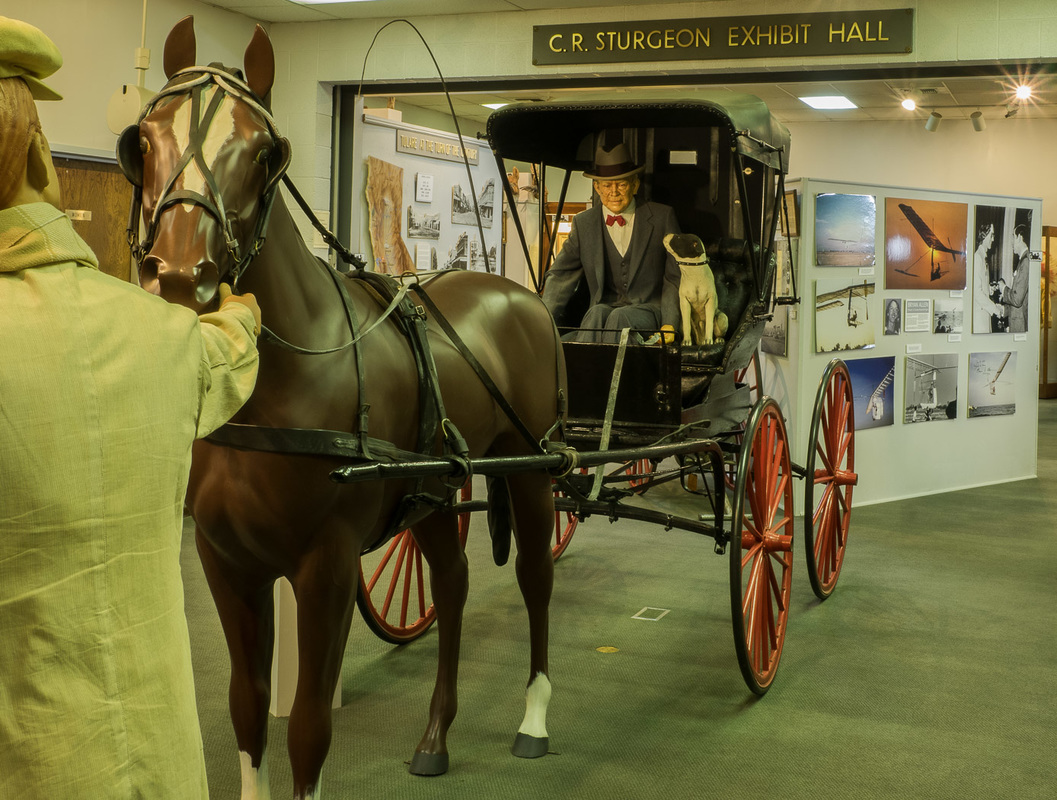
     He was quite a colorful character, always driving a two-wheeled cart, forbidding dogs on his property, and sometimes putting up fences across roads. Even so, he acquired a significant amount of property. In a county tax lien sale in 1895, he bought the forested land at the end of the road leading up from Badger to the western slope of Redwood Mountain.

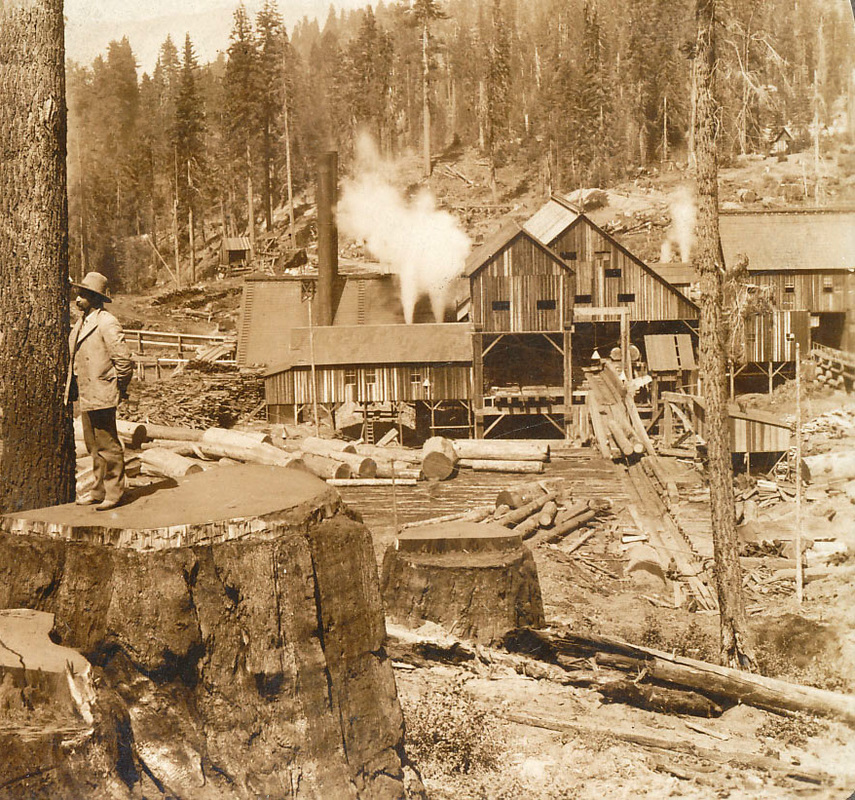
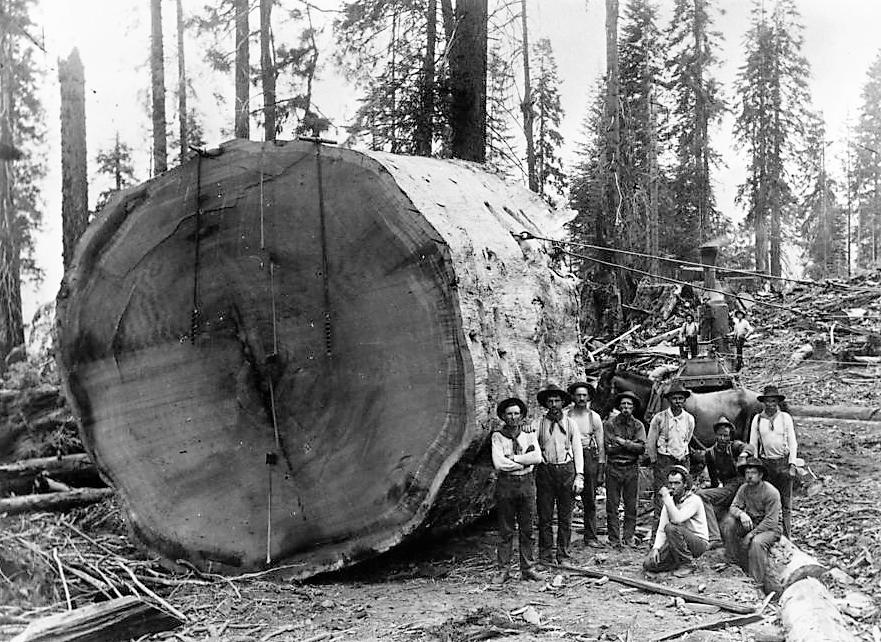
     The land had been logged from 1870 to 1878 by the Hyde Mill, and Whitaker made rails and fence posts by hand from the large quantities of sequoia chunks that were left scattered over most of the property from the milling days. John Muir visited the area surrounding the Hyde Mill and Redwood Mountain in 1875 and was in awe of the magnificent trees and vistas, but was equally appalled by the mill’s “. . . forming a sore, sad center of destruction . . .” in the sequoia forest.

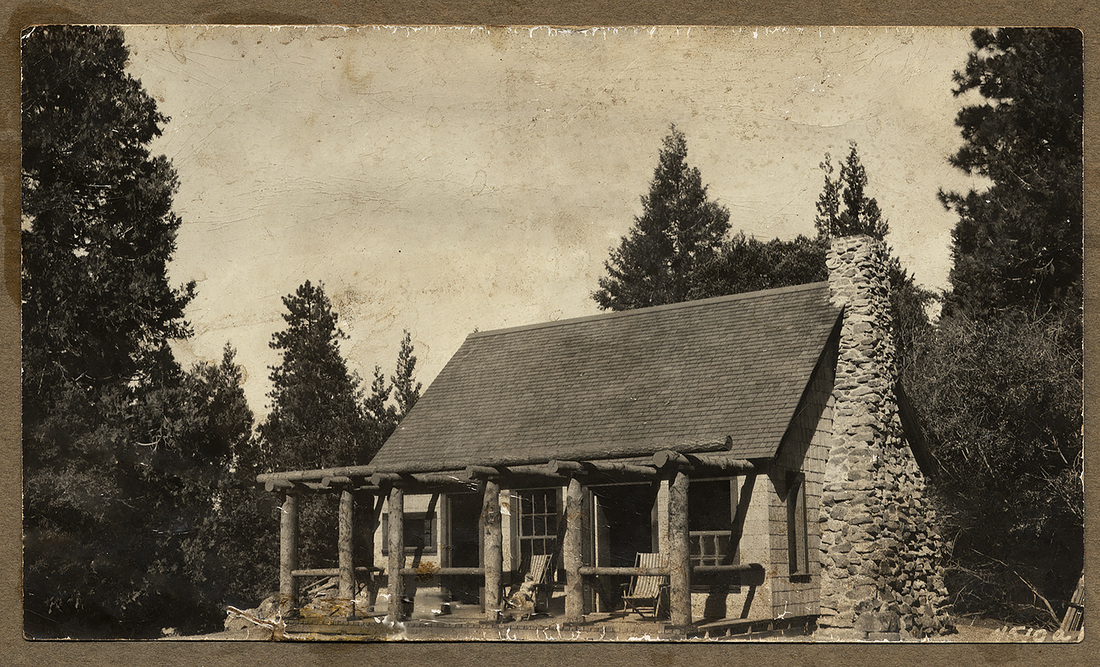
     Whitaker built a cabin on the flat where the mill had stood. He became very attached to the property, spent time every summer there, and developed a strong sense of conservation and land stewardship. In 1910, in failing health, Whitaker met with the President of UCB to discuss donating his forest property to the university.

     In August of that year a deed was created and signed, giving the university title to the property upon his death. Less than two months later, on October 16, 1910, Whitaker died and was buried on his ranch in Stokes Valley.

     In 1914, the university’s Division of Forestry was established on the Berkeley campus, and in 1915, UCB professor Woodridge (“Woody”) Metcalf surveyed Whitaker’s Forest and began setting up study plots to monitor the growth within the sequoia groves. Some of these plots have been measured regularly ever since.

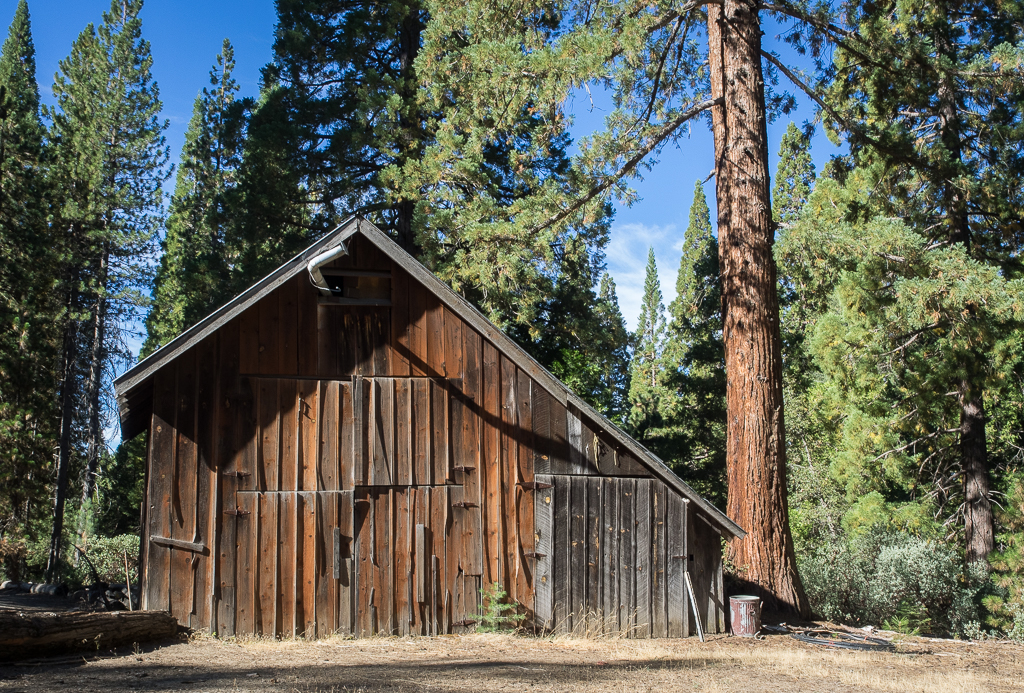
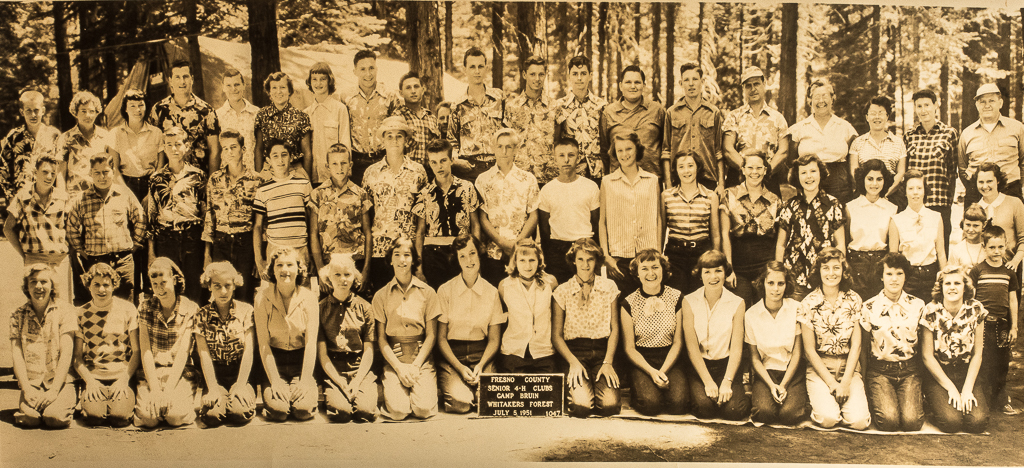
     In 1926, Metcalf, along with the heads of 4-H organizations in Madera, Fresno, Kings, Tulare, and Kern counties, began to organize a summer youth camp at Whitaker’s Forest. They planned to educate the campers in forestry and conservation. Camping began in 1926, and in the late 1920s and 1930s the camp expanded to include multiple tent platforms, a bathhouse, and a swimming pool on the site of the old Hyde Mill.

     From 1945-1947, an additional camp site, the Bruin Camp, was developed on the northeast side of the road. Consisting of five buildings and 25 tent platforms, it functioned as a camp for children with diabetes. At their peak in the 1950s, the two camps served over 15,000 students a year. But the last camping season was in 1960, and in the fall of 1961, due to increasing health standards and safety concerns, and because the extensive development went well beyond Whitaker’s provision that his forest should remain a forest, almost all of the camp facilities were removed. Three cabins, a barn, two bathhouses, and a power shed from the camps remain.

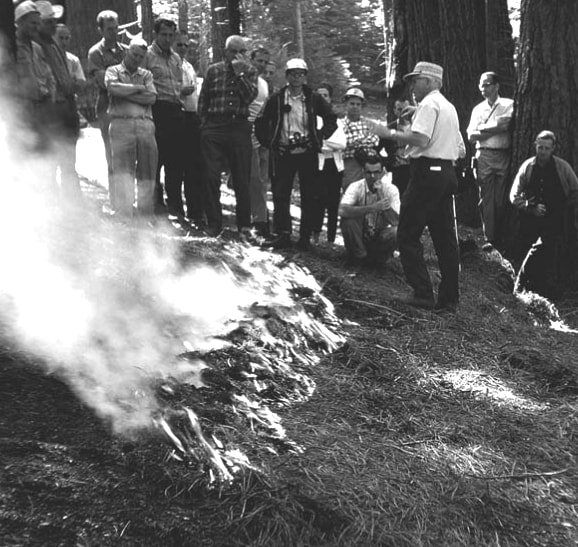
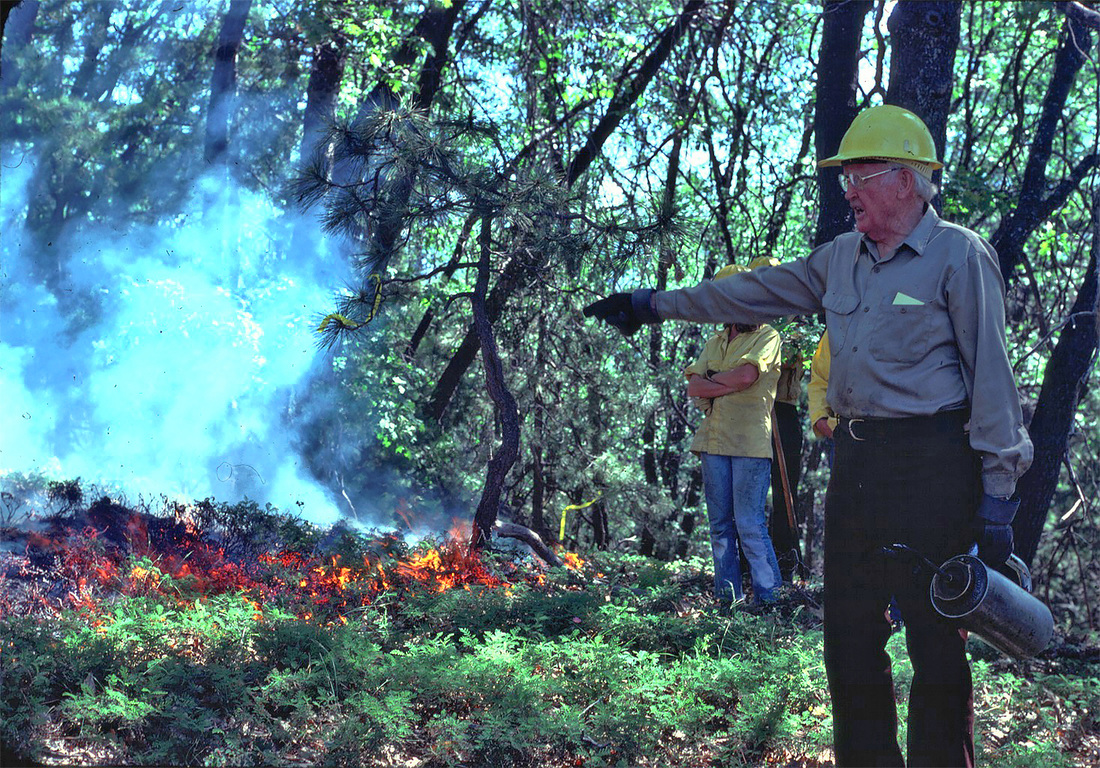
     Until the early 1960s, the western national parks and national forests adhered to the old Smokey Bear philosophy of putting out all fires on the lands they managed, no matter where the fires occurred. In the late 1950s, however, Dr. Harold Biswell of UC Berkeley’s School of Forestry began research and an informational campaign that would change nearly everyone’s view of how best to manage these forests.

     He and his students conducted what he called his “little burns” in the Whitaker’s Forest groves. This was the first research on the use of prescribed burns in western forests. Biswell tirelessly advocated for a more modern and beneficial method of dealing with fire in the forests, and now his doctrines are widely accepted among forest ecologists and forest managers.

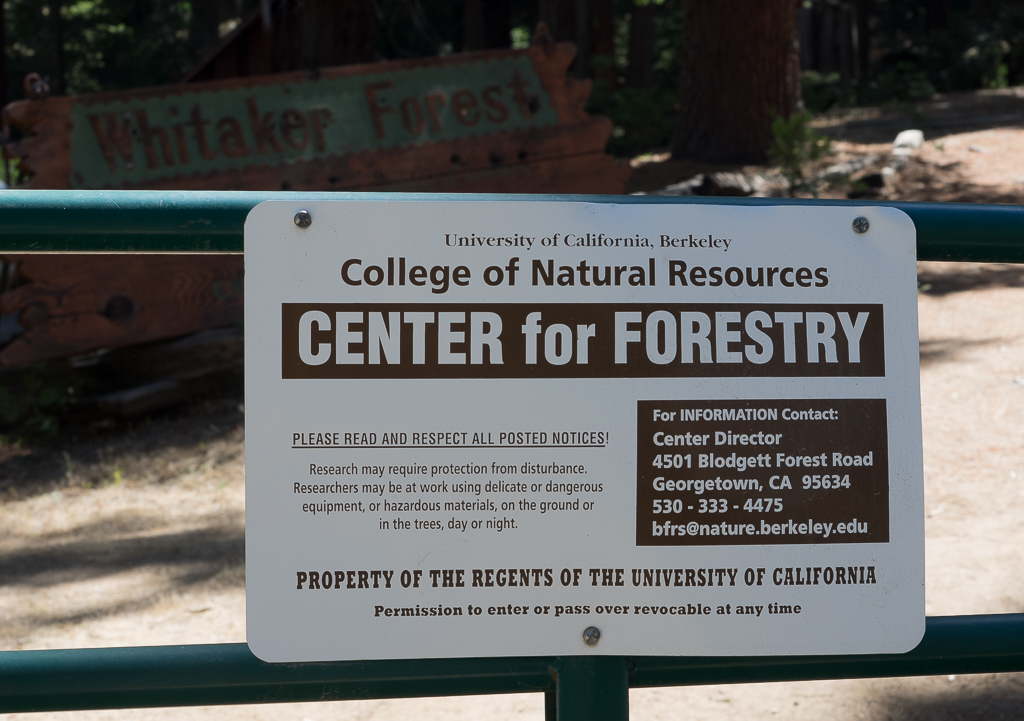
     Today, research continues at Whitaker’s Forest with the goals of providing methods on how best to sustainably manage sequoia forests while protecting the native flora and fauna that live there. In accordance with Horace Whitaker’s deed restrictions, the property is being maintained in its forested state in perpetuity, used for research and teaching. The public is allowed access free of charge (with reasonable regulations), but large-scale grazing activities are prohibited, along with selling or dispensing “whiskey or other intoxicating liquors.”

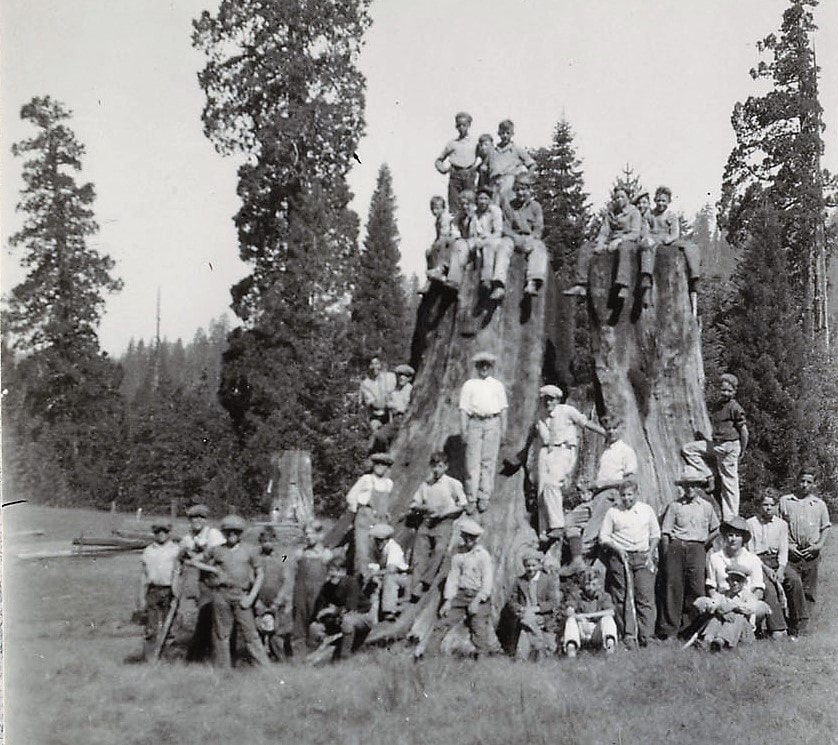
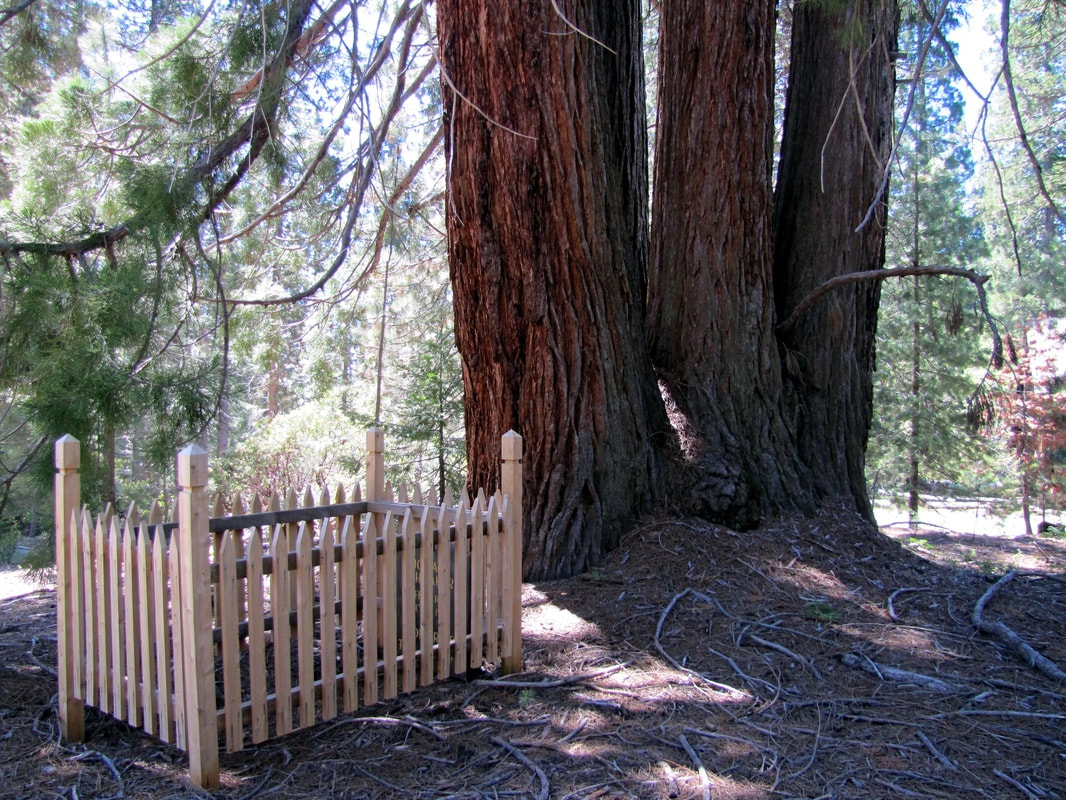
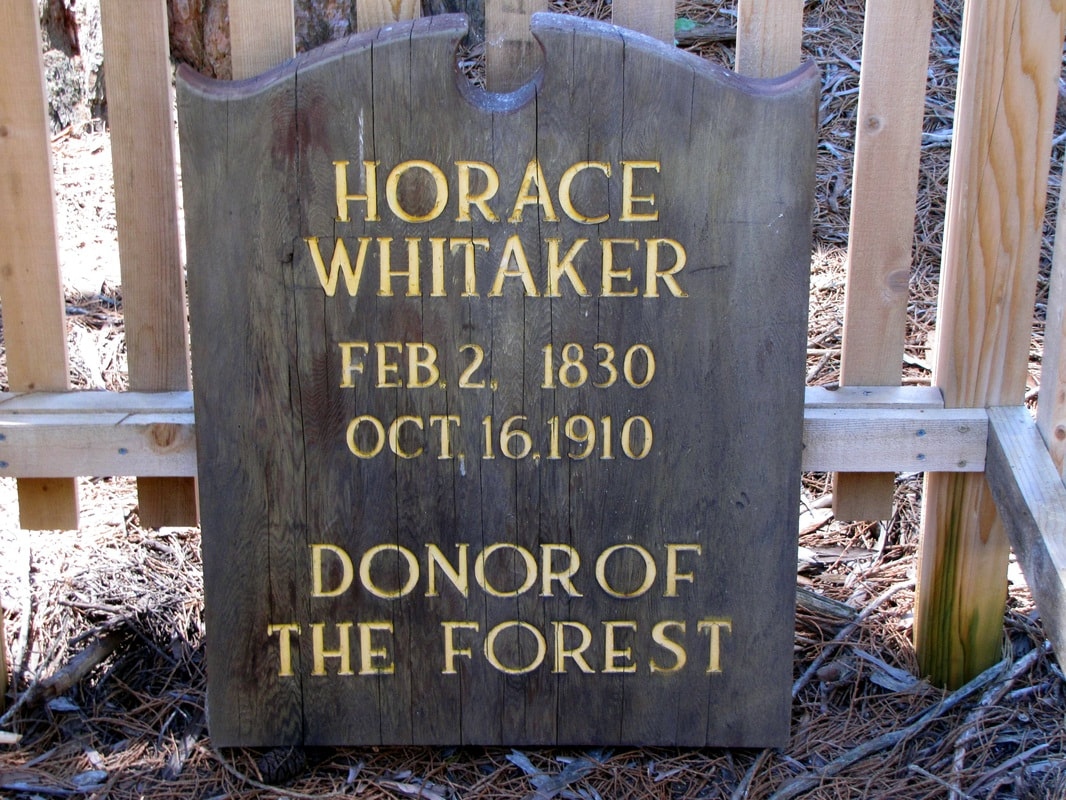
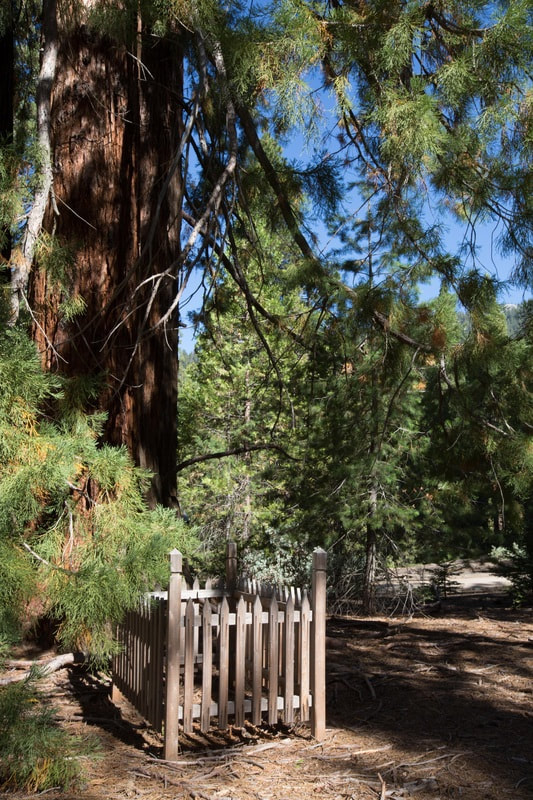
     What a great gift Horace Whitaker gave to benefit his beloved forest, forestry science, and all the generations to come. You can stop and thank him for it when you visit, because, in 1936, at the request of his niece, his grave was moved from his old ranch to lie forever in his forest, beneath a fine group of young sequoias just where the road bends in the old mill clearing. There, inside a little picket fence, a sequoia wood marker commemorates “Horace Whitaker, Donor of the Forest.”

November, 2014


Slideshow:


Quotes & More Photos:

“Immediately to the south of Hyde’s mill the mountain crest is crowned with a close continuous growth of the finest big trees I had ever seen. Their noble forms [are] exquisitely outlined on the blue sky, while all the slopes leading from the very bottom of the canyon are densely forested with the same exuberant growth. The finely curved, dome-like summits of almost every tree are seen rising regularly above one another in most imposing majesty.” — John Muir

“The Redwood Mountain area, of which Whitaker’s Forest is a part, was considered by John Muir to be one of the finest giant sequoia groves. The huge giant sequoia trees were interspersed with other conifer species. The Forest had a clean, open, park-like appearance which was maintained by periodic fires.” — University of California, Berkeley, Center for Forestry

“[T]he forest was donated to the University four years before there was a forestry program at UC! The first UC representative to set foot on the property was Professor Woodbridge Metcalf in 1915, together with soon-to-be state forester Merrit Pratt. They surveyed in the property lines and established five permanent growth plots to document the growth of the plentiful 30- to 40-year-old giant sequoia regeneration that varied in height from 6-50 feet tall. Subsequent remeasurement has shown that the . . . tallest are over 200 feet tall, with the largest having a diameter of 82.6 inches.” — Frieder Schurr, 2000

“In 1927 after the construction of a new road by the Forest Service, a start was made on what is now the finest 4-H club summer campsite in the entire State . . . enjoyed by thousands of boys and girls from the five southern San Joaquin counties.” — Woodbridge Metcalf, 1938

In 1938, Whitaker’s niece, Mrs. Lillian Jensen Page, of Sultana, arranged to have Whitaker’s body moved from Orosi to “a shaded spot in the forest he loved so well.” “The new grave was dug in the shade of a beautiful clump of young sequoia trees which are known as the Whitaker’s Pride group. He is said to have surrounded them with a picket fence when he first acquired the property so that they might be protected from injury by bands of cattle being driven to and from the mountain pastures.” — Woodbridge Metcalf, 1938

“The objective for the management of WFRS [Whitaker’s Forest Research Station] is to provide a location for research in forestry and related fields of natural resources by graduate students, faculty, and scientists from universities as well as public and private agencies. Research is expected to advance disciplines’ fields of knowledge by providing insight into theory, methodological practice, or application to management of mixed conifer-giant sequoia ecosystems.” — University of California, Berkeley, Center for Forestry, Policy for Use of Whitaker’s Forest Research Station

The first research into the role of fire in western forests happened in Redwood Canyon. Dr. Harold Biswell conducted research for UC Berkeley in Whitaker Forest. He took students into the field, a believer that the only way to teach about fire was to experience it. . . .” — Deb Schweizer

“Twelve species of mammals, three of reptiles, and 44 of birds (including spotted owls) were identified during the wildlife surveys in 1999.” — Frieder Schurr

“It is the intent of the Center to manage WFRS such that these natural resources are conserved for future research in perpetuity. . . . the best known available management practices will be utilized to maintain and, where feasible, improve the capability to produce: beneficial uses of water, wildlife habitat, protection of historic and pre-historic cultural sites, wood products, aesthetic quality, and recreation.” — University of California, Berkeley, Center for Forestry

“[T]he research activity on Whitaker’s is rapidly increasing. Momentum is added by research interests from Kings Canyon/Sequoia National Parks and from being surrounded by the newly formed Sequoia National Monument. . . . We look forward to a bright future in which UC will be leading research in giant sequoia ecology and management.” — Frieder Schurr


Maps & Directions:

Directions:

GPS:  36.707241,-118.9323281; on USGS General Grant Grove topo

NOTE: RVs over 22′ should not attempt the drive to Whitaker’s Forest.

From Visalia, take Hwy. 198 east to Lemoncove.  Turn left onto Hwy 216, toward Woodlake.  In about 1/2 mile, turn right onto J21/Dry Creek Rd. and follow it toward Badger.  Approaching Badger, take Rd. M465/Whitaker’s Forest Rd. toward Sierra Glen and Eshom Campground.  At the junction with Rd. 469/FS14S75, follow FS14S75 past the driveway to Eshom Campground and go about one mile farther to the entrance to Whitaker’s Forest.  Park on the side of the road across from the entrance gate.* 

To make a loop trip back to Visalia: when you’ leave Whitaker’s Forest, continue uphill on Forest Road 14S75 (dirt road) toward Redwood Saddle, Quail Flat, and the Generals Highway.  At the junction with Generals Hwy, turn right to return to Visalia via Sequoia National Park and Three Rivers (Hwy 198), OR turn left to return via Kings Canyon National Park and Hwy 180 west to Hwy 63 south to Visalia.

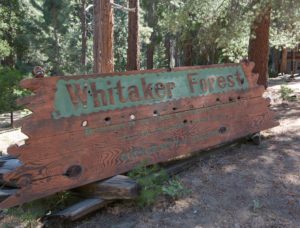
*(NOTE:  The big wooden Whitaker Forest sign was stolen in about 2020!  It has not been found or replaced.  If you know where it is, please Contact Us.)


Site Details & Activities:

Environment: Mountains, sequoia forest (320 acres, elevation 5050′-6400′)
Activities: birding, botanizing, hiking, photography, wildflower and wildlife viewing; camping nearby
Open: daily, weather permitting
Steward: University of California, Berkeley Forests, Rausser College of Natural Resources [formerly Center for Forestry]; 530-333-4475, athomson@berkeley.edu
Opportunities:
Links:


Click on photos for more information.

The Story of the Tule River Parkway

by Nancy Bruce

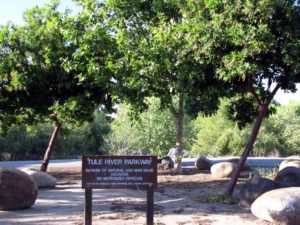
     It all started with the vision for a river refuge — a place for the people of Porterville to access the natural world without leaving town. The Tule River Parkway Association (TRPA) was originated by Don Zuckswert, a professor at Porterville College, sometime prior to 1990 to advocate for and assist the City of Porterville in creating a pathway along the river.

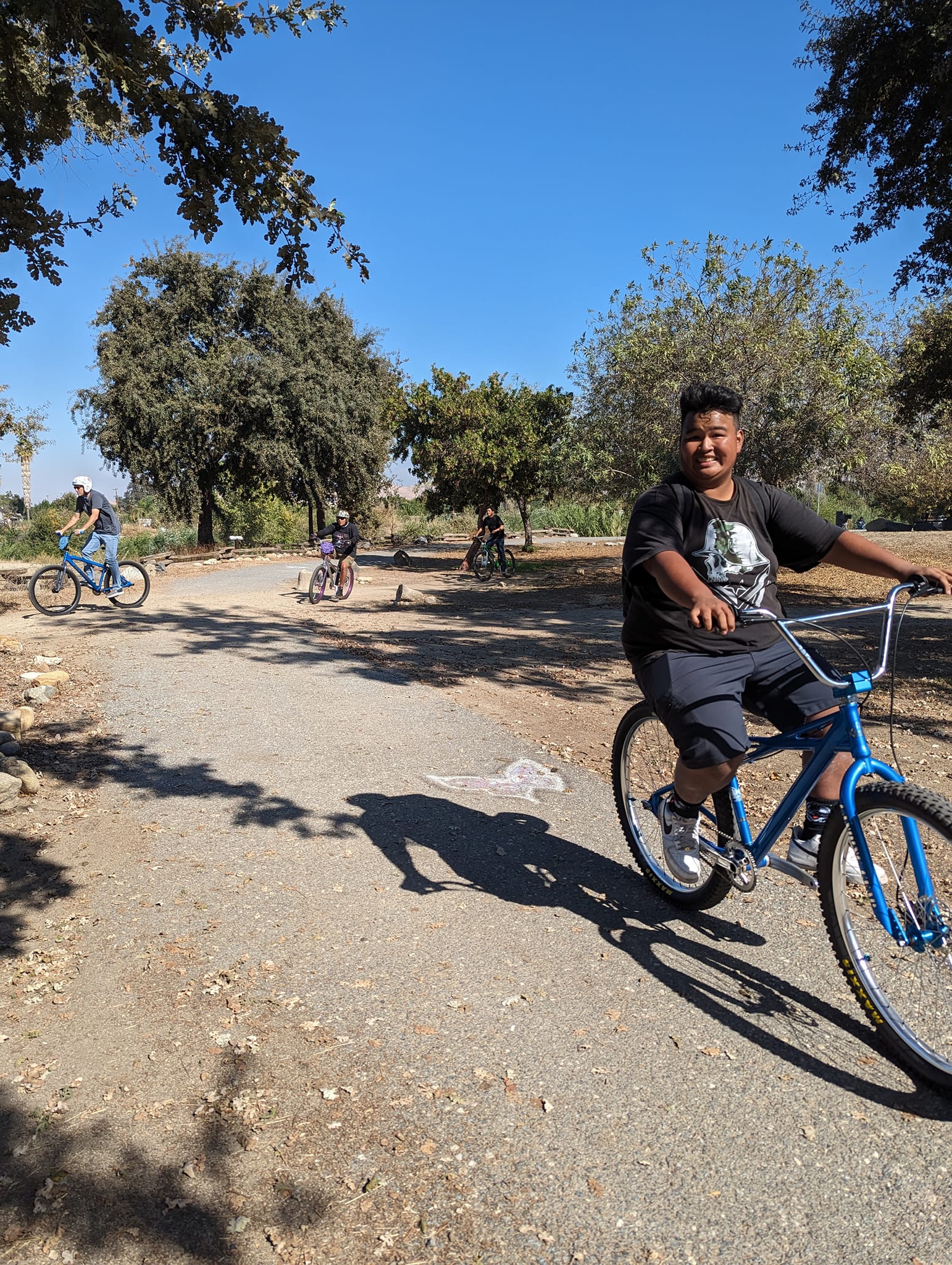
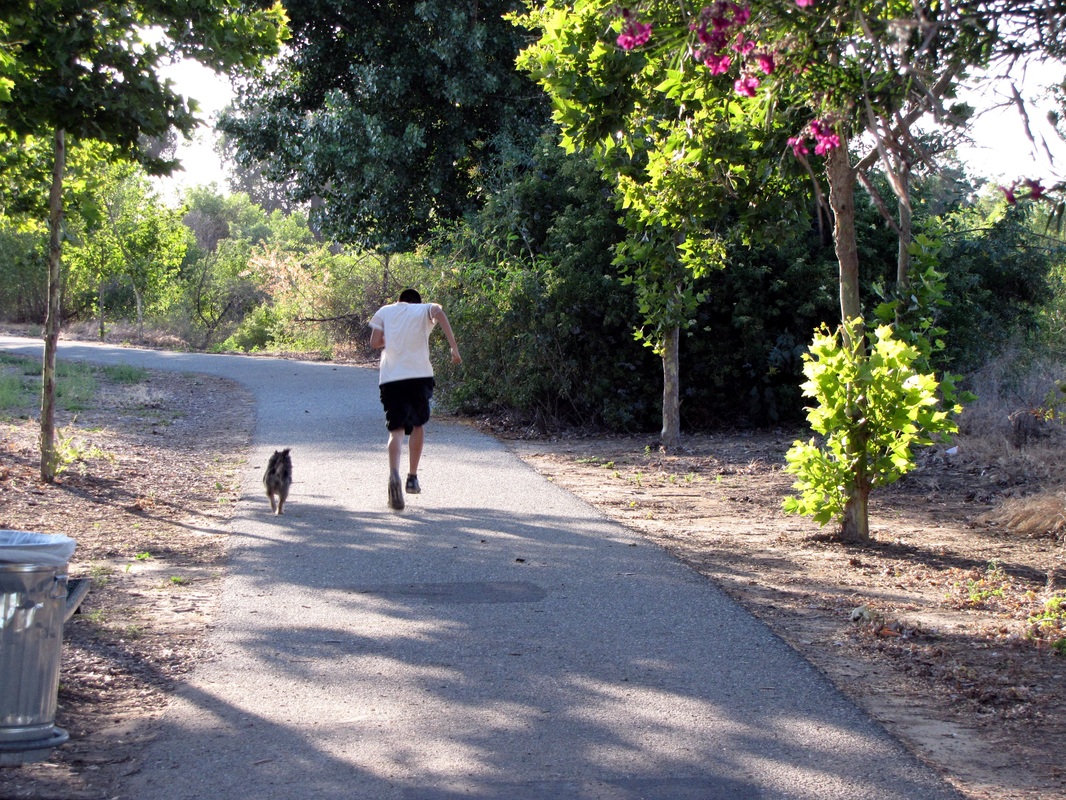
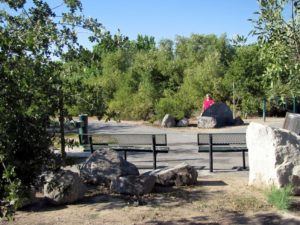
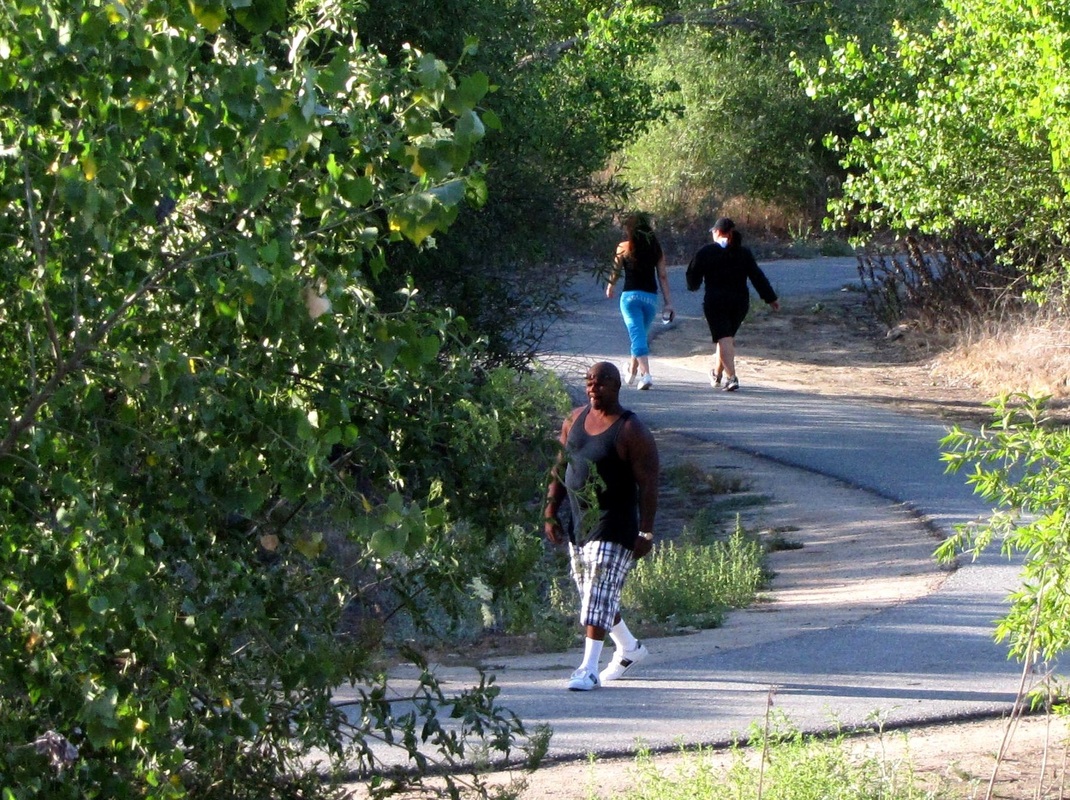
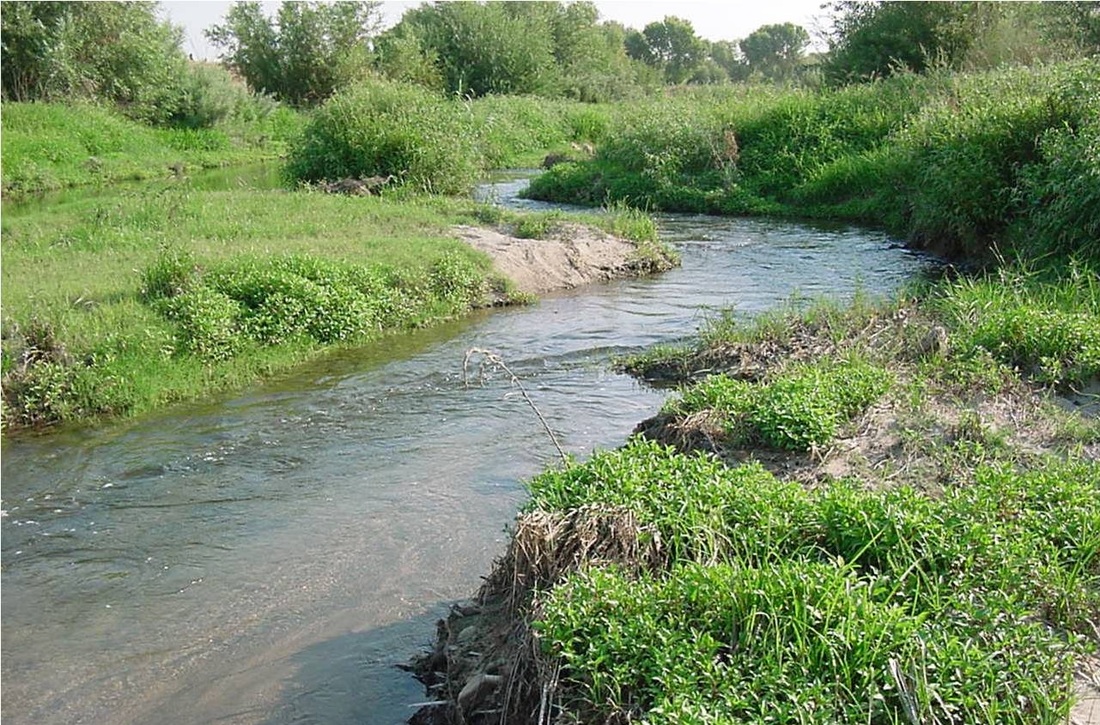
     Today local residents can retreat to the 2.2–mile Tule River Parkway for a stroll, jog, bicycle or horseback ride under leafy shade trees. The more adventurous may explore a network of informal sandy trails winding along the river’s floodplain and to the river’s edge from Jaye Street to Westwood.

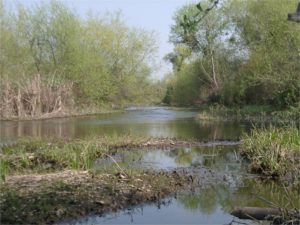
     This story is about how the action of local residents transformed the river and simultaneously inspired a change of heart about the value of the Tule River.

     The Tule had been neglected and mistreated. The river was looked upon as simply a conduit for water conveyance rather than a dynamic ecosystem. Old tires, discarded appliances, furniture, and refuse littered its path. Bulldozers scoured the riverbed to open up the channel for flood control and attempted to decrease an infestation of the noxious Arundo weed ( Arundo donax). Unfortunately, the unwanted plant thrived after bulldozing by sending up thousands of new shoots while native plants including Elderberry bushes were plowed over.

     TRPA members Don Zuckswert, Don Stover, Art Cowley, Teresa Stump, and later Cathy Capone dedicated themselves to the cause of cleaning up the river and making it accessible to the public. They rallied the support of residents by holding meetings, and writing letters to city officials and editorials to the Porterville Recorder. They documented the trash-strewn riverbed, infestation of invasive plants, and bulldozing of the riverbed in a photographic slide show titled “River of Shame” – and presented it to local service clubs such as the Morning Rotary and the Garden Club in order to raise awareness and support for the parkway.

     The vision for a river pathway earned the attention of Porterville’s civic leaders early on. In 1992, the City of Porterville’s Tule River Parkway Master Plan proposed a pathway stretching from the Friant-Kern Canal eastward to Bartlett Park near Lake Success– a distance of more than 12 miles. The City began the slow and tedious work of purchasing the land, acquiring permits, and obtaining funding. A break-through happened when Edward B. “Ted” Cornell and his wife, Elizabeth, of Cotton Center, donated a key 17-acre parcel. That donation fulfilled the matching funds needed to procure a $400,000 grant from CalTrans, and the trail building began.

     The TRPA built momentum by activating the populace — getting hundreds of people to come down to the Tule and work together to begin transforming the river of shame into a healthy waterway ecosystem. “People did not realize that there was this potentially incredible resource right in the center of town,” stated Capone. “We had to engage them.”

     Naturalist-guided walks engaged residents in learning the importance of fostering native plants and trees along the riverbanks to provide wildlife habitat. The walks educated residents (and the powers that be) about more environmentally friendly management practices for taking care of rivers.

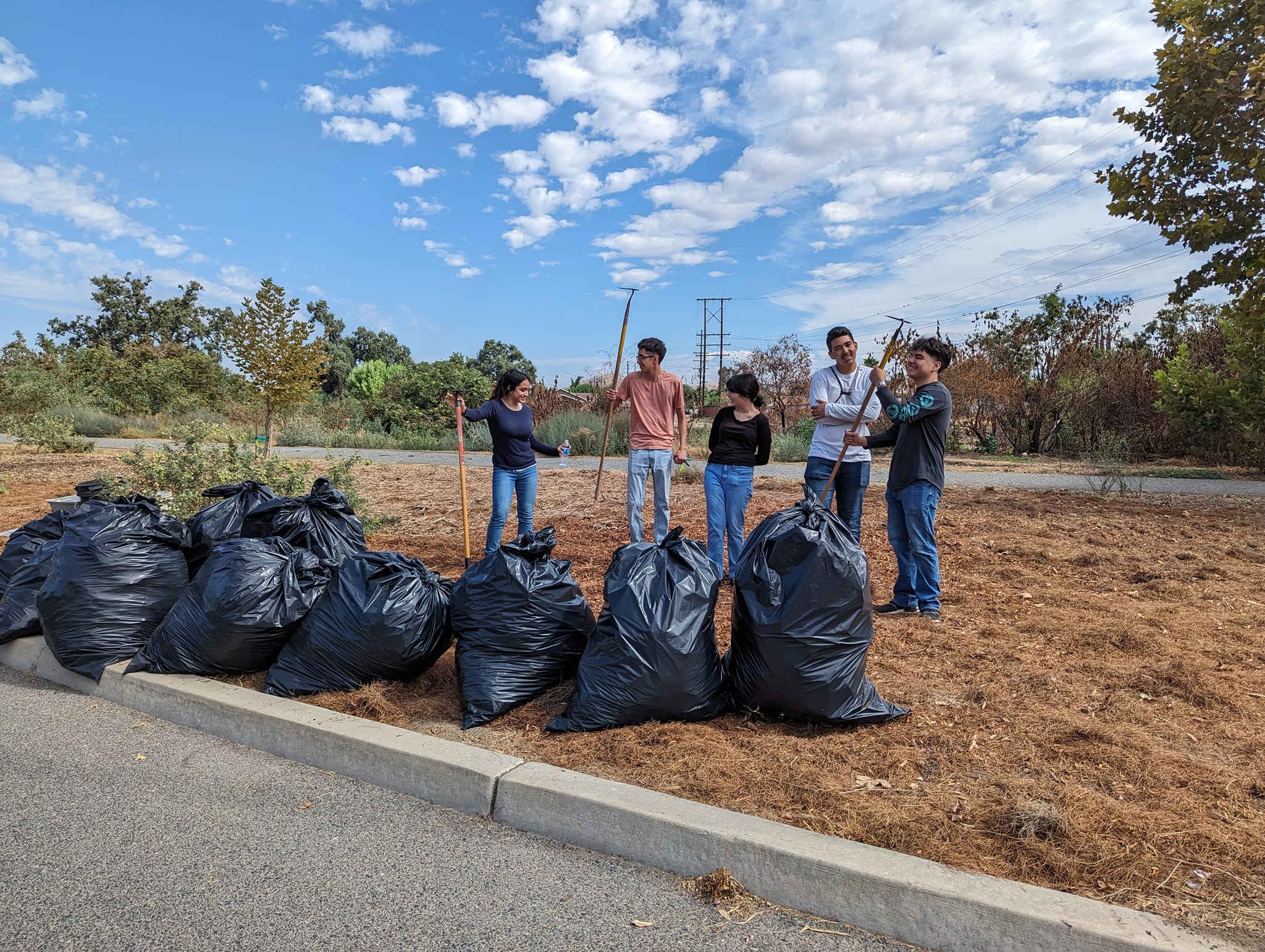
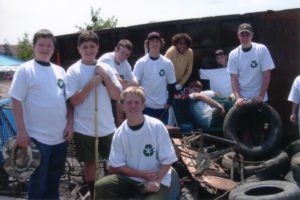
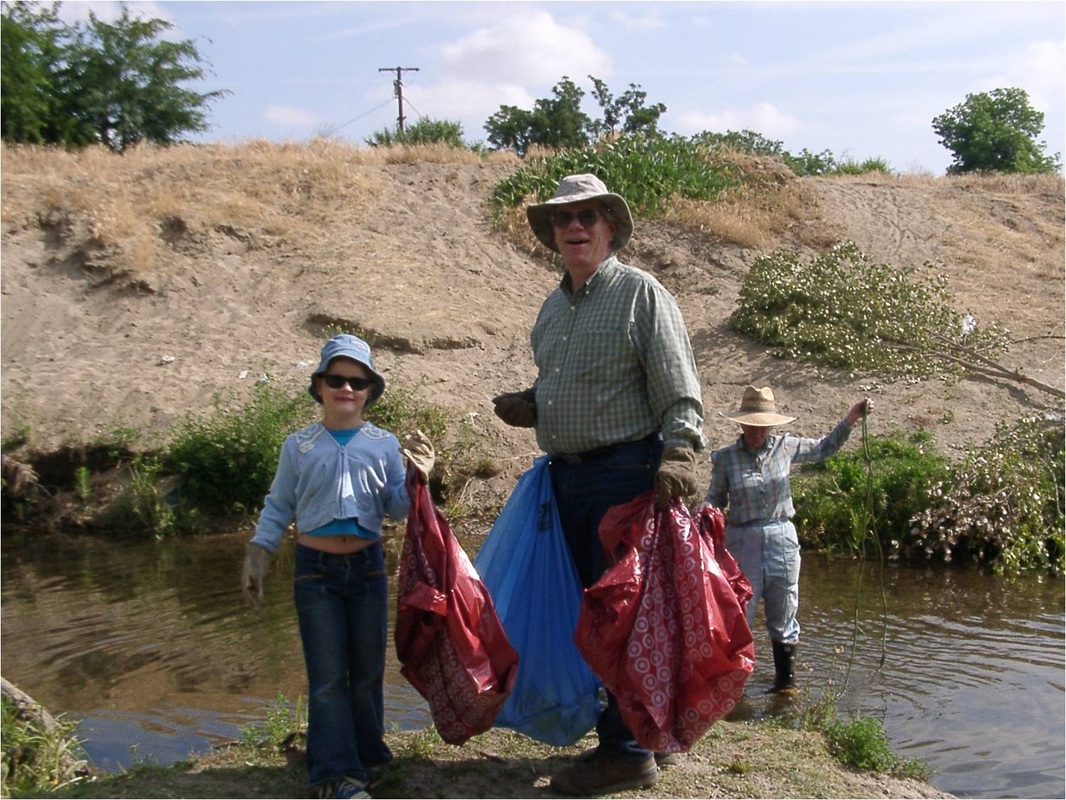
     River cleanups involved volunteers from Girl Scouts, Boy Scouts, Wal-Mart Distribution Center, Unitarian Universalist Fellowship of Porterville, to hundreds of others working together to remove the heaps of trash, discarded tires, and appliances from the riverbed.

     According to Cathy Capone, the slow growth of oak trees seemed, at times, to parallel the pace of progress with the river parkway. When asked about the ultimate lesson learned from her over twenty years of involvement in the project, Capone summed it up, “If we work together we can get a whole lot more done than if we work individually. Look to your city council, look to your board of supervisors, look to other organizations. Don’t give up your goal. Find partners.”

     Porterville broke ground on the first section of the parkway in December, 1998. In April of 1999, the first half mile had been completed, from near the Highway 65/Highway 190 junction north and eastward to Indiana Street. In February, 2003, the next segment, from Indiana to Jaye Street (.9 mile), was dedicated. Next came the .7 mile stretch from Jaye Street to Main Street, dedicated in January, 2005.

     TRPA has gotten grants and donations and involved many dozens of volunteers in beautifying the parkway by helping to plant and maintain hundreds of trees along the paved trail. Improvement and expansion of the parkway continues with a new neighborhood park adjacent to the river at Plano and community interest in formal parkway paths between Westwood and Highway 65, and from Main Street east to Plano.

     At the heart of Porterville’s General Plan 2030 are guiding policies that include protecting the Tule River Corridor as an open space resource to meet multiple needs, including bike and trail linkages, storm water drainage and treatment, wildlife habitat, and active and passive recreation.

     Truly, a change of heart has occurred, and the value of a river has enriched the lives of Porterville residents. And the Tule River Parkway continues to grow. “We’d love to connect the parkway to Bartlett Park at Lake Success, and connect it going farther west also. Some of our more adventuresome members would love to see it go to the Great Divide,” says Cathy.

                                                                                                                                                                                       February, 2014


UPDATE, 09/27/24:  In 2014, the City of Porterville was planning to extend the Parkway eastward from Main Street to Plano Street and westward from Highway 65 to Westwood, for a total length of 3.5 miles.  Construction has now begun on the eastward extension, to take the paved pathway from  S. Main Street to Fallen Heroes Park near S. Plano Street.  Two bridges will connect the pathway with the large island that can be seen from the Plano Street bridge and the park.  The new section will include solar lighting, retaining walls, and trail signage, and should be completed within a year.  TRPA and the City of Porterville will also use U.S. Fish and Wildlife grant funding to enhance habitat for native birds and wildlife in the project area, removing invasive non-native plants and planting and tending four distinct habitat communities.  (Volunteers have already created 31 wildlife-friendly gardens in the Native Plant Demonstration Project that runs east along the existing Parkway from the trailhead at the intersection of Parkway Drive and Oak View Street.)


Slideshow:


Quotes & More Photos:

“The Parkway Association is devoted to preservation, restoration, and development of public use of the Tule River riparian corridor. This includes re-vegetating the river area with native species.” — Cathy Capone

“The TRPA, led by Don Zuckswert, who was a retired college professor, really saw the potential of the Tule River to the town of Porterville.” — Cathy Capone

“There are many ways to salvation, and one of them is to follow a river.” —David Brower

“The care of rivers is not a question of rivers, but of the human heart.” — Tanaka Shozo

“[I]s there any task more pleasurable, or more vital, than learning to love the landscape in which we live?” — Guy Procter

“To learn something new, take the path that you took yesterday.”—John Burroughs

“That river monk, great blue heron, meditating behind the lightning strike of his beak in a downwater pool.” — Barry Lopez

“Look to your city council, look to your board of supervisors, look to other organizations. Don’t give up your goal. Find partners.” — Cathy Capone

“A river, to be sure, is a means to economic production, but before that it is an entity unto itself, with its own processes, dynamics, and values. In a sense it is a sacred being, something we have not created, and therefore worthy of our respect and understanding. To use a river without violating its intrinsic qualities will require much of us. It will require our learning to think like a river, our trying to become a river-adaptive people.” — David Worster


Maps & Directions:

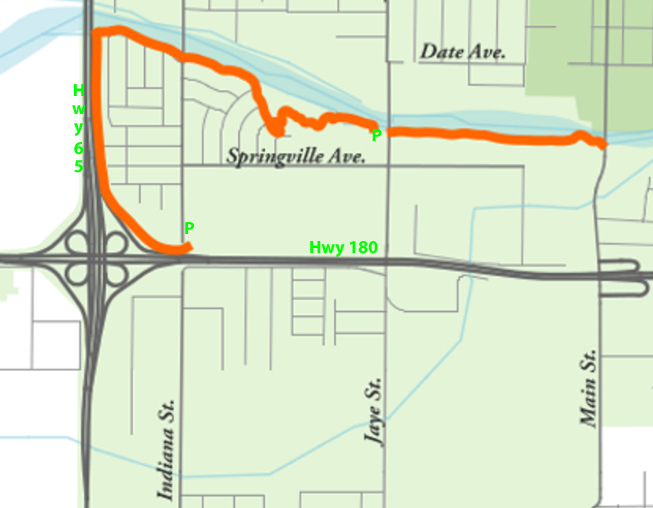
Parking for the Parkway is available at the Park & Ride lot on Jaye St., just south of the bridge over the river, and at the Parkway trailhead on S. Indiana St. near the junction of Hwy 65 and Hwy 190.

From Visalia, take Hwy 198 east to Hwy 65 south to Porterville; exit onto Hwy 190 east.  Turn north (left) onto S. Jaye St. to the Park & Ride (on your left) just south of the Tule River bridge.

The map below shows the current (October, 2024) extent of the Parkway (length: ~ 2.2 miles; elevation gain ~ 25 ft.) and its current end points:

                                                               Parkway Map


Site Details & Activities:

Environment:  Valley, urban, mostly along the Tule River riparian corridor
Activities:  biking, birding, botanizing (native plant gardens), dog walking (on leash, scoop poop), hiking, horseback riding, photography, picnicking, special events, water play (seasonal); paved trail is handicapped-accessible at Jaye Street Park & Ride lot; if your group would like a docent-led nature walk along the Parkway, please contact Cathy Capone at 559-361-9164
Open:  daily, free.  Note: the river will typically be dry during the hot summer months.
Site Stewards:  City of Porterville Parks and Leisure Services, 559-782-7536; Tule River Parkway Association,  559-361-9164
Opportunities for Involvement:  donate, volunteer
Links: 


Click on photos for more information.


Tulare Union High School Auditorium

by John Greening

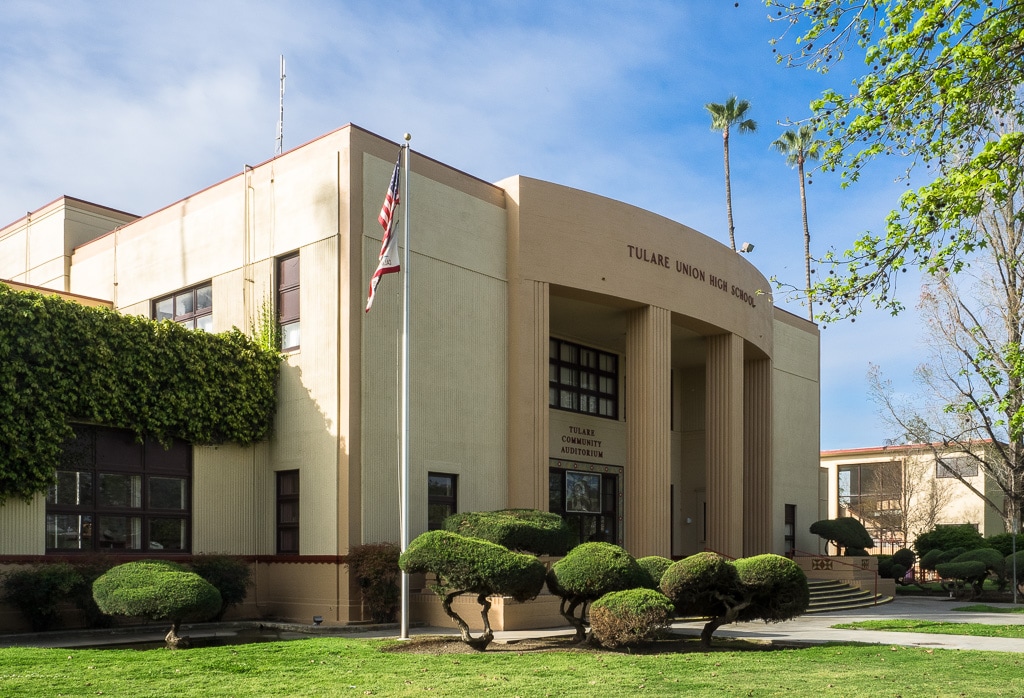
At 5:34 p.m. on March 11, 1933, the Long Beach earthquake severely shook California. It set off a chain of reactions which brought down a major building at Tulare High School and replaced it with today’s cherished and historically recognized auditorium.

Centered offshore, the magnitude 6.4 1933 temblor damaged many of Southern California’s unreinforced buildings, including a large number of schools. Between 115 and 120 people were killed. A month later, the state legislature passed the Field Act, mandating that school buildings be earthquake resistant. Shortly thereafter, the main building at Tulare High School, including its auditorium, was condemned as unsafe.

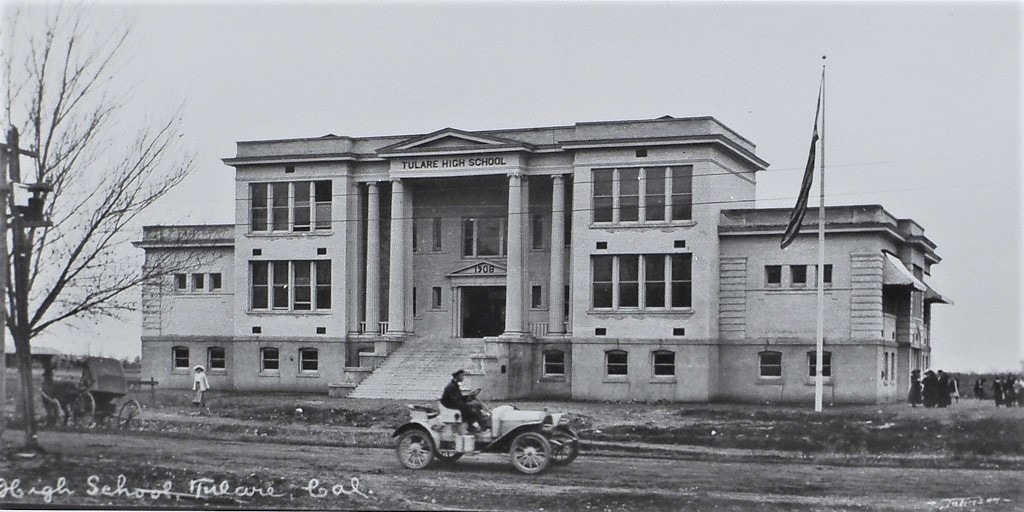
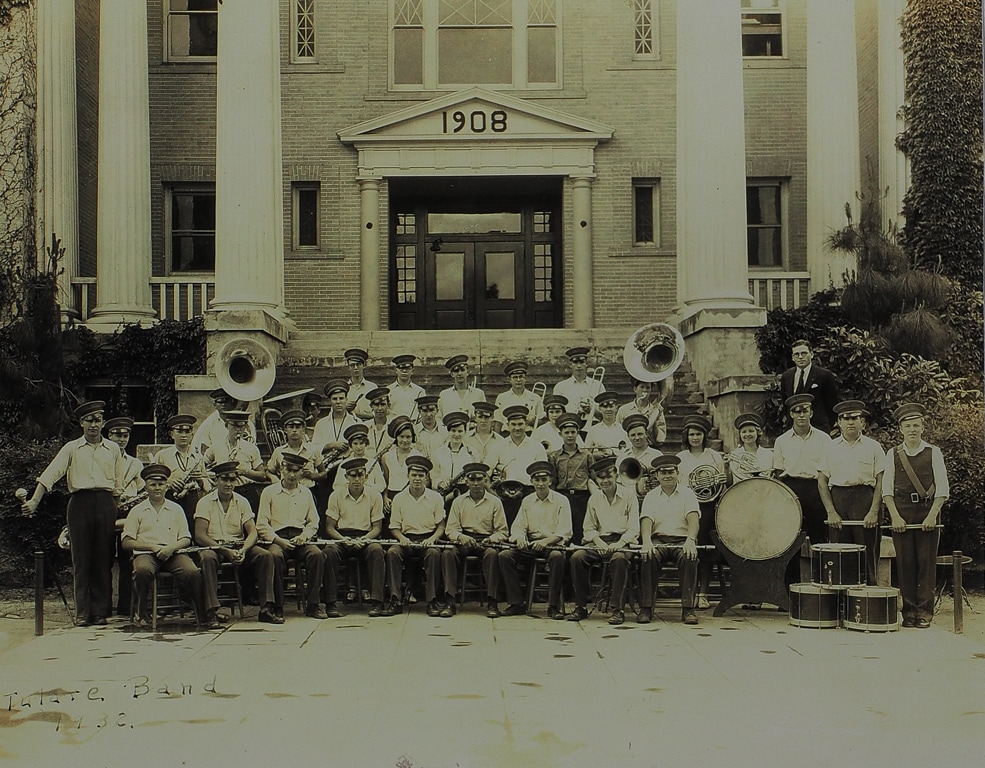
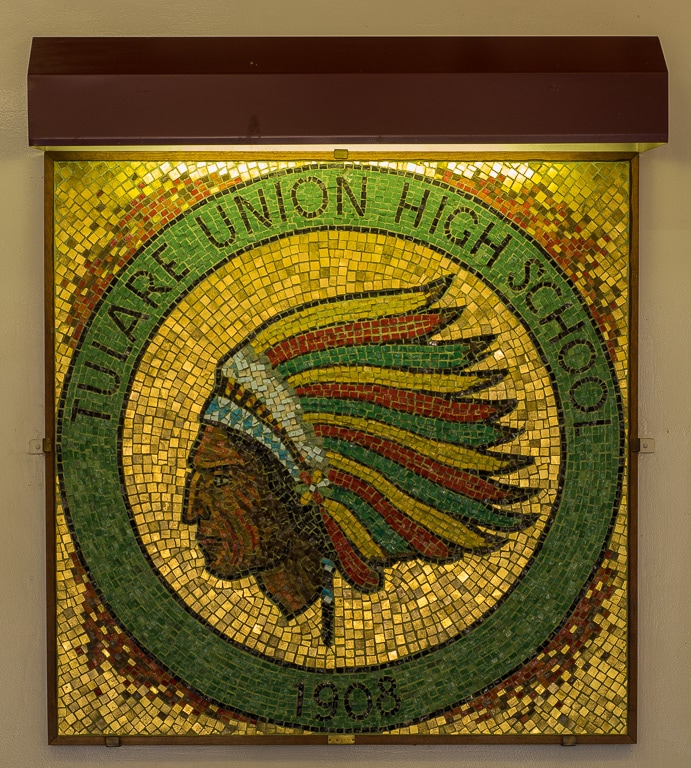
Accordingly, the big 1908 Greek Revival style building was then torn down, and classes were moved into local businesses, onto the front porches of neighboring homes, and into tents on the school’s lawn. School activities were spread around town, with assemblies and concerts held in the Tulare Theater and the Women’s Clubhouse.

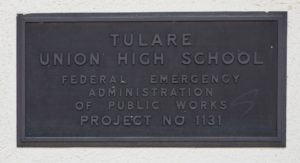
Construction of the new building, with an attached classroom wing, was one of the 19,004 projects across the U.S. that were partially funded through the Public Works Administration (PWA), a New Deal program that spent 3.3 billion dollars during the Great Depression to provide jobs and stimulate the economy. It gave Tulare Union High School District a grant of $60,388 toward what would become $175,000 in construction costs.

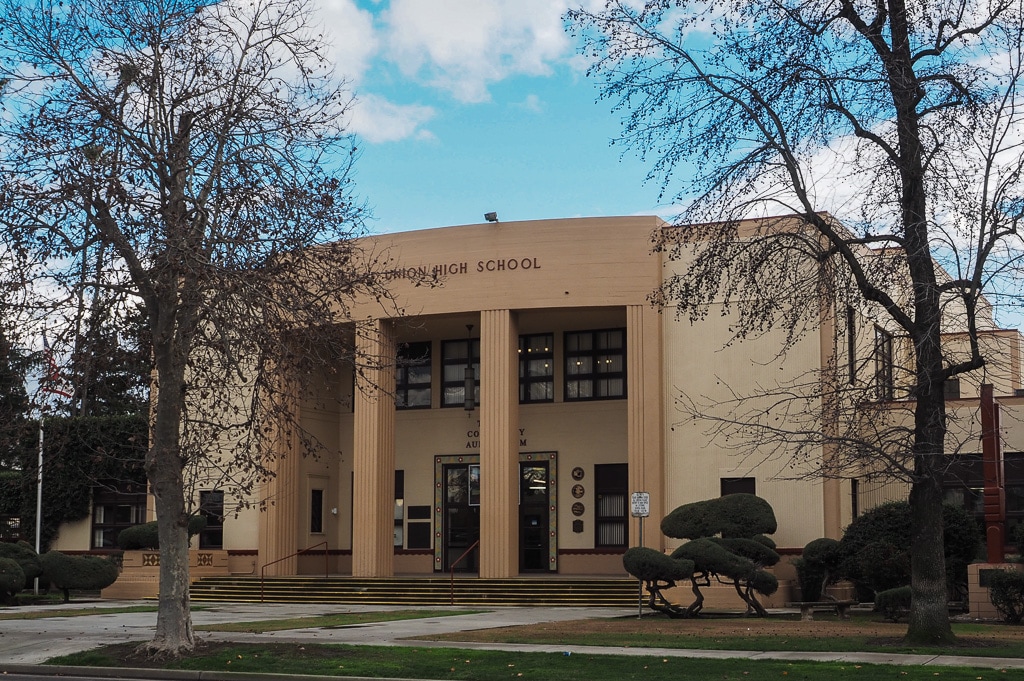
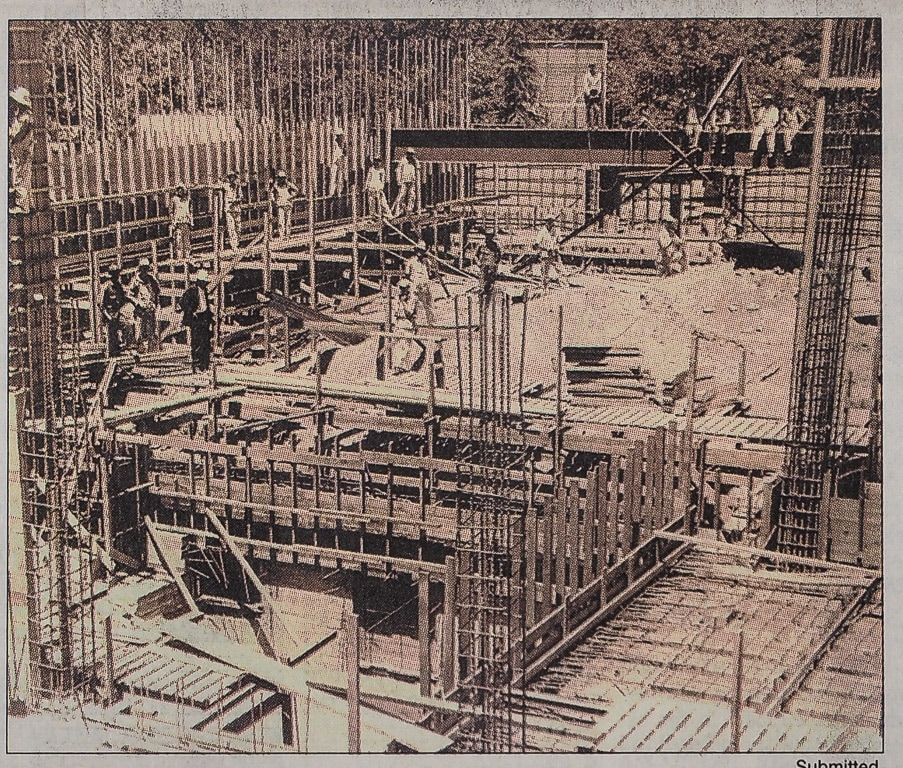
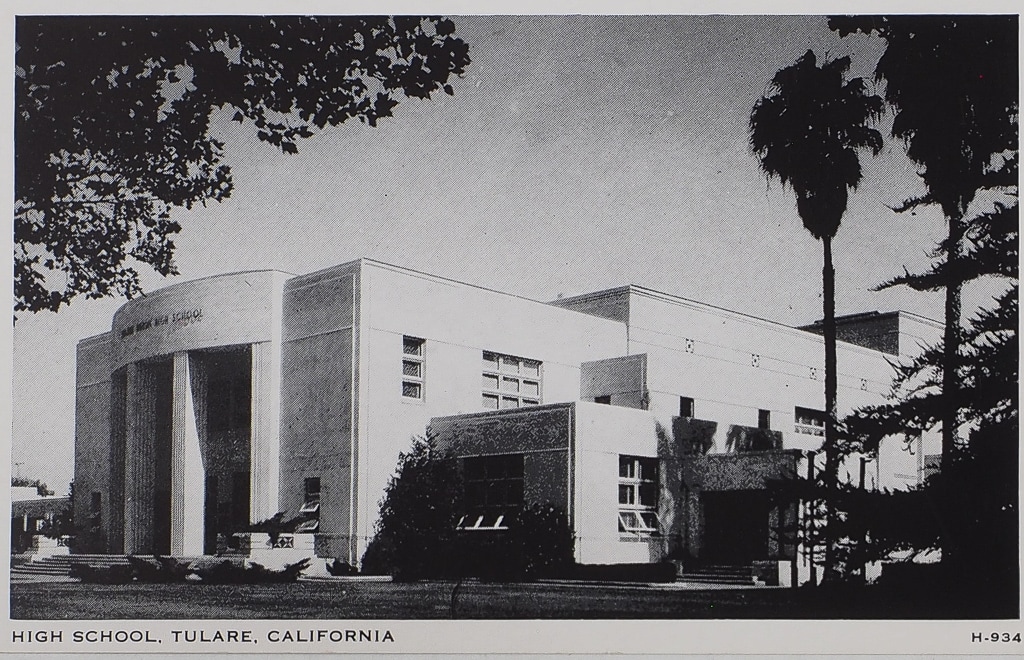
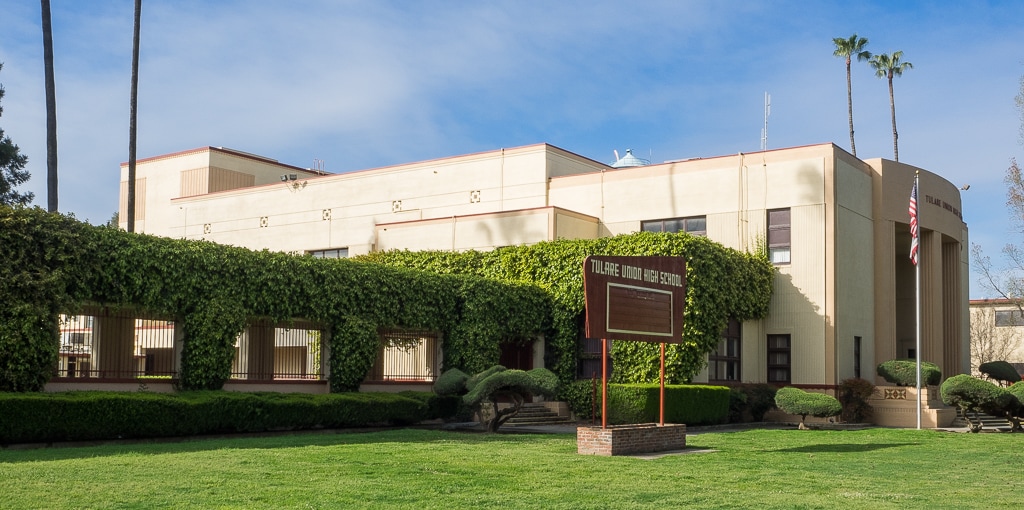
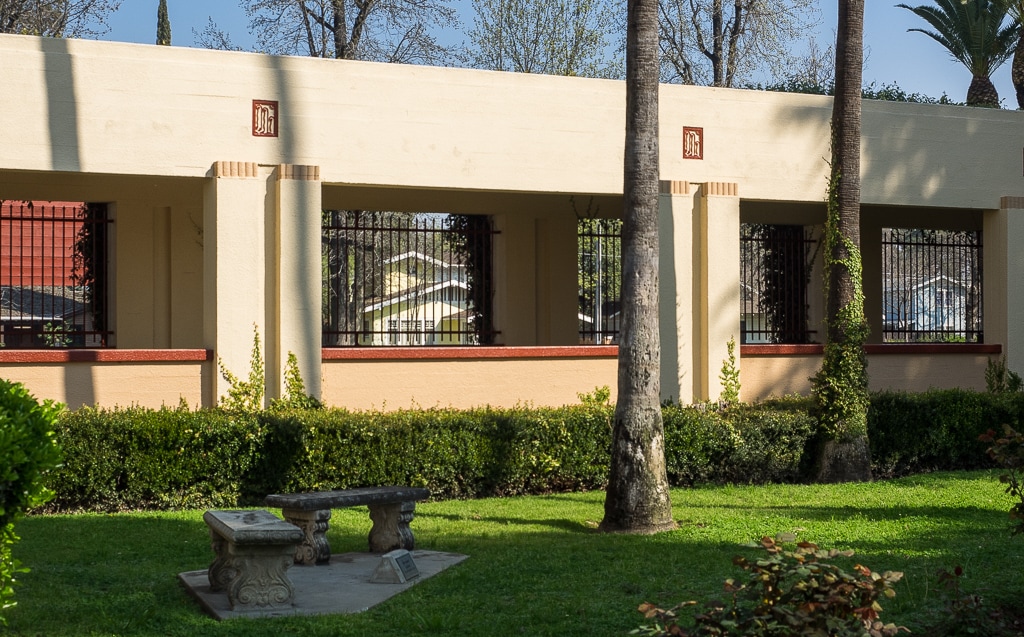
Plans were developed for the new building to hold the school’s offices, a larger auditorium, and several classrooms. The architect was W. D. Coates, of Fresno, who also designed the Civic Auditorium in Hanford, the Fresno Auditorium and Hall of Records, and Porterville High School. Coates used the then popular Art Moderne style. This form of Art Deco emphasized curves and long horizontal lines with smooth exterior surfaces to create an aerodynamic form. Its simplicity also reflected the hard economic times of the early 1930s. Blueprints were completed in November, 1935, and construction began immediately under general contractors W.J. Ochs and Midstate Construction of Fresno.

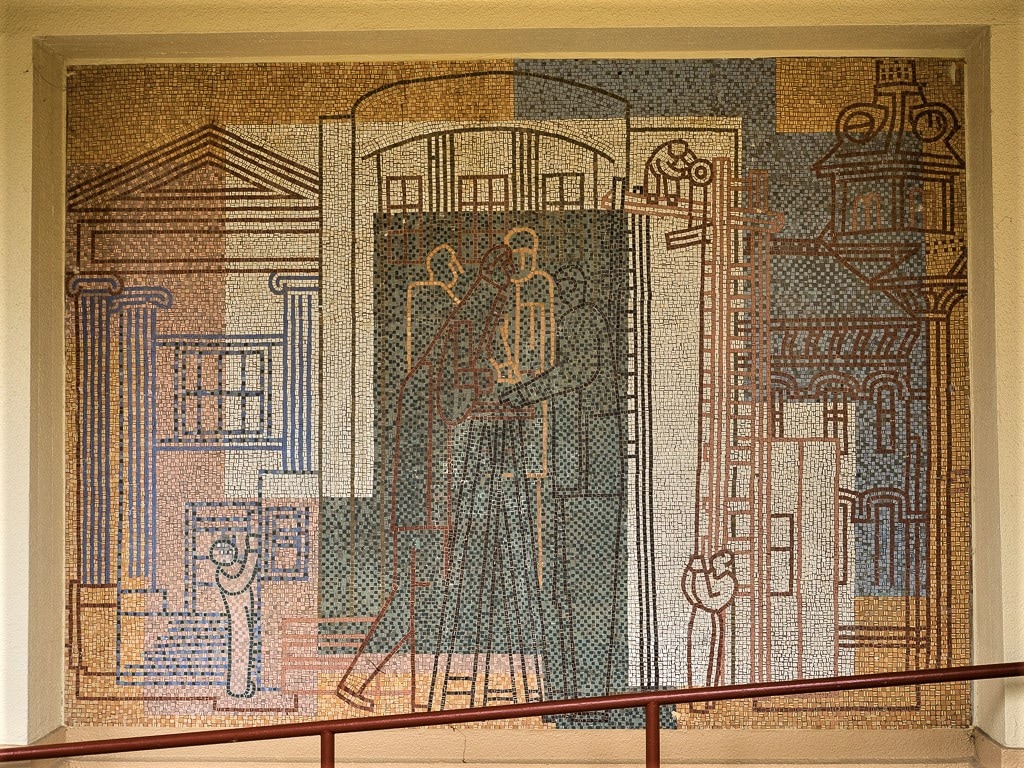
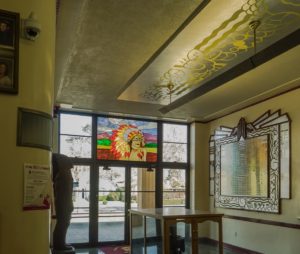
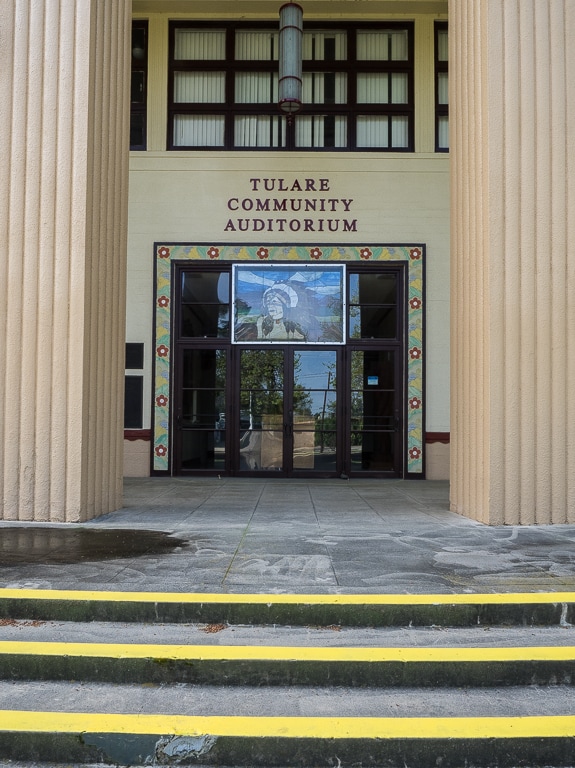
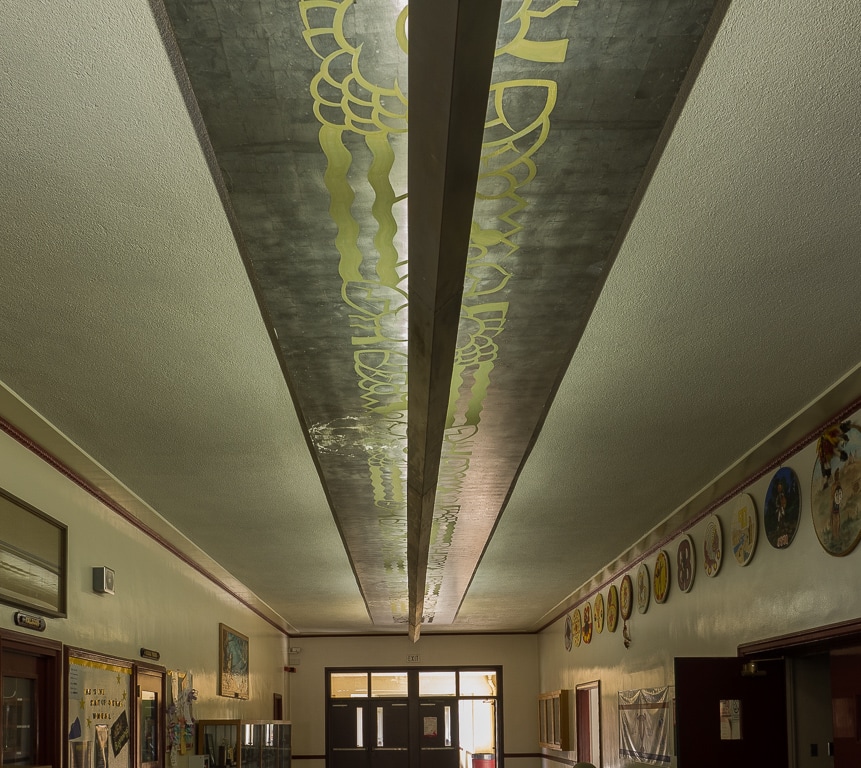
The building’s front features tall square columns and a curved upper facade. Entry is through large steel doors with leaf designs sculpted into a stucco border. The lobby has large rounded curves at its corners, and gold Art Deco light fixtures run the length of the interior corridors. A large mosaic on the east wall depicts the first Tulare high school of 1891, the second of 1908, and workmen constructing the new building. One of the goals of the PWA was to employ artists as well as construction workers.

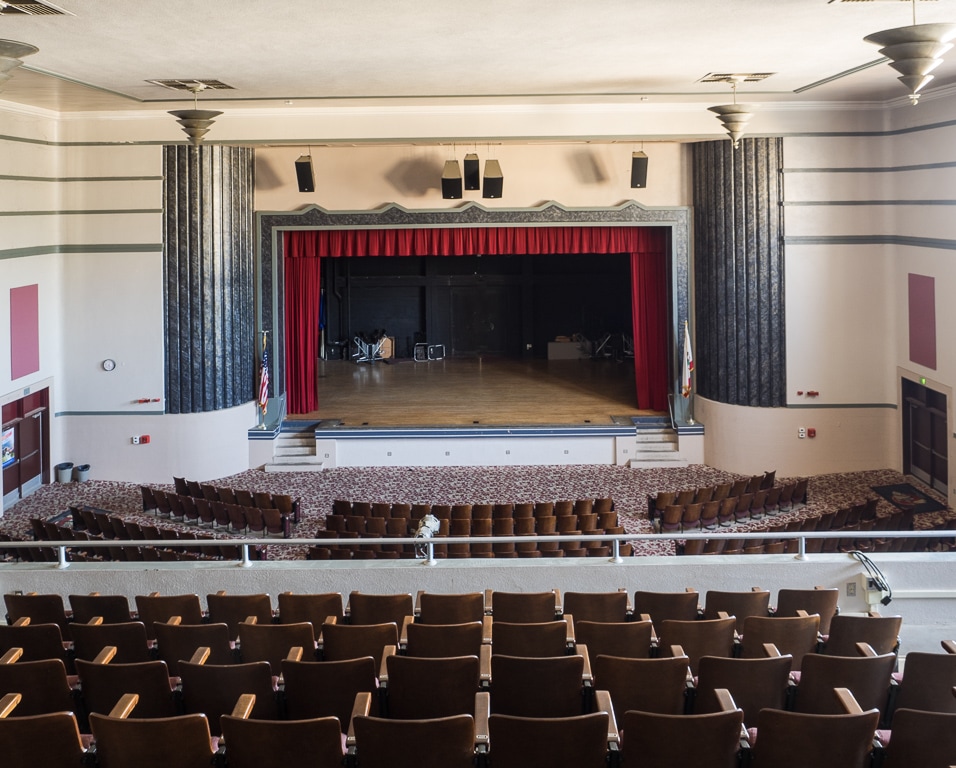
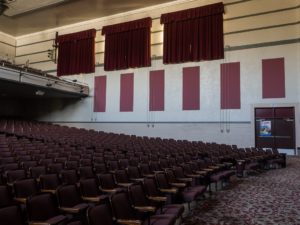
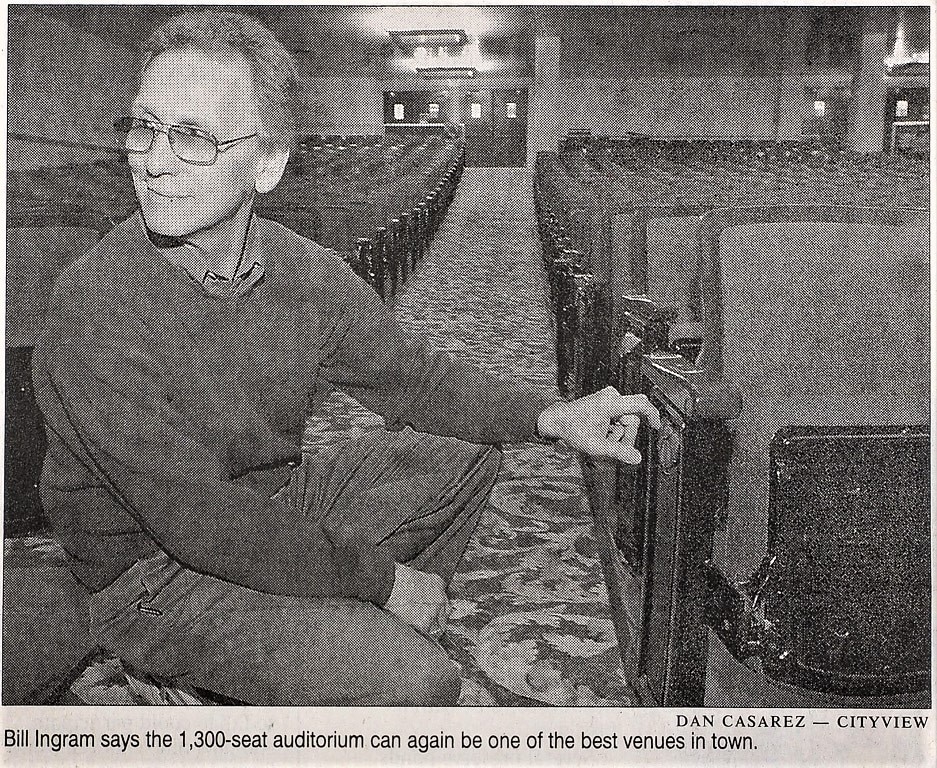
The new 25,187 square foot auditorium had a seating capacity of 1400. At the time, the population of Tulare was 4000. Scott & Co. furnished and installed the seats, and General Seating Co. of San Francisco supplied all the stage equipment.

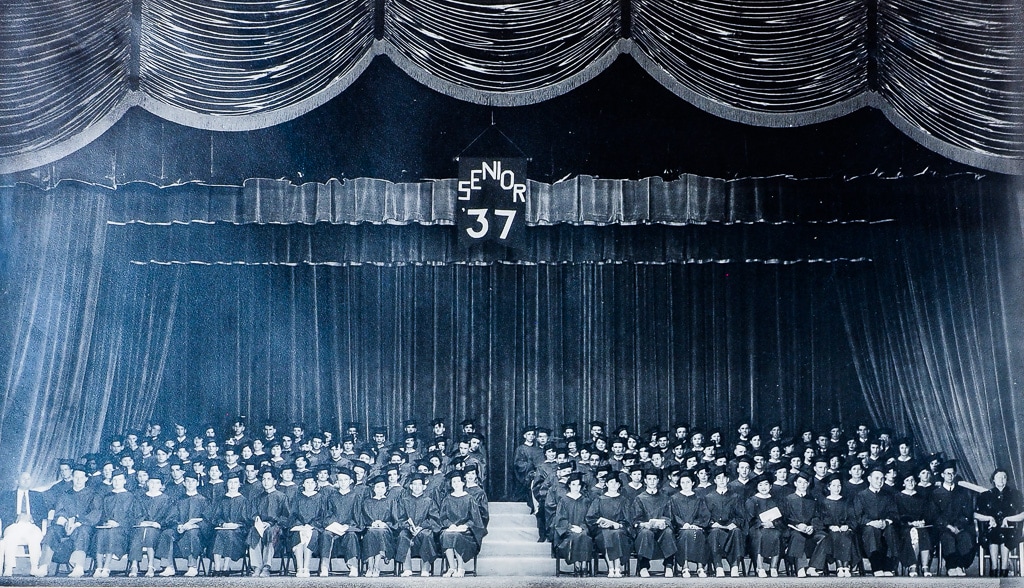
The building was finished in the spring of 1937 and was dedicated on May 30. It was first used two days later, for the Class of 1937’s graduation ceremony. The following year’s graduating class included Elmo “Bud” Zumwalt, who later became a U.S. Navy Admiral and the youngest man to serve as Chief of Naval Operations.

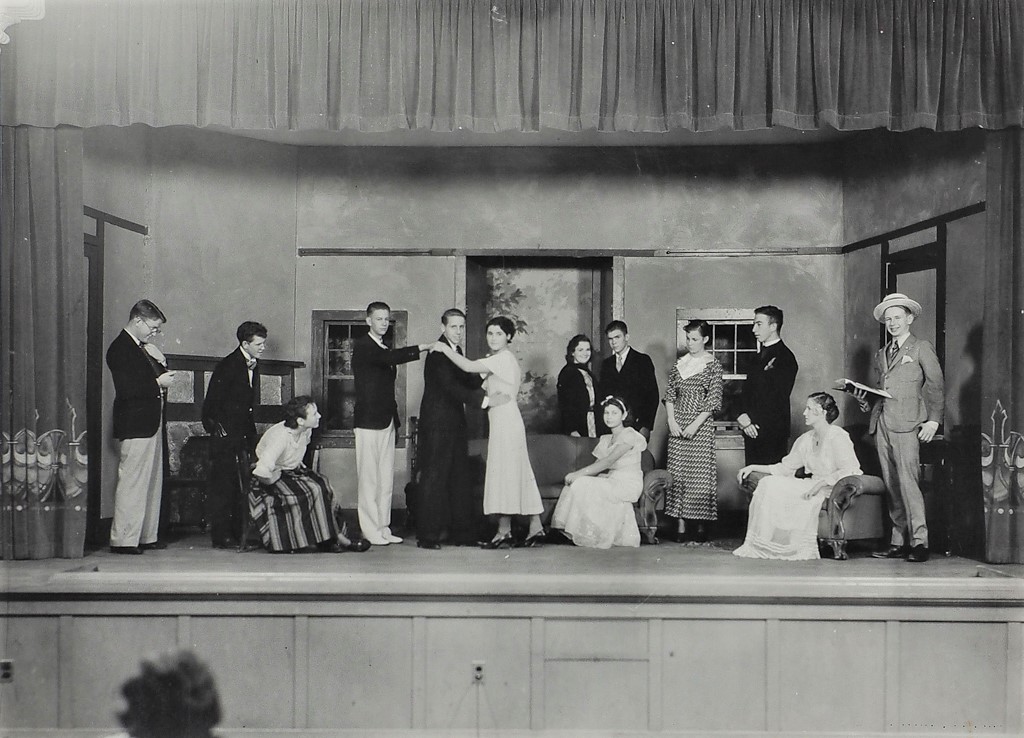
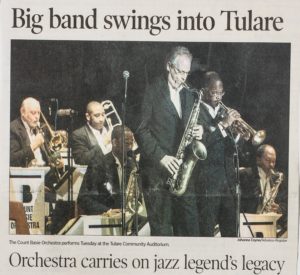
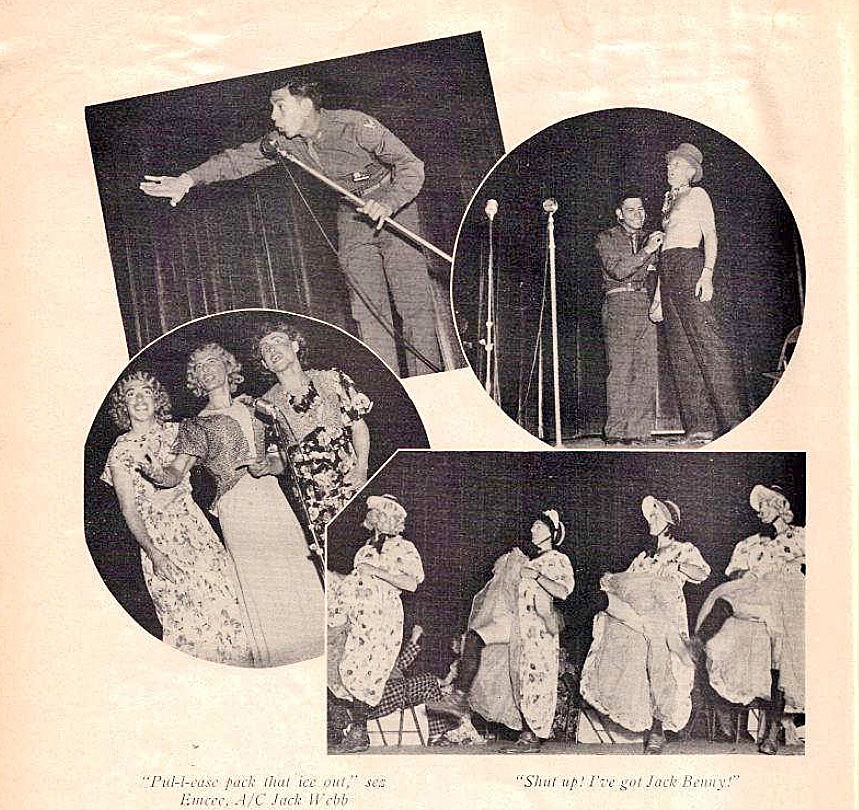
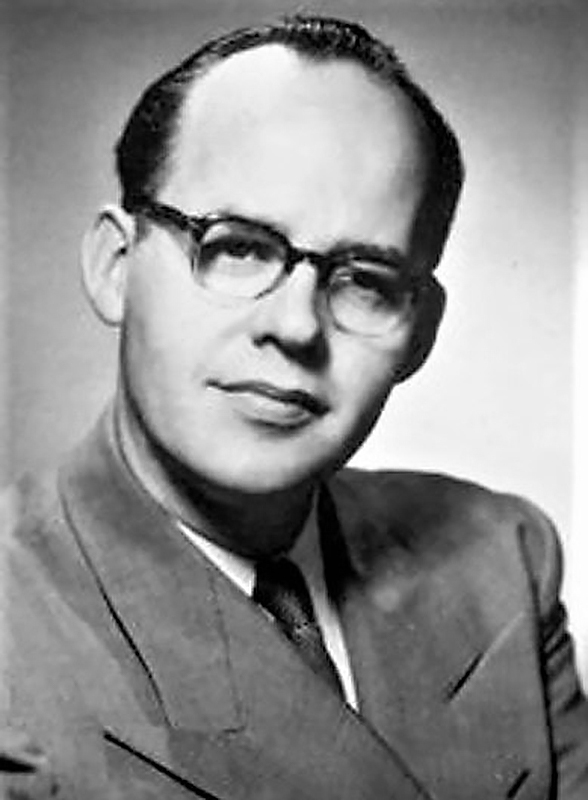
Thereafter, the auditorium was used for school plays, musicals, graduations, and community concerts. During WW II, cadets at Rankin Field, the Army Air Force training center southeast of town, put on “The Follies,” a talent show of humorous skits based on popular radio shows and movies. Jack Webb, famous for acting in and producing the “Dragnet” TV series popular in the 1950s and ’60s, was the Activity Director at the base and produced several of these talent shows.

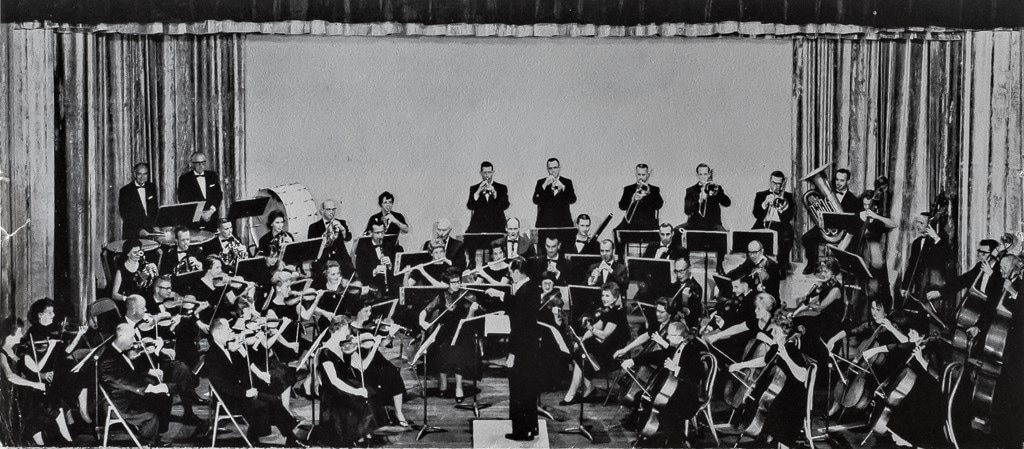
The newly-formed Tulare County Symphony Orchestra performed its first concert on April 8, 1960, in the auditorium, with tickets selling for $1.00. Tulare High School orchestra conductor Robert Cole led this group of volunteer musicians that would develop into one of the county’s premier musical organizations. For many years, the Symphony has performed Children’s Concerts in the auditorium for local third and fifth graders each October.

During the 1970s and 1980s the auditorium developed significant problems. The roof leaked, the stage curtains and rigging systems badly needed repair, and the wooden floor of the stage was seriously worn and becoming unsafe for dancers. Additionally, the building was inadequately cooled by its 1937 swamp cooling system.

A committee of community members formed and planned for a major expansion and renovation of the building, but it soon became apparent that the projected $3 million cost was too high, and the planned changes would diminish the historical value of the building. The committee chose instead to preserve all the distinctive Art Moderne features while still refurbishing the auditorium.

Meanwhile, the Auditorium Restoration Committee worked on nominating the then-60-year-old building for placement on the National Register of Historic Places. The research for this application outlined the significant historical features of the structure and provided the basis for the renovation plans. On December 17, 1999, the Tulare Union High School Auditorium and Administration Building was listed on the National Register, cited as an excellent example of well-preserved Art Moderne/Streamline Moderne architecture, and recognized for its beautiful design and outstanding PWA construction.

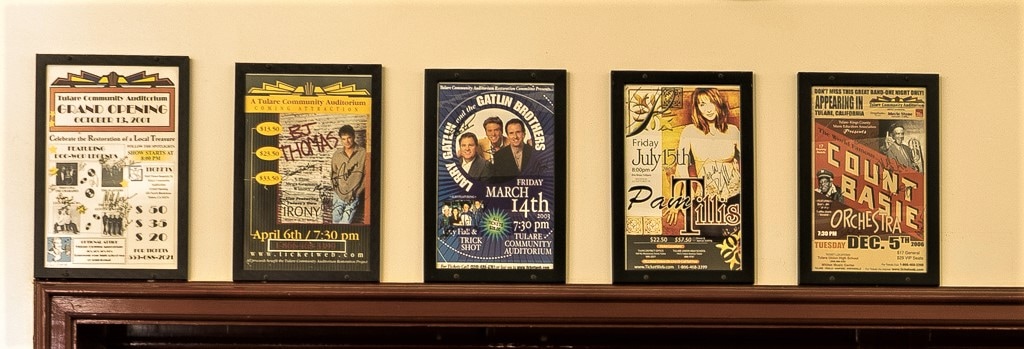
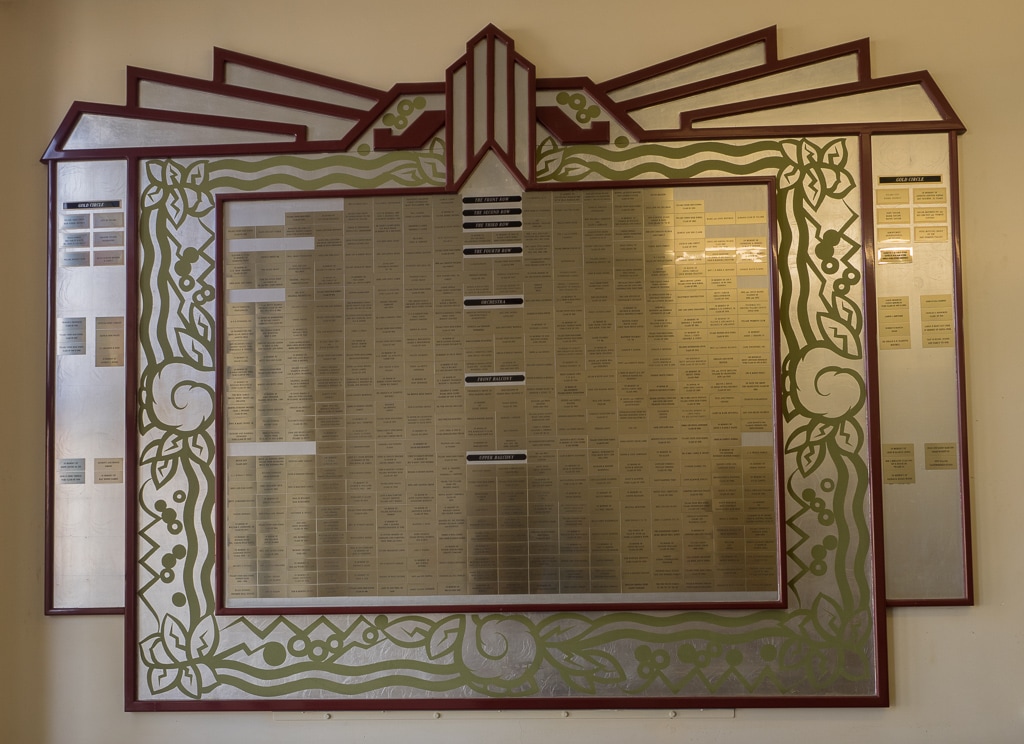
Contributions from many individuals and organizations raised the $1 million needed for the renovation. Seats in the auditorium were named for those contributing more than $125. Benefit concerts, including ones performed by country singers The Gatlin Brothers and Pam Tillis, also helped raise funds.

View of Balcony from Stage

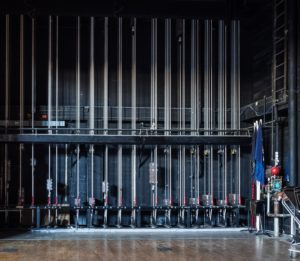
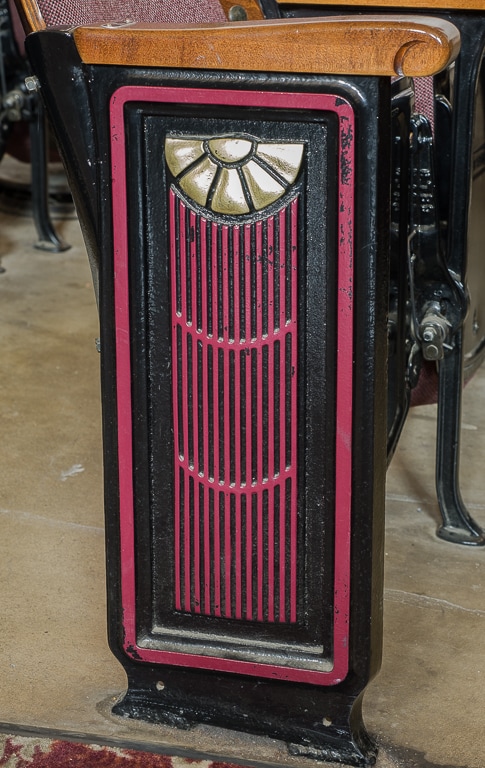
The entire building, inside and out, was repainted, and new maple flooring restored the stage, along with a new rigging system, curtains, and lighting and sound systems. For audiences, the most noticeable upgrade was the seating. The old and creaky wooden seats were shipped to Michigan, where they were refurbished by the same company that had made them in 1937. With refinished wood and new padding, they provided a much more comfortable audience experience. Six dressing rooms and an upstairs bathroom and shower were also refurbished.

The Grand Opening of the restored building was on October 13, 2001. The program was a doo-wop extravaganza, with performances by The Charades, The Platters, and The Cornell Gunter Coasters. Bill Ingram, Tulare Union band director at that time and Restoration Committee member, said “Their music will highlight the acoustic changes in the space.” Classic cars from the 1950s and ‘60s on display in front of the auditorium enhanced the doo-wop theme. A highlight of the grand opening was the unveiling of the striking Art Moderne style Donor Board in the lobby.

Now in its ninth decade, the TUHS auditorium building continues to serve its community well. Facing Tulare Avenue, its sleek, aerodynamic façade reminds passersby of how the people of a small city can work together to preserve and renew one of its greatest treasures.

May, 2017


Slideshow:


Quotes & More Photos:

It is a large, attractive building that deserves historic recognition because of its beautiful design, tall multi-level units, long curve accents, and majestic openings.” — National Register of Historic Places Nomination Form

“. . . Mr. Coates designed the building so that it would ‘truly combine simple beauty and usefulness.'” — from First Day Opening Dedication Handbook, May 30, 1937

“It is the best example of this [Streamline Moderne] style of the 1930’s in the county and surrounding areas.” — NRHP Nomination Form

“. . . C. M. Kromer, principal structural engineer in the State Department of Architecture . . . stated that the new auditorium building was the best planned and best appearing school building that had been constructed recently.” — National Register of Historic Places Nomination Form

“It was an incredible building at its time, and was regarded by other communities as the place-to-go for concerts, plays, dance recitals, 16 mm movies, and numerous other programs and events. It was praised by high officials as ‘one of the most beautiful auditorium buildings constructed in the state at the time.'” — National Register of Historic Places Nomination Form

“Other famous graduates of Tulare High were Bob Mathias, winning a Gold medal at the age of seventeen in the 1948 Olympic decathlon, and then again in 1952! Roger Nixon, class of 1938, is a world renown[ed] music composer, conductor and arranger. His high school and college compositions are regarded as some of the best contemporary musical pieces performed in the nation today.” — NRHP Nomination Form

“It’s a really beautiful structure that has served the community well for 70 years. Now it is our responsibility to serve it well.” — Ellen Gorelick

“On the lobby ceiling, and centered directly above the long metal v-shaped light panels, are gold deco designs that run continuously the full length of the lobby corridor.” — National Register of Historic Places Nomination Form

“I called the American Seating Co. and asked to speak to a sales person. I told the salesman that . . . we were restoring an old school auditorium and new seats is an item we definitely need! He said, ‘What year was your auditorium built?’ I answered, ‘1936.’ He then said, ‘You don’t want to put new seats in a 1936 auditorium; we have a seat refurbishing company here in Michigan that can restore them to their original condition.'” — Bill Ingram, Auditorium Restoration Committee

“Local people who want to preserve this historic place have donated, including school districts, organizations and individuals who care about their city. It is hard to believe that a small community such as ours has come up with this kind of funding for this project.” — Bill Ingram, Auditorium Restoration Committee


Maps & Directions:

 Address: 755 E. Tulare Ave., Tulare, CA 93274

From Visalia, go west on Hwy 198 to Hwy 99 South. Exit on Hwy 137 West (Exit 67). Hwy 137 is E. Tulare Avenue. The school is on the south (left) side.  To park at the school, continue to the end of the school campus and turn left onto South “O” Street.  In one block, turn left onto E. Kern Ave.  Parking lot will be on your left.


Site Details & Activities:

Environment: Valley, downtown Tulare
Activities: architecture study, events open to the public, history, visits by prior appointment
Open: during events open to the public; call 559-686-4761 for appointment to visit at other times during school day
Site Steward: Tulare Union High School, 559-686-4761
Opportunities: donate, volunteer
Links: National Register of Historic Places – Tulare Union HS Auditorium
Books: Windows into the Past, A History of Tulare High School, by Vern Longlee, 1993

Click on photos for more information.

THE STORY OF TULARE HISTORICAL MUSEUM

by John Greening

     In June, 1980, a group of citizens concerned about the loss of historical buildings and artifacts from the City of Tulare’s past formed the Tulare City Historical Society. Their first project was a big one: to raise $375,000 to build a museum on the site of the town’s first public school. With the help of their chief fundraiser, C.R. “Budge” Sturgeon, within two years they raised enough to begin construction.

     The first phase, a 7400 square foot structure, opened on November 16, 1985. Phase two was completed seven years later. It added office and storage space, the Tom Hennion Archives Center, and the Heritage Art Gallery, which serves as both an art gallery and event/reception space used by the community.

     In addition to military memorabilia, the museum’s exhibits concentrate on the city’s founding, life at the beginning of the 20th century, and the achievements of the town’s heroes. A self-guided audio tour of the museum is available at the entrance desk.

     On July 25, 1872, Southern Pacific Railroad engineer Andrew Neff drove the first locomotive to the end of the line at what would become the town of Tulare. Southern Pacific was pushing its rail line south through the San Joaquin Valley then and expected the existing communities to offer it land grants and up to $300,000 in cash.

     When the twenty year old town of Visalia refused, the railroad decided to establish a new town ten miles to the south. Farmers in that area gladly granted land to the railroad, and Tulare was born. Named for the tall “tule” reeds growing around the edge of nearby Tulare Lake, the town was intended to be the major railroad terminal for the southern Valley.

     Southern Pacific soon built a machine shop and roundhouse south of the current Inyo Avenue, and a passenger and freight depot on the southwest corner of the future Tulare and J Streets. With the monthly $40,000 railroad payroll, the town grew steadily from a population of 25 in 1873 until the early 1890s, when its population was 2.697.

     Then a double disaster struck. In 1891, Southern Pacific decided to move its repair center to Bakersfield, since it was extending its tracks south through the Tehachapi Mountains. The loss of the railroad jobs to the Tulare economy was compounded by the national financial panic of 1893 and the depression that followed. Though the local economy floundered and a number of businessmen left town, the community survived by emphasizing its strong agricultural base.

     Exhibits in the C.R. Sturgeon Hall recreate a historic barber shop and blacksmith shop, plus what one would have seen a hundred years ago in the kitchen, parlor, and bedroom of a typical Tulare home. Other displays remind visitors of important 19th century events in Tulare’s history. One exhibit shows the devastation wrought by three fires that destroyed the wooden buildings of downtown. No record shows exactly how many were destroyed in the fire of 1875, but 25 buildings were burned in 1883, leaving only one standing, and then the 1886 fire leveled 77 more.

     Among the unique exhibits at the museum are those about Tulare’s heroes. These include Bob Mathias, Sim Iness, Richard Torrez Jr., Bryan Allen, Admiral Elmo R. “Bud” Zumwalt, and Manuel Toledo.

     Mathias and Iness were local boys who became Olympic champions. Mathias was a football and track star at Tulare Union High School. After graduation, he concentrated on the decathlon, and in the following summer of 1948 won the decathlon Olympic gold medal in London. He then attended Stanford University and in the 1952 Helsinki Olympics repeated his gold medal triumph.

     Both of Mathias’s Olympic medals are on display in the museum. During his career, he competed in 13 decathlons, winning all of them. After appearing in four Hollywood films and a short-lived TV series, he was elected to the United States Congress in 1966 and served for eight years representing the Central Valley.

     Garland Simeon (Sim) Iness was a football and track standout at Tulare Union High School, alongside fellow teammate and classmate Bob Mathias. Specializing in the discus, Sim narrowly missed making the 1948 Olympic team. Continuing to set records at Compton Junior College and USC, Sim won the discus Olympic gold medal at the 1952 Olympics in Helsinki, Finland, where each of his throws set a new Olympic record.

     Sim would go on to set the discus World Record in 1953. He, too, returned to the Valley, and served as a teacher, counselor, and coach at Porterville High School and Porterville Junior College for 39 years. Memorabilia of both Iness and Mathias from high school through their Olympic competitions are displayed at the museum, as are remembrances from Mathias’s political career.

Tulare Union High School

     Richard Torrez Jr. became the third Tularean to bring home an Olympic medal, winning the silver in men’s super heavyweight boxing in the summer 2020 Games (held in 2021 in Tokyo). Born, raised, and trained (by his father) in Tulare, Torrez shone athletically from age 5. Before winning the U.S.A.’s first Olympic heavyweight boxing medal in 33 years, Torrez achieved ten national championships (his first at age 10), a Golden Gloves national title in 2017, and a bronze at the Pan-American Games in 2019.

     He signed up in late 2021 for a pro boxing career that will enable him to continue to train with his dad in the family gym and to give back to the community that raised him. Many of his medals, uniforms, and other memorabilia are on display in the museum.

     Another Tulare High School graduate, Bryan Allen, a hang glider pilot and a very strong cyclist, became the first to fly a human-powered aircraft that met the difficult criteria for the historic Kremer Prize when he pedaled and piloted the Gossamer Condor around a 2 kilometer figure-eight course in Shafter in 1977. The plane had a wingspan of nearly 100 feet, but weighed only 70 pounds. Three years later, Allen flew (pedaled) the Gossamer Albatross, a successor plane, across the 22 mile wide English Channel. Pictures of both these flights are part of the display dedicated to his achievements.

     Admiral Zumwalt, a Tulare High class Valedictorian, attended the U.S. Naval Academy. In 1965, at the age of 45, he became the youngest Rear Admiral in U.S. history. He also commanded the U.S. Naval Forces in Vietnam. In 1970, he became a Full Admiral when he was appointed Chief of Naval Operations, once again the youngest in history. Tulare named a downtown park in his and his father’s honor, and the U.S. Navy recently named its newest class of destroyers for him.

     The Robert & Geraldine Soults Hall serves as the Military History Wing, which houses the Manuel Toledo Military Collection donated by World War II veteran and Tulare jeweler Manuel Toledo. Its foundation is an extensive group of U.S. military uniforms and artifacts from the Civil War to the first Gulf War. Uniforms from Nazi Germany and the Japanese Empire, as well as other military memorabilia, round out the displays.

     Toledo grew up in Tulare and fought during WWII with the U.S. 7th Infantry in the South Pacific, where he was wounded several times. During his last long recovery, he resolved to do whatever he could to help other veterans. After returning to Tulare, he was instrumental in establishing the local AMVETS post, the largest post in the nation. In 1987, he opened his own military museum, which provided the foundation for the Tulare museum’s current collection.

     With its ongoing art exhibits, extensive displays, special events, and community involvement, the Tulare Historical Museum is indeed “A jewel among the small museums of California.”

March, 2016; updated July, 2023


Slideshow:


Quotes & More Photos:

​”Their mission was to build a museum that would tell the story of Tulare from its beginnings to modern times.” — Tulare Historical Museum

“If you don’t know history, then you don’t know anything. You are a leaf that doesn’t know it is part of a tree.” — Michael Crichton

​”The greatest story out of the Olympics, was the story of the little town of Tulare which produced two gold medal winners. This is all the more remarkable when you realize that only 24 gold medals were awarded for track and field events. Russia, Germany, Great Britain, Asia, and Africa won none; all of the continent of South America won only one. The United States won 14, and of those, two came home to our favorite town of Tulare.” — Harold Berliner

​”At Helsinki, Mathias asserted himself as one of the world’s best athletes. He won the decathlon by 912 points, an astounding margin, becoming the first to successfully defend an Olympic decathlon title. He returned to the United States as a national hero. In 1952, he was, therefore, the first person to ever compete in an Olympics and a Rose Bowl the same year.” — Life magazine

” . . . Sim wouldn’t let go of his dream. He had competitive Cherokee Indian blood in him, and he made the team in 1952. Then, at Helsinki, he uncorked a discus throw that won him a gold medal, beat the defending champion and set a new Olympic record. Sim weighs 245 and stands six feet, six inches, but he was floating on air right then.” — Bob Mathias

In 2017, Richard Torrez Jr. graduated as class valedictorian from Tulare’s Mission Oak High School, which named its gymnasium in his honor in 2022. In 2023 he joined Bob Mathias and Sim Iness with his own Olympic medalist mural in Downtown Tulare.

“I am a product of what everyone has sacrificed and supported in order for me to accomplish my dream. Thank you doesn’t do my feelings of appreciation justice. I will continue to do my best, to be the best I can be. Not just for myself but for my community, my family, and my home, Tulare.”–Richard Torrez Jr.

​”As a long-time long-distance cyclist, Allen was built for the kind of challenge presented by the Gossamer aircraft. In order to prepare for the Albatross’s English Channel flight, Allen trained both on the road (40-80 miles per day) and using an ergometer (stationary) training bike. The ergometer training enabled Allen to quantify his performance and improvement.” — AeroVironment.com

“Admiral Zumwalt crusaded for a fair and equal Navy. He fought to promote equality for minorities and women at a time of considerable racial strife in our country and at a time of deeply entrenched institutional racism and sexism in the Navy . . . Admiral Elmo Zumwalt was a great naval leader, a visionary and a courageous challenger of the conventional wisdom.” — Senator Russell D. Feingold

”’There is no black Navy, no white Navy — just one Navy — the United States Navy,’ Admiral Elmo R. Zumwalt declared.” — New York Times

​”Zumwalt began issuing Z-Grams, personal messages and directives from the CNO sent directly to deckplate Sailors. Z-Grams ushered in many monumental changes in the fleet, such as benefits for minorities and women, relaxed grooming standards, and better quality of life for the average Sailor. Z-66 promoted equal opportunity in the Navy, pushing the Navy forward in a racially divided military.” — Ian Cotter

​”’ . . . I vowed when I got wounded during the war, if I’d ever walk again, I’d help veterans.’ In 1944 [Manuel Toledo] was severely injured while fighting with the Army’s 7th Infantry Division on the island of Leyte in the Philippines and was left for dead. Three other soldiers from Tulare happened upon his body, detected a pulse and carried him through a swamp to a field hospital where his long recovery began.” — Valley Voice newspaper

​”Volunteerism is the life-blood for any museum, most especially ours.” — Chris Harrell.


Maps & Directions:

Address:  444 W. Tulare Ave., Tulare, CA 93274


From Visalia, take Hwy 198 west to Hwy 99 south to Tulare.  Take Exit 67 onto Tulare Ave./Hwy 137 and go west.  (East Tulare Ave. will soon become West Tulare Ave.)   The museum will be on the right (north) side of the street.


Site Details & Activities:

Environment: Valley, downtown City of Tulare
Activities: exhibits, group tours, guided audio tours, Heritage Art Gallery, special events, bookstore and gift shop
Open: Thursday-Saturday, 10 a.m.-4:00 p.m.   Admission: free for members with card; $8-adults, $6-seniors, $5-students; free for children under 5, and FREE for everyone on every first Saturday. Admission includes access to all exhibits.  Admission to art gallery always free.  Closed on holidays.
Site Steward: Tulare Historical Museum board and staff; 559-686-2074; info@tularehistoricalmuseum.org
Opportunities: membership, donate, volunteer
Links:
Books: 1) A Town Called Tulare: A Pictorial History of Tulare, California, by Derryl Dumermuth (Jostens, Inc., 2000)
2) A Twentieth Century Odyssey: The Bob Mathias Story, by Bob Matthias and Bob Mendes (Sports Publishing LLC, 2001)
3) On Watch: A Memoir, by Admiral Elmo R. Zumwalt (Quadrangle Books, 1976)
​4) Tulare, Legends and Trivia A to Z, by Derryl and Wanda Dumermuth (Jostens, Inc., 2004)


Click on photos for more information.

A Stroll Through History

by Amy L. King-Sunderson

     Nestled within the oak preserve protected by Visalia’s Mooney Grove Park, the Tulare County Museum complex holds a vast collection of our county and state’s history, including one of the largest Native American basket collections in California. It also displays a great variety of artifacts of the pioneer era, a trove of historic agricultural equipment, dozens of restored structures from the late 1800s on, and many other treasures, appealing to all ages, that tell the history of Tulare County.

     The seed of the Museum was planted in 1934, when Hugh Mooney and his family donated five thousand dollars to fund the building of a museum in Mooney Grove, which had itself been sold to the county in 1909 by his parents and is the oldest county park in California. But it wasn’t until 1947 that approval was given by the county Board of Supervisors to begin building the museum on the specified site.

     In 1948, construction began with the laying of corner stones and a dedicatory address by Dan McFadzean, who was one of the County Historical Society’s first members and also the attorney who had prepared the legal papers for the County’s acquisition of the park from the Mooneys in 1909. The museum was opened to the public on July 1, 1949, and the Tulare County Historical Society ran its operations from 1948 to 1956, when the county took over that responsibility.

     For almost three quarters of a century, the Tulare County Museum has actively partnered with the County Board of Supervisors, the County Historical Society, members of the county’s varied and historic cultures and communities, and many other local organizations and institutions “To protect, preserve and promote a shared understanding of Tulare County’s past and its place in the future by providing the community with innovative, diverse, and engaging exhibits and events.”

     The 1948 structure was originally a single gallery, now known as the Middle Room. Today, it houses a military display, tractor exhibit, Sequoia and Rankin fields aviation display, a Visalia Electric Railroad model train, and the Mountain Connection exhibit, which highlights the Sierra Nevada mountains.

     The East Wing, holding the native basket collection, was added in 1956 and the West Wing, or Annie Mitchell Room, with displays of living styles and early county families was added in 1967, making a total of three galleries. Around 1970, the Gun and Saddle gallery was added onto the main gallery to house the growing collection of firearms and tack, including several of the famous Visalia Saddles.

     The beautiful Masonic Building Façade was donated in 1961 and placed behind the original museum building to create an enclosed space for the Main Street gallery, which holds life-sized replicas of historic business establishments. During the 1960s, many structures, such as the Surprise School, the Emken House, and Visalia’s first jail, were added to a Pioneer Village of original historic buildings and preserved on the museum grounds.

     The museum’s newest addition is the History of Tulare County Farm Labor & Agriculture Museum. This building’s displays include a large steam tractor and a Hackney Auto Plow, along with a reconstructed Linnell Camp house that was used to shelter migrant farm workers. But the main focus of this Museum is its cultural gallery that highlights, one at a time, each of sixteen different cultural groups and their contributions to our county’s agricultural history.

     Each new exhibit brings new involvement in the museum as members of each group provide many of the photos and items on display. The Tulare County Office of Education also produces a video to accompany each exhibit, featuring interviews of local members of the highlighted group. An opening reception with food, guest speakers, and often music offers another opportunity for the Museum to connect with each community in a wonderful way.

     Over the years, the Museum has collaborated closely with the Tulare County Historical Society to acquire historical items for display and to host fundraising events that support vital restoration projects throughout the museum complex. The Clocktower that houses the clock that used to be in the Bank of Visalia building downtown, the Southern Pacific Caboose that was used on the Visalia Electric Railroad, the facade of the Masonic Building that used to be in downtown Visalia, the Main Street gallery, and recently the Agricultural Equipment project have all been funded by these events.

     The Agricultural Equipment Project has been in the works for several years with two components – restoration of displayed equipment, and construction of a building in which to showcase it. Don Vieira and Carl Switzer, members of the Tulare County Historical Society, have been integral in the conception of the project as well as bringing it to fruition.

   Through their efforts, the Museum has partnered with local high schools whose students have been working to restore several pieces of equipment from the collection that have been weathered by the elements over the years. The students’ research on each piece of restored equipment will contribute to the timeline of the history of local agriculture, a main focus of the new building.

     As the Tulare County Museum continues to expand its collection and its educational programming — including yearly classroom tours, lectures, publications, and events — community engagement is vital in making those efforts successful. The Main Street Jamboree is one such free and fun event for the whole family that has helped to connect the museum to the community. Held each year on the last Saturday in April, the Jamboree provides many new and fun ways for visitors to learn about Tulare County history and its important part in the life and growth of California.

     The Tulare County Museum, with its constantly growing and improving displays and events, lies at the core of our county’s history. Set in one of the most beautiful oak groves in Tulare County, it is the perfect place to discover the wonderful preservation of our fascinating past. History can be intriguing. It can be fun. Come join us!

March, 2021


Slideshow:


Quotes & More Photos:

“The location itself is historic, being part of the great oak forest that extended from the foothills to old Tulare Lake along the delta of the Kaweah River.” — Joseph E. Doctor

“A statue depicting Mooney and his favorite hunting dog was dedicated to his memory in June, 2006, by the Tulare County Historical Society.” — Visit Visalia

Entering the museum, one is met by a seven-and-a-half-foot tall statue of Minerva, the goddess of wisdom. She stood atop the dome of the old Tulare County courthouse from when it was built in 1876-77 until it was razed after the 1952 Tehachapi earthquake. — from Terry Ommen and Tulare County Historical Society, in Los Tulares, March, 1968

Alsalio Herrera and Ricardo Mattley worked with Juan Martarel at his Visalia saddle shop in 1869. Martarel radically changed the Mexican stock saddles used by the California vaqueros, making them lighter, stronger, and more comfortable for both rider and horse. Herrera, a skilled silversmith, made bits, spurs, ornaments, and metal parts for saddles and bridles, while for 20 years Mattley made all of the saddle trees used by Martarel and his successor, David E. Walker, who bought the business in 1870. — from Annie R. Mitchell, in Los Tulares, September, 1959

“D.E. Walker . . . was something of a merchandising genius and made ‘Visalia’ a by-word among stockmen.” — Tulare County Historical Society, in Los Tulares, March, 1968

“The Yokuts Indians were among the best basket weavers and until recent years a few were still being made. In other cases are displayed arrow points, charm stones, arrow straighteners, ceremonial blades, [and]. . . portable rock mortars and metates. In the center case is a display showing how acorn flour was prepared . . . .” — Tulare County Historical Society, in Los Tulares, March, 1968

“”[T]he old Masonic building in Visalia . . . was constructed in 1873 and 1874 and at the time was the largest building between Stockton and Los Angeles. It was a social, political, fraternal, and governmental center for much of the county and the valley. . . . It represents a noble type of architecture which has virtually disappeared from California. . . . a magnificent example of the work of the old-time builders in wood . . . constructed almost entirely of redwood . . . .” — Joseph E. Doctor, President, Tulare County Historical Society, 1957

“The Tulare County Historical Society was privileged in 1961 to receive a donation of the Emken house from Marcus and Victor Emken. This lovely typical farm house was moved [from its original location west of Strathmore] into the historical village. The village is a delight to history buffs and is greatly used by various schools in Tulare and surrounding counties.” — Tulare County Historical Society, in Los Tulares, March, 1994

“The Farm Labor and Agriculture Museum recognizes the importance of the farmers . . . those special hardy men, women, and children from the many cultural and ethnic groups that tilled the soil. Well worth a visit.” –Terry Ommen

“It is difficult for the present generation to realize how people lived without high speed automobiles, TV, radio, even without electricity for any purpose. When chores meant filling the wood-box after school every day, when mom had to wash and polish the lamp chimneys and when kids’ spending money might be a penny or two.” — Tulare County Historical Society, in Los Tulares, March, 1968

“From the beginning, the Tulare County Historical Society has been involved in the development of the museum, donating money for additions and repairs to the museum, as well as members’ time and effort. It would be impossible to think of the Tulare County Museum without thinking of Annie Mitchell. In 1947, . . . [she] was appointed Museum Curator. She was a member of the Board of Directors longer than anyone, and it was with regret that she resigned in January 1998 due to ill health.” — Tulare County Historical Society, in Los Tulares, September, 1998

“A historical society . . . fundamentally . . . is a trustee of the past and its culture. As such, it faces the challenge of preserving not only what obviously has value now, but also what will have significance in the future.” — William B. Osgood; June, 1957

The first Surprise School dated back to 1876. It was replaced in 1906. When use of the 1906 school was discontinued in 1962, the Surprise Community Club raised money to move it from near Woodville to the Museum. “The belfry was lifted off and the roof removed to avoid cutting utility lines.” — Tulare County Historical Society, in Los Tulares,  March, 1968


Maps & Directions:

Directions:


Address: 27000 South Mooney Blvd., Visalia, CA 93277


From Visalia, go south from Hwy 198 in downtown Visalia on Mooney Blvd./Hwy 63 for 3.5 miles and turn left (east) into Mooney Grove Park.

Follow the park road to the original Museum building, which will be on your right.


NOTE:  Admission to the Museum (as well as the Farm Labor & Agriculture Museum) is via the office in the original Museum building (except during special events).


Site Details & Activities:

Environment:  Valley, outskirts of City of Visalia, inside Mooney Grove Park
Activities:  Pioneer village, cultural center, tours of museum for schools, special events
Open:  Thursday – Monday 10:00 a.m. – 4:00 p.m. April through October; in November through March weekend hours are reduced to noon — 4:00 p.m. School tours can be arranged by calling the office during open hours at 559-624-7326, or email aking1@tularecounty.ca.gov (reservations are required for school field trips; admission fee: $1.00/student [no charge for teachers or chaperones], plus $6/vehicle other than school bus).  Admission: free for the public (included in Mooney Grove Park entrance fee:  $6/vehicle, $3 for seniors, collected at park entrance gate Friday-Sunday during March-October).  Donations greatly appreciated.
Site Steward:  Amy L. King-Sunderson, curator, 559-624-7326, aking1@tularecounty.ca.gov
Opportunities for Involvement:  Donate, volunteer
Links:


Click on photos for more information.

Tharp’s Log — The One-Log Cabin of the “Discoverer” of the Giant Forest

by Laurie Schwaller

     The gentle loop trail from the foot of Crescent Meadow to Tharp’s Log is one of the easiest and loveliest in Sequoia National Park. In just under a mile, at the top of this loop, lies the oldest man-made structure in the Park. It is a truly unique tree house — a genuine log cabin.

     Hale Dixon Tharp, the pioneer rancher who is credited with being the first Caucasian American to discover and explore the Giant Forest, modified this fire-hollowed fallen sequoia tree in 1861 to provide a comfortable, convenient, weather-proof dwelling for his summer sojourns there.

     Ten years earlier, the Michigan-born 23-year-old Tharp had come to California with a wagon train. He had been hired by Mrs. Chloe Ann Smith Swanson, an Illinois widow with four young sons, to drive her prairie schooner across the country to Placerville.

     There, Tharp began working in the gold mines, and soon married Mrs. Swanson. But after a mining injury, he decided to find a better way to make a living. Reasoning that California’s growing population would continue to make a ready market for beef, he went searching for free range for cattle.

     It was 1856, one of California’s worst drought years, but eventually, Tharp found what he what he was looking for. In Tulare County, he followed the Kaweah River east from Visalia. Where the Kaweah ran through a broad plain bordered by the last high foothills (now the site of Lake Kaweah), water, grass, and game abounded, and the hundreds of Native Americans living in the area seemed friendly and curious about the first Euro-American most of them had ever seen.

     Near the confluence of Horse Creek and the Kaweah (about 2-1/2 miles below what is now the town of Three Rivers), Tharp made a preemption claim on the land, erected a brush shelter as an improvement, and returned to Placerville.

     Two years later, he came back to his Kaweah homestead with his brother-in-law, John Swanson. They built a cabin and a barn, then explored the area further, looking for summer pasturage for their cattle. Tharp befriended his Native American neighbors, visited their large village at Hospital Rock, and was intrigued by their stories of green meadows and gigantic trees in the nearby mountains.

     That summer, two of the local Yokuts guided him up past Moro Rock into the Giant Forest. At Crescent and Log meadows, Tharp saw excellent forage for his animals. He laid claim to the land, inscribing his name and the date, 1858, with his knife on a huge, hollow fallen sequoia at the north end of Log Meadow.

     Thus Tharp was not only the first Euro-American settler on the Kaweah above the Central Valley, he was also one of the first non-Indians to see this majestic sequoia forest. Soon, however, others began to settle in the Horse Creek and Three Rivers area. As a result, the local Indians were decimated by the whites’ contagious diseases and steadily displaced from their homeland. By the summer of 1865, almost all were gone.

     Meanwhile, Tharp had moved his wife and family to Tulare County and continued to explore the mountains. By 1861, he decided that he had to take further action to hold his claim to the Giant Forest country: He drove a herd of horses up to graze Log Meadow all summer, and he turned its fallen sequoia into a summer home.

     The great tree’s trunk had split crosswise into two sections when it crashed to the earth some centuries before. The upper segment was not hollow, but the larger, 70-foot-long lower section was entirely hollow, its interior charcoal black from fire. Almost 55 feet of it was large enough in diameter for Tharp’s use, with an interior diameter of almost six feet at the large open end.

     For light and ventilation, he cut a large window into the south side of the log. He made a shutter for it of redwood shakes attached to a redwood frame with hinges made from leather straps and horseshoes. He enclosed the big west end of the log with an 8 x 10 foot shake structure of three walls, a roof, and a door, but left the east end open for additional ventilation. On the cabin’s south wall, he built a mud-mortared fireplace and chimney from local granite boulders. He furnished the cabin with a rough bed, table, and bench, made from massive slabs of redwood, all standing on a smooth floor of packed earth.

     Every year thereafter, until Sequoia National Park was created in 1890, members of Tharp’s family and herds of Tharp’s livestock spent summers ranging in the Giant Forest. Tharp’s Log also sheltered hired hands who tended his cattle, and various visitors — including a very famous one.

     Not everyone who came to the region wanted to exploit its resources for profit. In 1875, John Muir arrived, wandering over the plateau with his mule, Brownie, and marveling at the number, size, beauty, and extent of its Big Trees. Inspired, he gave it the name still used today — Giant Forest.

     Muir writes that he encountered a man on horseback, but doesn’t name him. It was likely Hale Tharp or one of his sons who then invited Muir to make himself at home in his “camp in a big hollow log on the side of a meadow.” Enchanted by this “noble den,” and greatly enjoying his host’s company and conversation, Muir spent several nights in Tharp’s Log before continuing south in search of the farthest sequoias. For years thereafter, he worked and wrote tirelessly to save the Big Trees from destruction.

     In 1920, eight years after Tharp died, the Park Service bought the last of his inholdings in the Giant Forest, paying his son Nort $33,130 for the 120-acre tract that included Tharp’s Log. Soon, the Log, also called Tharp’s Cabin, was opened for public display. The Park Service restored the structure to its original condition in 1923, aided by donations from the Three Rivers Woman’s Club. More work was done in the 1930s and ’50s. Unfortunately, Tharp’s engraving, “H.D. Tharp 1858,” was destroyed by vandals in 1953, even though it had been protected for many years beneath a glass plate.

     In recognition of its local significance in the field of exploration and settlement, Tharp’s Log was listed on the National Register of Historic Places in 1977. The cabin is over 150 years old now; the log itself may last another thousand years. That adds a long perspective to the enjoyment of this special summer home and the contemplation of Tulare County’s history.

June, 2020


Slideshow:


Quotes & More Photos:

“If the meadows of Giant Forest are special places, there can be little doubt that Crescent and Log meadows, each more than half a mile long, are the most special of all. A walk around the two meadows offers wonderful views of the giant sequoias, a visit to the oldest pioneer cabin in Sequoia National Park, and, in season, vistas of flower-filled meadows.” — William Tweed, 1987

“The scout for the wagon train was a rather brash, but well qualified young man who went by the name Hale Tharp. That he was also a keen shot proved handy for providing meat for the frying pan and protection from wild animal or Indian attack.” — Dallas Pattee, 1999, great great great niece of Chloe Ann Smith Swanson Tharp

“There were about 2,000 Indians then living along the Kaweah River above where Lemon Cove now stands. . . . . But few of them had ever seen a white man prior to my arrival. The Indians all liked me because I was good to them. I shot many deer for them to eat, as they had no firearms and knew nothing about firearms. I liked the Indians, too for they were honest and kind to each other. I never knew of a theft or murder amongst them.” — Hale Tharp in 1910 interview by Sequoia N.P. Chief Ranger Walter Fry
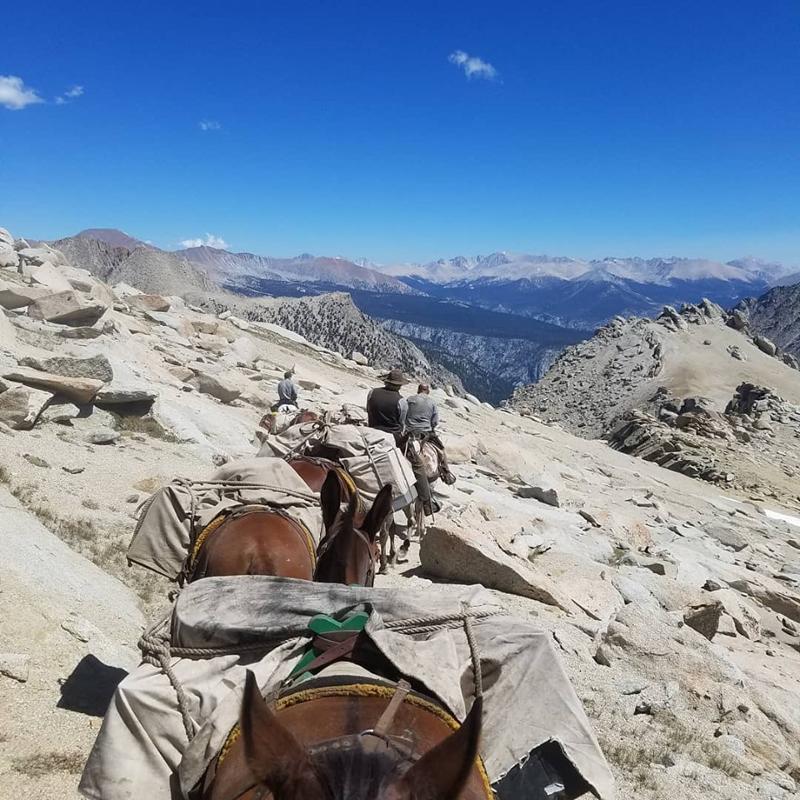
“In his account of visiting Chief Chappo’s village at Hospital Rock, [Tharp] speaks with admiration and respect for the cleanliness and thrift of the Indians he found there and he considered Chappo, or Ho-Nush, as the Indians called him, a good friend. . . . [The Indians] told him about the big trees which 25 men with hands clasped could circle.” — Los Tulares #39, 1959

“Tharp recalls . . . [T]he Indians . . . had contracted contagious diseases from the whites, such as measles, scarlet fever and smallpox, and they died off by the hundreds. I helped to bury 27 in one day up on the Sam Kelly place.'” — Mike Whitney, 2017

“During the early 1860s, after a rapid buildup of interior grazing activity, two successive events, the great Central Valley flood of 1862 and the severe drought of 1863-1864, shook the grazing industry to its foundations. The drought especially, with its near total failure of winter-pasture grasses, sent stockmen desperately searching for previously unused rangelands. What resulted was the first utilization of the Sierra for large-scale livestock feeding.” — William C. Tweed and Lary M. Dilsaver, 2016

“By the summer of 1864, as many as 4,000 cattle were in the Giant Forest areas. . . . Within a few years, much of the herbaceous vegetation of the Sierra was either destroyed or replaced.” — William C. Tweed and Lary M. Dilsaver, 2016

“The effective replacement of the Native American population of the southern Sierra with a population of Caucasian settlers had a profound effect upon the land. Both cultures looked to the land for sustenance, but in very different ways. . . . The new people saw nature not as a part of the same psychological world as that of humanity but as something provided by God for their consumption and use.” — William C. Tweed and Lary M. Dilsaver, 2016

“[A] man and horse came in sight at the farther end of the meadow .. . . I explained that I came across the canyons from Yosemite and was only looking at the trees. ‘Oh then, I know,’ he said, greatly to my surprise, ‘you must be John Muir. . . . Just take my track and it will lead you to my camp . . . . [M]ake yourself at home.'” — John Muir, 1901

“[I[ discovered his noble den in a fallen Sequoia hollowed by fire — a spacious loghouse of one log, carbon-lined, centuries old yet sweet and fresh, weather proof, earthquake proof, likely to outlast the most durable stone castle, and commanding views of garden and grove grander far than the richest king ever enjoyed.” — John Muir, 1901

“[U]p spring the mighty walls of verdure three hundred feet high, the brown fluted pillars so thick and tall and strong they seem fit to uphold the sky . . . .” — John Muir, 1901

“Soon the good Samaritan mountaineer came in, and I enjoyed a famous rest listening to his observations on trees, animals, adventures, etc., while he was busily preparing supper.” — John Muir, 1901

In May, 1910, Sequoia National Park Chief Ranger Walter Fry interviewed Hale Tharp as the first white man to discover and explore the Three Rivers and park country. This interview is the basis of most of what we know of Tharp’s story.
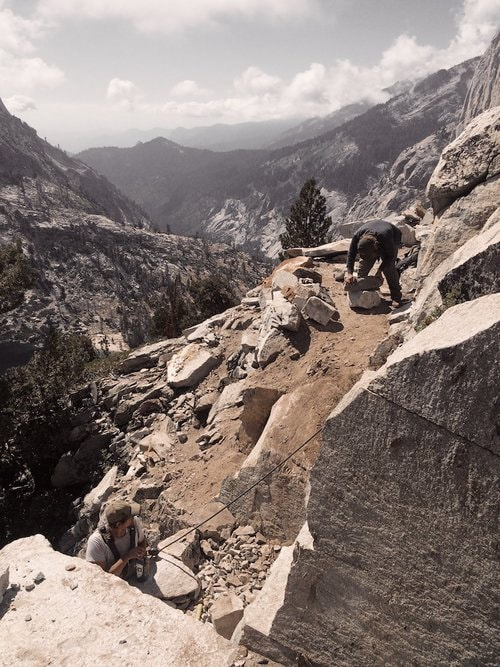
[Tharp] told Fry, that “[U]p to 1890, when the park was created, I held the Giant Forest country as my range and some of my family went there every year with stock. When the land up there was thrown on the market, with other men we bought large holdings some of which Nort, my son, still owns.”

In 1912, at age 82, Tharp died at his ranch home near Three Rivers. He was buried beside his wife at Hamilton Cemetery between Exeter and Woodlake. His gravestone names him “Discoverer of the Giant Forest.”

“To earn money for our various charities, we ladies of the Three Rivers Woman’s Club held old-time dances and card parties, served meals to many local and out-of-town organizations, held apple festivals and bazaars, presented plays, sold magazine subscriptions, and baked pies to sell. . . . Money was donated for gates to the Three Rivers Cemetery, and for the restoration of Tharp’s Log in Sequoia National Park.” — Wilma Kauling, 2016


Maps & Directions:

Directions:


Tharp’s Log is accessible only by foot trail; the primary trailhead is accessed from the Crescent Meadow parking lot in Giant Forest.

From Visalia, take Hwy 198 east to Three Rivers. Continue through Three Rivers to the park entrance station (fee), where the road becomes the Generals Highway.   NOTE: This is a steep, narrow, winding road; vehicles longer than 22 feet are NOT advised from between the upcoming Potwisha Campground and the Giant Forest Museum.

Follow the Generals Highway to just before the Giant Forest Museum, where you will turn right onto the Moro Rock/Crescent Meadow Road. Proceed to where the road dead ends at the Crescent Meadow parking area.

Find the signed trailhead for the Crescent Meadow/Log Meadow Loop.  Follow the signs along the trail to Tharp’s Log, near the upper end of Log Meadow.


Site Details & Activities:

Environment: Mountains, subalpine meadows, giant sequoia forest, elevation: about 6800′; Sequoia National Park  (NOTE: Tharp’s Log is accessible only by foot trail; no dogs on park trails.)
Activities: study of architecture and landscape architecture, birding, botanizing, camping (nearby, at Lodgepole, seasonal), hiking, history, photography, picnicking (at Crescent Meadow), wildflower and wildlife viewing
Open: Sequoia National Park is always open, weather permitting (unless closed due to emergency conditions); park entrance fee
Site Steward: National Park Service-Sequoia and Kings Canyon National Parks; 559-565-3341; www.nps.gov/seki
Opportunities for Involvement: donate, volunteer
Links:
Books: Challenge of the Big Trees -The History of Sequoia and Kings Canyon National Parks, revised edition by William C. Tweed and Lary M. Dilsaver, George F. Thompson Publishing, 2016


Click on photos for more information.

Tailholt — the Road to White River

by Louise Jackson

     The old foothill stage road to White River hasn’t changed much in one hundred seventy years. It is paved now and widened a bit, but still winds like a writhing snake through the green and golden foothills of the southern Sierra Nevada. Miles stretch without a building in sight.

     In the early 1800s, current Tulare County’s south borderlands were a virtual wilderness. There was little to draw settlers to the dry, summer-scorched area; only a few isolated Yokuts families and renegade outlaws called the southern Sierra foothills their home.

     Even California’s 1848 gold rush passed the area by. The Forty-niners who followed an ancient Indian, Spanish, and emigrant trail north from Los Angeles through California’s Central Valley were intent on reaching the American River diggings 400 miles away. If any of the travelers saw possible mineral prospects on the hillsides or in the gulches and streams they crossed, they seem to have ignored them on their flight to more certain riches. But that would change.

     As the easy pickings of the northern California placer mines played out, a few of the prospectors began heading back south, down the old Spanish trail, newly designated the Stockton-Los Angeles Road. Where it veered east to avoid the marshlands of immense Tulare Lake, they crossed the Kaweah, Tule, White, Poso, and Kern rivers and some paused to explore the foothill waters of each stream.

     Few of their efforts bore fruit until, in 1853, De Witt Clinton Biggs and Andrew J. Maltby made a significant gold strike near White River. David James also claimed he had found gold farther south in the Greenhorn area. Then in spring of 1854, major finds of placer gold were discovered on Kern River.

     As word spread, thousands of miners rushed south, and some stopped at White River. When they found placer gold in the river’s waters, a rough camp sprang up that they called Dog Town. It wasn’t long before the seasonal river dried and the easy river pickings gave out, but there were good finds in the dry hillside gulches of the White River Mining District. Finds that required significant investments, big mining equipment, and a good wagon road to haul it on.

     California’s roadways were untidy affairs in the 1800s. They zigged and zagged around property lines, avoided ditches, led to private ferry river crossings, connected farms and ranches and were the lifelines of small towns. In the foothills, they also avoided cliffs and gulches, skirted granite outcroppings, curved around giant oak trees, and rose and fell at the whim of the mounded landscape; and they detoured or branched to every active mining district.

     The road to White River was no different. It headed as directly as possible for the mining district, by-passing the shanties of Dog Town. Undaunted, almost overnight, a core of serious miners moved upstream to the road and set up a more permanent settlement that sported real houses, saloons, and a store. They gave it the name of Tailholt.

     The name is shrouded in mystery. Passed down through generations, several stories have emerged. One claims the term originated as an identifying direction to the town’s original cabin where a miner (or the town’s first female occupant) had hung a cow’s tail on the front door to pull for entry. Another says it was in honor of an early miner who always took his faithful cow to town with him so he could hang on to her tail while she led him home from a hard-drinking night at one of the saloons. Yet another was of a screaming lady stage passenger grabbing the tail of her little dog when it jumped out of the stage, and the driver yelling back to her, “Get a good tail holt and hang on until I can help you!” Whatever the story, a general saying emerged that “a good tailholt is better than no holt at all.”

     Life in the extensive White River mining district was somewhat primitive in the early 1850s. Although Tulare County had been formed in 1852, White River didn’t get its own voting district, justice of the peace, or constable until 1855. The mining processes were limited, too, with the major digs still using the South American arrastra or a small stamp mill to crush the ore and separate out the gold. Gradually, stores, hotels, saloons, a church, and two graveyards dotted the hills.

     By 1862, Tailholt was a thriving community of perhaps 1,000 to 3,000 souls, and when an official post office was established that year, store owner and hotel keeper Levi Mitchell chose the more dignified name of White River for its postmark. It was a name the growing community could be proud of. But it was basically a one-purpose town, away from any major commercial route with little to sustain it beyond mining. This circumstance came from a decision made five years earlier.

     After California achieved statehood in 1850, the need for good connections to the rest of the nation became paramount. Congress immediately set up a national overland mail service to the west coast, but it was a fragmented system and it could take months for a letter to arrive. So, in 1857, the government issued a $600,000 permit to John Butterfield for development of a 2,700 mile-long transcontinental stagecoach service that would deliver semi-weekly mail service to 139 stations along the route.

     Speed, not passenger service or community connections, was the main criterion. The service began on September 15, 1858, and its route through Tulare County followed some of the old foothill road to Kern River. But it by-passed the foothill towns of White River and Woody to follow the more direct Los Angeles-Stockton route lower down. Gradually, the populations along the old Stage Road to the Kern diminished. Only during droughts and depressions did the mines see much activity through the years.

     By the late 1890s and early 1900s, the town of White River had become a small rural hamlet whose citizens valued the preservation of the area’s history and uniqueness, even petitioning the county in 1903 for the creation of a local fish and game preserve.

     Today, as we take the Old Stage Road to White River, we are following a drive through history: from the prehistoric route of what became the Los Angeles-Stockton and then Butterfield Road; along the 1854 miners’ foothill wagon road; to the remnants of the town of White River. Drive slowly, take a picnic lunch, relax and enjoy as side trips along the way and the continuing road to Woody and Posey beckon. It will be a day through rural California history to remember.

     What to see in Tailholt/White River:

     Visitors can still find intriguing traces of the old boom town, signed by a Tulare County Historical Marker: a couple of short dirt roadways leading off the well-maintained Old Stage Coach Road, sites and remnants of a few old buildings; a tall tombstone in the graveyard on the hill north of the road; some small tunnels; a smattering of rock tailings; and the remains of a reverberatory furnace—all sitting on private land. (Permission to explore can depend on the local residents.)

     Here’s What Tailholt Looked Like circa 1898:

Key to Overview of Tailholt, circa 1898
Overview of Tailholt, circa 1898

November, 2019


Slideshow:


Quotes & More Photos:

“The first mining camp on White River was Dogtown, about a mile and a half south of State Registered Landmark Number 413.” — Annie Mitchell

“Almost every kind of mining was tried around here except hydraulic mining. At first, it was panning or sluicing. Then shafts and tunnels proved successful tho [sic] dangerous. Coyote mining was probably the most dangerous of any type. The need for water was recognized early and the White River Ditch Company was organized in 1857.” — Annie Mitchell

“[The miners] soon found that this field was not a shovel and pan operation. Gold was here, but in quartz, buried in deep veins, and arrastras and stamp mills would be needed. The smaller streams dried up in the summer and sluicing was impossible unless dams and ditches were built. Thousands left, no richer than when they came.” — Annie Mitchell

“[U]using an arrastra to crush the ore and separate out the gold . . . was . . . primitive . . . but effective. . . . Arrastras were much used around Tailholt as late as the ‘90s at the Eclipse Mine.” — Ina H. Stiner

“For several years, most of the supplies for the new camp [White River] were brought in from Stockton by bull teams. It took three weeks to make the trip, with a relay of bulls along the line. . . . At that time, Porterville was only a trading post, and it was cheaper to go to Stockton than to trade with Royal Porter Putnam. ” — Fred Guthree

“Tailholt (White River) prospered, and miners, merchants, farmers, stockmen and teamsters made a good living. Over a million dollars in gold was mined out.” — Annie Mitchell

“Once there were enough people here to support 2 stores, a hotel, 2 boarding houses, blacksmith shop, saloon, 4 quartz mills, a school, livery stable, justice of the peace, constable, Sunday school, post office, literary society, . . . and a baseball team.” — Annie Mitchell

“The schoolhouse [built in 1874] served as a center for town affairs. Church services were held there by traveling preachers like Parson Dooley of Woody . . . Tailholt [also] had its own specialty – a singing school . . . .” — Ina H. Stiner

“Life in White River had both its problems and delights. Drunkenness; fights; acts of discrimination and prejudice against Chinese and indigenous miners and workers; lack of doctors during a decimating diphtheria epidemic in 1877; and occasional destructive fires. But there were also dances, a baseball team, fraternal organizations, hunting parties, traveling ministers, picnics, and school programs.” — Annie Mitchell

“The drouths of the late 70s were hard on the miners as well as the farmers. Also, so much livestock died that the very air was poisoned and an epidemic of diphtheria swept Tailholt in 1877. Twelve children died, among them the two daughters of the Mitchell family. The most pathetic case was the Clinton Biggs family, where all of their five children died.” — Ina H. Stiner

“With the 80s came wetter years: and mining at Tailholt revived: the period from 1884 to 1902 being given in statistics as the most productive years of White River mines ($70,000 in 1884).” — Ina H. Stiner

“In the 90s a literary society was formed and plays were given. . . . In this way and the miners giving dances, money was raised and a hall built. They had been taking up the benches in the school house, but three times a year or so used a barn for dances. The new hall was 80 by 40 feet and . . . in quadrille dancing the floor would be filled . . . .” — Ina H. Stiner

“When the price of gold went down around 1900, the mines were closed. Tailholt gradually became a ghost town.” — Annie Mitchell

“One [White River cemetery] is on a hillside on the north side of the river. Natural deaths are buried there. The bodies were placed in a whipsawed pine box from lumber that came from the Jack Ranch area.” — Fred Guthree

“The second cemetery is on top of a small hill south and across the river. Men who died with their boots on are buried there. They were rolled in blankets and buried without a box . . . .” — Fred Guthree

“During the depression of the 1930s many people came back and worked the tailings from the old mines and could pan out $3 or $4 a day and live.” — Annie Mitchell

“In 1949 some three thousand people came to Tailholt to dedicate a memorial marker.” Placed by the California Centennial Commission, with a base furnished by the Tulare County Historical Society, it was dedicated May 15, 1949. — Annie Mitchell


Maps & Directions:

Directions:

From Visalia, take Hwy 198 east to Hwy 65 south to Porterville. Exit east on Teapot Dome Avenue (Avenue 128), then turn right (south) onto Road 264. At Avenue 116, go left (south) onto Old Stage Road toward Fountain Springs. Stop there, at the junction with Avenue 56 (J22) and Hot Springs Drive, to read the historical markers about local landmarks and history. (Note that the actual Fountain Springs was about 1.5 miles northwest of this intersection; the junction of the Stockton-Los Angeles Road and the old road to the Kern and White River mines was there.) Then continue south on Old Stage Road (M109) to White River and the Tailholt State Historical Landmark.

Just after you cross the bridge over White River, scan the hill to the north until you see the white monument standing in the old “respectable” graveyard. Road M-12 goes south from Old Stage Road near the bridge. To see the unmarked and unmaintained site of the old Boot Hill cemetery, go just past the cattle guard on M-12 and look along the fence line climbing the hill to your right. The cemetery lies about 3/4 of the way up the hill.

Alternate Routes: Follow Hwy 65 south from Porterville to Terra Bella and take Avenue 96 east to Old Stage Road south. Or stay on Hwy 65 south to Ducor and take Avenue 56 (J22) east to Fountain Springs and Old Stage Road south to Tailholt/White River.


Site Details & Activities:

Environment: Foothills, traces of old mining town, California Historical Landmark #413
Activities: biking, birding, botanizing, history, photography, picnicking (no facilities available), wildflower and wildlife viewing
Open: Year-round, daily, for viewing and photography (no facilities).  NOTE: Except for the highways, this is all private land; do not explore beyond the roadway without permission.
Site Steward: Except for the highways, this is all private land
Books: 1) Sites to See-Historical Landmarks in Tulare County, by Annie Mitchell (Panorama West Books, 1983)
2) Tailholt Tales, by Frank F. Latta (Brewer’s Historical Press, 1976)
3) The Way It Was, by Annie Mitchell (Valley Publishers, 1976)
4) Into a Land Unknown: A Report on the Push to the Kern River and Eastern California, Volume 1: 1854-1860, by Alan Hensher (Alan Hensher Books, 2002)


Click on photos for more information.

Farmland Forever: the Story of Sweet Home Ranch

by Shirley Kirkpatrick

     Paul and Ruth Buxman’s Sweet Home Ranch will remain forever in farming. And that’s just the way they want it. In fact, that’s what they stipulated when they traded the development rights on their 40 acre farm east of Kingsburg for one of the first two farmland conservation easements in Tulare County. The other is held by close neighbor and friend Jim Moore.

     The easements were facilitated by Sequoia Riverlands Trust in 2009 with funding to buy the farmers’ development rights coming from Tulare County’s Measure R road improvement tax fund. As part of the county’s project to widen the Visalia/Dinuba highway (Road 80), Cal Trans stipulated that the farmland being eaten up by the widening must be mitigated by placing farmland conservation easements on comparable prime agricultural land.

     In addition to being a farmer, Paul Buxman is also an artist, musician, teacher, mentor, rural philosopher, and visionary. He was eager to save his farm from the threat of urbanization as new subdivisions leap-frogged across the fertile Kings River plain toward his property.

     His son, Wyeth, the fourth generation of Buxmans at Sweet Home Ranch, is also greatly relieved. He didn’t think he could continue the family’s farming tradition if faced with the traffic, dust, and noise generated by a population explosion nearby.

     Paul points to an amazing fact when he considers why he wants to preserve farmland. “A little more than one percent of the earth’s surface is actually farmable. That’s it. Only that one percent enables us to survive. I don’t think people realize that. When you remove arable land and put it into something non-productive – at least in the way of producing food and fiber – to bring it back into some kind of agrarian use is a massive undertaking,” he said.

     He and his neighbors live and work in an area they call the Golden Triangle of farmland. “Great water, great fertility, great location, great weather – and we’re trying to draw lines of farmland forever.”

     Paul understands completely the current trends in agriculture nationwide: (1) the average age of farmers is increasing as fewer young people choose to return to the family’s farm, and (2) farms are getting larger to take advantage of the economies of scale.

     Paul and like-minded small farmers are not only vested in farming as a livelihood, but they see it as a way of life – a place to raise their children and teach them about working and living with nature – “cultured nature, agriculture,” in Paul’s words. They believe land would be taken care of better for a longer period of time if children were introduced to it early, so farming is perpetuated.

     To express those concepts Paul started something called Celebration of the Small Family Farm. He formed a group of farmers called California Clean Growers (CCG). Their goal is to farm responsibly and win the hearts of urban people. California Clean Growers became known for making their farms and homes accessible to visitors, for conserving fertility of the soil and water through the practice of Integrated Pest Management (IPM) and for marketing their products with the CCG backing.

     Paul and Ruth practice what they preach. Every year they set aside a portion of Sweet Home Ranch to give young people the experience of growing a crop. Through their church, the Buxmans are introduced to at-risk youth, who are invited to participate. Given tools and seeds for planting, the teens began with growing food items they could easily sell: watermelons, corn, and other favorites. “The kids had to grow it, tend it, weed it, harvest it, and sell it,” said Paul. They also learned to cook it and eat it. And they profited from it.

     With the earnings, Paul and Ruth began taking the youth on overnight trips to the nearby national parks – places the youngsters had never seen. “So, in this case,” said Paul, “farmland is being used as a way of gang prevention, a way of intervening in young people’s lives … and changing their lives for the better, we hope.”

     When not cultivating, irrigating, pruning, and taking care of his farm, Paul finds time for his other passion – art. A trained and noted painter of the Plein Air impressionistic style made famous during the Arts and Crafts era, Paul doesn’t have to travel far for his inspiration. He finds it in nature at his and nearby ranches and farms. He paints what he sees and what he understands – even the flow of water through the weir of an irrigation ditch is made beautiful with his choice of vibrant colors, shadows, and depth. Many online articles and interviews detail his art story.

     To share the beauty and the bounty of Sweet Home Ranch and nearby farms, Paul and Ruth host a harvest festival every year on the two days following Thanksgiving, inviting their neighbors and other small farmers to participate. The public is invited to enjoy the art show and tasting of locally handcrafted foods from 9-5:00 on Friday and 9-4:00 on Saturday at the ranch.

     Offered for entertainment, amusement and sale are: art, art cards, fresh fall fruit, trailer rides on the farm, locally made wines, 12 kinds of bread, handcrafted cheeses, dried fruit from small family farms, jams, jellies, soaps, infused honey, nuts, and more. Paul says, “Come out and see what we’re growing here for you.” On land that will be farmland forever.

November, 2012


UPDATE: In 2017, Paul and Ruth Buxman sold their beloved Sweet Home Ranch, as the intensive full-time manual labor became too much for them. But, good news: they still live there, they’re still making their famous jam, their Sweet Home traditions will continue, and now the entire ranch is protected by an agricultural easement.

  Happily, the Buxmans were able to sell the ranch to a wonderful, young and energetic couple, Jordan and Bailey Carlson, who are committed to family farming and live just a half mile west of Sweet Home Ranch. They will retain the ranch name and carry on the traditions of the farm, which are guided by love of environment and neighbor. These traditions are the secret to the award-winning fruit and faithful workers.

   Meanwhile, the Buxmans have retained a life estate on their house and studio and about a quarter of an acre of trees so that they can keep harvesting fruit and making their jam. Their traditional harvest festival will still be held at the ranch on the two days following Thanksgiving. And, working with Sequoia Riverlands Trust, they executed a lot line adjustment that made their two parcels one, thus securing a conservation easement on the entire 57 acres. Farmland Forever, indeed!


Slideshow:


Quotes & More Photos:

“I’d put everything I have under easement if there were money for it.” — Jim Moore

“All the natural ingredients were in place for intensive agriculture. The snow accumulated in the Sierra Nevada; the narrow river canyons that drained the mountains were located in the foothills where dams and reservoirs could be easily constructed; the valley floor was relatively flat and had the proper gradient for canals; and there was plenty of sun. The landscape would be altered – transformed to a greater extent than any similar place on earth – but the elemental factors remained in place and determined what occurred there.” — Philip L. Fradkin

“People in cities may forget the soil for as long as a hundred years, but Mother Nature’s memory is long and she will not let them forget indefinitely.” – Henry Cantwell Wallace

“Before we approve another kind of industry on top of farmland, let’s think – What will be our legacy? It will be that we are the fruit basket, the bread basket, we are the milk carton, we are the raisin capital. Let’s be what we were intended to be. This San Joaquin Valley is like no other place on earth.” — Paul Buxman

“Farmland is going to be the most important and most beautiful thing that we preserve in this country. We have National Parks, National Forests. Why not National Farms?” — Paul Buxman

“I just think all farms could be like this, right here in Tulare County. ‘Tulare County: known for its small family farms and community involvement.’ You know, why not?” — Paul Buxman


Maps & Directions:

Directions:

Address: 4399 Avenue 400, Dinuba, CA 93618; east of Kingsburg

Latitude/Longitude:

36° 31.054’/W119° 28.5308′

36.517567/119.475514N

From Visalia, go west on Hwy 198 to Hwy 99 North. Take exit 111 from Hwy 99 onto Mendocino Street going north, then go right onto Sierra Street (Ave. 400) in Kingsburg.  Go east on Ave. 400/Hwy 201 approximately five miles to 4399 Ave. 400 (between Roads 40 and 48), and turn right (south) into the long unpaved driveway to the house (which will be on your right).


Site Details & Activities:

Environment: Valley, farm
Activities: annual Harvest Festival: arts and crafts, hayrides, photography, produce tasting, visiting farm
Site Stewards: Paul and Ruth Buxman, 559-260-1958, irbuxman@gmail.com; Sequoia Riverlands Trust (SRT), 559-738-0211
Links:
Open: annually, on the two days following Thanksgiving (9-5:00 on Friday, 9-4:00 on Saturday)


Click on photos for more information.

The Springville Historical Museum: A Dream That Wouldn’t Die

by Louise Jackson

     It can be hard to know when an important idea is conceived. To ninety-eight-year-old Virginia Radeleff the concept of a community museum is simply part of a small town’s unique history. Raised from birth in the foothill community of Springville, California, Miss Virginia grew up and spent most of her adult life living her community’s history.

     “I think I realized from the time I was a little kid, that the town was a little bit different, that it needed to be preserved.” she reflects. “It wasn’t quite like other towns.” Born in 1919, Virginia left Springville to attend two universities, obtain two teaching credentials, and to work in an aircraft factory during World War II. But she always returned home.

     “People knew from the time I started teaching when I was about 21 years old, that I was working for a museum. We talked about it. They knew it. The way youngsters grow up in a town like this needs to be preserved.”

     The way they grew up in Springville was indeed special. Small by any community standards, it was a foothill town without borders, with few fences or restrictions. Its children of the early 1900s played, ate, and grew up together under the direction of all their neighbors. According to Virginia, “Everybody had a garden and a milk cow and lived within their means.”

     The original town was formed when John Crabtree, one of the first settlers on the Tule River, sold a piece of his 1856 land patent to William G. Daunt. In the 1860s, Daunt built the area’s first combination store and post office, which served the growing area for many years. That piece of property, sitting beside today’s rodeo grounds, and still supporting the original post office/store chimney, became the eventual home of Springville’s Tule River Historical Museum.

     The story of Springville’s museum is a tale of vision, determination, cooperation, perseverance, and hard work. Its very existence stands as a testimonial to the kind of community Springville is, and to the woman who made it happen.

     Virginia Radeleff constantly gathered its history. The heritage of its prehistoric Yokuts people who thrived in the lush landscape of its clear springs. Its early years as an important way station for southern Sierra Nevada hunters, trappers, miners, stockmen, and sheep herders. Its years as a major lumber mill town, with a railroad line to serve it. Its evolving role in ranching and farming. Home to a major regional hospital facility during a pandemic of tuberculosis that ravaged the nation for over 50 years. Its importance as a gateway to the Sierra Nevada’s recreational opportunities on both federal and private lands.

     Every time someone had something they thought should be in the museum, they gave it to Virginia to store. Finally, in the 1970s, she had to tell the town, “It’s time for us to hunt for a museum because we can’t just keep putting it in Miss Virginia’s garage!”

     The first places the community approached—the closed hospital, an old railroad right-of-way site, and the property of the Springville Hotel that had burned down—all proved unworkable. Then an interesting offer came. Lindsay dentist Dr. Franklin Baughman and his wife were going to build a new house on the property of one of the area’s early homesteads. The historic Murphy House was in the way, so they offered it for use as a museum. But there was one caveat; the old building had to be hauled away.

     On September 13, 1981, the Tule River Historical Society became a legal non-profit entity with two stated goals: to research and preserve the history of the area—and to move and preserve the Murphy House.

     Four years later, with the Baughmans ready to build but still without a home for the building or the capability to move it, a crew of volunteers started taking the structure apart. Piece by piece, they numbered each one and stored them all in nearby turkey sheds, a sea cargo container, and a barn. It took almost ten years before the Society found a place to re-assemble them into a house. That place turned out to be the property of the old Daunt store and post office.

     Daunt’s one acre site, its location by the rodeo grounds, and its history made it a perfect location for the museum. The Historical Society approached Mariann Sanders, who owned the property, but, once again, there were problems. Funds to buy the property, access to it, water and electrical connections were all missing.

     A committee of the Historical Society went to work on the funding first. It offered to handle the sales of local historian Jeff Edwards’ book, 100 Year History of the Tule River Mountain Country, in return for a donation to buy the property. When the donation reached over $4,000, negotiations with Mariann Sanders began in earnest, and in 1988 an agreement was reached in which she donated the land in exchange for payment of back taxes.

     The next few years were busy. The Rodeo Association granted access to the site, the Lions Club donated over $5,000, and in 1990, after the Tulare County Planning Department issued a building permit and approval of the site plans, the Southern California Edison Company brought in an underground electrical conduit. The Historical Society repaired the Daunt chimney, fenced the site, and poured the slab for its first building. Finally, in 1994, the Murphy House was reassembled in its new home and its restoration began.

     Today, Springville’s Historical Museum stands as a wonderful repository for all the artifacts and historic records of the upper Tule River region that Virginia Radeleff and the Tule River Historical Society have gathered through the years. The fully restored Murphy House is a museum in itself, filled with pioneer furnishings, fascinating artifacts of early America, interpretive photos, stories, documents, and genealogies.

     The museum grounds display restored and refurbished artifacts seldom seen in a rural museum. A full blacksmith shop, freight wagons, a covered wagon, historic trucks and cars; early lumbering and water power equipment, farm and ranch equipment, a replica post office and stores; and the original Daunt chimney standing tall, as a witness to the passing times.

     One of Miss Virginia Radeleff’s goals for the future is for the Tule River Historical Society to collect the modern industrial and personal technologies that are changing rural America’s way of life today. To maintain and grow the Springville Museum as continuing testimony to an ever-evolving community and its special can-do people.

October, 2017

UPDATE: On Sunday, January 26, 2025, Miss Virginia Radeleff died peacefully in her sleep at the age of 105.  Her dedication to the education of generations of Springville’s students and to the collection, preservation, and dissemination of the community’s (and its region’s) history has left a lasting legacy that is truly a Tulare County Treasure.


Slideshow:


Quotes & More Photos:

“[A museum] is an opportunity for a community to do things together . . . a museum can be a focus, not only of children but their parents and even grandparents . . . they not only take a part in life now, but they want to show their descendants what it was like.” — Miss Virginia

“My mother had the . . . telephone company switchboard in our living room, and the county library. That was her job. And my dad had a service station down the street. And no one was making any money. . . . But the one thing that both my parents always insisted was that every one of us was going to go to college. . . .  So we grew up with education being at the heart of everything.” — Miss Virginia

“. . . I found that working with youngsters was what I wanted most, and I thought I could help the town the most that way. There are at least six families here now that I taught four generations in their family.” — Miss Virginia

“The janitor over at school, when I first started to teach, every day when he came to school, he brought his milk cow with him, and tied her out along the fence, and she ate the grass along the road, and when he went home for lunch, he took her home, and then back.” — Miss Virginia

“The name of Springville was never official until 1911. At this time the name was changed from Daunt to Springville.” — Jeff Edwards

“To the Indians this was a spot for good living, and many significant signs show that they used it. The depth and size of the many potholes indicate the Indians ground a lot of acorns here. Game was plentiful, as were fish, fowl and vegetables.” — Jeff Edwards

“Murphy House is local, and it was actually built here . . . . about Civil War time, 1850s . . . . and it was pretty well put together.” — Miss Virginia

“The stove in the kitchen  . . . is out of the family that just recently gave us the Model [A] Ford. Somebody gave us the bathtub, made out of wood. The little organ that you can carry was given to us by a family from up there. The minister used to carry it in a little suitcase up to the mountain on Easter morning and we had sunrise services.” — Miss Virginia

“Also what happens in a small town that you can take advantage of when you want to start a museum is that people are used to doing their share. They don’t sit back and wait for someone else to do it.” — Miss Virginia

“That first year, everybody in Springville, or relatives, when Jeff put his book out got a copy; that was their Christmas present.” — Miss Virginia

“We’ve had some pretty nice big pieces of machinery from the mills and from the ranches. PG&E and Edison have both donated really hard-to-find heavy equipment, so some really good things from the power houses are in there.” — Miss Virginia

“You’re not only saving a thing, you are saving an idea and an effort and showing younger people what you can do for the town. . . . You’re generations of people, but there’s also generations of artifacts and of things and of attitudes . . . . Everything to do with a town and families and history is a living thing, and you just are preserving what’s available . . . .” — Miss Virginia


Maps & Directions:

Address:  34902 Hwy 190, Springville, CA 93265

From Visalia, take Hwy 198 east. Turn right (south) onto Road 204/Spruce Rd.  At the stoplight at the “T” intersection, turn left (east) onto Hwy 65 south toward Porterville.  Turn left (east) onto County Route J28 through Strathmore to the junction with Hwy 190.  Go left (east) on Hwy 190 toward Springville.   Nearing the west end of Springville, watch for the Springville Rodeo grounds entrance on your left.  Turn in  through the gate and immediately turn right and go downhill to the gateway to the museum.


Site Details & Activities:

Environment: Foothills, just southwest of Springville
Activities: tour museum, attend special events; Open House first Sunday in December
Open: Tuesdays, 10:00 a.m. – 4:00 p.m.; and Sundays, 1:00 p.m.- 4:00 p.m.
Site Steward: Tule River Historical Society; 559-539-6314; 559-539-5600
Opportunities for Involvement: volunteer, donate
Links:
Books: 1) 100 Year History of the Tule River Mountain Country, by Jeff Edwards (Panorama West Books, 1986)
2) The Men of Mammoth Forest: A Hundred-year History of a Sequoia Forest and Its People in Tulare County, California by Floyd L. Otter (self-published, 1964)


Click on photos for more information.

Science and Shelter at the Summit

by Laurie Schwaller

     Mt. Whitney’s distinction as the highest peak in our 48 contiguous states has made it a hiker magnet for almost 150 years. It also made it an astrophysicist magnet that drew a number of world-renowned scientists to its summit in the late 1800s and early 1900s.

     It was the scientists who, in 1908-1909, were responsible for the design and construction of the Smithsonian stone hut that continues to offer shelter and photo opportunities to the tens of thousands of trekkers striving to reach the top each year.

     In September, 1881, Samuel Pierpont Langley, then director of Allegheny Observatory and subsequently Secretary of the Smithsonian Institution in Washington, D.C., and director of its Astrophysical Observatory, led an expedition up a narrow foot trail from Lone Pine to the barren 4-acre plateau at the mountain’s top to study solar radiation.

     Excited by the quality of his results, Langley recommended that Mount Whitney and its environs be reserved by the government as a prime location for a high-altitude observatory. His expedition report noted that a permanent shelter was required to enable scientists and support teams to remain at the summit, and added that “Stone for the erection of permanent buildings is here in unlimited quantity.”

     In July, 1903, Professor Alexander G. McAdie, Chief of the U.S. Weather Bureau in San Francisco, and Professor Joseph N. LeConte reached the summit with their instruments, in company with a 137-member Sierra Club High Trip group. McAdie’s report that Mount Whitney was “most suited for a meteorological observatory” contributed ultimately to a series of expeditions under the auspices of the Smithsonian Institution.

     Spurred by the tourists’, scientists’, and National Park’s interest in “their” mountain, the citizens of Lone Pine raised money to complete the trail work started in 1903 by U.S. Army troops under Captain Charles Young, Acting Superintendent of Sequoia National Park that year.

     Gustave F. Marsh, who operated a stage line and express business in Lone Pine, was contracted to engineer and finish building the Army’s good path for pack and riding stock all the way to the summit. He finished his work on July 22, 1904.

     Plans for a summit shelter finally got made in 1908, as a result of a summit expedition that August. Dr. William Wallace Campbell of the University of California’s Lick Observatory and Dr. Charles Greeley Abbot, the new director of the Smithsonian’s Astrophysical Observatory after Langley’s death, ascended the peak on a reconnaissance mission.

     Campbell had decided 14 years earlier that he had to be atop Mount Whitney in late August of 1909, when Mars would next be most favorably positioned for his studies, at its brightest and closest to Earth, opposite the Sun in Earth’s sky. He was determined to debunk the “evidence” of intelligent life on Mars that was currently being popularized. Abbot was accompanying him to continue Professor Langley’s studies of solar radiation.

     With only a two-week opportunity for the best viewing in 1909, the scientists had climbed Whitney a year in advance so they could meticulously plan and prepare for that expedition. Gustave Marsh, head of the crew that opened the east side pack trail to the summit in 1903-04, had been hired to guide both the 1908 and 1909 expeditions.

     After the scientists spent a frigid night on the summit in 1908, Campbell decided that observations in 1909 “should not be undertaken unless a building of some kind could be erected as a shelter in case of storm.” He drew plans for a three-room hut with stone walls and a steel roof and doors, “to be used as a shelter and living quarters for observers in any branch of science.”

     Abbot presented Campbell’s plans to Secretary Charles D. Walcott of the Smithsonian, and on October 30, the Smithsonian approved a grant for the shelter. Abbot hired the firm Speiden and Speiden to create the construction plans. Then, through the Smithsonian, he got government permission to construct the shelter on the summit, and funds to pay for it.

     Campbell tackled logistics. He got estimates for cement and workers’ tents and for the steel and glass parts from the United Sheet Metal Works in San Francisco. (No wood was to be used, as lightning could set it on fire.) Through Marsh, he got costs for packers to carry everything up the mountain and for a mason and helpers on the peak to assemble the hut. He sent Abbot an estimate of $2,315. The enthusiastic Secretary Walcott approved a generous $2,500 instead.

     In 1909, the badly deteriorated east side trail had to be remade to enable pack stock to transport the building materials, supplies, and scientific instruments to the summit. On July 28, the first mule train reached the top, barely a month before the expedition’s arrival, and work began on the shelter, with stone for the walls being broken, shaped, riveted, and cemented with hand tools.

     By mid-June Campbell had inspected all the steel parts assembled for the hut in San Francisco, and supervised their actual trial erection. He shipped them, the cement, and the tents for the construction crew to Lone Pine while Marsh worked tirelessly at all the tasks on the summit.

     Campbell had also invited McAdie of the Weather Bureau to join the party as its meteorological observer. The main expedition party left Lone Pine on August 23. Abbot set up his 16-inch heliostat and spectrograph to compare the spectra of the Moon and Mars, and began his observations before the shelter was completed.

     Twenty-eight years after Langley made his observations on the summit, McAdie obtained continuous records of pressure, humidity, and temperature for the entire period on the peak.

     On August 28, Campbell and the Lick group, including Messrs. Albrecht, McAdie, the physician Dr. Miller, Hoover, and Skinner, arrived at noon, and the entire party got soaked in a thunderstorm. The storms continued until September 1, but on that night and the next, Campbell obtained a good series of exposures on Mars and the Moon.

     The spectrograms were developed at the summit as they were taken. Then the unusual, extremely adverse weather returned, precluding further observations, and sending the expedition back down the mountain. Campbell’s findings substantiated that there was insufficient water vapor on Mars to support life as we know it on Earth.

     In August of 1910, the Smithsonian shelter was used again when Dr. Abbot and Mr. Marsh were back on the summit in an expedition organized to complete the scientists’ work and confirm the 1909 results. The Smithsonian’s final Whitney excursion was in 1913.

     The National Park Service acquired title to the shelter in 1926, when Sequoia National Park was expanded to include its site. Those hiking the high trail at night can still experience the stunningly clear starry skies that drew the scientists to the great peak over a century ago. William Wallace Campbell designed the simple stone building well. In 1909, he told The New York Times that it “should last 500 years.”

December, 2020

 Mt Whitney lies on the boundary of Sequoia National Park and Inyo National Forest. About 30,000 people per year want to hike Mt. Whitney, so hikers must secure a permit from the Forest Service* in order to enter the Mt. Whitney Zone. Permits are required year-round, for both day and overnight use, and a quota system is in effect between May 1 and November 1.

 Applications to reserve a backpacking trip on the Mt. Whitney trail or a day hike in the Mt. Whitney Zone are accepted in the Mt. Whitney Lottery from February 1 through March 15. Any space left over after those dates will go on sale April 1 at 10:00 a.m. Go to https://www.fs.usda.gov/detail/inyo/passes-permits/recreation/?cid=stelprdb5150055 for Inyo National Forest permit and trail information. Wilderness Office Information Line: 760-873-2483. Reservations can be made through www.recreation.gov.

Hikers are advised to carry crampons and ice axes when snow and ice may be on the trails. Those on the summit are warned against seeking shelter in the Smithsonian hut during lightning storms.

The Smithsonian Shelter was added to the National Register of Historic Places on March 8, 1977, because it is “a monument to the difficulty of high altitude research in the period before prolonged human flight was possible.”

*If your trip begins in Sequoia or Kings Canyon national parks, then the Inyo National Forest will accept the permit issued by that agency as long as you meet the requirements for continuous wilderness travel.


Slideshow:


Quotes & More Photos:

Mount Whitney, elevation 14,505 feet, was “discovered” by scientific Americans in July, 1864, when the California Geological Survey’s Brewer party decided that it was “so far as known” the state’s highest point and named it in honor of Josiah D. Whitney, the Survey’s Chief Geologist. (The Owens Valley Paiute Tribes called it Tumanguwa.)

On August 18, 1873, three Owens Valley fishermen made the first recorded successful summit climb. On September 6, Carl Rabe, an assistant in the State Geological Survey, arrived on the peak with a mountain mercurial barometer and made the first determination of the mountain’s height.

Langley wanted to find out whether Mt. Whitney’s very high altitude, very dry atmosphere, and very clear air would reduce the interference of earth’s moist atmosphere with astrophysical observations. “In no country is there a finer site for meteorological and atmospheric observations than . . . Mount Whitney and its neighboring peaks. . . . The sky is of the most deep violet blue, . . . an incomparably beautiful sky for the observer’s purposes.” — Samuel P. Langley, 1881

In 1896, Swedish scientist Svante Arrhenius, winner of the Nobel Prize for chemistry in 1903, used Langley’s measurement of interference of the infrared radiation by carbon dioxide in Earth’s atmosphere to make the first calculation of how earth’s climate and temperature would change from a future doubling of carbon dioxide levels.

In 1903, Langley’s sketchy 20-year-old path had almost disappeared. Captain Charles Young deployed troops from Sequoia National Park to make a new trail suitable for stock travel over Army Pass, cutting 20 miles off the old multi-day route to the mountain’s west base. They started work on the east side trail as well.

On July 22, 1904, Gustave Marsh wrote to Dr. McAdie that “{W]e completed the pack trail to the summit of Mount Whitney . . . and parties are going over it every day.” Four days later, Dr. Barton Evermann, chief of the Division of Scientific Inquiry, U.S. Bureau of Fisheries, and three employees took the new trail to the top. They were eating lunch when lightning struck them, killing Byrd Surby.

Astronomer Percival Lowell proclaimed that there was intelligent life on the Red Planet, evidenced by the “canals” crisscrossing its surface that he had seen from his observatory on “Mars Hill” near Flagstaff, Arizona.

“[I] arrived on the summit August 22. The walls of the building were done except gables and partitions, and the frame of the roof was up. The masons were laying the walls of the little stone hut for my work, and they finished it, including the roof, that day. Several 6 x 6 tents had been loaned by Professor Campbell, and in these we cooked, ate, and slept.” “Marsh worked at all kinds of jobs himself — cooking, breaking stone, carrying stone, carrying snow for water, riveting and cementing, as well as general bossing. He will never get paid in this world for the work he did on that house.” — C.G. Abbot, 1909

The approximately 11 x 30 foot structure is built of concrete-mortared granite from the site, with a roof of corrugated steel riveted to a steel truss frame. The three rooms are in a line, with windows in each and an east-facing door in both the north and south rooms. Iron shutters can cover the windows and doors. Built to withstand extreme weather conditions, the Smithsonian shelter has undergone only minor alterations since its construction in 1909. — NRHP Nomination Form

“Two of the rooms communicate, and are kept locked by the Institution except when in use by authorized observing parties. The third room is accessible to the general public, and will doubtless be very welcome to persons who may be caught by storms or cold blasts on the top of Mount Whitney.” — C.G. Abbot, 1909

Distant lightning bristled the hair on the necks of the 14 animals in the pack train ascending Mount Whitney. “Two of the mules, Jack and Lucky, were specially honored,” McAdie wrote, “because they carried the mirrors safely to the top.” The size of the mirrors had been set by the heaviest load that a mule could carry.

“To an Easterner it is hardly a trail even now, and even Mr. Marsh said . . . that he hardly saw how the mules could go over it, unless they had hooks on their hind feet to hang on by till they found a place for their fore feet. There are places where . . . the mules must step down as far as from a high desk to the floor, landing on jagged rocks, not on dirt or sand.” — C.G. Abbot, 1909

“[A]t an elevation of about 13,000 feet, . . . four mules and a saddle horse, loaded with mirrors, photographic material, hygrograph and thermograph, lost their footing and glissaded the snow fields … fortunately … the injuries were mostly flesh wounds.” — Alexander McAdie, re 1909 expedition

“May we not hope that this is the nucleus of a great aero-physical observatory where work shall be done that will both add luster to American science and justify in fullest measure the aim of the Smithsonian Institution in its purpose to diffuse knowledge throughout the world for the welfare of men.” — Alexander G. McAdie, 1910

“I found the [Smithsonian shelter] in good shape and everything as I had left it. . . . [The Comet] was a good deal larger than I expected . . . and the tail streamed out for a long distance and was very beautiful . . . I forgot all about the time, but was wishing . . . I had someone with me who understood more about it.” — Gustave F. Marsh, atop Mt. Whitney to see Haley’s Comet, May 23, 1910

In 1913, a final Smithsonian Whitney expedition used the shelter. A colleague of Dr. Abbot, Anders Angstrom, then aged 25, of Uppsala, Sweden, came to study the radiation of the atmosphere. W.R. Gregg, of the U.S. Weather Bureau, launched captive balloons from the summit to explore the upper air. Gustave Marsh rebuilt the trail and organized the logistics from Lone Pine.

Abbot’s small flat-roofed stone shelter was again used for setting up the instruments inside and on its roof, while the 11 x 30 foot shelter provided living quarters and storage. “A thrilling electric storm raged for some time. Every point of rock and the tips of the nails and hair emitted electric discharges. But the little stone-and-iron building of the Smithsonian Institution furnished shelter.” — Anders Angstrom, 1915

“The Mount Whitney shelter . . . received some much needed repairs by Thor [Riksheim] in mid-September. He re-hung the doors and patched some of the holes in the structure too in an attempt to keep blowing snow out of the building. . . . The lightning diffusion system is intact and in good repair.” — SEKI Crabtree Ranger End of Season Report, 2006
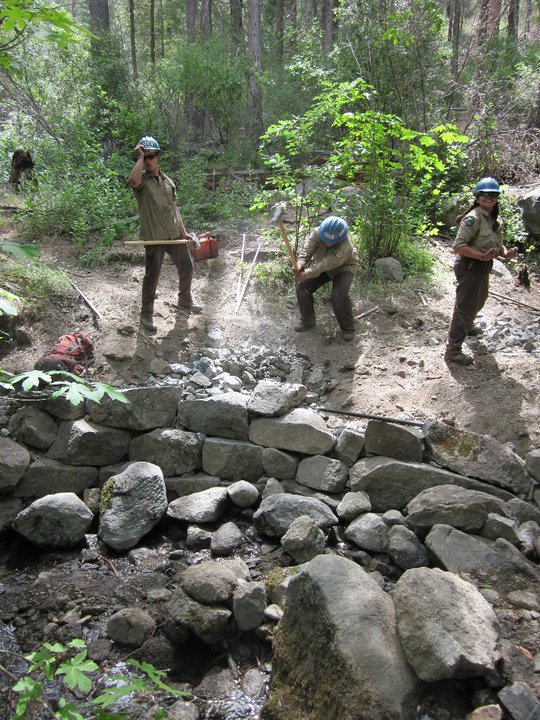
“During its centennial summer of 2009, recognition is extended to all who have hiked to the summit and seen the shelter. Special appreciation is being noted for the services of construction foreman Gustave F. Marsh, his crew, and the citizens of Inyo County whose support was key to seeing that the shelter was built in time for the 1909 observations of Mars.” — U.S. Forest Service, Inyo National Forest


Maps & Directions:

    Trail from Whitney Portal to Mt. Whitney Summit

Directions:

The shortest and most popular route to the summit is a 10.7 mile trail from Whitney Portal, 13 miles west of the town of Lone Pine on the east side of the Sierra, via Hwy 395.  Permit required.  See information above, just below article.

From Visalia, take Hwy 99 south to Bakersfield and go east on Hwy 58 over Tehachapi and down to the junction with Hwy 14. Go north on Hwy 14 to Hwy 395 north to Lone Pine and then up Whitney Portal Road to the trailhead.


   High Sierra Trail from Giant Forest to Mount Whitney Summit


Directions:

Other routes to Mt. Whitney are less heavily used, but require a much longer hike to reach the summit. To start from the west side, the High Sierra Trail leaves from Giant Forest in Sequoia National Park and is about 60 miles (taking a minimum of 6 hiking days) one-way. A Sequoia National Park wilderness permit for the High Sierra Trail is required (see Site Details below).
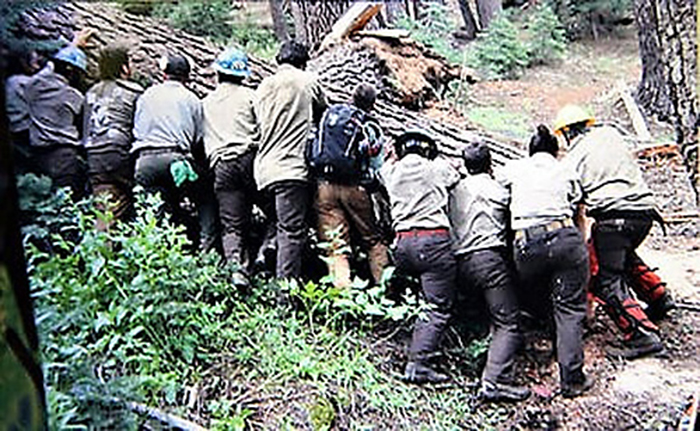
From Visalia, take Hwy 198 east through Three Rivers to the Sequoia National Park entrance station (fee), where the road’s name changes to the Generals Highway. About a mile up the road, stop at the Wilderness Office near the Foothills Visitor Center to pick up your required Wilderness Permit for the High Sierra Trail (see Links in the Site Details section below).

Proceed on the Generals Highway to just before the Giant Forest Museum area and turn right onto the Moro Rock/Crescent Meadow Road. From the parking area at the end of the road at Crescent Meadow, follow the signs to the High Sierra Trail trailhead.


Site Details & Activities:

Environment: Mountains, summit of Mt. Whitney, Sequoia National Park (NOTE: the Smithsonian shelter can be visited only by foot trail; summit elevation is approx. 14,505′.)
Activities: architecture study, backpacking, birding, botanizing, camping (below the summit), hiking, history, photography, wildflower and wildlife viewing
Open: Sequoia and Kings Canyon National Parks are always open, weather permitting, unless closed due to emergency conditions; park entrance fee; High Sierra Trail Wilderness Permit required for trail to Mt. Whitney from the west; permit required from Inyo National Forest if coming from the east.
Site Steward: National Park Service-Sequoia and Kings Canyon National Parks; 559-565-3341; www.nps.gov/seki
Opportunities for Involvement: Sequoia Parks Conservancy (SPC) membership; donate, volunteer
Links:

Click on photos for more information.

The Story of the Origins of Sequoia National Forest: The Sierra Forest Reserve

by William Tweed

     In terms of the acreage involved, no other conservation effort in the history of Tulare County comes close to the establishment of the Sequoia National Forest, and that story, like so many others, has its origins among the citizens of this county.

     When the effort began, the campaigns that would ultimately result in the creation of both Sequoia National Park and the Sequoia National Forest were one and the same. The goal, quite simply, was to protect all the Sierra Nevada watersheds that provided mountain water to the expanding farms of the San Joaquin Valley.

     The initiative got under way in Visalia in October 1889, when four local residents – Tipton Lindsey, Frank. J. Walker, John Tuohy, and George Stewart – launched a campaign to protect the mountain lands adjacent to the southern half of the San Joaquin Valley. Each of the four brought special skills to the movement. Lindsey, because he worked in the United States Land Office in Visalia, provided his knowledge of federal lands. Walker and Stewart were associated with the Visalia Delta newspaper. Tuohy, a rancher, knew the mountains first hand.

     Collecting information from the group, Stewart drafted a map of the area they wanted to see protected from overgrazing and logging, a huge tract of over two hundred thirty-six-square-mile townships, and circulated a petition calling for its protection as a federally-controlled reserve.

     The threat to the giant sequoia trees soon became so intense, however, that Stewart and his friends temporarily set aside this broader target and shifted their focus to a more limited and immediate goal – the establishment of a national park to protect the best of the giant sequoia trees. This effort gained energy over the summer of 1890, and Congress passed a bill establishing such a park in September 1890. A mere week later, the new park was enlarged, but it still contained only seven of the two hundred townships the group wanted to protect.

     The Visalia group remained in close contact with Interior Department Secretary John Noble, who was highly sympathetic to what they were trying to accomplish. Noble had the ear of President Benjamin Harrison, who had appointed him. This was an important connection because Harrison supported what came next when Noble succeeded in adding a forest reserve clause to an obscure piece of legislation focused on repealing obsolete timber culture laws.

     The March 1891 Forest Reserve Act, as it came to be known, gave the president the right to set aside lands from the public domain as “forest reserves,” thus withdrawing them from sale to private interests.

     This provided the Visalians with just the authority they needed to renew their campaign for protecting the entirety of the southern Sierra. The Visalia group resumed their political efforts.

     Responding to the resulting local interest in forest protection, Secretary Noble put special land agent B. F. Allen on the ground in the Sierra studying what lands might logically be placed within a “Tulare Forest Reserve.”

     Allen, working largely alone, resumed his efforts once the snows melted from the Sierra in the spring of 1892, and he finished his report in January 1893. He had spent most of a year riding the trails of the Sierra, checking on conditions, and listening to local concerns.

     Time was running short now, for President’s Harrison’s term was ending, and thus Noble would soon also be leaving the Interior Department. Noble pushed Allen’s report onto the president’s desk, and on February 14, 1893, just two weeks before the end of his term, President Harrison created the “Sierra Forest Reserve” under the authority granted to him by the Forest Reserve Act. The new reservation set aside for permanent public ownership over four million acres of forest land.

     It took another dozen years and a government reorganization before effective management came to the reserve, but the changes did come. In 1905, management of the reserve was transferred to a new agency in the Agriculture Department, the United States Forest Service. In 1908, the new managers renamed the Tulare County portion of the forest reserve the Sequoia National Forest, the name under which the huge area is still managed today (with 353,000 acres of it designated as Giant Sequoia National Monument in April, 2000).

     Tipton Lindsey, Frank. J. Walker, John Tuohy, and George Stewart had succeeded beyond their wildest dreams. The Sequoia National Forest is the direct result of the efforts of these forward-thinking early Tulare County citizens.

                                                                                                                                                                                                                     October, 2012

     The Sequoia National Forest includes elevations ranging from 1,000 to over 12,000 feet, more than 30 giant sequoia groves (and Giant Sequoia National Monument), over 1500 miles of maintained roads, 1000 miles of abandoned roads, and 850 miles of trails (including 78 miles of the Pacific Crest National Scenic Trail and three National Recreation Trails: Summit, Cannell Meadow, and Jackass Creek), over 200 miles of Wild and Scenic Rivers, over 300,000 acres of wilderness, 158 ponds and lakes, 52 developed campgrounds, and frontcountry and backcountry winter activity areas. Portions of four of its six designated wilderness areas are within Tulare County: South Sierra, Dome Land, Jennie Lakes, and Golden Trout. Three USDA Forest Service ranger districts — Hume Lake, Western Divide, and Kern River — administer the 1.1 million-acre Sequoia National Forest.
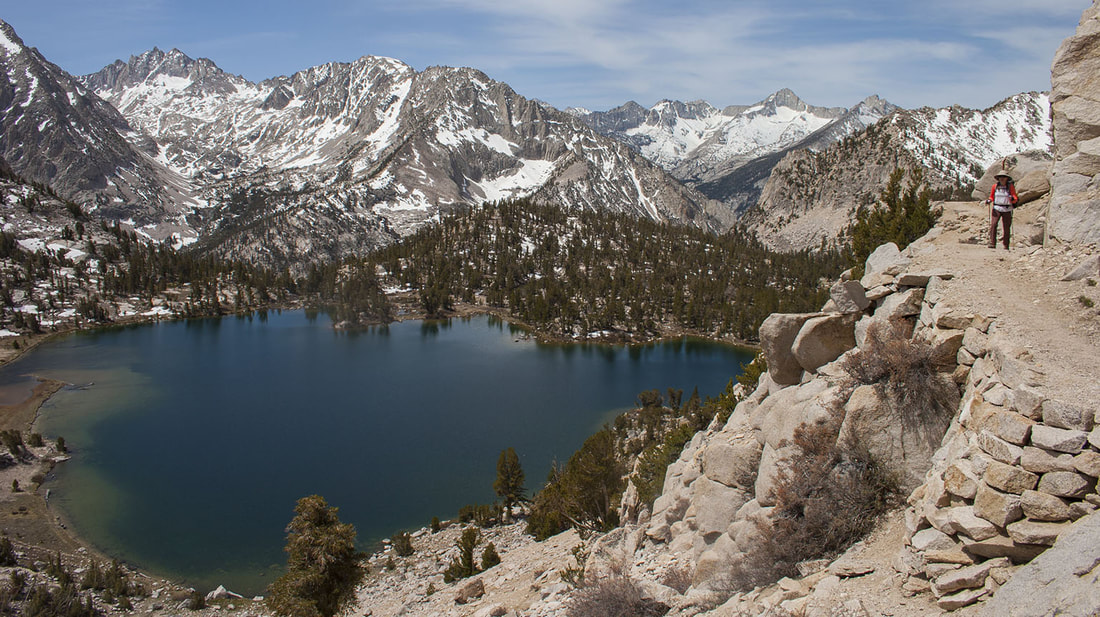
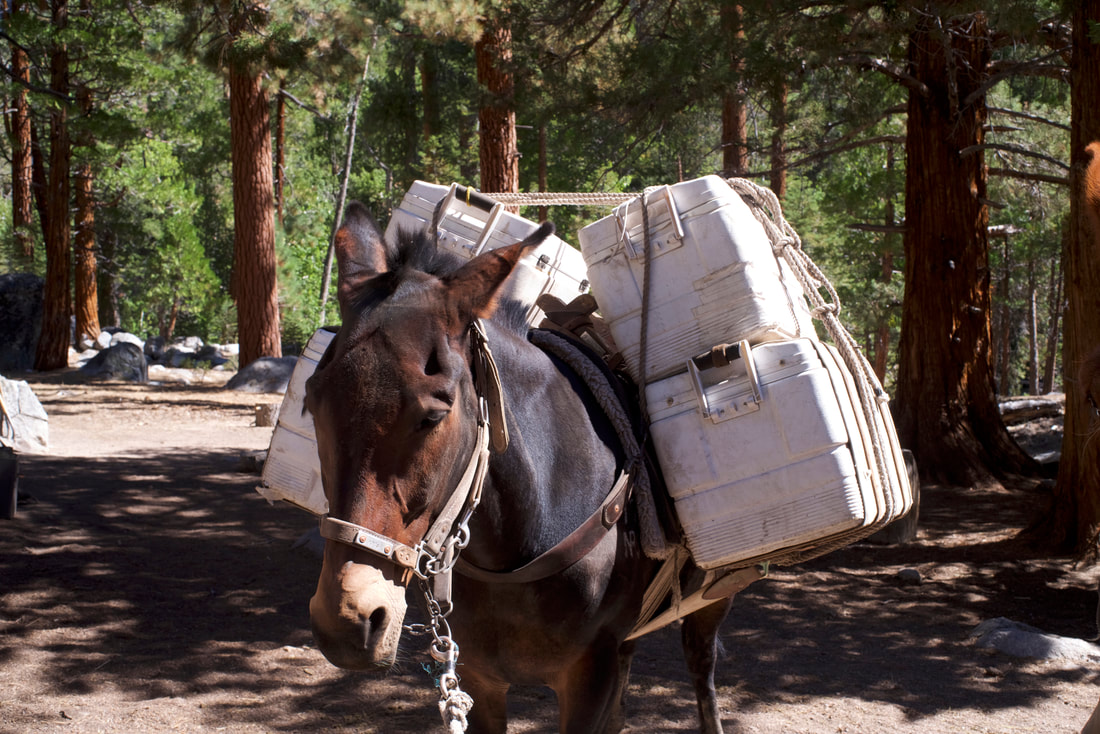
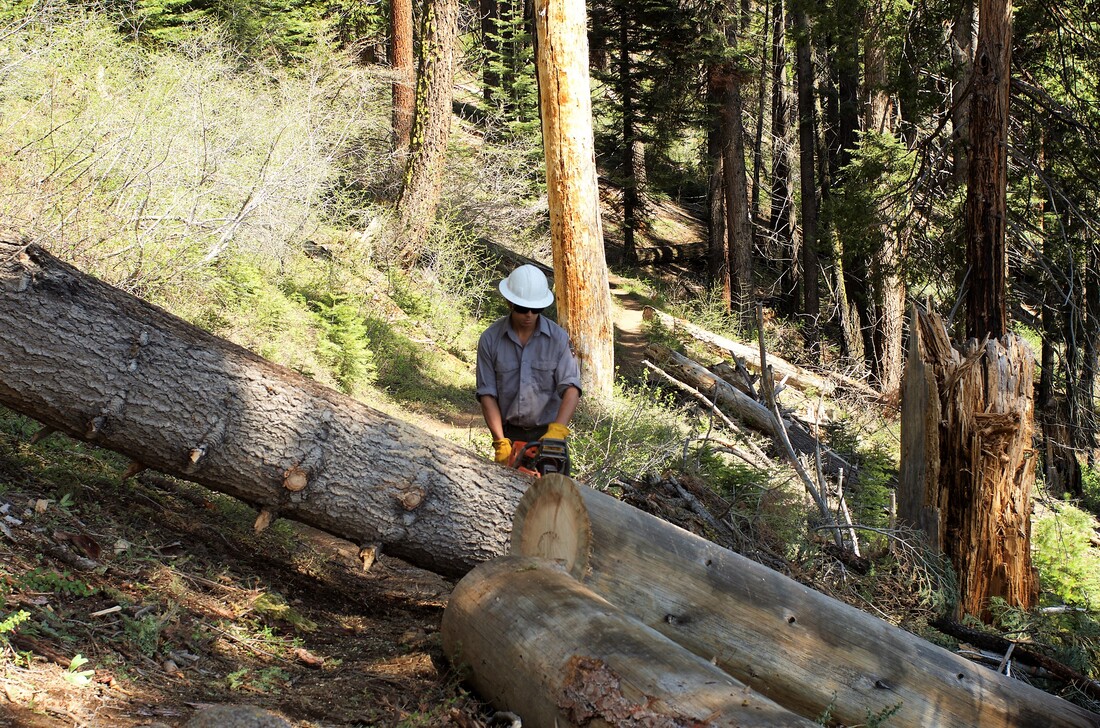


Slideshow:


Quotes & More Photos:

“The conservation of natural resources is the fundamental problem. Unless we solve that problem it will avail us little to solve all others.” — Theodore Roosevelt

“The creek is very clear and beautiful, gliding through tangles of shrubs and flower-beds, gay bee and butterfly pastures, . . . pure Sequoia water, flowing all the year, every drop filtered through moss and leaves and . . . myriad spongy rootlets . . . .” – John Muir

“Man did not weave the web of life; he is merely a strand in it. Whatever he does to the web he does to himself.” – Sealth, Suquamish Chief (Chief Seattle)

“The interior landscape responds to the character and subtlety of an exterior landscape; the shape of the individual mind is affected by land as it is by genes.” – Barry Lopez

“The nation behaves well if it treats the natural resources as assets which it must turn over to the next generation increased; and not impaired in value.” – Theodore Roosevelt

“What we are doing to the forests of the world is but a mirror reflection of what we are doing to ourselves and to one another.” — Chris Maser


Maps & Directions:


Three main roads from the west side will take you to the Sequoia National Forest:

1. From Visalia, take Hwy 198 east to Hwy 65 south to Hwy 190 east through Springville to the Forest (or stay on Hwy 65 south to Ducor and take J22/Avenue 56 east to Fountain Springs, where either M56/Hot Springs Drive or M190/Old Stage Road lead into the Forest/Giant Sequoia National Monument (Western Divide Ranger District and, if you keep going east, Kern River Ranger District).

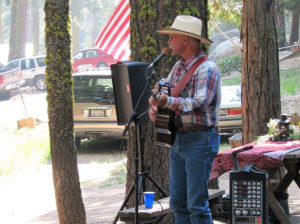
2. From Visalia, take Hwy 198 east through Three Rivers and the Ash Mountain Entrance Station of Sequoia National Park (fee) and continue on the Generals Highway through the Park, passing Dorst campground, to enter the National Forest/Giant Sequoia National Monument, and trails to Jennie Lakes Wilderness (Hume Lake Ranger District).
3. From Visalia, take Hwy 63 north to Hwy 180 east through the Big Stump entrance station to Kings Canyon National Park (fee), and then go either left or right at the “Y” junction to access the Forest/Giant Sequoia National Monument (Hume Lake Ranger District).
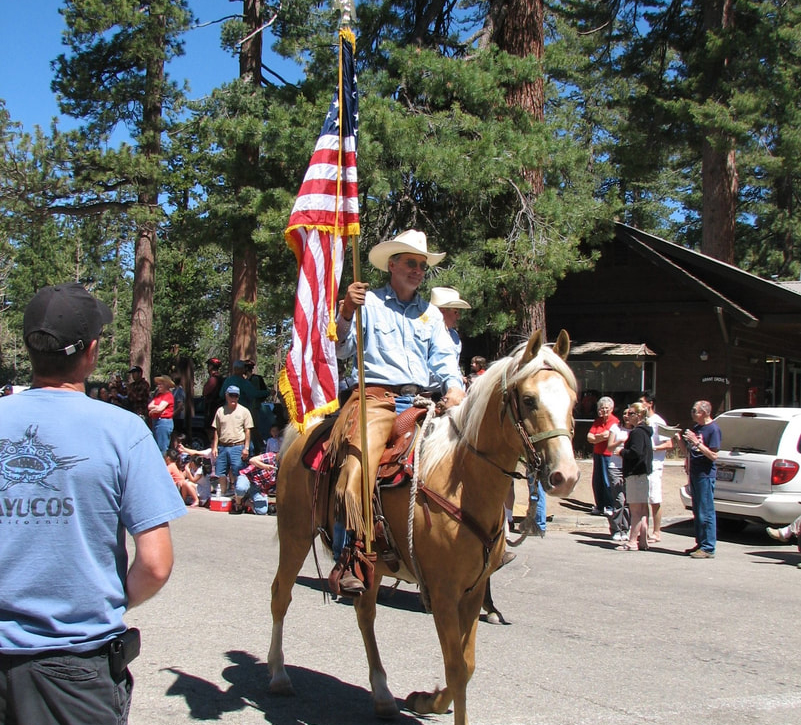


Site Details & Activities:

Environment: Foothills, Mountains, oak woodlands, conifer forests, giant sequoias
Activities: backpacking, bird watching, boating, botanizing, camping, dog walking (on a 6′ leash; scoop poop), fire lookouts, fishing, hiking, horseback riding and packing, hunting, kayaking, OHV routes, pack trains, photography, picnicking, mountain biking, scenic drives, skiing, snowboarding, snowshoeing, snowmobiling, swimming, whitewater rafting, and wildlife viewing
Open: daily, year-round, weather permitting, free admission
Site Steward: USDA-National Forest Service
Links: USDA site for Sequoia National Forest;
Hume Lake Ranger District
Western Divide Ranger District
Kern River Ranger District
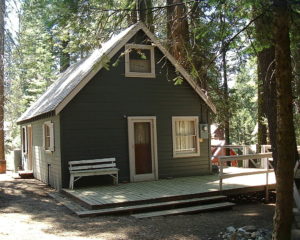
Southern Sierra Trailheads
Books: The Magic of My Mountains–Memories from California’s Sequoia National Forest 1919-1926 by Norman L. Norris, 199


Click on photos for more information.

Recognizing Tulare County’s
Last True Mountain Man

by Laurie Schwaller

     Joseph Walter “Shorty” Lovelace may not have looked like the classic image of a mountain man, but the National Historic District bearing his name in the rugged high Sierra Nevada of Kings Canyon National Park is a testament to the lifeway, ingenuity, and endurance Shorty embodied for forty years as a totally self-sufficient fur-trapping mountain man.

     Born in 1886 in Sacramento, he moved with his family two years later to a homestead several miles above the village of Three Rivers in the foothills of what became Sequoia National Park in 1890. Shorty spent his early years exploring, hunting, and trapping with his four brothers and his pioneer father.

     The family moved to Visalia in time for Shorty to attend high school there, and he turned out to be a fine mechanic. He operated a garage in Tulare County and then in Reno, Nevada, before opening a pump shop in Visalia in partnership with his boyhood friend Charles Hammer, whose sister he married a few years later.

     But by 1920, Shorty had lost his partnership, his marriage, and all his prospects to alcoholism. His father and his brother Bryan helped Shorty find a way out. Together, they completed a cabin compound begun in 1911, including corrals and pelt-drying racks, in Crowley Canyon near Comanche Meadow, a few miles beyond Sequoia National Park’s northern boundary. Shorty would live there all winter, where the solitude, peace, beauty, labors of trapping, and absence of liquor stores would keep him sober and productive for half the year.

     From that base camp, Shorty steadily extended his range, building as many as 36 smaller shelters throughout the South Fork of the Kings River drainage. All but one were smaller than six by ten feet, with none taller inside than five and a half feet, which was fine for Shorty, who stood only about 5’3″.

     They were tiny because he built most of them single-handedly, so the materials couldn’t be too large or heavy. Also, he didn’t want them to be noticed, by people or animals. A small space was easier to heat, important when temperatures often fell below zero, and snugly accommodated his furnishings, consisting of only a little plank bed at one end, a mortarless stone fireplace at the other, and numerous shelves to hold his utensils and supplies.

     Shorty constructed these winter homes usually in the summer or early fall, from the natural materials available at each site. Whenever possible, he used small fallen trees, which he cut into logs 6-12″ in diameter for the walls. He notched them lightly to fit together and spiked wooden wedges or poles into place to fill the gaps. Sometimes he used stones for foundations, but his floors were all just dirt.

     He cut poles to serve as rafters. Shakes made the roof and also the door, which hung on leather straps. He tied a piece of rope to an overhanging branch so that he could dig below it to locate each den in the snow.

     By October, Shorty was loading pack animals, his own or ones he rented, with canned goods, traps, toilet paper, blankets, candles, matches, reading material, and everything else he would need alone in the mountains for the next five or six months. As he stocked each cabin and lean-to, he also laid in a big supply of firewood, his only source of heat for the long winter. When all his shelters were ship-shape, he took the pack animals out of the mountains and watched the peaks for snowfall.

     Shorty was a strong, skilled, resourceful mountain man, who worked hard as a fur trapper. He travelled only on foot or his home-made skis (equipped with pine marten climbing skins for trekking uphill) until he brought the pack animals back in the spring to haul out his winter accumulation of furs.

     His huge territory covered most of the watershed of the South Fork of the Kings River, spanning 50 miles from his Crowley Canyon compound to his cabins in Upper Basin, and ranging in elevation from 4,600 feet to over 12,000. Unless the weather was too extreme, he was out every day, traveling over steep, trackless, rugged terrain, setting his traps, checking them regularly, killing and skinning the animals he caught, processing their pelts, watching for treacherous ice or snow, wary of avalanches, falling rocks and trees, and sudden storms.

     Only once did the mountains almost beat him. One winter in the 1930s, a falling tree crashed into his Granite Pass cabin, caught fire, and burned him out. Despite painful internal injuries, Shorty had to reach shelter before nightfall. Gradually he moved from cabin to cabin, covering almost 50 miles back to his Crowley Canyon headquarters. A snow survey crew, finding him there in March, still in bad shape, offered to take him out of the mountains, but Shorty refused. When the snow melted, he walked out alone.

     Shorty continued his annual schedule by selling his pelts in the spring, in Visalia or San Francisco. He earned up to $2,000 a year for his furs (fisher furs averaged about $45 each, wolverines $25 to $30, and martens about $15), when most California trappers reported making about $160.

     After giving his brother enough money to cover his re-stocking costs in the fall, Shorty spent his summers blowing most of his earnings on binge drinking, but also, when sober, working on his shelters in the mountains and on odd jobs in the valley, and visiting his extended family at various gatherings, where he was especially a much-loved uncle of the children.

     A letter was waiting for Shorty when he came out of the mountains in the spring of 1940. It said that Kings Canyon National Park had been established on March 4. Encompassing virtually all of Shorty’s trapping range, the park did not allow hunting or trapping.

     Shorty, age 54, knew what he had to do. Within just a few years, he completed a new layout of traplines and shelters north of the new national park, on the watershed of the North Fork of the Kings in the Sierra National Forest. He worked his new territory for another 20 years, until, at age 75, he brought his winter harvest down from the mountains for the last time.

     Shorty died two years later, in 1963, but at least two of his structures survive. In the 1970s, and again in 2012, Sequoia and Kings Canyon National Parks restored his Cloud Canyon and Vidette Meadow cabins (the latter just north of the Tulare County line). Visitors can duck under their low doorways and imagine spending 15-hour nights there under 10 feet of snow with only a candle and an old magazine for company and a little fire for warmth after working traplines alone in the wilderness all day.

     As one visitor remarked, “Shorty must have been one tough, savvy woodsman.” While our time spent in the high Sierra is different in many ways from Shorty’s, these magnificent mountains are still a haven of solitude, respite, peace, beauty, and adventure for us all.

November, 2020


Slideshow:


Quotes & More Photos:

“One of the most unforgettable characters that I ever knew as a boy in Tulare County was a fifty-plus year old man named ‘Shorty’ Lovelace. I don’t believe I ever knew his real first name. To everyone he was just ‘Shorty.’ He stood about five feet three or so, and had a very deceiving stature. At first glance you’d say he was fat, or chunky, or obese. The truth was he was hard as nails . . . he had to be to endure the rigors of his unusual lifestyle.” — Jack Harold Moffet, 1990

Jack Moffet was sleeping outdoors when Shorty placed a piece of Limberger cheese near his face. The strong smell woke Jack up. “My shout was answered by a loud, high-pitched belly laughing . . . . Then out popped this diminutive, Santa Claus of a creature . . . holding his belly in absolute delight. . . . He loved a joke or prank, whether executed by or perpetrated on himself.” — Jack Harold Moffet, 1990

During the 1920s and 1930s Shorty trapped all over the southern two-thirds of what is now Kings Canyon National Park. His preferred prey was the pine marten, a house-cat-sized member of the weasel family. He trapped in the winter because that was when the pelts of the animals he caught were at their best. — Central Sierra Historical Society

“First, traveling on homemade skis, he set up trap lines using the time-honored snow trapping methods of placing traps in trees, hollow logs, or beneath small conifers. Then he followed a regime of checking established traps, placing new ones, and hauling in the pelts as they were caught.” — William C. Tweed, 2007

“By 1922, if not earlier, he was building additional line cabins. Ideally, these small shelters were not more than a day’s travel apart. They were arranged in loops so that travel between them would be as infrequent as possible,” since frequent travel made the game more wary. — William C. Tweed, 2007

Shorty built shelters throughout his trapping territory, at sites including Williams (Quartz) Meadow, Rowell Meadow, Kettle Peak, Ellis Meadow, Moraine Meadow, Cloud Canyon, and probably in upper Deadman and Ferguson canyons. Over the years, he gradually expanded, over Avalanche Pass onto Sphinx Creek, down into Kings Canyon, up Bubbs Creek, over Granite Pass, and into Rae Lakes, Sixty Lakes, and Gardiner basins. — William C. Tweed, 2007

“[M]oving uphill, Shorty had to use climbing skins strapped to the bottoms of his skis, and there can be no better skin for that purpose than the hide of a marten; it’s [sic] finely textured fur grows at a backward angle, allowing the skis to glide smoothly forward while sticking to the snow when slipping backward.” — Steve Sorensen, 2018

“I once asked an experienced wildlife biologist why we don’t see more pine martens in Sequoia and Kings Canyon. His answer was, ‘I don’t know. Maybe Shorty trapped them all.'” — Steve Sorensen, 2018

Unless he encountered a snow survey crew, he spent his days and months in total isolation. Only once did he try having a partner. Long before spring released them, they were sick of each other, crammed together in tiny spaces, both armed — and Shorty said he had to spend more time keeping track of his friend in the wilderness than minding his traps. — from Jack Harold Moffet, 1990

“Once his initial binge was over, Shorty whiled away the remainder of the summer, dividing his time between the mountains and the valley. Sometimes, Shorty hunted coyotes in Kern County for the bounty. Occasionally he took an odd job, building a fireplace or replacing an engine.” — William C. Tweed, 2007

“In at least two different years ‘Shorty’ never made it back to his traps. Instead he was an honored guest [working inmate] of the Tulare County Sheriff’s Department Road Camp at Cain Flat. Evidently ‘Shorty’ was a hellatiously [sic] good cook and was a welcomed trustee. The officers and inmates never ate so well as when ‘Shorty ‘ donned the white hat and apron.” — Jack Harold Moffet, 1990

“At seventy-five, [Shorty] was too old to winter in the Sierra any longer. That same summer, he was seen camping in the Roaring River area, where he had set up his first high mountain trap lines nearly half a century earlier. Two years later, he was dead.” — William C. Tweed, 2007

“. . . Shorty Lovelace was the first and only Caucasian ever to reside in the upper Kings Canyon region on a long-term year-round basis. Since Shorty’s departure, this region of approximately 200 square miles has remained uninhabited except for summer visitors.” — NRHP Nomination Form

“[F]ur trapping [was] the only industrial process ever to be undertaken successfully in the region in question with the single exception of grazing. During the nineteenth century, fur trapping was a major western industry, providing the impetus for the exploration of much of the West.” — NRHP Nomination Form

“Shorty lived a pioneer life that was anachronistic even in his time; now it seems almost unimaginable. His life, and the surviving cabins that document it, remind us of an earlier America and how it looked at the natural world.” — William C. Tweed,


Maps & Directions:

                                                       Click to enlarge detail map

Directions:

The Historic District comprises nine sites in Kings Canyon National Park where remains of Shorty’s shelters could still be seen in 1978 when the District was listed on the National Register of Historic Places (NRHP). The sites are accessible only by foot/stock trail. Wilderness Permits are required for all overnight trips.

By 1978, only the cabins at Vidette Meadow and Cloud Canyon were sufficiently intact to allow for structural preservation. The other sites are near Woods Creek Crossing, Granite Pass, Gardiner Basin, Bubbs Creek, Sphinx Creek, Crowley Canyon, and Williams Meadow.

“[S]ufficient . . . sites remain to document in rare detail the operative patterns of an alpine fur trapping circuit. . . . {T]his [may be] the only such opportunity present within the national park system.” — NRHP Nomination Form


Directions:

The most-visited of Shorty’s cabins in Kings Canyon N.P. is near Vidette Meadow, just north of the Tulare County line. It can be reached via the Bubbs Creek Trail out of Hwy 180 Road’s End, a few miles east of Cedar Grove in the bottom of Kings Canyon. At the junction of the Bubbs Creek Trail with the John Muir Trail, go south a short distance on the John Muir to the area of the bear box campsite and the junction with the Vidette Lakes Trail. This cabin can also be reached via the Onion Valley Trailhead off Hwy 395 on the east side of the Sierra.

From Visalia, take Hwy 63 north to its junction with Hwy 180.  Go right (east) on Hwy 180 into Kings Canyon National Park (entry fee) and follow the highway through Grant Grove Village and all the way to its termination at Road’s End, where there is lots of parking for day use and longer use, a Wilderness Permit station, and the trailhead for the Bubbs Creek Trail.


Directions:

Shorty’s cabin in Cloud Canyon can be reached from Lodgepole in Sequoia N.P. via the Twin Lakes Trail, which quickly enters Kings Canyon N.P., then via the Sugarloaf Trail to the locale of the Roaring River Ranger Station and up Cloud Canyon on the Colby Pass Trail about 6 miles to the area of the cabin. This cabin can also be reached from the Rowell Meadow trailhead in Giant Sequoia National Monument. Follow this trail to Comanche Meadow and then take the Sugarloaf Trail to the Roaring River Ranger Station and up Cloud Canyon on the Colby Pass Trail to the area of the cabin.

From Visalia, take Hwy 198 east through Three Rivers into Sequoia National Park (entrance fee) and follow it (now named the Generals Highway) to the trailhead parking area at Lodgepole Village.


Site Details & Activities:

Environment: Mountains, meadows, rivers, elevation varies, Kings Canyon National Park
Activities: architecture study, backpacking, birding, botanizing, camping (near several of the sites), fishing (license required), hiking, history, photography, wildflower and wildlife viewing (NOTE: the structures, ruins, and sites of Shorty’s shelters can be visited only by foot/stock trail.)
Open: Sequoia and Kings Canyon National Parks are always open, weather permitting, unless closed due to emergency conditions; park entrance fee; Wilderness Permit required for all overnight trips
Site Steward: National Park Service-Sequoia and Kings Canyon National Parks, 559-565-3341
Opportunities for Involvement: donate, volunteer, Sequoia Parks Conservancy (SPC) membership
Links:
Books: 1) Shorty Lovelace, Kings Canyon Fur Trapper, by William Tweed (Sequoia Natural History Association, 1980, 2007)
2) A Branch of the Sky, Fifty Years of Adventure, Tragedy, & Restoration in the Sierra Nevada, by Steve Sorensen (Picacho, 2018)


Click on photos for more information.

The Story of Tulare County and the Origins of Sequoia National Park

by William Tweed

     Of the many contributions made by the citizens of Tulare County to the conservation of nature, no other effort comes close to matching the 1890 campaign to create Sequoia National Park. Not only did this effort establish one of our nation’s premiere national parks but it also was a key step in the development of the idea that our nation should have a national park system made up of multiple units. Today that model is emulated worldwide.

     The government of the United States, prior to 1890, had taken two major preliminary steps toward developing what we now recognize as the national park idea. The first of these occurred in 1864, when Congress, in response to a request from a number of prominent California residents, gave title to Yosemite Valley and the Mariposa Grove of the giant sequoias to the State of California to be managed as a public park. The resulting nature preserve, in many ways America’s first major step toward creating a national park, was to be managed by the State of California.

     Eight years later, in 1872, Congress did create a national park – Yellowstone. Again, a small group of influential citizens lobbied to create the reservation. The difference this time was there was as yet no State of Wyoming to give the park to – the area was still a territory under direct federal management. Out of this came Yellowstone National Park.

     Many who supported the creation of Yellowstone envisioned it as adequate to meet all the young nation’s need for wildland recreation. At the time, Yellowstone was thought of as the national park; certainly one such place was all the nation would ever require.

     Enter the citizens of Tulare County. As early as the late 1870s, George Stewart of the Visalia Delta newspaper had begun to editorialize about the need to protect the amazing giant sequoia trees of the southern Sierra Nevada and the forests in which they grew. At that time almost all the land in the mountains was for sale by the federal government with the expectation that it would eventually be sold to private parties and logged.

     Stewart and his friends initiated their efforts by seeking temporary suspension of land sales in a number of key tracts of giant sequoia trees. They achieved some short-term successes in this effort, but all knew that they needed a permanent solution if they were to preserve these special forests.

     By 1889, Stewart had begun to lobby for the creation of a national park in Tulare County. State administration of Yosemite had not turned out all that well, and Stewart thought that the Yellowstone model offered more promise for protecting the mountains east of Visalia.

     The campaign took an even more serious direction in 1890, when the government prepared to release large tracts of temporarily protected mountains for sale. Stewart, working closely with Frank Walker, editorialized and networked, building support for the idea. He convinced Representative William Vandever, whose large district included Tulare County, to draft a bill to create a national park among the headwaters of the Kaweah River.

     As a result of the efforts of Stewart and many other Tulare County residents, the Sequoia National Park bill passed both houses of Congress as the summer ended, and was signed by President Benjamin Harrison on September 25, 1890.

     Just a week later, Congress passed another national park bill. It created a Yosemite National Park to surround the state park there, and also established General Grant National Park, which is today a part of Kings Canyon National Park in northern Tulare County.

     But it was the Sequoia National Park bill, which created America’s second national park, that initiated the formation of a system that now contains almost 400 separate units.

     It is hard to overestimate the significance of what Stewart and his Tulare County friends accomplished in 1890. Locally, they saved what we now know to be the largest trees on earth. Beyond that, they also established a pattern for national systems of preserved lands – a model that continues to expand across the planet even in the 21st century.

                                                                                                                                                                   October, 2012


Slideshow:


Quotes & More Photos:

“Keep close to nature’s heart . . . and break away, once in a while, and climb a mountain or spend a week in the woods. Wash your spirit clean.” — John Muir

“When you’re standing there silently in the presence of the giant sequoias, you can’t help but recognize that you’re a part of something that is way beyond whatever it is that you envisioned this world might be.” – George B. Hartzog, Jr.

“That which is not good for the beehive cannot be good for the bees.” – Marcus Aurelius, Roman Emperor 161-180 AD

“Bears are made of the same dust as we, and breathe the same winds and drink of the same waters. A bear’s days are warmed by the same sun, his dwellings are overdomed by the same blue sky, and his life turns and ebbs with heart-pulsings like ours, and was poured from the same First Fountain.” – John Muir

“It is our task in our time and in our generation, to hand down undiminished to those who come after us . . . the natural wealth and beauty which is ours.”–U.S. President John F. Kennedy

“Giant Sequoia, John Muir’s ‘forest masterpieces,’ mellow through the centuries, growing ever more imposing with time.” — Verna R. Johnston


Maps & Directions:

Directions:

From Visalia, take Hwy 198 east through Three Rivers to Sequoia National Park Ash Mountain Entrance Station (fee), where Hwy 198 becomes the Generals Highway, linking Sequoia National Park to Kings Canyon National Park. Along or near the Generals Highway in Sequoia National Park, make time if you can to visit the iconic Ash Mountain Entrance Sign, the Foothills Visitor Center, Hospital Rock, Amphitheater Point, the Giant Forest, Crescent Meadow and historic Tharp’s Log, Moro Rock Stairway, the General Sherman Tree, Lodgepole Village and Visitor Center, the Generals Highway Stone Bridges, Wuksachi Village, and the Lost Grove, after which the Generals Highway leaves Sequoia National Park.

To make a loop trip, continue on the highway through Sequoia National Forest to Kings Canyon National Park, where you can turn left onto Hwy 180 west to Hwy 63 south back to Visalia. (You may want to first go north on Hwy 180 at the junction to visit Grant Grove Village, Kings Canyon Visitor Center, and General Grant Grove and its famous tree before driving back to the Valley.)

If you have another day for Sequoia National Park, consider taking the winding road (seasonal) to Mineral King or returning to spend more time exploring the attractions along the Generals Highway. (Alternatively, consider visiting Kings Canyon National Park, Grant Grove, and the great canyon of the Kings.)


Site Details & Activities:

Environment: Foothills to mountains, coniferous forests, oak woodlands, giant sequoias, sub-alpine valleys, rivers, lakes
Activities: archaeological sites, backpacking, birdwatching, botanizing, camping, caving, cross-country skiing, educational activities, fishing, hiking, historical sites, horseback riding, museums, photography, picnicking, rock climbing, snow play, visitor centers, wildlife and wildflower viewing
Open: year-round, weather permitting, unless closed due to emergency conditions
Site Steward: National Park Service (NPS), Sequoia and Kings Canyon National Parks, 559-565-3341
Opportunities for Involvement: donate, volunteer, Sequoia Parks Conservancy (SPC) membership
Links:
Books: 1) Challenge of the Big Trees -The Updated History of Sequoia and Kings Canyon National Parks, by William C. Tweed and Lary M. Dilsaver (University of Virginia Press, 2017)
2) Sequoia and Kings Canyon: Official National Park Handbook #145, by Division of Publications, National Park Service, 1992 (U.S. Government Printing Office, 1986)
3) A Guide to the Sequoia Groves of California, by Dwight Willard (Yosemite Association, 2000)
​4) King Sequoia: The Tree That Inspired a Nation, Created Our National Park System, and Changed the Way We Think about Nature, by William C. Tweed (Heyday, 2016)


Click on photos for more information.

A GIANT GROWING IN OUR MIDST!
The Sequoia Legacy Tree at the Visalia Town Center Post Office

by Laurie Schwaller

     In February, 1936, Guy Hopping, Superintendent of General Grant National Park (now Kings Canyon National Park), brought two three-year-old giant sequoia trees from Grant Grove to the downtown Visalia Town Center Post Office, where he worked from an office in the basement during the winter. The Superintendent and Nathan Levy, Visalia’s Postmaster, planted the little trees one at each end of the recently-completed building.

     Around 50 years later, the ailing east-side sequoia had to be removed, but its sister tree kept growing. On April 28, 2018, a dedication ceremony was held to honor this now-towering 85-year-old Sequoia Legacy Tree. A historic treasure and source of pride for Visalia, it is also an important reminder of our valley’s vital connection to the Sierra Nevada.

     Attractive new signage tells the story. From the mountain home of the giant sequoias comes the surface water that flows in the valley’s rivers and creeks and the essential groundwater that we depend on throughout the year. As the sign reminds us, “It’s up to each of us to use our water wisely” to protect and conserve this legacy.

Mountain Home Conservation Camp #10 Sign Shop Crew

     The decomposed granite pathway that encircles the tree was designed to approximate the diameter of the General Sherman Tree in Sequoia National Park. This helps to provide scale for understanding how large these trees are capable of growing.

     In favorable conditions, giant sequoias can live well beyond 2,000 years. The first U.S. Post Office was established in 1775. Visalia was established in 1852. The Sequoia Legacy Tree is basically the same age as the post office building it stands beside; both came into being in 1933. What will their future be?

                                                                                                                                                                 July, 2018

 The Sequoia Legacy Tree interpretive feature is a project of the Visalia Convention and Visitors Bureau and was dedicated on April 28, 2018.

UPDATE: In the autumn of 2023, Visalia’s treasured Sequoia Legacy Tree began turning brown and was diagnosed with a fungus that had developed after two winters of heavy rains followed by two exceptionally hot summers. A horticulturist treated the great tree with a series of injections, but, most unfortunately, the dire fungus prevailed, the tree died, and the Postal Service removed it in February, 2025. It is hoped that the interpretive pocket park created around the tree in 2018 will remain. Visit Visalia is working with community partners on ideas for a replacement for the tree that will continue to honor its history and significance.


Click on photos for more information.

A Brief History of SCICON

by Rick Mitchell

     SCICON is the story of the caring people of Tulare County. They care about children and about the land and they want future generations to also grow up caring about the land and the rich natural resources of Tulare County.

     In 1950, a science educator named Charles Rich began working for Tulare County Office of Education, traveling throughout the valley to assist schools with their science programs. Charles believed that students needed to realize the importance of the environment. He also believed that students learn best when they are actually experiencing something first-hand and see and live it for themselves. Charles believed that the students of Tulare County needed an outdoor school of their own.

     After discussing the idea with many educators, a pilot program was set up in 1958 at the YMCA camp “Tulequoia,” located at Sequoia Lake. The students from six schools came up for a week to hike, study, explore nature, and learn the importance of taking care of the environment and conserving natural resources. The name SCICON was given to the program, combining the key words science and conservation.

     The trial program was operated for three years and was a huge success. Students, teachers, parents, and educators all agreed that this was the best way to learn about the environment – to study it first-hand. But unfortunately, the special monies used to operate the trial program were running out. SCICON would not be able to continue unless something was done.

     Meanwhile, Charles Rich was becoming more convinced than ever that Tulare County must have its own outdoor school, a place within the county where students could come to study nature at its best. Charles searched the countryside looking for just the perfect spot. Finally he found it.

     In the foothills of the Sierra Nevada above Springville was a parcel of land known as the “Lost Forty.” At an elevation of 2000 feet, it was below the winter snow line but higher than the valley fog. Bear Creek flowed year-round through the middle of the area. The land abounded with plants and wildlife. The “Lost Forty” was part of the Gill family cattle ranch and Clemmie Gill owned the parcel.

     Charles approached Clemmie Gill about donating the “Lost Forty” for the SCICON program. At first Clemmie was not convinced the project would be successful. But Charles Rich did not give up. After several visits, Clemmie donated the “Lost Forty” (which turned out to be thirty-five acres) to Tulare County Office of Education in 1958 for use as an outdoor school site. SCICON was born!

     But Charles Rich knew that the work had only just begun. With a donation of wood from a lumber company, and labor from a carpenters’ union, the John Muir Lodge was built near Bear Creek in the center of the thirty-five acres. Over the ensuing years school districts recognized the value of the program and built cabins for the students to stay in.

     Thousands of students have now stayed in these cabins named after those districts (Tulare Cabin, Visalia Cabin, Lindsay Cabin, Dinuba Cabin, Orosi Cabin, Pixley Cabin, Earlimart Cabin, Shafter Cabin, Delano Cabin, Ivanhoe Cabin, Woodlake Cabin, Burton Cabin, Exeter House, Porterville Learning Center).

     There was no electricity on the campus at that time. Cabins were heated by fireplaces. Cabin counselors were often parents or teachers. There were no telephones, no hot showers, and no flush toilets – only outhouses! Life was rustic, but everyone loved it. SCICON began to flourish and grow.

     At first the 35 acres seemed like a lot of land. But as the SCICON program and facilities grew, the SCICON campus needed to grow as well. Through donations, a trade was made with the United States Forest Service for an additional thirty acres. In 1972, the adjoining private land next to SCICON was planned to be developed and sold so that homes and small ranches could be built. It was feared that the possibility of these new homes and buildings could threaten the serenity of the SCICON campus.

     Once again, the people of Tulare County showed they cared. A huge fundraising effort was begun in 1973, entitled “Acres for SCICON.” Presentations were made to school PTAs, service clubs, garden clubs, and chambers of commerce. In a three-year-span enough money was raised to buy the surrounding thousand acres! Now the pristine beauty of SCICON was guaranteed. Also through this effort, an organization called the “Friends of SCICON” was formed. To this day, donations of time, money, and materials continue to benefit the SCICON program.

     This spirit of giving has resulted in many improvements, all provided through donations, including showers and restrooms for the boys’ and girls’ villages, the Phyllis Wall Museum, the Max Cochran Planetarium, the Lyle Christman Observatory, the Handicabin, the Charles Rich Intern Staff House, the Health Center, the Briz Brizby Raptor Center, and the Barton Memorial Amphitheatre. Additionally, many miles of roads and trails have been built, all by volunteers.

     Despite all these developments, it became obvious by 2004 that Tulare County’s growing student population would soon exceed the program’s ability to schedule all of the sixth grade students. Possibilities were discussed and an idea was born to build a new village on the SCICON campus.

     A generous donation from Barbara and Melville Price (educators in Porterville) plus significant support from the Tulare County Board of Education made it possible for “Eagle Point Village” to be constructed near the museum during the summer and fall of 2007. On March 13, 2008, the first students started attending this new village. With the addition of Eagle Point, the SCICON experience is guaranteed for many future generations of students in Tulare County.

     Students at SCICON are reminded every day of all those who have made it possible for them to be there. Every trail they walk, every bridge they cross, every building they enter is a gift from people who cared. Students are taught to treat all these with respect and to give something back, and every student knows the SCICON motto: “SCICON is people working together!”

October, 2012


Slideshow:


Quotes & More Photos:

“We must make an effort to reinstill in ourselves and in our children a sense of stewardship toward this planet and its resources. The story of SCICON is the story of one such effort.” — Joe Doctor

“This world, after all our science and sciences, is still a miracle; wonderful, inscrutable, magical and more, to whosoever will think of it.” — Thomas Carlyle

“Long before ecology became an everyday word, [Charles Rich] used to go around to the various schools in the county and take seedlings for the students to plant. He believed all youngsters should be taught about science and nature, and to respect and preserve the environment.” — from “SCICON Memories”

“The youngsters begin to see the symbiotic relationships surrounding them and to understand the interdependence of all things in the natural environment: the sun providing energy, green plants storing it, animals converting it, decay conserving it. . . . And as they see all of these natural elements working together, the students grasp the importance of maintaining those natural balances. They begin to appreciate the significance of conserving our natural resources.” — from “SCICON Memories”

“Nothing in SCICON has been done easily. But every clod of dirt moved, every nail driven has been done by people who have functioned willingly because of their love of the out-of-doors and of their fellow man.” — Charles Rich

“SCICON represents the very best of the human spirit. A monument to perseverance, the school exists because a handful of individuals once dreamed it could, and countless others willed it would.” — from “SCICON Memories”


Maps & Directions:

Directions:

Address: 41569 Bear Creek Road, Springville, CA 93265‎; (559) 539-2642


Latitude/Longitude:

N36° 13.0564’/W118° 45.9503′

36.217607/-118.765838


From Visalia, take Hwy 198 east. Turn right (south) onto Road 204/Spruce Rd. Turn left (east) onto Hwy 65 south toward Porterville.  Turn left (east) onto County Route J28 through Strathmore to the junction with Hwy 190.  Go left (east) on Hwy 190 into Springville.   Turn left (north) onto Balch Park Road. Drive 3 miles and turn right (east) onto Bear Creek Road.  Drive 3 miles to the SCICON entrance gate on right.


Site Details & Activities:

Environment: Foothills, oak woodlands, riparian
Activities: science and conservation school for Tulare County students
Open: The SCICON BBQ & Wildflower Festival is held on the third Sunday in April. There are also traditionally two “Open Houses” held on Sunday afternoons; for Open House dates, go to SCICON and click on “Events” in the left hand sidebar. Students are scheduled through their elementary schools for one-day field trips (fifth grade) and week-long field trips (sixth grade).
Site Stewards: Tulare County Office of Education; The Friends of SCICON; SCICON Administrator, Dianne Shew, 559-539-2642
Opportunities for Involvement: Audubon Christmas Bird Count, donate, volunteer
Links:


Click on photos for more information.

The Story of Bravo Lake Botanical Garden

by Paul Hurley

     From tiny seeds, great things grow.

     In Woodlake, the Bravo Lake Botanical Garden has grown fruits and vegetables, flowers, trees, and samples of the San Joaquin Valley’s agricultural bounty since 2003. Its 13 acres of plantings extol the area’s botanical diversity, teach people about the value of natural resources, and promote community pride.

     “We sort of knew that we wanted to create the first agricultural botanical garden in California,” said its co-founder and director, Manuel Jimenez.

     Manuel and his wife and garden collaborator, Olga Jimenez, both lifelong Woodlake residents, trace the origin of the botanical garden to 1972, when they first began beautification projects and planting community gardens in Woodlake, with the help of youth volunteers. “Our premise was that we would grow kids by planting gardens,” Manuel said.

     The Jimenezes had almost 30 years of experience planting community gardens when the city of Woodlake approached them in 1999, wondering if they would be interested in a barren stretch of ground near Bravo Lake that had been the Visalia Electric Railroad right of way. “The city had an empty area that was available,” Olga said, “and we had been doing beautification projects in different parts of the little town.”

     The couple launched into the large project with their Woodlake Pride youth as grass-roots collaborators with the city of Woodlake. They sought funding from service clubs, including the Woodlake Rotary. They received donations of plantings from nurseries, notably L.E. Cooke for fruit trees and Monrovia Nurseries for ornamentals. They visited other botanical gardens throughout California. They appealed to local businesses and farms for financial and technical support, including carpenters, plumbers, and electricians for infrastructure. Grading and grooming the site took a couple of years.

     They planted tens of thousands of annuals with the help of a labor force composed mostly of volunteering teenagers. When they began planting, they solicited experts to lay out specific areas of the garden. They planted 1,700 rose bushes in 130 varieties. The garden began to take shape, not just as a ground for growing plants but as a complete ecosystem.

     “The botanical garden was just a piece of dirt that was barren,” Olga said. “Now, if you go and visit it, you will see that not only have we got plants growing, kids growing, but we also have a variety of birds that have come to visit us. We have cottontails that are there, and turtles, and doves, and lizards. Things that were never there. And since we put the plants down, we see a lot of variety of wildlife just existing in our area.”

     The garden officially opened in 2003, and welcomes the public on weekends. Visitors walk a 1.2-mile trail that takes them past fruit trees and vegetable patches, ornamental shrubs and rose gardens, row crops and flower beds. Young people plant between 10,000 and 20,000 specimens a year.

     The garden is organized to show off not only the plants that grow in California, but the abundance of its agriculture and the heritage of farming in the San Joaquin Valley. “Once we did that, the next phase was to begin to include the key things that we thought were important for the community to learn, and that was conserving the natural resources that we have,” Manuel said.

     Water conservation was a priority, so the Garden installed several different efficient irrigation systems. They encouraged wildlife, and gradually observed snakes, frogs, birds, small mammals, and insects using the garden.

    We share our resources with the wildlife,” Manuel said. “So we plant fruit trees, you know. Fifty percent is for us, and fifty percent is for the wildlife. We let them feed.

     At the gardens, we let nature take its course.”

     The Bravo Lake Botanical Garden is a place for hands-on learning. People are encouraged to taste the produce. “You don’t have to visit 10 farms to see 10 crops. Our goal is eventually to plant everything that’s grown in the state. And so, I believe that people do seek to visit a facility like ours.”

     As complete as the garden is, it is not finished, Olga said. “I know that the seed, that it comes from the seed, but then the good Lord provides the water and all these beautiful plants that come up,” she said. “So, it’s been a learning experience, having this garden, and I’m sure that there’s more to be learned.”

October, 2012

 2017 Update: The City of Woodlake has changed the garden’s name to Woodlake Botanical Garden, and management, maintenance, plantings and purpose of the garden may be subject to change.


Slideshow:


Quotes & More Photos:

“You’re only as happy as your surroundings. And by planting gardens, we thought that people would be happy, and they were. They saw the gardens, and they would stop and say, you know, ‘This is beautiful.’ And they would tell the kids, ‘This is an awesome project that you guys have.'” — Manuel Jimenez

“And I think I haven’t found one lazy child yet, or one bad kid yet, and I’ve been doing this volunteer work over at the botanical garden for almost nine years.” — Olga Jimenez

“People from a planet without flowers would think we must be mad with joy to have such things around us.” — Iris Murdoch

“Tu, que caminas acaso con pensamientos perturbados, en entra aqui y reposa; y que la dulce serenidad de las cosas que brotan y la paz celestial, se reflejen en tu alma. You who walk, maybe with troubled thoughts, come, enter here and rest; and may the sweet serenity of growing things, and the heavenly peace be mirrored in thy soul.” — Doxis M. Palmer

“If we do not permit the earth to produce beauty and joy, it will in the end not produce food, either.” — Joseph Wood Krutch

“The legacy that I’d like to leave Tulare County and its residents is mostly the beauty, the beauty that can be.” — Olga Jimenez


Maps & Directions:

Directions:


Address: Naranjo Blvd. just east of Hwy 245, Woodlake, CA 93286


Latitude/Longitude:

36-24’28” N, Longitude: 119-05’49” W

36.4077273, -119.0970507


From Visalia, take Hwy 198 east to Hwy 245 (Valencia Blvd.).  Go left (north) on Hwy 245 about 5 miles into Woodlake, and take the first right turn on the roundabout to go east on Hwy 216 (Naranjo Blvd.).  Woodlake Botanical Garden is quickly on your right (south); parking is available along the street and in a parking lot.


Site Details & Activities:

Environment: Valley, in Woodlake, community agricultural botanical garden
Activities: birdwatching, botanizing, dog walking (on a 6′ leash; scoop poop), educational activities, photography, picnicking, produce tasting (during events), walking (1.2 mile trail, wheelchair accessible), wildlife viewing
Note: To schedule a group tour of the gardens, contact Manuel Jimenez at 559-280-2483
Open: The rose garden on the west side of the parking lot is open daily, year-round. The eastern, gated part of the garden is open Thursday, Friday, & Saturday 9:00 a.m.-3:00 p.m. Note: Please check the Garden’s Facebook page for any changes to Open days and for current hours and announcements of special events – (https://www.facebook.com/WoodlakeBotanicalGardens/)
Site Stewards: Woodlake Pride, Manuel and Olga Jimenez, 559-280-2483; City of Woodlake, 559-564-8055
Opportunities for Involvement: Donate, volunteer
Links:

Click on photos for more information.


The Story of Zalud House Museum

by John Greening

    On the corner of Hockett and Morton streets in Porterville sits an elegant historic home whose past involves tales of gambling, scandal, murder, bootlegging, and visitations from the spirits of those long dead. A tour of the house features these and other stories of the Zalud family members, prominent early Porterville residents who suffered a series of tragedies that by the 1960s left only one member still alive.

    The builders of the home, John and Mary Jane Zalud, were born in Bohemia, now part of the Czech Republic, in Central Europe. As children each immigrated with their families to the U.S. In 1875, John and Mary Jane wed in San Francisco. Later, they moved to Tulare, then, in 1888, to Porterville with their family of two daughters and a son: Anna (born in 1872), Pearle (1884), and Edward (1877).

1875 Wedding Photo of John & Mary Jane Zalud
Photo Display of Zalud Children
Zalud House Shortly after Construction, 1891

         In Porterville, John opened a saloon on Main Street next door to Scotty’s Chop House, where food was served. Connecting doors joined the two establishments and both were open 24 hours a day. A card room in the back of the Zalud Saloon proved to be a lucrative source of income. After some high stakes card games, John won several south county cattle ranches. These included a 3000 acre spread near California Hot Springs, where the family often stayed.

    The Zaluds’ elegant Porterville home was built in 1891, featuring a mansard roof. This roof style was popular in Europe, particularly in France in the 1860’s, and may have reminded John and Mary Jane of their European homeland. In California at the time it was not a common style and was therefore very distinctive.

Pearle after Grammar School Graduation – circa 1895

Pearle’s Porterville High School Graduation Picture, 1902

    In 1912, Mary Jane died of tuberculosis. The grieving family cancelled their travel plans until, in 1913, John and the children, and Anna’s husband, William Brooks, made the first of their several trips to different parts of the world, including Bohemia, Germany, France, China, Japan, Great Britain, and Australia. The Zalud house today is filled with their photographs and memorabilia from those extensive travels.

    In 1917, a second, shocking tragedy stunned the family: the murder of son-in-law William Brooks. Rumored to be a man with “an eye for the ladies,” in Oakland he supposedly made advances to a Mrs. Juliette Howe, who refused him. Afterward he spread dark rumors about her morality and she subsequently had a nervous breakdown. Nearly a year later, while in Porterville on business, Juliette heard the devastating rumors circulating again. She bought a pistol, intending to kill herself. But when Juliette saw William sitting in a rocking chair in the Pioneer Hotel, she shot and killed him instead. She showed no remorse. At her subsequent trial, the killing was ruled a justifiable homicide because William was adjudged partially responsible. The rocking chair, including bullet holes, now rests in an upstairs bedroom in the Zalud house.

    Tragedy struck again in 1922. When Prohibition was established, John was forced to close his saloon. However, son Edward bought all the liquor and moved it into storage out of town. For the next several years, he ran a small bootlegging business in addition to working on the family ranches. During an afternoon ride in 1922, he was thrown from his horse, kicked in the head, and died, at age 45. This accident was the third tragedy in ten years for the family. Ed was friends with some of the area’s more notorious tough men, and since his death several versions of what happened or what might have happened that day have been recounted. Was it simply an accident, or was something more nefarious going on? After Edward’s death, John and Pearle spent most of their time with Anna, at her home in Los Angeles.

Rocking Chair in which William Brooks was Shot
Formal Portrait of Edward Zalud
Infrared Photo of Zalud House

    Over the next twenty years, Porterville saw little of the Zaluds, although each spring and fall John and Pearle returned to check on the house and garden. In 1944, after her father’s death, Pearle began to spend more and more time at the Zalud house, and she lived there year-round from 1962 on. She lived downstairs and never married, but was convinced that the spirits of her family members came to visit her in the old family home. Today, on a special tour with a local paranormal investigation team, you can enter the house at night and find out whether they will visit you, too.

    Pearle had a few close friends, but was not an active community member, although she did host the 1968 reunion of the class of 1902 in her home. She loved to sit in her garden and particularly loved its roses, but toward the end of her life she allowed the garden to become hugely overgrown.

    Anna died in 1962, leaving Pearle as the sole survivor of the family — with a substantial inheritance. When Pearle died in 1970, she left an estate of $1,500,000, with the ranch properties going to various long-time friends. However, she willed fifteen acres in town, the house and all its belongings, and several hundred thousand dollars to the city.

    The land was to be used for a children’s park and rose garden, named for her beloved brother. Edward Zalud Park, at El Granito and Grand streets, has now been enjoyed by decades of Porterville families. The house was to become a museum in memory of her parents, and the money was to be used as an endowment to maintain it.

Pearle’s Bedroom Downstairs in Her Later Years
Dressing Table in Pearle’s Bedroom
Magnolia Blossoms in Garden

    Unfortunately, it took several years for the city to gain undisputed control of the house and the land for the park. Joe Witt, his brother Marcus Witt, Jr., and Marcus’s son claimed that they had become friends with Pearle in Los Angeles, and that she had written a new will, leaving them everything. Finally, this version was ruled to be bogus, and in 1973 the three were convicted of fraud and forgery, and the city took possession of the house and land.

    After several years of repair work, including the replacement of its foundation, the Zalud House Museum was opened to the public on May 2, 1977. In 1986 the meticulously maintained house was listed on the National Register of Historic Places.

   With a superb collection of historic photos, keepsakes from trips around the world, works of art, closets full of vintage clothing, and seasonally decorated rooms filled with furnishings used by the family, the Zalud House today enables visitors to immerse themselves in the lives and lifestyle of a prominent Valley family of a hundred years ago. Here, their triumphs and their tragedies, and perhaps their spirits, live on.

April, 2015


Slideshow:


Quotes & More Photos:

“The John Zalud house is . . . a very fine example of Second Empire styling and the only one of its type in the town of Porterville . . . It is undoubtedly the finest nineteenth century residential structure in Porterville.” — National Register of Historic Places (NRHP) Nomination Form

“Italianate influence is obvious in the exuberant detail of upper level fenestration. The front porch is also extravagantly decorated with finely ornamental woodwork.” — NRHP Nomination Form 

“The Zalud House is a one and one-half story brick dwelling . . . with mansard roof and double walls of brick with air space in between to accommodate San Joaquin Valley weather. Its integrity is excellent, as the structure is virtually unaltered.” — NRHP Nomination Form 

“The house also has unique properties as a museum because, unlike many other historical homes, it was owned and occupied exclusively by the original family, has undergone no major redesigns, and the furnishing and artifacts on display there are almost all Zalud family possessions.” — Darla Welles

“With few exceptions, the interior is structurally and aesthetically a mirror image of its Zalud family days. Most of its rich furnishings are family items, and wallpaper-paint restoration done in 1976 duplicates the original.” — NRHP Nomination Form

“Floors throughout are hardwood covered with oriental and Persian rugs collected by the Zaluds.” — NRHP Nomination Form

“Most significant feature of the dining room is a floor-to-ceiling rosewood wall completely hand-carved in a bamboo pattern commissioned by the Zaluds while in China.” — NRHP Nomination Form

“‘With that house, we received one of the largest collections of clothing of that era (mostly women’s gowns and hats from the 1890s to the mid- 950s) to be found anywhere in the country today.” — Gil Meachum

“The elder Zaluds started the garden in 1892, gradually creating a beautiful formal cultivated area. . . . It was described in garden magazines and newspaper stories and pictured in the ‘Pictorial Guide to American Gardens.'” — Annie Mitchell

“Both John Zalud and his wife Mary Jane were good cooks, and John loved to prepare breakfast for his family, and often made them jelly tarts as desserts.” — Jeff Edwards

“In memory of my parents, John and Mary Zalud, pioneers of Porterville, California, I give our home . . . and all of the contents of said home, to the City of Porterville . . . to be used for an ART CENTER and Exhibits of Art . . . [S]aid home is to be kept in good repair and not demolished, and the art contents therein shall not be removed from their present site . . . . ” — from the Will of Pearle Priscilla Zalud


Maps & Directions:

Directions:


Address:  393 N. Hockett St., Porterville, CA 93257


From Visalia, take Hwy 198 east to Hwy 65 south to Porterville.

Take the West Henderson Avenue exit east to J29/North Main Street.

Go right (south) on North Main to Morton Avenue.

Turn right (west) onto West Morton Avenue, then left (south) onto North Hockett Street.


Site Details & Activities:

Environment: Valley, historic home in urban Porterville
Activities:  architecture study, guided tours, Old Fashioned Christmas Candlelight Tours in December, paranormal tours, special events (garden area can be rented for weddings, etc.; contact Parks and Leisure Heritage Center Office, 559-791-7695), viewing historic furniture, furnishings, art objects, and apparel
Open:  Thursday-Saturday, 10:00-4:00 (except closed the month of January); admission fee: $3/adult, $1/child
Site Steward:  City of Porterville, Parks and Leisure Department, 559-782-7548
Opportunities for Involvement:  Donate, volunteer
Links:
Zalud House Museum – (Facebook)

Zalud House Museum – NRHP Asset Detail
Zalud House Museum – Porterville Parks Department
Books:
1) Porterville: Facts-Legends-Fires, by Jeff Edwards (Edwards Publishing, 1996)
2) Porterville Main Street Book II, by Jeff Edwards (Edwards Publishing, 1991)
3) Sites to See: Historical Landmarks in Tulare County, by Annie Mitchell (Panorama West Publishing, 1983)
4) Zaluds of Porterville, by Jeff Edwards (Edwards Book Publishing, 1989 [first edition 1977])