Click on photos for more information.
THE STORY OF TULARE HISTORICAL MUSEUM
by John Greening
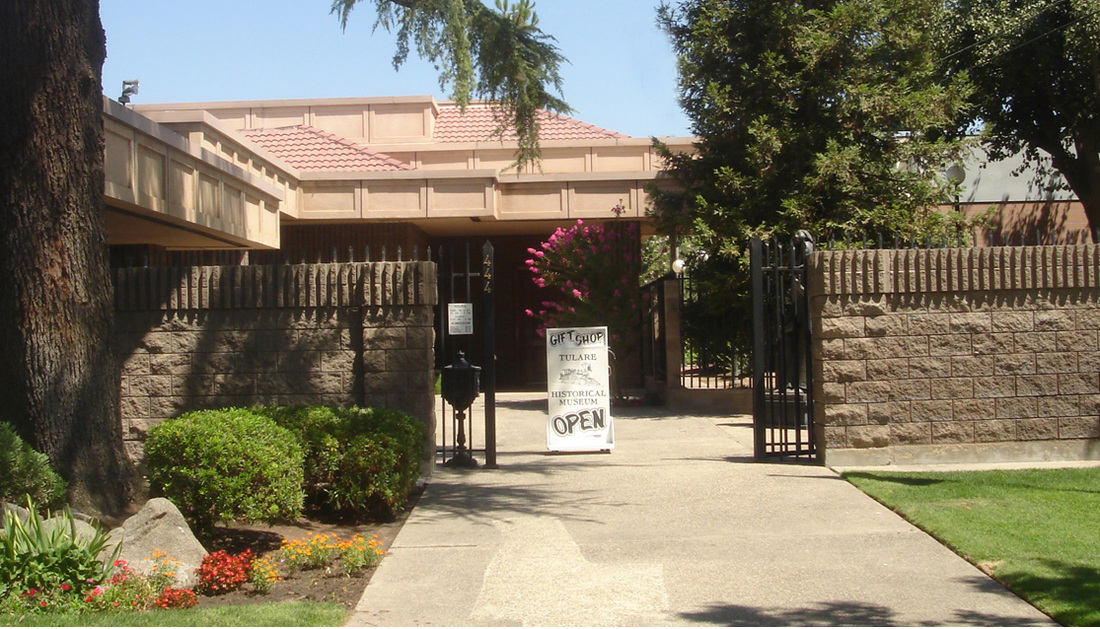
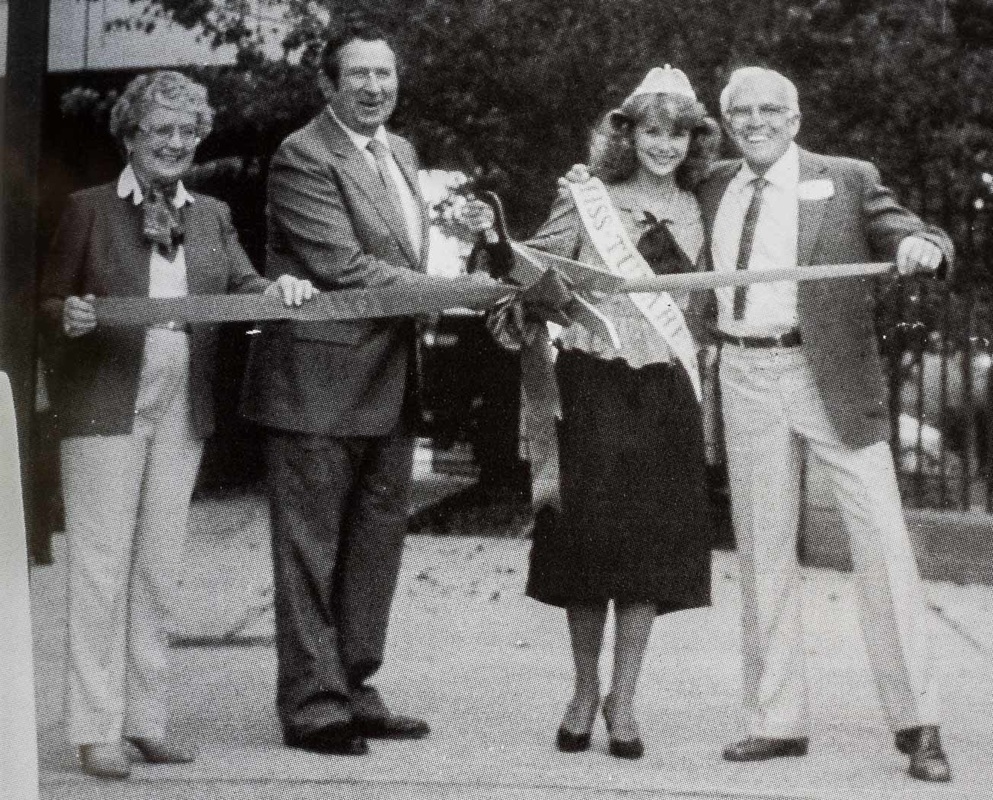
In June, 1980, a group of citizens concerned about the loss of historical buildings and artifacts from the City of Tulare’s past formed the Tulare City Historical Society. Their first project was a big one: to raise $375,000 to build a museum on the site of the town’s first public school. With the help of their chief fundraiser, C.R. “Budge” Sturgeon, within two years they raised enough to begin construction.
The first phase, a 7400 square foot structure, opened on November 16, 1985. Phase two was completed seven years later. It added office and storage space, the Tom Hennion Archives Center, and the Heritage Art Gallery, which serves as both an art gallery and event/reception space used by the community.
In addition to military memorabilia, the museum’s exhibits concentrate on the city’s founding, life at the beginning of the 20th century, and the achievements of the town’s heroes. A self-guided audio tour of the museum is available at the entrance desk.
On July 25, 1872, Southern Pacific Railroad engineer Andrew Neff drove the first locomotive to the end of the line at what would become the town of Tulare. Southern Pacific was pushing its rail line south through the San Joaquin Valley then and expected the existing communities to offer it land grants and up to $300,000 in cash.
When the twenty year old town of Visalia refused, the railroad decided to establish a new town ten miles to the south. Farmers in that area gladly granted land to the railroad, and Tulare was born. Named for the tall “tule” reeds growing around the edge of nearby Tulare Lake, the town was intended to be the major railroad terminal for the southern Valley.
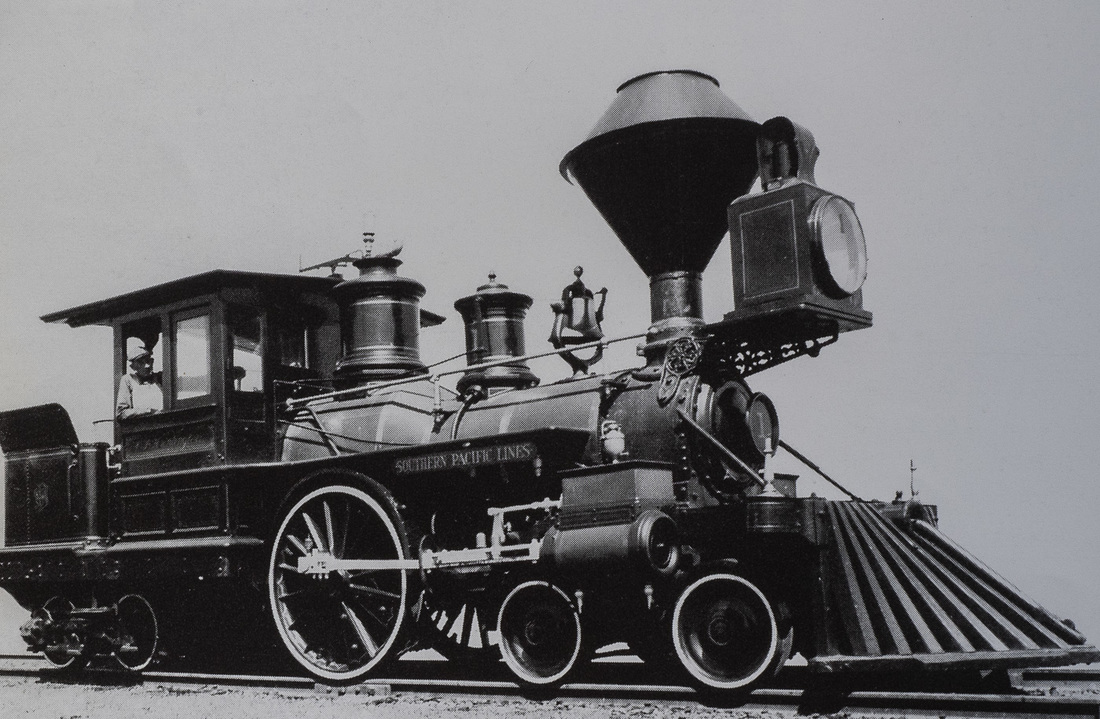
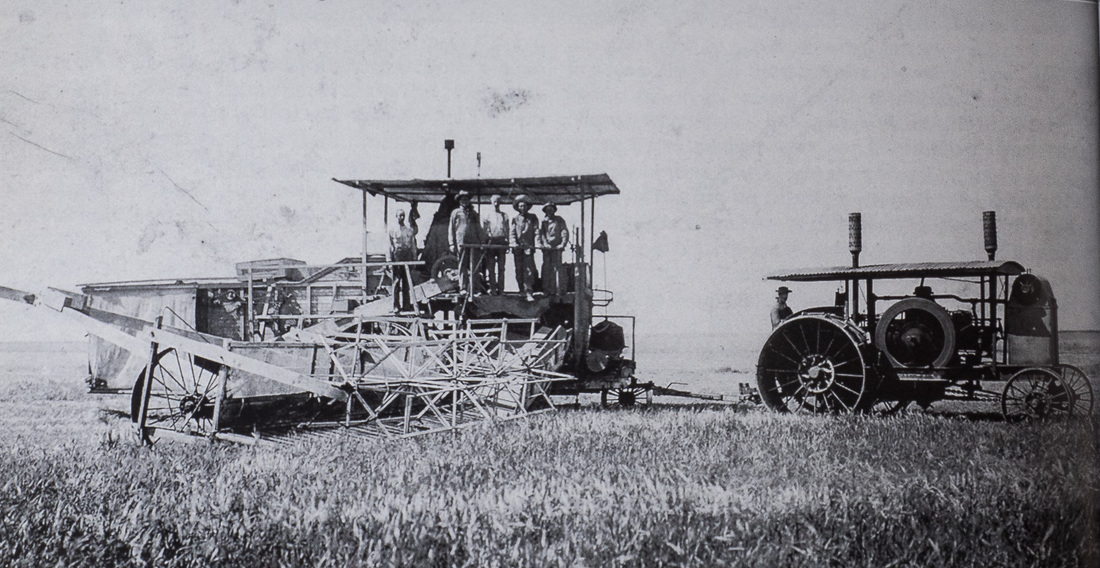
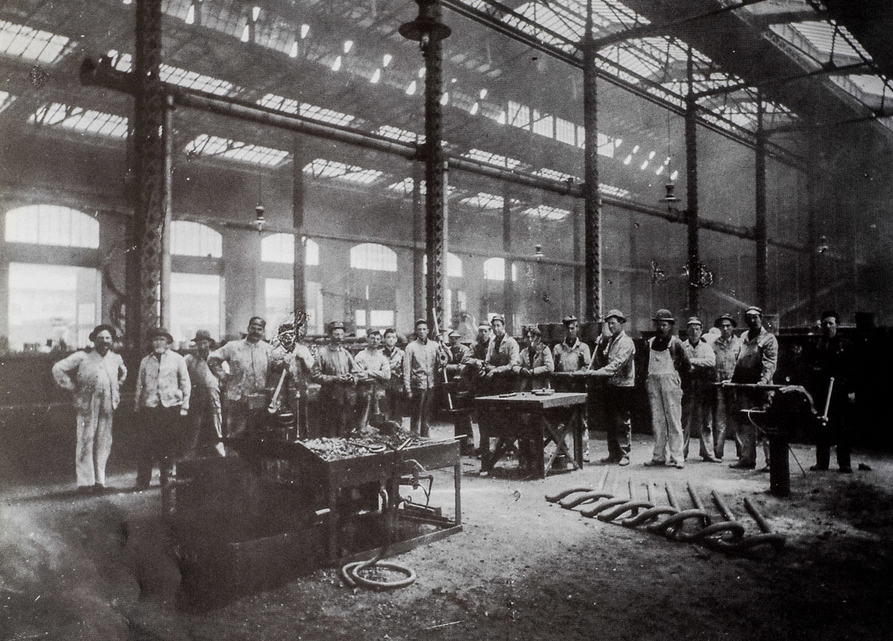
Southern Pacific soon built a machine shop and roundhouse south of the current Inyo Avenue, and a passenger and freight depot on the southwest corner of the future Tulare and J Streets. With the monthly $40,000 railroad payroll, the town grew steadily from a population of 25 in 1873 until the early 1890s, when its population was 2.697.
Then a double disaster struck. In 1891, Southern Pacific decided to move its repair center to Bakersfield, since it was extending its tracks south through the Tehachapi Mountains. The loss of the railroad jobs to the Tulare economy was compounded by the national financial panic of 1893 and the depression that followed. Though the local economy floundered and a number of businessmen left town, the community survived by emphasizing its strong agricultural base.
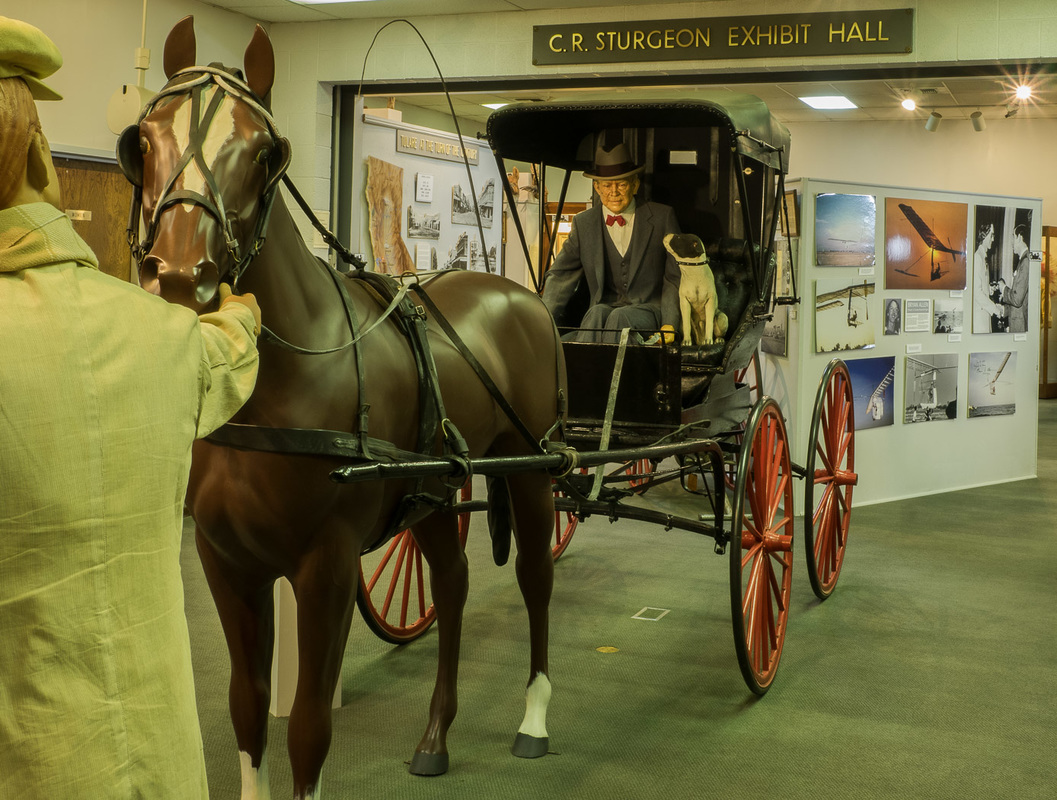
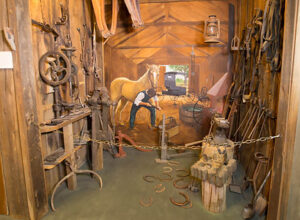
Exhibits in the C.R. Sturgeon Hall recreate a historic barber shop and blacksmith shop, plus what one would have seen a hundred years ago in the kitchen, parlor, and bedroom of a typical Tulare home. Other displays remind visitors of important 19th century events in Tulare’s history. One exhibit shows the devastation wrought by three fires that destroyed the wooden buildings of downtown. No record shows exactly how many were destroyed in the fire of 1875, but 25 buildings were burned in 1883, leaving only one standing, and then the 1886 fire leveled 77 more.
Among the unique exhibits at the museum are those about Tulare’s heroes. These include Bob Mathias, Sim Iness, Richard Torrez Jr., Bryan Allen, Admiral Elmo R. “Bud” Zumwalt, and Manuel Toledo.

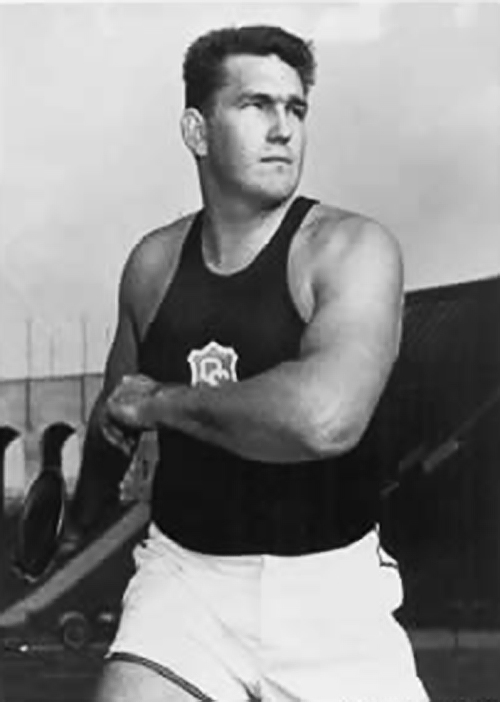


Mathias and Iness were local boys who became Olympic champions. Mathias was a football and track star at Tulare Union High School. After graduation, he concentrated on the decathlon, and in the following summer of 1948 won the decathlon Olympic gold medal in London. He then attended Stanford University and in the 1952 Helsinki Olympics repeated his gold medal triumph.
Both of Mathias’s Olympic medals are on display in the museum. During his career, he competed in 13 decathlons, winning all of them. After appearing in four Hollywood films and a short-lived TV series, he was elected to the United States Congress in 1966 and served for eight years representing the Central Valley.
Garland Simeon (Sim) Iness was a football and track standout at Tulare Union High School, alongside fellow teammate and classmate Bob Mathias. Specializing in the discus, Sim narrowly missed making the 1948 Olympic team. Continuing to set records at Compton Junior College and USC, Sim won the discus Olympic gold medal at the 1952 Olympics in Helsinki, Finland, where each of his throws set a new Olympic record.
Sim would go on to set the discus World Record in 1953. He, too, returned to the Valley, and served as a teacher, counselor, and coach at Porterville High School and Porterville Junior College for 39 years. Memorabilia of both Iness and Mathias from high school through their Olympic competitions are displayed at the museum, as are remembrances from Mathias’s political career.


Richard Torrez Jr. became the third Tularean to bring home an Olympic medal, winning the silver in men’s super heavyweight boxing in the summer 2020 Games (held in 2021 in Tokyo). Born, raised, and trained (by his father) in Tulare, Torrez shone athletically from age 5. Before winning the U.S.A.’s first Olympic heavyweight boxing medal in 33 years, Torrez achieved ten national championships (his first at age 10), a Golden Gloves national title in 2017, and a bronze at the Pan-American Games in 2019.
He signed up in late 2021 for a pro boxing career that will enable him to continue to train with his dad in the family gym and to give back to the community that raised him. Many of his medals, uniforms, and other memorabilia are on display in the museum.
Another Tulare High School graduate, Bryan Allen, a hang glider pilot and a very strong cyclist, became the first to fly a human-powered aircraft that met the difficult criteria for the historic Kremer Prize when he pedaled and piloted the Gossamer Condor around a 2 kilometer figure-eight course in Shafter in 1977. The plane had a wingspan of nearly 100 feet, but weighed only 70 pounds. Three years later, Allen flew (pedaled) the Gossamer Albatross, a successor plane, across the 22 mile wide English Channel. Pictures of both these flights are part of the display dedicated to his achievements.
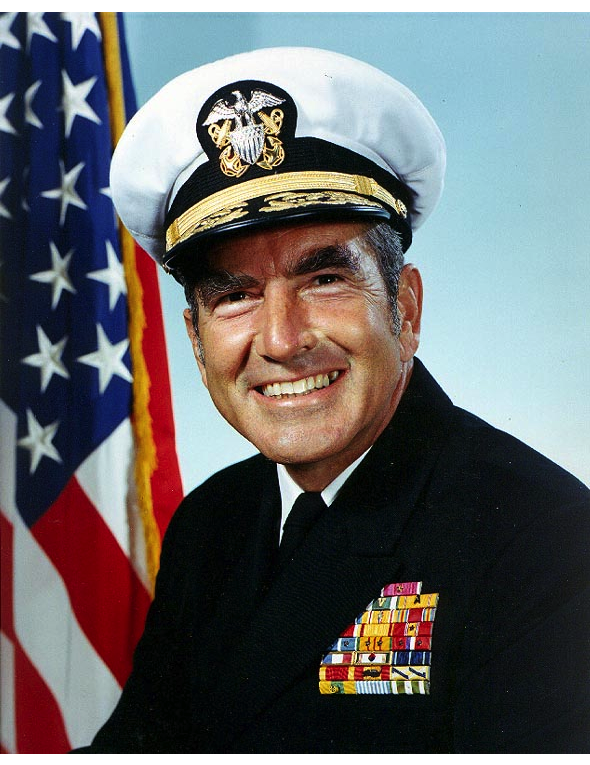


Admiral Zumwalt, a Tulare High class Valedictorian, attended the U.S. Naval Academy. In 1965, at the age of 45, he became the youngest Rear Admiral in U.S. history. He also commanded the U.S. Naval Forces in Vietnam. In 1970, he became a Full Admiral when he was appointed Chief of Naval Operations, once again the youngest in history. Tulare named a downtown park in his and his father’s honor, and the U.S. Navy recently named its newest class of destroyers for him.
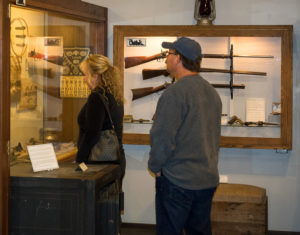
The Robert & Geraldine Soults Hall serves as the Military History Wing, which houses the Manuel Toledo Military Collection donated by World War II veteran and Tulare jeweler Manuel Toledo. Its foundation is an extensive group of U.S. military uniforms and artifacts from the Civil War to the first Gulf War. Uniforms from Nazi Germany and the Japanese Empire, as well as other military memorabilia, round out the displays.
Toledo grew up in Tulare and fought during WWII with the U.S. 7th Infantry in the South Pacific, where he was wounded several times. During his last long recovery, he resolved to do whatever he could to help other veterans. After returning to Tulare, he was instrumental in establishing the local AMVETS post, the largest post in the nation. In 1987, he opened his own military museum, which provided the foundation for the Tulare museum’s current collection.


With its ongoing art exhibits, extensive displays, special events, and community involvement, the Tulare Historical Museum is indeed “A jewel among the small museums of California.”
March, 2016; updated July, 2023


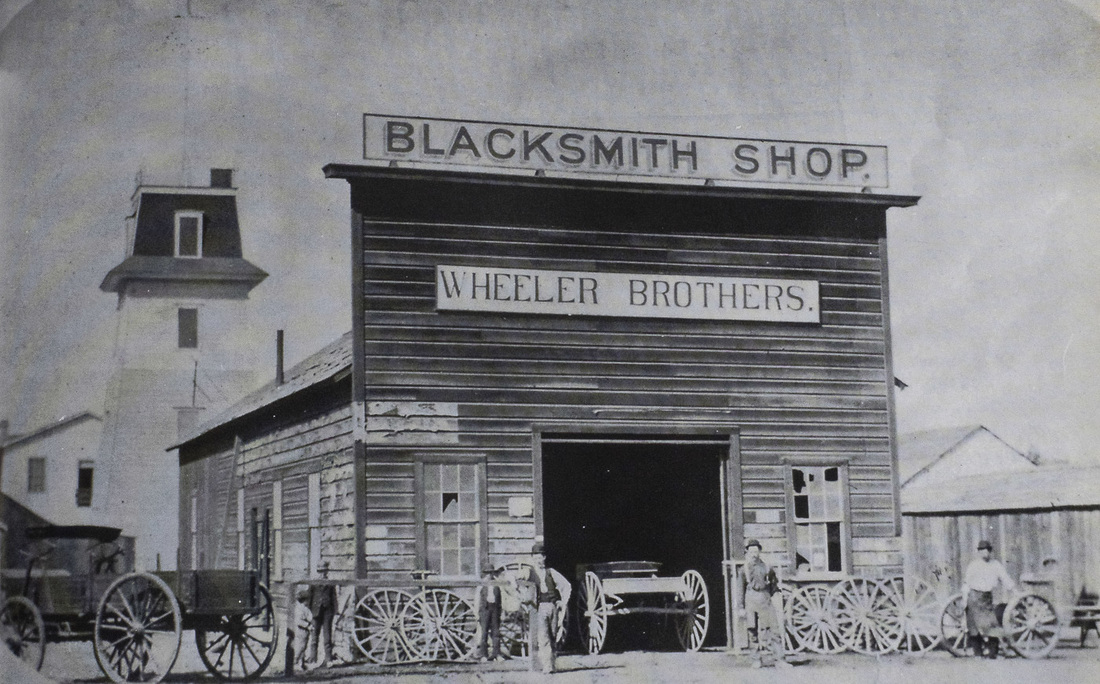





”Their mission was to build a museum that would tell the story of Tulare from its beginnings to modern times.” — Tulare Historical Museum

“If you don’t know history, then you don’t know anything. You are a leaf that doesn’t know it is part of a tree.” — Michael Crichton

”The greatest story out of the Olympics, was the story of the little town of Tulare which produced two gold medal winners. This is all the more remarkable when you realize that only 24 gold medals were awarded for track and field events. Russia, Germany, Great Britain, Asia, and Africa won none; all of the continent of South America won only one. The United States won 14, and of those, two came home to our favorite town of Tulare.” — Harold Berliner

”At Helsinki, Mathias asserted himself as one of the world’s best athletes. He won the decathlon by 912 points, an astounding margin, becoming the first to successfully defend an Olympic decathlon title. He returned to the United States as a national hero. In 1952, he was, therefore, the first person to ever compete in an Olympics and a Rose Bowl the same year.” — Life magazine
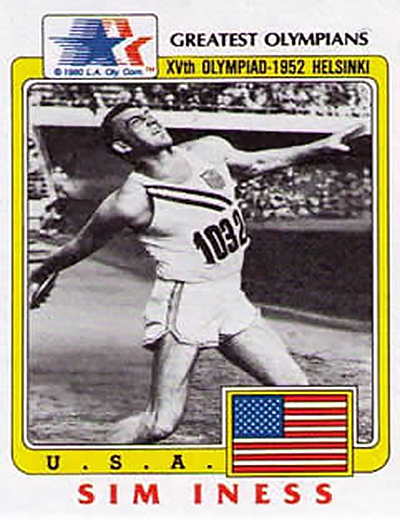
” . . . Sim wouldn’t let go of his dream. He had competitive Cherokee Indian blood in him, and he made the team in 1952. Then, at Helsinki, he uncorked a discus throw that won him a gold medal, beat the defending champion and set a new Olympic record. Sim weighs 245 and stands six feet, six inches, but he was floating on air right then.” — Bob Mathias
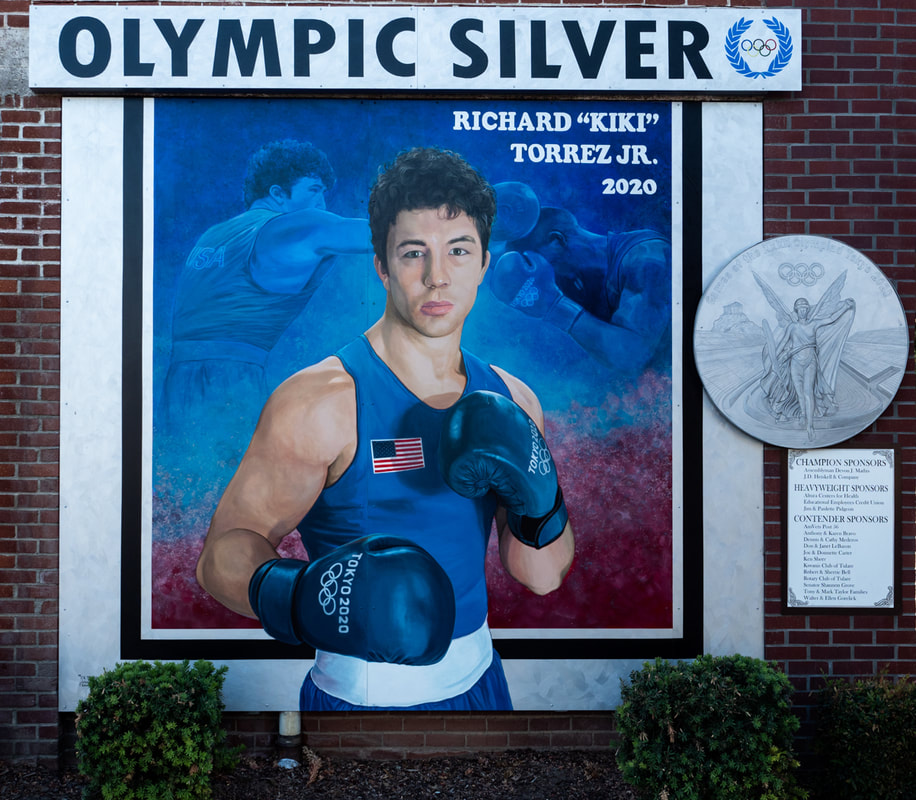
In 2017, Richard Torrez Jr. graduated as class valedictorian from Tulare’s Mission Oak High School, which named its gymnasium in his honor in 2022. In 2023 he joined Bob Mathias and Sim Iness with his own Olympic medalist mural in Downtown Tulare.

“I am a product of what everyone has sacrificed and supported in order for me to accomplish my dream. Thank you doesn’t do my feelings of appreciation justice. I will continue to do my best, to be the best I can be. Not just for myself but for my community, my family, and my home, Tulare.”–Richard Torrez Jr.
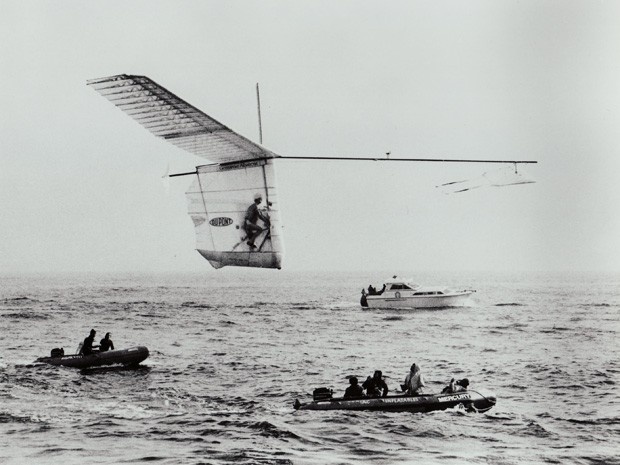
”As a long-time long-distance cyclist, Allen was built for the kind of challenge presented by the Gossamer aircraft. In order to prepare for the Albatross’s English Channel flight, Allen trained both on the road (40-80 miles per day) and using an ergometer (stationary) training bike. The ergometer training enabled Allen to quantify his performance and improvement.” — AeroVironment.com
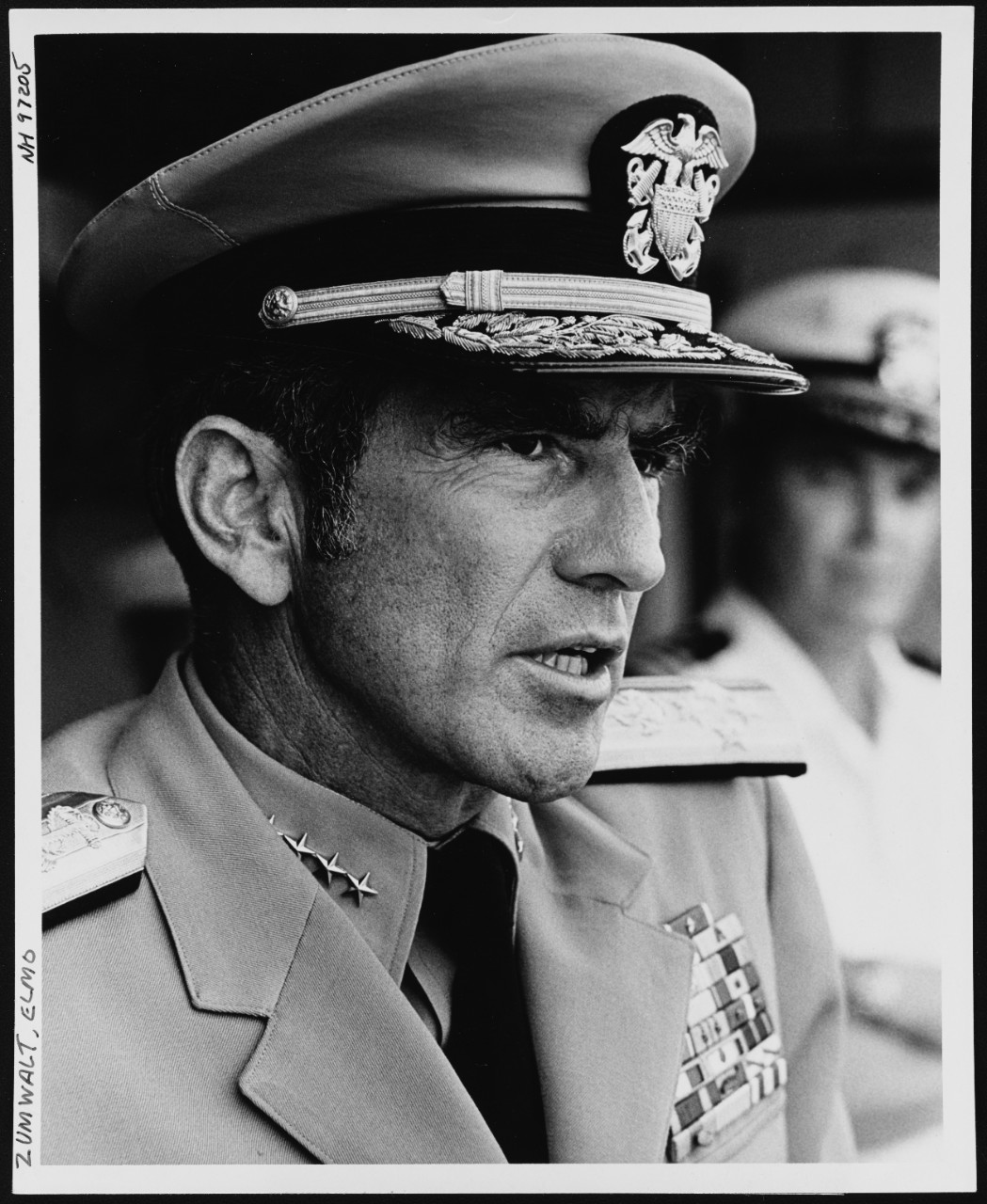
“Admiral Zumwalt crusaded for a fair and equal Navy. He fought to promote equality for minorities and women at a time of considerable racial strife in our country and at a time of deeply entrenched institutional racism and sexism in the Navy . . . Admiral Elmo Zumwalt was a great naval leader, a visionary and a courageous challenger of the conventional wisdom.” — Senator Russell D. Feingold
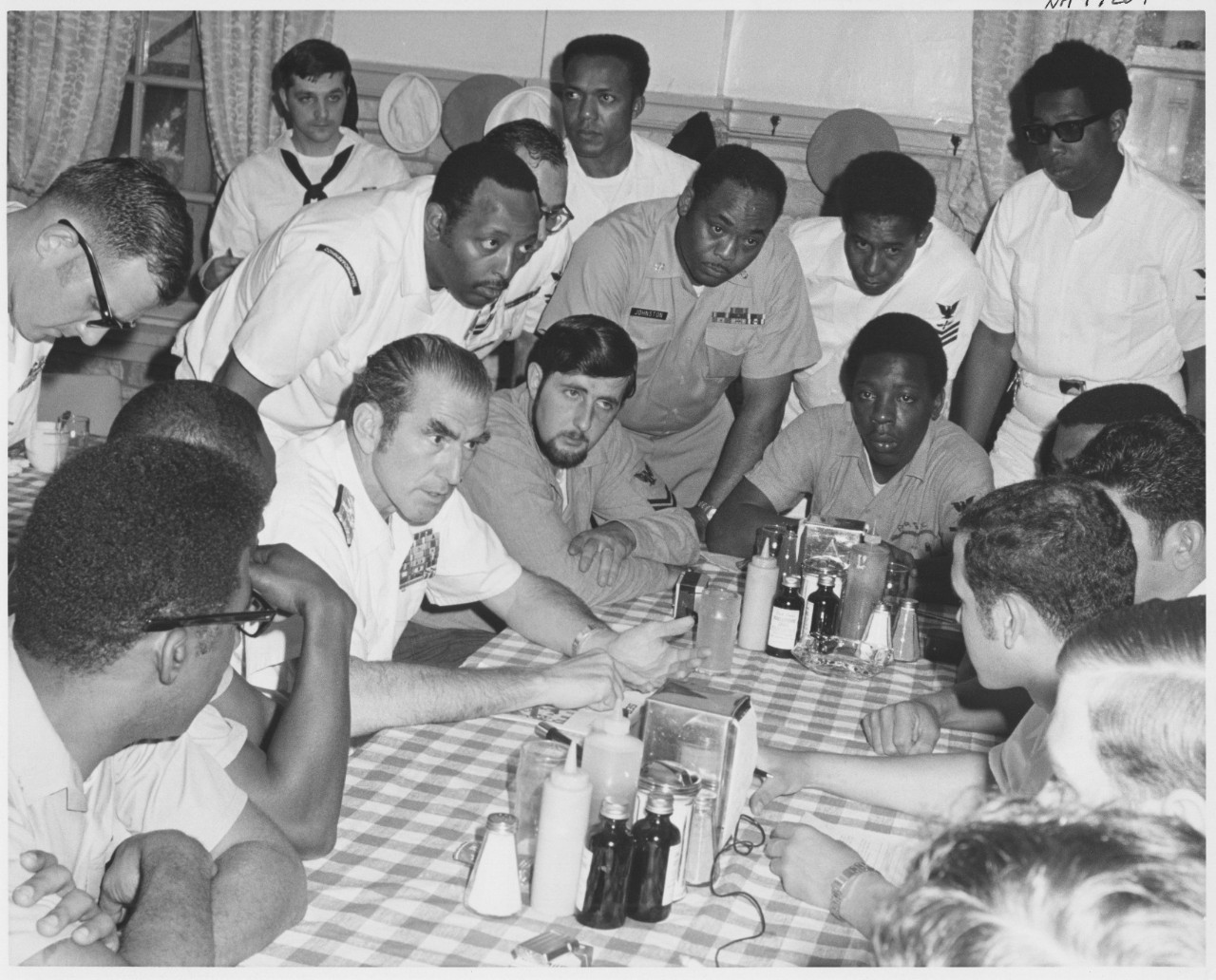
”’There is no black Navy, no white Navy — just one Navy — the United States Navy,’ Admiral Elmo R. Zumwalt declared.” — New York Times

”Zumwalt began issuing Z-Grams, personal messages and directives from the CNO sent directly to deckplate Sailors. Z-Grams ushered in many monumental changes in the fleet, such as benefits for minorities and women, relaxed grooming standards, and better quality of life for the average Sailor. Z-66 promoted equal opportunity in the Navy, pushing the Navy forward in a racially divided military.” — Ian Cotter

”’ . . . I vowed when I got wounded during the war, if I’d ever walk again, I’d help veterans.’ In 1944 [Manuel Toledo] was severely injured while fighting with the Army’s 7th Infantry Division on the island of Leyte in the Philippines and was left for dead. Three other soldiers from Tulare happened upon his body, detected a pulse and carried him through a swamp to a field hospital where his long recovery began.” — Valley Voice newspaper

”Volunteerism is the life-blood for any museum, most especially ours.” — Chris Harrell.