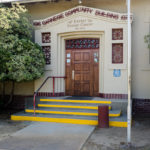
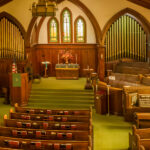
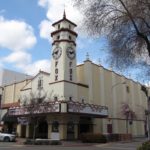
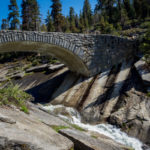
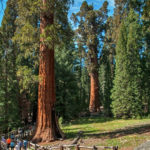
In 1912, Charles Augustus Elster built a classic two-story brick business block on boomtown Springville’s Main Street. Well over 100 years later, having passed through the hands of dozens of owners and tenants and serving many different businesses, the Elster Building (listed on the National Register of Historic Places in 1982) still presides over its community’s historic downtown. Its handsome exterior still stands virtually unchanged facing Main Street, and — restored, refurnished, and refreshed yet again inside, the Elster invites locals and visitors alike to stop in and walk into Springville’s history. Inside Visalia’s historic Mooney Grove Park, the Tulare County Museum complex presents a fascinating collection of artifacts from county and California history, an outstanding Native American basketry collection, a trove of memorable agricultural equipment, dozens of restored historic structures, special exhibits, diverse educational programs, a Farm Labor & Agriculture Museum, and an annual Jamboree. Since 1908, the First Congregational Church of Porterville has served its community from this remarkable Late Gothic Revival style building, the only one of its kind in the South San Joaquin Valley. Its unique and beautiful stained glass, elegant woodwork, and grand nave are enlivened by music from its two pianos, original pump organ, and 1916 theater pipe organ, probably the oldest functioning Wurlitzer in California. And thrice daily, with chimes on the hour in between, its carillon sends music out over the town. Includes video. The Mighty Wurlitzer pipe organ in Porterville’s First Presbyterian Church was built in 1916 to accompany the silent movies of that time. In 1931, after the silents became “talkies,” this organ was bought by the church, where, today, its well-maintained voice still mighty well past its 100th birthday, it’s considered to be the oldest functioning Wurlitzer in California. Come here it sing! Visalia’s fabulous Fox Theatre, opened in 1930, beautifully restored in 1999, is Spanish style on the outside, with a landmark multi-clock tower, and East Indian themed on the inside, with twinkling stars on the ceiling, “the mystic shrines of the gods” along the walls — and a 1919 Wurlitzer pipe organ and a Baldwin grand piano, keeping it the area’s premier choice for music, plays, comedy, dance, and movies Constructed in 1930-31, the historic Generals Highway Stone Bridges over the Marble Fork and Clover Creek, about a mile apart in Sequoia National Park, are beautiful, enduring examples of the National Parks’ famous “rustic architecture,” harmonizing them with the landscape while providing access to park resources. Enjoy picnic facilities with restroom and river access at the photogenic Marble Fork site. Giant Forest, deservedly the most-visited single feature in Sequoia National Park, contains five of the ten largest giant sequoias, including the biggest, General Sherman; miles of easy hiking trails; a fine museum; picnic areas with restrooms; beautiful meadows; wonderful wildflowers; abundant wildlife; scenic drives; Moro Rock; Tharp’s Log; Ranger programs; and year-round amazement and delight. Includes video. In April, 2000, 327,000 acres (27%) of Sequoia National Forest became Giant Sequoia National Monument, expressly to save their sequoias from commercial logging, while still inviting backpacking, birding, camping, dog walking, fishing, hiking, horseback riding, hunting, mountain biking, OHV riding, photography, picnicking, skiing, snowshoeing, snowmobiling, and wildlife viewing in Big Tree country. The Sequoia National Forest’s 300,000 acre Golden Trout Wilderness, in southeast Tulare County, is home to California’s State fish (its namesake), the Wild and Scenic Kern River, miles of meadows, small streams, mixed conifer forests, and many mountains — great for backpackers, birders, campers, fisher folk, hikers, equestrians, hunters, photographers, rock climbers, winter sports, native plants, and wildlife. In 1890, four square miles around the magnificent General Grant Tree became General Grant National Park, which, in 1940, became part of the new Kings Canyon National Park. Its pristine, easily accessible giant sequoia grove, trails, streams, meadows, wildlife, visitor center, lodging, restaurant, museum, campgrounds, picnic sites, historic structures, and Ranger programs keep it a favorite destination. Established in 2000, the 725-acre James K. Herbert Wetland Prairie Preserve, owned and managed by Sequoia Riverlands Trust, protects Tulare County’s largest remaining natural prairie. Ongoing restoration work is dramatically increasing its abundance of native wetland prairie plants and animals and more than doubled the number of bird species on the property (to over 150). Grab your binoculars and join an SRT-led tour, or view this preserve from its fenceline anytime. Includes video. Sequoia National Park’s Hockett Meadow Ranger Station and its small adjacent barn were built in 1934 by CCC workers using natural, native materials — lodgepole pine logs, hand-cut shakes, and granite rock — to harmonize them with their wild landscape per National Park “Parkitecture” guidelines. Timeless and sturdy, they’ll continue to shelter backcountry rangers and crews for years to come. The ancient mound and swale landforms called hogwallows locally, or mima mounds scientifically, once covered thousands of acres in Tulare County, but they were rapidly being bulldozed, to provide level land for agriculture, housing, or business sites, when, in 1979, Dr. Phil Buckman and his daughter Carol dedicated 10 never-cultivated acres of their land to be protected in perpetuity as a Hogwallow Preserve. Includes video. While soil scientists have posited over 30 theories to explain the cause of the mounds in hogwallow landscapes, the dominant conclusion is that they are the work of pocket gophers. The creation story of the Wukchumni Yokuts people says the mounds (Pawkawkwitch) were made by the People when they emptied their baskets of the leftover dirt after they finished building the high mountains for Eagle. Majestic oak and sycamore woodlands, seasonal Dry Creek, wildflower and wildlife viewing, trails, birding, photography, picnicking, and periodic educational and volunteer activities bring visitors to this beautiful 1800-acre foothill working ranch. Preserved and stewarded by Sequoia Riverlands Trust, it’s an exceptional Tulare County landscape little changed since the 1880s early ranching days.
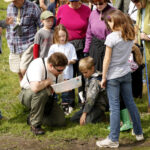
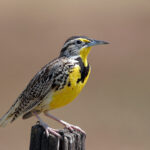
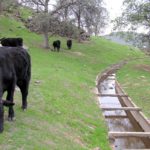
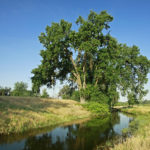
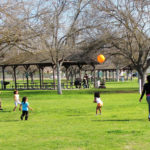
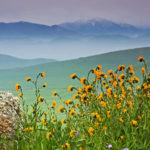
Established in 2000, the 725-acre James K. Herbert Wetland Prairie Preserve, owned and managed by Sequoia Riverlands Trust, protects Tulare County’s largest remaining natural prairie. Ongoing restoration work is dramatically increasing its abundance of native wetland prairie plants and animals and more than doubled the number of bird species on the property (to over 150). Grab your binoculars and join an SRT-led tour, or view this preserve from its fenceline anytime. Includes video. Surrounded by bright “fairy rings” of gold and purple flowers, the hundreds of vernal pools that dot the James K. Herbert Wetland Prairie Preserve in wet years support fascinating life forms such as tiny fairy shrimps, clam shrimps, “Cyclops” copepods, and the astonishing western spadefoot, all of which provide meals for the scores of different birds that flock there to find food. The 725-acre James K. Herbert Wetland Prairie Preserve provides fine opportunities — especially in wet winters and springs — for birdwatchers to enjoy the sights and sounds of dozens of different avian species flying, feeding, courting, hunting, and sometimes even vanishing underground. Established in 1927, the Kaweah Delta Water Conservation District, encompassing 337,000 acres of Tulare and parts of Kings counties, works with the U.S. Army Corps of Engineers and the many area irrigation districts and ditch companies on flood control, irrigation, and power generation, maintaining over 200 miles of waterways and hundreds of acres of recharge basins. Call to arrange group tours. In 1982, Visalian Alan George, the Nature Conservancy, and the people of Tulare and Kings counties saved a 324-acre parcel of rare intact Valley oak woodland from destruction. Now managed by Sequoia Riverlands Trust, Kaweah Oaks Preserve, near Visalia, is a haven for birdwatchers, dog walkers, hikers, photographers, picnickers, and wildlife, and a major educational resource for schools and the public. Includes video. Alan George, Tulare County’s honored “Mr. Oak,” tells the fascinating story of his “chance of a lifetime” to preserve 324 acres of intact Valley oak woodland and how the long process to protect these trees “was like a big jigsaw puzzle with all the parts finally coming together to the satisfaction of all involved.” Vision, dedication, communication, coordination, partnerships, and persistence prevailed at last. Includes video. This tiny (10′ x 12′) rustic wooden post office, built in 1910 to replace the original one established in 1890 in a Kaweah Cooperative Colony tent, has continuously served Three Rivers residents on the North Fork of the Kaweah River for well over 100 years. Picnickers, photographers, and history buffs are welcome. Includes video. Decades of contention ended in 1940 with the creation of Kings Canyon National Park. Its wonderfully accessible wilderness and front country invite backpackers, birdwatchers, campers, fisher folk, hikers of all abilities, equestrians and stock packers, photographers, picnickers, nature lovers, fans of wildlife and wildflowers, giant sequoia seekers, and scenic drivers to revel in its magnificence. The southern part of Kings Canyon National Park, including part of Grant Grove and other giant sequoia groves, is in Tulare County, but to see the great canyon of the Kings River, the park’s namesake, you must leave Grant Grove and make the spectacular drive down Highway 180 all the way to Roads End and back. Walk some easy, short, beautiful trails with your camera for meadow, river, waterfall, wildflower, and wildlife viewing. Lake Kaweah, near Three Rivers, was created in 1962 by damming the Kaweah River. The large lake area provides seasonal opportunities for birding, boating (marina and boat rentals, too), camping, disc golfing, dog walking, fishing, hiking, horseback riding, photography, picnicking, swimming, and waterskiing. Its Kaweah Heritage Visitor Center, open year-round, has free loaner life vests for kids. Ledbetter Park has eleven acres of lawns, many trees, a baseball/soccer field, a basketball court, picnic tables and arbors, multiple sets of modern playground equipment, a skate park, a stage and bandstand, paved walking paths, and several Veterans’ memorials make this Tulare County park a community hub, serving the enjoyment, health, and well-being of Cutler and Orosi residents and visitors of all ages and abilities. On only one springtime day per year is Sequoia Riverlands Trust’s 110-acre Lewis Hill Preserve near Porterville opened to the public so that folks of all ages can climb its thousand-foot high hill to discover the rare and imperiled striped adobe lily and San Joaquin adobe sunburst amidst multitudes of other beautiful wildflowers. Fabulous views and kite flying from the hilltop are extra rewards of this day. Video included. Andrew Carnegie funded construction of 1681 public library buildings in the U.S., including six in Tulare County, two of which still actively serve their communities. Exeter’s 1916 Mission/Spanish Colonial Revival style library became, in 1975, a senior center, while the 1921 Craftsman style Orosi building (the last Carnegie library built in California) continues as Orosi and nearby Cutler’s library today. ELSTER BUILDING
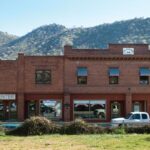
FARM LABOR AND AG MUSEUM
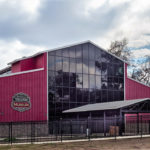
FIRST CONGREGATIONAL CHURCH of PORTERVILLE
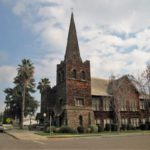
FIRST CONGREGATIONAL CHURCH of PORTERVILLE: ITS MIGHTY WURLITZER STILL SINGS
FOX THEATRE
GENERALS HIGHWAY STONE BRIDGES
GIANT FOREST
GIANT SEQUOIA NATIONAL MONUMENT
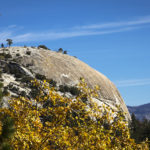
GOLDEN TROUT WILDERNESS
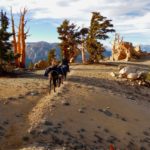
GRANT GROVE
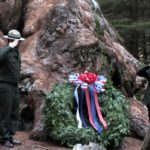
HERBERT WETLAND PRAIRIE PRESERVE
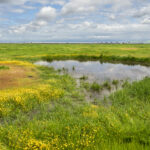
HOCKETT MEADOW RANGER STATION
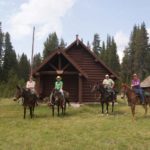
HOGWALLOW PRESERVE
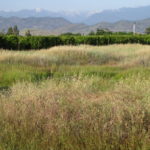
HOGWALLOW PRESERVE: HOGWALLOW ORIGINS
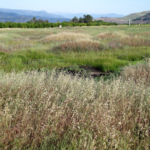
HOMER RANCH PRESERVE
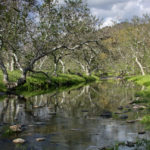
JAMES K. HERBERT WETLAND PRAIRIE PRESERVE
JAMES K. HERBERT WETLAND PRAIRIE PRESERVE: Mysterious Vernal Pools
JAMES K. HERBERT WETLAND PRAIRIE PRESERVE: Some Birds of the Herbert
KAWEAH DELTA WATER CONSERVATION DISTRICT
KAWEAH OAKS PRESERVE
KAWEAH OAKS PRESERVE First Person Account:

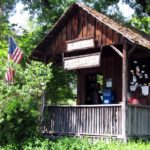
KAWEAH POST OFFICE
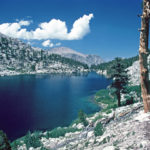
KINGS CANYON NATIONAL PARK
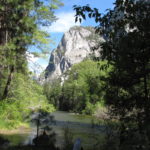
KINGS CANYON NATIONAL PARK: A Trip to the Great Canyon of the Kings
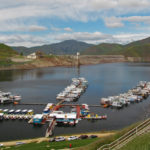
LAKE KAWEAH
LEDBETTER PARK
LEWIS HILL PRESERVE
LIBRARIES: EXETER & OROSI CARNEGIE LIBRARIES