Click on photos for more information.
The Story of the Exeter and Orosi Carnegie Libraries
by Shirley Kirkpatrick
Emerging Towns and Inquiring Minds Garner Carnegie Libraries — The Story of the Exeter Public Library/Carnegie Community Building/Senior Center and the Orosi-Cutler Branch Library
At the turn of the twentieth century, no one in Tulare County had a radio. Such electronic marvels as television, computers, and cameras as we know them had not even been dreamed of. There were few schools with sufficient supplies, and many households could not afford to buy much in the way of books or magazines. Yet, as small towns across America grew, their residents were hungry for knowledge. They yearned for schools and libraries.
Scottish-born American industrialist and philanthropist Andrew Carnegie fully understood this. Between 1889 and 1929 his Carnegie Corporation funded construction of 1,681 public library buildings in the United States, as well as many more in Africa, the Caribbean, Canada, and Europe. Rural Tulare County received six of them.
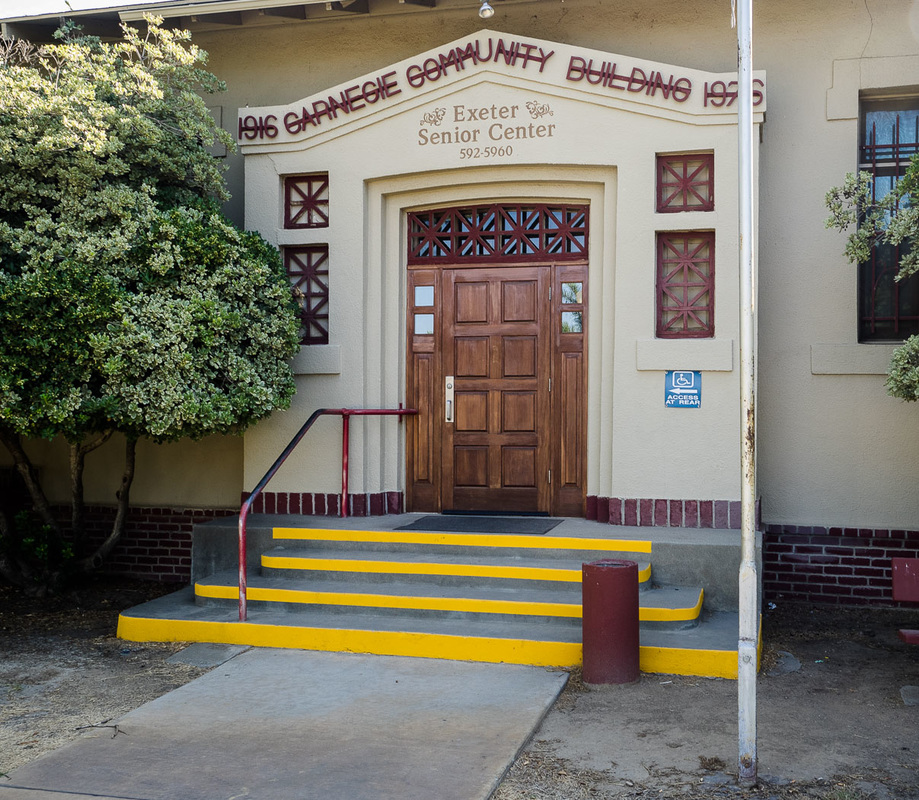
Of those six, only two remain in use today. The Orosi Carnegie still serves as a free public library. The Exeter Carnegie building serves as a community center for senior citizens. Both have achieved listing on the National Register of Historic Places, Orosi in 1983 and Exeter in 1990.
Tulare County established its own library system in 1910. This added stimulus and encouragement for cities to submit grant applications to the Carnegie Foundation to fund their own buildings. To qualify for the Carnegie grant each city had to meet four requirements: it had to demonstrate need for a library, provide the building site, provide ten percent of the grant amount annually for operational expenses, and provide free service to all.
The Exeter and Orosi proposals moved forward nearly simultaneously. Both communities had to deal with James Bertram, Andrew Carnegie’s private secretary and fellow Scotsman, who was in charge of the library grant program and who monitored – some might say gave an undue amount of attention and advice to – even a small library
Exeter’s Carnegie approval was not without some testy correspondence.
Exeter became an incorporated city in 1911. Two years later, with a population of 1,500 in the city and 1,000 more in the surrounding rural area, Exeter made its first application to the Carnegie Corporation for a library. There was no response. Undaunted, the city made a new request the next year (1914) with a letter of support from the county librarian. This brought an almost immediate offer of $5,000, subject to the above-listed contingencies.
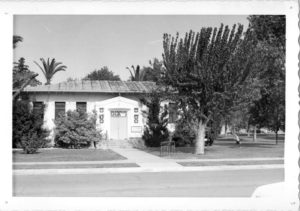
Soon the first disagreement arose. A controversy over the location of the library was reported to Bertram, and he urged that the whole community be satisfied. He required that the lot be large enough for light all around, plus room for future expansion. Thus, the location at the northwest corner of the new one-block square City Park at the corner of Chestnut and E Streets seemed a natural and was finally chosen.
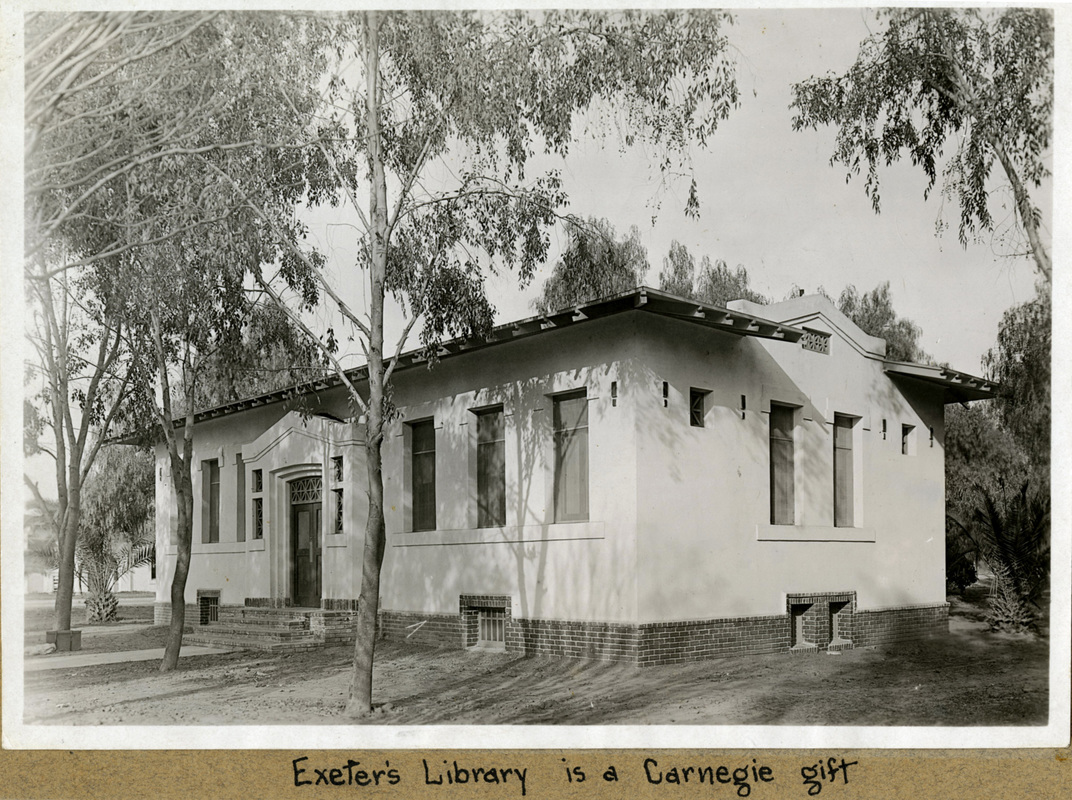
When the City Clerk sent Bertram plans from three separate architects, a flurry of correspondence ensued. The first letter from Bertram said, “… it is about as much as we can do to go over one set of plans which has been tentatively decided by a community, without having to take up the points for, or against, three different sets.” He then proceeded to comment on all three, suggesting revisions. He also cautioned that lack of a basement might prejudice against any request for future expansion funds.
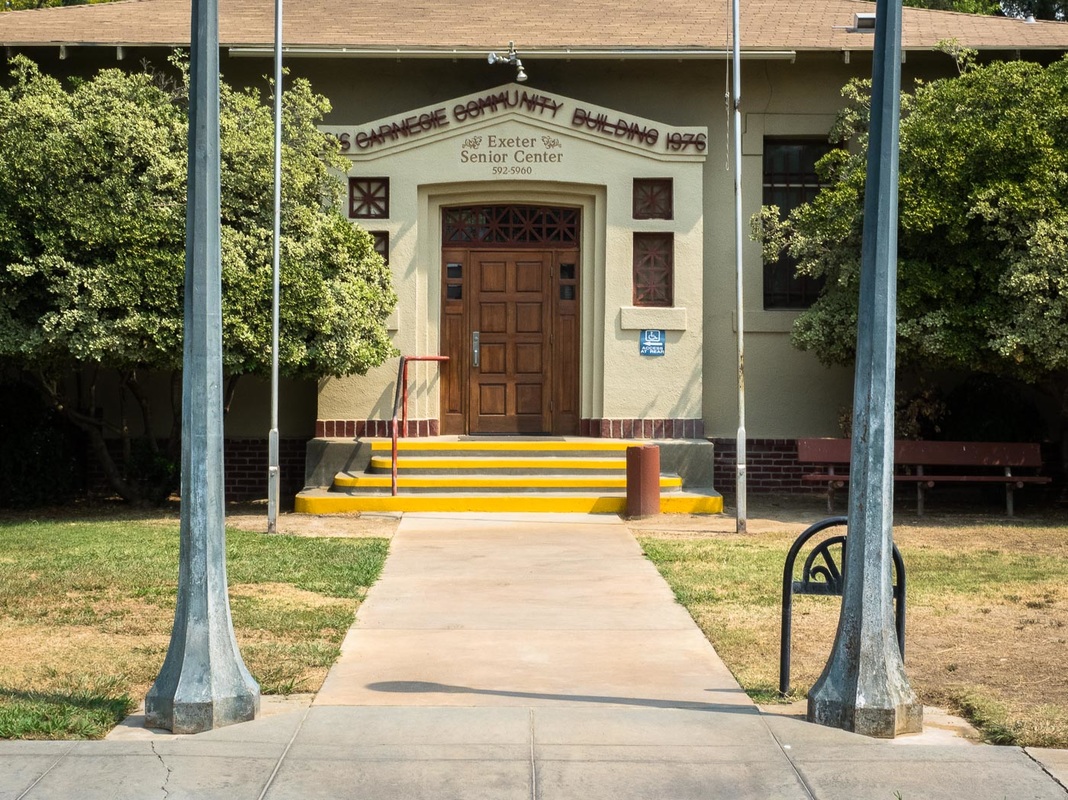
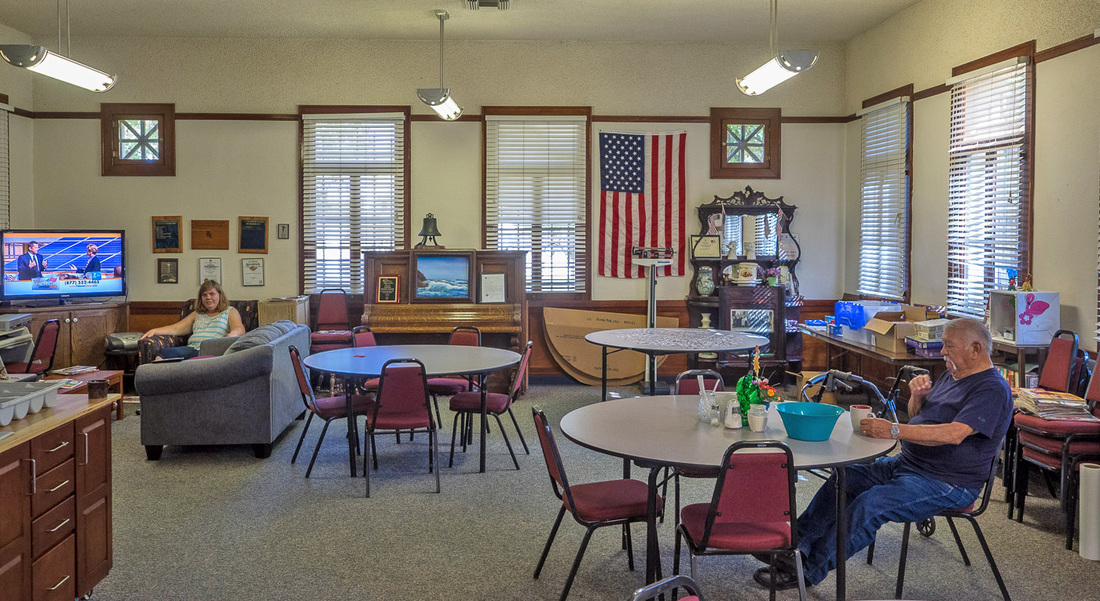
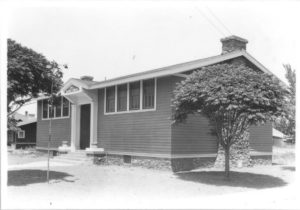
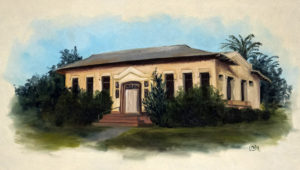
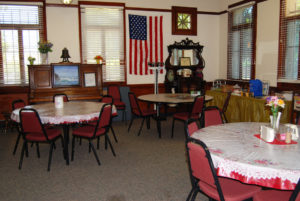
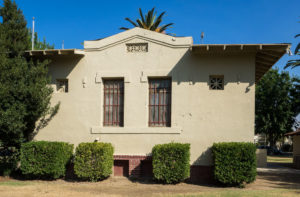
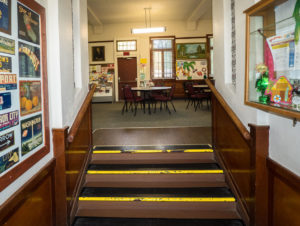
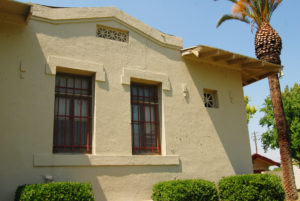
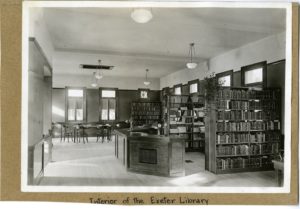
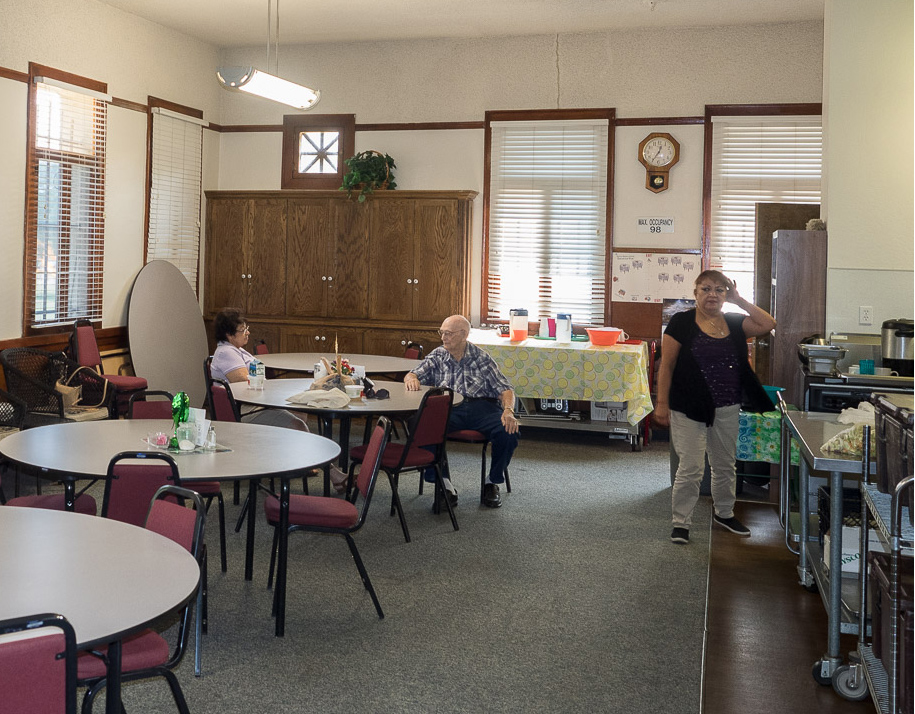
The Carnegie library, which combined Mission and Spanish Colonial Revival style elements – and yes, it has a basement – was completed in 1916. When it was outgrown, the city built a new, larger library nearby on city park land in 1975. The Carnegie building was then renovated, with the only major revision being the addition of a wheelchair accessible ramp on the back side, and has been used as a gathering place for senior citizens since that time.
Orosi’s construction was delayed until the end of World War I
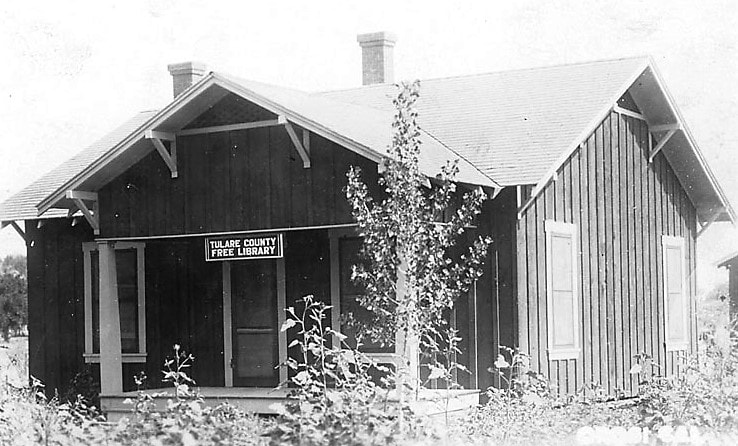
As in many other unincorporated communities, the first lending library in Orosi served the area from a private building, initially in a room of Ryan’s Cyclery beginning in 1911. Three more moves were made, each time to a small room in an otherwise occupied building. Then, in 1914, a group of enthusiastic women organized The Improvement Club for Orosi “for the general welfare of Orosi and vicinity.”
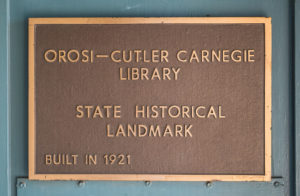
Through creative fundraising efforts they were able to pay $250.00, one-half the purchase price, for the corner lot at 12646 Avenue 416 (El Monte Way), where they proposed to build a library. The owner took a mortgage for the balance, to be paid in three years, and in 1917 a Carnegie grant of $3,000 was obtained. Construction was delayed because of World War I, but the Improvement Club went on to raise $2,000 more to match the grant funds, and provided some materials and labor. In 1921, the library, the last Carnegie library to be built in California, became a reality.
Planners of the Orosi building, like those in Exeter and all others, had to deal with James Bertram, who published his “Notes on Library Buildings” in 1911. The leaflet detailed his requirements – that each community obtain the greatest amount of usable space consistent with “good taste in building.” He also advised that the edifices should be plain and dignified structures, not Greek temples.
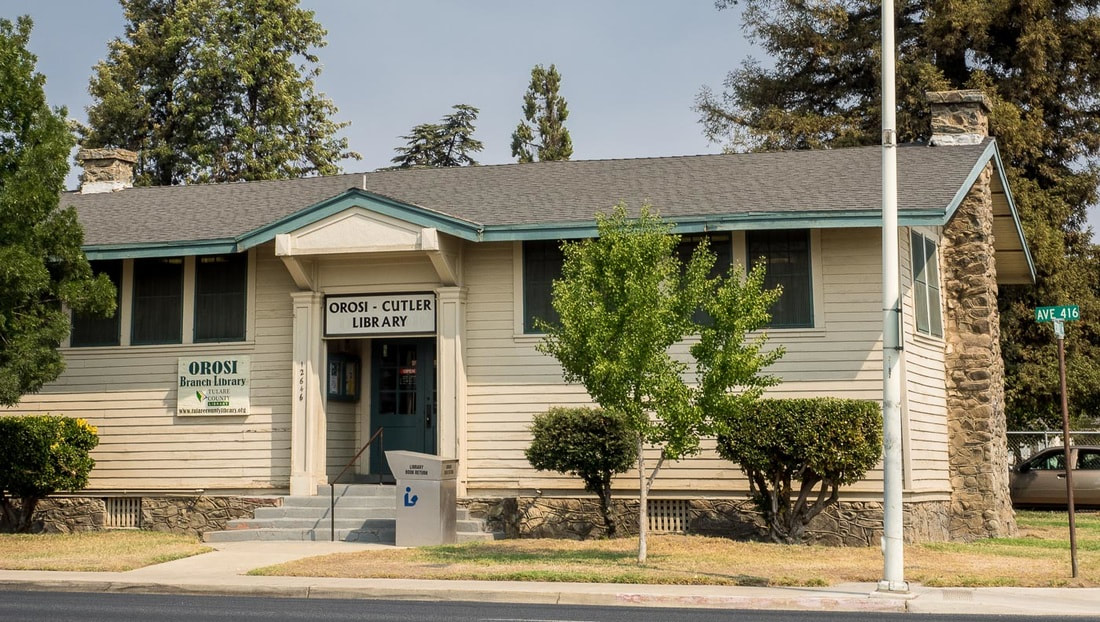
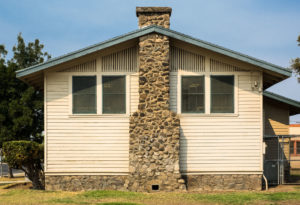
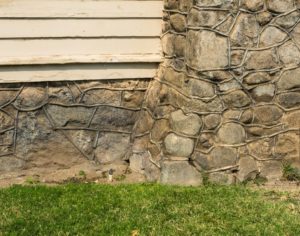
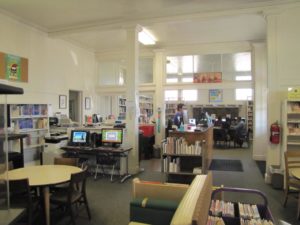
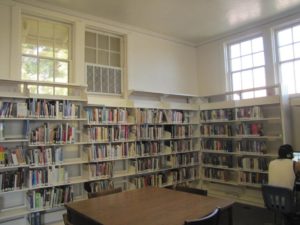
The Orosi library reflects Bertram’s advice faithfully and is one of only three in California designed in the simple style of a Craftsman bungalow. Key features of the Orosi building were two fireplaces, one at each end of the two main rooms that comprise the T-shaped structure. It has shiplap siding, and all masonry, both inside and out, is random stone with an unusual overlaid tubular grouting.
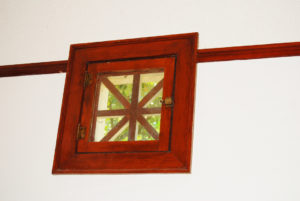
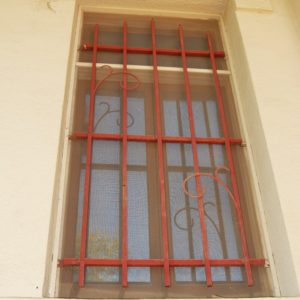
Large double-hung windows on all sides allow ample light into the rooms and, in pre-air conditioning days, provided good air circulation. The fireplaces are no longer in use, with the stonework of just the one on the east side still in view.
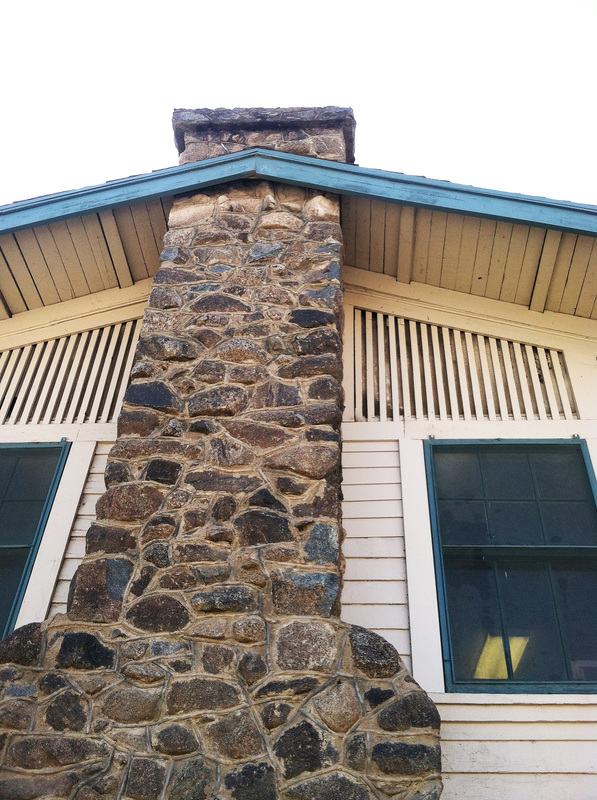
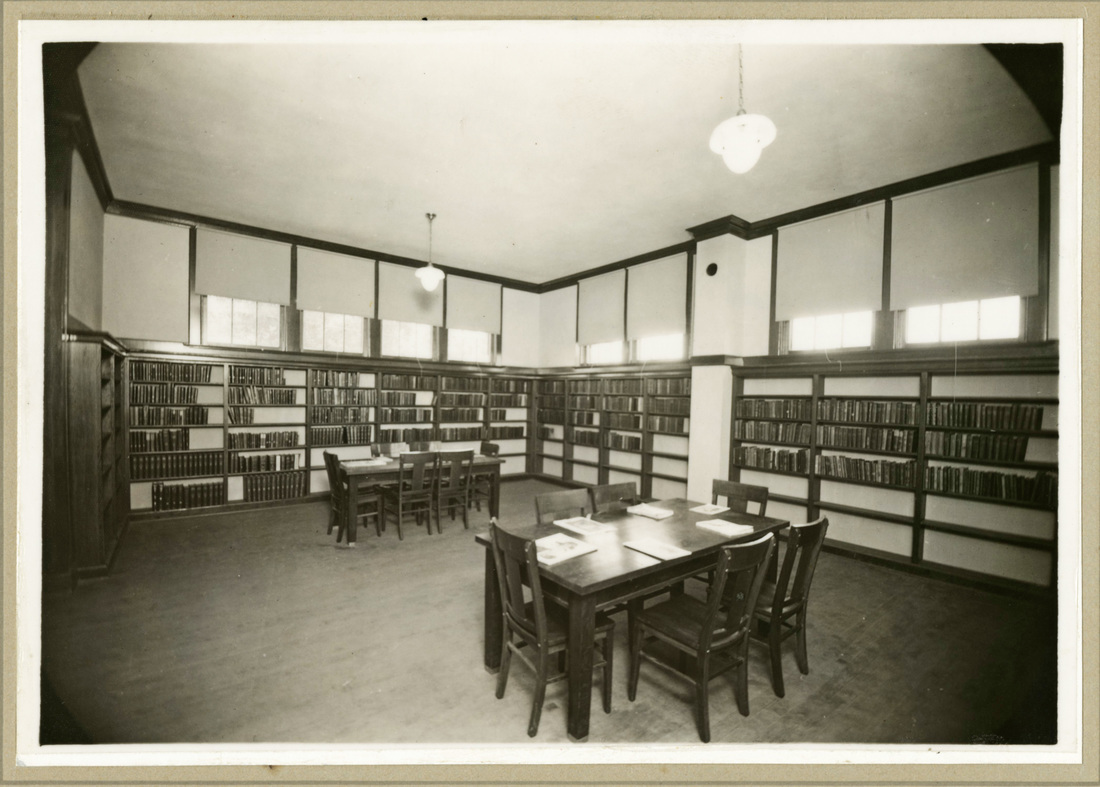
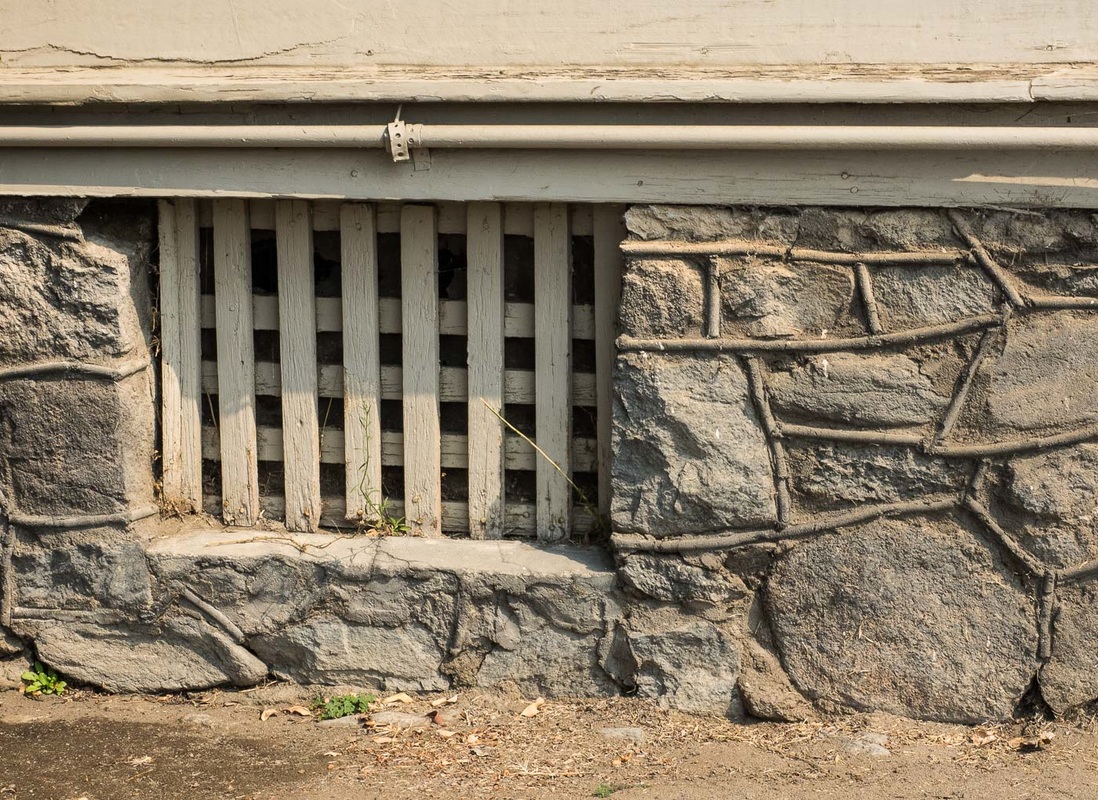
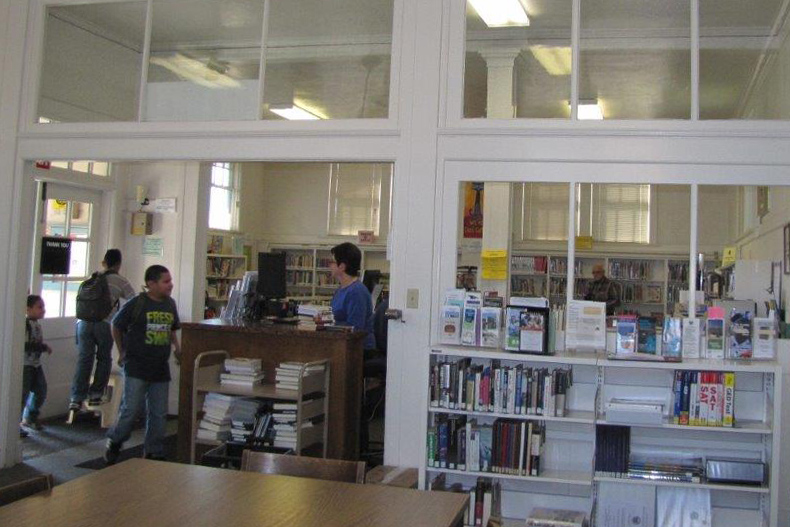
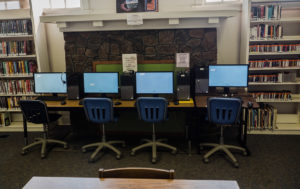
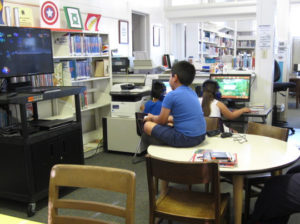
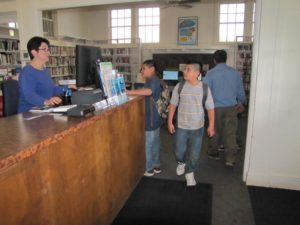
In 1978, the Orosi library’s service was expanded to the nearby community of Cutler, so in the county’s library system the branch became known as the Orosi-Cutler Branch Library. It was given a remodel in 2013 with new carpeting and fresh paint. “The Orosi-Cutler Library represents the history of libraries and the strength of the community,” said the county librarian at the time of the branch’s grand re-opening. “The work performed on this renovation will ensure the library will provide the same great service for many more years.”
December, 2015
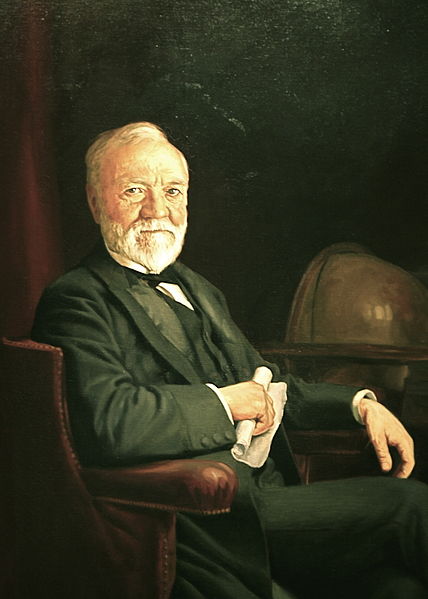
“A library outranks any other one thing a community can do to benefit its people. It is a never failing spring in the desert.” — Andrew Carnegie
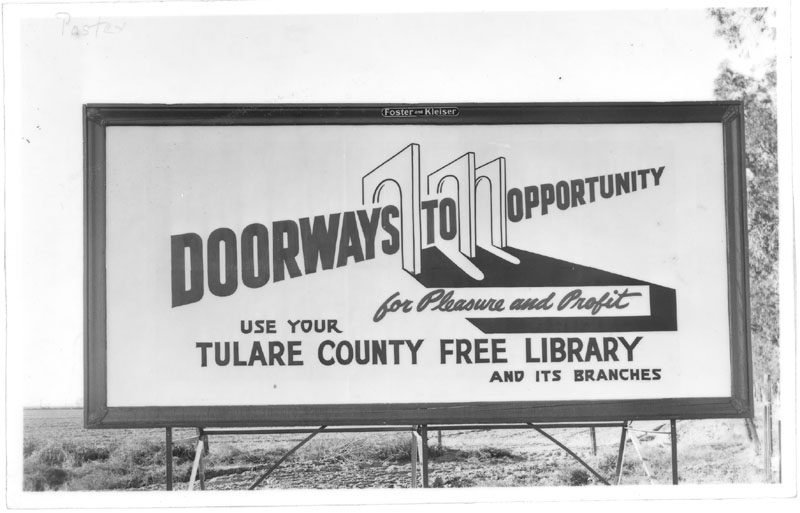
“A man’s . . . duty . . . is to contribute to the general good of the community in which he lives. . . . To try to make the world in some way better than you found it, is to have a noble motive in life.” — Andrew Carnegie
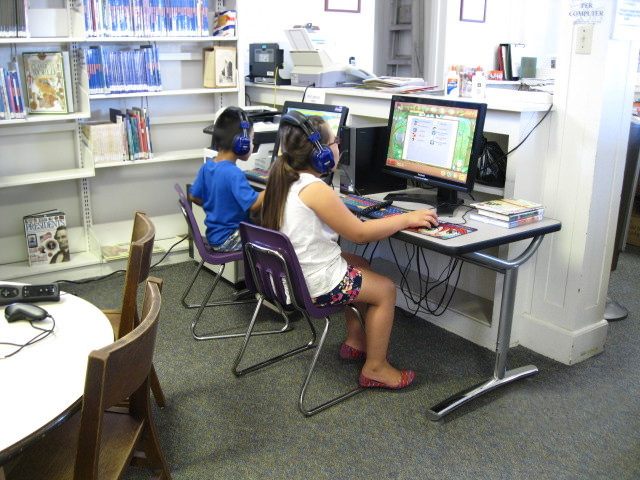
“It was from my own early experience that I decided there was no use to which money could be applied so productive of good to boys and girls who have good within them and ability and ambition to develop it, as the founding of a public library in a community.” — Andrew Carnegie
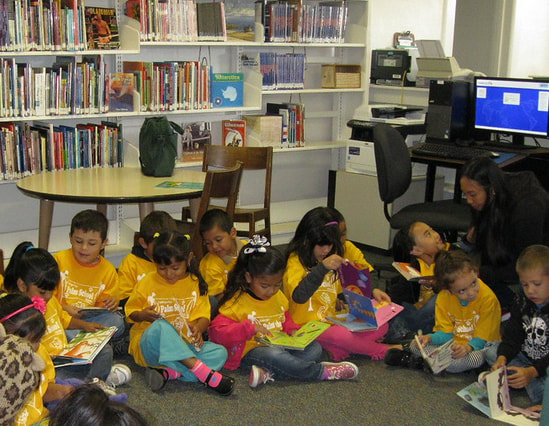
“. . . Carnegie . . . believed that in America, anyone with access to books and the desire to learn could educate him- or herself and be successful, as he had been. Second, Carnegie, an immigrant, felt America’s newcomers needed to acquire cultural knowledge of the country, which a library would help make possible.” — Carnegie Corporation of New York
“When you are growing up, there are two institutional places that affect you most powerfully: the church, which belongs to God, and the public library, which belongs to you.” — Keith Richards
“When I got [my] library card, that was when my life began.” — Rita Mae Brown

“When I graduated from high school, it was during the Depression and we had no money. I couldn’t go to college, so I went to the library three days a week for 10 years.” — Ray Bradbury
“I like libraries. It makes me feel comfortable and secure to have walls of words, beautiful and wise, all around me.” — Roger Zelazny
“Books permit us to voyage through time, to tap the wisdom of our ancestors. The library connects us with the insight and knowledge, painfully extracted from Nature, of the greatest minds that ever were, with the best teachers, drawn from the entire planet and from all our history, to instruct us without tiring, and to inspire us to make our own contribution to the collective knowledge of the human species. I think the health of our civilization, the depth of our awareness about the underpinnings of our culture and our concern for the future can all be tested by how well we support our libraries.” — Carl Sagan
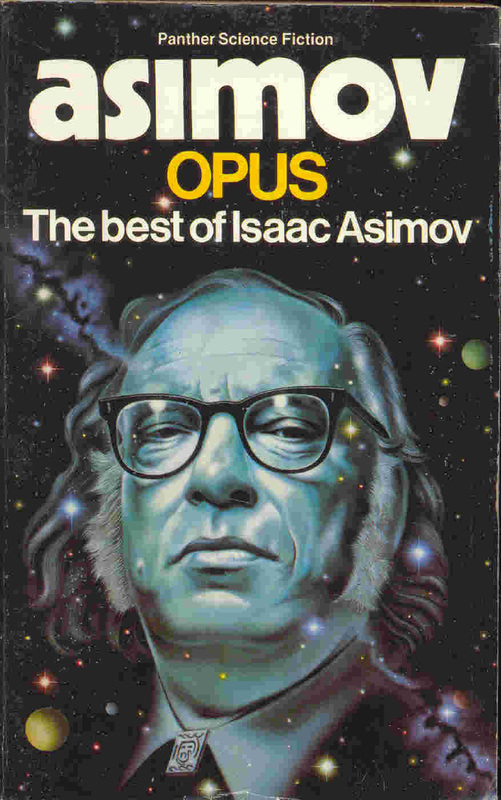
“[A library] is a space ship that will take you to the farthest reaches of the Universe, a time machine that will take you to the far past and the far future, a teacher that knows more than any human being, a friend that will amuse you and console you — and most of all, a gateway, to a better and happier and more useful life.” — Isaac Asimov

“Libraries store the energy that fuels the imagination. They open up windows to the world and inspire us to explore and achieve, and contribute to improving our quality of life. Libraries change lives for the better.” — Sidney Sheldon
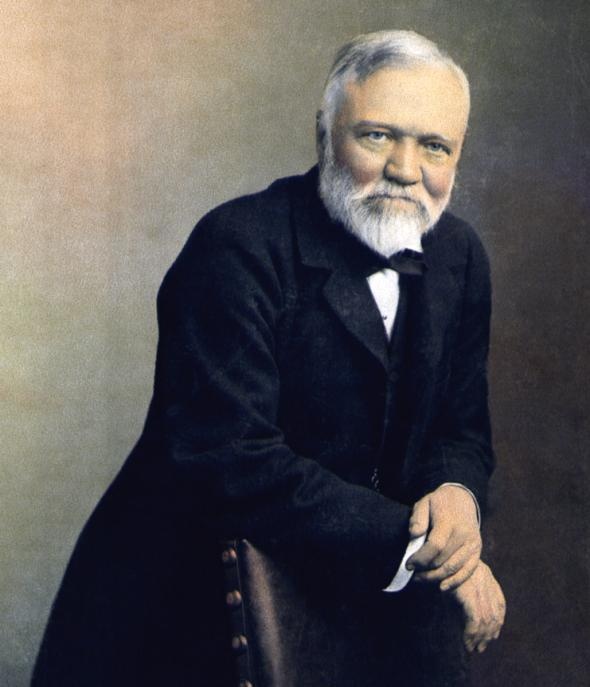
“There is not such a cradle of democracy upon the earth as the Free Public Library, this republic of letters, where neither rank, office, nor wealth receives the slightest consideration.” — Andrew Carnegie
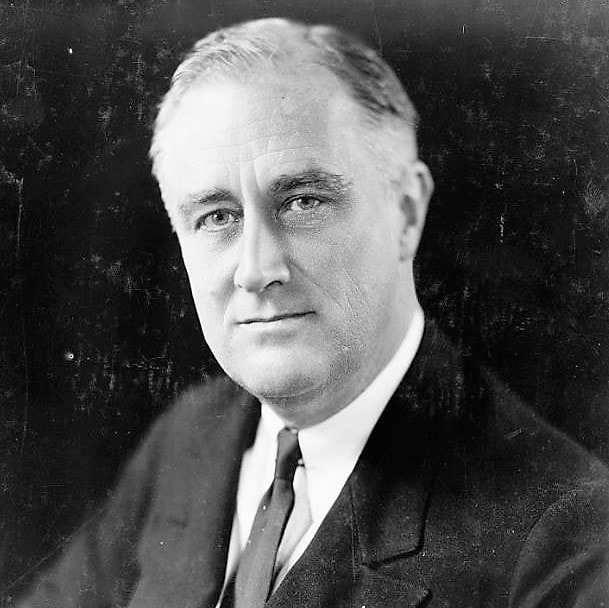
“I have an unshaken conviction that democracy can never be undermined if we maintain our library resources and a national intelligence capable of utilizing them. — Franklin D. Roosevelt

“Civilized nations build libraries; lands that have lost their soul close them down.” — Toby Forward
Orosi Library Directions:
Orosi Address: 12662 Ave. 416 (corner of El Monte Way and Eddy Street), Orosi, CA 93647-2018
From Visalia, take Hwy 63 north to Orosi. Take Ave. 416 (El Monte Way) west (left) to 12662 Ave. 416, at the corner of Eddy St. Library is on the north side of El Monte Way.