Click on photos for more information.
First Congregational Church of Porterville — An Important Feature in the City’s Life for Over 125 Years
by Shirley Kirkpatrick
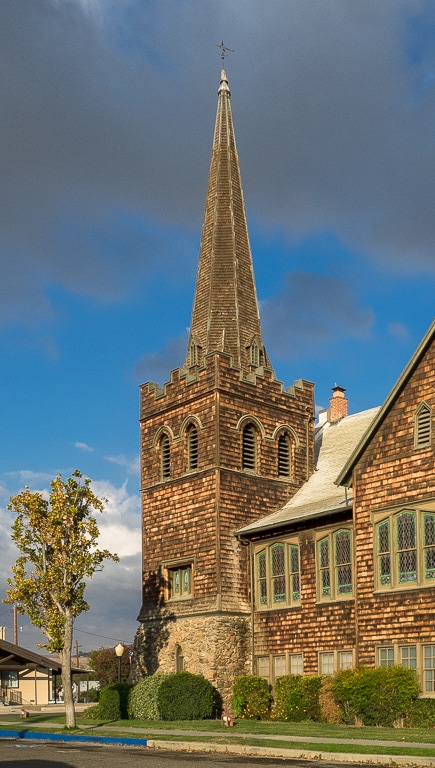
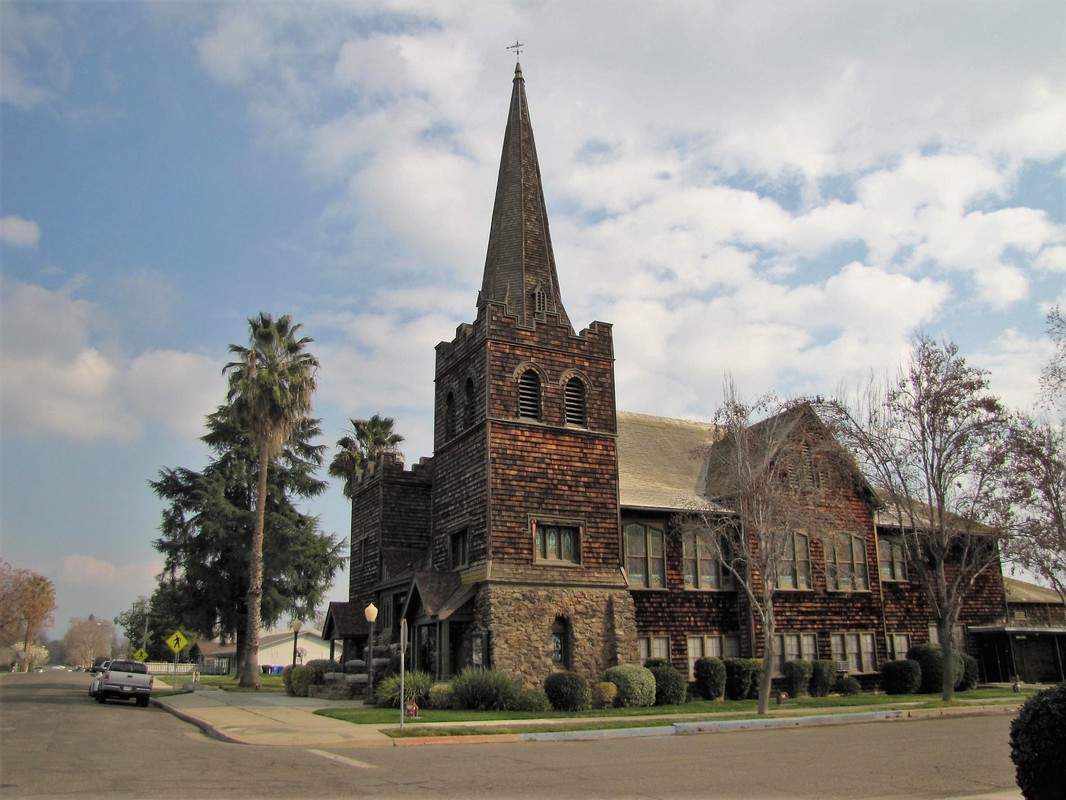
As the peals of the carillon bells from the First Congregational Church steeple drift over Porterville’s downtown, residents are reminded daily that the church is a longstanding element in the city’s life.
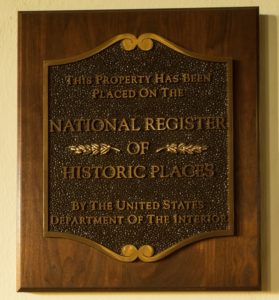
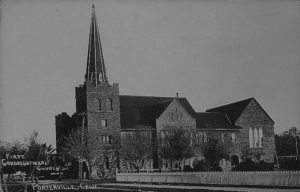
The nationally recognized structure sits on three city lots east of downtown at the southeast corner of Mill and Fourth streets. With no nearby buildings, the church is clearly visible with its distinctive Late Gothic Revival architecture, arched stained-glass windows, cedar shingle siding, native stonework, and soaring steeple. It was approved for recognition on the National Register of Historic Places in 1998, ninety years after its construction.
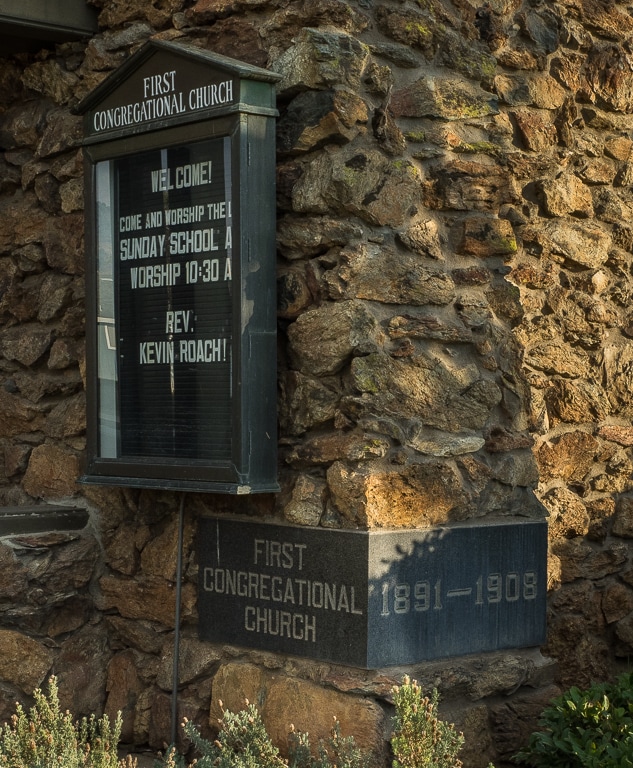
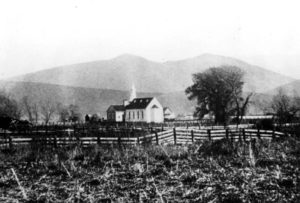
Still, the story of the First Congregational Church dates farther back and is uniquely linked to the history of the Porterville. A cornerstone marker on the building is dated 1891-1908, marking the church’s establishment before construction of the current facility.
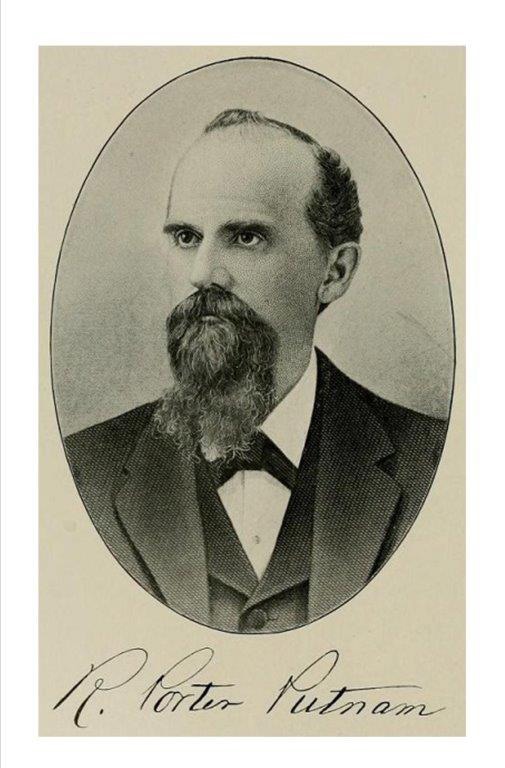
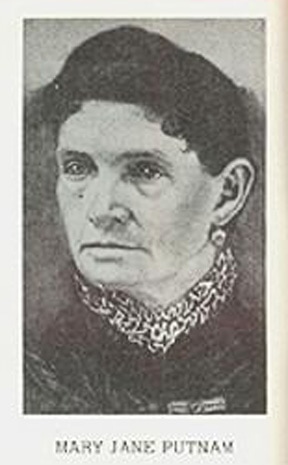
Church member Joe Faure is a frequent tour guide for visitors who want to see inside the building. As he explains it, the city was first just a cluster of houses, saloons, and shops serving as a stopover for land schooners carrying newcomers eager to search the gold fields farther north. When Royal Porter Putnam, a shopkeeper and owner of 40 acres on the banks of the Tule River, began laying out a grid for streets and lots for a new town in 1864, his wife, dismayed by the “wild west” feel of the village, insisted he set aside three lots for churches.
As settlement in the area by farmers began, it brought an influx of mid-Westerners, many of them of the Congregational faith. Sharing similar theological views, they merged with a dwindling Presbyterian church at the site, and in 1891 the congregation became affiliated with the Congregational Church. It was identified as an “institutional church” — providing not only religious services but multiple uses for the entire community, with culture, education, recreation, and respectable entertainment – meant to help tame the rough and tumble town.
Thus, they built a multi-level edifice in 1908 where young people could develop body, mind, and spirit with physical fitness, mental training, religious ideals, citizenship, and service. They brought the first daily kindergarten to the area, provided an indoor swimming pool with a gymnasium on the second story – the first in southern Tulare County, and a 250 seat sanctuary that doubled as the town’s only auditorium. The church even bought two additional lots south of the building in 1915 to construct the first tennis courts in town for public use.
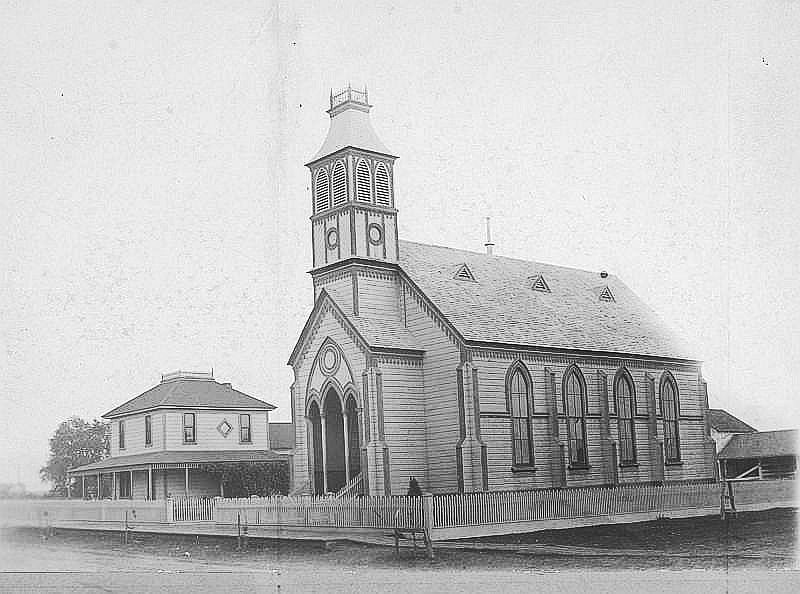
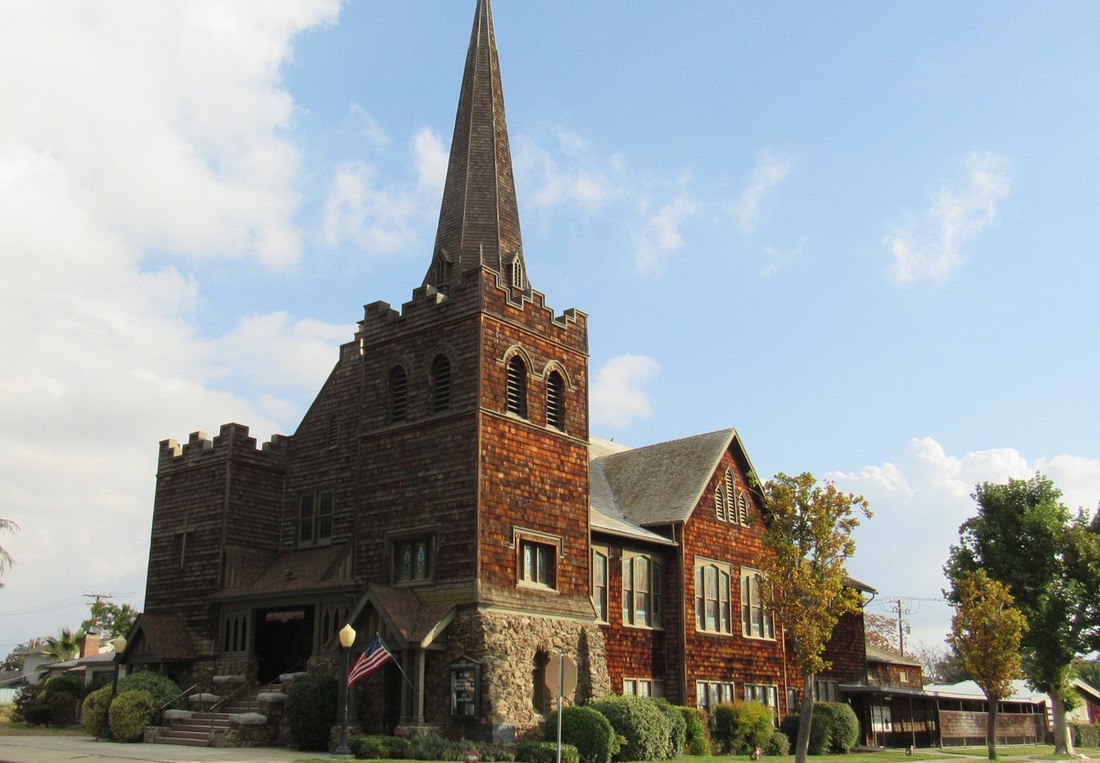
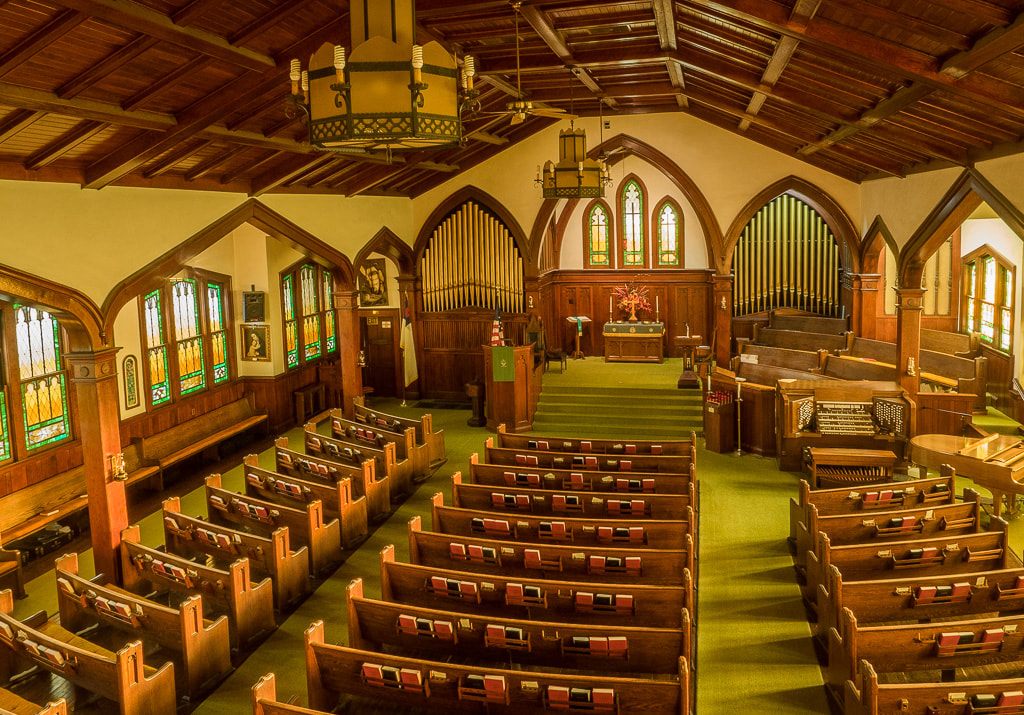
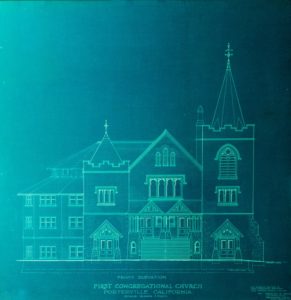
Some alterations have been made over the years, but the church building today is essentially unchanged from its original plan, as attested to by the framed blueprints on display, the work of San Francisco Bay Area architects George C. Meeker and Francis W. Reed. Its design is in the Shingle/Bay Tradition of the Gothic Revival style. It is now the only site representative of this architectural style in the south San Joaquin Valley – others of the era having been mostly destroyed by fire.
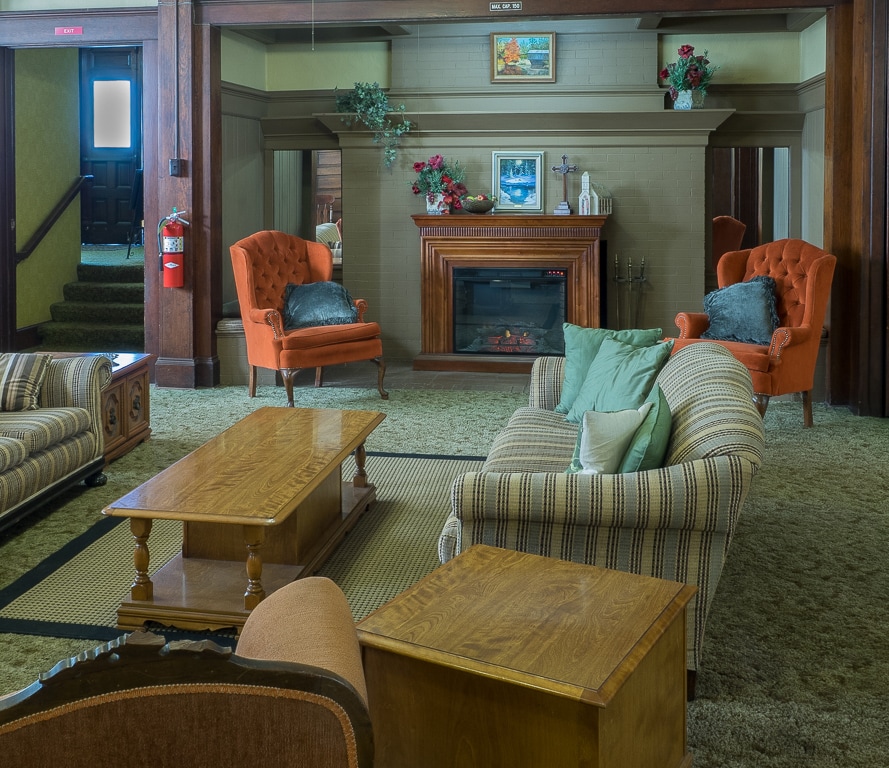
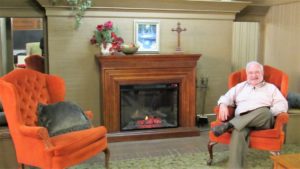
However, fire did significantly change the church in 1936, burning the south wall of the sanctuary, a portion of the altar and recessed chancel, and the entire gymnasium. Since area high schools were now providing swimming, gymnasium, and tennis venues to the public, the Congregationalists replaced theirs with a social hall, complete with a modern kitchen and raised stage over the original swimming pool. This lower level addition adjoins the Fireside Room, a large area with comfortable seating and a fireplace.
In 1961, a separate building south of the church was built for classrooms; and in 1978, an elevator was installed from the ground level Mill Street entrance side to the upper vestibule for wheelchair access. The church still provides a home for gatherings of community groups such as Girl and Boy Scout troops, quilters, and Alcoholics Anonymous, and for entertainment in the form of plays and musical concerts.

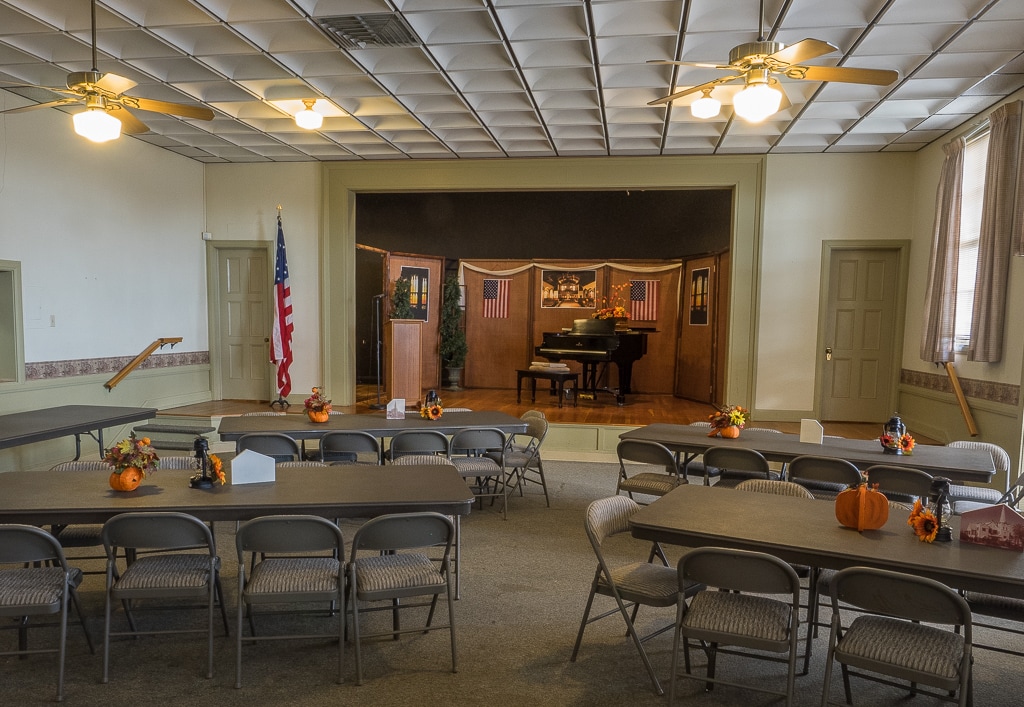
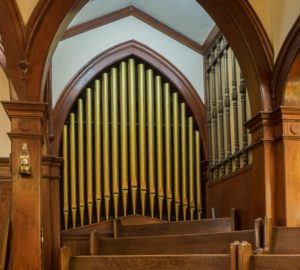
Music has been an important part of the Congregational church since its beginning. The church maintains two Steinway pianos, a magnificent pipe organ, and its original pump organ, which is still used for special occasions, such as the church’s 125th anniversary celebration in 2016.
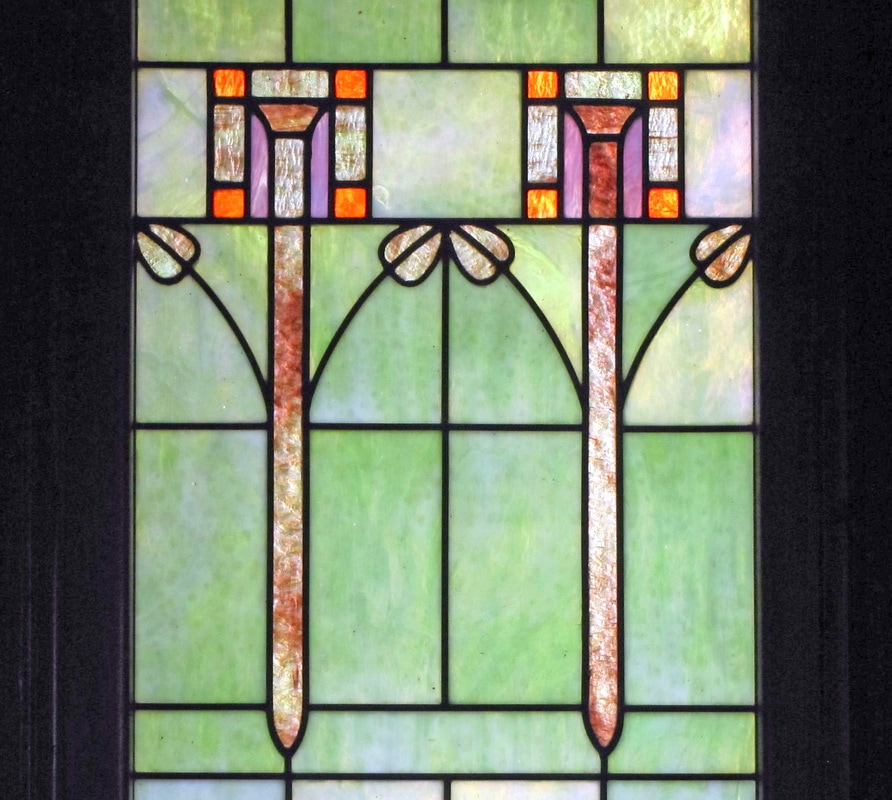
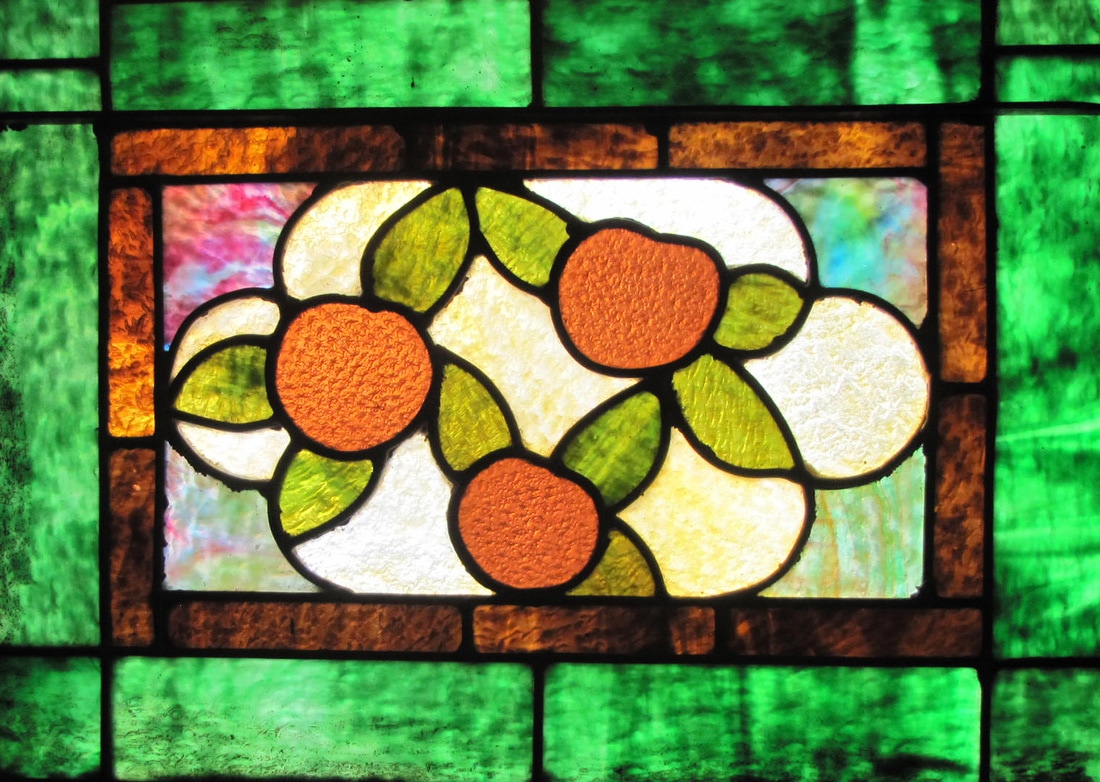
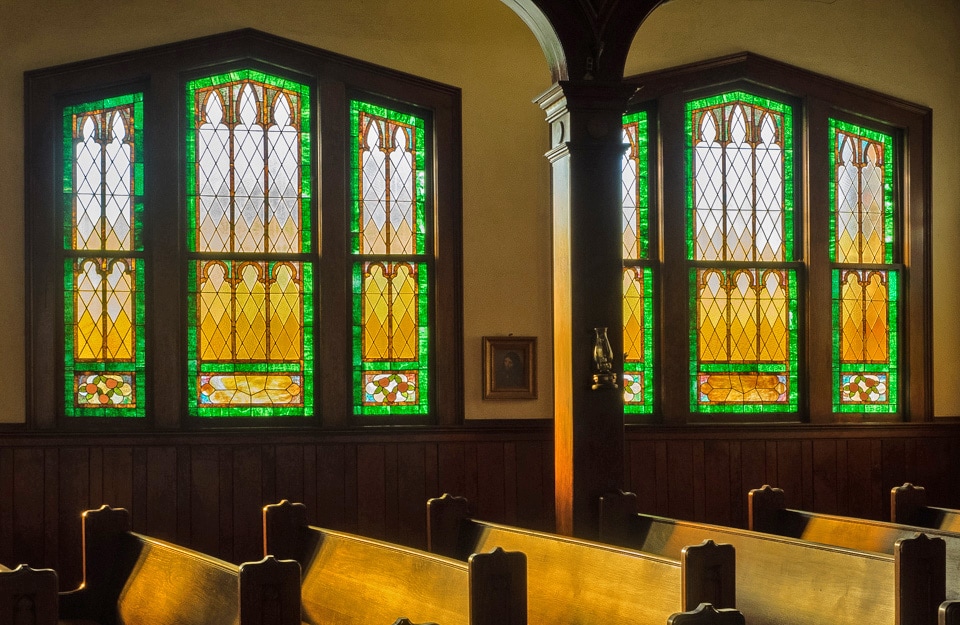
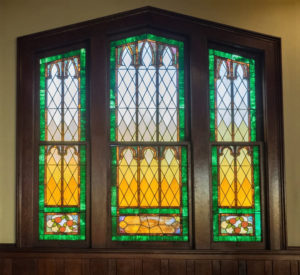
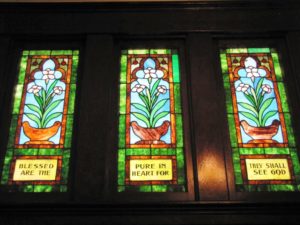
Another source of pride and contributory factor in the church’s selection for National Register recognition are its outstanding stained glass windows. The unique windows were designed by a San Francisco artisan who was unfamiliar with the region and was fascinated by its changing seasons and the emerging citrus industry on the nearby hillsides. Thus, the windows feature the greens and golds of spring and fall, and each is anchored at the bottom by a panel featuring a cluster of three oranges and leaves. This motif, many congregants believe, suggests the Christian doctrine of the Trinity.
This brings us full circle in our tour of the church and back to the carillon system. It, too, has a story. The sound system was a gift to the church in memory of Richard Moore from his family and friends. It was first installed in 1957 by the Maas-Rowe Company of Escondido. It served well for twenty two years, when the installing company was re-hired to upgrade the parts and system. Once again the carillon sounds marked the passage of time for the city, with songs at 8 a.m., noon, and 5 p.m., and chimes on the hour in between — a fix that lasted until 2001.
After 15 years of silence from the carillon, the family of the late Harry and Virginia Falconer pledged the entire sum for the carillon replacement project in their memory, providing a modern, digital system with over 600 songs to choose from. And so, just before Christmas 2016, the familiar musical interludes once again emanated from the First Congregational Church spire daily and for special occasions. It is an audible indicator that the church continues to serve its community well into its second century.
April, 2017
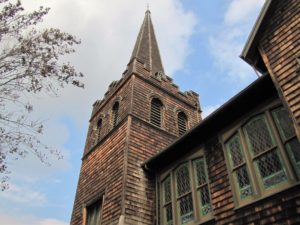
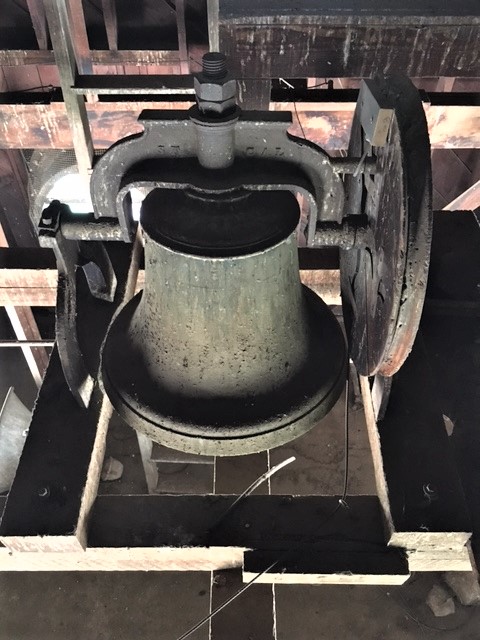
“‘W.T. GARRATT & CO. SF CAL 1870’ is cast around the top of a[n] 18 inch high, 24 inch diameter bell, which is still rung by hand for celebrations such as the church’s centennial in 1991. This bell is from the earlier 1873 church on this site. . . . The 1873 church was torn down and construction of the present church, finished in 1908, began at this bell tower corner.” — Joe Faure
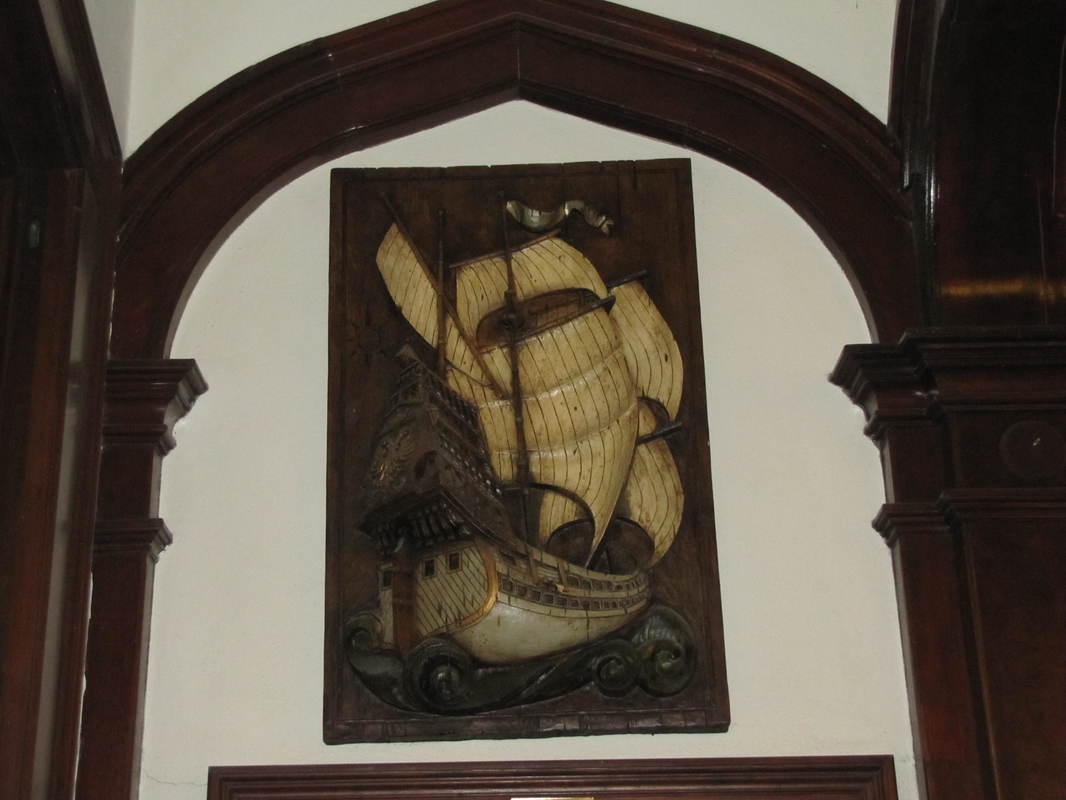
“Lavish use of elegantly crafted wood in interiors also reflects the New England heritage of early families.” — Joe Faure
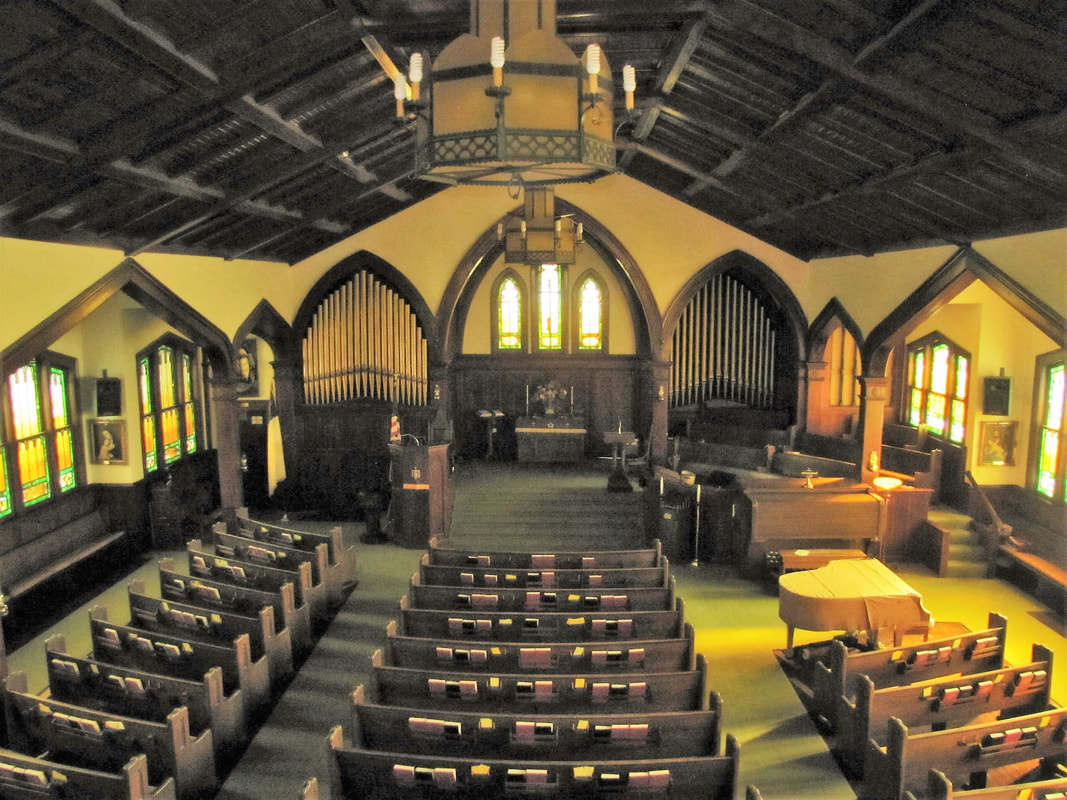
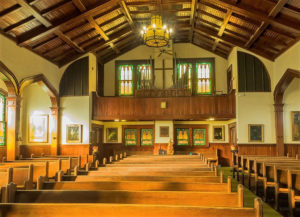
“The grand space [of the nave], 54 feet by 74 feet, is flanked on both sides by an arched colonnade and narrow aisles. … The floor is tongue and groove vertical grain [D]ouglas fir. All woodwork throughout this auditorium displays elegant craftmanship.” — Joe Faure
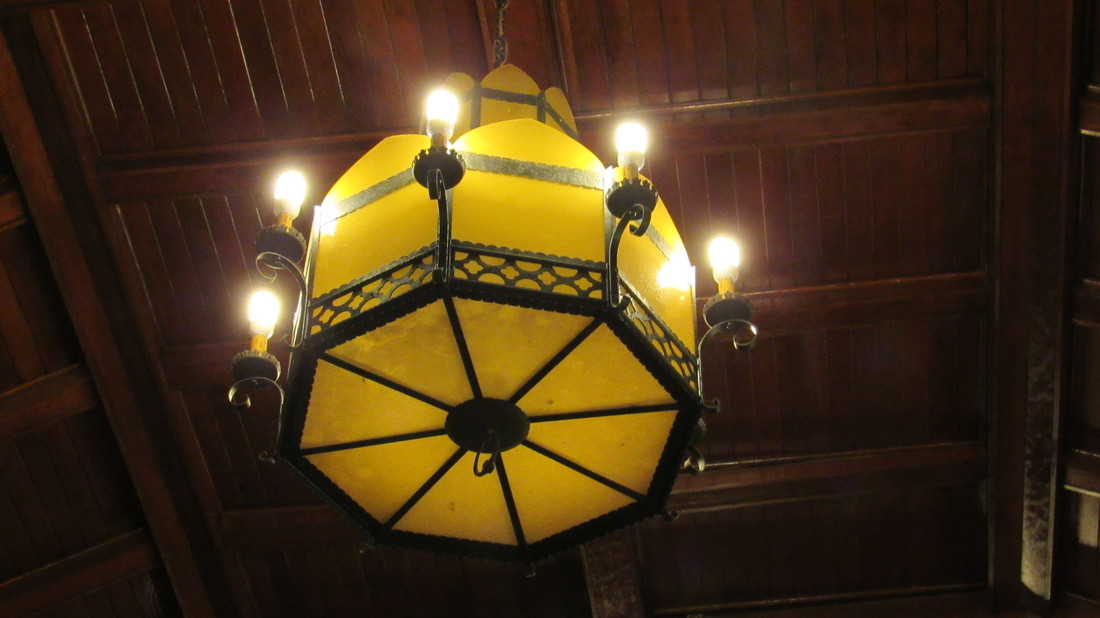
“Blacksmiths were essential in a community that depended on horses. . . . Local craftsmen were available to provide church ornaments such as the light fixtures.” — Joe Faure
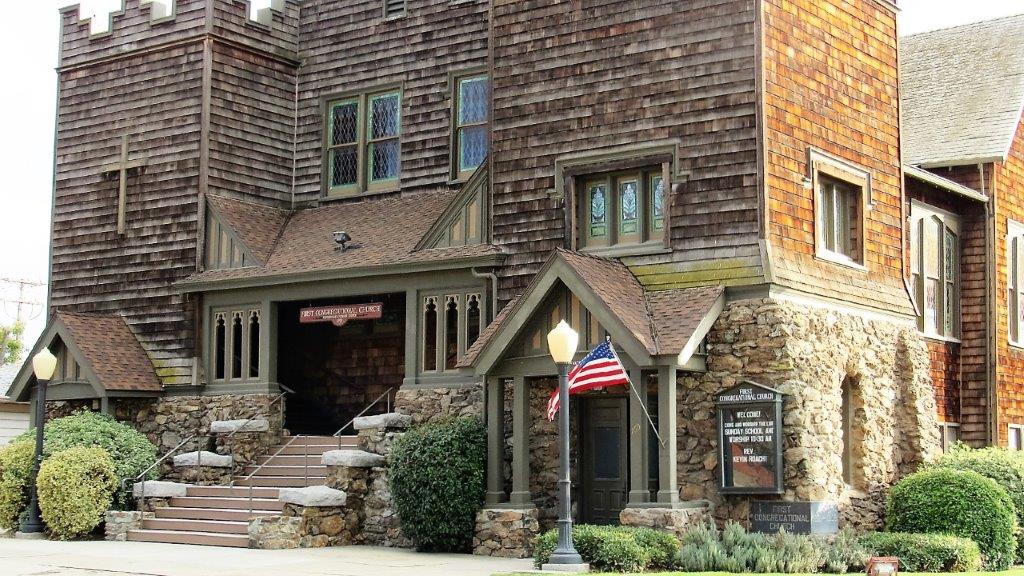
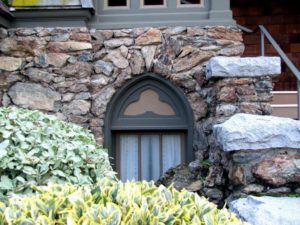
“Several local rock quarries provided roughly cut blocks and slabs such as were used on the front face, and for the foundation and steps of the church. The cornerstone itself was hauled from a nearby hillside.” — National Register of Historic Places (NRHP) Nomination Form
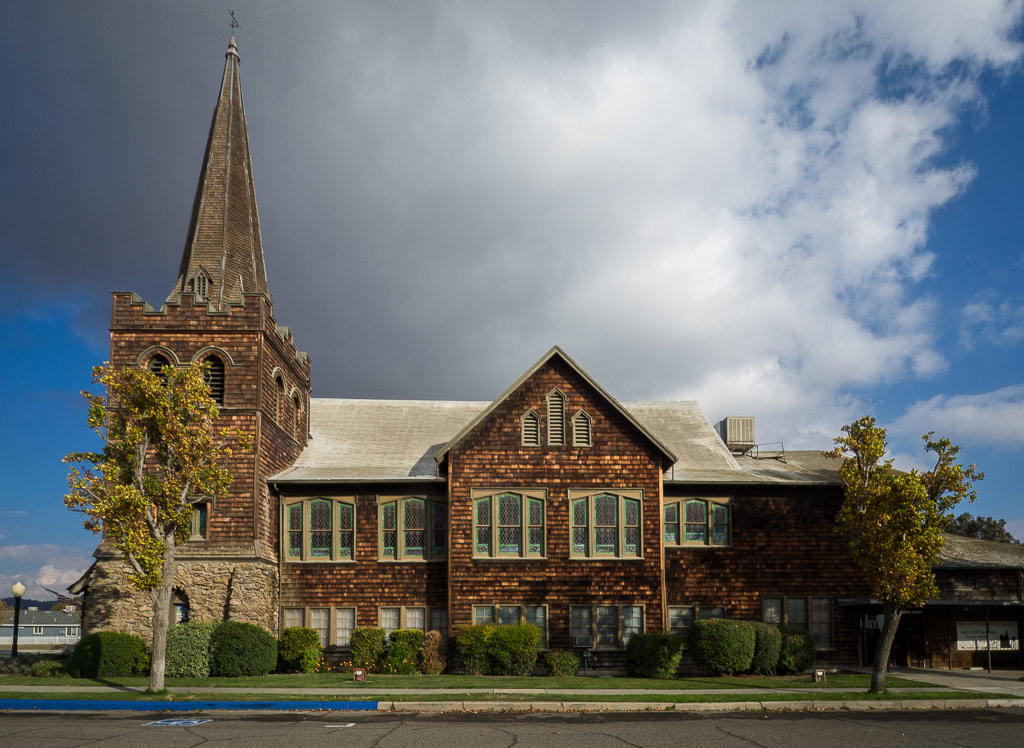
“You could never rebuild this church the way it is now. The craftsmen aren’t available. The construction materials aren’t there. You could not afford to build this today.” — Joe Faure
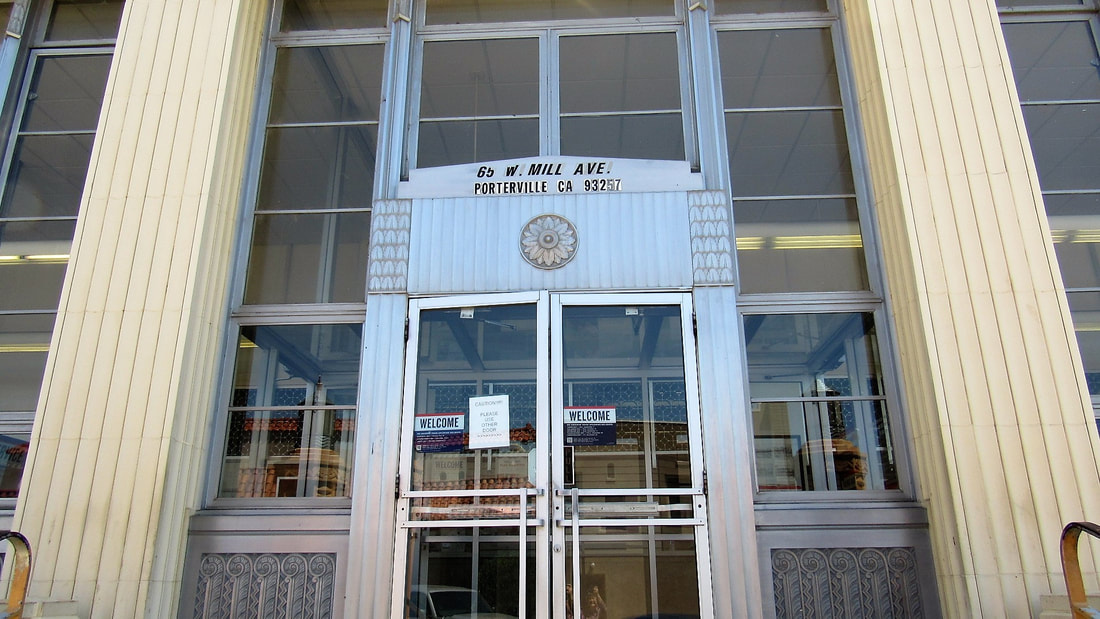
“Periods of architecture like this one, and like the Art Deco period that the post office represents . . .”
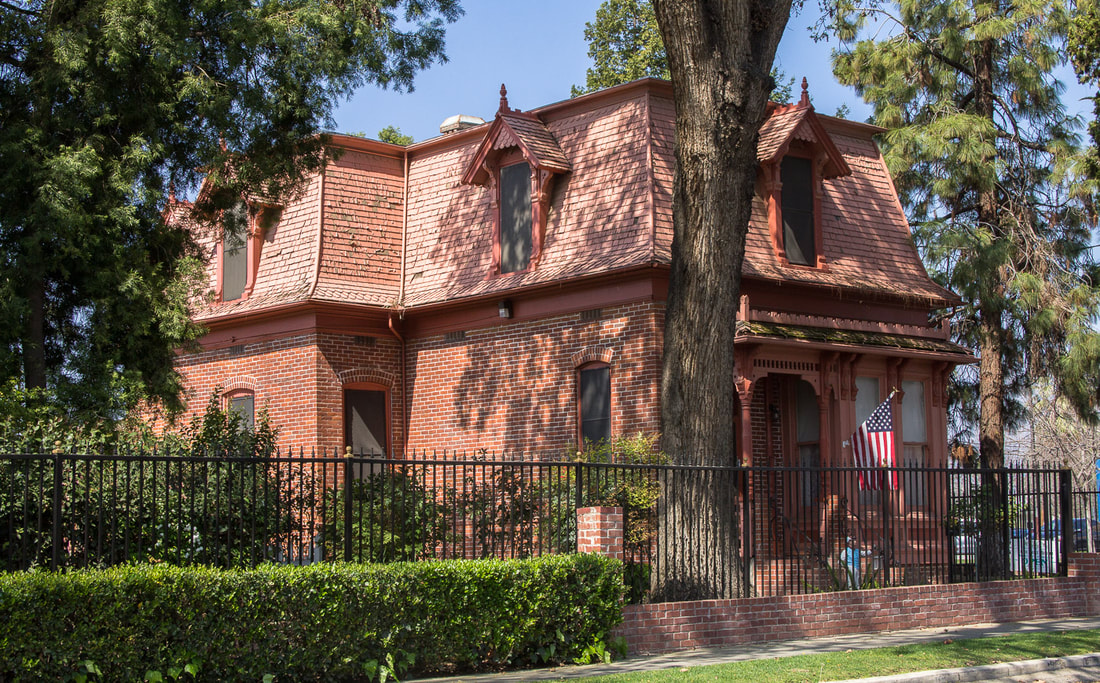
“. . . and the Victorian era that Zalud House represents, those periods aren’t going to come again. We’re fortunate in Porterville: we have three of those periods represented, going clear back to the 1890s. They need to be preserved if at all possible.” — Joe Faure